
Zoom the image with the mouse
Tropical Hibiscus Erin Rachel - 1 Gallon
SKU:
2094450
UPC:
014949241332
$19.99
- Jaw-dropping 5-inch blooms in a show-stopping fusion of neon orange, vibrant pink, and rich magenta that last from summer through nearly year-round in frost-free climates
- Slow-growing, compact evergreen habit reaches just 5 to 6 feet tall and 3 to 4 feet wide, making it ideal for patio containers, borders, and low hedges
- Non-toxic to cats and dogs, and proven tough in coastal gardens where salt-laden breezes challenge lesser plants
- A magnet for hummingbirds and butterflies, delivering reliable tropical drama with minimal space requirements
Hibiscus rosa-sinensis 'Erin Rachel' is a stunning tropical evergreen shrub that brings bold, vacation-worthy color to Southern Oregon and Northern California gardens and patios. Each flower is an eye-catching canvas of hot neon orange that blends seamlessly into vibrant pink petals, all anchored by a deep, jewel-toned magenta center — blooms that reach up to 5 inches across and appear in continuous flushes from summer onward, virtually nonstop in the mildest coastal climates of USDA Zones 10 and 11. Unlike many tropical hibiscus varieties that grow large and unwieldy, 'Erin Rachel' is a notably slow-growing, compact selection that matures to just 5 to 6 feet tall and 3 to 4 feet wide, giving gardeners all the drama of a full-sized tropical shrub in a tidy, manageable silhouette. Its glossy, rich green evergreen foliage provides a lush backdrop that makes the brilliant flowers pop even more. Thriving in full sun and well-drained, organically enriched soil with a neutral to slightly acidic pH, this refined hibiscus is equally at home as a specimen in a large patio container, anchoring a mixed tropical border, or forming a colorful informal hedge. Its proven tolerance of coastal conditions, combined with its status as a pet-safe plant, makes 'Erin Rachel' a versatile and responsible choice for gardeners who want maximum floral impact with a thoughtfully sized, well-behaved plant.
Plant Description
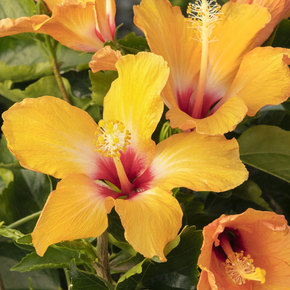
Hibiscus rosa-sinensis 'Erin Rachel' is a tropical evergreen shrub celebrated for its exceptionally showy flowers and refined, compact growth habit. Each bloom measures up to 5 inches across and presents a breathtaking color progression: hot neon orange at the outer petals transitions into vibrant pink toward the center, which is then dramatically punctuated by a rich, deep magenta eye. The flowers are single-form with the characteristic long, protruding staminal column typical of the species, adding elegant architectural detail to each blossom. The glossy, dark green foliage is evergreen, giving the plant year-round visual presence even between bloom cycles. The overall habit is dense and upright with a naturally tidy appearance, making it one of the more refined tropical hibiscus selections available for home gardeners and landscape professionals alike.
Mature Size
| Attribute | Measurement |
|---|---|
| Mature Height | 5 to 6 feet |
| Mature Width | 3 to 4 feet |
| Growth Rate | Slow |
| Growth Habit | Compact, upright, densely branched |
| Foliage Type | Evergreen |
The slow growth rate of 'Erin Rachel' is one of its most appreciated qualities. It will not outgrow a large patio container quickly, and in the landscape it fills its allotted space gradually and gracefully without crowding neighboring plants. Its compact footprint of 3 to 4 feet wide makes it well-suited to smaller garden beds, tight patio corners, and container growing.
Hardiness and Climate
Hibiscus rosa-sinensis 'Erin Rachel' is rated for USDA Hardiness Zones 10 and 11, reflecting its tropical origins and sensitivity to frost. It performs best where winter temperatures remain well above freezing. In the milder coastal and inland valleys of Northern California where frosts are rare or absent, it can be grown as a permanent landscape shrub. In areas that experience even occasional light frost, such as portions of Southern Oregon and the cooler inland valleys of Northern California, 'Erin Rachel' is best grown in a container so it can be moved to a frost-free location — a covered patio, garage, or bright indoor space — when cold nighttime temperatures are forecast. Bring plants indoors when nighttime temperatures approach the mid- to lower 50s°F, as prolonged cool temperatures can stress the plant even without frost. It has demonstrated good tolerance of coastal conditions, handling the salt air and wind exposure common to seaside gardens.
Sunlight Requirements
Full sun is the ideal exposure for 'Erin Rachel', providing the high light levels that fuel the most prolific and vibrant bloom production. In the warmest inland climates, a position that receives some light afternoon shade during the hottest summer months can be beneficial and will help prevent flower fading, while still maintaining strong growth. At minimum, aim for 6 hours of direct sunlight per day. Plants grown in too much shade will produce noticeably fewer flowers, develop a leggier form, and are more susceptible to pest and disease issues. When transitioning a plant from indoors back to an outdoor sunny position in spring, acclimate it gradually over 7 to 10 days to prevent sunscald on leaves that have adapted to lower interior light levels.
Soil and pH Preferences
Hibiscus rosa-sinensis 'Erin Rachel' thrives in well-drained, organically enriched soil with a neutral to slightly acidic pH, ideally between 6.0 and 7.0. Good drainage is critical — while this hibiscus needs consistent moisture, it does not tolerate waterlogged conditions, which quickly lead to root rot. Before planting in the ground, amend native soil generously with compost or other organic matter to improve both drainage and fertility. For container culture, use a high-quality, well-draining potting mix formulated for tropical plants or shrubs. Avoid heavy clay soils without significant amendment, as they retain too much water and restrict the oxygen availability that roots require. In alkaline soils, iron chlorosis (yellowing of leaves between the veins) can occasionally occur; an acidifying fertilizer or soil acidifier can help correct this condition if it arises.
Watering Guide
Consistent moisture is key to keeping 'Erin Rachel' healthy and blooming generously. During the first growing season in the ground, water deeply and regularly to encourage the establishment of a strong, extensive root system. Once established, reduce watering frequency somewhat, but never allow the soil to dry out completely — sustained drought stress will cause bud drop and leaf yellowing. As a general rule, water when the top inch of soil feels dry to the touch. Container-grown plants dry out much faster than in-ground plants, especially during hot summer weather, and may require daily watering in peak summer heat. Always water at the base of the plant rather than overhead to keep foliage dry and reduce the risk of fungal disease. During the winter rest period indoors, reduce watering significantly but do not allow the root ball to dry out completely.
Fertilizing
Tropical hibiscus are heavy feeders and respond enthusiastically to regular fertilization during the active growing season. Apply a general-purpose or hibiscus-specific balanced fertilizer before new growth begins in spring. Through the growing season, feed every 4 to 6 weeks with a fertilizer that has moderate to high levels of potassium (the third number in the N-P-K ratio), which supports prolific flowering. Avoid fertilizers with excessive phosphorus, which can actually inhibit bloom production in tropical hibiscus. A formulation such as 10-4-12 or similar is often recommended by tropical hibiscus specialists. Micronutrients — particularly iron and magnesium — are important for healthy dark green foliage; a fertilizer that includes chelated micronutrients is beneficial, especially when plants are grown in containers or in alkaline soil conditions. Reduce or stop fertilizing in fall as the plant enters its slower winter period.
Pruning and Maintenance
For a formal, tidy appearance, prune 'Erin Rachel' annually after a main flush of flowering. Because tropical hibiscus blooms on new wood produced during the current season, pruning encourages vigorous new growth and, in turn, a fresh cycle of prolific blooming. In late winter or early spring — before new growth begins — cut older, woody stems back by about one-third. This rejuvenates the plant, promotes a denser branching structure, and keeps the naturally compact form looking its best. Avoid heavy pruning in fall or during cool weather, as new growth stimulated at the wrong time can be vulnerable to cold damage. Deadheading spent blooms is not strictly necessary, as the flowers are relatively short-lived and drop on their own, but removing them keeps the plant looking tidy and can marginally improve the overall appearance during peak bloom periods.
Planting Instructions
- Choose a location that receives at least 6 hours of direct sun daily and is protected from frost in Zones below 10.
- Dig a planting hole twice as wide and approximately the same depth as the root ball.
- Amend the excavated soil generously with compost or aged organic matter to improve fertility and drainage.
- Remove the plant from its nursery container and gently loosen any circling or compacted roots.
- Position the plant so the top of the root ball sits level with or very slightly above the surrounding soil grade — never plant deeper than the original soil line.
- Backfill with the amended soil, firming gently around the roots to eliminate air pockets.
- Water deeply and thoroughly immediately after planting to settle the soil and hydrate the roots.
- Apply a 2- to 3-inch layer of organic mulch around the plant, keeping it several inches away from the main stem, to conserve soil moisture and moderate soil temperature.
- For container planting, use a large pot (at least 15 to 20 gallons) with drainage holes and a well-draining tropical potting mix.
Container Growing
'Erin Rachel' is ideally suited for container culture, and its slow, compact growth habit makes it one of the best tropical hibiscus varieties for patio and deck use. Select a large, sturdy container — at least 15 to 20 gallons — with adequate drainage holes to prevent waterlogging. Use a premium, fast-draining potting mix and elevate the container on pot feet to ensure unrestricted drainage. Container-grown plants require more frequent watering and fertilizing than in-ground plants, so check soil moisture daily during summer heat. The great advantage of container culture in climates like Southern Oregon and Northern California is portability: simply wheel or carry the plant to a frost-free location when cold weather threatens in winter. When overwintering indoors, place it in the brightest available location — a south-facing window or under supplemental grow lights — and reduce watering while continuing to monitor for common indoor pests such as spider mites and whiteflies. Repot every 2 to 3 years into a slightly larger container to refresh the growing medium and give the root system room to expand.
Bloom Time and Seasonal Interest
In warm, frost-free climates (Zones 10–11), 'Erin Rachel' can bloom nearly year-round, providing continuous waves of spectacular color through every season. In areas with cooler winters or where the plant is overwintered indoors, the primary bloom season runs from late spring through summer and into early fall, coinciding with the long, warm days that tropical hibiscus thrive in. Each individual flower lasts only a day or two, but the plant compensates by producing new buds in a near-constant succession throughout the season. The glossy evergreen foliage provides attractive year-round structure and a lush green backdrop that remains handsome even during any brief periods between flowering cycles. In the landscape, 'Erin Rachel' provides excellent summer color when many other shrubs are between bloom cycles, making it a valuable focal point during the hottest months of the year.
Landscape Uses
The compact size and spectacular flower display of 'Erin Rachel' make it a versatile performer in a wide range of landscape settings. Recommended uses include:
- Patio and deck container specimen: One of its best applications — the slow growth and tidy form make it an outstanding focal point on a sunny patio or deck
- Mixed tropical border: Pairs beautifully with other bold-textured tropical and subtropical plants for a lush, resort-style planting
- Informal low hedge or screen: A row of 'Erin Rachel' plants creates a colorful, seasonally blooming privacy screen
- Foundation planting: Works well along the sunny side of a structure where its root system will stay dry and warm
- Coastal gardens: Its documented tolerance of coastal salt exposure makes it an excellent choice near the ocean
- Hummingbird and pollinator garden: The large, nectar-rich flowers are a proven magnet for hummingbirds and butterflies
Companion Plants
The vivid orange, pink, and magenta palette of 'Erin Rachel' pairs beautifully with plants that either echo its tropical energy or provide contrasting cool tones and textures. Excellent companion plants include:
- Plumbago (Plumbago auriculata): Cool sky-blue flowers provide a stunning complementary contrast to the warm tones of 'Erin Rachel'
- Orchid Tree (Bauhinia purpurea): Lavender-pink blooms in a tree form create an elegant tropical canopy above the hibiscus
- Cuphea (Cuphea spp.): Fine-textured mounding habit and small but prolific flowers weave nicely around the larger blooms of 'Erin Rachel'
- Cordyline (Cordyline spp.): Striking upright, sword-like foliage in reds, purples, or creams adds bold vertical contrast and tropical drama
- Star Jasmine (Trachelospermum jasminoides): Fragrant white flowers and evergreen foliage make a beautiful, softening backdrop
- Bougainvillea: The vivid magenta or orange bracts of bougainvillea echo 'Erin Rachel's' warm tones in a high-impact, sun-loving combination
- Lantana: Long-blooming, heat-tolerant color that complements the tropical theme without competing with the hibiscus's bold flowers
Pests and Diseases
Tropical hibiscus are generally resilient but can be affected by a handful of common pests and diseases, particularly when grown under stressful conditions such as overwintering indoors.
- Aphids: Small, soft-bodied insects that cluster on new growth and flower buds; dislodge with a strong stream of water or treat with insecticidal soap
- Whiteflies: Tiny white flying insects that gather on the undersides of leaves; yellow sticky traps, insecticidal soap, or neem oil sprays are effective controls
- Spider Mites: More common on indoor-overwintered plants in dry conditions; look for fine webbing and stippled leaves; increase humidity and treat with miticide or neem oil
- Fungal Leaf Spots: Can occur in humid conditions with poor air circulation; remove infected leaves, avoid overhead watering, and ensure good airflow around the plant
- Bud Drop: Often caused by sudden temperature changes, drought stress, low light levels, or being moved — try to avoid relocating a budding plant and maintain consistent moisture and warmth
- Iron Chlorosis: Yellowing between leaf veins, most often a sign of iron deficiency in alkaline soils or soggy conditions; treat with chelated iron and address drainage
Preventive care — proper watering, good air circulation, and regular inspection — will minimize most pest and disease problems and keep 'Erin Rachel' looking its best.
Wildlife Value
The large, nectar-rich flowers of 'Erin Rachel' are particularly attractive to hummingbirds, which are drawn to the tubular shape and vivid warm-toned colors of the blooms. The long, protruding staminal column provides a convenient landing perch as hummingbirds hover and feed, making each flower a rewarding wildlife encounter. Butterflies also visit the open blooms regularly, adding additional movement and life to the garden. For gardeners in Southern Oregon and Northern California who want to support local pollinator populations and enjoy close-up hummingbird activity on their patios and decks, 'Erin Rachel' positioned near a seating area delivers an exceptional nature-watching experience throughout the long bloom season. As an added benefit, this hibiscus has been confirmed non-toxic to cats and dogs, making it a responsible choice for pet-friendly outdoor spaces.
Overwintering in Cooler Climates
In areas of Southern Oregon and the cooler inland valleys of Northern California where frost is possible, overwintering 'Erin Rachel' successfully requires some planning. Begin monitoring nighttime temperatures in early fall. When forecasts indicate nights consistently falling into the mid-50s°F or below, it is time to bring container plants indoors. Choose the brightest available indoor location — ideally a south-facing window or a sunroom — to maintain as much light as possible through the winter months. Reduce watering significantly during the indoor rest period, allowing the top inch or two of soil to dry between waterings, but never letting the root ball completely dry out. Expect some leaf drop during the transition indoors; this is normal and the plant will flush new growth when returned to warmth and bright light. Inspect plants carefully for pests before bringing them inside, and treat any infestations promptly to prevent them from spreading to other houseplants. In late winter or early spring, as temperatures warm and the risk of frost passes, gradually reintroduce the plant to outdoor conditions over 7 to 10 days before placing it back in its full-sun summer position.
- Jaw-dropping 5-inch blooms in a show-stopping fusion of neon orange, vibrant pink, and rich magenta that last from summer through nearly year-round in frost-free climates
- Slow-growing, compact evergreen habit reaches just 5 to 6 feet tall and 3 to 4 feet wide, making it ideal for patio containers, borders, and low hedges
- Non-toxic to cats and dogs, and proven tough in coastal gardens where salt-laden breezes challenge lesser plants
- A magnet for hummingbirds and butterflies, delivering reliable tropical drama with minimal space requirements
Hibiscus rosa-sinensis 'Erin Rachel' is a stunning tropical evergreen shrub that brings bold, vacation-worthy color to Southern Oregon and Northern California gardens and patios. Each flower is an eye-catching canvas of hot neon orange that blends seamlessly into vibrant pink petals, all anchored by a deep, jewel-toned magenta center — blooms that reach up to 5 inches across and appear in continuous flushes from summer onward, virtually nonstop in the mildest coastal climates of USDA Zones 10 and 11. Unlike many tropical hibiscus varieties that grow large and unwieldy, 'Erin Rachel' is a notably slow-growing, compact selection that matures to just 5 to 6 feet tall and 3 to 4 feet wide, giving gardeners all the drama of a full-sized tropical shrub in a tidy, manageable silhouette. Its glossy, rich green evergreen foliage provides a lush backdrop that makes the brilliant flowers pop even more. Thriving in full sun and well-drained, organically enriched soil with a neutral to slightly acidic pH, this refined hibiscus is equally at home as a specimen in a large patio container, anchoring a mixed tropical border, or forming a colorful informal hedge. Its proven tolerance of coastal conditions, combined with its status as a pet-safe plant, makes 'Erin Rachel' a versatile and responsible choice for gardeners who want maximum floral impact with a thoughtfully sized, well-behaved plant.
Plant Description
Hibiscus rosa-sinensis 'Erin Rachel' is a tropical evergreen shrub celebrated for its exceptionally showy flowers and refined, compact growth habit. Each bloom measures up to 5 inches across and presents a breathtaking color progression: hot neon orange at the outer petals transitions into vibrant pink toward the center, which is then dramatically punctuated by a rich, deep magenta eye. The flowers are single-form with the characteristic long, protruding staminal column typical of the species, adding elegant architectural detail to each blossom. The glossy, dark green foliage is evergreen, giving the plant year-round visual presence even between bloom cycles. The overall habit is dense and upright with a naturally tidy appearance, making it one of the more refined tropical hibiscus selections available for home gardeners and landscape professionals alike.
Mature Size
| Attribute | Measurement |
|---|---|
| Mature Height | 5 to 6 feet |
| Mature Width | 3 to 4 feet |
| Growth Rate | Slow |
| Growth Habit | Compact, upright, densely branched |
| Foliage Type | Evergreen |
The slow growth rate of 'Erin Rachel' is one of its most appreciated qualities. It will not outgrow a large patio container quickly, and in the landscape it fills its allotted space gradually and gracefully without crowding neighboring plants. Its compact footprint of 3 to 4 feet wide makes it well-suited to smaller garden beds, tight patio corners, and container growing.
Hardiness and Climate
Hibiscus rosa-sinensis 'Erin Rachel' is rated for USDA Hardiness Zones 10 and 11, reflecting its tropical origins and sensitivity to frost. It performs best where winter temperatures remain well above freezing. In the milder coastal and inland valleys of Northern California where frosts are rare or absent, it can be grown as a permanent landscape shrub. In areas that experience even occasional light frost, such as portions of Southern Oregon and the cooler inland valleys of Northern California, 'Erin Rachel' is best grown in a container so it can be moved to a frost-free location — a covered patio, garage, or bright indoor space — when cold nighttime temperatures are forecast. Bring plants indoors when nighttime temperatures approach the mid- to lower 50s°F, as prolonged cool temperatures can stress the plant even without frost. It has demonstrated good tolerance of coastal conditions, handling the salt air and wind exposure common to seaside gardens.
Sunlight Requirements
Full sun is the ideal exposure for 'Erin Rachel', providing the high light levels that fuel the most prolific and vibrant bloom production. In the warmest inland climates, a position that receives some light afternoon shade during the hottest summer months can be beneficial and will help prevent flower fading, while still maintaining strong growth. At minimum, aim for 6 hours of direct sunlight per day. Plants grown in too much shade will produce noticeably fewer flowers, develop a leggier form, and are more susceptible to pest and disease issues. When transitioning a plant from indoors back to an outdoor sunny position in spring, acclimate it gradually over 7 to 10 days to prevent sunscald on leaves that have adapted to lower interior light levels.
Soil and pH Preferences
Hibiscus rosa-sinensis 'Erin Rachel' thrives in well-drained, organically enriched soil with a neutral to slightly acidic pH, ideally between 6.0 and 7.0. Good drainage is critical — while this hibiscus needs consistent moisture, it does not tolerate waterlogged conditions, which quickly lead to root rot. Before planting in the ground, amend native soil generously with compost or other organic matter to improve both drainage and fertility. For container culture, use a high-quality, well-draining potting mix formulated for tropical plants or shrubs. Avoid heavy clay soils without significant amendment, as they retain too much water and restrict the oxygen availability that roots require. In alkaline soils, iron chlorosis (yellowing of leaves between the veins) can occasionally occur; an acidifying fertilizer or soil acidifier can help correct this condition if it arises.
Watering Guide
Consistent moisture is key to keeping 'Erin Rachel' healthy and blooming generously. During the first growing season in the ground, water deeply and regularly to encourage the establishment of a strong, extensive root system. Once established, reduce watering frequency somewhat, but never allow the soil to dry out completely — sustained drought stress will cause bud drop and leaf yellowing. As a general rule, water when the top inch of soil feels dry to the touch. Container-grown plants dry out much faster than in-ground plants, especially during hot summer weather, and may require daily watering in peak summer heat. Always water at the base of the plant rather than overhead to keep foliage dry and reduce the risk of fungal disease. During the winter rest period indoors, reduce watering significantly but do not allow the root ball to dry out completely.
Fertilizing
Tropical hibiscus are heavy feeders and respond enthusiastically to regular fertilization during the active growing season. Apply a general-purpose or hibiscus-specific balanced fertilizer before new growth begins in spring. Through the growing season, feed every 4 to 6 weeks with a fertilizer that has moderate to high levels of potassium (the third number in the N-P-K ratio), which supports prolific flowering. Avoid fertilizers with excessive phosphorus, which can actually inhibit bloom production in tropical hibiscus. A formulation such as 10-4-12 or similar is often recommended by tropical hibiscus specialists. Micronutrients — particularly iron and magnesium — are important for healthy dark green foliage; a fertilizer that includes chelated micronutrients is beneficial, especially when plants are grown in containers or in alkaline soil conditions. Reduce or stop fertilizing in fall as the plant enters its slower winter period.
Pruning and Maintenance
For a formal, tidy appearance, prune 'Erin Rachel' annually after a main flush of flowering. Because tropical hibiscus blooms on new wood produced during the current season, pruning encourages vigorous new growth and, in turn, a fresh cycle of prolific blooming. In late winter or early spring — before new growth begins — cut older, woody stems back by about one-third. This rejuvenates the plant, promotes a denser branching structure, and keeps the naturally compact form looking its best. Avoid heavy pruning in fall or during cool weather, as new growth stimulated at the wrong time can be vulnerable to cold damage. Deadheading spent blooms is not strictly necessary, as the flowers are relatively short-lived and drop on their own, but removing them keeps the plant looking tidy and can marginally improve the overall appearance during peak bloom periods.
Planting Instructions
- Choose a location that receives at least 6 hours of direct sun daily and is protected from frost in Zones below 10.
- Dig a planting hole twice as wide and approximately the same depth as the root ball.
- Amend the excavated soil generously with compost or aged organic matter to improve fertility and drainage.
- Remove the plant from its nursery container and gently loosen any circling or compacted roots.
- Position the plant so the top of the root ball sits level with or very slightly above the surrounding soil grade — never plant deeper than the original soil line.
- Backfill with the amended soil, firming gently around the roots to eliminate air pockets.
- Water deeply and thoroughly immediately after planting to settle the soil and hydrate the roots.
- Apply a 2- to 3-inch layer of organic mulch around the plant, keeping it several inches away from the main stem, to conserve soil moisture and moderate soil temperature.
- For container planting, use a large pot (at least 15 to 20 gallons) with drainage holes and a well-draining tropical potting mix.
Container Growing
'Erin Rachel' is ideally suited for container culture, and its slow, compact growth habit makes it one of the best tropical hibiscus varieties for patio and deck use. Select a large, sturdy container — at least 15 to 20 gallons — with adequate drainage holes to prevent waterlogging. Use a premium, fast-draining potting mix and elevate the container on pot feet to ensure unrestricted drainage. Container-grown plants require more frequent watering and fertilizing than in-ground plants, so check soil moisture daily during summer heat. The great advantage of container culture in climates like Southern Oregon and Northern California is portability: simply wheel or carry the plant to a frost-free location when cold weather threatens in winter. When overwintering indoors, place it in the brightest available location — a south-facing window or under supplemental grow lights — and reduce watering while continuing to monitor for common indoor pests such as spider mites and whiteflies. Repot every 2 to 3 years into a slightly larger container to refresh the growing medium and give the root system room to expand.
Bloom Time and Seasonal Interest
In warm, frost-free climates (Zones 10–11), 'Erin Rachel' can bloom nearly year-round, providing continuous waves of spectacular color through every season. In areas with cooler winters or where the plant is overwintered indoors, the primary bloom season runs from late spring through summer and into early fall, coinciding with the long, warm days that tropical hibiscus thrive in. Each individual flower lasts only a day or two, but the plant compensates by producing new buds in a near-constant succession throughout the season. The glossy evergreen foliage provides attractive year-round structure and a lush green backdrop that remains handsome even during any brief periods between flowering cycles. In the landscape, 'Erin Rachel' provides excellent summer color when many other shrubs are between bloom cycles, making it a valuable focal point during the hottest months of the year.
Landscape Uses
The compact size and spectacular flower display of 'Erin Rachel' make it a versatile performer in a wide range of landscape settings. Recommended uses include:
- Patio and deck container specimen: One of its best applications — the slow growth and tidy form make it an outstanding focal point on a sunny patio or deck
- Mixed tropical border: Pairs beautifully with other bold-textured tropical and subtropical plants for a lush, resort-style planting
- Informal low hedge or screen: A row of 'Erin Rachel' plants creates a colorful, seasonally blooming privacy screen
- Foundation planting: Works well along the sunny side of a structure where its root system will stay dry and warm
- Coastal gardens: Its documented tolerance of coastal salt exposure makes it an excellent choice near the ocean
- Hummingbird and pollinator garden: The large, nectar-rich flowers are a proven magnet for hummingbirds and butterflies
Companion Plants
The vivid orange, pink, and magenta palette of 'Erin Rachel' pairs beautifully with plants that either echo its tropical energy or provide contrasting cool tones and textures. Excellent companion plants include:
- Plumbago (Plumbago auriculata): Cool sky-blue flowers provide a stunning complementary contrast to the warm tones of 'Erin Rachel'
- Orchid Tree (Bauhinia purpurea): Lavender-pink blooms in a tree form create an elegant tropical canopy above the hibiscus
- Cuphea (Cuphea spp.): Fine-textured mounding habit and small but prolific flowers weave nicely around the larger blooms of 'Erin Rachel'
- Cordyline (Cordyline spp.): Striking upright, sword-like foliage in reds, purples, or creams adds bold vertical contrast and tropical drama
- Star Jasmine (Trachelospermum jasminoides): Fragrant white flowers and evergreen foliage make a beautiful, softening backdrop
- Bougainvillea: The vivid magenta or orange bracts of bougainvillea echo 'Erin Rachel's' warm tones in a high-impact, sun-loving combination
- Lantana: Long-blooming, heat-tolerant color that complements the tropical theme without competing with the hibiscus's bold flowers
Pests and Diseases
Tropical hibiscus are generally resilient but can be affected by a handful of common pests and diseases, particularly when grown under stressful conditions such as overwintering indoors.
- Aphids: Small, soft-bodied insects that cluster on new growth and flower buds; dislodge with a strong stream of water or treat with insecticidal soap
- Whiteflies: Tiny white flying insects that gather on the undersides of leaves; yellow sticky traps, insecticidal soap, or neem oil sprays are effective controls
- Spider Mites: More common on indoor-overwintered plants in dry conditions; look for fine webbing and stippled leaves; increase humidity and treat with miticide or neem oil
- Fungal Leaf Spots: Can occur in humid conditions with poor air circulation; remove infected leaves, avoid overhead watering, and ensure good airflow around the plant
- Bud Drop: Often caused by sudden temperature changes, drought stress, low light levels, or being moved — try to avoid relocating a budding plant and maintain consistent moisture and warmth
- Iron Chlorosis: Yellowing between leaf veins, most often a sign of iron deficiency in alkaline soils or soggy conditions; treat with chelated iron and address drainage
Preventive care — proper watering, good air circulation, and regular inspection — will minimize most pest and disease problems and keep 'Erin Rachel' looking its best.
Wildlife Value
The large, nectar-rich flowers of 'Erin Rachel' are particularly attractive to hummingbirds, which are drawn to the tubular shape and vivid warm-toned colors of the blooms. The long, protruding staminal column provides a convenient landing perch as hummingbirds hover and feed, making each flower a rewarding wildlife encounter. Butterflies also visit the open blooms regularly, adding additional movement and life to the garden. For gardeners in Southern Oregon and Northern California who want to support local pollinator populations and enjoy close-up hummingbird activity on their patios and decks, 'Erin Rachel' positioned near a seating area delivers an exceptional nature-watching experience throughout the long bloom season. As an added benefit, this hibiscus has been confirmed non-toxic to cats and dogs, making it a responsible choice for pet-friendly outdoor spaces.
Overwintering in Cooler Climates
In areas of Southern Oregon and the cooler inland valleys of Northern California where frost is possible, overwintering 'Erin Rachel' successfully requires some planning. Begin monitoring nighttime temperatures in early fall. When forecasts indicate nights consistently falling into the mid-50s°F or below, it is time to bring container plants indoors. Choose the brightest available indoor location — ideally a south-facing window or a sunroom — to maintain as much light as possible through the winter months. Reduce watering significantly during the indoor rest period, allowing the top inch or two of soil to dry between waterings, but never letting the root ball completely dry out. Expect some leaf drop during the transition indoors; this is normal and the plant will flush new growth when returned to warmth and bright light. Inspect plants carefully for pests before bringing them inside, and treat any infestations promptly to prevent them from spreading to other houseplants. In late winter or early spring, as temperatures warm and the risk of frost passes, gradually reintroduce the plant to outdoor conditions over 7 to 10 days before placing it back in its full-sun summer position.