
Zoom the image with the mouse
Bowhall Maple
SKU:
1320830
$69.99
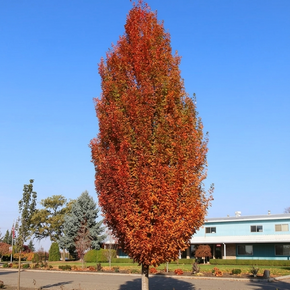
- Striking columnar form grows 40-50 feet tall and only 15-20 feet wide, making it the ideal shade tree for narrow yards, tight streetscapes, and space-limited urban gardens
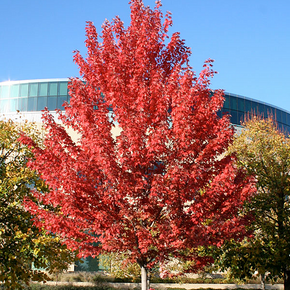
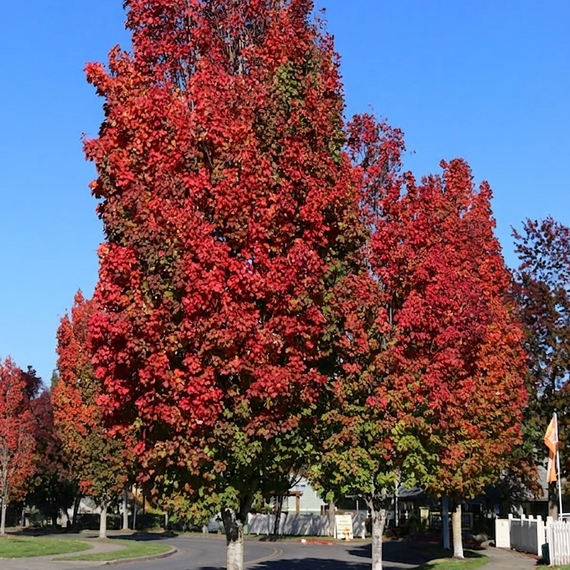
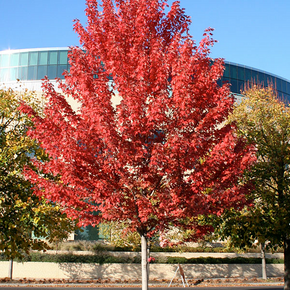
- Brilliant fall foliage transitions from medium green to vivid shades of yellow-orange and reddish-orange, delivering one of the most reliable autumn color displays of any columnar maple
- Pale reddish-orange flowers emerge on intriguing reddish branches in early spring before the leaves unfurl, providing multi-season ornamental interest from spring through fall
- Extremely cold hardy to USDA Zone 4 (-30°F) and tolerant of urban conditions including pollution, making it an outstanding low-maintenance street, lawn, or privacy-screen tree
Bowhall Maple (Acer rubrum 'Bowhall') is a tightly formed, symmetrical, narrowly columnar red maple cultivar prized by homeowners, urban planners, and landscape designers alike for its exceptional combination of vertical stature and restrained spread. Reaching 40-50 feet in height while maintaining a width of just 15-20 feet, this fast-to-moderate-growing deciduous tree delivers all the grandeur of a classic maple without overwhelming smaller landscapes or tight planting strips. In spring, delicate pale orange-red flowers flush out along reddish branches before the foliage emerges, signaling the new growing season with subtle beauty. Summer brings a dense canopy of medium green leaves that provide welcome shade, while autumn transforms the tree into a stunning pillar of yellow-orange to reddish-orange fire. Originally selected by the Scanlon Nursery of Ohio in 1946 and named after the road near Cleveland where the original tree was discovered, Bowhall has proven itself over decades as one of the most dependable narrow-form maples available. Hardy to USDA Zone 4 and tolerant of a wide range of soil types, urban pollution, and varying moisture conditions, the Bowhall Maple is the perfect choice for street plantings, avenue corridors, property line screens, and residential landscapes throughout Southern Oregon and Northern California where a stately yet space-conscious tree is desired.
Plant Description
Bowhall Maple is a cultivar of the native North American red maple (Acer rubrum), selected specifically for its tightly upright, narrowly columnar growth habit. Unlike the broad-spreading form of the species, 'Bowhall' maintains a symmetrical, fastigiate silhouette throughout its life, broadening only slightly into a more oval-columnar outline with advanced age. New spring foliage emerges with a hint of red before settling into a rich medium green through summer. The bark begins smooth and light gray on young trees, gradually developing attractive ridging and furrows as the tree matures, adding year-round textural interest. This is a female selection that produces the characteristic paired winged seeds (samaras) typical of red maples, which ripen in early summer and provide a food source for wildlife. The tree's dense, upright branching structure creates a strong architectural presence in any landscape setting.
Mature Size
| Characteristic | Detail |
|---|---|
| Mature Height | 40-50 feet |
| Mature Spread | 15-20 feet |
| Growth Rate | Moderate to fast; typically 12-18 inches per year under good conditions |
| Growth Habit | Narrowly columnar to upright oval; symmetrical |
| Tree Type | Deciduous shade tree |
| Canopy Density | Dense, providing good shade and seasonal screening |
Hardiness Zones
Bowhall Maple is hardy across a wide range of climates, performing reliably in USDA Hardiness Zones 4 through 9. It withstands winter temperatures as low as -30°F, making it exceptionally cold tolerant. At the warmer end of its range, it shows good heat and humidity tolerance, making it well suited to the varied climates found throughout Southern Oregon and Northern California. In our region it is particularly well adapted to the Rogue Valley, Applegate, and coastal zones where summer heat and cool winters are common.
Sunlight Requirements
Bowhall Maple thrives in full sun to partial shade. For the most vigorous growth, densest canopy, and best fall color display, plant it where it will receive a minimum of 6 hours of direct sunlight per day. Morning sun with some afternoon shade in the hottest inland valleys can help reduce heat stress on young, newly established trees. Mature trees are highly adaptable and will perform well in both full sun and lightly shaded conditions, though fall color intensity tends to be most vivid on trees receiving ample direct light.
Soil and pH Preferences
Bowhall Maple prefers moist, well-drained, slightly acidic soils and performs best when the soil pH falls between 4.5 and 7.0, with an ideal range of 5.5 to 6.5. It is notably adaptable and will grow in a variety of soil textures ranging from sandy loams to heavier clay soils, provided drainage is adequate. It does not tolerate prolonged waterlogged conditions at the root zone. Amending planting sites with compost or aged organic matter improves moisture retention in sandy soils and enhances drainage and aeration in clay-heavy soils. A soil test before planting is a good practice to determine whether pH adjustment is needed, as overly alkaline soils can cause chlorosis (yellowing of leaves) in red maples.
Watering Guide
Consistent watering is critical during the establishment period of the first one to two years after planting. Follow these general guidelines:
| Tree Stage | Recommended Watering |
|---|---|
| Newly Planted (Year 1) | Water deeply 1-2 times per week; keep root zone consistently moist but not waterlogged |
| Establishing (Year 2) | Water deeply every 1-2 weeks depending on rainfall and temperature |
| Established Mature Tree | Generally relies on natural rainfall; supplement with deep watering every 2-3 weeks during prolonged dry spells |
Always water deeply to encourage deep root development rather than shallow, frequent irrigation. Water in the morning when possible so foliage can dry during the day. Apply a 3-4 inch layer of organic mulch around the base of the tree, keeping it several inches away from the trunk, to conserve soil moisture and moderate soil temperature.
Planting Instructions
- Choose a planting site that receives at least 6 hours of sunlight daily and has well-drained soil. Early spring after the last frost or early fall before the ground freezes are the best planting windows.
- Dig a planting hole 2-3 times wider than the root ball and equal in depth to the root ball height. The root flare (the widening at the base of the trunk) should sit at or just slightly above the existing grade.
- Remove the tree from its container and gently loosen any circling or densely matted roots to encourage outward growth.
- Place the tree in the center of the hole, backfill with the native soil (amended with compost if needed), and lightly firm the soil to eliminate large air pockets. Do not bury the trunk flare.
- Build a shallow watering berm or ring around the outer edge of the planting hole to direct irrigation water to the root zone.
- Water thoroughly and deeply immediately after planting.
- Apply a 3-4 inch layer of organic mulch such as shredded bark or wood chips over the root zone, keeping mulch at least 4-6 inches away from the trunk to prevent rot and rodent damage.
- If the planting site is exposed and windy, stake the tree loosely to allow slight movement, which encourages stronger root and trunk development. Remove stakes after the first growing season.
Fertilizing
Bowhall Maple has modest fertilizer requirements and performs well in most soils without heavy feeding. Young trees benefit most from fertilization during their first few years as they establish. Apply a balanced, slow-release granular fertilizer formulated for trees (such as a 10-10-10 or similar analysis) in early spring just as the growing season begins. Avoid fertilizing in late summer or fall, as this can stimulate tender new growth that will not properly harden off before winter. Mature, established trees typically need fertilizing only every 2-3 years unless a soil test indicates a specific nutrient deficiency. Always follow label rate directions and avoid over-application of nitrogen, which can produce excessive leafy growth at the expense of the tree's structural strength and root system. If chlorosis (yellowing between leaf veins) appears, a soil pH test should be conducted, as overly alkaline conditions may require an acidifying fertilizer or soil amendment.
Pruning and Maintenance
Bowhall Maple's naturally symmetrical and self-directing columnar form requires minimal corrective pruning. Follow these guidelines to keep the tree healthy and well structured:
- Prune during the dormant season in late winter or very early spring, just before new growth emerges, for the best results. Avoid heavy pruning in late spring when the tree is actively leafing out, as sap flow is highest and wounds heal more slowly.
- Remove any dead, diseased, damaged, or crossing branches using clean, sharp tools to make smooth cuts that heal quickly.
- Thin crowded or rubbing branches to improve air circulation within the canopy and reduce the risk of fungal issues.
- Limit structural pruning on young trees to preserve the energy they need for root establishment; remove only problematic branches during the first two to three years.
- Do not top the tree or remove the central leader, as this will compromise the signature upright form that makes 'Bowhall' so distinctive and valuable in the landscape.
- Always sanitize pruning tools between cuts when working on potentially diseased wood to prevent spreading pathogens.
Seasonal Interest
| Season | Ornamental Features |
|---|---|
| Early Spring | Pale orange-red flowers emerge on reddish branches before foliage leafs out; one of the earliest flowering trees in the landscape |
| Late Spring | Fresh green foliage unfurls; paired winged samaras (seeds) develop and ripen to tan before dispersing |
| Summer | Dense, medium green canopy provides shade; strong upright architectural silhouette adds structure |
| Fall | Foliage transitions to brilliant shades of yellow-orange and reddish-orange; one of the most reliable and vivid fall color displays among columnar maples |
| Winter | Upright branching structure and attractive gray, increasingly furrowed bark provide strong structural interest in the dormant garden |
Landscape Uses
Bowhall Maple's narrow, columnar form opens up a range of landscape applications where a standard-sized maple would be impractical:
- Street and parkway planting: One of the most popular street tree choices for narrow planting strips between sidewalks and curbs; its upright form avoids conflicts with overhead utilities and adjacent structures
- Privacy and screening: When planted in a row, the dense upright canopy creates an effective seasonal privacy screen or windbreak without encroaching on neighboring properties
- Entranceway framing: Pairs beautifully on either side of driveways, gates, or building entrances to create a formal, stately allée effect
- Small yards and urban gardens: Brings the full beauty of a large-canopy shade tree to spaces where a broader tree simply would not fit
- Lawn specimen: Makes a striking standalone focal point in open lawn areas where its vertical form provides a bold architectural contrast to lower planting beds
- Commercial and civic landscapes: Widely used in parking lot islands, median plantings, and civic green spaces for its durability, symmetry, and urban tolerance
Bowhall vs. Armstrong Maple
Both 'Bowhall' and 'Armstrong' are popular columnar maples frequently compared by gardeners and landscape professionals. Here is how they differ:
| Feature | Bowhall Maple (Acer rubrum 'Bowhall') | Armstrong Maple (Acer x freemanii 'Armstrong') |
|---|---|---|
| Parentage | Pure red maple cultivar | Hybrid of red maple and silver maple |
| Form | Narrowly columnar, becoming slightly more oval with age; dense canopy | Very narrow, rigidly fastigiate column; more open branching |
| Mature Size | 40-50 ft tall x 15-20 ft wide | 50-70 ft tall x 15-20 ft wide |
| Fall Color | Reliable, vivid yellow-orange to reddish-orange | More variable; often yellow to orange, less consistent red |
| Foliage Density | Denser canopy; better summer foliage color | Slightly more open canopy |
| Best Use | Narrow spaces needing dense canopy and reliable fall color | Very tight spaces requiring maximum height with minimum spread |
Pests and Diseases
Bowhall Maple is generally a sturdy, low-maintenance tree, but like all maples it can occasionally be affected by the following pests and diseases. Early detection and good cultural practices are the best defenses.
- Aphids: Small soft-bodied insects that cluster on new growth and feed on sap, producing sticky honeydew that can lead to sooty mold. Populations are typically kept in check by natural predators like ladybugs and lacewings. Treat heavy infestations with insecticidal soap or a strong water spray.
- Scale insects: Appear as small bumps on stems and branches; feed on sap and can weaken the tree if left unchecked. Treat with horticultural oil applied during the dormant season or when crawlers are active in spring.
- Caterpillars and leaf feeders: Occasional defoliation by caterpillars or leafrollers is rarely fatal to a healthy tree; treat persistent infestations with Bacillus thuringiensis (Bt) or appropriate labeled insecticides.
- Verticillium wilt: A soil-borne fungal disease that blocks water-conducting tissues, causing wilting and branch dieback. No chemical cure is available; remove and dispose of infected branches and avoid injuring roots. Maintain good tree vigor with proper watering and fertilization.
- Tar spot (Rhytisma spp.): A fungal disease producing raised, black, tar-like spots on leaves in late summer. Primarily cosmetic; rake and dispose of fallen leaves in autumn to reduce overwintering spores.
- Leaf scorch: Browning of leaf edges during hot, dry summer periods, particularly in young or stressed trees. Consistent deep watering and mulching around the root zone largely prevent this issue.
- Leaf spot fungi: Brown or black circular spots caused by various fungal pathogens, especially in wet seasons. Improve air circulation through selective pruning; remove fallen leaves to reduce disease pressure.
Wildlife Value
Bowhall Maple, as a cultivar of the native red maple, supports a meaningful range of local wildlife:
- Birds: The paired samaras (winged seeds) produced in late spring are eaten by a variety of seed-eating birds including finches, grosbeaks, and nuthatches. The tree's dense branching structure also provides excellent nesting and roosting habitat.
- Pollinators: Early spring flowers are among the first nectar and pollen sources of the season, attracting honeybees, native bees, and other beneficial insects when little else is blooming.
- Butterflies and moths: Red maple is a documented host plant for several moth and butterfly species whose caterpillars feed on maple foliage, supporting broader food web diversity in the garden.
- Small mammals: Squirrels and other small mammals collect and cache the nutritious seeds, contributing to seed dispersal in the broader landscape.
Companion Plants
Bowhall Maple pairs beautifully with a range of plants that complement its upright form, seasonal color, and preference for moist, slightly acidic soils. Consider these combinations for a cohesive landscape design:
- Oakleaf Hydrangea (Hydrangea quercifolia): A native shrub with striking white flower panicles in summer and bronzy-red fall color that echoes and complements the maple's autumn display
- Witch Hazel (Hamamelis spp.): Provides fragrant late-winter or early-spring flowers that bridge the gap before the maple begins leafing out
- Serviceberry (Amelanchier spp.): A native small tree or shrub with white spring flowers, edible berries, and vibrant orange-red fall color that harmonizes with Bowhall's autumn palette
- Ornamental grasses (Calamagrostis, Panicum): Upright grasses like Karl Foerster feather reed grass mirror the vertical form of the maple and provide texture contrast at a lower scale
- Ferns (Dryopteris, Osmunda): Shade-tolerant native ferns thrive beneath the maple's canopy, carpeting the ground with fine-textured foliage in the dappled light
- Inkberry Holly (Ilex glabra): An evergreen native shrub that performs well in similar moist, acidic soil conditions and provides year-round structure under or near the maple
- Echinacea and native perennials: Planted at the outer edge of the canopy drip line where sunlight is available, native coneflowers and black-eyed Susans create a pollinator-friendly border that complements the tree's wildlife value
- Striking columnar form grows 40-50 feet tall and only 15-20 feet wide, making it the ideal shade tree for narrow yards, tight streetscapes, and space-limited urban gardens
- Brilliant fall foliage transitions from medium green to vivid shades of yellow-orange and reddish-orange, delivering one of the most reliable autumn color displays of any columnar maple
- Pale reddish-orange flowers emerge on intriguing reddish branches in early spring before the leaves unfurl, providing multi-season ornamental interest from spring through fall
- Extremely cold hardy to USDA Zone 4 (-30°F) and tolerant of urban conditions including pollution, making it an outstanding low-maintenance street, lawn, or privacy-screen tree
Bowhall Maple (Acer rubrum 'Bowhall') is a tightly formed, symmetrical, narrowly columnar red maple cultivar prized by homeowners, urban planners, and landscape designers alike for its exceptional combination of vertical stature and restrained spread. Reaching 40-50 feet in height while maintaining a width of just 15-20 feet, this fast-to-moderate-growing deciduous tree delivers all the grandeur of a classic maple without overwhelming smaller landscapes or tight planting strips. In spring, delicate pale orange-red flowers flush out along reddish branches before the foliage emerges, signaling the new growing season with subtle beauty. Summer brings a dense canopy of medium green leaves that provide welcome shade, while autumn transforms the tree into a stunning pillar of yellow-orange to reddish-orange fire. Originally selected by the Scanlon Nursery of Ohio in 1946 and named after the road near Cleveland where the original tree was discovered, Bowhall has proven itself over decades as one of the most dependable narrow-form maples available. Hardy to USDA Zone 4 and tolerant of a wide range of soil types, urban pollution, and varying moisture conditions, the Bowhall Maple is the perfect choice for street plantings, avenue corridors, property line screens, and residential landscapes throughout Southern Oregon and Northern California where a stately yet space-conscious tree is desired.
Plant Description
Bowhall Maple is a cultivar of the native North American red maple (Acer rubrum), selected specifically for its tightly upright, narrowly columnar growth habit. Unlike the broad-spreading form of the species, 'Bowhall' maintains a symmetrical, fastigiate silhouette throughout its life, broadening only slightly into a more oval-columnar outline with advanced age. New spring foliage emerges with a hint of red before settling into a rich medium green through summer. The bark begins smooth and light gray on young trees, gradually developing attractive ridging and furrows as the tree matures, adding year-round textural interest. This is a female selection that produces the characteristic paired winged seeds (samaras) typical of red maples, which ripen in early summer and provide a food source for wildlife. The tree's dense, upright branching structure creates a strong architectural presence in any landscape setting.
Mature Size
| Characteristic | Detail |
|---|---|
| Mature Height | 40-50 feet |
| Mature Spread | 15-20 feet |
| Growth Rate | Moderate to fast; typically 12-18 inches per year under good conditions |
| Growth Habit | Narrowly columnar to upright oval; symmetrical |
| Tree Type | Deciduous shade tree |
| Canopy Density | Dense, providing good shade and seasonal screening |
Hardiness Zones
Bowhall Maple is hardy across a wide range of climates, performing reliably in USDA Hardiness Zones 4 through 9. It withstands winter temperatures as low as -30°F, making it exceptionally cold tolerant. At the warmer end of its range, it shows good heat and humidity tolerance, making it well suited to the varied climates found throughout Southern Oregon and Northern California. In our region it is particularly well adapted to the Rogue Valley, Applegate, and coastal zones where summer heat and cool winters are common.
Sunlight Requirements
Bowhall Maple thrives in full sun to partial shade. For the most vigorous growth, densest canopy, and best fall color display, plant it where it will receive a minimum of 6 hours of direct sunlight per day. Morning sun with some afternoon shade in the hottest inland valleys can help reduce heat stress on young, newly established trees. Mature trees are highly adaptable and will perform well in both full sun and lightly shaded conditions, though fall color intensity tends to be most vivid on trees receiving ample direct light.
Soil and pH Preferences
Bowhall Maple prefers moist, well-drained, slightly acidic soils and performs best when the soil pH falls between 4.5 and 7.0, with an ideal range of 5.5 to 6.5. It is notably adaptable and will grow in a variety of soil textures ranging from sandy loams to heavier clay soils, provided drainage is adequate. It does not tolerate prolonged waterlogged conditions at the root zone. Amending planting sites with compost or aged organic matter improves moisture retention in sandy soils and enhances drainage and aeration in clay-heavy soils. A soil test before planting is a good practice to determine whether pH adjustment is needed, as overly alkaline soils can cause chlorosis (yellowing of leaves) in red maples.
Watering Guide
Consistent watering is critical during the establishment period of the first one to two years after planting. Follow these general guidelines:
| Tree Stage | Recommended Watering |
|---|---|
| Newly Planted (Year 1) | Water deeply 1-2 times per week; keep root zone consistently moist but not waterlogged |
| Establishing (Year 2) | Water deeply every 1-2 weeks depending on rainfall and temperature |
| Established Mature Tree | Generally relies on natural rainfall; supplement with deep watering every 2-3 weeks during prolonged dry spells |
Always water deeply to encourage deep root development rather than shallow, frequent irrigation. Water in the morning when possible so foliage can dry during the day. Apply a 3-4 inch layer of organic mulch around the base of the tree, keeping it several inches away from the trunk, to conserve soil moisture and moderate soil temperature.
Planting Instructions
- Choose a planting site that receives at least 6 hours of sunlight daily and has well-drained soil. Early spring after the last frost or early fall before the ground freezes are the best planting windows.
- Dig a planting hole 2-3 times wider than the root ball and equal in depth to the root ball height. The root flare (the widening at the base of the trunk) should sit at or just slightly above the existing grade.
- Remove the tree from its container and gently loosen any circling or densely matted roots to encourage outward growth.
- Place the tree in the center of the hole, backfill with the native soil (amended with compost if needed), and lightly firm the soil to eliminate large air pockets. Do not bury the trunk flare.
- Build a shallow watering berm or ring around the outer edge of the planting hole to direct irrigation water to the root zone.
- Water thoroughly and deeply immediately after planting.
- Apply a 3-4 inch layer of organic mulch such as shredded bark or wood chips over the root zone, keeping mulch at least 4-6 inches away from the trunk to prevent rot and rodent damage.
- If the planting site is exposed and windy, stake the tree loosely to allow slight movement, which encourages stronger root and trunk development. Remove stakes after the first growing season.
Fertilizing
Bowhall Maple has modest fertilizer requirements and performs well in most soils without heavy feeding. Young trees benefit most from fertilization during their first few years as they establish. Apply a balanced, slow-release granular fertilizer formulated for trees (such as a 10-10-10 or similar analysis) in early spring just as the growing season begins. Avoid fertilizing in late summer or fall, as this can stimulate tender new growth that will not properly harden off before winter. Mature, established trees typically need fertilizing only every 2-3 years unless a soil test indicates a specific nutrient deficiency. Always follow label rate directions and avoid over-application of nitrogen, which can produce excessive leafy growth at the expense of the tree's structural strength and root system. If chlorosis (yellowing between leaf veins) appears, a soil pH test should be conducted, as overly alkaline conditions may require an acidifying fertilizer or soil amendment.
Pruning and Maintenance
Bowhall Maple's naturally symmetrical and self-directing columnar form requires minimal corrective pruning. Follow these guidelines to keep the tree healthy and well structured:
- Prune during the dormant season in late winter or very early spring, just before new growth emerges, for the best results. Avoid heavy pruning in late spring when the tree is actively leafing out, as sap flow is highest and wounds heal more slowly.
- Remove any dead, diseased, damaged, or crossing branches using clean, sharp tools to make smooth cuts that heal quickly.
- Thin crowded or rubbing branches to improve air circulation within the canopy and reduce the risk of fungal issues.
- Limit structural pruning on young trees to preserve the energy they need for root establishment; remove only problematic branches during the first two to three years.
- Do not top the tree or remove the central leader, as this will compromise the signature upright form that makes 'Bowhall' so distinctive and valuable in the landscape.
- Always sanitize pruning tools between cuts when working on potentially diseased wood to prevent spreading pathogens.
Seasonal Interest
| Season | Ornamental Features |
|---|---|
| Early Spring | Pale orange-red flowers emerge on reddish branches before foliage leafs out; one of the earliest flowering trees in the landscape |
| Late Spring | Fresh green foliage unfurls; paired winged samaras (seeds) develop and ripen to tan before dispersing |
| Summer | Dense, medium green canopy provides shade; strong upright architectural silhouette adds structure |
| Fall | Foliage transitions to brilliant shades of yellow-orange and reddish-orange; one of the most reliable and vivid fall color displays among columnar maples |
| Winter | Upright branching structure and attractive gray, increasingly furrowed bark provide strong structural interest in the dormant garden |
Landscape Uses
Bowhall Maple's narrow, columnar form opens up a range of landscape applications where a standard-sized maple would be impractical:
- Street and parkway planting: One of the most popular street tree choices for narrow planting strips between sidewalks and curbs; its upright form avoids conflicts with overhead utilities and adjacent structures
- Privacy and screening: When planted in a row, the dense upright canopy creates an effective seasonal privacy screen or windbreak without encroaching on neighboring properties
- Entranceway framing: Pairs beautifully on either side of driveways, gates, or building entrances to create a formal, stately allée effect
- Small yards and urban gardens: Brings the full beauty of a large-canopy shade tree to spaces where a broader tree simply would not fit
- Lawn specimen: Makes a striking standalone focal point in open lawn areas where its vertical form provides a bold architectural contrast to lower planting beds
- Commercial and civic landscapes: Widely used in parking lot islands, median plantings, and civic green spaces for its durability, symmetry, and urban tolerance
Bowhall vs. Armstrong Maple
Both 'Bowhall' and 'Armstrong' are popular columnar maples frequently compared by gardeners and landscape professionals. Here is how they differ:
| Feature | Bowhall Maple (Acer rubrum 'Bowhall') | Armstrong Maple (Acer x freemanii 'Armstrong') |
|---|---|---|
| Parentage | Pure red maple cultivar | Hybrid of red maple and silver maple |
| Form | Narrowly columnar, becoming slightly more oval with age; dense canopy | Very narrow, rigidly fastigiate column; more open branching |
| Mature Size | 40-50 ft tall x 15-20 ft wide | 50-70 ft tall x 15-20 ft wide |
| Fall Color | Reliable, vivid yellow-orange to reddish-orange | More variable; often yellow to orange, less consistent red |
| Foliage Density | Denser canopy; better summer foliage color | Slightly more open canopy |
| Best Use | Narrow spaces needing dense canopy and reliable fall color | Very tight spaces requiring maximum height with minimum spread |
Pests and Diseases
Bowhall Maple is generally a sturdy, low-maintenance tree, but like all maples it can occasionally be affected by the following pests and diseases. Early detection and good cultural practices are the best defenses.
- Aphids: Small soft-bodied insects that cluster on new growth and feed on sap, producing sticky honeydew that can lead to sooty mold. Populations are typically kept in check by natural predators like ladybugs and lacewings. Treat heavy infestations with insecticidal soap or a strong water spray.
- Scale insects: Appear as small bumps on stems and branches; feed on sap and can weaken the tree if left unchecked. Treat with horticultural oil applied during the dormant season or when crawlers are active in spring.
- Caterpillars and leaf feeders: Occasional defoliation by caterpillars or leafrollers is rarely fatal to a healthy tree; treat persistent infestations with Bacillus thuringiensis (Bt) or appropriate labeled insecticides.
- Verticillium wilt: A soil-borne fungal disease that blocks water-conducting tissues, causing wilting and branch dieback. No chemical cure is available; remove and dispose of infected branches and avoid injuring roots. Maintain good tree vigor with proper watering and fertilization.
- Tar spot (Rhytisma spp.): A fungal disease producing raised, black, tar-like spots on leaves in late summer. Primarily cosmetic; rake and dispose of fallen leaves in autumn to reduce overwintering spores.
- Leaf scorch: Browning of leaf edges during hot, dry summer periods, particularly in young or stressed trees. Consistent deep watering and mulching around the root zone largely prevent this issue.
- Leaf spot fungi: Brown or black circular spots caused by various fungal pathogens, especially in wet seasons. Improve air circulation through selective pruning; remove fallen leaves to reduce disease pressure.
Wildlife Value
Bowhall Maple, as a cultivar of the native red maple, supports a meaningful range of local wildlife:
- Birds: The paired samaras (winged seeds) produced in late spring are eaten by a variety of seed-eating birds including finches, grosbeaks, and nuthatches. The tree's dense branching structure also provides excellent nesting and roosting habitat.
- Pollinators: Early spring flowers are among the first nectar and pollen sources of the season, attracting honeybees, native bees, and other beneficial insects when little else is blooming.
- Butterflies and moths: Red maple is a documented host plant for several moth and butterfly species whose caterpillars feed on maple foliage, supporting broader food web diversity in the garden.
- Small mammals: Squirrels and other small mammals collect and cache the nutritious seeds, contributing to seed dispersal in the broader landscape.
Companion Plants
Bowhall Maple pairs beautifully with a range of plants that complement its upright form, seasonal color, and preference for moist, slightly acidic soils. Consider these combinations for a cohesive landscape design:
- Oakleaf Hydrangea (Hydrangea quercifolia): A native shrub with striking white flower panicles in summer and bronzy-red fall color that echoes and complements the maple's autumn display
- Witch Hazel (Hamamelis spp.): Provides fragrant late-winter or early-spring flowers that bridge the gap before the maple begins leafing out
- Serviceberry (Amelanchier spp.): A native small tree or shrub with white spring flowers, edible berries, and vibrant orange-red fall color that harmonizes with Bowhall's autumn palette
- Ornamental grasses (Calamagrostis, Panicum): Upright grasses like Karl Foerster feather reed grass mirror the vertical form of the maple and provide texture contrast at a lower scale
- Ferns (Dryopteris, Osmunda): Shade-tolerant native ferns thrive beneath the maple's canopy, carpeting the ground with fine-textured foliage in the dappled light
- Inkberry Holly (Ilex glabra): An evergreen native shrub that performs well in similar moist, acidic soil conditions and provides year-round structure under or near the maple
- Echinacea and native perennials: Planted at the outer edge of the canopy drip line where sunlight is available, native coneflowers and black-eyed Susans create a pollinator-friendly border that complements the tree's wildlife value
Related Products