
Zoom the image with the mouse
Autumn Blaze Maple - 5 gallon
SKU:
2094515
UPC:
757316011045
$89.99
- Exceptionally fast growth rate of 3-5 feet per year delivers magnificent shade and striking presence in far less time than most shade trees
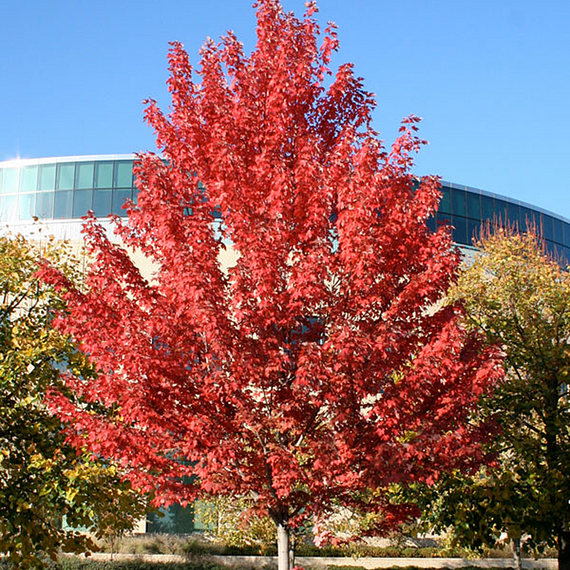
- Brilliant orange-red fall foliage arrives early and holds on longer than comparable maples, putting on one of the most reliable and vibrant autumn color displays available
- Hardy hybrid combining the rapid growth of Silver Maple with the superior fall color and stronger branch structure of Red Maple, thriving in USDA Zones 3-8
- Adaptable and drought-tolerant once established, tolerating a wide range of soil types and urban conditions with minimal ongoing maintenance
Autumn Blaze Maple (Acer x freemanii 'Jeffersred') is one of the most beloved and widely planted shade trees in American landscapes, and it earns that reputation season after season. This vigorous hybrid is the result of crossing the Silver Maple and the Red Maple, pulling the finest traits from each parent to create a stately, fast-growing tree that delivers enormous shade and spectacular fall color without demanding intensive care. Growing at an impressive 3-5 feet per year under favorable conditions, Autumn Blaze Maple develops a broad, symmetrical oval to rounded crown that can ultimately reach 40-60 feet tall and 30-40 feet wide, making it a commanding focal point or a generous canopy tree for large yards, parks, and streetscapes. Summer foliage is a clean, medium green with a slightly silvery underside, and as autumn approaches, the leaves transform into an unforgettable blaze of brilliant orange-red that persists longer than many competing varieties. Its upright branching habit, improved branch angles, and sturdy central leader give it a more structurally sound form than its Silver Maple parent, reducing the risk of storm damage over a long, healthy lifespan that can extend 60 years or more. Hardy from USDA Zones 3 through 8 and tolerant of a broad range of soils - from sandy loam to clay - Autumn Blaze Maple also handles urban pollution, occasional drought once established, and the challenging conditions common to Southern Oregon and Northern California landscapes with admirable resilience. Whether you're creating a shaded retreat, framing a property line, or simply planting a legacy tree for future generations, Autumn Blaze Maple is a proven, adaptable, and visually spectacular choice.
Plant Description
Autumn Blaze Maple is a deciduous hybrid shade tree (Acer x freemanii 'Jeffersred') produced by crossing Red Maple (Acer rubrum) and Silver Maple (Acer saccharinum), two species native to North America. The result is a tree that inherits the rapid growth habit of the Silver Maple and the brilliant fall color of the Red Maple, while improving on the structural weaknesses of both parents. The crown is broadly oval to rounded with a strong, upright central leader and well-spaced ascending branches. Summer leaves are deeply five-lobed, medium to dark green on top with a pale, slightly silvery underside - a hallmark nod to its Silver Maple lineage. In autumn, the foliage ignites in intense shades of orange-red and burgundy, earning the tree its evocative name. Young bark is smooth and gray, developing shallow, attractive furrows with age. Autumn Blaze Maple produces small, reddish flowers in early spring before the leaves emerge, and it generates significantly fewer of the familiar winged "helicopter" seeds (samaras) than its Silver Maple parent, meaning less cleanup and unwanted seedlings in the yard.
Mature Size and Growth Rate
| Characteristic | Details |
|---|---|
| Mature Height | 40-60 feet (some specimens up to 70 feet in ideal conditions) |
| Mature Spread | 30-40 feet |
| Growth Rate | Fast - 3 to 5 feet per year under optimal conditions |
| Years to Maturity | Reaches substantial size in 10-15 years |
| Crown Shape | Upright, broadly oval to rounded; symmetrical habit |
| Expected Lifespan | 60+ years with proper care |
Autumn Blaze Maple is one of the fastest-growing shade trees available, making it an ideal choice when a large, established canopy is desired without waiting decades. Newly planted trees in loose, moist, fertile soil under full sun can put on exceptional growth in just the first few seasons. Once the canopy fills in, it can shade areas of up to 1,000 square feet, offering meaningful cooling benefits for nearby structures and outdoor living spaces.
Hardiness Zones and Climate
Autumn Blaze Maple is rated for USDA Hardiness Zones 3 through 8, making it one of the most climatically flexible large shade trees available. It can withstand winter temperatures as low as -40°F in its coldest range and performs well across the broad temperature swings common to inland growing regions. In Southern Oregon and Northern California, it thrives beautifully, adapting to the hot, dry summers and cool winters characteristic of the region. It prefers a temperature range of roughly 60-85°F for peak growth, but remains resilient well outside that range. In warmer microclimates, supplemental summer irrigation is important, especially during establishment. Autumn Blaze Maple also tolerates moderate humidity and urban heat island conditions, making it an excellent street or parking lot tree where reflected heat and drought stress are concerns.
Sunlight Requirements
Autumn Blaze Maple performs best in full sun, requiring a minimum of 6 hours of direct sunlight daily. Full sun exposure encourages the fastest growth rates, the densest canopy development, and - most importantly - the most vibrant and reliable fall color display. Trees grown in partial shade will still grow and function well as shade trees, but may exhibit slower growth and somewhat less intense autumn coloration. In warmer regions and during exceptionally hot summers, some afternoon shade can help prevent leaf scorch, particularly on younger or newly planted trees. For the most spectacular fall color and a full, symmetrical crown, choose a planting site with as much open sun exposure as possible.
Soil and pH Preferences
One of Autumn Blaze Maple's greatest practical strengths is its adaptability to a wide range of soil conditions. It performs best in moist, well-drained, slightly acidic loamy soil enriched with organic matter, but it tolerates sandy, clay, and even compacted or nutrient-poor soils far better than many other large trees. The ideal soil pH range is 4.5 to 7.5, though a slightly acidic pH around 6.0 to 6.5 produces the healthiest growth. In alkaline soils above pH 7.5 (common in some areas of Southern Oregon and Northern California), trees may develop chlorosis - yellowing leaves with green veins - due to difficulty absorbing iron. If your soil is alkaline, conduct a soil test before planting and consider amending with sulfur or iron chelate to bring pH into the preferred range. Adding organic compost at planting time improves both drainage in clay soils and moisture retention in sandy soils, while also gently lowering pH over time. Avoid planting in areas with standing water or chronically waterlogged conditions.
Watering Guide
- At Planting: Water thoroughly at installation with 15-20 gallons to settle the soil, eliminate air pockets, and establish root-to-soil contact.
- First Year: Water deeply 2-3 times per week, providing 10-15 gallons each session. Deep, infrequent watering is far more beneficial than frequent shallow watering, as it encourages the root system to grow deeper into the soil profile.
- Second Year: Gradually reduce to once-weekly deep watering during dry spells as the root system expands.
- Established Trees (Year 3+): Once well-rooted, Autumn Blaze Maple is moderately drought-tolerant thanks to its Silver Maple heritage. Supplement with deep watering during extended dry periods (2 or more weeks without significant rainfall), especially during hot summer months.
- Target Moisture: Aim to keep soil lightly and consistently moist to a depth of 12-18 inches. Soil should never be waterlogged or stay saturated.
- Brown Leaf Tips: If leaves begin to scorch or drop prematurely in summer, increase watering frequency immediately - this is typically a moisture stress response, not a disease.
- Mulch: A 2-4 inch layer of organic mulch around the root zone dramatically reduces moisture loss between waterings and is one of the most effective water conservation practices for newly planted trees.
Fertilizing
Autumn Blaze Maple does not require aggressive fertilization, and overfeeding - especially with high-nitrogen formulas late in the season - can stimulate soft, tender growth that is more susceptible to cold damage and pest pressure. During the first year after planting, it is generally best to avoid synthetic fertilizers entirely, allowing the young roots to adjust to their new environment. Starting in the second spring, apply a slow-release, balanced fertilizer such as a 10-10-10 formula, or one slightly higher in nitrogen, as the buds begin to swell in early spring. Spread the fertilizer evenly over the entire root zone area rather than concentrating it at the base of the trunk. For mature, well-established trees growing in organically rich soil and adding 2-3 feet of growth annually with healthy, deep green foliage, additional fertilization may be unnecessary. Topdressing the soil annually with quality compost and maintaining a mulch layer over the root zone is often sufficient to sustain excellent health and growth in established specimens. Have your soil tested every few years to identify any specific deficiencies before applying corrective amendments.
Planting Instructions
- Choose the right time: Plant in early spring after the last frost, or in early fall at least 4-6 weeks before the first hard freeze. Avoid summer planting when heat stress is high.
- Select the right location: Choose a spot with full sun and enough room for the tree's mature spread of 30-40 feet. Keep the tree at least 15-20 feet from buildings, driveways, fences, and underground utilities. Avoid planting near septic lines or water pipes.
- Dig the planting hole: Dig a hole 2-3 times as wide as the root ball but no deeper than the root ball's height. The hole should have gently sloping sides, like a wide, shallow bowl, to encourage lateral root spread.
- Set the tree at the correct depth: The trunk flare - where the trunk visibly widens near the base - must remain above the soil surface. Setting a tree too deep is one of the leading causes of long-term decline. The top of the root ball should sit level with or very slightly above the surrounding ground.
- Inspect and free the roots: Gently loosen any circling or matted roots before placing the tree in the hole. If the root ball is heavily pot-bound, make 3-4 vertical cuts along the sides to encourage outward root growth.
- Backfill and water: Use the native soil removed from the hole to backfill. Halfway through backfilling, water thoroughly to collapse air pockets, then continue filling. Water again deeply once the hole is filled.
- Apply mulch: Spread 2-4 inches of shredded bark or wood chip mulch in a wide ring out to the drip line, keeping mulch at least 3-6 inches away from the trunk to prevent rot and disease.
- Staking: Most trees do not require staking. If the tree is in an especially windy location, use two flexible stakes outside the root ball and remove them after one growing season to allow the trunk to develop natural strength.
Pruning and Maintenance
Autumn Blaze Maple develops a naturally attractive and symmetrical form, and generally requires only minimal pruning to maintain its health and structure. That said, early training is worthwhile given how quickly this tree grows and how heavy its canopy can become.
- Best time to prune: Late winter while the tree is dormant is ideal, as the bare branch structure is easy to evaluate and cuts heal well before spring growth begins. Minor corrective pruning and dead branch removal can be done any time of year.
- Young trees: Focus on establishing a single, dominant central leader. Remove any competing or co-dominant leaders early, as these are the most common cause of structural failure in mature maples. Remove branches with narrow crotch angles less than 45 degrees, as these are prone to splitting under load.
- Mature trees: Once established and well-structured, mature trees typically need pruning only every 2-5 years. Remove dead, damaged, crossing, or rubbing branches. Lightly thin congested areas of the canopy to improve air circulation and light penetration.
- Never remove more than 25% of the total canopy in a single pruning session. Excessive pruning stresses the tree and stimulates weak, rapid regrowth.
- Avoid pruning in early spring when sap is actively flowing, as maples can bleed heavily from fresh wounds during this period, though the bleeding itself is not harmful to the tree.
- Trunk protection: Protect young, thin-barked trunks from sun scald and frost crack by wrapping them with a light-colored tree wrap in late fall during the first 2-3 winters. Remove the wrap each spring.
Seasonal Interest
| Season | What to Expect |
|---|---|
| Early Spring | Small clusters of reddish flowers emerge before the leaves, adding early-season color and providing an important early nectar source for pollinators including bees. |
| Late Spring | Fresh, bright green foliage leafs out fully, rapidly filling the canopy and creating a lush overhead canopy with excellent shade density. |
| Summer | A dense, medium to dark green canopy provides generous cooling shade. The slightly silvery leaf undersides catch the light in a breeze, adding subtle visual texture. |
| Fall | The signature display: leaves turn a brilliant, intense orange-red, often among the first maples in the neighborhood to color up and among the last to drop. Color typically lasts several weeks before leaf fall. |
| Winter | An elegant, symmetrical silhouette with smooth gray bark adds architectural structure to the winter landscape. Young stems may show attractive reddish tones. |
Landscape Uses
- Specimen or focal point tree: The tree's large, symmetrical form and extraordinary fall color make it a natural showstopper when planted alone where it can be fully appreciated.
- Shade tree: The broad, dense canopy is ideal for shading patios, lawns, decks, and the sides of homes. Strategic placement on the west or southwest side of a home can meaningfully reduce summer cooling costs.
- Street and boulevard planting: Its pollution tolerance and adaptability to compacted or variable urban soils make it a proven performer in street tree applications, provided adequate root space is available.
- Lawn tree: Autumn Blaze Maple looks handsome planted in open lawn settings where its full form can develop without competition and its fall color can be appreciated from all angles.
- Property line or screen planting: A row of Autumn Blaze Maples planted 40-50 feet apart along a property line creates a dramatic seasonal display while providing privacy and a natural windbreak as the canopy fills in.
- Park and recreational area planting: Its rapid growth, durability, and impressive size make it well-suited to parks, schools, commercial properties, and other large-scale landscape projects.
- Note on placement: Avoid planting directly adjacent to sidewalks, paved surfaces, or underground utility lines, as the expansive root system can cause damage over time. Maintain a minimum clearance of 15-20 feet from structures.
Pests and Diseases
Autumn Blaze Maple is considered a low-maintenance, relatively pest- and disease-resistant tree. The most common issues arise when trees are stressed by drought, poor drainage, or soil compaction. Maintaining a healthy, well-watered tree in suitable growing conditions is the most effective prevention strategy.
- Aphids: The most commonly encountered pest. They feed on sap and excrete sticky honeydew on leaves and surfaces below the tree. Secondary sooty mold can grow on honeydew deposits. Treat mild infestations with a strong blast of water. For heavier pressure, use insecticidal soap. Encourage natural predators such as ladybugs and lacewings.
- Scale insects: Small, waxy or shell-like insects that attach to bark and stems and suck sap. Apply dormant horticultural oil in late winter before bud break for effective control. Neem oil can be applied during the growing season for active infestations.
- Flathead borers and other wood-boring insects: Generally only attack stressed, weakened, or declining trees. Keep the tree healthy with proper watering and avoid wounding the bark with mowers or string trimmers. A healthy tree is largely resistant to borer attack.
- Spider mites: Can occur during hot, dry spells. Look for fine webbing on foliage and a dusty, stippled appearance on leaves. Adequate moisture and humidity generally deter mites. Insecticidal soap or horticultural oil sprays are effective treatments.
- Verticillium wilt: A serious soil-borne fungal disease that causes sudden wilting, yellowing, and branch dieback. Infected sapwood shows brown or olive streaking when cut. There is no chemical cure. Remove and dispose of infected branches, improve drainage, avoid high-nitrogen fertilization, and maintain overall tree vigor. A healthy tree may partially recover and compartmentalize the infection.
- Anthracnose (leaf blight): A fungal disease causing irregular tan or brown patches on leaves, often with premature leaf drop in wet spring weather. Rake and dispose of fallen infected leaves. Fungicide applications in early spring can help reduce reinfection in heavily affected trees.
- Leaf scorch: Not a disease but a physiological response to drought stress. Brown, crispy leaf margins during summer heat are a signal to water more deeply and consistently. Mulching the root zone significantly reduces the incidence of scorch.
Wildlife Value
Autumn Blaze Maple supports local ecosystems throughout the year. In early spring, the small but numerous reddish flowers open before most other trees leaf out, providing an early and valuable nectar source for native bees, honeybees, and other early-emerging pollinators when few other food sources are available. The winged samaras (seeds), while produced in smaller quantities than those of Silver Maple, are consumed by a variety of birds including finches, nuthatches, and grosbeaks, as well as squirrels and other small mammals. The dense, broad canopy offers secure nesting habitat for songbirds throughout the spring and summer. Leaf litter and bark provide overwintering habitat for beneficial insects. As a large, structurally complex tree, a mature Autumn Blaze Maple becomes an integral part of the local food web and habitat structure over its long lifespan.
Companion Plants
When designing a planting around an Autumn Blaze Maple, consider plants that complement its scale, share similar growing preferences for moist, slightly acidic to neutral soil, and extend the season of interest before and after the maple's spectacular fall color peak. Because the mature tree will eventually cast significant shade, choose understory plants that can tolerate partial to full shade beneath the canopy.
- Flowering dogwood (Cornus florida): A beautiful small to medium understory tree with spring bloom and its own fall color display, pairing naturally with the maple's size and autumn performance.
- Rhododendrons and azaleas: Acid-loving shrubs that thrive in the dappled shade beneath large deciduous trees. Their spring blooms provide color before the maple fully leafs out.
- Camellias: Excellent companions in milder climates like Southern Oregon and Northern California; their late fall to winter bloom season picks up where the maple's color show leaves off.
- Hostas: Superb shade-tolerant perennials for underplanting beneath the canopy. Their bold foliage provides textural contrast and comes in a wide range of colors.
- Ferns (Athyrium, Dryopteris spp.): Native and ornamental ferns thrive in the moist, shady conditions under a large deciduous maple canopy and pair beautifully in naturalistic settings.
- Epimedium: A tough, shade-tolerant groundcover well-suited to the dry shade conditions that can develop under a mature maple canopy, especially in summer.
- Serviceberry (Amelanchier spp.): Another multi-season native tree or large shrub with spring flowers, summer berries for birds, and its own warm autumn tones that complement the maple's orange-red palette.
Root System Considerations
Autumn Blaze Maple develops a moderately aggressive, wide-spreading root system that anchors deeply while also extending laterally well beyond the drip line of the canopy. While the root system is generally less problematic than that of its Silver Maple parent, thoughtful site selection before planting is essential to avoid costly conflicts over the tree's long lifespan.
- Maintain a minimum clearance of 15-20 feet from building foundations, driveways, sidewalks, and retaining walls.
- Do not plant within 20-30 feet of septic systems, drain fields, or buried water and sewer lines.
- In compacted or shallow soils, surface roots may become visible over time. Apply a 2-3 inch layer of mulch over exposed surface roots rather than cutting them, as removing large roots can destabilize the tree and create entry points for disease.
- Planting in loose, deep, well-drained soil encourages roots to grow downward rather than laterally along the surface.
- Avoid planting in confined tree wells with restricted soil volume. This tree needs generous root space to achieve its potential and remain structurally sound over decades.
- Replace lawn grass under the tree's drip line with mulch or shade-tolerant groundcovers as the tree matures - this reduces competition, improves soil health, and eliminates mower traffic that can damage surface roots and bark.
- Exceptionally fast growth rate of 3-5 feet per year delivers magnificent shade and striking presence in far less time than most shade trees
- Brilliant orange-red fall foliage arrives early and holds on longer than comparable maples, putting on one of the most reliable and vibrant autumn color displays available
- Hardy hybrid combining the rapid growth of Silver Maple with the superior fall color and stronger branch structure of Red Maple, thriving in USDA Zones 3-8
- Adaptable and drought-tolerant once established, tolerating a wide range of soil types and urban conditions with minimal ongoing maintenance
Autumn Blaze Maple (Acer x freemanii 'Jeffersred') is one of the most beloved and widely planted shade trees in American landscapes, and it earns that reputation season after season. This vigorous hybrid is the result of crossing the Silver Maple and the Red Maple, pulling the finest traits from each parent to create a stately, fast-growing tree that delivers enormous shade and spectacular fall color without demanding intensive care. Growing at an impressive 3-5 feet per year under favorable conditions, Autumn Blaze Maple develops a broad, symmetrical oval to rounded crown that can ultimately reach 40-60 feet tall and 30-40 feet wide, making it a commanding focal point or a generous canopy tree for large yards, parks, and streetscapes. Summer foliage is a clean, medium green with a slightly silvery underside, and as autumn approaches, the leaves transform into an unforgettable blaze of brilliant orange-red that persists longer than many competing varieties. Its upright branching habit, improved branch angles, and sturdy central leader give it a more structurally sound form than its Silver Maple parent, reducing the risk of storm damage over a long, healthy lifespan that can extend 60 years or more. Hardy from USDA Zones 3 through 8 and tolerant of a broad range of soils - from sandy loam to clay - Autumn Blaze Maple also handles urban pollution, occasional drought once established, and the challenging conditions common to Southern Oregon and Northern California landscapes with admirable resilience. Whether you're creating a shaded retreat, framing a property line, or simply planting a legacy tree for future generations, Autumn Blaze Maple is a proven, adaptable, and visually spectacular choice.
Plant Description
Autumn Blaze Maple is a deciduous hybrid shade tree (Acer x freemanii 'Jeffersred') produced by crossing Red Maple (Acer rubrum) and Silver Maple (Acer saccharinum), two species native to North America. The result is a tree that inherits the rapid growth habit of the Silver Maple and the brilliant fall color of the Red Maple, while improving on the structural weaknesses of both parents. The crown is broadly oval to rounded with a strong, upright central leader and well-spaced ascending branches. Summer leaves are deeply five-lobed, medium to dark green on top with a pale, slightly silvery underside - a hallmark nod to its Silver Maple lineage. In autumn, the foliage ignites in intense shades of orange-red and burgundy, earning the tree its evocative name. Young bark is smooth and gray, developing shallow, attractive furrows with age. Autumn Blaze Maple produces small, reddish flowers in early spring before the leaves emerge, and it generates significantly fewer of the familiar winged "helicopter" seeds (samaras) than its Silver Maple parent, meaning less cleanup and unwanted seedlings in the yard.
Mature Size and Growth Rate
| Characteristic | Details |
|---|---|
| Mature Height | 40-60 feet (some specimens up to 70 feet in ideal conditions) |
| Mature Spread | 30-40 feet |
| Growth Rate | Fast - 3 to 5 feet per year under optimal conditions |
| Years to Maturity | Reaches substantial size in 10-15 years |
| Crown Shape | Upright, broadly oval to rounded; symmetrical habit |
| Expected Lifespan | 60+ years with proper care |
Autumn Blaze Maple is one of the fastest-growing shade trees available, making it an ideal choice when a large, established canopy is desired without waiting decades. Newly planted trees in loose, moist, fertile soil under full sun can put on exceptional growth in just the first few seasons. Once the canopy fills in, it can shade areas of up to 1,000 square feet, offering meaningful cooling benefits for nearby structures and outdoor living spaces.
Hardiness Zones and Climate
Autumn Blaze Maple is rated for USDA Hardiness Zones 3 through 8, making it one of the most climatically flexible large shade trees available. It can withstand winter temperatures as low as -40°F in its coldest range and performs well across the broad temperature swings common to inland growing regions. In Southern Oregon and Northern California, it thrives beautifully, adapting to the hot, dry summers and cool winters characteristic of the region. It prefers a temperature range of roughly 60-85°F for peak growth, but remains resilient well outside that range. In warmer microclimates, supplemental summer irrigation is important, especially during establishment. Autumn Blaze Maple also tolerates moderate humidity and urban heat island conditions, making it an excellent street or parking lot tree where reflected heat and drought stress are concerns.
Sunlight Requirements
Autumn Blaze Maple performs best in full sun, requiring a minimum of 6 hours of direct sunlight daily. Full sun exposure encourages the fastest growth rates, the densest canopy development, and - most importantly - the most vibrant and reliable fall color display. Trees grown in partial shade will still grow and function well as shade trees, but may exhibit slower growth and somewhat less intense autumn coloration. In warmer regions and during exceptionally hot summers, some afternoon shade can help prevent leaf scorch, particularly on younger or newly planted trees. For the most spectacular fall color and a full, symmetrical crown, choose a planting site with as much open sun exposure as possible.
Soil and pH Preferences
One of Autumn Blaze Maple's greatest practical strengths is its adaptability to a wide range of soil conditions. It performs best in moist, well-drained, slightly acidic loamy soil enriched with organic matter, but it tolerates sandy, clay, and even compacted or nutrient-poor soils far better than many other large trees. The ideal soil pH range is 4.5 to 7.5, though a slightly acidic pH around 6.0 to 6.5 produces the healthiest growth. In alkaline soils above pH 7.5 (common in some areas of Southern Oregon and Northern California), trees may develop chlorosis - yellowing leaves with green veins - due to difficulty absorbing iron. If your soil is alkaline, conduct a soil test before planting and consider amending with sulfur or iron chelate to bring pH into the preferred range. Adding organic compost at planting time improves both drainage in clay soils and moisture retention in sandy soils, while also gently lowering pH over time. Avoid planting in areas with standing water or chronically waterlogged conditions.
Watering Guide
- At Planting: Water thoroughly at installation with 15-20 gallons to settle the soil, eliminate air pockets, and establish root-to-soil contact.
- First Year: Water deeply 2-3 times per week, providing 10-15 gallons each session. Deep, infrequent watering is far more beneficial than frequent shallow watering, as it encourages the root system to grow deeper into the soil profile.
- Second Year: Gradually reduce to once-weekly deep watering during dry spells as the root system expands.
- Established Trees (Year 3+): Once well-rooted, Autumn Blaze Maple is moderately drought-tolerant thanks to its Silver Maple heritage. Supplement with deep watering during extended dry periods (2 or more weeks without significant rainfall), especially during hot summer months.
- Target Moisture: Aim to keep soil lightly and consistently moist to a depth of 12-18 inches. Soil should never be waterlogged or stay saturated.
- Brown Leaf Tips: If leaves begin to scorch or drop prematurely in summer, increase watering frequency immediately - this is typically a moisture stress response, not a disease.
- Mulch: A 2-4 inch layer of organic mulch around the root zone dramatically reduces moisture loss between waterings and is one of the most effective water conservation practices for newly planted trees.
Fertilizing
Autumn Blaze Maple does not require aggressive fertilization, and overfeeding - especially with high-nitrogen formulas late in the season - can stimulate soft, tender growth that is more susceptible to cold damage and pest pressure. During the first year after planting, it is generally best to avoid synthetic fertilizers entirely, allowing the young roots to adjust to their new environment. Starting in the second spring, apply a slow-release, balanced fertilizer such as a 10-10-10 formula, or one slightly higher in nitrogen, as the buds begin to swell in early spring. Spread the fertilizer evenly over the entire root zone area rather than concentrating it at the base of the trunk. For mature, well-established trees growing in organically rich soil and adding 2-3 feet of growth annually with healthy, deep green foliage, additional fertilization may be unnecessary. Topdressing the soil annually with quality compost and maintaining a mulch layer over the root zone is often sufficient to sustain excellent health and growth in established specimens. Have your soil tested every few years to identify any specific deficiencies before applying corrective amendments.
Planting Instructions
- Choose the right time: Plant in early spring after the last frost, or in early fall at least 4-6 weeks before the first hard freeze. Avoid summer planting when heat stress is high.
- Select the right location: Choose a spot with full sun and enough room for the tree's mature spread of 30-40 feet. Keep the tree at least 15-20 feet from buildings, driveways, fences, and underground utilities. Avoid planting near septic lines or water pipes.
- Dig the planting hole: Dig a hole 2-3 times as wide as the root ball but no deeper than the root ball's height. The hole should have gently sloping sides, like a wide, shallow bowl, to encourage lateral root spread.
- Set the tree at the correct depth: The trunk flare - where the trunk visibly widens near the base - must remain above the soil surface. Setting a tree too deep is one of the leading causes of long-term decline. The top of the root ball should sit level with or very slightly above the surrounding ground.
- Inspect and free the roots: Gently loosen any circling or matted roots before placing the tree in the hole. If the root ball is heavily pot-bound, make 3-4 vertical cuts along the sides to encourage outward root growth.
- Backfill and water: Use the native soil removed from the hole to backfill. Halfway through backfilling, water thoroughly to collapse air pockets, then continue filling. Water again deeply once the hole is filled.
- Apply mulch: Spread 2-4 inches of shredded bark or wood chip mulch in a wide ring out to the drip line, keeping mulch at least 3-6 inches away from the trunk to prevent rot and disease.
- Staking: Most trees do not require staking. If the tree is in an especially windy location, use two flexible stakes outside the root ball and remove them after one growing season to allow the trunk to develop natural strength.
Pruning and Maintenance
Autumn Blaze Maple develops a naturally attractive and symmetrical form, and generally requires only minimal pruning to maintain its health and structure. That said, early training is worthwhile given how quickly this tree grows and how heavy its canopy can become.
- Best time to prune: Late winter while the tree is dormant is ideal, as the bare branch structure is easy to evaluate and cuts heal well before spring growth begins. Minor corrective pruning and dead branch removal can be done any time of year.
- Young trees: Focus on establishing a single, dominant central leader. Remove any competing or co-dominant leaders early, as these are the most common cause of structural failure in mature maples. Remove branches with narrow crotch angles less than 45 degrees, as these are prone to splitting under load.
- Mature trees: Once established and well-structured, mature trees typically need pruning only every 2-5 years. Remove dead, damaged, crossing, or rubbing branches. Lightly thin congested areas of the canopy to improve air circulation and light penetration.
- Never remove more than 25% of the total canopy in a single pruning session. Excessive pruning stresses the tree and stimulates weak, rapid regrowth.
- Avoid pruning in early spring when sap is actively flowing, as maples can bleed heavily from fresh wounds during this period, though the bleeding itself is not harmful to the tree.
- Trunk protection: Protect young, thin-barked trunks from sun scald and frost crack by wrapping them with a light-colored tree wrap in late fall during the first 2-3 winters. Remove the wrap each spring.
Seasonal Interest
| Season | What to Expect |
|---|---|
| Early Spring | Small clusters of reddish flowers emerge before the leaves, adding early-season color and providing an important early nectar source for pollinators including bees. |
| Late Spring | Fresh, bright green foliage leafs out fully, rapidly filling the canopy and creating a lush overhead canopy with excellent shade density. |
| Summer | A dense, medium to dark green canopy provides generous cooling shade. The slightly silvery leaf undersides catch the light in a breeze, adding subtle visual texture. |
| Fall | The signature display: leaves turn a brilliant, intense orange-red, often among the first maples in the neighborhood to color up and among the last to drop. Color typically lasts several weeks before leaf fall. |
| Winter | An elegant, symmetrical silhouette with smooth gray bark adds architectural structure to the winter landscape. Young stems may show attractive reddish tones. |
Landscape Uses
- Specimen or focal point tree: The tree's large, symmetrical form and extraordinary fall color make it a natural showstopper when planted alone where it can be fully appreciated.
- Shade tree: The broad, dense canopy is ideal for shading patios, lawns, decks, and the sides of homes. Strategic placement on the west or southwest side of a home can meaningfully reduce summer cooling costs.
- Street and boulevard planting: Its pollution tolerance and adaptability to compacted or variable urban soils make it a proven performer in street tree applications, provided adequate root space is available.
- Lawn tree: Autumn Blaze Maple looks handsome planted in open lawn settings where its full form can develop without competition and its fall color can be appreciated from all angles.
- Property line or screen planting: A row of Autumn Blaze Maples planted 40-50 feet apart along a property line creates a dramatic seasonal display while providing privacy and a natural windbreak as the canopy fills in.
- Park and recreational area planting: Its rapid growth, durability, and impressive size make it well-suited to parks, schools, commercial properties, and other large-scale landscape projects.
- Note on placement: Avoid planting directly adjacent to sidewalks, paved surfaces, or underground utility lines, as the expansive root system can cause damage over time. Maintain a minimum clearance of 15-20 feet from structures.
Pests and Diseases
Autumn Blaze Maple is considered a low-maintenance, relatively pest- and disease-resistant tree. The most common issues arise when trees are stressed by drought, poor drainage, or soil compaction. Maintaining a healthy, well-watered tree in suitable growing conditions is the most effective prevention strategy.
- Aphids: The most commonly encountered pest. They feed on sap and excrete sticky honeydew on leaves and surfaces below the tree. Secondary sooty mold can grow on honeydew deposits. Treat mild infestations with a strong blast of water. For heavier pressure, use insecticidal soap. Encourage natural predators such as ladybugs and lacewings.
- Scale insects: Small, waxy or shell-like insects that attach to bark and stems and suck sap. Apply dormant horticultural oil in late winter before bud break for effective control. Neem oil can be applied during the growing season for active infestations.
- Flathead borers and other wood-boring insects: Generally only attack stressed, weakened, or declining trees. Keep the tree healthy with proper watering and avoid wounding the bark with mowers or string trimmers. A healthy tree is largely resistant to borer attack.
- Spider mites: Can occur during hot, dry spells. Look for fine webbing on foliage and a dusty, stippled appearance on leaves. Adequate moisture and humidity generally deter mites. Insecticidal soap or horticultural oil sprays are effective treatments.
- Verticillium wilt: A serious soil-borne fungal disease that causes sudden wilting, yellowing, and branch dieback. Infected sapwood shows brown or olive streaking when cut. There is no chemical cure. Remove and dispose of infected branches, improve drainage, avoid high-nitrogen fertilization, and maintain overall tree vigor. A healthy tree may partially recover and compartmentalize the infection.
- Anthracnose (leaf blight): A fungal disease causing irregular tan or brown patches on leaves, often with premature leaf drop in wet spring weather. Rake and dispose of fallen infected leaves. Fungicide applications in early spring can help reduce reinfection in heavily affected trees.
- Leaf scorch: Not a disease but a physiological response to drought stress. Brown, crispy leaf margins during summer heat are a signal to water more deeply and consistently. Mulching the root zone significantly reduces the incidence of scorch.
Wildlife Value
Autumn Blaze Maple supports local ecosystems throughout the year. In early spring, the small but numerous reddish flowers open before most other trees leaf out, providing an early and valuable nectar source for native bees, honeybees, and other early-emerging pollinators when few other food sources are available. The winged samaras (seeds), while produced in smaller quantities than those of Silver Maple, are consumed by a variety of birds including finches, nuthatches, and grosbeaks, as well as squirrels and other small mammals. The dense, broad canopy offers secure nesting habitat for songbirds throughout the spring and summer. Leaf litter and bark provide overwintering habitat for beneficial insects. As a large, structurally complex tree, a mature Autumn Blaze Maple becomes an integral part of the local food web and habitat structure over its long lifespan.
Companion Plants
When designing a planting around an Autumn Blaze Maple, consider plants that complement its scale, share similar growing preferences for moist, slightly acidic to neutral soil, and extend the season of interest before and after the maple's spectacular fall color peak. Because the mature tree will eventually cast significant shade, choose understory plants that can tolerate partial to full shade beneath the canopy.
- Flowering dogwood (Cornus florida): A beautiful small to medium understory tree with spring bloom and its own fall color display, pairing naturally with the maple's size and autumn performance.
- Rhododendrons and azaleas: Acid-loving shrubs that thrive in the dappled shade beneath large deciduous trees. Their spring blooms provide color before the maple fully leafs out.
- Camellias: Excellent companions in milder climates like Southern Oregon and Northern California; their late fall to winter bloom season picks up where the maple's color show leaves off.
- Hostas: Superb shade-tolerant perennials for underplanting beneath the canopy. Their bold foliage provides textural contrast and comes in a wide range of colors.
- Ferns (Athyrium, Dryopteris spp.): Native and ornamental ferns thrive in the moist, shady conditions under a large deciduous maple canopy and pair beautifully in naturalistic settings.
- Epimedium: A tough, shade-tolerant groundcover well-suited to the dry shade conditions that can develop under a mature maple canopy, especially in summer.
- Serviceberry (Amelanchier spp.): Another multi-season native tree or large shrub with spring flowers, summer berries for birds, and its own warm autumn tones that complement the maple's orange-red palette.
Root System Considerations
Autumn Blaze Maple develops a moderately aggressive, wide-spreading root system that anchors deeply while also extending laterally well beyond the drip line of the canopy. While the root system is generally less problematic than that of its Silver Maple parent, thoughtful site selection before planting is essential to avoid costly conflicts over the tree's long lifespan.
- Maintain a minimum clearance of 15-20 feet from building foundations, driveways, sidewalks, and retaining walls.
- Do not plant within 20-30 feet of septic systems, drain fields, or buried water and sewer lines.
- In compacted or shallow soils, surface roots may become visible over time. Apply a 2-3 inch layer of mulch over exposed surface roots rather than cutting them, as removing large roots can destabilize the tree and create entry points for disease.
- Planting in loose, deep, well-drained soil encourages roots to grow downward rather than laterally along the surface.
- Avoid planting in confined tree wells with restricted soil volume. This tree needs generous root space to achieve its potential and remain structurally sound over decades.
- Replace lawn grass under the tree's drip line with mulch or shade-tolerant groundcovers as the tree matures - this reduces competition, improves soil health, and eliminates mower traffic that can damage surface roots and bark.