
Zoom the image with the mouse
Autumn Blaze Maple
SKU:
1081240-P
$199.99
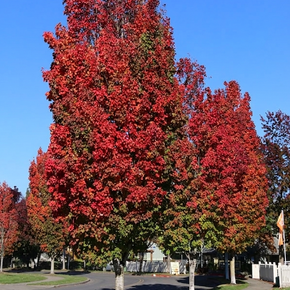
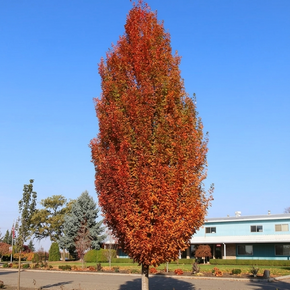
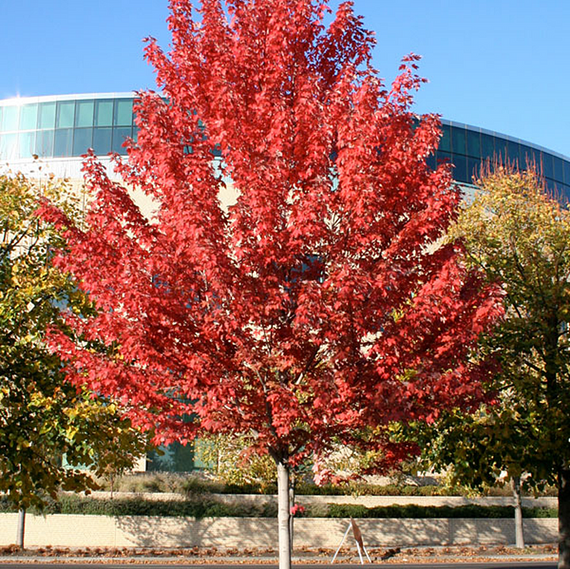
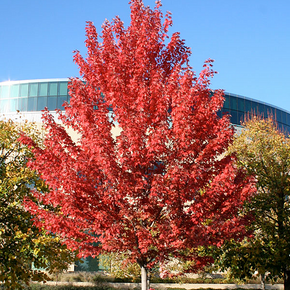
- Spectacular, long-lasting brilliant orange-red fall color that outperforms nearly every other shade tree on the market
- Vigorous fast grower reaching up to 3 feet per year, quickly establishing a stately, broadly oval canopy up to 50 feet tall
- A tough, adaptable hybrid combining the drought tolerance of Silver Maple with the superior wood strength and color of Red Maple
- Exceptionally cold-hardy through USDA Zone 3, thriving across a wide range of soils including clay, loam, and occasionally wet or dry conditions
Autumn Blaze Maple (Acer x freemanii 'Jeffersred') is one of the most celebrated and widely planted shade trees in American horticulture, and for very good reason. This outstanding Freeman Maple hybrid brings together the best genetic traits of two native North American maples — the vigorous, fast-growing Silver Maple and the richly colored, stronger-wooded Red Maple — resulting in a landscape tree that excels in nearly every measurable quality. Its upright, broadly oval canopy develops rapidly, typically adding 3 feet of growth per year under good conditions, so you get impressive shade and visual impact in far less time than most comparable shade trees. Through spring and summer, the deeply lobed, five-lobed leaves emerge a clean medium green with a glossy upper surface, creating a lush, dense canopy that provides generous shade across lawns, driveways, and outdoor living spaces. As temperatures cool in autumn, Autumn Blaze earns its name with a breathtaking and long-lasting display of brilliant orange-red fall color that reliably outlasts most other maples season after season. Hardy from USDA Zones 3 through 8, this proven performer tolerates a wide range of challenging site conditions — including clay soils, occasional wet soils, periodic drought, and urban environments — making it an ideal choice for homeowners and landscapers across Southern Oregon and Northern California who want maximum beauty with minimal fuss. Whether used as a grand lawn specimen, a canopy street tree, or a fast-growing source of privacy and shade, Autumn Blaze Maple consistently delivers stunning results year after year.
Plant Description
Autumn Blaze Maple is a deciduous hybrid shade tree resulting from a cross between Red Maple (Acer rubrum) and Silver Maple (Acer saccharinum), collectively known as Freeman Maple (Acer x freemanii). The cultivar name 'Jeffersred' identifies this specific selection, which was developed and trademarked as Autumn Blaze for its exceptional fall color performance. The tree develops a strongly upright, broadly oval to rounded crown with well-structured branching — a notable improvement over the weaker, more brittle branch structure typical of pure Silver Maple. The bark is a smooth silver-gray on young trees, becoming furrowed and ridged with age, while younger branchlets display a distinctive reddish-brown coloration. The deeply lobed, five-pointed palmatifid leaves are 4 to 6 inches long and wide, with a dark glossy green upper surface and a paler, smooth underside. When the growing season winds down, the foliage transitions into a stunning display of brilliant orange-red that persists longer than most maples, giving the tree a well-deserved reputation as one of the most reliable and eye-catching fall trees available.
Mature Size and Growth Rate
| Characteristic | Detail |
|---|---|
| Mature Height | 40 to 50 feet (occasionally to 60 feet in ideal conditions) |
| Mature Spread | 30 to 40 feet |
| Growth Rate | Fast — typically 2 to 3 feet per year |
| Crown Shape | Upright branching, broadly oval to rounded |
| Tree Form | Single-trunk, densely branched canopy |
| Root Character | Less invasive than Silver Maple; moderately shallow feeding roots |
Thanks to its Silver Maple heritage, Autumn Blaze grows significantly faster than most shade trees, making it an excellent choice when quick canopy development is a priority. Under optimal conditions with adequate moisture and nutrients, expect the tree to put on 2 to 3 feet of growth annually during its establishment years.
Hardiness Zones and Climate Adaptability
Autumn Blaze Maple is rated hardy in USDA Hardiness Zones 3 through 8, making it one of the most cold-tolerant fast-growing shade trees available. It thrives across a remarkably wide swath of climates — from the frigid winters of the northern Great Plains and New England (Zone 3) all the way through the milder winters found throughout much of the Pacific Coast and upper South (Zone 8). This broad adaptability is a direct result of its hybrid parentage, combining the extreme cold hardiness of Red Maple with the resilience and vigor of Silver Maple. In Southern Oregon and Northern California, Autumn Blaze performs excellently across Zones 5 through 8, handling both cool mountain valley winters and warmer inland summers with ease. It can tolerate late spring frosts and recovers well from cold snaps that might stress less hardy trees.
Sunlight Requirements
Autumn Blaze Maple performs best in full sun, defined as 6 or more hours of direct sunlight per day. Full sun encourages the densest canopy development, the most vigorous growth rate, and the richest, most vibrant fall color. The tree will also grow acceptably in partial shade, receiving 2 to 6 hours of direct sun daily, though growth rate may slow slightly and fall color intensity can be reduced in lower-light conditions. When siting the tree, avoid locations where it will be heavily shaded by buildings or larger trees for the majority of the day. Open lawn positions or locations along streets and driveways where sunlight is unobstructed are ideal. In hotter inland climates, a site with some afternoon shade can reduce heat stress, particularly for young trees still in their establishment phase.
Soil and pH Preferences
One of the most appealing traits of Autumn Blaze Maple is its impressive soil versatility, inherited largely from its Silver Maple parent. It adapts to a wide range of soil types and conditions that would challenge many other shade trees:
- Soil texture: Tolerates clay, loam, and sandy soils; performs best in well-drained, moist loam
- Drainage: Adapts to well-drained, moderately moist, occasionally dry, and occasionally wet soils
- Soil pH: Prefers slightly acidic to neutral soil (pH 5.5 to 7.0); may exhibit nutrient deficiencies (particularly iron chlorosis) in soils above pH 7.5
- Organic matter: Benefits from soils rich in organic matter; amend heavy clay or very sandy soils at planting time when possible
- Wet tolerance: Unlike many maples, Autumn Blaze can handle periodic wet conditions and performs well in rain garden settings
Avoid planting in highly alkaline soils without soil amendment, as this can lead to yellowing leaves from iron deficiency. Applying a 3- to 4-inch layer of organic mulch beneath the canopy helps moderate soil pH, retain moisture, and protect shallow surface roots.
Watering Guide
Proper watering is most critical during the tree's first two to three years in the ground, while it is actively establishing its root system:
- At planting: Water deeply and thoroughly immediately after planting to settle soil around the roots and eliminate air pockets.
- First season: Water deeply once or twice per week, depending on weather and soil drainage. Allow the soil to dry slightly between waterings — avoid prolonged waterlogging.
- Establishment period (years 1-3): Supplement rainfall during dry spells, providing the equivalent of at least 1 inch of water per week during the growing season.
- Established trees: Once fully established, Autumn Blaze Maple develops good drought tolerance. Deep watering during extended dry periods in summer will maintain vigor and protect fall color quality.
- Mulching: Maintain a 3- to 4-inch layer of organic mulch extending out to the drip line to conserve soil moisture, moderate temperature, and reduce the need for supplemental irrigation.
Avoid frequent shallow watering, which encourages roots to stay near the surface. Deep, infrequent watering promotes deeper root development and greater drought resilience over time.
Fertilizing
Autumn Blaze Maple benefits from fertilization, especially during its early years when rapid establishment is the goal:
- Young trees (years 1-3): Apply a balanced slow-release fertilizer formulated for trees and shrubs (such as a 10-10-10 or 12-6-6 formula) in early spring as new growth emerges. Follow label rate recommendations based on tree size.
- Established trees: Fertilize once annually in early spring with a slow-release granular tree fertilizer. Avoid over-fertilizing, which can produce excessive leafy growth at the expense of branch strength.
- Soil pH concerns: If leaves show signs of iron chlorosis (yellowing between green veins) in late spring or summer, apply a soil acidifier or chelated iron to lower soil pH and improve iron availability.
- Avoid late-season fertilizing: Do not apply nitrogen-heavy fertilizers after midsummer, as this can stimulate tender new growth that is vulnerable to early frost damage.
- Mulch as fertilizer: Decomposing organic mulch gradually releases nutrients into the soil and improves soil structure over time, reducing the need for supplemental feeding in established trees.
Pruning and Maintenance
Autumn Blaze Maple is considered a low-maintenance tree once established, but some routine pruning helps maintain structure, safety, and longevity:
- Best time to prune: Prune in late summer or early fall after the tree has completed its main growth flush, or in mid-to-late winter during full dormancy. Avoid pruning in spring when sap is actively running — the tree will "bleed" sap, which, while not harmful, is messy and can attract pests.
- Structural pruning (young trees): Begin structural pruning early. Select a strong central leader and remove competing leaders. Eliminate branches with narrow, weak crotch angles. Space scaffold branches evenly around the trunk to develop a balanced, wind-resistant canopy.
- Maintenance pruning (mature trees): Remove dead, damaged, or crossing branches annually. Prune for clearance beneath the canopy as the tree matures to accommodate foot traffic, vehicles, or structures.
- Suckers and water sprouts: Remove root suckers and water sprouts (vigorous vertical shoots from branches) promptly to maintain clean structure and redirect energy to the main canopy.
- Wound care: Maple bark is relatively thin and easily damaged by mowers and string trimmers. Protect the trunk with a circle of mulch rather than growing grass up to the base. Avoid unnecessary pruning cuts that expose the tree to disease and insect entry points.
Planting Instructions
- Site selection: Choose a location in full sun with enough space for the tree to reach its full mature spread of 30 to 40 feet without obstruction from structures, utility lines, or other trees.
- Dig the hole: Dig a hole 2 to 3 times as wide as the root ball but no deeper than the root ball's height. A wide, shallow hole encourages lateral root spread into surrounding soil.
- Check depth: Position the tree so the root flare (where the trunk widens at the base) sits at or just slightly above the surrounding grade. Planting too deep is one of the most common causes of long-term tree decline.
- Backfill: Backfill with the native soil removed from the hole. Extensive soil amendment is generally not recommended for large-growing trees, as it can discourage roots from spreading beyond the planting hole.
- Water in: Firm the soil gently to eliminate large air pockets, then water deeply and thoroughly immediately after planting.
- Mulch: Apply a 3- to 4-inch layer of coarse organic mulch (wood chips, shredded bark) in a wide ring around the tree extending out to the drip line. Keep mulch several inches away from direct contact with the trunk to prevent rot.
- Staking (if needed): Stake only if required for support in a high-wind location. Use flexible ties and remove stakes after the first growing season to allow the trunk to strengthen naturally.
- Spacing: When planting in groups or rows, space trees a minimum of 20 to 30 feet apart to allow for full canopy development at maturity.
Seasonal Interest
| Season | What to Expect |
|---|---|
| Spring | Fresh medium-green deeply lobed leaves emerge; sparse, inconspicuous reddish flower clusters appear on year-old branches before or with leaf emergence; winged samaras (seed pairs) may develop but are sparsely produced |
| Summer | Dense, glossy dark green canopy provides generous shade; tree grows vigorously; a smooth gray-silver bark adds subtle texture interest |
| Fall | The showstopper season — foliage transitions to brilliant orange-red color earlier than many maples and holds color for an extended period, often outlasting comparable shade trees by weeks |
| Winter | Attractive gray bark and upright branching architecture provide winter structure and visual interest in the leafless landscape; the broadly oval silhouette remains elegant even without foliage |
Landscape Uses
The large size, fast growth, and exceptional fall color of Autumn Blaze Maple make it one of the most versatile and impactful shade trees for residential and commercial landscapes:
- Lawn specimen: Plant as a single focal-point tree in an open lawn where its full, broadly oval canopy can be appreciated from all angles.
- Street tree: Adapts well to roadside planting due to its tolerance of compacted soils, occasional flooding, and urban pollution. Its strong branch structure is more wind-resistant than Silver Maple.
- Shade and energy efficiency: Planted on the east or west side of a home, its dense summer canopy can significantly reduce cooling costs by blocking intense afternoon or morning sun.
- Allee or canopy row: Planted in evenly spaced rows along a driveway or property edge, Autumn Blaze creates a stunning seasonal canopy corridor, especially breathtaking in fall.
- Rain garden and wet-area planting: Its tolerance for periodic wet conditions makes it suitable for rain gardens, bioswales, and low-lying areas that collect runoff.
- Parks and public spaces: A long-standing favorite for public parks, school grounds, and commercial developments where a fast-establishing, low-maintenance, high-impact tree is needed.
- Property boundary: Used in clusters or a grove planting, Autumn Blaze creates a naturalistic screen that provides seasonal privacy and brilliant fall color.
Wildlife Value
Autumn Blaze Maple provides meaningful ecological value to the surrounding environment across multiple seasons:
- Pollinators: The early spring flowers, while not showy, are a valuable early-season nectar source for bees and other pollinators when few other trees are blooming.
- Birds: Winged samaras (seed pairs) are eaten by a variety of songbirds. The dense canopy also provides nesting sites and cover for numerous bird species.
- Squirrels and small mammals: The seeds and buds serve as a primary food source for gray squirrels in late winter and early spring when other food is scarce.
- Moths and butterflies: As a member of the Acer genus, Freeman Maple supports the larval stage of the Imperial Moth (Eacles imperialis) and several other native moth species, contributing to local food web diversity.
- Deer resistance: While young sprouts can be browsed by white-tailed deer, established Autumn Blaze trees are considered moderately deer-resistant and typically suffer only minor damage.
Pests and Diseases
Autumn Blaze Maple is generally considered a robust, low-maintenance tree with no serious pest or disease problems under normal growing conditions. However, the following issues can occasionally arise:
- Leafhoppers: Can cause stippling and minor cosmetic leaf damage, particularly on young trees. Rarely requires treatment on established trees.
- Aphids: May appear in spring on new growth; natural predators such as ladybugs typically keep populations in check without intervention. A strong spray of water can dislodge light infestations.
- Scale insects: Occasional infestations on young trees; treat with horticultural oil sprays during the dormant season or as directed on the product label.
- Flathead borers: Can attack stressed or newly planted trees. The best prevention is maintaining tree vigor through proper planting depth, adequate watering, and mulching.
- Bacterial leaf scorch: Can cause irregular browning of leaf margins in summer. There is no cure, but maintaining tree health minimizes symptoms.
- Leaf spot and anthracnose: Minor fungal issues that can cause cosmetic spotting or browning; rarely threaten the health of otherwise vigorous trees. Good air circulation and avoiding overhead watering reduce incidence.
- Iron chlorosis: Yellowing between leaf veins (interveinal chlorosis) in summer can signal iron deficiency, typically caused by high soil pH. Treat with chelated iron and/or a soil acidifier.
- Branch breakage: While more structurally sound than Silver Maple, Autumn Blaze's faster growth can result in somewhat less-hardened wood. Routine structural pruning when young reduces the risk of storm damage on mature trees.
Companion Plants
The broad, high canopy of a mature Autumn Blaze Maple creates a range of light and soil conditions beneath it, from moderate shade to full sun at the outer edges of the canopy. Select companions that complement both the tree's seasonal show and the site conditions it creates:
- Spring bulbs: Tulips, daffodils, and crocus naturalize beautifully beneath the canopy, blooming before the tree leafs out in spring when light levels are highest.
- Shade-tolerant groundcovers: Hostas, ferns, epimediums, and sweet woodruff thrive in the dappled to moderate shade under the canopy once the tree matures.
- Ornamental grasses: Tall grasses such as Karl Foerster feather reed grass or switchgrass planted at the sunny outer edge of the canopy echo the vertical habit of the maple while offering textural contrast.
- Fall-color companions: Combine with other autumn showpieces such as sweetgum (Liquidambar), Chinese pistache, oakleaf hydrangea, or native viburnums to extend and diversify the fall color palette.
- Native understory shrubs: Serviceberry (Amelanchier), native viburnums, and oakleaf hydrangea pair naturally with maples in a woodland-edge-inspired planting.
- Spring-flowering trees: Plant near flowering dogwoods or redbuds, which bloom brilliantly before the maple leafs out, creating a layered multi-season interest planting.
- Spectacular, long-lasting brilliant orange-red fall color that outperforms nearly every other shade tree on the market
- Vigorous fast grower reaching up to 3 feet per year, quickly establishing a stately, broadly oval canopy up to 50 feet tall
- A tough, adaptable hybrid combining the drought tolerance of Silver Maple with the superior wood strength and color of Red Maple
- Exceptionally cold-hardy through USDA Zone 3, thriving across a wide range of soils including clay, loam, and occasionally wet or dry conditions
Autumn Blaze Maple (Acer x freemanii 'Jeffersred') is one of the most celebrated and widely planted shade trees in American horticulture, and for very good reason. This outstanding Freeman Maple hybrid brings together the best genetic traits of two native North American maples — the vigorous, fast-growing Silver Maple and the richly colored, stronger-wooded Red Maple — resulting in a landscape tree that excels in nearly every measurable quality. Its upright, broadly oval canopy develops rapidly, typically adding 3 feet of growth per year under good conditions, so you get impressive shade and visual impact in far less time than most comparable shade trees. Through spring and summer, the deeply lobed, five-lobed leaves emerge a clean medium green with a glossy upper surface, creating a lush, dense canopy that provides generous shade across lawns, driveways, and outdoor living spaces. As temperatures cool in autumn, Autumn Blaze earns its name with a breathtaking and long-lasting display of brilliant orange-red fall color that reliably outlasts most other maples season after season. Hardy from USDA Zones 3 through 8, this proven performer tolerates a wide range of challenging site conditions — including clay soils, occasional wet soils, periodic drought, and urban environments — making it an ideal choice for homeowners and landscapers across Southern Oregon and Northern California who want maximum beauty with minimal fuss. Whether used as a grand lawn specimen, a canopy street tree, or a fast-growing source of privacy and shade, Autumn Blaze Maple consistently delivers stunning results year after year.
Plant Description
Autumn Blaze Maple is a deciduous hybrid shade tree resulting from a cross between Red Maple (Acer rubrum) and Silver Maple (Acer saccharinum), collectively known as Freeman Maple (Acer x freemanii). The cultivar name 'Jeffersred' identifies this specific selection, which was developed and trademarked as Autumn Blaze for its exceptional fall color performance. The tree develops a strongly upright, broadly oval to rounded crown with well-structured branching — a notable improvement over the weaker, more brittle branch structure typical of pure Silver Maple. The bark is a smooth silver-gray on young trees, becoming furrowed and ridged with age, while younger branchlets display a distinctive reddish-brown coloration. The deeply lobed, five-pointed palmatifid leaves are 4 to 6 inches long and wide, with a dark glossy green upper surface and a paler, smooth underside. When the growing season winds down, the foliage transitions into a stunning display of brilliant orange-red that persists longer than most maples, giving the tree a well-deserved reputation as one of the most reliable and eye-catching fall trees available.
Mature Size and Growth Rate
| Characteristic | Detail |
|---|---|
| Mature Height | 40 to 50 feet (occasionally to 60 feet in ideal conditions) |
| Mature Spread | 30 to 40 feet |
| Growth Rate | Fast — typically 2 to 3 feet per year |
| Crown Shape | Upright branching, broadly oval to rounded |
| Tree Form | Single-trunk, densely branched canopy |
| Root Character | Less invasive than Silver Maple; moderately shallow feeding roots |
Thanks to its Silver Maple heritage, Autumn Blaze grows significantly faster than most shade trees, making it an excellent choice when quick canopy development is a priority. Under optimal conditions with adequate moisture and nutrients, expect the tree to put on 2 to 3 feet of growth annually during its establishment years.
Hardiness Zones and Climate Adaptability
Autumn Blaze Maple is rated hardy in USDA Hardiness Zones 3 through 8, making it one of the most cold-tolerant fast-growing shade trees available. It thrives across a remarkably wide swath of climates — from the frigid winters of the northern Great Plains and New England (Zone 3) all the way through the milder winters found throughout much of the Pacific Coast and upper South (Zone 8). This broad adaptability is a direct result of its hybrid parentage, combining the extreme cold hardiness of Red Maple with the resilience and vigor of Silver Maple. In Southern Oregon and Northern California, Autumn Blaze performs excellently across Zones 5 through 8, handling both cool mountain valley winters and warmer inland summers with ease. It can tolerate late spring frosts and recovers well from cold snaps that might stress less hardy trees.
Sunlight Requirements
Autumn Blaze Maple performs best in full sun, defined as 6 or more hours of direct sunlight per day. Full sun encourages the densest canopy development, the most vigorous growth rate, and the richest, most vibrant fall color. The tree will also grow acceptably in partial shade, receiving 2 to 6 hours of direct sun daily, though growth rate may slow slightly and fall color intensity can be reduced in lower-light conditions. When siting the tree, avoid locations where it will be heavily shaded by buildings or larger trees for the majority of the day. Open lawn positions or locations along streets and driveways where sunlight is unobstructed are ideal. In hotter inland climates, a site with some afternoon shade can reduce heat stress, particularly for young trees still in their establishment phase.
Soil and pH Preferences
One of the most appealing traits of Autumn Blaze Maple is its impressive soil versatility, inherited largely from its Silver Maple parent. It adapts to a wide range of soil types and conditions that would challenge many other shade trees:
- Soil texture: Tolerates clay, loam, and sandy soils; performs best in well-drained, moist loam
- Drainage: Adapts to well-drained, moderately moist, occasionally dry, and occasionally wet soils
- Soil pH: Prefers slightly acidic to neutral soil (pH 5.5 to 7.0); may exhibit nutrient deficiencies (particularly iron chlorosis) in soils above pH 7.5
- Organic matter: Benefits from soils rich in organic matter; amend heavy clay or very sandy soils at planting time when possible
- Wet tolerance: Unlike many maples, Autumn Blaze can handle periodic wet conditions and performs well in rain garden settings
Avoid planting in highly alkaline soils without soil amendment, as this can lead to yellowing leaves from iron deficiency. Applying a 3- to 4-inch layer of organic mulch beneath the canopy helps moderate soil pH, retain moisture, and protect shallow surface roots.
Watering Guide
Proper watering is most critical during the tree's first two to three years in the ground, while it is actively establishing its root system:
- At planting: Water deeply and thoroughly immediately after planting to settle soil around the roots and eliminate air pockets.
- First season: Water deeply once or twice per week, depending on weather and soil drainage. Allow the soil to dry slightly between waterings — avoid prolonged waterlogging.
- Establishment period (years 1-3): Supplement rainfall during dry spells, providing the equivalent of at least 1 inch of water per week during the growing season.
- Established trees: Once fully established, Autumn Blaze Maple develops good drought tolerance. Deep watering during extended dry periods in summer will maintain vigor and protect fall color quality.
- Mulching: Maintain a 3- to 4-inch layer of organic mulch extending out to the drip line to conserve soil moisture, moderate temperature, and reduce the need for supplemental irrigation.
Avoid frequent shallow watering, which encourages roots to stay near the surface. Deep, infrequent watering promotes deeper root development and greater drought resilience over time.
Fertilizing
Autumn Blaze Maple benefits from fertilization, especially during its early years when rapid establishment is the goal:
- Young trees (years 1-3): Apply a balanced slow-release fertilizer formulated for trees and shrubs (such as a 10-10-10 or 12-6-6 formula) in early spring as new growth emerges. Follow label rate recommendations based on tree size.
- Established trees: Fertilize once annually in early spring with a slow-release granular tree fertilizer. Avoid over-fertilizing, which can produce excessive leafy growth at the expense of branch strength.
- Soil pH concerns: If leaves show signs of iron chlorosis (yellowing between green veins) in late spring or summer, apply a soil acidifier or chelated iron to lower soil pH and improve iron availability.
- Avoid late-season fertilizing: Do not apply nitrogen-heavy fertilizers after midsummer, as this can stimulate tender new growth that is vulnerable to early frost damage.
- Mulch as fertilizer: Decomposing organic mulch gradually releases nutrients into the soil and improves soil structure over time, reducing the need for supplemental feeding in established trees.
Pruning and Maintenance
Autumn Blaze Maple is considered a low-maintenance tree once established, but some routine pruning helps maintain structure, safety, and longevity:
- Best time to prune: Prune in late summer or early fall after the tree has completed its main growth flush, or in mid-to-late winter during full dormancy. Avoid pruning in spring when sap is actively running — the tree will "bleed" sap, which, while not harmful, is messy and can attract pests.
- Structural pruning (young trees): Begin structural pruning early. Select a strong central leader and remove competing leaders. Eliminate branches with narrow, weak crotch angles. Space scaffold branches evenly around the trunk to develop a balanced, wind-resistant canopy.
- Maintenance pruning (mature trees): Remove dead, damaged, or crossing branches annually. Prune for clearance beneath the canopy as the tree matures to accommodate foot traffic, vehicles, or structures.
- Suckers and water sprouts: Remove root suckers and water sprouts (vigorous vertical shoots from branches) promptly to maintain clean structure and redirect energy to the main canopy.
- Wound care: Maple bark is relatively thin and easily damaged by mowers and string trimmers. Protect the trunk with a circle of mulch rather than growing grass up to the base. Avoid unnecessary pruning cuts that expose the tree to disease and insect entry points.
Planting Instructions
- Site selection: Choose a location in full sun with enough space for the tree to reach its full mature spread of 30 to 40 feet without obstruction from structures, utility lines, or other trees.
- Dig the hole: Dig a hole 2 to 3 times as wide as the root ball but no deeper than the root ball's height. A wide, shallow hole encourages lateral root spread into surrounding soil.
- Check depth: Position the tree so the root flare (where the trunk widens at the base) sits at or just slightly above the surrounding grade. Planting too deep is one of the most common causes of long-term tree decline.
- Backfill: Backfill with the native soil removed from the hole. Extensive soil amendment is generally not recommended for large-growing trees, as it can discourage roots from spreading beyond the planting hole.
- Water in: Firm the soil gently to eliminate large air pockets, then water deeply and thoroughly immediately after planting.
- Mulch: Apply a 3- to 4-inch layer of coarse organic mulch (wood chips, shredded bark) in a wide ring around the tree extending out to the drip line. Keep mulch several inches away from direct contact with the trunk to prevent rot.
- Staking (if needed): Stake only if required for support in a high-wind location. Use flexible ties and remove stakes after the first growing season to allow the trunk to strengthen naturally.
- Spacing: When planting in groups or rows, space trees a minimum of 20 to 30 feet apart to allow for full canopy development at maturity.
Seasonal Interest
| Season | What to Expect |
|---|---|
| Spring | Fresh medium-green deeply lobed leaves emerge; sparse, inconspicuous reddish flower clusters appear on year-old branches before or with leaf emergence; winged samaras (seed pairs) may develop but are sparsely produced |
| Summer | Dense, glossy dark green canopy provides generous shade; tree grows vigorously; a smooth gray-silver bark adds subtle texture interest |
| Fall | The showstopper season — foliage transitions to brilliant orange-red color earlier than many maples and holds color for an extended period, often outlasting comparable shade trees by weeks |
| Winter | Attractive gray bark and upright branching architecture provide winter structure and visual interest in the leafless landscape; the broadly oval silhouette remains elegant even without foliage |
Landscape Uses
The large size, fast growth, and exceptional fall color of Autumn Blaze Maple make it one of the most versatile and impactful shade trees for residential and commercial landscapes:
- Lawn specimen: Plant as a single focal-point tree in an open lawn where its full, broadly oval canopy can be appreciated from all angles.
- Street tree: Adapts well to roadside planting due to its tolerance of compacted soils, occasional flooding, and urban pollution. Its strong branch structure is more wind-resistant than Silver Maple.
- Shade and energy efficiency: Planted on the east or west side of a home, its dense summer canopy can significantly reduce cooling costs by blocking intense afternoon or morning sun.
- Allee or canopy row: Planted in evenly spaced rows along a driveway or property edge, Autumn Blaze creates a stunning seasonal canopy corridor, especially breathtaking in fall.
- Rain garden and wet-area planting: Its tolerance for periodic wet conditions makes it suitable for rain gardens, bioswales, and low-lying areas that collect runoff.
- Parks and public spaces: A long-standing favorite for public parks, school grounds, and commercial developments where a fast-establishing, low-maintenance, high-impact tree is needed.
- Property boundary: Used in clusters or a grove planting, Autumn Blaze creates a naturalistic screen that provides seasonal privacy and brilliant fall color.
Wildlife Value
Autumn Blaze Maple provides meaningful ecological value to the surrounding environment across multiple seasons:
- Pollinators: The early spring flowers, while not showy, are a valuable early-season nectar source for bees and other pollinators when few other trees are blooming.
- Birds: Winged samaras (seed pairs) are eaten by a variety of songbirds. The dense canopy also provides nesting sites and cover for numerous bird species.
- Squirrels and small mammals: The seeds and buds serve as a primary food source for gray squirrels in late winter and early spring when other food is scarce.
- Moths and butterflies: As a member of the Acer genus, Freeman Maple supports the larval stage of the Imperial Moth (Eacles imperialis) and several other native moth species, contributing to local food web diversity.
- Deer resistance: While young sprouts can be browsed by white-tailed deer, established Autumn Blaze trees are considered moderately deer-resistant and typically suffer only minor damage.
Pests and Diseases
Autumn Blaze Maple is generally considered a robust, low-maintenance tree with no serious pest or disease problems under normal growing conditions. However, the following issues can occasionally arise:
- Leafhoppers: Can cause stippling and minor cosmetic leaf damage, particularly on young trees. Rarely requires treatment on established trees.
- Aphids: May appear in spring on new growth; natural predators such as ladybugs typically keep populations in check without intervention. A strong spray of water can dislodge light infestations.
- Scale insects: Occasional infestations on young trees; treat with horticultural oil sprays during the dormant season or as directed on the product label.
- Flathead borers: Can attack stressed or newly planted trees. The best prevention is maintaining tree vigor through proper planting depth, adequate watering, and mulching.
- Bacterial leaf scorch: Can cause irregular browning of leaf margins in summer. There is no cure, but maintaining tree health minimizes symptoms.
- Leaf spot and anthracnose: Minor fungal issues that can cause cosmetic spotting or browning; rarely threaten the health of otherwise vigorous trees. Good air circulation and avoiding overhead watering reduce incidence.
- Iron chlorosis: Yellowing between leaf veins (interveinal chlorosis) in summer can signal iron deficiency, typically caused by high soil pH. Treat with chelated iron and/or a soil acidifier.
- Branch breakage: While more structurally sound than Silver Maple, Autumn Blaze's faster growth can result in somewhat less-hardened wood. Routine structural pruning when young reduces the risk of storm damage on mature trees.
Companion Plants
The broad, high canopy of a mature Autumn Blaze Maple creates a range of light and soil conditions beneath it, from moderate shade to full sun at the outer edges of the canopy. Select companions that complement both the tree's seasonal show and the site conditions it creates:
- Spring bulbs: Tulips, daffodils, and crocus naturalize beautifully beneath the canopy, blooming before the tree leafs out in spring when light levels are highest.
- Shade-tolerant groundcovers: Hostas, ferns, epimediums, and sweet woodruff thrive in the dappled to moderate shade under the canopy once the tree matures.
- Ornamental grasses: Tall grasses such as Karl Foerster feather reed grass or switchgrass planted at the sunny outer edge of the canopy echo the vertical habit of the maple while offering textural contrast.
- Fall-color companions: Combine with other autumn showpieces such as sweetgum (Liquidambar), Chinese pistache, oakleaf hydrangea, or native viburnums to extend and diversify the fall color palette.
- Native understory shrubs: Serviceberry (Amelanchier), native viburnums, and oakleaf hydrangea pair naturally with maples in a woodland-edge-inspired planting.
- Spring-flowering trees: Plant near flowering dogwoods or redbuds, which bloom brilliantly before the maple leafs out, creating a layered multi-season interest planting.
Related Products