

Zoom the image with the mouse
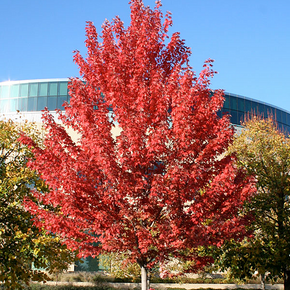
Pacific Sunset Maple - 15 Gallon
SKU:
1040460
UPC:
757316181151
$229.99
- Stunning fall foliage transitions from glossy dark green summer leaves to brilliant shades of yellow, orange, and bright red — color arrives earlier and more intensely than many comparable maples.
- Tough and adaptable hybrid (Acer truncatum x A. platanoides) with excellent heat and drought tolerance once established, plus notable resistance to Japanese beetles.
- Upright-spreading, rounded crown reaching approximately 30 feet tall and 25 feet wide, making it an ideal medium-sized shade tree for lawns, streets, and urban landscapes.
- Low-maintenance and cold-hardy to USDA Zone 4b, thriving across a wide range of climates including the challenging conditions of Southern Oregon and Northern California.
Pacific Sunset Maple (Acer truncatum x A. platanoides 'Warrenred') is a standout hybrid shade tree that combines the best qualities of its Shantung maple and Norway maple parents into one exceptionally ornamental and tough landscape performer. Throughout the growing season, the tree holds its distinctive deep green, smooth, very glossy foliage that gives it a polished, refined appearance in the summer landscape. As autumn approaches, Pacific Sunset Maple is among the first maples to transition into its spectacular fall palette, shifting to rich tones of yellow-orange to bright red earlier and with more intensity than many of its counterparts. The tree develops a handsome upright-spreading form with a rounded crown, growing to approximately 30 feet tall and 25 feet wide, making it a versatile choice for a wide range of residential and commercial landscape applications. Its hybrid vigor provides excellent tolerance to heat, drought, and urban stresses, while its resistance to Japanese beetles gives it a clear advantage over many other popular maples. Hardy from USDA Zone 4b through Zone 8, Pacific Sunset Maple is well suited for the diverse climates of the Pacific Northwest and Northern California, adapting readily to varying soils and conditions with minimal maintenance once established. Whether used as a specimen tree, street tree, or lawn shade tree, this refined maple delivers reliable four-season interest and enduring curb appeal year after year.
Plant Description
Pacific Sunset Maple is a deciduous hybrid shade tree resulting from a cross between Acer truncatum (Shantung maple, native to northern China and Korea) and Acer platanoides (Norway maple). The cultivar name is 'Warrenred'. This hybrid captures the superior glossy foliage, heat tolerance, and fine branch texture of Shantung maple, combined with the cold hardiness and strong branch structure of Norway maple. The result is a tree with outstanding ornamental quality throughout all seasons — neat form and lustrous leaves in spring and summer, spectacular fall color in autumn, and an attractive branching silhouette in winter. The leaves are 5-lobed, opposite, and typically 3 to 5 inches across, displaying a smooth, very glossy dark green surface that catches the light beautifully. Like other members of the Acer truncatum lineage, the leaf petioles exude a milky sap when broken.
Mature Size and Growth Rate
| Characteristic | Detail |
|---|---|
| Mature Height | Approximately 25 to 30 feet |
| Mature Spread | Approximately 20 to 25 feet |
| Growth Rate | Moderate — typically 1 to 2 feet per year under good conditions |
| Habit / Form | Upright spreading with a rounded, symmetrical crown |
| Branch Texture | Finer textured and slightly more spreading than Norwegian Sunset Maple |
Hardiness Zones and Climate Tolerance
Pacific Sunset Maple is rated hardy to USDA Hardiness Zone 4b, tolerating winter temperatures as low as approximately -25 degrees F, and performs well through Zone 8. This wide zone adaptability makes it an excellent choice for the variable climates of Southern Oregon and Northern California, where it handles both cold winters and warm, dry summers with ease. Its Shantung maple heritage contributes exceptional heat tolerance and drought endurance once the tree is established in the landscape, making it more resilient than Norway maple in hot summer conditions. It is well suited to both the milder coastal climates and the more extreme inland valleys of the Pacific Northwest.
Sunlight Requirements
Pacific Sunset Maple thrives in full sun, which is defined as 6 or more hours of direct sunlight per day. Full sun exposure encourages the best canopy density, the most vibrant summer foliage color, and the most intense fall color display. The tree can also tolerate partial shade (2 to 6 hours of direct sun daily), though fall color and overall density may be somewhat reduced under lower light conditions. For the most spectacular seasonal performance, choose a planting site that receives unobstructed sun for the majority of the day.
Soil and pH Preferences
Pacific Sunset Maple is adaptable to a range of soil types, including loam, clay loam, and sandy loam, as long as drainage is adequate. It performs best in moist, well-drained soils and prefers a slightly acidic to neutral soil pH in the range of approximately 5.5 to 7.0. It does not perform well in permanently waterlogged or compacted soils. The tree has demonstrated tolerance to the heavier clay soils commonly found in many parts of Southern Oregon and Northern California, though soil amendment with organic matter at planting will help with both drainage and establishment. It adapts reasonably well to urban soils and has good tolerance for some soil compaction once established, which contributes to its popularity as a street and parking lot tree.
Watering Guide
During the first two to three growing seasons after planting, regular deep watering is essential to help Pacific Sunset Maple develop a strong, extensive root system. Water deeply once or twice per week during warm, dry periods, allowing the soil to partially dry between waterings to avoid root rot. Once fully established — typically after two to three years — this maple demonstrates good drought tolerance, especially during the mild dry summers of Southern Oregon and Northern California. Even established trees, however, benefit from supplemental irrigation during extended dry spells or periods of extreme heat to maintain optimal foliage appearance and vigor. Applying a 2 to 4 inch layer of organic mulch over the root zone helps retain soil moisture, moderate soil temperature, and reduce competition from grass and weeds.
Fertilizing
Pacific Sunset Maple generally benefits from light annual fertilization, especially during the establishment phase. Apply a balanced, slow-release fertilizer formulated for trees and shrubs in early spring before new growth emerges. A fertilizer with a roughly balanced N-P-K ratio or one slightly higher in nitrogen supports healthy foliage development and steady growth. Avoid over-fertilizing with high-nitrogen products, as this can produce excessive soft growth that is more susceptible to late-frost damage and certain pest pressures. Once the tree is well established in a reasonably fertile soil, fertilization needs diminish, though a light annual feeding in early spring can help maintain vigor and lush foliage color. Always water thoroughly after fertilizing to move nutrients into the root zone.
Pruning and Maintenance
Pacific Sunset Maple requires minimal pruning to maintain its naturally attractive, symmetrical rounded crown. The best time to prune is in late summer or fall after the tree has hardened off for the season, or in mid-winter when the tree is fully dormant. Avoid pruning in early spring when sap is actively rising, as maples can bleed sap heavily from fresh cuts during this period. Pruning objectives should focus on removing any dead, damaged, or crossing branches, and improving airflow through the canopy. Light shaping or canopy-raising can be done as needed for clearance under lower branches. This cultivar naturally develops a well-structured form that requires very little corrective pruning when given adequate space to develop. Overall, Pacific Sunset Maple is considered a low-maintenance tree once established.
Planting Instructions
- Select a site with full sun to partial shade and well-drained soil. Ensure the location provides enough room for the tree's full mature spread of 20 to 25 feet.
- Dig a planting hole two to three times as wide as the root ball, but no deeper than the height of the root ball. The top of the root ball should sit at or very slightly above the surrounding soil grade.
- Remove the tree from its container and gently loosen any circling roots before placing it in the hole.
- Backfill with the original soil, tamping lightly to eliminate large air pockets. Avoid burying the root flare — the point where the trunk flares out at its base — as this can lead to long-term decline.
- Create a shallow watering basin around the outer edge of the planting hole and water deeply immediately after planting.
- Apply 2 to 4 inches of organic mulch such as wood chips or bark over the root zone, keeping mulch pulled back 2 to 3 inches from the trunk to prevent rot and pest issues.
- Water deeply two to three times per week for the first month, then taper to weekly deep waterings through the first growing season.
Seasonal Interest
Pacific Sunset Maple delivers attractive landscape interest across all four seasons. In spring, new leaves emerge with a fresh, bright green color as the canopy fills in with the tree's distinctive glossy foliage. During summer, the deep green, very glossy leaves create a dense, refined canopy that provides excellent shade and a polished, ornamental appearance. Inconspicuous greenish-yellow flowers appear in small clusters in spring before or as the leaves emerge, adding a subtle seasonal detail. In autumn, Pacific Sunset Maple earns its place as one of the finest fall-color trees available — it colors up earlier than many maples, with foliage turning from deep green into rich shades of yellow, orange, and bright red, often displaying multiple colors simultaneously on the same tree. In winter, the tree's attractive branching structure and gray-brown furrowed bark provide visual interest in the dormant landscape.
Landscape Uses
Pacific Sunset Maple is highly versatile in the landscape and is well suited to a wide variety of applications. Its moderate size and tidy form make it an excellent choice where a large-canopy species like a silver or red maple might be too massive. Common landscape uses include:
- Lawn specimen tree — a focal point in open yard settings where its form and fall color can be fully appreciated
- Street tree — its tolerance for urban conditions, heat, drought, and compacted soils makes it ideal for planting strips and streetscapes
- Parking lot tree — used widely in commercial landscapes due to its adaptability and low maintenance needs
- Patio shade tree — the moderate size and dense canopy make it perfect for providing filtered shade over outdoor living areas
- Residential driveway tree — planted in pairs to frame entrances with seasonal color
- Naturalistic or park-style plantings — groups of Pacific Sunset Maples create stunning fall color displays in larger landscape settings
Pests and Diseases
One of the significant advantages of Pacific Sunset Maple over many other popular maples is its notable resistance to Japanese beetles, a destructive pest that can severely defoliate susceptible trees. Beyond this key resistance, the tree has no serious insect or disease problems under normal growing conditions. As with all maples, occasional issues may include:
- Aphids — small clusters may appear on new growth in spring, usually controlled naturally by beneficial insects
- Scale insects — monitor bark in late winter; treat with horticultural oil if populations are significant
- Verticillium wilt — a soilborne fungal disease that can affect maples; avoid planting in sites with a known history of this pathogen and maintain good tree health to resist infection
- Leaf scorch — can occur during periods of extreme heat or drought stress, but is largely prevented by adequate irrigation; not caused by a pathogen
- Tar spot — a cosmetic leaf fungal issue common in late summer; rarely causes significant harm and generally requires no treatment
Overall, Pacific Sunset Maple's resistance profile and hybrid vigor make it one of the more trouble-free maples available for residential and commercial landscapes.
Companion Plants
Pacific Sunset Maple pairs beautifully with a wide range of companion plants that complement its ornamental qualities across the seasons. Consider the following combinations for a cohesive and visually dynamic planting:
- Ornamental grasses such as Karl Foerster feather reed grass or Blue Oat grass — their upright forms and late-season plumes contrast well with the maple's broad canopy
- Flowering ground covers like creeping phlox or ajuga — provide spring color and weed suppression beneath the canopy
- Deciduous shrubs with complementary fall color such as Oakleaf Hydrangea, Viburnum, or Fothergilla — extend the autumn color display at a lower level
- Spring-flowering bulbs including daffodils and tulips planted under the canopy dripline — provide early-season color before the maple leafs out and shades the ground
- Evergreen shrubs such as boxwood, Heavenly Bamboo (Nandina), or Oregon Grape (Mahonia) — provide year-round structure and contrast against the maple's seasonal changes
- Perennials like hostas and astilbes in partially shaded spots beneath the canopy — thrive in the dappled light and complement the lush green summer foliage
Wildlife Value
Pacific Sunset Maple, like other members of the Acer genus, provides meaningful value to local wildlife. The winged double samaras (seed pairs) that develop in summer are a food source for various birds, squirrels, and other small mammals. The tree's canopy provides nesting habitat and shelter for songbirds. As a hybrid that retains the Acer truncatum lineage, this maple can serve as a host plant for the larvae of the Imperial Moth (Eacles imperialis), a large and striking native moth species, as well as various other Lepidoptera species that rely on maples as larval hosts. The spring flowers, while small, attract early-season pollinators seeking nectar and pollen. Planting Pacific Sunset Maple contributes positively to local biodiversity and supports the broader garden ecosystem.
Key Plant Specifications at a Glance
| Feature | Detail |
|---|---|
| Botanical Name | Acer truncatum x A. platanoides 'Warrenred' |
| Common Name | Pacific Sunset Maple |
| Plant Type | Deciduous shade tree |
| USDA Hardiness Zones | 4b to 8 |
| Mature Height | 25 to 30 feet |
| Mature Spread | 20 to 25 feet |
| Growth Rate | Moderate |
| Tree Form | Upright spreading, rounded crown |
| Foliage | Dark green, smooth, very glossy; 5-lobed |
| Fall Color | Yellow-orange to bright red; early coloring |
| Sun Requirements | Full sun; tolerates partial shade |
| Water Needs | Regular during establishment; drought tolerant once established |
| Soil Preference | Moist, well-drained; adapts to clay and urban soils |
| Pest Resistance | Resistant to Japanese beetles |
| Maintenance Level | Low |
- Stunning fall foliage transitions from glossy dark green summer leaves to brilliant shades of yellow, orange, and bright red — color arrives earlier and more intensely than many comparable maples.
- Tough and adaptable hybrid (Acer truncatum x A. platanoides) with excellent heat and drought tolerance once established, plus notable resistance to Japanese beetles.
- Upright-spreading, rounded crown reaching approximately 30 feet tall and 25 feet wide, making it an ideal medium-sized shade tree for lawns, streets, and urban landscapes.
- Low-maintenance and cold-hardy to USDA Zone 4b, thriving across a wide range of climates including the challenging conditions of Southern Oregon and Northern California.
Pacific Sunset Maple (Acer truncatum x A. platanoides 'Warrenred') is a standout hybrid shade tree that combines the best qualities of its Shantung maple and Norway maple parents into one exceptionally ornamental and tough landscape performer. Throughout the growing season, the tree holds its distinctive deep green, smooth, very glossy foliage that gives it a polished, refined appearance in the summer landscape. As autumn approaches, Pacific Sunset Maple is among the first maples to transition into its spectacular fall palette, shifting to rich tones of yellow-orange to bright red earlier and with more intensity than many of its counterparts. The tree develops a handsome upright-spreading form with a rounded crown, growing to approximately 30 feet tall and 25 feet wide, making it a versatile choice for a wide range of residential and commercial landscape applications. Its hybrid vigor provides excellent tolerance to heat, drought, and urban stresses, while its resistance to Japanese beetles gives it a clear advantage over many other popular maples. Hardy from USDA Zone 4b through Zone 8, Pacific Sunset Maple is well suited for the diverse climates of the Pacific Northwest and Northern California, adapting readily to varying soils and conditions with minimal maintenance once established. Whether used as a specimen tree, street tree, or lawn shade tree, this refined maple delivers reliable four-season interest and enduring curb appeal year after year.
Plant Description
Pacific Sunset Maple is a deciduous hybrid shade tree resulting from a cross between Acer truncatum (Shantung maple, native to northern China and Korea) and Acer platanoides (Norway maple). The cultivar name is 'Warrenred'. This hybrid captures the superior glossy foliage, heat tolerance, and fine branch texture of Shantung maple, combined with the cold hardiness and strong branch structure of Norway maple. The result is a tree with outstanding ornamental quality throughout all seasons — neat form and lustrous leaves in spring and summer, spectacular fall color in autumn, and an attractive branching silhouette in winter. The leaves are 5-lobed, opposite, and typically 3 to 5 inches across, displaying a smooth, very glossy dark green surface that catches the light beautifully. Like other members of the Acer truncatum lineage, the leaf petioles exude a milky sap when broken.
Mature Size and Growth Rate
| Characteristic | Detail |
|---|---|
| Mature Height | Approximately 25 to 30 feet |
| Mature Spread | Approximately 20 to 25 feet |
| Growth Rate | Moderate — typically 1 to 2 feet per year under good conditions |
| Habit / Form | Upright spreading with a rounded, symmetrical crown |
| Branch Texture | Finer textured and slightly more spreading than Norwegian Sunset Maple |
Hardiness Zones and Climate Tolerance
Pacific Sunset Maple is rated hardy to USDA Hardiness Zone 4b, tolerating winter temperatures as low as approximately -25 degrees F, and performs well through Zone 8. This wide zone adaptability makes it an excellent choice for the variable climates of Southern Oregon and Northern California, where it handles both cold winters and warm, dry summers with ease. Its Shantung maple heritage contributes exceptional heat tolerance and drought endurance once the tree is established in the landscape, making it more resilient than Norway maple in hot summer conditions. It is well suited to both the milder coastal climates and the more extreme inland valleys of the Pacific Northwest.
Sunlight Requirements
Pacific Sunset Maple thrives in full sun, which is defined as 6 or more hours of direct sunlight per day. Full sun exposure encourages the best canopy density, the most vibrant summer foliage color, and the most intense fall color display. The tree can also tolerate partial shade (2 to 6 hours of direct sun daily), though fall color and overall density may be somewhat reduced under lower light conditions. For the most spectacular seasonal performance, choose a planting site that receives unobstructed sun for the majority of the day.
Soil and pH Preferences
Pacific Sunset Maple is adaptable to a range of soil types, including loam, clay loam, and sandy loam, as long as drainage is adequate. It performs best in moist, well-drained soils and prefers a slightly acidic to neutral soil pH in the range of approximately 5.5 to 7.0. It does not perform well in permanently waterlogged or compacted soils. The tree has demonstrated tolerance to the heavier clay soils commonly found in many parts of Southern Oregon and Northern California, though soil amendment with organic matter at planting will help with both drainage and establishment. It adapts reasonably well to urban soils and has good tolerance for some soil compaction once established, which contributes to its popularity as a street and parking lot tree.
Watering Guide
During the first two to three growing seasons after planting, regular deep watering is essential to help Pacific Sunset Maple develop a strong, extensive root system. Water deeply once or twice per week during warm, dry periods, allowing the soil to partially dry between waterings to avoid root rot. Once fully established — typically after two to three years — this maple demonstrates good drought tolerance, especially during the mild dry summers of Southern Oregon and Northern California. Even established trees, however, benefit from supplemental irrigation during extended dry spells or periods of extreme heat to maintain optimal foliage appearance and vigor. Applying a 2 to 4 inch layer of organic mulch over the root zone helps retain soil moisture, moderate soil temperature, and reduce competition from grass and weeds.
Fertilizing
Pacific Sunset Maple generally benefits from light annual fertilization, especially during the establishment phase. Apply a balanced, slow-release fertilizer formulated for trees and shrubs in early spring before new growth emerges. A fertilizer with a roughly balanced N-P-K ratio or one slightly higher in nitrogen supports healthy foliage development and steady growth. Avoid over-fertilizing with high-nitrogen products, as this can produce excessive soft growth that is more susceptible to late-frost damage and certain pest pressures. Once the tree is well established in a reasonably fertile soil, fertilization needs diminish, though a light annual feeding in early spring can help maintain vigor and lush foliage color. Always water thoroughly after fertilizing to move nutrients into the root zone.
Pruning and Maintenance
Pacific Sunset Maple requires minimal pruning to maintain its naturally attractive, symmetrical rounded crown. The best time to prune is in late summer or fall after the tree has hardened off for the season, or in mid-winter when the tree is fully dormant. Avoid pruning in early spring when sap is actively rising, as maples can bleed sap heavily from fresh cuts during this period. Pruning objectives should focus on removing any dead, damaged, or crossing branches, and improving airflow through the canopy. Light shaping or canopy-raising can be done as needed for clearance under lower branches. This cultivar naturally develops a well-structured form that requires very little corrective pruning when given adequate space to develop. Overall, Pacific Sunset Maple is considered a low-maintenance tree once established.
Planting Instructions
- Select a site with full sun to partial shade and well-drained soil. Ensure the location provides enough room for the tree's full mature spread of 20 to 25 feet.
- Dig a planting hole two to three times as wide as the root ball, but no deeper than the height of the root ball. The top of the root ball should sit at or very slightly above the surrounding soil grade.
- Remove the tree from its container and gently loosen any circling roots before placing it in the hole.
- Backfill with the original soil, tamping lightly to eliminate large air pockets. Avoid burying the root flare — the point where the trunk flares out at its base — as this can lead to long-term decline.
- Create a shallow watering basin around the outer edge of the planting hole and water deeply immediately after planting.
- Apply 2 to 4 inches of organic mulch such as wood chips or bark over the root zone, keeping mulch pulled back 2 to 3 inches from the trunk to prevent rot and pest issues.
- Water deeply two to three times per week for the first month, then taper to weekly deep waterings through the first growing season.
Seasonal Interest
Pacific Sunset Maple delivers attractive landscape interest across all four seasons. In spring, new leaves emerge with a fresh, bright green color as the canopy fills in with the tree's distinctive glossy foliage. During summer, the deep green, very glossy leaves create a dense, refined canopy that provides excellent shade and a polished, ornamental appearance. Inconspicuous greenish-yellow flowers appear in small clusters in spring before or as the leaves emerge, adding a subtle seasonal detail. In autumn, Pacific Sunset Maple earns its place as one of the finest fall-color trees available — it colors up earlier than many maples, with foliage turning from deep green into rich shades of yellow, orange, and bright red, often displaying multiple colors simultaneously on the same tree. In winter, the tree's attractive branching structure and gray-brown furrowed bark provide visual interest in the dormant landscape.
Landscape Uses
Pacific Sunset Maple is highly versatile in the landscape and is well suited to a wide variety of applications. Its moderate size and tidy form make it an excellent choice where a large-canopy species like a silver or red maple might be too massive. Common landscape uses include:
- Lawn specimen tree — a focal point in open yard settings where its form and fall color can be fully appreciated
- Street tree — its tolerance for urban conditions, heat, drought, and compacted soils makes it ideal for planting strips and streetscapes
- Parking lot tree — used widely in commercial landscapes due to its adaptability and low maintenance needs
- Patio shade tree — the moderate size and dense canopy make it perfect for providing filtered shade over outdoor living areas
- Residential driveway tree — planted in pairs to frame entrances with seasonal color
- Naturalistic or park-style plantings — groups of Pacific Sunset Maples create stunning fall color displays in larger landscape settings
Pests and Diseases
One of the significant advantages of Pacific Sunset Maple over many other popular maples is its notable resistance to Japanese beetles, a destructive pest that can severely defoliate susceptible trees. Beyond this key resistance, the tree has no serious insect or disease problems under normal growing conditions. As with all maples, occasional issues may include:
- Aphids — small clusters may appear on new growth in spring, usually controlled naturally by beneficial insects
- Scale insects — monitor bark in late winter; treat with horticultural oil if populations are significant
- Verticillium wilt — a soilborne fungal disease that can affect maples; avoid planting in sites with a known history of this pathogen and maintain good tree health to resist infection
- Leaf scorch — can occur during periods of extreme heat or drought stress, but is largely prevented by adequate irrigation; not caused by a pathogen
- Tar spot — a cosmetic leaf fungal issue common in late summer; rarely causes significant harm and generally requires no treatment
Overall, Pacific Sunset Maple's resistance profile and hybrid vigor make it one of the more trouble-free maples available for residential and commercial landscapes.
Companion Plants
Pacific Sunset Maple pairs beautifully with a wide range of companion plants that complement its ornamental qualities across the seasons. Consider the following combinations for a cohesive and visually dynamic planting:
- Ornamental grasses such as Karl Foerster feather reed grass or Blue Oat grass — their upright forms and late-season plumes contrast well with the maple's broad canopy
- Flowering ground covers like creeping phlox or ajuga — provide spring color and weed suppression beneath the canopy
- Deciduous shrubs with complementary fall color such as Oakleaf Hydrangea, Viburnum, or Fothergilla — extend the autumn color display at a lower level
- Spring-flowering bulbs including daffodils and tulips planted under the canopy dripline — provide early-season color before the maple leafs out and shades the ground
- Evergreen shrubs such as boxwood, Heavenly Bamboo (Nandina), or Oregon Grape (Mahonia) — provide year-round structure and contrast against the maple's seasonal changes
- Perennials like hostas and astilbes in partially shaded spots beneath the canopy — thrive in the dappled light and complement the lush green summer foliage
Wildlife Value
Pacific Sunset Maple, like other members of the Acer genus, provides meaningful value to local wildlife. The winged double samaras (seed pairs) that develop in summer are a food source for various birds, squirrels, and other small mammals. The tree's canopy provides nesting habitat and shelter for songbirds. As a hybrid that retains the Acer truncatum lineage, this maple can serve as a host plant for the larvae of the Imperial Moth (Eacles imperialis), a large and striking native moth species, as well as various other Lepidoptera species that rely on maples as larval hosts. The spring flowers, while small, attract early-season pollinators seeking nectar and pollen. Planting Pacific Sunset Maple contributes positively to local biodiversity and supports the broader garden ecosystem.
Key Plant Specifications at a Glance
| Feature | Detail |
|---|---|
| Botanical Name | Acer truncatum x A. platanoides 'Warrenred' |
| Common Name | Pacific Sunset Maple |
| Plant Type | Deciduous shade tree |
| USDA Hardiness Zones | 4b to 8 |
| Mature Height | 25 to 30 feet |
| Mature Spread | 20 to 25 feet |
| Growth Rate | Moderate |
| Tree Form | Upright spreading, rounded crown |
| Foliage | Dark green, smooth, very glossy; 5-lobed |
| Fall Color | Yellow-orange to bright red; early coloring |
| Sun Requirements | Full sun; tolerates partial shade |
| Water Needs | Regular during establishment; drought tolerant once established |
| Soil Preference | Moist, well-drained; adapts to clay and urban soils |
| Pest Resistance | Resistant to Japanese beetles |
| Maintenance Level | Low |