
Zoom the image with the mouse
Boulevard Parisienne Clematis - 1 Gallon
SKU:
2054360
UPC:
014949491096
$22.99
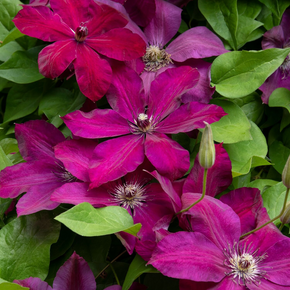
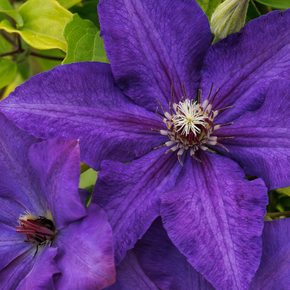
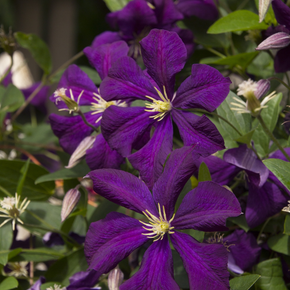
- Spectacular large, star-shaped violet-blue flowers up to 5-6 inches across with striking bright red anthers bloom reliably from late spring through early summer, then again in late summer through fall for an extended season of color lasting up to five months.
- Compact, space-saving growth habit reaches just 3-4 feet tall, making it an outstanding choice for container gardens, patio planters, small trellises, arbors, and tight urban or courtyard spaces where larger clematis cannot fit.
- Exceptionally cold-hardy and easy to grow, this low-maintenance rebloomer thrives in USDA Hardiness Zones 4-9, tolerates deer and rabbit browsing, and attracts hummingbirds, butterflies, and bees to the garden.
- A versatile landscape performer from the renowned Boulevard Series — equally at home climbing a fence or trellis, cascading over a retaining wall, spilling from a container, or threading through a mixed border for bold vertical color.
Boulevard Parisienne Clematis (Clematis 'Evipo019') is a breathtaking compact flowering vine from the Boulevard Series that delivers an unrivaled season of color for gardens of every size. Producing an abundance of large, soft violet-blue, star-shaped flowers adorned with eye-catching bright red anthers, this reblooming clematis puts on a spectacular show from late spring into early summer and then blooms again from late summer through fall — a flowering window that can span up to five months, far outperforming many traditional clematis varieties. Growing just 3 to 4 feet tall with a tidy 2-foot spread, Boulevard Parisienne is perfectly sized for small garden spaces, patio containers, balconies, and compact trellises while still delivering the big, bold flowers that clematis lovers crave. Hardy in USDA Zones 4 through 9, this deciduous climbing perennial is a low-maintenance powerhouse that resists deer and rabbits, draws in pollinators including hummingbirds, butterflies, and bees, and brings reliable, long-lasting beauty to cottage gardens, courtyard plantings, mixed borders, and container arrangements alike. Whether you are looking to add vertical interest to a small yard or create a stunning focal point on a porch or patio, Boulevard Parisienne Clematis delivers elegance, resilience, and season-long color that is hard to match.
Plant Description
Boulevard Parisienne Clematis is a compact, deciduous climbing perennial in the family Ranunculaceae, sold under the cultivar name 'Evipo019' and part of the celebrated Boulevard Series developed by Raymond Evison. The plant produces large, star-shaped flowers measuring 5 to 6 inches (12-15 cm) across, featuring soft, pale violet-blue petals with slightly ruffled edges and a dramatic central boss of vivid bright red anthers. The foliage consists of attractive compound, dark to mid-green leaves that emerge in spring and remain through autumn before the plant dies back to the ground for winter. Unlike many clematis that bloom for only four to eight weeks, Boulevard Parisienne is a confirmed rebloomer with a flowering window that can extend up to five months — from late spring through early summer, then again from late summer into fall. Its twining, climbing stems attach themselves to supports using their leaf petioles, creating a graceful, layered appearance on trellises, fences, arbors, and other structures.
Mature Size
| Characteristic | Measurement |
|---|---|
| Mature Height | 3-4 feet (90-120 cm) |
| Mature Spread | 2 feet (approximately 60 cm) |
| Growth Rate | Medium |
| Bloom Size | 5-6 inches (12-15 cm) in diameter |
| Estimated Lifespan | Approximately 20 years under ideal conditions |
| Time to Ultimate Height | 2-5 years |
Hardiness Zones
Boulevard Parisienne Clematis is hardy in USDA Plant Hardiness Zones 4 through 9, making it suitable for a wide range of climates across the continental United States — from cold northern regions with harsh winters to warm southern and western gardens. In Southern Oregon and Northern California, this clematis is exceptionally well-suited to local conditions, performing reliably through both cool winters and warm summers. As an herbaceous perennial, the plant will die back to the crown each winter and regrow vigorously from the base each spring. It is important not to disturb the crown in late winter when it may not be visible above the soil surface. In colder microclimates or exposed locations, applying a thick layer of mulch around the root zone in late fall will provide additional insulation and protection.
Sunlight Requirements
Boulevard Parisienne Clematis performs best in full sun to partial shade, requiring a minimum of 3 hours of direct sunlight per day for optimal flowering. A south-, west-, or east-facing aspect is ideal. In the hotter inland valleys of Southern Oregon and Northern California, a location with morning sun and light afternoon shade will protect the flowers from scorching and extend their individual bloom period. True to the classic clematis adage of "head in the sun, feet in the shade," the foliage and flowers benefit from full sun while the root zone thrives when kept cool and shaded — this can be accomplished by surrounding the base with a layer of flat stones, pebbles, or a low-growing ground cover plant. Avoid deep, full shade, as it significantly reduces bloom production.
Soil and pH Preferences
This clematis thrives in moisture-retentive, well-drained soil enriched with organic matter. It is adaptable to a variety of soil types including chalk, clay, loam, and sand, provided drainage is adequate — standing water at the root zone is not tolerated and can lead to rot. The preferred soil pH range is neutral to slightly alkaline (approximately 7.0 to 7.5), which is consistent with the naturally occurring soil profile found in much of Southern Oregon and Northern California. If your native soil is acidic, incorporating garden lime at planting time can help raise the pH to an appropriate level. Enriching the planting hole with compost or aged organic matter will improve both soil structure and moisture retention, giving roots an excellent foundation for healthy, long-term growth.
Watering Guide
Boulevard Parisienne Clematis has average water needs and prefers consistently moist but well-drained conditions. Water deeply and regularly during the active growing and blooming seasons, allowing the top 1-2 inches of soil to begin drying between waterings. Never allow the plant to sit in waterlogged soil. Drought stress during bud development can reduce flower size and frequency, so it is particularly important to maintain consistent moisture from spring through the first bloom flush. During hot, dry summer periods typical of Northern California and Southern Oregon, supplemental irrigation may be necessary. Applying a 2-3 inch layer of organic mulch around the base helps retain soil moisture, moderate root temperature, and reduce the frequency of watering. When grown in containers, check soil moisture more frequently, as potted plants dry out much faster than those planted in the ground.
Fertilizing
Feed Boulevard Parisienne Clematis in early spring as new growth begins to emerge from the base, using a low-nitrogen fertilizer such as a 5-10-10 formulation to support root development and budding without pushing excessive, soft vegetative growth. Once the plant is actively growing and through the first bloom cycle, switch to a balanced fertilizer such as a 10-10-10 applied monthly throughout the growing season to sustain continued flowering and healthy foliage. Potassium-rich fertilizers can be particularly beneficial for encouraging flower production during the second bloom cycle in late summer and fall. Avoid over-fertilizing with high-nitrogen products, which promote lush leafy growth at the expense of flowers. Always water the plant thoroughly before and after applying fertilizer to prevent root burn.
Pruning and Maintenance
Boulevard Parisienne Clematis is classified within Pruning Group 2 (also referred to as Group 2 / Early Large-Flowered Clematis), though it may also be managed using a Group 3 hard-prune method for a simplified care routine. Here is how to approach each option:
- Group 2 Approach (for maximum early blooms): In late winter or early spring before new growth starts, remove any dead or weak stems. Work down each stem from the top and prune just above the highest pair of strong, healthy buds. After the first flush of flowers fades in early summer, cut back the flowered stems by about one-third to just above a set of strong buds or a robust side shoot to encourage the second bloom cycle in late summer and fall.
- Group 3 Approach (simplified, easy-care option): In late winter or early spring, cut all stems back hard to within 6-12 inches of the ground, just above the lowest pair of healthy buds. This method sacrifices the early-summer bloom but simplifies maintenance and results in an especially vigorous second flush of flowers later in the season on new growth.
- General tip: As an herbaceous perennial, the plant naturally dies back to the crown each winter. Mark the crown location with a stake in autumn so you do not accidentally disturb or damage it during late-winter cleanup.
Planting Instructions
- Select a site with at least 3-6 hours of sunlight and access to a fence, trellis, arbor, or other support structure for the vines to climb.
- Dig a planting hole approximately twice as wide as the root ball and deep enough to set the crown of the plant 3-4 inches below the final soil surface — this deep planting encourages new shoots to develop from below ground and helps the plant recover more easily from any stem damage.
- Amend the backfill soil with generous amounts of compost or aged organic matter to improve drainage and fertility. If soil pH is below 6.5, incorporate garden lime as directed by a soil test.
- Remove the plant carefully from its container and gently loosen any circling roots. Place in the hole, backfill with amended soil, and firm gently around the base.
- Water thoroughly immediately after planting and apply a 2-3 inch layer of mulch, keeping the mulch a few inches away from the crown to prevent rot.
- Install your support structure (trellis, stakes, or wire) at planting time to avoid disturbing roots later. Gently guide the vines toward the support and loosely tie if needed until the plant attaches on its own.
- Space plants approximately 3 feet apart in mass plantings. A single plant is sufficient for a standard 18-inch or larger container.
Container Growing
Boulevard Parisienne Clematis is one of the most container-friendly clematis varieties available, and its compact size makes it an outstanding candidate for patio pots, balcony planters, and even large hanging baskets. When growing in a container, choose a pot that is at least 18 inches in diameter and equally deep to accommodate the root system comfortably. Use a high-quality, well-draining, peat-free, loam-based potting mix. Because of its trailing and spreading growth habit, it works beautifully as a "spiller" element in a mixed container planting — position it near the rim of a pot where the vines can cascade gracefully over the edge. Provide a small trellis, bamboo tripod, or wire frame within the container for the vines to climb. Container-grown plants dry out more quickly than in-ground specimens, so check soil moisture regularly and water more frequently during warm weather. Feed container plants with a balanced liquid fertilizer every 2-3 weeks during the growing season. Repot every 2-3 years in late winter to refresh the growing medium and accommodate root growth.
Seasonal Interest
- Spring: Fresh, mid- to dark-green compound foliage emerges vigorously from the base as temperatures warm. By late spring, flower buds begin to form on new growth.
- Early Summer: The first, and typically heaviest, flush of spectacular violet-blue flowers with red anthers appears, creating a bold display on trellises, fences, and containers.
- Midsummer: After the first bloom cycle, light pruning encourages lateral shoots and the plant prepares for its second flowering.
- Late Summer to Fall: A generous second flush of flowers blooms on new growth, extending the display well into the autumn months — a rare quality that makes this variety especially prized.
- Winter: As temperatures drop, the herbaceous top growth dies back to the crown. The bare structure can be left in place until late winter cleanup to provide some frost protection for the crown below.
Landscape Uses
Boulevard Parisienne Clematis is a versatile performer in the landscape and suits a wide range of garden styles and design applications. Its compact stature makes it particularly valuable in smaller spaces where large, vigorous climbers would quickly overwhelm. Recommended landscape uses include:
- Training up small trellises, obelisks, and arbor posts as a vertical accent in mixed borders
- Weaving through and among low-growing shrubs, using the shrub's structure as a natural support
- Climbing decorative fence panels and walls to add color and texture to hardscape elements
- Cascading over the edges of raised beds or retaining walls for a soft, flowing effect
- Featured as a focal-point specimen in patio containers and outdoor planters
- Incorporated into cottage-style, city and courtyard, and informal garden designs
- Used in wildlife and pollinator gardens to attract hummingbirds, bees, and butterflies
- Planted in narrow side-yard or entry garden spaces where a large-scale vine would not be suitable
Companion Plants
Boulevard Parisienne Clematis pairs beautifully with a wide range of garden plants, particularly those that share its preference for sun to partial shade, moderate moisture, and neutral to slightly alkaline soil. For best results, pair it with companions that can provide light shade for its root zone while allowing the vines to reach sunlight above. Excellent companion plant ideas include:
- Climbing Roses — A classic pairing; rose canes provide a natural support structure while the violet-blue clematis flowers create stunning color contrast against pink, red, or white rose blooms
- Lavender — Low-growing, fragrant, and drought-tolerant; its silver-green foliage and purple flower spikes beautifully echo the clematis color palette and help shade the root zone
- Salvia nemorosa (Meadow Sage) — Upright violet-blue spikes complement the large flowers of the clematis and bloom in a similar color range
- Black-Eyed Susan (Rudbeckia fulgida) — Warm golden-yellow daisy flowers create a vivid, complementary contrast with the cool violet-blue clematis blooms in late summer
- Reblooming Bearded Iris — Their upright, sword-like foliage provides structure near the clematis base while their flowers offer harmonious color pairing
- Catmint (Nepeta) — Low, mounding, and drought-tolerant; ideal for covering and cooling the clematis root zone with attractive gray-green foliage and soft blue flowers
- Dwarf ornamental grasses — Provide a contrasting texture at the base of the plant and keep roots cool throughout the growing season
Pests and Diseases
Boulevard Parisienne Clematis is considered a low-maintenance, relatively trouble-free plant, but gardeners should be aware of a few potential issues:
- Clematis Wilt: A fungal disease that can cause sudden wilting and blackening of stems, usually in young plants. It rarely kills the entire plant — cut affected stems back to healthy growth or to the base, and the plant will typically regrow from below ground. Deep planting helps recovery. Improve air circulation and avoid wetting the foliage when watering.
- Aphids: Small, soft-bodied insects may cluster on new shoot tips and buds. Dislodge with a strong stream of water or treat with insecticidal soap.
- Snails and Slugs: Can damage new spring growth emerging from the crown. Use baited traps or physical barriers such as copper tape around containers.
- Earwigs: Occasionally feed on petals, causing ragged or notched flower edges. Trap in rolled corrugated cardboard overnight and dispose of.
- Powdery Mildew: May appear in hot, dry conditions with poor air circulation. Ensure the plant is not overcrowded and consider a preventative fungicide spray if the problem recurs.
- Root Rot: Results from consistently waterlogged soil. Always ensure good drainage and avoid overwatering, especially in heavy clay soils.
Note: All parts of clematis are considered toxic if ingested and can cause skin irritation upon handling. Wear gloves when pruning or handling plant material, and keep away from pets, particularly rabbits and cats.
Wildlife Value
Boulevard Parisienne Clematis is a genuine wildlife-friendly plant that offers significant value to pollinators and beneficial garden wildlife. The large, open, star-shaped flowers are highly accessible to a wide range of visiting insects and birds throughout their extended blooming season.
- Hummingbirds: The richly colored violet-blue flowers are attractive to hummingbirds, which visit regularly in search of nectar, making this plant an excellent addition to any hummingbird garden in Southern Oregon and Northern California.
- Butterflies: The open flower form provides an easy landing platform for a variety of butterfly species including swallowtails, painted ladies, and skippers.
- Bees: Both honeybees and native bumblebees are frequent visitors to the flowers, attracted to the generous nectar and pollen supply provided by the prominent stamens and anthers.
- Deer and Rabbit Resistance: Boulevard Parisienne Clematis is notably resistant to browsing by deer and rabbits, making it a reliable choice for gardens in rural and semi-rural areas of Southern Oregon and Northern California where wildlife pressure is common.
- Spectacular large, star-shaped violet-blue flowers up to 5-6 inches across with striking bright red anthers bloom reliably from late spring through early summer, then again in late summer through fall for an extended season of color lasting up to five months.
- Compact, space-saving growth habit reaches just 3-4 feet tall, making it an outstanding choice for container gardens, patio planters, small trellises, arbors, and tight urban or courtyard spaces where larger clematis cannot fit.
- Exceptionally cold-hardy and easy to grow, this low-maintenance rebloomer thrives in USDA Hardiness Zones 4-9, tolerates deer and rabbit browsing, and attracts hummingbirds, butterflies, and bees to the garden.
- A versatile landscape performer from the renowned Boulevard Series — equally at home climbing a fence or trellis, cascading over a retaining wall, spilling from a container, or threading through a mixed border for bold vertical color.
Boulevard Parisienne Clematis (Clematis 'Evipo019') is a breathtaking compact flowering vine from the Boulevard Series that delivers an unrivaled season of color for gardens of every size. Producing an abundance of large, soft violet-blue, star-shaped flowers adorned with eye-catching bright red anthers, this reblooming clematis puts on a spectacular show from late spring into early summer and then blooms again from late summer through fall — a flowering window that can span up to five months, far outperforming many traditional clematis varieties. Growing just 3 to 4 feet tall with a tidy 2-foot spread, Boulevard Parisienne is perfectly sized for small garden spaces, patio containers, balconies, and compact trellises while still delivering the big, bold flowers that clematis lovers crave. Hardy in USDA Zones 4 through 9, this deciduous climbing perennial is a low-maintenance powerhouse that resists deer and rabbits, draws in pollinators including hummingbirds, butterflies, and bees, and brings reliable, long-lasting beauty to cottage gardens, courtyard plantings, mixed borders, and container arrangements alike. Whether you are looking to add vertical interest to a small yard or create a stunning focal point on a porch or patio, Boulevard Parisienne Clematis delivers elegance, resilience, and season-long color that is hard to match.
Plant Description
Boulevard Parisienne Clematis is a compact, deciduous climbing perennial in the family Ranunculaceae, sold under the cultivar name 'Evipo019' and part of the celebrated Boulevard Series developed by Raymond Evison. The plant produces large, star-shaped flowers measuring 5 to 6 inches (12-15 cm) across, featuring soft, pale violet-blue petals with slightly ruffled edges and a dramatic central boss of vivid bright red anthers. The foliage consists of attractive compound, dark to mid-green leaves that emerge in spring and remain through autumn before the plant dies back to the ground for winter. Unlike many clematis that bloom for only four to eight weeks, Boulevard Parisienne is a confirmed rebloomer with a flowering window that can extend up to five months — from late spring through early summer, then again from late summer into fall. Its twining, climbing stems attach themselves to supports using their leaf petioles, creating a graceful, layered appearance on trellises, fences, arbors, and other structures.
Mature Size
| Characteristic | Measurement |
|---|---|
| Mature Height | 3-4 feet (90-120 cm) |
| Mature Spread | 2 feet (approximately 60 cm) |
| Growth Rate | Medium |
| Bloom Size | 5-6 inches (12-15 cm) in diameter |
| Estimated Lifespan | Approximately 20 years under ideal conditions |
| Time to Ultimate Height | 2-5 years |
Hardiness Zones
Boulevard Parisienne Clematis is hardy in USDA Plant Hardiness Zones 4 through 9, making it suitable for a wide range of climates across the continental United States — from cold northern regions with harsh winters to warm southern and western gardens. In Southern Oregon and Northern California, this clematis is exceptionally well-suited to local conditions, performing reliably through both cool winters and warm summers. As an herbaceous perennial, the plant will die back to the crown each winter and regrow vigorously from the base each spring. It is important not to disturb the crown in late winter when it may not be visible above the soil surface. In colder microclimates or exposed locations, applying a thick layer of mulch around the root zone in late fall will provide additional insulation and protection.
Sunlight Requirements
Boulevard Parisienne Clematis performs best in full sun to partial shade, requiring a minimum of 3 hours of direct sunlight per day for optimal flowering. A south-, west-, or east-facing aspect is ideal. In the hotter inland valleys of Southern Oregon and Northern California, a location with morning sun and light afternoon shade will protect the flowers from scorching and extend their individual bloom period. True to the classic clematis adage of "head in the sun, feet in the shade," the foliage and flowers benefit from full sun while the root zone thrives when kept cool and shaded — this can be accomplished by surrounding the base with a layer of flat stones, pebbles, or a low-growing ground cover plant. Avoid deep, full shade, as it significantly reduces bloom production.
Soil and pH Preferences
This clematis thrives in moisture-retentive, well-drained soil enriched with organic matter. It is adaptable to a variety of soil types including chalk, clay, loam, and sand, provided drainage is adequate — standing water at the root zone is not tolerated and can lead to rot. The preferred soil pH range is neutral to slightly alkaline (approximately 7.0 to 7.5), which is consistent with the naturally occurring soil profile found in much of Southern Oregon and Northern California. If your native soil is acidic, incorporating garden lime at planting time can help raise the pH to an appropriate level. Enriching the planting hole with compost or aged organic matter will improve both soil structure and moisture retention, giving roots an excellent foundation for healthy, long-term growth.
Watering Guide
Boulevard Parisienne Clematis has average water needs and prefers consistently moist but well-drained conditions. Water deeply and regularly during the active growing and blooming seasons, allowing the top 1-2 inches of soil to begin drying between waterings. Never allow the plant to sit in waterlogged soil. Drought stress during bud development can reduce flower size and frequency, so it is particularly important to maintain consistent moisture from spring through the first bloom flush. During hot, dry summer periods typical of Northern California and Southern Oregon, supplemental irrigation may be necessary. Applying a 2-3 inch layer of organic mulch around the base helps retain soil moisture, moderate root temperature, and reduce the frequency of watering. When grown in containers, check soil moisture more frequently, as potted plants dry out much faster than those planted in the ground.
Fertilizing
Feed Boulevard Parisienne Clematis in early spring as new growth begins to emerge from the base, using a low-nitrogen fertilizer such as a 5-10-10 formulation to support root development and budding without pushing excessive, soft vegetative growth. Once the plant is actively growing and through the first bloom cycle, switch to a balanced fertilizer such as a 10-10-10 applied monthly throughout the growing season to sustain continued flowering and healthy foliage. Potassium-rich fertilizers can be particularly beneficial for encouraging flower production during the second bloom cycle in late summer and fall. Avoid over-fertilizing with high-nitrogen products, which promote lush leafy growth at the expense of flowers. Always water the plant thoroughly before and after applying fertilizer to prevent root burn.
Pruning and Maintenance
Boulevard Parisienne Clematis is classified within Pruning Group 2 (also referred to as Group 2 / Early Large-Flowered Clematis), though it may also be managed using a Group 3 hard-prune method for a simplified care routine. Here is how to approach each option:
- Group 2 Approach (for maximum early blooms): In late winter or early spring before new growth starts, remove any dead or weak stems. Work down each stem from the top and prune just above the highest pair of strong, healthy buds. After the first flush of flowers fades in early summer, cut back the flowered stems by about one-third to just above a set of strong buds or a robust side shoot to encourage the second bloom cycle in late summer and fall.
- Group 3 Approach (simplified, easy-care option): In late winter or early spring, cut all stems back hard to within 6-12 inches of the ground, just above the lowest pair of healthy buds. This method sacrifices the early-summer bloom but simplifies maintenance and results in an especially vigorous second flush of flowers later in the season on new growth.
- General tip: As an herbaceous perennial, the plant naturally dies back to the crown each winter. Mark the crown location with a stake in autumn so you do not accidentally disturb or damage it during late-winter cleanup.
Planting Instructions
- Select a site with at least 3-6 hours of sunlight and access to a fence, trellis, arbor, or other support structure for the vines to climb.
- Dig a planting hole approximately twice as wide as the root ball and deep enough to set the crown of the plant 3-4 inches below the final soil surface — this deep planting encourages new shoots to develop from below ground and helps the plant recover more easily from any stem damage.
- Amend the backfill soil with generous amounts of compost or aged organic matter to improve drainage and fertility. If soil pH is below 6.5, incorporate garden lime as directed by a soil test.
- Remove the plant carefully from its container and gently loosen any circling roots. Place in the hole, backfill with amended soil, and firm gently around the base.
- Water thoroughly immediately after planting and apply a 2-3 inch layer of mulch, keeping the mulch a few inches away from the crown to prevent rot.
- Install your support structure (trellis, stakes, or wire) at planting time to avoid disturbing roots later. Gently guide the vines toward the support and loosely tie if needed until the plant attaches on its own.
- Space plants approximately 3 feet apart in mass plantings. A single plant is sufficient for a standard 18-inch or larger container.
Container Growing
Boulevard Parisienne Clematis is one of the most container-friendly clematis varieties available, and its compact size makes it an outstanding candidate for patio pots, balcony planters, and even large hanging baskets. When growing in a container, choose a pot that is at least 18 inches in diameter and equally deep to accommodate the root system comfortably. Use a high-quality, well-draining, peat-free, loam-based potting mix. Because of its trailing and spreading growth habit, it works beautifully as a "spiller" element in a mixed container planting — position it near the rim of a pot where the vines can cascade gracefully over the edge. Provide a small trellis, bamboo tripod, or wire frame within the container for the vines to climb. Container-grown plants dry out more quickly than in-ground specimens, so check soil moisture regularly and water more frequently during warm weather. Feed container plants with a balanced liquid fertilizer every 2-3 weeks during the growing season. Repot every 2-3 years in late winter to refresh the growing medium and accommodate root growth.
Seasonal Interest
- Spring: Fresh, mid- to dark-green compound foliage emerges vigorously from the base as temperatures warm. By late spring, flower buds begin to form on new growth.
- Early Summer: The first, and typically heaviest, flush of spectacular violet-blue flowers with red anthers appears, creating a bold display on trellises, fences, and containers.
- Midsummer: After the first bloom cycle, light pruning encourages lateral shoots and the plant prepares for its second flowering.
- Late Summer to Fall: A generous second flush of flowers blooms on new growth, extending the display well into the autumn months — a rare quality that makes this variety especially prized.
- Winter: As temperatures drop, the herbaceous top growth dies back to the crown. The bare structure can be left in place until late winter cleanup to provide some frost protection for the crown below.
Landscape Uses
Boulevard Parisienne Clematis is a versatile performer in the landscape and suits a wide range of garden styles and design applications. Its compact stature makes it particularly valuable in smaller spaces where large, vigorous climbers would quickly overwhelm. Recommended landscape uses include:
- Training up small trellises, obelisks, and arbor posts as a vertical accent in mixed borders
- Weaving through and among low-growing shrubs, using the shrub's structure as a natural support
- Climbing decorative fence panels and walls to add color and texture to hardscape elements
- Cascading over the edges of raised beds or retaining walls for a soft, flowing effect
- Featured as a focal-point specimen in patio containers and outdoor planters
- Incorporated into cottage-style, city and courtyard, and informal garden designs
- Used in wildlife and pollinator gardens to attract hummingbirds, bees, and butterflies
- Planted in narrow side-yard or entry garden spaces where a large-scale vine would not be suitable
Companion Plants
Boulevard Parisienne Clematis pairs beautifully with a wide range of garden plants, particularly those that share its preference for sun to partial shade, moderate moisture, and neutral to slightly alkaline soil. For best results, pair it with companions that can provide light shade for its root zone while allowing the vines to reach sunlight above. Excellent companion plant ideas include:
- Climbing Roses — A classic pairing; rose canes provide a natural support structure while the violet-blue clematis flowers create stunning color contrast against pink, red, or white rose blooms
- Lavender — Low-growing, fragrant, and drought-tolerant; its silver-green foliage and purple flower spikes beautifully echo the clematis color palette and help shade the root zone
- Salvia nemorosa (Meadow Sage) — Upright violet-blue spikes complement the large flowers of the clematis and bloom in a similar color range
- Black-Eyed Susan (Rudbeckia fulgida) — Warm golden-yellow daisy flowers create a vivid, complementary contrast with the cool violet-blue clematis blooms in late summer
- Reblooming Bearded Iris — Their upright, sword-like foliage provides structure near the clematis base while their flowers offer harmonious color pairing
- Catmint (Nepeta) — Low, mounding, and drought-tolerant; ideal for covering and cooling the clematis root zone with attractive gray-green foliage and soft blue flowers
- Dwarf ornamental grasses — Provide a contrasting texture at the base of the plant and keep roots cool throughout the growing season
Pests and Diseases
Boulevard Parisienne Clematis is considered a low-maintenance, relatively trouble-free plant, but gardeners should be aware of a few potential issues:
- Clematis Wilt: A fungal disease that can cause sudden wilting and blackening of stems, usually in young plants. It rarely kills the entire plant — cut affected stems back to healthy growth or to the base, and the plant will typically regrow from below ground. Deep planting helps recovery. Improve air circulation and avoid wetting the foliage when watering.
- Aphids: Small, soft-bodied insects may cluster on new shoot tips and buds. Dislodge with a strong stream of water or treat with insecticidal soap.
- Snails and Slugs: Can damage new spring growth emerging from the crown. Use baited traps or physical barriers such as copper tape around containers.
- Earwigs: Occasionally feed on petals, causing ragged or notched flower edges. Trap in rolled corrugated cardboard overnight and dispose of.
- Powdery Mildew: May appear in hot, dry conditions with poor air circulation. Ensure the plant is not overcrowded and consider a preventative fungicide spray if the problem recurs.
- Root Rot: Results from consistently waterlogged soil. Always ensure good drainage and avoid overwatering, especially in heavy clay soils.
Note: All parts of clematis are considered toxic if ingested and can cause skin irritation upon handling. Wear gloves when pruning or handling plant material, and keep away from pets, particularly rabbits and cats.
Wildlife Value
Boulevard Parisienne Clematis is a genuine wildlife-friendly plant that offers significant value to pollinators and beneficial garden wildlife. The large, open, star-shaped flowers are highly accessible to a wide range of visiting insects and birds throughout their extended blooming season.
- Hummingbirds: The richly colored violet-blue flowers are attractive to hummingbirds, which visit regularly in search of nectar, making this plant an excellent addition to any hummingbird garden in Southern Oregon and Northern California.
- Butterflies: The open flower form provides an easy landing platform for a variety of butterfly species including swallowtails, painted ladies, and skippers.
- Bees: Both honeybees and native bumblebees are frequent visitors to the flowers, attracted to the generous nectar and pollen supply provided by the prominent stamens and anthers.
- Deer and Rabbit Resistance: Boulevard Parisienne Clematis is notably resistant to browsing by deer and rabbits, making it a reliable choice for gardens in rural and semi-rural areas of Southern Oregon and Northern California where wildlife pressure is common.
Related Products