
Zoom the image with the mouse
Seaside Serenade Newport Hydrangea
SKU:
1929730-P
UPC:
014949458518
$39.99 - $64.99
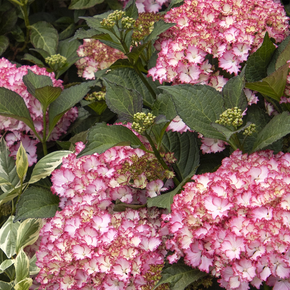
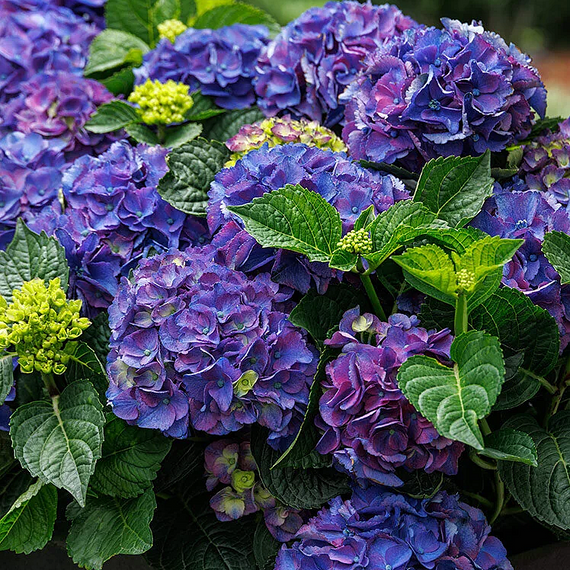
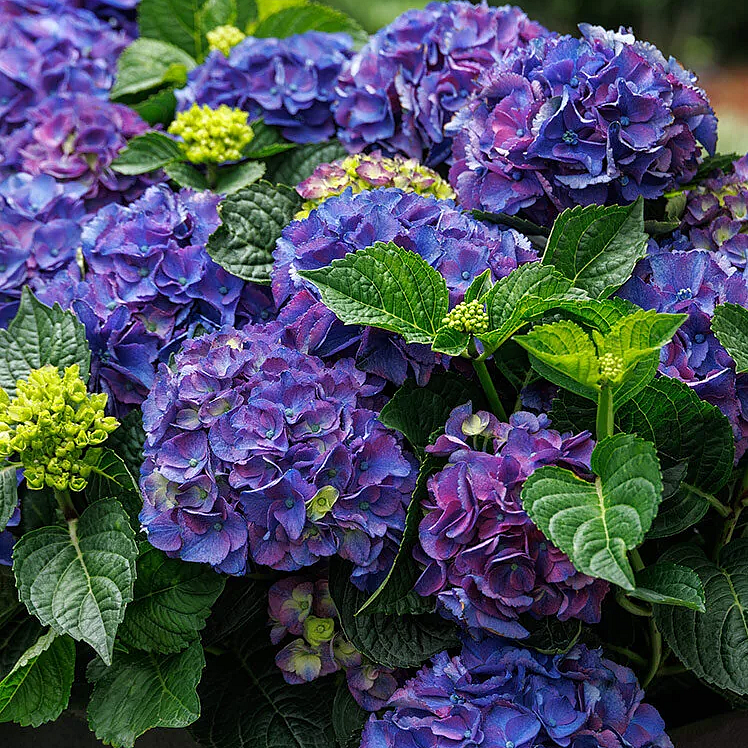
- Showy mophead blooms shift from chartreuse buds to rich blue-violet or deep pink depending on soil pH, rebloom reliably from late spring through early fall on both old and new wood
- Compact, rounded form reaches just 3 to 4 feet tall and wide, making it perfectly sized for foundation plantings, mixed borders, containers, and small urban gardens
- Exceptionally sturdy, upright stems resist flopping and produce long-lasting cut flowers that are outstanding in fresh arrangements
- Tetraploid genetics deliver thicker, waxier foliage and stronger stems than traditional bigleaf hydrangeas, with proven tolerance of coastal and urban conditions
Seaside Serenade Newport Hydrangea (Hydrangea macrophylla 'HORTMANI' PP#28,085) is a standout deciduous shrub from the exclusive Seaside Serenade series, bred in the Netherlands for superior compactness, stem strength, and extended bloom performance. From late spring through early fall, this reblooming bigleaf hydrangea produces a profusion of large, globe-shaped mophead flower clusters that emerge from eye-catching chartreuse buds and open into vivid blooms that shift between deep blue-violet and rich rose-pink depending on your soil's pH level — a dynamic, customizable color display no other shrub can quite match. Maturing at a tidy 3 to 4 feet tall and wide, 'Newport' fits naturally into foundation plantings, mixed borders, cottage-style gardens, mass plantings, and patio containers without outgrowing its space. Its tetraploid genetics give it noticeably thicker, glossier dark green leaves and exceptionally sturdy stems that hold blooms upright even in coastal winds — and those same sturdy stems make it a florist's favorite for fresh-cut arrangements. Highly tolerant of urban pollution and coastal conditions, this low-maintenance, long-lived shrub is an elegant, versatile choice for gardeners across USDA Zones 4b through 9b who want season-long color, easy care, and timeless hydrangea charm.
Plant Description
Seaside Serenade Newport is a compact, multi-stemmed deciduous shrub with a naturally rounded, symmetrical habit. It belongs to the bigleaf hydrangea (Hydrangea macrophylla) species and is part of the Seaside Serenade series, a group of robust, improved hydrangeas developed for stronger stems, more compact growth, and extended rebloom. The cultivar name 'HORTMANI' carries U.S. Plant Patent #28,085. Its tetraploid genetics — meaning it carries double the typical chromosome count — contribute directly to its thicker stems, waxy dark green foliage, and larger, more durable flower clusters compared to many traditional bigleaf hydrangeas. Large, globe-shaped mophead flower clusters emerge from distinctive bright chartreuse buds and open into showy, ball-like blooms. As they age through the season, the flowers transition through multiple color phases, beginning vibrant and gradually taking on a vintage, antique appearance before drying gracefully on the stem. The plant is named after Newport, Rhode Island, evoking the coastal elegance of that historic New England city.
Mature Size and Growth Rate
| Characteristic | Detail |
|---|---|
| Mature Height | 3 to 4 feet |
| Mature Spread | 3 to 4 feet |
| Growth Rate | Fast |
| Habit | Compact, rounded, multi-stemmed |
| Clearance from Ground | Approximately 1 foot |
| Lifespan | Approximately 20 years under ideal conditions |
Thanks to its fast growth rate, Seaside Serenade Newport establishes quickly and fills out its allotted space within a few seasons. Its naturally compact, rounded form means minimal corrective pruning is needed to maintain a tidy silhouette.
Hardiness Zones
Seaside Serenade Newport Hydrangea is rated for USDA Hardiness Zones 4b through 9b, making it a versatile choice across a wide range of climates — from the cold winters of the upper Midwest to the mild coastal conditions of the Pacific Coast and the warmth of the South. In colder microclimates or more exposed sites, applying a generous layer of mulch around the root zone in late fall provides additional winter protection and helps retain soil moisture. In warmer zones, selecting a site with afternoon shade and maintaining consistent soil moisture will keep the plant performing at its best through the heat of summer. Southern Oregon and Northern California gardeners will find this hydrangea well-suited to local conditions, particularly in locations that offer some afternoon shade protection from intense summer sun.
Sunlight Requirements
Seaside Serenade Newport thrives in partial sun to partial shade, with morning sun and afternoon shade being the ideal exposure. In the Pacific Northwest and coastal Northern California, it can handle more direct sun, especially in areas moderated by marine influence. In hotter inland valleys, afternoon shade is particularly important to prevent leaf scorch, bloom bleaching, and overall stress. While the plant can survive in full sun in cooler climates, providing some shade during the hottest part of the day results in longer-lasting, more vibrant blooms and healthier foliage throughout the season. Avoid planting in dense full shade, as this will significantly reduce flowering.
Soil and pH Preferences
This hydrangea performs best in rich, evenly moist, well-drained soil. It is adaptable to a range of soil types — including loam, clay-loam, and sandy loam — provided drainage is adequate, as soggy or waterlogged conditions can lead to root rot. Amending native soil with compost or well-aged organic matter at planting time greatly improves both fertility and moisture retention.
Soil pH has a direct and dramatic effect on bloom color in Seaside Serenade Newport:
- Acidic soil (pH 5.5 and below): Blooms shift toward blue and blue-violet due to increased aluminum availability in the soil.
- Neutral to slightly acidic soil (pH 6.0 to 6.5): Blooms often appear in mixed lavender-purple tones.
- Alkaline soil (pH 7.0 and above): Blooms express deep pink to rose-red hues as aluminum uptake is restricted.
To encourage blue flowers, work agricultural sulfur or aluminum sulfate into the soil. To encourage pink, add garden lime to raise the pH. Note that adjusting soil pH takes time, and results may not be immediate or perfectly consistent.
Watering Guide
Consistent, even moisture is key to keeping Seaside Serenade Newport healthy and blooming at its best. During the first growing season, water deeply and regularly — approximately once or twice per week depending on temperature and rainfall — to help establish a strong root system. Once established, the plant is moderately drought tolerant but benefits from supplemental irrigation during prolonged dry spells or periods of intense summer heat.
- Water at the base of the plant rather than overhead to reduce the risk of foliar disease and powdery mildew.
- Allow the top inch of soil to dry slightly between waterings, but do not allow the plant to wilt repeatedly, as this stresses the root system and diminishes bloom quality.
- Apply a 2 to 3 inch layer of organic mulch around the root zone to conserve soil moisture, moderate soil temperature, and reduce watering frequency.
- Container-grown plants dry out more quickly than in-ground plants and will typically require more frequent watering — check soil moisture daily during warm weather.
Fertilizing
Seaside Serenade Newport responds well to a straightforward fertilizing routine. Over-fertilizing, particularly with high-nitrogen formulas, encourages lush leafy growth at the expense of flower production, so a balanced approach is best.
- Early spring: Apply a balanced granular fertilizer such as a 10-10-10 or a slow-release shrub fertilizer as new growth begins to emerge. This supports healthy foliage expansion and sets the stage for abundant blooms.
- Mid-summer: A second light application of fertilizer can be made in early to mid-summer to encourage the reblooming flush. Avoid fertilizing after late summer, as this can stimulate tender new growth that is susceptible to early frost damage.
- If blue flowers are desired, use a fertilizer formulated for acid-loving plants (such as an azalea and rhododendron blend) combined with aluminum sulfate to lower soil pH and promote blue pigmentation.
- Topdressing with compost each spring is an excellent organic alternative or supplement to granular fertilizer, improving soil structure and feeding soil biology over time.
Pruning and Maintenance
Seaside Serenade Newport blooms on both old wood (stems that overwintered) and new wood (growth from the current season), giving it its valuable reblooming habit. This means timing your pruning carefully is important to avoid sacrificing either the early-season or rebloom flushes.
- Do not perform hard pruning in fall or early spring, as this will remove old-wood buds and eliminate the first, often largest flush of blooms.
- Deadheading: Remove spent flower clusters throughout the season to encourage continued reblooming and maintain a tidy appearance.
- Dead wood removal: In late spring, after new leaves have begun to unfurl, cut back any stems that show no signs of life to healthy green wood. This is the safest way to assess winter damage without removing viable buds prematurely.
- Light shaping: Minimal shaping can be done right after the plant finishes a flush of blooms. The naturally compact habit means heavy reshaping is rarely needed.
- Its naturally strong, upright stems resist flopping, so staking is generally not required.
Bloom Color and Seasonal Interest
One of the most captivating features of Seaside Serenade Newport is its dynamic, ever-changing color display across the seasons:
- Late spring: Flower clusters emerge from distinctive bright chartreuse-green buds, offering a fresh, cool-toned preview of the blooms to come.
- Late spring to early summer: Blooms open fully into large, globe-shaped mophead clusters ranging from blue-violet (in acidic soils) to deep rose-pink or red (in neutral to alkaline soils), with purple tones possible in intermediate pH conditions.
- Mid to late summer: Reblooming flushes continue to push new flower clusters, maintaining color through the hottest months. Older blooms begin to transition to warm pink tones regardless of soil pH as they age.
- Late summer to fall: As flowers finish their life cycle, they develop a beautiful antique, vintage appearance — fading to soft parchment, dusty rose, and green tones — and can be left on the plant for late-season interest or dried for arrangements.
- Winter: As a deciduous shrub, Newport drops its leaves in late fall, revealing attractive multi-stemmed branch structure. Dried flower heads can persist attractively into winter if left in place.
Cut Flower Use
Seaside Serenade Newport is an exceptional cut flower hydrangea, widely regarded as one of the best bigleaf hydrangeas for fresh arrangements. Its key advantages for cutting include:
- Exceptionally sturdy stems hold the large flower heads upright without flopping, both on the plant and in the vase — a common weakness in many hydrangea varieties that Newport notably overcomes.
- Cut stems when flower clusters are fully open, ideally in the cooler hours of early morning.
- Make a fresh cut at a sharp angle and immediately place stems in cool water. Splitting or lightly crushing the bottom inch of the stem improves water uptake.
- Change vase water every one to two days and recut stems to maximize vase life.
- Blooms can also be dried by hanging stems upside down in a cool, dry, well-ventilated space, or by allowing them to dry slowly in a vase with a small amount of water. Dried blooms retain beautiful color and texture for use in long-lasting arrangements.
Planting Instructions
- Choose the right site: Select a location with morning sun and afternoon shade, protected from harsh drying winds. Avoid low-lying frost pockets or areas with standing water.
- Prepare the soil: Dig a hole two to three times the width of the root ball and approximately the same depth. Amend the backfill generously with compost or aged organic matter to improve drainage and fertility.
- Set the plant: Place the plant so that the top of the root ball sits level with or slightly above the surrounding soil surface. Avoid planting too deep, which can lead to stem rot and poor establishment.
- Backfill and firm: Fill in around the root ball with amended soil, gently firming as you go to eliminate air pockets.
- Water thoroughly: Give the plant a deep, slow watering immediately after planting to settle the soil and begin root establishment.
- Mulch: Apply a 2 to 3 inch layer of organic mulch (shredded bark, wood chips, or compost) around the base of the plant, keeping mulch a few inches away from the stem to prevent rot.
- Space correctly: Allow at least 3 to 4 feet between plants when planting in groups or hedges to ensure good air circulation as plants mature.
Landscape Uses
Seaside Serenade Newport's compact size, strong stems, long bloom season, and color-changing flowers make it one of the most versatile hydrangeas available for a wide range of landscape applications:
- Foundation plantings: Its tidy, predictable size makes it ideal for planting along home foundations without the worry of overgrowth.
- Mixed shrub borders: Provides bold seasonal color and textural contrast alongside ornamental grasses, conifers, and broadleaf evergreens.
- Cottage and informal gardens: The classic mophead blooms fit beautifully in relaxed, romantic garden styles.
- Mass plantings: Planted in groups, Newport creates sweeping waves of color that are especially dramatic along slopes, driveways, or large beds.
- Low informal hedges and screening: Its dense, rounded habit creates a soft, flowering privacy screen or border hedge.
- Accent specimen: Works equally well as a standalone focal point in a smaller garden or entry planting.
- Coastal and urban gardens: Highly tolerant of salt air, urban pollution, and challenging environmental conditions.
- Container planting: Suitable as a dramatic "thriller" centerpiece in large patio containers or as a standalone patio specimen.
Container Growing
Seaside Serenade Newport performs beautifully as a container plant, and its compact size makes it well-suited for large pots on patios, decks, porches, and entryways. When grown in containers, keep the following in mind:
- Choose a container that is at least 16 to 20 inches in diameter with ample drainage holes to prevent waterlogging.
- Use a high-quality, well-draining potting mix formulated for shrubs or amended with perlite for improved drainage. Adding compost enriches the mix and supports healthy growth.
- Container plants dry out significantly faster than in-ground plants — check soil moisture daily during warm weather and water thoroughly whenever the top inch feels dry.
- Fertilize container plants more frequently than in-ground plants, as nutrients leach out with regular watering. A slow-release granular fertilizer applied in spring, supplemented with occasional liquid fertilizer through summer, works well.
- Because container roots are more exposed to temperature extremes, protect pots from freezing winter temperatures by moving them into an unheated garage, shed, or sheltered location. Container plants are not reliably cold-hardy through winter outdoors in most climates.
- Newport makes a striking "thriller" centerpiece in mixed container plantings surrounded by trailing or lower-growing companion plants.
Companion Plants
Seaside Serenade Newport pairs beautifully with a wide range of garden plants. Consider these companions to create layered, complementary plantings:
- Hostas: Their bold, textured foliage in shades of blue-green, gold, and variegated tones provides a lush, cooling contrast beneath the hydrangea's blooms.
- Astilbe: Feathery plumes in pink, white, and red complement the mophead flowers and share similar moisture preferences.
- Ferns (Japanese painted fern, autumn fern): Soft, arching fronds add fine texture and shade tolerance alongside Newport's coarser leaf form.
- Rhododendrons and azaleas: Share similar acidic soil preferences, bloom in the same season, and provide coordinating or contrasting flower colors.
- Japanese forest grass (Hakonechloa macra): Golden or variegated foliage creates a striking contrast with Newport's dark green leaves and vibrant blooms.
- Coneflowers (Echinacea): In sunnier settings, these long-blooming perennials carry the color display through late summer alongside Newport's rebloom flushes.
- Heucheras (coral bells): Colorful, low-growing foliage plants that create a rich, textured groundcover layer beneath Newport.
- Itea (Virginia sweetspire): Graceful arching form, fragrant summer blooms, and outstanding fall color provide excellent seasonal contrast.
Pests and Diseases
Seaside Serenade Newport is generally a robust, low-maintenance plant with good resistance to many common problems. However, gardeners should be aware of the following:
- Powdery mildew: White powdery coating on foliage can develop in humid conditions with poor air circulation. Prevent by spacing plants properly, avoiding overhead irrigation, and ensuring adequate airflow. Treat with a fungicidal spray if needed.
- Cercospora leaf spot: Circular brown or purple-edged spots on leaves caused by a fungal pathogen, especially in wet seasons. Remove affected foliage, improve air circulation, and avoid wetting leaves when watering.
- Botrytis blight (gray mold): Can affect spent flowers and foliage in cool, wet conditions. Remove faded blooms promptly and ensure good airflow.
- Aphids: Small, soft-bodied insects that cluster on new growth and flower buds. Usually manageable with a strong spray of water, insecticidal soap, or by encouraging natural predators such as ladybugs and lacewings.
- Spider mites: More common in hot, dry conditions. Increase humidity around the plant, avoid water stress, and treat with insecticidal soap or horticultural oil if populations are significant.
- Root rot (Phytophthora): Caused by poorly drained, constantly wet soils. Ensure well-draining planting conditions to prevent this serious issue.
With appropriate siting, proper watering practices, and good airflow, most pest and disease issues can be avoided or minimized without the need for chemical intervention.
Wildlife Value
While Seaside Serenade Newport is primarily prized for its ornamental value, it does provide meaningful benefits to garden wildlife:
- Pollinators: The large, open flower clusters attract butterflies, bumblebees, and other native pollinators, providing a valuable nectar source from late spring through early fall.
- Birds: Dense branching provides shelter and nesting habitat for small garden birds. Dried flower heads left on the plant through winter can offer perching structure.
- Deer resistance: While no hydrangea is considered fully deer-proof, the thicker, waxy foliage of this tetraploid variety is somewhat less palatable than that of more tender bigleaf hydrangeas. In high-deer-pressure areas, protective measures may still be warranted, especially in winter when other food sources are scarce.
- Showy mophead blooms shift from chartreuse buds to rich blue-violet or deep pink depending on soil pH, rebloom reliably from late spring through early fall on both old and new wood
- Compact, rounded form reaches just 3 to 4 feet tall and wide, making it perfectly sized for foundation plantings, mixed borders, containers, and small urban gardens
- Exceptionally sturdy, upright stems resist flopping and produce long-lasting cut flowers that are outstanding in fresh arrangements
- Tetraploid genetics deliver thicker, waxier foliage and stronger stems than traditional bigleaf hydrangeas, with proven tolerance of coastal and urban conditions
Seaside Serenade Newport Hydrangea (Hydrangea macrophylla 'HORTMANI' PP#28,085) is a standout deciduous shrub from the exclusive Seaside Serenade series, bred in the Netherlands for superior compactness, stem strength, and extended bloom performance. From late spring through early fall, this reblooming bigleaf hydrangea produces a profusion of large, globe-shaped mophead flower clusters that emerge from eye-catching chartreuse buds and open into vivid blooms that shift between deep blue-violet and rich rose-pink depending on your soil's pH level — a dynamic, customizable color display no other shrub can quite match. Maturing at a tidy 3 to 4 feet tall and wide, 'Newport' fits naturally into foundation plantings, mixed borders, cottage-style gardens, mass plantings, and patio containers without outgrowing its space. Its tetraploid genetics give it noticeably thicker, glossier dark green leaves and exceptionally sturdy stems that hold blooms upright even in coastal winds — and those same sturdy stems make it a florist's favorite for fresh-cut arrangements. Highly tolerant of urban pollution and coastal conditions, this low-maintenance, long-lived shrub is an elegant, versatile choice for gardeners across USDA Zones 4b through 9b who want season-long color, easy care, and timeless hydrangea charm.
Plant Description
Seaside Serenade Newport is a compact, multi-stemmed deciduous shrub with a naturally rounded, symmetrical habit. It belongs to the bigleaf hydrangea (Hydrangea macrophylla) species and is part of the Seaside Serenade series, a group of robust, improved hydrangeas developed for stronger stems, more compact growth, and extended rebloom. The cultivar name 'HORTMANI' carries U.S. Plant Patent #28,085. Its tetraploid genetics — meaning it carries double the typical chromosome count — contribute directly to its thicker stems, waxy dark green foliage, and larger, more durable flower clusters compared to many traditional bigleaf hydrangeas. Large, globe-shaped mophead flower clusters emerge from distinctive bright chartreuse buds and open into showy, ball-like blooms. As they age through the season, the flowers transition through multiple color phases, beginning vibrant and gradually taking on a vintage, antique appearance before drying gracefully on the stem. The plant is named after Newport, Rhode Island, evoking the coastal elegance of that historic New England city.
Mature Size and Growth Rate
| Characteristic | Detail |
|---|---|
| Mature Height | 3 to 4 feet |
| Mature Spread | 3 to 4 feet |
| Growth Rate | Fast |
| Habit | Compact, rounded, multi-stemmed |
| Clearance from Ground | Approximately 1 foot |
| Lifespan | Approximately 20 years under ideal conditions |
Thanks to its fast growth rate, Seaside Serenade Newport establishes quickly and fills out its allotted space within a few seasons. Its naturally compact, rounded form means minimal corrective pruning is needed to maintain a tidy silhouette.
Hardiness Zones
Seaside Serenade Newport Hydrangea is rated for USDA Hardiness Zones 4b through 9b, making it a versatile choice across a wide range of climates — from the cold winters of the upper Midwest to the mild coastal conditions of the Pacific Coast and the warmth of the South. In colder microclimates or more exposed sites, applying a generous layer of mulch around the root zone in late fall provides additional winter protection and helps retain soil moisture. In warmer zones, selecting a site with afternoon shade and maintaining consistent soil moisture will keep the plant performing at its best through the heat of summer. Southern Oregon and Northern California gardeners will find this hydrangea well-suited to local conditions, particularly in locations that offer some afternoon shade protection from intense summer sun.
Sunlight Requirements
Seaside Serenade Newport thrives in partial sun to partial shade, with morning sun and afternoon shade being the ideal exposure. In the Pacific Northwest and coastal Northern California, it can handle more direct sun, especially in areas moderated by marine influence. In hotter inland valleys, afternoon shade is particularly important to prevent leaf scorch, bloom bleaching, and overall stress. While the plant can survive in full sun in cooler climates, providing some shade during the hottest part of the day results in longer-lasting, more vibrant blooms and healthier foliage throughout the season. Avoid planting in dense full shade, as this will significantly reduce flowering.
Soil and pH Preferences
This hydrangea performs best in rich, evenly moist, well-drained soil. It is adaptable to a range of soil types — including loam, clay-loam, and sandy loam — provided drainage is adequate, as soggy or waterlogged conditions can lead to root rot. Amending native soil with compost or well-aged organic matter at planting time greatly improves both fertility and moisture retention.
Soil pH has a direct and dramatic effect on bloom color in Seaside Serenade Newport:
- Acidic soil (pH 5.5 and below): Blooms shift toward blue and blue-violet due to increased aluminum availability in the soil.
- Neutral to slightly acidic soil (pH 6.0 to 6.5): Blooms often appear in mixed lavender-purple tones.
- Alkaline soil (pH 7.0 and above): Blooms express deep pink to rose-red hues as aluminum uptake is restricted.
To encourage blue flowers, work agricultural sulfur or aluminum sulfate into the soil. To encourage pink, add garden lime to raise the pH. Note that adjusting soil pH takes time, and results may not be immediate or perfectly consistent.
Watering Guide
Consistent, even moisture is key to keeping Seaside Serenade Newport healthy and blooming at its best. During the first growing season, water deeply and regularly — approximately once or twice per week depending on temperature and rainfall — to help establish a strong root system. Once established, the plant is moderately drought tolerant but benefits from supplemental irrigation during prolonged dry spells or periods of intense summer heat.
- Water at the base of the plant rather than overhead to reduce the risk of foliar disease and powdery mildew.
- Allow the top inch of soil to dry slightly between waterings, but do not allow the plant to wilt repeatedly, as this stresses the root system and diminishes bloom quality.
- Apply a 2 to 3 inch layer of organic mulch around the root zone to conserve soil moisture, moderate soil temperature, and reduce watering frequency.
- Container-grown plants dry out more quickly than in-ground plants and will typically require more frequent watering — check soil moisture daily during warm weather.
Fertilizing
Seaside Serenade Newport responds well to a straightforward fertilizing routine. Over-fertilizing, particularly with high-nitrogen formulas, encourages lush leafy growth at the expense of flower production, so a balanced approach is best.
- Early spring: Apply a balanced granular fertilizer such as a 10-10-10 or a slow-release shrub fertilizer as new growth begins to emerge. This supports healthy foliage expansion and sets the stage for abundant blooms.
- Mid-summer: A second light application of fertilizer can be made in early to mid-summer to encourage the reblooming flush. Avoid fertilizing after late summer, as this can stimulate tender new growth that is susceptible to early frost damage.
- If blue flowers are desired, use a fertilizer formulated for acid-loving plants (such as an azalea and rhododendron blend) combined with aluminum sulfate to lower soil pH and promote blue pigmentation.
- Topdressing with compost each spring is an excellent organic alternative or supplement to granular fertilizer, improving soil structure and feeding soil biology over time.
Pruning and Maintenance
Seaside Serenade Newport blooms on both old wood (stems that overwintered) and new wood (growth from the current season), giving it its valuable reblooming habit. This means timing your pruning carefully is important to avoid sacrificing either the early-season or rebloom flushes.
- Do not perform hard pruning in fall or early spring, as this will remove old-wood buds and eliminate the first, often largest flush of blooms.
- Deadheading: Remove spent flower clusters throughout the season to encourage continued reblooming and maintain a tidy appearance.
- Dead wood removal: In late spring, after new leaves have begun to unfurl, cut back any stems that show no signs of life to healthy green wood. This is the safest way to assess winter damage without removing viable buds prematurely.
- Light shaping: Minimal shaping can be done right after the plant finishes a flush of blooms. The naturally compact habit means heavy reshaping is rarely needed.
- Its naturally strong, upright stems resist flopping, so staking is generally not required.
Bloom Color and Seasonal Interest
One of the most captivating features of Seaside Serenade Newport is its dynamic, ever-changing color display across the seasons:
- Late spring: Flower clusters emerge from distinctive bright chartreuse-green buds, offering a fresh, cool-toned preview of the blooms to come.
- Late spring to early summer: Blooms open fully into large, globe-shaped mophead clusters ranging from blue-violet (in acidic soils) to deep rose-pink or red (in neutral to alkaline soils), with purple tones possible in intermediate pH conditions.
- Mid to late summer: Reblooming flushes continue to push new flower clusters, maintaining color through the hottest months. Older blooms begin to transition to warm pink tones regardless of soil pH as they age.
- Late summer to fall: As flowers finish their life cycle, they develop a beautiful antique, vintage appearance — fading to soft parchment, dusty rose, and green tones — and can be left on the plant for late-season interest or dried for arrangements.
- Winter: As a deciduous shrub, Newport drops its leaves in late fall, revealing attractive multi-stemmed branch structure. Dried flower heads can persist attractively into winter if left in place.
Cut Flower Use
Seaside Serenade Newport is an exceptional cut flower hydrangea, widely regarded as one of the best bigleaf hydrangeas for fresh arrangements. Its key advantages for cutting include:
- Exceptionally sturdy stems hold the large flower heads upright without flopping, both on the plant and in the vase — a common weakness in many hydrangea varieties that Newport notably overcomes.
- Cut stems when flower clusters are fully open, ideally in the cooler hours of early morning.
- Make a fresh cut at a sharp angle and immediately place stems in cool water. Splitting or lightly crushing the bottom inch of the stem improves water uptake.
- Change vase water every one to two days and recut stems to maximize vase life.
- Blooms can also be dried by hanging stems upside down in a cool, dry, well-ventilated space, or by allowing them to dry slowly in a vase with a small amount of water. Dried blooms retain beautiful color and texture for use in long-lasting arrangements.
Planting Instructions
- Choose the right site: Select a location with morning sun and afternoon shade, protected from harsh drying winds. Avoid low-lying frost pockets or areas with standing water.
- Prepare the soil: Dig a hole two to three times the width of the root ball and approximately the same depth. Amend the backfill generously with compost or aged organic matter to improve drainage and fertility.
- Set the plant: Place the plant so that the top of the root ball sits level with or slightly above the surrounding soil surface. Avoid planting too deep, which can lead to stem rot and poor establishment.
- Backfill and firm: Fill in around the root ball with amended soil, gently firming as you go to eliminate air pockets.
- Water thoroughly: Give the plant a deep, slow watering immediately after planting to settle the soil and begin root establishment.
- Mulch: Apply a 2 to 3 inch layer of organic mulch (shredded bark, wood chips, or compost) around the base of the plant, keeping mulch a few inches away from the stem to prevent rot.
- Space correctly: Allow at least 3 to 4 feet between plants when planting in groups or hedges to ensure good air circulation as plants mature.
Landscape Uses
Seaside Serenade Newport's compact size, strong stems, long bloom season, and color-changing flowers make it one of the most versatile hydrangeas available for a wide range of landscape applications:
- Foundation plantings: Its tidy, predictable size makes it ideal for planting along home foundations without the worry of overgrowth.
- Mixed shrub borders: Provides bold seasonal color and textural contrast alongside ornamental grasses, conifers, and broadleaf evergreens.
- Cottage and informal gardens: The classic mophead blooms fit beautifully in relaxed, romantic garden styles.
- Mass plantings: Planted in groups, Newport creates sweeping waves of color that are especially dramatic along slopes, driveways, or large beds.
- Low informal hedges and screening: Its dense, rounded habit creates a soft, flowering privacy screen or border hedge.
- Accent specimen: Works equally well as a standalone focal point in a smaller garden or entry planting.
- Coastal and urban gardens: Highly tolerant of salt air, urban pollution, and challenging environmental conditions.
- Container planting: Suitable as a dramatic "thriller" centerpiece in large patio containers or as a standalone patio specimen.
Container Growing
Seaside Serenade Newport performs beautifully as a container plant, and its compact size makes it well-suited for large pots on patios, decks, porches, and entryways. When grown in containers, keep the following in mind:
- Choose a container that is at least 16 to 20 inches in diameter with ample drainage holes to prevent waterlogging.
- Use a high-quality, well-draining potting mix formulated for shrubs or amended with perlite for improved drainage. Adding compost enriches the mix and supports healthy growth.
- Container plants dry out significantly faster than in-ground plants — check soil moisture daily during warm weather and water thoroughly whenever the top inch feels dry.
- Fertilize container plants more frequently than in-ground plants, as nutrients leach out with regular watering. A slow-release granular fertilizer applied in spring, supplemented with occasional liquid fertilizer through summer, works well.
- Because container roots are more exposed to temperature extremes, protect pots from freezing winter temperatures by moving them into an unheated garage, shed, or sheltered location. Container plants are not reliably cold-hardy through winter outdoors in most climates.
- Newport makes a striking "thriller" centerpiece in mixed container plantings surrounded by trailing or lower-growing companion plants.
Companion Plants
Seaside Serenade Newport pairs beautifully with a wide range of garden plants. Consider these companions to create layered, complementary plantings:
- Hostas: Their bold, textured foliage in shades of blue-green, gold, and variegated tones provides a lush, cooling contrast beneath the hydrangea's blooms.
- Astilbe: Feathery plumes in pink, white, and red complement the mophead flowers and share similar moisture preferences.
- Ferns (Japanese painted fern, autumn fern): Soft, arching fronds add fine texture and shade tolerance alongside Newport's coarser leaf form.
- Rhododendrons and azaleas: Share similar acidic soil preferences, bloom in the same season, and provide coordinating or contrasting flower colors.
- Japanese forest grass (Hakonechloa macra): Golden or variegated foliage creates a striking contrast with Newport's dark green leaves and vibrant blooms.
- Coneflowers (Echinacea): In sunnier settings, these long-blooming perennials carry the color display through late summer alongside Newport's rebloom flushes.
- Heucheras (coral bells): Colorful, low-growing foliage plants that create a rich, textured groundcover layer beneath Newport.
- Itea (Virginia sweetspire): Graceful arching form, fragrant summer blooms, and outstanding fall color provide excellent seasonal contrast.
Pests and Diseases
Seaside Serenade Newport is generally a robust, low-maintenance plant with good resistance to many common problems. However, gardeners should be aware of the following:
- Powdery mildew: White powdery coating on foliage can develop in humid conditions with poor air circulation. Prevent by spacing plants properly, avoiding overhead irrigation, and ensuring adequate airflow. Treat with a fungicidal spray if needed.
- Cercospora leaf spot: Circular brown or purple-edged spots on leaves caused by a fungal pathogen, especially in wet seasons. Remove affected foliage, improve air circulation, and avoid wetting leaves when watering.
- Botrytis blight (gray mold): Can affect spent flowers and foliage in cool, wet conditions. Remove faded blooms promptly and ensure good airflow.
- Aphids: Small, soft-bodied insects that cluster on new growth and flower buds. Usually manageable with a strong spray of water, insecticidal soap, or by encouraging natural predators such as ladybugs and lacewings.
- Spider mites: More common in hot, dry conditions. Increase humidity around the plant, avoid water stress, and treat with insecticidal soap or horticultural oil if populations are significant.
- Root rot (Phytophthora): Caused by poorly drained, constantly wet soils. Ensure well-draining planting conditions to prevent this serious issue.
With appropriate siting, proper watering practices, and good airflow, most pest and disease issues can be avoided or minimized without the need for chemical intervention.
Wildlife Value
While Seaside Serenade Newport is primarily prized for its ornamental value, it does provide meaningful benefits to garden wildlife:
- Pollinators: The large, open flower clusters attract butterflies, bumblebees, and other native pollinators, providing a valuable nectar source from late spring through early fall.
- Birds: Dense branching provides shelter and nesting habitat for small garden birds. Dried flower heads left on the plant through winter can offer perching structure.
- Deer resistance: While no hydrangea is considered fully deer-proof, the thicker, waxy foliage of this tetraploid variety is somewhat less palatable than that of more tender bigleaf hydrangeas. In high-deer-pressure areas, protective measures may still be warranted, especially in winter when other food sources are scarce.