Zoom the image with the mouse
Seaside Serenade Hamptons Hydrangea - 1 Gallon
SKU:
2096575
UPC:
014949491454
$24.99
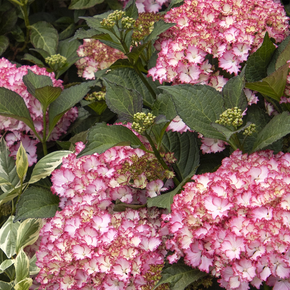
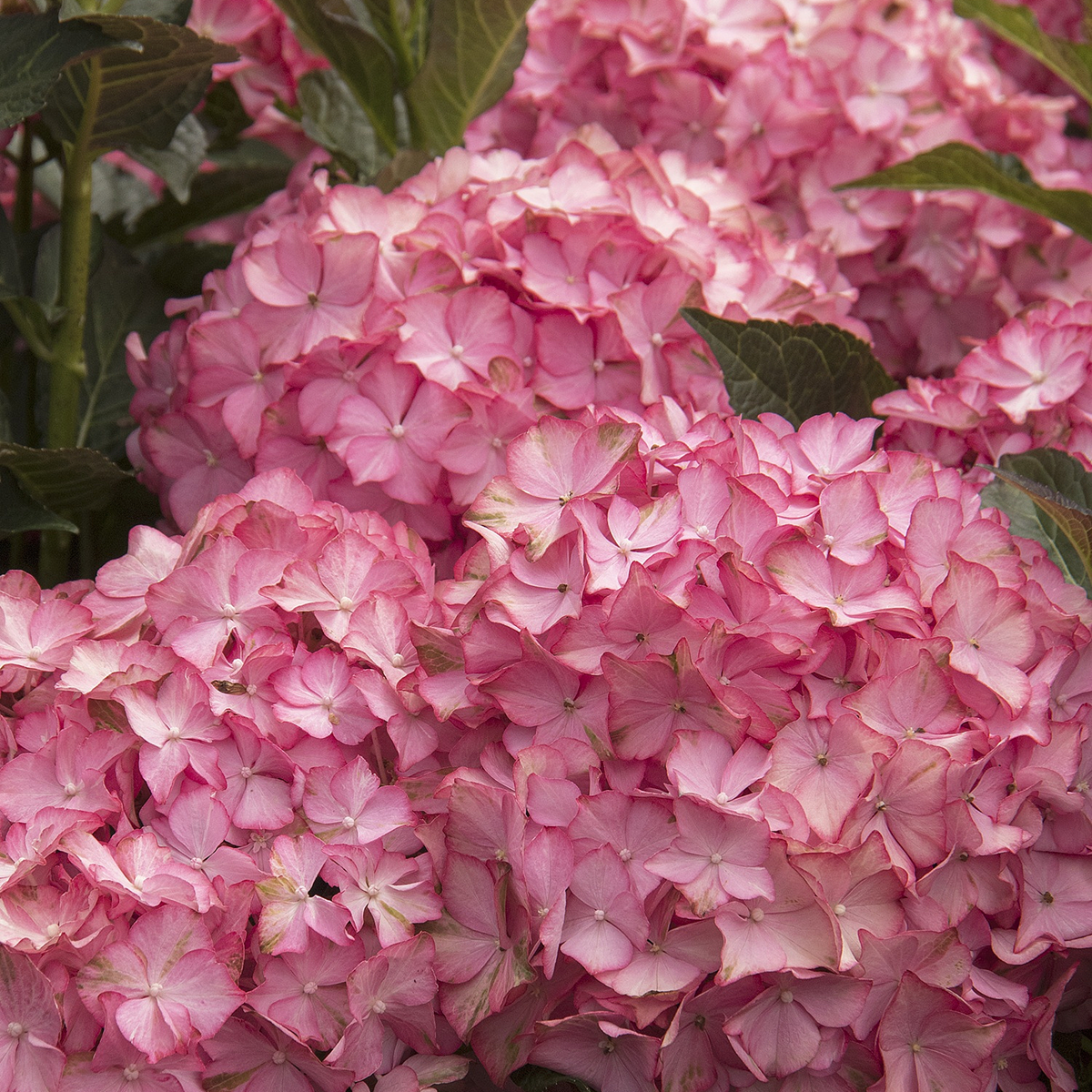
- Spectacular oversized mophead blooms in vivid pink with white-eyed florets and a subtle green tint are held upright on exceptionally strong, thick stems — ideal for long-lasting cut flower arrangements.
- Three-season foliage interest: striking burgundy-maroon leaves emerge in spring, mature to glossy deep green in summer, then transition to fiery cinnamon-red in fall.
- Uniquely heat- and wind-tolerant thick leaves outperform standard bigleaf hydrangeas, even shrugging off the occasional missed watering on a hot day without scorching.
- Naturally compact, rounded habit stays tidy at roughly 3-4 feet tall and wide — a perfect fit for foundation plantings, mixed borders, containers, and smaller garden spaces.
Seaside Serenade Hamptons Hydrangea (Hydrangea macrophylla 'HORTHAMP' PP29005) is a showstopping deciduous shrub that brings coastal-inspired elegance to any garden. Part of the exclusive Seaside Serenade series, this compact bigleaf hydrangea was named after the iconic Hamptons region of New York and delivers a sophisticated, multi-season display that sets it apart from ordinary macrophyllas. From late spring through late summer, massive ball-shaped mophead flower clusters erupt in intense pink with white-eyed centers and a delicate green blush — blooms that mature gracefully to lavender tones with darker edging for a lacy, layered effect. The thick-petaled florets are exceptionally long-lasting both in the garden and in a vase, sitting upright on robust, non-drooping stems that resist lodging even in coastal winds. Foliage is equally remarkable: deep coppery-maroon leaves unfurl in spring, transforming to rich, glossy dark green through summer before putting on a brilliant cinnamon-red fall show. The thicker leaf construction of the Seaside Serenade series provides superior tolerance to heat, wind, and brief periods of dry stress compared to standard bigleaf hydrangeas, making this cultivar an excellent performer in the challenging climates of Southern Oregon and Northern California. Whether planted as a specimen, massed in a border, tucked into a foundation planting, or featured as the thriller in a large container, Seaside Serenade Hamptons Hydrangea delivers refined, effortless beauty across every season.
Plant Description
Seaside Serenade Hamptons Hydrangea is a deciduous, multi-stemmed shrub with a naturally rounded, compact habit. It belongs to the bigleaf hydrangea species (Hydrangea macrophylla) and is part of the Seaside Serenade series, distinguished by its unusually thick leaves and flower petals that deliver superior durability compared to other macrophylla cultivars. The flower clusters are classic mophead-style — large, dense, ball-shaped heads composed of showy sterile florets in vivid pink with white eyes and a hint of green, all held erect on thick, sturdy stems. As the season progresses, the blooms age gracefully to soft lavender with a darker pink border, giving each flower head a romantic, layered depth. Foliage emerges in spring with eye-catching deep coppery-maroon color, transitions to glossy, leathery dark green for summer, and closes out the season with a fiery cinnamon-red fall display. This cultivar is patented under PP29005.
Mature Size
| Attribute | Detail |
|---|---|
| Mature Height | 3 to 4 feet |
| Mature Spread | 3 feet |
| Growth Habit | Rounded, compact, multi-stemmed |
| Growth Rate | Fast |
| Clearance from Ground | Approximately 1 foot |
| Expected Lifespan | Approximately 20 years under ideal conditions |
Hardiness Zones
Seaside Serenade Hamptons Hydrangea is hardy in USDA Zones 5-9, making it well-suited for a wide range of climates including Southern Oregon and Northern California. It appreciates a sheltered planting location in colder parts of its range to protect developing flower buds from late frosts. Applying a generous layer of mulch around the root zone in late fall helps insulate roots and retain soil moisture through winter. In warmer zones (8-9), afternoon shade is especially important to prevent heat stress during the hottest months of summer.
Sunlight Requirements
This hydrangea performs best in partial shade, particularly a site that receives morning sun and is shielded from direct afternoon sunlight. While it can tolerate more sun in cooler coastal climates, exposure to intense afternoon sun — especially reflected heat from south- or west-facing walls — can cause stress even with the Seaside series' improved leaf thickness. Dappled shade under the high canopy of deciduous trees is an ideal setting. Avoid dense, full shade, as this significantly reduces bloom production.
- Best: Morning sun, afternoon shade (4-6 hours of direct morning light)
- Acceptable: Dappled sunlight throughout the day
- Avoid: Hot, direct afternoon sun; reflected heat from walls or pavement
Soil and pH Preferences
Seaside Serenade Hamptons Hydrangea thrives in moist, fertile, well-drained soil rich in organic matter. It is adaptable to clay, loam, and sandy soils provided drainage is adequate and moisture is consistent. Like all bigleaf hydrangeas, soil pH plays a significant role in flower color expression:
- Acidic soil (pH below 6.0): Promotes blue to purple flower tones as aluminum becomes more available to the plant.
- Alkaline soil (pH above 7.0): Favors the intense pink to red flower tones this cultivar is best known for.
- Neutral soil (pH 6.0-7.0): May produce mixed or transitional purple-pink tones.
To encourage vivid pink blooms, maintain a slightly alkaline to neutral pH and avoid adding acidifying amendments. To shift blooms toward blue or purple, incorporate aluminum sulfate into the soil over several weeks before bloom time. Amend heavy clay soils with compost or aged bark to improve drainage and aeration.
Watering Guide
Consistent moisture is key to healthy growth and abundant flowering. Seaside Serenade Hamptons Hydrangea prefers evenly moist soil and does not tolerate drought well once in active growth, although its thicker leaves make it more resilient to brief dry spells than standard macrophylla varieties.
- At planting: Water deeply and thoroughly at the time of planting to settle the soil around the roots.
- First growing season: Water deeply and regularly — typically 2-3 times per week depending on temperature and soil type — to help establish a strong, extensive root system.
- Established plants: Water as needed to maintain consistently moist (not waterlogged) soil. During hot, dry spells, deep watering once or twice per week is typically sufficient.
- Mulching: Apply a 2-3 inch layer of organic mulch (bark, shredded leaves, or compost) around the root zone to conserve soil moisture, moderate soil temperature, and reduce watering frequency.
- Avoid: Overhead watering, which can promote fungal disease on foliage. Use drip irrigation or a soaker hose at the base of the plant when possible.
Fertilizing
Feed Seaside Serenade Hamptons Hydrangea in early spring as new growth begins to emerge. Use a balanced, slow-release granular fertilizer formulated for flowering shrubs, or a fertilizer specifically blended for hydrangeas and acid-loving plants. A second light application can be made in early to mid-summer if growth appears sluggish or foliage is pale. Avoid fertilizing after late summer, as this can stimulate late-season growth that is vulnerable to frost damage and may reduce next year's bloom set. Avoid high-nitrogen fertilizers, which promote lush foliage at the expense of flowers. Topdressing with compost each spring also enriches soil structure and provides a slow, gentle nutrient boost throughout the growing season.
Pruning and Maintenance
Seaside Serenade Hamptons Hydrangea blooms primarily on old wood (stems from the previous season), so proper pruning timing is critical to preserving the flower buds that produce next year's display.
- When to prune: Prune only immediately after flowering — typically in mid to late summer — and no later than early August. Pruning after this window risks removing next season's flower buds that form on the current season's growth.
- What to prune: Remove spent flower heads just below the bloom cluster. Cut back any dead, weak, or crossing stems to the base to encourage a clean, open structure.
- Dead wood: In late spring, once leaves begin to unfurl, identify any stems that did not leaf out and cut them back to live wood just above a healthy bud.
- Hard rejuvenation: If the shrub becomes overgrown or unproductive, a full rejuvenation cut can be done in late winter or early spring, accepting the trade-off of losing one season's bloom.
- Deadheading: Spent blooms can be removed throughout summer to keep the plant tidy, though dried flower heads left in place offer attractive winter interest and some frost protection for the buds below.
Planting Instructions
- Select a site with morning sun, afternoon shade, and protection from strong prevailing winds. Avoid low-lying frost pockets in colder areas of the growing range.
- Dig a hole twice as wide as the root ball and equal in depth. Avoid planting too deeply — the top of the root ball should sit level with or very slightly above the surrounding soil grade.
- Amend the backfill soil with compost or aged organic matter if the native soil is poor, heavy clay, or very sandy.
- Remove the plant from its container and gently loosen any circling or compacted roots before placing it in the hole.
- Backfill the hole, firming the soil lightly around the roots to eliminate air pockets. Do not compact the soil heavily.
- Water deeply and thoroughly immediately after planting.
- Apply a 2-3 inch layer of organic mulch over the root zone, keeping mulch a few inches away from the base of the stems to prevent crown rot.
- Water regularly for the first growing season until the plant is fully established.
Seasonal Interest
| Season | What to Expect |
|---|---|
| Spring | Striking deep coppery-burgundy foliage emerges, providing bold color before flowers appear. Early flower buds become visible on the tips of old wood stems. |
| Early Summer | Massive mophead flower clusters open in vivid pink with white-eyed florets and a fresh green tint, held erect on strong stems. |
| Mid to Late Summer | Blooms mature and develop deeper lavender-pink tones with a darker edging for a layered, romantic look. Foliage is rich, glossy dark green. |
| Fall | Foliage transitions to spectacular fiery cinnamon-red. Dried flower heads persist on the plant, providing textural interest. |
| Winter | Skeletal branching structure with persistent dried flower heads adds subtle garden interest. Dormant buds on old wood carry next season's blooms. |
Landscape Uses
Seaside Serenade Hamptons Hydrangea is a versatile performer across a wide range of landscape applications. Its compact size, refined appearance, and multi-season interest make it a reliable workhorse in both formal and informal garden designs.
- Foundation plantings: Its naturally compact, rounded habit and bold flowers make it an excellent choice near home entrances and building foundations.
- Mixed shrub borders: Use in the front to middle of a border where its spring foliage color, summer blooms, and fall leaf color provide long-season interest.
- Mass plantings: Planted in groups of three or more, it creates a dramatic sweep of color along driveways, fences, or property edges.
- Cottage and coastal gardens: Its relaxed mophead blooms and wind-tolerant foliage suit informal seaside-inspired or cottage-style gardens perfectly.
- Cutting gardens: Strong stems and long-lasting blooms make it an outstanding source of fresh-cut flowers for home arrangements.
- Container planting: Effective as a standalone "thriller" specimen in a large decorative pot on a patio, deck, or courtyard.
- Urban gardens: Tolerates urban pollution and is well-suited to smaller city garden spaces.
- Woodland garden edges: Thrives in the dappled light at the perimeter of a woodland garden or under the canopy of deciduous trees.
Companion Plants
Pair Seaside Serenade Hamptons Hydrangea with plants that share its preference for partial shade and consistent moisture, while complementing its bold mophead blooms, burgundy spring color, and fiery fall foliage.
- Hostas: Large-leaved hostas provide a lush, contrasting texture beneath the hydrangea and thrive in the same shaded, moist conditions.
- Astilbe: Feathery pink, white, or red plumes of astilbe bloom simultaneously with the hydrangea and enjoy the same cool, moist partial-shade environment.
- Japanese Forest Grass (Hakonechloa macra): Cascading golden or variegated foliage creates a soft, elegant contrast at the base of the shrub.
- Ferns (Dryopteris, Athyrium): Textural, fine-cut fronds complement the bold, glossy leaves of the hydrangea and fill in shaded gaps in the border.
- Heuchera (Coral Bells): Dark-leaved or colorful heuchera varieties echo the burgundy spring foliage tones and provide low-growing color year-round.
- Japanese Pieris (Pieris japonica): Shares a preference for acidic, moist, well-drained soil and offers early spring interest with dangling white flower clusters.
- Bleeding Heart (Lamprocapnos spectabilis): Delicate arching stems and heart-shaped flowers add a romantic cottage-garden feel in spring before summer blooms take center stage.
- Rhododendrons and Azaleas: Bloom in spring as a colorful lead-in to the hydrangea's summer show, and share the same soil and light requirements.
Pests and Diseases
Seaside Serenade Hamptons Hydrangea is generally a robust, low-maintenance shrub with no serious pest or disease problems when grown in appropriate conditions. The Seaside Serenade series' thicker leaves provide additional resistance to some common issues. Be aware of the following:
- Powdery mildew: Can develop in humid conditions with poor air circulation. Ensure plants are not overcrowded and avoid overhead watering. Treat with a fungicide labeled for ornamentals if needed.
- Leaf spot (Cercospora, Botrytis): Fungal leaf spotting may appear in wet seasons. Remove and dispose of affected leaves; improve air circulation around the plant.
- Aphids: Occasionally appear on tender new growth in spring. Knock off with a strong stream of water or apply insecticidal soap.
- Spider mites: More likely during hot, dry periods. Increased irrigation and humidity around the plant generally discourages mite populations.
- Deer: Bigleaf hydrangeas are a known browse target for deer. In deer-pressure areas, consider protective fencing for newly planted specimens or apply deer repellent regularly.
- Bacterial wilt: Rare but possible; affected stems wilt suddenly. Remove and destroy infected material promptly and avoid wounding plants during maintenance.
- Note on toxicity: All parts of Hydrangea macrophylla contain low levels of cyanogenic glycosides and are considered mildly toxic if ingested by humans, dogs, cats, and horses. Keep this in mind when siting the plant in gardens frequented by pets or children.
Container Growing
Seaside Serenade Hamptons Hydrangea is an excellent candidate for large container growing and serves as a dramatic "thriller" specimen on patios, decks, and in courtyard gardens. Follow these guidelines for success in containers:
- Container size: Choose a pot at least 18-24 inches in diameter with ample drainage holes. Larger containers retain moisture more evenly and require less frequent watering.
- Potting mix: Use a high-quality, well-draining potting mix enriched with compost. Avoid using straight garden soil, which can compact and restrict drainage in containers.
- Watering: Container plants dry out significantly faster than in-ground plantings — check soil moisture daily during warm weather and water thoroughly when the top inch of soil feels dry.
- Fertilizing: Feed container-grown plants with a slow-release granular fertilizer at planting and supplement with a liquid fertilizer every 4-6 weeks during the growing season, as nutrients leach out more quickly with regular watering.
- Winter care: In colder areas of the hardiness range, move containers to a sheltered, unheated garage or shed over winter to protect roots from freeze-thaw cycles that can damage container-grown plants more severely than those in the ground.
- Repotting: Repot into a slightly larger container every 2-3 years, or when roots begin to circle and crowd the base of the pot, to maintain vigorous growth and blooming.
Wildlife Value and Garden Ecology
While the large, showy sterile florets of mophead hydrangeas offer limited direct nectar access compared to lacecap types, Seaside Serenade Hamptons Hydrangea still contributes meaningfully to a healthy garden ecosystem:
- Pollinators: Butterflies and native bees are attracted to the plant and may access nectar from any fertile flowers present within the bloom clusters. The bold color and size of the flower heads serve as a visual beacon for pollinators moving through the garden.
- Stem-nesting bees: After the growing season, the hollow or pithy dead stems of bigleaf hydrangeas provide nesting sites for native solitary bees. Rather than cutting all stems to the ground in fall, consider leaving stubs of 12-24 inches in place until they naturally disintegrate to support these beneficial insects.
- Birds: Persistent dried flower heads provide minor cover and perching structure for small songbirds through the winter months.
- Spectacular oversized mophead blooms in vivid pink with white-eyed florets and a subtle green tint are held upright on exceptionally strong, thick stems — ideal for long-lasting cut flower arrangements.
- Three-season foliage interest: striking burgundy-maroon leaves emerge in spring, mature to glossy deep green in summer, then transition to fiery cinnamon-red in fall.
- Uniquely heat- and wind-tolerant thick leaves outperform standard bigleaf hydrangeas, even shrugging off the occasional missed watering on a hot day without scorching.
- Naturally compact, rounded habit stays tidy at roughly 3-4 feet tall and wide — a perfect fit for foundation plantings, mixed borders, containers, and smaller garden spaces.
Seaside Serenade Hamptons Hydrangea (Hydrangea macrophylla 'HORTHAMP' PP29005) is a showstopping deciduous shrub that brings coastal-inspired elegance to any garden. Part of the exclusive Seaside Serenade series, this compact bigleaf hydrangea was named after the iconic Hamptons region of New York and delivers a sophisticated, multi-season display that sets it apart from ordinary macrophyllas. From late spring through late summer, massive ball-shaped mophead flower clusters erupt in intense pink with white-eyed centers and a delicate green blush — blooms that mature gracefully to lavender tones with darker edging for a lacy, layered effect. The thick-petaled florets are exceptionally long-lasting both in the garden and in a vase, sitting upright on robust, non-drooping stems that resist lodging even in coastal winds. Foliage is equally remarkable: deep coppery-maroon leaves unfurl in spring, transforming to rich, glossy dark green through summer before putting on a brilliant cinnamon-red fall show. The thicker leaf construction of the Seaside Serenade series provides superior tolerance to heat, wind, and brief periods of dry stress compared to standard bigleaf hydrangeas, making this cultivar an excellent performer in the challenging climates of Southern Oregon and Northern California. Whether planted as a specimen, massed in a border, tucked into a foundation planting, or featured as the thriller in a large container, Seaside Serenade Hamptons Hydrangea delivers refined, effortless beauty across every season.
Plant Description
Seaside Serenade Hamptons Hydrangea is a deciduous, multi-stemmed shrub with a naturally rounded, compact habit. It belongs to the bigleaf hydrangea species (Hydrangea macrophylla) and is part of the Seaside Serenade series, distinguished by its unusually thick leaves and flower petals that deliver superior durability compared to other macrophylla cultivars. The flower clusters are classic mophead-style — large, dense, ball-shaped heads composed of showy sterile florets in vivid pink with white eyes and a hint of green, all held erect on thick, sturdy stems. As the season progresses, the blooms age gracefully to soft lavender with a darker pink border, giving each flower head a romantic, layered depth. Foliage emerges in spring with eye-catching deep coppery-maroon color, transitions to glossy, leathery dark green for summer, and closes out the season with a fiery cinnamon-red fall display. This cultivar is patented under PP29005.
Mature Size
| Attribute | Detail |
|---|---|
| Mature Height | 3 to 4 feet |
| Mature Spread | 3 feet |
| Growth Habit | Rounded, compact, multi-stemmed |
| Growth Rate | Fast |
| Clearance from Ground | Approximately 1 foot |
| Expected Lifespan | Approximately 20 years under ideal conditions |
Hardiness Zones
Seaside Serenade Hamptons Hydrangea is hardy in USDA Zones 5-9, making it well-suited for a wide range of climates including Southern Oregon and Northern California. It appreciates a sheltered planting location in colder parts of its range to protect developing flower buds from late frosts. Applying a generous layer of mulch around the root zone in late fall helps insulate roots and retain soil moisture through winter. In warmer zones (8-9), afternoon shade is especially important to prevent heat stress during the hottest months of summer.
Sunlight Requirements
This hydrangea performs best in partial shade, particularly a site that receives morning sun and is shielded from direct afternoon sunlight. While it can tolerate more sun in cooler coastal climates, exposure to intense afternoon sun — especially reflected heat from south- or west-facing walls — can cause stress even with the Seaside series' improved leaf thickness. Dappled shade under the high canopy of deciduous trees is an ideal setting. Avoid dense, full shade, as this significantly reduces bloom production.
- Best: Morning sun, afternoon shade (4-6 hours of direct morning light)
- Acceptable: Dappled sunlight throughout the day
- Avoid: Hot, direct afternoon sun; reflected heat from walls or pavement
Soil and pH Preferences
Seaside Serenade Hamptons Hydrangea thrives in moist, fertile, well-drained soil rich in organic matter. It is adaptable to clay, loam, and sandy soils provided drainage is adequate and moisture is consistent. Like all bigleaf hydrangeas, soil pH plays a significant role in flower color expression:
- Acidic soil (pH below 6.0): Promotes blue to purple flower tones as aluminum becomes more available to the plant.
- Alkaline soil (pH above 7.0): Favors the intense pink to red flower tones this cultivar is best known for.
- Neutral soil (pH 6.0-7.0): May produce mixed or transitional purple-pink tones.
To encourage vivid pink blooms, maintain a slightly alkaline to neutral pH and avoid adding acidifying amendments. To shift blooms toward blue or purple, incorporate aluminum sulfate into the soil over several weeks before bloom time. Amend heavy clay soils with compost or aged bark to improve drainage and aeration.
Watering Guide
Consistent moisture is key to healthy growth and abundant flowering. Seaside Serenade Hamptons Hydrangea prefers evenly moist soil and does not tolerate drought well once in active growth, although its thicker leaves make it more resilient to brief dry spells than standard macrophylla varieties.
- At planting: Water deeply and thoroughly at the time of planting to settle the soil around the roots.
- First growing season: Water deeply and regularly — typically 2-3 times per week depending on temperature and soil type — to help establish a strong, extensive root system.
- Established plants: Water as needed to maintain consistently moist (not waterlogged) soil. During hot, dry spells, deep watering once or twice per week is typically sufficient.
- Mulching: Apply a 2-3 inch layer of organic mulch (bark, shredded leaves, or compost) around the root zone to conserve soil moisture, moderate soil temperature, and reduce watering frequency.
- Avoid: Overhead watering, which can promote fungal disease on foliage. Use drip irrigation or a soaker hose at the base of the plant when possible.
Fertilizing
Feed Seaside Serenade Hamptons Hydrangea in early spring as new growth begins to emerge. Use a balanced, slow-release granular fertilizer formulated for flowering shrubs, or a fertilizer specifically blended for hydrangeas and acid-loving plants. A second light application can be made in early to mid-summer if growth appears sluggish or foliage is pale. Avoid fertilizing after late summer, as this can stimulate late-season growth that is vulnerable to frost damage and may reduce next year's bloom set. Avoid high-nitrogen fertilizers, which promote lush foliage at the expense of flowers. Topdressing with compost each spring also enriches soil structure and provides a slow, gentle nutrient boost throughout the growing season.
Pruning and Maintenance
Seaside Serenade Hamptons Hydrangea blooms primarily on old wood (stems from the previous season), so proper pruning timing is critical to preserving the flower buds that produce next year's display.
- When to prune: Prune only immediately after flowering — typically in mid to late summer — and no later than early August. Pruning after this window risks removing next season's flower buds that form on the current season's growth.
- What to prune: Remove spent flower heads just below the bloom cluster. Cut back any dead, weak, or crossing stems to the base to encourage a clean, open structure.
- Dead wood: In late spring, once leaves begin to unfurl, identify any stems that did not leaf out and cut them back to live wood just above a healthy bud.
- Hard rejuvenation: If the shrub becomes overgrown or unproductive, a full rejuvenation cut can be done in late winter or early spring, accepting the trade-off of losing one season's bloom.
- Deadheading: Spent blooms can be removed throughout summer to keep the plant tidy, though dried flower heads left in place offer attractive winter interest and some frost protection for the buds below.
Planting Instructions
- Select a site with morning sun, afternoon shade, and protection from strong prevailing winds. Avoid low-lying frost pockets in colder areas of the growing range.
- Dig a hole twice as wide as the root ball and equal in depth. Avoid planting too deeply — the top of the root ball should sit level with or very slightly above the surrounding soil grade.
- Amend the backfill soil with compost or aged organic matter if the native soil is poor, heavy clay, or very sandy.
- Remove the plant from its container and gently loosen any circling or compacted roots before placing it in the hole.
- Backfill the hole, firming the soil lightly around the roots to eliminate air pockets. Do not compact the soil heavily.
- Water deeply and thoroughly immediately after planting.
- Apply a 2-3 inch layer of organic mulch over the root zone, keeping mulch a few inches away from the base of the stems to prevent crown rot.
- Water regularly for the first growing season until the plant is fully established.
Seasonal Interest
| Season | What to Expect |
|---|---|
| Spring | Striking deep coppery-burgundy foliage emerges, providing bold color before flowers appear. Early flower buds become visible on the tips of old wood stems. |
| Early Summer | Massive mophead flower clusters open in vivid pink with white-eyed florets and a fresh green tint, held erect on strong stems. |
| Mid to Late Summer | Blooms mature and develop deeper lavender-pink tones with a darker edging for a layered, romantic look. Foliage is rich, glossy dark green. |
| Fall | Foliage transitions to spectacular fiery cinnamon-red. Dried flower heads persist on the plant, providing textural interest. |
| Winter | Skeletal branching structure with persistent dried flower heads adds subtle garden interest. Dormant buds on old wood carry next season's blooms. |
Landscape Uses
Seaside Serenade Hamptons Hydrangea is a versatile performer across a wide range of landscape applications. Its compact size, refined appearance, and multi-season interest make it a reliable workhorse in both formal and informal garden designs.
- Foundation plantings: Its naturally compact, rounded habit and bold flowers make it an excellent choice near home entrances and building foundations.
- Mixed shrub borders: Use in the front to middle of a border where its spring foliage color, summer blooms, and fall leaf color provide long-season interest.
- Mass plantings: Planted in groups of three or more, it creates a dramatic sweep of color along driveways, fences, or property edges.
- Cottage and coastal gardens: Its relaxed mophead blooms and wind-tolerant foliage suit informal seaside-inspired or cottage-style gardens perfectly.
- Cutting gardens: Strong stems and long-lasting blooms make it an outstanding source of fresh-cut flowers for home arrangements.
- Container planting: Effective as a standalone "thriller" specimen in a large decorative pot on a patio, deck, or courtyard.
- Urban gardens: Tolerates urban pollution and is well-suited to smaller city garden spaces.
- Woodland garden edges: Thrives in the dappled light at the perimeter of a woodland garden or under the canopy of deciduous trees.
Companion Plants
Pair Seaside Serenade Hamptons Hydrangea with plants that share its preference for partial shade and consistent moisture, while complementing its bold mophead blooms, burgundy spring color, and fiery fall foliage.
- Hostas: Large-leaved hostas provide a lush, contrasting texture beneath the hydrangea and thrive in the same shaded, moist conditions.
- Astilbe: Feathery pink, white, or red plumes of astilbe bloom simultaneously with the hydrangea and enjoy the same cool, moist partial-shade environment.
- Japanese Forest Grass (Hakonechloa macra): Cascading golden or variegated foliage creates a soft, elegant contrast at the base of the shrub.
- Ferns (Dryopteris, Athyrium): Textural, fine-cut fronds complement the bold, glossy leaves of the hydrangea and fill in shaded gaps in the border.
- Heuchera (Coral Bells): Dark-leaved or colorful heuchera varieties echo the burgundy spring foliage tones and provide low-growing color year-round.
- Japanese Pieris (Pieris japonica): Shares a preference for acidic, moist, well-drained soil and offers early spring interest with dangling white flower clusters.
- Bleeding Heart (Lamprocapnos spectabilis): Delicate arching stems and heart-shaped flowers add a romantic cottage-garden feel in spring before summer blooms take center stage.
- Rhododendrons and Azaleas: Bloom in spring as a colorful lead-in to the hydrangea's summer show, and share the same soil and light requirements.
Pests and Diseases
Seaside Serenade Hamptons Hydrangea is generally a robust, low-maintenance shrub with no serious pest or disease problems when grown in appropriate conditions. The Seaside Serenade series' thicker leaves provide additional resistance to some common issues. Be aware of the following:
- Powdery mildew: Can develop in humid conditions with poor air circulation. Ensure plants are not overcrowded and avoid overhead watering. Treat with a fungicide labeled for ornamentals if needed.
- Leaf spot (Cercospora, Botrytis): Fungal leaf spotting may appear in wet seasons. Remove and dispose of affected leaves; improve air circulation around the plant.
- Aphids: Occasionally appear on tender new growth in spring. Knock off with a strong stream of water or apply insecticidal soap.
- Spider mites: More likely during hot, dry periods. Increased irrigation and humidity around the plant generally discourages mite populations.
- Deer: Bigleaf hydrangeas are a known browse target for deer. In deer-pressure areas, consider protective fencing for newly planted specimens or apply deer repellent regularly.
- Bacterial wilt: Rare but possible; affected stems wilt suddenly. Remove and destroy infected material promptly and avoid wounding plants during maintenance.
- Note on toxicity: All parts of Hydrangea macrophylla contain low levels of cyanogenic glycosides and are considered mildly toxic if ingested by humans, dogs, cats, and horses. Keep this in mind when siting the plant in gardens frequented by pets or children.
Container Growing
Seaside Serenade Hamptons Hydrangea is an excellent candidate for large container growing and serves as a dramatic "thriller" specimen on patios, decks, and in courtyard gardens. Follow these guidelines for success in containers:
- Container size: Choose a pot at least 18-24 inches in diameter with ample drainage holes. Larger containers retain moisture more evenly and require less frequent watering.
- Potting mix: Use a high-quality, well-draining potting mix enriched with compost. Avoid using straight garden soil, which can compact and restrict drainage in containers.
- Watering: Container plants dry out significantly faster than in-ground plantings — check soil moisture daily during warm weather and water thoroughly when the top inch of soil feels dry.
- Fertilizing: Feed container-grown plants with a slow-release granular fertilizer at planting and supplement with a liquid fertilizer every 4-6 weeks during the growing season, as nutrients leach out more quickly with regular watering.
- Winter care: In colder areas of the hardiness range, move containers to a sheltered, unheated garage or shed over winter to protect roots from freeze-thaw cycles that can damage container-grown plants more severely than those in the ground.
- Repotting: Repot into a slightly larger container every 2-3 years, or when roots begin to circle and crowd the base of the pot, to maintain vigorous growth and blooming.
Wildlife Value and Garden Ecology
While the large, showy sterile florets of mophead hydrangeas offer limited direct nectar access compared to lacecap types, Seaside Serenade Hamptons Hydrangea still contributes meaningfully to a healthy garden ecosystem:
- Pollinators: Butterflies and native bees are attracted to the plant and may access nectar from any fertile flowers present within the bloom clusters. The bold color and size of the flower heads serve as a visual beacon for pollinators moving through the garden.
- Stem-nesting bees: After the growing season, the hollow or pithy dead stems of bigleaf hydrangeas provide nesting sites for native solitary bees. Rather than cutting all stems to the ground in fall, consider leaving stubs of 12-24 inches in place until they naturally disintegrate to support these beneficial insects.
- Birds: Persistent dried flower heads provide minor cover and perching structure for small songbirds through the winter months.