

Zoom the image with the mouse
Seaside Serenade Martha's Vineyard Hydrangea - 1 Gallon
SKU:
2096580
UPC:
014949491461
$24.99
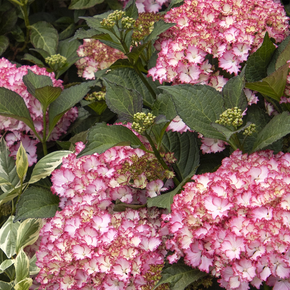
- Spectacular deep rose-pink to red mophead blooms up to 10 inches across emerge from chartreuse buds and hold their rich color regardless of soil pH, gradually developing a charming antique green tinge as they age.
- A true rebloomer that flowers on both old and new wood, delivering a continuous parade of color from late spring through summer and into fall without skipping a beat.
- Compact, sturdy-stemmed habit topping out at just 3 to 4 feet tall and wide makes it a versatile fit for foundation plantings, mixed borders, cottage gardens, and large containers alike.
- Lush, glossy dark green foliage transitions to rich bronze tones in autumn, extending seasonal interest well beyond the bloom period and offering four-season garden appeal.
Seaside Serenade Martha's Vineyard Hydrangea (Hydrangea macrophylla 'HORTMAVI' PP #31,352) is a standout compact bigleaf hydrangea that brings bold, long-lasting color to gardens across USDA Hardiness Zones 5 through 9. Unlike many traditional bigleaf hydrangeas whose bloom color shifts dramatically with soil pH, Martha's Vineyard holds a consistently rich pink-red to deep rose hue season after season, making it a reliable and low-maintenance choice for gardeners who want guaranteed color. Its large mophead flower clusters, often exceeding 10 inches in diameter, emerge from distinctive chartreuse buds on notably strong, upright stems that resist flopping and make exceptional fresh-cut or dried floral arrangements. As a reblooming variety that sets buds on both old and new wood, it produces wave after wave of flowers from late spring all the way through fall, far outlasting traditional once-and-done bigleaf types. The shrub's tidy, rounded, multi-stemmed form, clothed in glossy deep green foliage that turns bronze in autumn, keeps the plant looking polished from spring through the first frost. At home in partial shade to full morning sun, Martha's Vineyard thrives in moist, well-drained, organically rich soil and adapts well to the coastal and woodland garden conditions common throughout Southern Oregon and Northern California. Whether used as a striking specimen, massed in a border, planted along a foundation, or grown as a showstopping container plant, this award-worthy hydrangea delivers the lush, cottage-garden drama gardeners love with the reliability and rebloom performance modern landscapes demand.
Plant Description
Seaside Serenade Martha's Vineyard Hydrangea is a deciduous, multi-stemmed flowering shrub belonging to the bigleaf hydrangea species (Hydrangea macrophylla). It is part of the exclusive Seaside Serenade series and carries the patent number PP #31,352. The plant produces enormous mophead-style flower clusters, often 10 inches or more in diameter, in a deep rose-pink to red color that is notably stable and not significantly influenced by soil pH — a trait that sets it apart from most other bigleaf hydrangeas. Blooms emerge from distinctive chartreuse-green buds before opening to their full, lush color, then gracefully develop a soft antique green tinge as they mature and age on the plant. The foliage is glossy, pointy-tipped, and deep forest green throughout the growing season, transitioning to attractive dark bronze tones in autumn. Strong, upright stems support the large flower heads without flopping, making this variety exceptional for fresh-cut bouquets and dried flower arrangements. As a reblooming cultivar, it flowers on both old wood (previous season's stems) and new wood (current season's growth), ensuring a long, nearly continuous season of color from late spring through fall.
Mature Size
| Characteristic | Measurement |
|---|---|
| Mature Height | 3 to 4 feet |
| Mature Spread | 3 feet |
| Growth Rate | Fast |
| Plant Form | Rounded, multi-stemmed |
| Canopy Clearance | Approximately 1 foot from ground |
| Expected Lifespan | Approximately 20 years under ideal conditions |
This is a compact selection well suited to smaller garden spaces. Its tidy, rounded habit requires less pruning to maintain a neat appearance compared to larger bigleaf hydrangea varieties.
Hardiness Zones and Climate
Seaside Serenade Martha's Vineyard Hydrangea is rated for USDA Hardiness Zones 5 through 9, making it a reliable garden performer across a broad range of climates. It is particularly well adapted to the mild, maritime conditions found throughout Southern Oregon and Northern California, where the moderate winters and warm summers suit bigleaf hydrangeas exceptionally well. In colder microclimates at the edge of its hardiness range, applying a generous layer of mulch around the root zone in late fall provides valuable insulation for the root system and helps protect developing flower buds on the lower stems through winter. While the plant itself is cold-hardy to Zone 5, late spring frosts can damage emerging flower buds, which is why selecting a sheltered planting site with good air drainage is beneficial in frost-prone areas. In the Pacific Coast climate zones, this hydrangea performs at its very best thanks to the naturally cool, moist summers and mild winters that closely replicate its ancestral growing conditions in coastal Japan and Asia.
Sunlight Requirements
Martha's Vineyard Hydrangea performs best in partial shade to full morning sun with protection from intense afternoon sun. The ideal exposure provides 3 to 6 hours of direct or dappled sunlight per day. In Southern Oregon and Northern California, where summer afternoons can bring intense heat, a site that receives morning sun and afternoon shade is ideal, helping to preserve bloom color intensity and prevent leaf scorch. The more sun this plant receives, the more consistent and attentive watering will be needed to keep the soil evenly moist and the flowers from wilting. In deep shade with fewer than 2 hours of direct sun, bloom production may be reduced, though the foliage will remain attractive. Dappled light beneath the canopy of tall trees is an excellent natural setting for this hydrangea.
- Ideal: Morning sun, afternoon shade (3 to 6 hours of sun daily)
- Acceptable: Dappled light all day or light full sun in cool coastal climates
- Avoid: Intense, unrelenting afternoon sun, especially in hot inland valleys
Soil and pH Preferences
This hydrangea adapts to a range of soil types, including loam, clay, and sandy soils, as long as drainage is adequate. It will not tolerate standing water or consistently waterlogged conditions. For best performance, amend heavy clay soils with compost or bark to improve drainage, and enrich sandy soils with organic matter to boost moisture retention. A soil rich in organic matter is ideal.
Regarding pH: while most bigleaf hydrangeas shift their bloom color dramatically based on soil acidity, Martha's Vineyard is notably less influenced by pH than typical varieties — its blooms remain a consistent deep rose-pink to red. That said, it still prefers a slightly acidic to neutral soil pH in the range of 5.5 to 7.0. Acidic soils (below 6.0) are acceptable and common in the Pacific Northwest. Maintaining soil pH in the slightly acidic range supports overall plant health and nutrient uptake. You do not need to actively acidify the soil to manipulate bloom color with this particular cultivar, which is one of its key selling points.
Watering Guide
Consistent, even moisture is one of the most important factors in growing a healthy, floriferous Martha's Vineyard Hydrangea. This plant thrives in evenly moist, well-drained soil and is not drought-tolerant once established. During the first growing season, water deeply and regularly to help establish a strong root system. Once established, continue to water deeply but allow the top inch or two of soil to dry slightly between waterings to prevent root rot.
- Frequency: Water deeply 2 to 3 times per week in warm, dry summer conditions; reduce in cool, rainy weather.
- Method: Drip irrigation or soaker hoses at the base of the plant are preferred over overhead watering, which can promote fungal diseases on foliage.
- Signs of underwatering: Drooping, wilted leaves — plants typically recover quickly after watering if not too stressed.
- Signs of overwatering: Yellowing leaves, brown leaf edges, soggy soil — ensure drainage is adequate before planting.
- Mulching: Apply a 2- to 3-inch layer of organic mulch around the root zone to conserve soil moisture, moderate temperature, and reduce watering frequency.
Fertilizing
Martha's Vineyard Hydrangea benefits from light, timely fertilization to support its vigorous growth and prolific reblooming habit. Avoid over-fertilizing with high-nitrogen products, as excessive nitrogen promotes lush leafy growth at the expense of flowers.
- Type: Use a balanced, slow-release granular fertilizer (such as a 10-10-10 or similar formulation) or one specifically formulated for flowering shrubs.
- Timing: Apply in early spring as new growth begins, and optionally again in early summer to support rebloom. Avoid fertilizing after midsummer, as this can stimulate tender new growth that may be damaged by early fall frosts.
- Application: Broadcast evenly around the drip line of the plant and water in well.
- Yellowing leaves mid-season: If leaves in the center of the plant show yellowing during the bloom period, a light application of a fast-acting balanced fertilizer can help.
- Note: Avoid high-phosphate fertilizers if you are trying to maintain the best soil conditions for nutrient uptake, as phosphate can limit aluminum absorption in the soil.
Pruning and Maintenance
Proper pruning timing is essential for maintaining excellent bloom production on Martha's Vineyard Hydrangea. As a reblooming bigleaf hydrangea that flowers on both old and new wood, it is more forgiving than traditional once-blooming varieties, but best practices still apply.
- When to prune: Prune immediately after the first flush of blooms fades in early summer, or wait until late winter or very early spring before new growth emerges. Avoid heavy pruning in late summer, fall, or early winter, which removes the old wood buds needed for the first flush of spring blooms.
- How to prune: Remove spent flower heads by cutting back to just above the first pair of healthy leaf buds. Cut at a 45-degree angle about 1/2 to 1 inch above a budding node.
- Dead wood: In late spring, once leaves begin to unfurl, identify any winter-killed or fully woody dead branches and remove them by cutting back to live wood or to the ground.
- Rejuvenation: To maintain vigor, remove a few of the oldest, most woody stems at the base each year to encourage fresh new growth from the root crown.
- Dead stems for wildlife: Consider leaving a few hollow old stems standing over winter, as native stem-nesting bees use them for overwintering habitat.
- General upkeep: This plant is low maintenance overall. Aside from timely pruning and regular watering, it requires little day-to-day attention once established.
Planting Instructions
- Choose the right site: Select a location with morning sun and afternoon shade, protected from drying winds and intense heat. Ensure the site has well-drained soil and is not prone to standing water.
- Timing: Plant in spring after the last frost date has passed or in early fall while temperatures remain mild. Avoid planting during the hottest summer months.
- Prepare the soil: Dig a hole twice as wide as the root ball and just as deep. Amend heavy clay or sandy soils with generous amounts of compost or aged bark to improve drainage and fertility.
- Position the plant: Set the plant so the top of the root ball is level with or very slightly above the surrounding soil grade. Avoid planting too deeply.
- Backfill: Fill the hole with the amended native soil, gently firming it in layers to eliminate air pockets.
- Water thoroughly: Water deeply immediately after planting to settle the soil around the roots.
- Mulch: Apply a 2- to 3-inch layer of organic mulch (shredded bark, wood chips, or compost) around the base of the plant, keeping mulch a few inches away from the main stems to prevent rot.
- First-season care: Water consistently throughout the first growing season to establish a deep, healthy root system. Do not allow the plant to dry out completely.
- Spacing: Space plants approximately 3 feet apart for mass plantings or as a low informal hedge.
Seasonal Interest
| Season | What to Expect |
|---|---|
| Spring | Lush, glossy deep green foliage emerges vigorously; distinctive chartreuse flower buds begin to form on old wood stems; the first flush of large mophead blooms opens in late spring. |
| Summer | Peak blooming season with continuous waves of deep rose-pink to red mophead flowers up to 10 inches across; new flushes of blooms emerge on new wood as earlier flowers age and take on attractive antique green overtones. |
| Fall | Blooming continues well into fall; aged flower heads turn papery and take on antique tones, making excellent dried arrangements; foliage transitions to rich dark bronze, adding warm color to the autumn landscape. |
| Winter | Deciduous — foliage drops; dried flower heads and upright stems provide subtle structural interest; hollow stems offer overwintering habitat for native stem-nesting bees. |
Landscape Uses
Seaside Serenade Martha's Vineyard Hydrangea is a highly versatile shrub that suits a wide range of landscape applications thanks to its compact size, tidy habit, and exceptionally long bloom season.
- Foundation Planting: Its manageable size and attractive form make it an outstanding choice for planting along house foundations, particularly on north- or east-facing walls that provide afternoon shade.
- Mixed Borders: Use as a bold mid-border focal point surrounded by lower-growing perennials and groundcovers for a layered, cottage-garden effect.
- Mass Planting: Planted in sweeps of three or more, Martha's Vineyard creates a dramatic, season-long sea of deep pink blooms that is visually stunning from a distance.
- Informal Hedge or Screen: Its dense, rounded habit and consistent size lend themselves well to use as a soft, flowering low hedge or seasonal screen along walkways and property borders.
- Woodland Garden: Thrives at the edge of a wooded area or beneath the dappled canopy of tall trees, where it mimics its natural Pacific Rim habitat.
- Cottage and Cutting Garden: A top-tier cut flower shrub — its sturdy stems and large blooms are exceptional in fresh arrangements, and the aged heads dry beautifully for long-lasting dried bouquets.
- Container Planting: Its compact size makes it a showstopping "thriller" element in large patio containers and planters, especially when paired with trailing and filler companions.
- Accent Plant: A single specimen planted near a gate, entry, or garden focal point commands attention throughout the long growing season.
Container Growing
Martha's Vineyard Hydrangea is well suited to container culture, making it a striking patio and deck plant in both small urban gardens and larger outdoor living spaces. When growing in containers, keep these guidelines in mind:
- Container size: Choose a large container — at least 16 to 20 inches in diameter — with multiple drainage holes to provide adequate root room and prevent waterlogging.
- Potting mix: Use a high-quality, well-draining potting mix rich in organic matter. Avoid standard garden soil, which compacts in containers and restricts drainage.
- Watering: Container-grown plants dry out significantly faster than in-ground plants, especially during warm summer weather. Check soil moisture daily and water thoroughly whenever the top inch of soil feels dry.
- Fertilizing: Container plants benefit from more frequent feeding — apply a balanced slow-release fertilizer at the start of the season and supplement with a liquid fertilizer monthly through the bloom period.
- Placement: Position containers where the plant receives morning sun and is shaded from hot afternoon sun. Avoid placing containers on hot reflective surfaces that can overheat the roots.
- Winter care: In colder climates, move containers to a sheltered, frost-free location such as an unheated garage or shed over winter to protect the root system from hard freezes. In the mild winters of Southern Oregon and Northern California coastal areas, containers may be left outdoors in a sheltered spot with appropriate mulching around the pot.
Companion Plants
Martha's Vineyard Hydrangea pairs beautifully with a wide range of shade-tolerant and partial-shade perennials, shrubs, and groundcovers that complement its bold mophead blooms and lush foliage. Consider the following companions for a cohesive, layered garden design:
- Hostas: Large- and medium-leaved hostas provide a lush, textural contrast beneath the hydrangea's canopy, their bold foliage echoing the coarse texture of the hydrangea leaves.
- Astilbe: Feathery astilbe plumes in pink, white, or red harmonize with the mophead blooms and thrive in the same moist, partially shaded conditions.
- Japanese Forest Grass (Hakonechloa): The arching golden or green-striped foliage of this ornamental grass provides beautiful textural contrast at the base of the shrub.
- Heuchera (Coral Bells): Colorful heuchera varieties with deep burgundy, caramel, or lime foliage complement the rose-red blooms while thriving in similar partial-shade conditions.
- Ferns: Native sword ferns or Japanese painted ferns fill in the shady understory with elegant, fine-textured fronds that contrast the coarse hydrangea leaves.
- Hellebores: Early-blooming hellebores bridge the gap between winter and the hydrangea's first spring bloom flush, providing multi-season interest in the same border.
- Roses: Repeat-blooming shrub roses in complementary pink, red, or white tones create a classic cottage-garden pairing with sustained seasonal color.
- Salvia: Upright salvias in deep purple or blue provide strong color contrast against the pink-red mopheads while also attracting pollinators.
Pests and Diseases
Seaside Serenade Martha's Vineyard Hydrangea is generally a healthy, resilient plant with few serious pest or disease problems when grown in appropriate conditions. Providing good air circulation, proper siting, and avoiding overhead watering will prevent the majority of issues.
- Powdery Mildew: A white powdery coating can appear on leaves in shady, humid locations with poor air circulation. Improve airflow around the plant and avoid wetting foliage when watering. Remove and dispose of affected leaves.
- Leaf Spot (Cercospora and others): Brown or purple spots on foliage may develop under wet conditions. Water at the base of the plant, avoid overhead irrigation, and remove affected foliage promptly.
- Bacterial Wilt: Can occur in some conditions; affected stems wilt and die back. Prune out and dispose of infected material and avoid injuring stems during garden maintenance.
- Rust Spots: Rust-colored spots may appear when plants receive direct sun exposure after overhead watering. Water in early morning at the base of the plant to minimize this issue.
- Aphids: Occasionally feed on tender new growth; typically manageable with a strong stream of water or insecticidal soap spray.
- Slugs and Snails: Can damage soft new leaves, particularly in moist, shady conditions common in the Pacific Northwest. Use iron phosphate-based slug bait as an effective and garden-safe control.
- Deer: Bigleaf hydrangeas are known to be browsed by deer. In deer-prone areas, consider using deer repellent sprays or physical barriers, especially for young plants.
- Root Rot: Caused by overly wet or poorly drained soils. Ensure good drainage at planting and avoid overwatering to prevent this condition.
Toxicity note: All parts of Hydrangea macrophylla contain low levels of cyanogenic glycosides and are considered mildly toxic if consumed in large quantities by humans, dogs, cats, and horses. Keep this in mind when siting the plant in gardens accessed by pets and small children.
Cut and Dried Flower Use
One of the standout features of Martha's Vineyard Hydrangea is its exceptional value as both a fresh-cut and dried flower, supported by its notably sturdy, strong stems that resist flopping in the vase.
For fresh-cut arrangements:
- Cut blooms after they have fully opened and the flower head feels slightly papery to the touch — older blooms last significantly longer in the vase than freshly opened ones.
- Cut stems in the early morning and immediately place them in cool water.
- Remove all foliage from the portion of the stem that will be submerged in water.
- To prevent wilting, recut the stem end and briefly dip it in boiling water for 30 seconds, then plunge into cool water — this helps remove the air bubble that commonly blocks water uptake in hydrangea stems.
- Alternatively, use florist's alum powder on the freshly cut stem end to seal it and improve water uptake.
For dried arrangements:
- Allow flower heads to mature on the plant for 6 to 8 weeks after opening, until the blooms develop a papery texture and the color softens to antique pink, green, or parchment tones.
- Cut in the morning, remove all leaves, and hang upside down in a dry, well-ventilated, shaded space — or place stems in a vase with just a few inches of water and allow them to dry slowly in place.
- Once dried, blooms can be preserved with floral spray or left natural for a rustic, vintage look.
Wildlife Value
While Martha's Vineyard Hydrangea is primarily grown for its ornamental qualities, it does offer several benefits to garden wildlife:
- Pollinators: The large mophead flower clusters attract butterflies, bumblebees, and other native bees, providing nectar and pollen resources throughout the long bloom season from late spring through fall.
- Stem-nesting bees: Native solitary bees, including mason bees and other stem-nesting species, use the hollow dead canes of hydrangeas as overwintering habitat. Leaving a few cut stems standing 12 to 24 inches tall over winter (rather than cutting them to the ground) provides valuable nesting sites that support native bee populations.
- Birds: The dense, rounded shrub habit provides protective cover and potential nesting sites for small songbirds.
- Deer note: Foliage is palatable to deer and may require protection in landscapes where deer pressure is high.
- Spectacular deep rose-pink to red mophead blooms up to 10 inches across emerge from chartreuse buds and hold their rich color regardless of soil pH, gradually developing a charming antique green tinge as they age.
- A true rebloomer that flowers on both old and new wood, delivering a continuous parade of color from late spring through summer and into fall without skipping a beat.
- Compact, sturdy-stemmed habit topping out at just 3 to 4 feet tall and wide makes it a versatile fit for foundation plantings, mixed borders, cottage gardens, and large containers alike.
- Lush, glossy dark green foliage transitions to rich bronze tones in autumn, extending seasonal interest well beyond the bloom period and offering four-season garden appeal.
Seaside Serenade Martha's Vineyard Hydrangea (Hydrangea macrophylla 'HORTMAVI' PP #31,352) is a standout compact bigleaf hydrangea that brings bold, long-lasting color to gardens across USDA Hardiness Zones 5 through 9. Unlike many traditional bigleaf hydrangeas whose bloom color shifts dramatically with soil pH, Martha's Vineyard holds a consistently rich pink-red to deep rose hue season after season, making it a reliable and low-maintenance choice for gardeners who want guaranteed color. Its large mophead flower clusters, often exceeding 10 inches in diameter, emerge from distinctive chartreuse buds on notably strong, upright stems that resist flopping and make exceptional fresh-cut or dried floral arrangements. As a reblooming variety that sets buds on both old and new wood, it produces wave after wave of flowers from late spring all the way through fall, far outlasting traditional once-and-done bigleaf types. The shrub's tidy, rounded, multi-stemmed form, clothed in glossy deep green foliage that turns bronze in autumn, keeps the plant looking polished from spring through the first frost. At home in partial shade to full morning sun, Martha's Vineyard thrives in moist, well-drained, organically rich soil and adapts well to the coastal and woodland garden conditions common throughout Southern Oregon and Northern California. Whether used as a striking specimen, massed in a border, planted along a foundation, or grown as a showstopping container plant, this award-worthy hydrangea delivers the lush, cottage-garden drama gardeners love with the reliability and rebloom performance modern landscapes demand.
Plant Description
Seaside Serenade Martha's Vineyard Hydrangea is a deciduous, multi-stemmed flowering shrub belonging to the bigleaf hydrangea species (Hydrangea macrophylla). It is part of the exclusive Seaside Serenade series and carries the patent number PP #31,352. The plant produces enormous mophead-style flower clusters, often 10 inches or more in diameter, in a deep rose-pink to red color that is notably stable and not significantly influenced by soil pH — a trait that sets it apart from most other bigleaf hydrangeas. Blooms emerge from distinctive chartreuse-green buds before opening to their full, lush color, then gracefully develop a soft antique green tinge as they mature and age on the plant. The foliage is glossy, pointy-tipped, and deep forest green throughout the growing season, transitioning to attractive dark bronze tones in autumn. Strong, upright stems support the large flower heads without flopping, making this variety exceptional for fresh-cut bouquets and dried flower arrangements. As a reblooming cultivar, it flowers on both old wood (previous season's stems) and new wood (current season's growth), ensuring a long, nearly continuous season of color from late spring through fall.
Mature Size
| Characteristic | Measurement |
|---|---|
| Mature Height | 3 to 4 feet |
| Mature Spread | 3 feet |
| Growth Rate | Fast |
| Plant Form | Rounded, multi-stemmed |
| Canopy Clearance | Approximately 1 foot from ground |
| Expected Lifespan | Approximately 20 years under ideal conditions |
This is a compact selection well suited to smaller garden spaces. Its tidy, rounded habit requires less pruning to maintain a neat appearance compared to larger bigleaf hydrangea varieties.
Hardiness Zones and Climate
Seaside Serenade Martha's Vineyard Hydrangea is rated for USDA Hardiness Zones 5 through 9, making it a reliable garden performer across a broad range of climates. It is particularly well adapted to the mild, maritime conditions found throughout Southern Oregon and Northern California, where the moderate winters and warm summers suit bigleaf hydrangeas exceptionally well. In colder microclimates at the edge of its hardiness range, applying a generous layer of mulch around the root zone in late fall provides valuable insulation for the root system and helps protect developing flower buds on the lower stems through winter. While the plant itself is cold-hardy to Zone 5, late spring frosts can damage emerging flower buds, which is why selecting a sheltered planting site with good air drainage is beneficial in frost-prone areas. In the Pacific Coast climate zones, this hydrangea performs at its very best thanks to the naturally cool, moist summers and mild winters that closely replicate its ancestral growing conditions in coastal Japan and Asia.
Sunlight Requirements
Martha's Vineyard Hydrangea performs best in partial shade to full morning sun with protection from intense afternoon sun. The ideal exposure provides 3 to 6 hours of direct or dappled sunlight per day. In Southern Oregon and Northern California, where summer afternoons can bring intense heat, a site that receives morning sun and afternoon shade is ideal, helping to preserve bloom color intensity and prevent leaf scorch. The more sun this plant receives, the more consistent and attentive watering will be needed to keep the soil evenly moist and the flowers from wilting. In deep shade with fewer than 2 hours of direct sun, bloom production may be reduced, though the foliage will remain attractive. Dappled light beneath the canopy of tall trees is an excellent natural setting for this hydrangea.
- Ideal: Morning sun, afternoon shade (3 to 6 hours of sun daily)
- Acceptable: Dappled light all day or light full sun in cool coastal climates
- Avoid: Intense, unrelenting afternoon sun, especially in hot inland valleys
Soil and pH Preferences
This hydrangea adapts to a range of soil types, including loam, clay, and sandy soils, as long as drainage is adequate. It will not tolerate standing water or consistently waterlogged conditions. For best performance, amend heavy clay soils with compost or bark to improve drainage, and enrich sandy soils with organic matter to boost moisture retention. A soil rich in organic matter is ideal.
Regarding pH: while most bigleaf hydrangeas shift their bloom color dramatically based on soil acidity, Martha's Vineyard is notably less influenced by pH than typical varieties — its blooms remain a consistent deep rose-pink to red. That said, it still prefers a slightly acidic to neutral soil pH in the range of 5.5 to 7.0. Acidic soils (below 6.0) are acceptable and common in the Pacific Northwest. Maintaining soil pH in the slightly acidic range supports overall plant health and nutrient uptake. You do not need to actively acidify the soil to manipulate bloom color with this particular cultivar, which is one of its key selling points.
Watering Guide
Consistent, even moisture is one of the most important factors in growing a healthy, floriferous Martha's Vineyard Hydrangea. This plant thrives in evenly moist, well-drained soil and is not drought-tolerant once established. During the first growing season, water deeply and regularly to help establish a strong root system. Once established, continue to water deeply but allow the top inch or two of soil to dry slightly between waterings to prevent root rot.
- Frequency: Water deeply 2 to 3 times per week in warm, dry summer conditions; reduce in cool, rainy weather.
- Method: Drip irrigation or soaker hoses at the base of the plant are preferred over overhead watering, which can promote fungal diseases on foliage.
- Signs of underwatering: Drooping, wilted leaves — plants typically recover quickly after watering if not too stressed.
- Signs of overwatering: Yellowing leaves, brown leaf edges, soggy soil — ensure drainage is adequate before planting.
- Mulching: Apply a 2- to 3-inch layer of organic mulch around the root zone to conserve soil moisture, moderate temperature, and reduce watering frequency.
Fertilizing
Martha's Vineyard Hydrangea benefits from light, timely fertilization to support its vigorous growth and prolific reblooming habit. Avoid over-fertilizing with high-nitrogen products, as excessive nitrogen promotes lush leafy growth at the expense of flowers.
- Type: Use a balanced, slow-release granular fertilizer (such as a 10-10-10 or similar formulation) or one specifically formulated for flowering shrubs.
- Timing: Apply in early spring as new growth begins, and optionally again in early summer to support rebloom. Avoid fertilizing after midsummer, as this can stimulate tender new growth that may be damaged by early fall frosts.
- Application: Broadcast evenly around the drip line of the plant and water in well.
- Yellowing leaves mid-season: If leaves in the center of the plant show yellowing during the bloom period, a light application of a fast-acting balanced fertilizer can help.
- Note: Avoid high-phosphate fertilizers if you are trying to maintain the best soil conditions for nutrient uptake, as phosphate can limit aluminum absorption in the soil.
Pruning and Maintenance
Proper pruning timing is essential for maintaining excellent bloom production on Martha's Vineyard Hydrangea. As a reblooming bigleaf hydrangea that flowers on both old and new wood, it is more forgiving than traditional once-blooming varieties, but best practices still apply.
- When to prune: Prune immediately after the first flush of blooms fades in early summer, or wait until late winter or very early spring before new growth emerges. Avoid heavy pruning in late summer, fall, or early winter, which removes the old wood buds needed for the first flush of spring blooms.
- How to prune: Remove spent flower heads by cutting back to just above the first pair of healthy leaf buds. Cut at a 45-degree angle about 1/2 to 1 inch above a budding node.
- Dead wood: In late spring, once leaves begin to unfurl, identify any winter-killed or fully woody dead branches and remove them by cutting back to live wood or to the ground.
- Rejuvenation: To maintain vigor, remove a few of the oldest, most woody stems at the base each year to encourage fresh new growth from the root crown.
- Dead stems for wildlife: Consider leaving a few hollow old stems standing over winter, as native stem-nesting bees use them for overwintering habitat.
- General upkeep: This plant is low maintenance overall. Aside from timely pruning and regular watering, it requires little day-to-day attention once established.
Planting Instructions
- Choose the right site: Select a location with morning sun and afternoon shade, protected from drying winds and intense heat. Ensure the site has well-drained soil and is not prone to standing water.
- Timing: Plant in spring after the last frost date has passed or in early fall while temperatures remain mild. Avoid planting during the hottest summer months.
- Prepare the soil: Dig a hole twice as wide as the root ball and just as deep. Amend heavy clay or sandy soils with generous amounts of compost or aged bark to improve drainage and fertility.
- Position the plant: Set the plant so the top of the root ball is level with or very slightly above the surrounding soil grade. Avoid planting too deeply.
- Backfill: Fill the hole with the amended native soil, gently firming it in layers to eliminate air pockets.
- Water thoroughly: Water deeply immediately after planting to settle the soil around the roots.
- Mulch: Apply a 2- to 3-inch layer of organic mulch (shredded bark, wood chips, or compost) around the base of the plant, keeping mulch a few inches away from the main stems to prevent rot.
- First-season care: Water consistently throughout the first growing season to establish a deep, healthy root system. Do not allow the plant to dry out completely.
- Spacing: Space plants approximately 3 feet apart for mass plantings or as a low informal hedge.
Seasonal Interest
| Season | What to Expect |
|---|---|
| Spring | Lush, glossy deep green foliage emerges vigorously; distinctive chartreuse flower buds begin to form on old wood stems; the first flush of large mophead blooms opens in late spring. |
| Summer | Peak blooming season with continuous waves of deep rose-pink to red mophead flowers up to 10 inches across; new flushes of blooms emerge on new wood as earlier flowers age and take on attractive antique green overtones. |
| Fall | Blooming continues well into fall; aged flower heads turn papery and take on antique tones, making excellent dried arrangements; foliage transitions to rich dark bronze, adding warm color to the autumn landscape. |
| Winter | Deciduous — foliage drops; dried flower heads and upright stems provide subtle structural interest; hollow stems offer overwintering habitat for native stem-nesting bees. |
Landscape Uses
Seaside Serenade Martha's Vineyard Hydrangea is a highly versatile shrub that suits a wide range of landscape applications thanks to its compact size, tidy habit, and exceptionally long bloom season.
- Foundation Planting: Its manageable size and attractive form make it an outstanding choice for planting along house foundations, particularly on north- or east-facing walls that provide afternoon shade.
- Mixed Borders: Use as a bold mid-border focal point surrounded by lower-growing perennials and groundcovers for a layered, cottage-garden effect.
- Mass Planting: Planted in sweeps of three or more, Martha's Vineyard creates a dramatic, season-long sea of deep pink blooms that is visually stunning from a distance.
- Informal Hedge or Screen: Its dense, rounded habit and consistent size lend themselves well to use as a soft, flowering low hedge or seasonal screen along walkways and property borders.
- Woodland Garden: Thrives at the edge of a wooded area or beneath the dappled canopy of tall trees, where it mimics its natural Pacific Rim habitat.
- Cottage and Cutting Garden: A top-tier cut flower shrub — its sturdy stems and large blooms are exceptional in fresh arrangements, and the aged heads dry beautifully for long-lasting dried bouquets.
- Container Planting: Its compact size makes it a showstopping "thriller" element in large patio containers and planters, especially when paired with trailing and filler companions.
- Accent Plant: A single specimen planted near a gate, entry, or garden focal point commands attention throughout the long growing season.
Container Growing
Martha's Vineyard Hydrangea is well suited to container culture, making it a striking patio and deck plant in both small urban gardens and larger outdoor living spaces. When growing in containers, keep these guidelines in mind:
- Container size: Choose a large container — at least 16 to 20 inches in diameter — with multiple drainage holes to provide adequate root room and prevent waterlogging.
- Potting mix: Use a high-quality, well-draining potting mix rich in organic matter. Avoid standard garden soil, which compacts in containers and restricts drainage.
- Watering: Container-grown plants dry out significantly faster than in-ground plants, especially during warm summer weather. Check soil moisture daily and water thoroughly whenever the top inch of soil feels dry.
- Fertilizing: Container plants benefit from more frequent feeding — apply a balanced slow-release fertilizer at the start of the season and supplement with a liquid fertilizer monthly through the bloom period.
- Placement: Position containers where the plant receives morning sun and is shaded from hot afternoon sun. Avoid placing containers on hot reflective surfaces that can overheat the roots.
- Winter care: In colder climates, move containers to a sheltered, frost-free location such as an unheated garage or shed over winter to protect the root system from hard freezes. In the mild winters of Southern Oregon and Northern California coastal areas, containers may be left outdoors in a sheltered spot with appropriate mulching around the pot.
Companion Plants
Martha's Vineyard Hydrangea pairs beautifully with a wide range of shade-tolerant and partial-shade perennials, shrubs, and groundcovers that complement its bold mophead blooms and lush foliage. Consider the following companions for a cohesive, layered garden design:
- Hostas: Large- and medium-leaved hostas provide a lush, textural contrast beneath the hydrangea's canopy, their bold foliage echoing the coarse texture of the hydrangea leaves.
- Astilbe: Feathery astilbe plumes in pink, white, or red harmonize with the mophead blooms and thrive in the same moist, partially shaded conditions.
- Japanese Forest Grass (Hakonechloa): The arching golden or green-striped foliage of this ornamental grass provides beautiful textural contrast at the base of the shrub.
- Heuchera (Coral Bells): Colorful heuchera varieties with deep burgundy, caramel, or lime foliage complement the rose-red blooms while thriving in similar partial-shade conditions.
- Ferns: Native sword ferns or Japanese painted ferns fill in the shady understory with elegant, fine-textured fronds that contrast the coarse hydrangea leaves.
- Hellebores: Early-blooming hellebores bridge the gap between winter and the hydrangea's first spring bloom flush, providing multi-season interest in the same border.
- Roses: Repeat-blooming shrub roses in complementary pink, red, or white tones create a classic cottage-garden pairing with sustained seasonal color.
- Salvia: Upright salvias in deep purple or blue provide strong color contrast against the pink-red mopheads while also attracting pollinators.
Pests and Diseases
Seaside Serenade Martha's Vineyard Hydrangea is generally a healthy, resilient plant with few serious pest or disease problems when grown in appropriate conditions. Providing good air circulation, proper siting, and avoiding overhead watering will prevent the majority of issues.
- Powdery Mildew: A white powdery coating can appear on leaves in shady, humid locations with poor air circulation. Improve airflow around the plant and avoid wetting foliage when watering. Remove and dispose of affected leaves.
- Leaf Spot (Cercospora and others): Brown or purple spots on foliage may develop under wet conditions. Water at the base of the plant, avoid overhead irrigation, and remove affected foliage promptly.
- Bacterial Wilt: Can occur in some conditions; affected stems wilt and die back. Prune out and dispose of infected material and avoid injuring stems during garden maintenance.
- Rust Spots: Rust-colored spots may appear when plants receive direct sun exposure after overhead watering. Water in early morning at the base of the plant to minimize this issue.
- Aphids: Occasionally feed on tender new growth; typically manageable with a strong stream of water or insecticidal soap spray.
- Slugs and Snails: Can damage soft new leaves, particularly in moist, shady conditions common in the Pacific Northwest. Use iron phosphate-based slug bait as an effective and garden-safe control.
- Deer: Bigleaf hydrangeas are known to be browsed by deer. In deer-prone areas, consider using deer repellent sprays or physical barriers, especially for young plants.
- Root Rot: Caused by overly wet or poorly drained soils. Ensure good drainage at planting and avoid overwatering to prevent this condition.
Toxicity note: All parts of Hydrangea macrophylla contain low levels of cyanogenic glycosides and are considered mildly toxic if consumed in large quantities by humans, dogs, cats, and horses. Keep this in mind when siting the plant in gardens accessed by pets and small children.
Cut and Dried Flower Use
One of the standout features of Martha's Vineyard Hydrangea is its exceptional value as both a fresh-cut and dried flower, supported by its notably sturdy, strong stems that resist flopping in the vase.
For fresh-cut arrangements:
- Cut blooms after they have fully opened and the flower head feels slightly papery to the touch — older blooms last significantly longer in the vase than freshly opened ones.
- Cut stems in the early morning and immediately place them in cool water.
- Remove all foliage from the portion of the stem that will be submerged in water.
- To prevent wilting, recut the stem end and briefly dip it in boiling water for 30 seconds, then plunge into cool water — this helps remove the air bubble that commonly blocks water uptake in hydrangea stems.
- Alternatively, use florist's alum powder on the freshly cut stem end to seal it and improve water uptake.
For dried arrangements:
- Allow flower heads to mature on the plant for 6 to 8 weeks after opening, until the blooms develop a papery texture and the color softens to antique pink, green, or parchment tones.
- Cut in the morning, remove all leaves, and hang upside down in a dry, well-ventilated, shaded space — or place stems in a vase with just a few inches of water and allow them to dry slowly in place.
- Once dried, blooms can be preserved with floral spray or left natural for a rustic, vintage look.
Wildlife Value
While Martha's Vineyard Hydrangea is primarily grown for its ornamental qualities, it does offer several benefits to garden wildlife:
- Pollinators: The large mophead flower clusters attract butterflies, bumblebees, and other native bees, providing nectar and pollen resources throughout the long bloom season from late spring through fall.
- Stem-nesting bees: Native solitary bees, including mason bees and other stem-nesting species, use the hollow dead canes of hydrangeas as overwintering habitat. Leaving a few cut stems standing 12 to 24 inches tall over winter (rather than cutting them to the ground) provides valuable nesting sites that support native bee populations.
- Birds: The dense, rounded shrub habit provides protective cover and potential nesting sites for small songbirds.
- Deer note: Foliage is palatable to deer and may require protection in landscapes where deer pressure is high.