Zoom the image with the mouse
Hi Horizon Blue Hydrangea - 2 Gallon
SKU:
2153165
UPC:
014949073179
$44.99
- Reblooming mophead bigleaf hydrangea that produces lush, rounded clusters of true sky-blue blooms continuously from spring through fall on both old and new wood
- Sturdy, exceptionally strong stems support large flower heads beautifully, making it an outstanding choice for fresh-cut and dried floral arrangements
- Compact, well-branched habit is perfectly suited to containers, patio planters, small garden borders, and cottage-style landscape designs
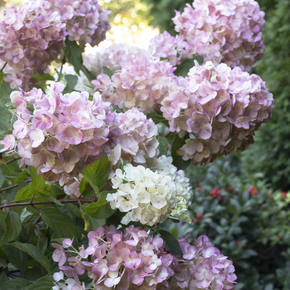
- Bloom color is naturally influenced by soil pH -- vivid blue in acidic soils, shifting to deep pink or mauve in neutral to alkaline soils -- giving you creative control over your garden palette
Hydrangea macrophylla 'Horizon', sold under the Hi Horizon Blue name, is a standout reblooming bigleaf hydrangea that brings season-long color and reliability to gardens across USDA Hardiness Zones 6 through 9. Unlike traditional hydrangeas that bloom only once on old wood, Hi Horizon Blue reliably flowers on both old and new growth, ensuring a continuous succession of full, dome-shaped mophead blooms from late spring well into autumn. The large, rounded flower clusters emerge in rich shades of sky blue when grown in acidic soil -- or shift to deep rose and dark pink in more alkaline conditions -- set against a backdrop of lustrous, deep green large-lobed foliage. Its compact, multi-stemmed rounded form fills garden spaces beautifully without overwhelming them, making it an ideal choice for foundation plantings, mixed shrub borders, cottage gardens, shaded patios, and decorative container displays. Exceptionally strong stems hold the abundant flower heads upright through wind and rain, and the blooms transition gracefully to dried flower heads that extend ornamental interest into the cooler months. Whether you're designing a classic cottage garden, a refined shaded border, or a colorful container feature, Hi Horizon Blue Hydrangea delivers effortless elegance and unmatched floral performance all season long.
Plant Description
Hi Horizon Blue is a deciduous, woody perennial shrub belonging to the species Hydrangea macrophylla, commonly known as bigleaf hydrangea or French hydrangea. This cultivar ('Horizon') is classified as a mophead type, producing large, fully rounded, dome-shaped flower clusters composed of showy sterile florets. The blooms emerge in rich sky-blue tones in acidic soil and shift toward deep rose-pink in neutral to alkaline conditions. The foliage is bold and attractive -- large, opposite, glossy dark green leaves with a coarsely toothed margin give the shrub a lush, full appearance even when not in bloom. One of its most prized attributes is its exceptionally sturdy stem structure, which holds the heavy flower heads upright without flopping, a trait that distinguishes it from many other bigleaf hydrangea varieties. Hi Horizon Blue is a reblooming variety, meaning it flowers on both the previous season's old wood and on current-season new growth, providing a far longer and more reliable bloom period than traditional once-blooming bigleaf hydrangeas.
Mature Size
| Attribute | Measurement |
|---|---|
| Mature Height | 3 to 5 feet |
| Mature Width | 3 to 5 feet |
| Growth Rate | Moderate to rapid |
| Plant Habit | Rounded, multi-stemmed, compact |
| Plant Type | Deciduous woody shrub |
Hardiness Zones
Hi Horizon Blue Hydrangea is reliably winter-hardy in USDA Plant Hardiness Zones 6 through 9, making it an excellent choice for a wide range of climates across the Pacific Coast, the South, and much of the Mid-Atlantic and Lower Midwest. In Zone 6, it is important to site the plant in a location sheltered from harsh winter winds to protect the overwintering flower buds on old wood. In hotter inland areas of Zones 8 and 9, providing afternoon shade and consistent moisture will ensure the best performance and most vibrant bloom color. In the mild maritime climates of Southern Oregon and Northern California, this hydrangea generally thrives with minimal winter protection.
Sunlight Requirements
Hi Horizon Blue performs best in a site that receives morning sun with protection from intense afternoon sun, particularly in warmer climates. Ideal light exposure is filtered or dappled sunlight throughout the day, or a minimum of 2 to 6 hours of direct morning sun followed by shade in the afternoon. In cooler coastal climates, the plant can tolerate more sun, including nearly full sun conditions. Deep shade (fewer than 2 hours of direct sun) may reduce blooming but is sometimes tolerated. Avoid hot, exposed, western-facing sites where harsh afternoon sun can stress the foliage, cause wilting, and fade the flower color prematurely.
Soil and pH Preferences
This hydrangea is adaptable to a range of soil types, including loam, clay, and sandy soils, as long as the site is well-drained but retains some moisture. Rich, organically amended soil is ideal for the most vigorous growth and prolific flowering. Soil pH plays a critical role in determining bloom color:
- Acidic soil (pH below 6.0 to 6.5): Aluminum is more readily available for plant uptake, producing the characteristic vibrant blue flower color.
- Neutral soil (pH 6.5 to 7.0): Flowers may appear purple or a mix of blue and pink tones.
- Alkaline soil (pH above 7.0): Produces deep pink to rose-colored blooms.
To encourage and maintain blue blooms, amend the soil with aluminum sulfate or elemental sulfur to lower the pH. Test your soil pH before planting and re-test annually. Avoid over-acidification below 5.5, as this can impair the plant's ability to absorb essential nutrients.
Watering Guide
Bigleaf hydrangeas like Hi Horizon Blue have moderate to high water needs and should be kept consistently moist, especially during the heat of summer and while establishing in the first season or two after planting. Water deeply once or twice per week rather than frequent shallow watering, aiming for about 1 inch of water per week. Allow the top inch of soil to dry slightly between waterings but never allow the root zone to dry out completely, as this leads to wilting and flower damage. Plants in containers will require more frequent watering -- often daily in warm weather -- as pots dry out much faster than in-ground plantings. Applying a 2 to 3 inch layer of organic mulch around the base of the plant will help conserve soil moisture, moderate soil temperature, and reduce watering frequency. Avoid overhead watering to minimize foliar disease; water at the base of the plant whenever possible.
Fertilizing
Feed Hi Horizon Blue Hydrangea to support strong growth and abundant blooming throughout the season. Use a balanced, slow-release granular fertilizer formulated for shrubs or flowering plants in early spring as new growth emerges. A second application in midsummer will sustain bloom production into fall. Avoid over-fertilizing with high-nitrogen products, which can promote lush leafy growth at the expense of flowering. For gardeners actively trying to maintain blue flower color, incorporating an aluminum sulfate soil drench at a rate appropriate for your soil's current pH will also deliver the aluminum that interacts with floral pigments to sustain blue tones. Always water the plant thoroughly after fertilizing to help distribute nutrients into the root zone and prevent root burn.
Pruning and Maintenance
Because Hi Horizon Blue is a reblooming hydrangea that flowers on both old and new wood, pruning should be approached with care to avoid removing next season's flower buds. Follow these guidelines:
- Deadheading: Remove spent flower heads throughout the season to encourage continued new blooms on new wood. This can be done at any time during the growing season.
- Light shaping: Light cosmetic shaping can be performed in late summer to early fall if needed. Avoid heavy pruning after August, as this may remove overwintering buds that will produce early-season blooms.
- Late winter/early spring cleanup: In late winter or very early spring before new growth begins, prune out any dead, damaged, or crossing stems back to healthy live wood. Cut dead stems back to 12 to 24 inches and leave them standing temporarily -- hollow dead stems provide nesting habitat for native stem-nesting bees.
- Avoid hard renovation pruning unless absolutely necessary, as it will reduce or eliminate the current season's bloom production.
Planting Instructions
- Choose a location with morning sun and afternoon shade, with good drainage but moisture-retentive soil.
- Dig a planting hole two to three times as wide as the root ball and approximately the same depth, so the top of the root ball sits level with or slightly above the surrounding soil grade.
- Amend the backfill soil with compost or well-aged organic matter to improve moisture retention and fertility.
- If targeting blue flowers, incorporate aluminum sulfate into the planting hole according to package directions and test soil pH before planting.
- Remove the plant from its container, gently loosen any circling roots, and place it in the center of the hole.
- Backfill with amended soil, firming gently to eliminate air pockets.
- Water deeply and thoroughly immediately after planting.
- Apply a 2 to 3 inch layer of organic mulch (such as shredded bark, wood chips, or compost) in a ring around the plant, keeping mulch a few inches away from the main stem to prevent rot.
- Water regularly throughout the first growing season to help establish a strong root system.
Bloom Color and How to Control It
One of the most fascinating characteristics of Hi Horizon Blue is that its flower color is directly influenced by soil chemistry -- specifically soil pH and aluminum availability. This is a trait unique to bigleaf (Hydrangea macrophylla) and mountain hydrangeas among common landscape hydrangeas.
- For vivid blue blooms: Maintain soil pH at or below 6.0 to 6.5. Apply aluminum sulfate to make aluminum more available for uptake. Test soil pH with a home kit or send a sample to your local extension service for analysis.
- For pink or deep rose blooms: Maintain a more neutral to alkaline soil pH (above 7.0) by adding garden lime. Avoid aluminum sulfate applications.
- For purple blooms: A neutral soil pH of approximately 6.5 to 7.0 will often result in a blend of pink and blue pigments, producing lavender to purple flowers.
- Color changes are gradual and typically affect the following season's buds. Patience and consistent soil management are key to achieving the desired bloom color.
- In containers, it is easier to control soil pH precisely by using an acidic potting mix and targeted aluminum sulfate drenches.
Seasonal Interest
Hi Horizon Blue delivers multi-season garden interest from late spring through winter:
- Spring: Fresh, bright green new foliage emerges and early flower buds begin to form on old wood. Established plants may begin blooming as early as late spring.
- Summer: Peak bloom season. Large, rounded mophead clusters in brilliant sky-blue (or pink, depending on soil pH) cover the plant throughout summer. New buds continue to form and open on new wood, extending the floral display.
- Fall: Blooming continues into early fall. Flower heads gradually transition to antique green, tan, and parchment tones, providing attractive dried flower displays that persist on the plant.
- Winter: The dried flower heads and sturdy branching structure provide subtle winter texture in the landscape. The plant is deciduous and will drop its leaves after frost, but the dried blooms may remain ornamental well into the dormant season.
Landscape Uses
The compact, rounded habit and spectacular long-blooming performance of Hi Horizon Blue make it one of the most versatile flowering shrubs available for home landscapes. Recommended uses include:
- Foundation plantings along home or building facades, particularly on north- or east-facing exposures
- Mixed shrub borders paired with other shade-tolerant companions
- Specimen or accent planting on a patio, courtyard, or entryway
- Mass plantings for a dramatic swath of summer color
- Cottage, English, or woodland-style garden designs
- Shaded cutting gardens for fresh and dried floral arrangements
- Container and patio planter displays, where soil pH can be easily managed for blue blooms
- Low informal hedges or screens along pathways or property edges
Container Growing
Hi Horizon Blue is an excellent candidate for container culture and is one of the best bigleaf hydrangeas for patio and balcony gardens. When growing in containers:
- Choose a large container (at least 16 to 20 inches in diameter) with drainage holes to prevent waterlogging.
- Use a high-quality, moisture-retentive potting mix amended with perlite for drainage. For blue blooms, select an acidic potting mix formulated for azaleas and rhododendrons, or amend a standard mix with aluminum sulfate.
- Water more frequently than in-ground plants -- containers dry out rapidly, especially in warm or sunny conditions. Check moisture daily in summer.
- Feed with a slow-release balanced fertilizer in spring and supplement with a liquid fertilizer monthly during the growing season.
- In colder zones (Zone 6 to 7), move containers to a sheltered, frost-free location such as an unheated garage or shed over winter to protect the root ball from hard freezing.
- Repot or refresh the top few inches of potting mix every two to three years to maintain fertility and soil structure.
Companion Plants
Hi Horizon Blue pairs beautifully with a wide range of shade-tolerant and woodland-edge plants. Consider these companions to create a cohesive, layered planting design:
- Hostas: Bold, textural foliage in gold, blue, and variegated forms contrasts beautifully with the hydrangea's flower heads and provides complementary shade-garden interest.
- Astilbe: Feathery plumes in pink, red, or white bloom at a similar time and thrive in similar moist, part-shade conditions.
- Ferns (e.g., Japanese Painted Fern, Autumn Fern): Delicate, arching fronds provide elegant textural contrast beneath and around hydrangeas.
- Hellebores: Early-season bloomers that fill the late-winter to spring gap before hydrangeas reach peak bloom, enjoying the same shaded, moist conditions.
- Ligularia: Bold, deep green to bronze foliage and tall yellow flower spikes in summer provide dramatic contrast in color and form.
- Japanese Forest Grass (Hakonechloa macra): Graceful, arching golden or green-striped grass that softens the base of hydrangeas beautifully.
- Rhododendrons and Azaleas: Share a preference for acidic, organically rich, moist soil and create a cohesive acid-loving shrub border.
- Coral Bells (Heuchera): Low-growing, colorful foliage plants that fill in the foreground beautifully in a mixed border.
Pests and Diseases
Hi Horizon Blue is generally a low-maintenance, robust shrub, but gardeners in certain regions may encounter the following issues:
- Powdery Mildew: A fungal disease that appears as a white, powdery coating on leaves, most common during warm days and cool nights with high humidity. Improve air circulation, avoid overhead watering, and apply a fungicide if necessary.
- Leaf Spot (Cercospora and Anthracnose): Causes brown or purple-edged spots on foliage. Remove and dispose of affected leaves, avoid wetting foliage, and apply a labeled fungicide if infections are severe.
- Bacterial Wilt: Can cause sudden wilting of stems. Remove affected stems promptly and avoid injuring the plant during cultivation.
- Aphids: Soft-bodied insects that cluster on tender new growth and flower buds. Treat with a strong jet of water or apply insecticidal soap.
- Spider Mites: More common in dry, hot conditions. Look for stippled, yellowing foliage and fine webbing. Increase humidity and apply an appropriate miticide if needed.
- Deer: Bigleaf hydrangeas are susceptible to deer browsing, particularly in areas with high deer pressure. Consider deer repellent sprays or physical barriers where deer are a concern.
The best defense against most problems is proper siting, good air circulation, consistent moisture management, and avoiding excessive nitrogen fertilization.
Wildlife Value
Hi Horizon Blue offers meaningful ecological value in the home garden and naturalized landscape settings:
- Pollinators: The large, showy mophead flower clusters attract a variety of pollinators including butterflies and native bees during the long summer bloom season. The fertile florets at the center of older flower heads provide pollen and nectar resources.
- Stem-nesting bees: The hollow dead canes of bigleaf hydrangeas are used as nesting habitat by native stem-nesting bee species. Gardeners are encouraged to cut back dead stems to 12 to 24 inches in height and leave them standing rather than removing them entirely, supporting native bee populations.
- Birds: Dense foliage provides shelter and nesting cover for songbirds and other small birds in the garden.
Toxicity
All parts of Hydrangea macrophylla, including the leaves, flowers, and bark, contain cyanogenic glycosides (hydracyanosides) and are considered mildly toxic to humans, dogs, cats, and horses if ingested in significant quantities. Symptoms of ingestion may include nausea, stomach pain, vomiting, and sweating. The plant does not cause contact dermatitis. While toxicity severity is considered low, it is advisable to plant Hi Horizon Blue in areas inaccessible to pets and young children who might be inclined to chew on plant material. Contact a veterinarian or poison control center if significant ingestion is suspected.
- Reblooming mophead bigleaf hydrangea that produces lush, rounded clusters of true sky-blue blooms continuously from spring through fall on both old and new wood
- Sturdy, exceptionally strong stems support large flower heads beautifully, making it an outstanding choice for fresh-cut and dried floral arrangements
- Compact, well-branched habit is perfectly suited to containers, patio planters, small garden borders, and cottage-style landscape designs
- Bloom color is naturally influenced by soil pH -- vivid blue in acidic soils, shifting to deep pink or mauve in neutral to alkaline soils -- giving you creative control over your garden palette
Hydrangea macrophylla 'Horizon', sold under the Hi Horizon Blue name, is a standout reblooming bigleaf hydrangea that brings season-long color and reliability to gardens across USDA Hardiness Zones 6 through 9. Unlike traditional hydrangeas that bloom only once on old wood, Hi Horizon Blue reliably flowers on both old and new growth, ensuring a continuous succession of full, dome-shaped mophead blooms from late spring well into autumn. The large, rounded flower clusters emerge in rich shades of sky blue when grown in acidic soil -- or shift to deep rose and dark pink in more alkaline conditions -- set against a backdrop of lustrous, deep green large-lobed foliage. Its compact, multi-stemmed rounded form fills garden spaces beautifully without overwhelming them, making it an ideal choice for foundation plantings, mixed shrub borders, cottage gardens, shaded patios, and decorative container displays. Exceptionally strong stems hold the abundant flower heads upright through wind and rain, and the blooms transition gracefully to dried flower heads that extend ornamental interest into the cooler months. Whether you're designing a classic cottage garden, a refined shaded border, or a colorful container feature, Hi Horizon Blue Hydrangea delivers effortless elegance and unmatched floral performance all season long.
Plant Description
Hi Horizon Blue is a deciduous, woody perennial shrub belonging to the species Hydrangea macrophylla, commonly known as bigleaf hydrangea or French hydrangea. This cultivar ('Horizon') is classified as a mophead type, producing large, fully rounded, dome-shaped flower clusters composed of showy sterile florets. The blooms emerge in rich sky-blue tones in acidic soil and shift toward deep rose-pink in neutral to alkaline conditions. The foliage is bold and attractive -- large, opposite, glossy dark green leaves with a coarsely toothed margin give the shrub a lush, full appearance even when not in bloom. One of its most prized attributes is its exceptionally sturdy stem structure, which holds the heavy flower heads upright without flopping, a trait that distinguishes it from many other bigleaf hydrangea varieties. Hi Horizon Blue is a reblooming variety, meaning it flowers on both the previous season's old wood and on current-season new growth, providing a far longer and more reliable bloom period than traditional once-blooming bigleaf hydrangeas.
Mature Size
| Attribute | Measurement |
|---|---|
| Mature Height | 3 to 5 feet |
| Mature Width | 3 to 5 feet |
| Growth Rate | Moderate to rapid |
| Plant Habit | Rounded, multi-stemmed, compact |
| Plant Type | Deciduous woody shrub |
Hardiness Zones
Hi Horizon Blue Hydrangea is reliably winter-hardy in USDA Plant Hardiness Zones 6 through 9, making it an excellent choice for a wide range of climates across the Pacific Coast, the South, and much of the Mid-Atlantic and Lower Midwest. In Zone 6, it is important to site the plant in a location sheltered from harsh winter winds to protect the overwintering flower buds on old wood. In hotter inland areas of Zones 8 and 9, providing afternoon shade and consistent moisture will ensure the best performance and most vibrant bloom color. In the mild maritime climates of Southern Oregon and Northern California, this hydrangea generally thrives with minimal winter protection.
Sunlight Requirements
Hi Horizon Blue performs best in a site that receives morning sun with protection from intense afternoon sun, particularly in warmer climates. Ideal light exposure is filtered or dappled sunlight throughout the day, or a minimum of 2 to 6 hours of direct morning sun followed by shade in the afternoon. In cooler coastal climates, the plant can tolerate more sun, including nearly full sun conditions. Deep shade (fewer than 2 hours of direct sun) may reduce blooming but is sometimes tolerated. Avoid hot, exposed, western-facing sites where harsh afternoon sun can stress the foliage, cause wilting, and fade the flower color prematurely.
Soil and pH Preferences
This hydrangea is adaptable to a range of soil types, including loam, clay, and sandy soils, as long as the site is well-drained but retains some moisture. Rich, organically amended soil is ideal for the most vigorous growth and prolific flowering. Soil pH plays a critical role in determining bloom color:
- Acidic soil (pH below 6.0 to 6.5): Aluminum is more readily available for plant uptake, producing the characteristic vibrant blue flower color.
- Neutral soil (pH 6.5 to 7.0): Flowers may appear purple or a mix of blue and pink tones.
- Alkaline soil (pH above 7.0): Produces deep pink to rose-colored blooms.
To encourage and maintain blue blooms, amend the soil with aluminum sulfate or elemental sulfur to lower the pH. Test your soil pH before planting and re-test annually. Avoid over-acidification below 5.5, as this can impair the plant's ability to absorb essential nutrients.
Watering Guide
Bigleaf hydrangeas like Hi Horizon Blue have moderate to high water needs and should be kept consistently moist, especially during the heat of summer and while establishing in the first season or two after planting. Water deeply once or twice per week rather than frequent shallow watering, aiming for about 1 inch of water per week. Allow the top inch of soil to dry slightly between waterings but never allow the root zone to dry out completely, as this leads to wilting and flower damage. Plants in containers will require more frequent watering -- often daily in warm weather -- as pots dry out much faster than in-ground plantings. Applying a 2 to 3 inch layer of organic mulch around the base of the plant will help conserve soil moisture, moderate soil temperature, and reduce watering frequency. Avoid overhead watering to minimize foliar disease; water at the base of the plant whenever possible.
Fertilizing
Feed Hi Horizon Blue Hydrangea to support strong growth and abundant blooming throughout the season. Use a balanced, slow-release granular fertilizer formulated for shrubs or flowering plants in early spring as new growth emerges. A second application in midsummer will sustain bloom production into fall. Avoid over-fertilizing with high-nitrogen products, which can promote lush leafy growth at the expense of flowering. For gardeners actively trying to maintain blue flower color, incorporating an aluminum sulfate soil drench at a rate appropriate for your soil's current pH will also deliver the aluminum that interacts with floral pigments to sustain blue tones. Always water the plant thoroughly after fertilizing to help distribute nutrients into the root zone and prevent root burn.
Pruning and Maintenance
Because Hi Horizon Blue is a reblooming hydrangea that flowers on both old and new wood, pruning should be approached with care to avoid removing next season's flower buds. Follow these guidelines:
- Deadheading: Remove spent flower heads throughout the season to encourage continued new blooms on new wood. This can be done at any time during the growing season.
- Light shaping: Light cosmetic shaping can be performed in late summer to early fall if needed. Avoid heavy pruning after August, as this may remove overwintering buds that will produce early-season blooms.
- Late winter/early spring cleanup: In late winter or very early spring before new growth begins, prune out any dead, damaged, or crossing stems back to healthy live wood. Cut dead stems back to 12 to 24 inches and leave them standing temporarily -- hollow dead stems provide nesting habitat for native stem-nesting bees.
- Avoid hard renovation pruning unless absolutely necessary, as it will reduce or eliminate the current season's bloom production.
Planting Instructions
- Choose a location with morning sun and afternoon shade, with good drainage but moisture-retentive soil.
- Dig a planting hole two to three times as wide as the root ball and approximately the same depth, so the top of the root ball sits level with or slightly above the surrounding soil grade.
- Amend the backfill soil with compost or well-aged organic matter to improve moisture retention and fertility.
- If targeting blue flowers, incorporate aluminum sulfate into the planting hole according to package directions and test soil pH before planting.
- Remove the plant from its container, gently loosen any circling roots, and place it in the center of the hole.
- Backfill with amended soil, firming gently to eliminate air pockets.
- Water deeply and thoroughly immediately after planting.
- Apply a 2 to 3 inch layer of organic mulch (such as shredded bark, wood chips, or compost) in a ring around the plant, keeping mulch a few inches away from the main stem to prevent rot.
- Water regularly throughout the first growing season to help establish a strong root system.
Bloom Color and How to Control It
One of the most fascinating characteristics of Hi Horizon Blue is that its flower color is directly influenced by soil chemistry -- specifically soil pH and aluminum availability. This is a trait unique to bigleaf (Hydrangea macrophylla) and mountain hydrangeas among common landscape hydrangeas.
- For vivid blue blooms: Maintain soil pH at or below 6.0 to 6.5. Apply aluminum sulfate to make aluminum more available for uptake. Test soil pH with a home kit or send a sample to your local extension service for analysis.
- For pink or deep rose blooms: Maintain a more neutral to alkaline soil pH (above 7.0) by adding garden lime. Avoid aluminum sulfate applications.
- For purple blooms: A neutral soil pH of approximately 6.5 to 7.0 will often result in a blend of pink and blue pigments, producing lavender to purple flowers.
- Color changes are gradual and typically affect the following season's buds. Patience and consistent soil management are key to achieving the desired bloom color.
- In containers, it is easier to control soil pH precisely by using an acidic potting mix and targeted aluminum sulfate drenches.
Seasonal Interest
Hi Horizon Blue delivers multi-season garden interest from late spring through winter:
- Spring: Fresh, bright green new foliage emerges and early flower buds begin to form on old wood. Established plants may begin blooming as early as late spring.
- Summer: Peak bloom season. Large, rounded mophead clusters in brilliant sky-blue (or pink, depending on soil pH) cover the plant throughout summer. New buds continue to form and open on new wood, extending the floral display.
- Fall: Blooming continues into early fall. Flower heads gradually transition to antique green, tan, and parchment tones, providing attractive dried flower displays that persist on the plant.
- Winter: The dried flower heads and sturdy branching structure provide subtle winter texture in the landscape. The plant is deciduous and will drop its leaves after frost, but the dried blooms may remain ornamental well into the dormant season.
Landscape Uses
The compact, rounded habit and spectacular long-blooming performance of Hi Horizon Blue make it one of the most versatile flowering shrubs available for home landscapes. Recommended uses include:
- Foundation plantings along home or building facades, particularly on north- or east-facing exposures
- Mixed shrub borders paired with other shade-tolerant companions
- Specimen or accent planting on a patio, courtyard, or entryway
- Mass plantings for a dramatic swath of summer color
- Cottage, English, or woodland-style garden designs
- Shaded cutting gardens for fresh and dried floral arrangements
- Container and patio planter displays, where soil pH can be easily managed for blue blooms
- Low informal hedges or screens along pathways or property edges
Container Growing
Hi Horizon Blue is an excellent candidate for container culture and is one of the best bigleaf hydrangeas for patio and balcony gardens. When growing in containers:
- Choose a large container (at least 16 to 20 inches in diameter) with drainage holes to prevent waterlogging.
- Use a high-quality, moisture-retentive potting mix amended with perlite for drainage. For blue blooms, select an acidic potting mix formulated for azaleas and rhododendrons, or amend a standard mix with aluminum sulfate.
- Water more frequently than in-ground plants -- containers dry out rapidly, especially in warm or sunny conditions. Check moisture daily in summer.
- Feed with a slow-release balanced fertilizer in spring and supplement with a liquid fertilizer monthly during the growing season.
- In colder zones (Zone 6 to 7), move containers to a sheltered, frost-free location such as an unheated garage or shed over winter to protect the root ball from hard freezing.
- Repot or refresh the top few inches of potting mix every two to three years to maintain fertility and soil structure.
Companion Plants
Hi Horizon Blue pairs beautifully with a wide range of shade-tolerant and woodland-edge plants. Consider these companions to create a cohesive, layered planting design:
- Hostas: Bold, textural foliage in gold, blue, and variegated forms contrasts beautifully with the hydrangea's flower heads and provides complementary shade-garden interest.
- Astilbe: Feathery plumes in pink, red, or white bloom at a similar time and thrive in similar moist, part-shade conditions.
- Ferns (e.g., Japanese Painted Fern, Autumn Fern): Delicate, arching fronds provide elegant textural contrast beneath and around hydrangeas.
- Hellebores: Early-season bloomers that fill the late-winter to spring gap before hydrangeas reach peak bloom, enjoying the same shaded, moist conditions.
- Ligularia: Bold, deep green to bronze foliage and tall yellow flower spikes in summer provide dramatic contrast in color and form.
- Japanese Forest Grass (Hakonechloa macra): Graceful, arching golden or green-striped grass that softens the base of hydrangeas beautifully.
- Rhododendrons and Azaleas: Share a preference for acidic, organically rich, moist soil and create a cohesive acid-loving shrub border.
- Coral Bells (Heuchera): Low-growing, colorful foliage plants that fill in the foreground beautifully in a mixed border.
Pests and Diseases
Hi Horizon Blue is generally a low-maintenance, robust shrub, but gardeners in certain regions may encounter the following issues:
- Powdery Mildew: A fungal disease that appears as a white, powdery coating on leaves, most common during warm days and cool nights with high humidity. Improve air circulation, avoid overhead watering, and apply a fungicide if necessary.
- Leaf Spot (Cercospora and Anthracnose): Causes brown or purple-edged spots on foliage. Remove and dispose of affected leaves, avoid wetting foliage, and apply a labeled fungicide if infections are severe.
- Bacterial Wilt: Can cause sudden wilting of stems. Remove affected stems promptly and avoid injuring the plant during cultivation.
- Aphids: Soft-bodied insects that cluster on tender new growth and flower buds. Treat with a strong jet of water or apply insecticidal soap.
- Spider Mites: More common in dry, hot conditions. Look for stippled, yellowing foliage and fine webbing. Increase humidity and apply an appropriate miticide if needed.
- Deer: Bigleaf hydrangeas are susceptible to deer browsing, particularly in areas with high deer pressure. Consider deer repellent sprays or physical barriers where deer are a concern.
The best defense against most problems is proper siting, good air circulation, consistent moisture management, and avoiding excessive nitrogen fertilization.
Wildlife Value
Hi Horizon Blue offers meaningful ecological value in the home garden and naturalized landscape settings:
- Pollinators: The large, showy mophead flower clusters attract a variety of pollinators including butterflies and native bees during the long summer bloom season. The fertile florets at the center of older flower heads provide pollen and nectar resources.
- Stem-nesting bees: The hollow dead canes of bigleaf hydrangeas are used as nesting habitat by native stem-nesting bee species. Gardeners are encouraged to cut back dead stems to 12 to 24 inches in height and leave them standing rather than removing them entirely, supporting native bee populations.
- Birds: Dense foliage provides shelter and nesting cover for songbirds and other small birds in the garden.
Toxicity
All parts of Hydrangea macrophylla, including the leaves, flowers, and bark, contain cyanogenic glycosides (hydracyanosides) and are considered mildly toxic to humans, dogs, cats, and horses if ingested in significant quantities. Symptoms of ingestion may include nausea, stomach pain, vomiting, and sweating. The plant does not cause contact dermatitis. While toxicity severity is considered low, it is advisable to plant Hi Horizon Blue in areas inaccessible to pets and young children who might be inclined to chew on plant material. Contact a veterinarian or poison control center if significant ingestion is suspected.