
Zoom the image with the mouse
Doctor Ruppel Clematis - 1 Gallon
SKU:
2054390
UPC:
014949481639
$24.99
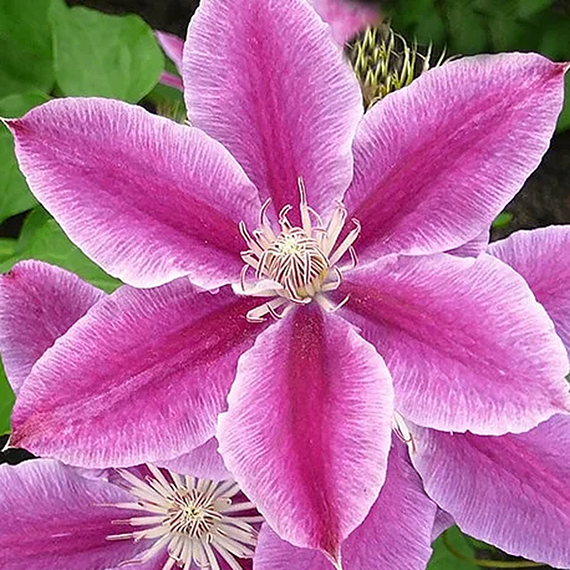
- Spectacular bi-color blooms up to 8 inches across feature soft rose-pink petals adorned with a bold, deep carmine-red central bar and warm chocolate-toned anthers - a truly eye-catching combination.
- A reliable rebloomer that flowers twice a season - first in late spring through early summer, then again in late summer into fall - delivering months of vibrant color in the garden.
- Vigorous yet manageable deciduous climbing vine reaching 8-12 feet tall, perfect for trellises, arbors, pergolas, fences, and walls in USDA Hardiness Zones 4-9.
- Low-maintenance and deer resistant, this long-lived perennial climber attracts bees, butterflies, and hummingbirds while offering exceptional tolerance to a wide range of soil types and exposures.
Clematis 'Doctor Ruppel' is one of the most beloved and enduring large-flowered clematis cultivars available to home gardeners, and it's easy to see why. This vigorous deciduous climbing vine produces an abundance of breathtaking, saucer-shaped blossoms measuring 5 to 8 inches in diameter, each showcasing delicately ruffled, pale rose-pink tepals dramatically striped with a wide, deep carmine-red central bar and complemented by distinctive light chocolate anthers at the center. As the flowers mature, the petals develop soft lavender highlights, adding even more dimension and beauty to the display. Unlike many clematis that bloom only once, Doctor Ruppel delivers two spectacular flushes of color - first in late spring to early summer, then again in late summer through early fall - ensuring your vertical structures remain a focal point of the garden for an extended season. A Group 2 early large-flowered hybrid, this perennial vine climbs by twining leaf stalks and will reach 8 to 12 feet in height with a spread of 3 to 6 feet, making it an ideal choice for covering trellises, arbors, pergolas, and fences. It thrives in full sun to partial shade in moist, well-drained, neutral to slightly alkaline soil across USDA Hardiness Zones 4-9, and its deer resistance, wildlife appeal, and low-maintenance nature make it a standout choice for cottage gardens, courtyard spaces, and mixed borders throughout Southern Oregon and Northern California.
Plant Description
Clematis 'Doctor Ruppel' is a deciduous, large-flowered climbing hybrid belonging to the Early Large-Flowered Group (Group 2) of clematis. It is celebrated for its exceptionally large, star-shaped to saucer-shaped flowers that can reach 5 to 8 inches (13-20 cm) across. Each bloom displays 6 to 8 delicately ruffled, pale rose-pink tepals boldly marked with a wide, deep reddish-pink to carmine-red central bar running the full length of each tepal. The contrasting light chocolate-colored anthers at the flower's center complete the striking bi-color effect. As blooms mature, the pale pink petals develop subtle lavender highlights, adding further elegance. The foliage consists of attractive, dense, dark green leaves that grow in pairs along the stems, providing a lush backdrop to the colorful flowers. Flowering occurs in two distinct waves: the first and most abundant flush appears in late spring through early summer on the previous year's growth, followed by a second flush in late summer through early fall on new season growth. The blooms are so freely produced during peak flowering that they can completely cover the foliage.
Mature Size
| Characteristic | Measurement |
|---|---|
| Mature Height | 8 to 12 feet (approx. 2.5 to 3.7 meters) |
| Mature Spread | 3 to 6 feet (approx. 0.9 to 1.8 meters) |
| Recommended Spacing | 36 to 48 inches apart |
| Growth Rate | Moderate to fast |
| Time to Reach Mature Height | 2 to 5 years |
| Flower Size | 5 to 8 inches (13 to 20 cm) in diameter |
Hardiness and Climate
Clematis 'Doctor Ruppel' is cold-hardy and adaptable, performing reliably across a broad range of climates. It is rated for USDA Hardiness Zones 4 through 9, tolerating winter temperatures as low as -30°F (-34°C) in colder zones and growing well in the warmer conditions found throughout Southern Oregon and Northern California. It is also suitable for AHS Heat Zones 1 through 8. In regions with hot summers, providing afternoon shade will protect the flowers from bleaching and help the plant thrive. As a deciduous vine, it naturally dies back in winter and returns vigorously each spring. Planting the crown 2 to 3 inches below the soil surface provides additional protection to the root system in cold climates and helps guard against clematis wilt.
Sunlight Requirements
Clematis 'Doctor Ruppel' grows best in full sun to partial shade, requiring a minimum of 6 hours of sunlight per day for optimal blooming. The classic guideline for clematis applies here: "head in the sun, feet in the shade." The flowering stems and foliage benefit from good sun exposure to produce prolific blooms, while the root zone must be kept cool and shaded. This can be achieved by planting a low-growing shrub or large perennial in front of the root ball, laying flat stones or pebbles at the base of the plant, or applying a generous layer of mulch. In the warmer climates of Southern Oregon and Northern California, a planting location that receives morning sun and afternoon shade will help preserve flower color and prevent heat stress during the hottest months of summer.
Soil and pH Preferences
This clematis thrives in moist, well-drained soil and is adaptable to a range of soil types including chalk, clay, loam, and sandy soils, provided drainage is adequate. It prefers a neutral to slightly alkaline soil pH, ideally between 6.5 and 7.5. If your soil is naturally acidic, incorporating garden lime at planting time and periodically thereafter will help raise the pH to the preferred range. Amending the planting hole with well-rotted compost or aged manure improves soil structure, enhances nutrient availability, and increases the soil's moisture-holding capacity - all of which benefit the long-term health and flowering performance of 'Doctor Ruppel.' Avoid planting in poorly drained or waterlogged soils, as this increases the risk of root rot and clematis wilt.
Planting Instructions
- Choose a location with at least 6 hours of sunlight and access to a sturdy support structure such as a trellis, arbor, fence, or wall.
- Dig a planting hole approximately twice the width of the root ball and deep enough to allow the crown of the plant to sit 2 to 3 inches below the finished soil surface. Planting deeper than the original pot level encourages strong shoots to develop from below ground and helps protect against clematis wilt.
- Amend the removed soil with compost or well-rotted organic matter to improve fertility and drainage.
- If your soil is acidic, add garden lime and mix it thoroughly into the amended backfill.
- Place the plant in the hole, backfill with the amended soil, and firm gently around the roots.
- Water thoroughly at planting to settle the soil and eliminate air pockets around the roots.
- Apply a 2 to 3 inch layer of organic mulch (bark chips, compost, or straw) around the base of the plant to retain moisture and shade the root zone. Keep mulch several inches away from the main stems to prevent rot.
- Place flat stones or pebbles at the base of the plant if mulch is not used, to help keep roots cool.
- Space multiple plants 36 to 48 inches apart to allow for adequate air circulation and growth.
Watering Guide
Consistent moisture is important for Clematis 'Doctor Ruppel,' especially during the first one to two growing seasons while the plant is establishing its root system. Water deeply every 7 to 10 days during the growing season, allowing water to penetrate well into the soil to encourage deep, drought-resilient root development. Always check soil moisture before watering by pressing a finger an inch into the soil near the base - if the soil feels dry at that depth, it is time to water. Avoid allowing the soil to dry out completely, but equally important, avoid waterlogging or overwatering, which can cause root rot and create conditions favorable to clematis wilt. During hot, dry periods in summer - common in Southern Oregon and Northern California - increase watering frequency as needed. Drip irrigation or soaker hoses are ideal delivery methods as they direct water to the root zone without wetting the foliage, reducing the risk of fungal diseases. Reduce watering in fall as the plant prepares for dormancy.
Fertilizing
Feed Clematis 'Doctor Ruppel' beginning in early spring as new growth emerges. Apply a balanced, slow-release granular fertilizer (such as a 10-10-10 formulation) around the base of the plant, following package rate directions. As the plant enters its active flowering phase, switching to or supplementing with a fertilizer higher in potassium (the third number in the NPK ratio) will help support robust flower production and encourage repeat blooming. A second light application of balanced fertilizer can be made after the first flush of flowers to support the plant's energy reserves going into the second bloom cycle. Avoid over-fertilizing with high-nitrogen products, as this promotes excessive leafy growth at the expense of flowers. Incorporating compost into the soil annually provides a gentle, steady supply of nutrients and supports a healthy soil environment for the root system.
Pruning and Maintenance
Clematis 'Doctor Ruppel' belongs to Pruning Group 2 (Early Large-Flowered Group), which requires a specific two-phase pruning approach to maintain health and maximize flowering:
- Late Winter / Early Spring Pruning: In late February to early March, before new growth begins, assess all stems from the top downward. Remove any dead, weak, or damaged stems entirely. For remaining stems, prune back just above the first pair of healthy, plump buds, cutting at a slight angle with clean, sharp pruners. Avoid heavy pruning at this stage, as the first flush of blooms is produced on last year's growth - cutting too far back will sacrifice these early flowers.
- After the First Flush of Flowers: Once the late spring / early summer blooms have faded, deadhead spent flowers and prune some of the flowered stems back to a strong pair of buds or a healthy side shoot just below the spent blooms. This encourages new growth that will produce the second flush of flowers in late summer and fall.
- Renovation Pruning: If the plant becomes overgrown or top-heavy over time, it can be gradually reduced by pruning harder after the first flowering over two to three seasons. Alternatively, a full hard renovation prune to 12 to 18 inches from the base can be performed every three to four years in late winter. The plant will only flower once in the first season after a hard renovation prune but will recover and resume two-flush blooming thereafter.
Seasonal Interest
| Season | What to Expect |
|---|---|
| Spring (Late) | First and most prolific flush of large rose-pink and carmine-barred blooms begins; fresh dark green foliage emerges vigorously. |
| Early Summer | Peak first-flush blooming; flowers so abundant they often obscure the foliage; strong fragrance noted on warm days. |
| Mid Summer | Lush dark green foliage; brief pause between bloom flushes; new growth develops for second flowering cycle. |
| Late Summer / Fall | Second flush of flowers appears on new growth; bloom size may be slightly smaller than spring flush but equally colorful; attractive seedheads begin to develop. |
| Winter | Deciduous; stems go dormant; old stems provide structure and may show attractive seed heads before dying back. |
Landscape Uses
The versatility of Clematis 'Doctor Ruppel' makes it a standout choice for a wide variety of landscape applications. Its vigorous climbing habit and prolific, showy flowers make it ideally suited for the following uses:
- Trellises and Lattice Panels: Creates a stunning living wall of color in late spring and again in fall.
- Arbors and Pergolas: Grows vigorously enough to cover large overhead structures while remaining manageable.
- Fences and Walls: Rapidly covers unsightly fencing or bare walls with lush green foliage and spectacular blooms.
- Growing Through Shrubs: Particularly effective when trained to scramble through large shrubs such as roses, viburnum, or forsythia, creating layered color combinations.
- Mixed Borders: Trained on a stake or small obelisk within a border to add vertical interest among perennials.
- Container Growing: Can be grown in large containers (minimum 15-20 gallon) on patios or decks with a support structure, provided consistent watering and feeding is maintained.
- Cottage and Informal Gardens: Its romantic, old-fashioned flower form is a perfect fit for traditional cottage-style plantings.
Companion Plants
Clematis 'Doctor Ruppel' combines beautifully with a wide range of garden plants. When selecting companions, choose plants that will shade the clematis root zone while complementing its bi-color pink and carmine blooms:
- Roses: A classic pairing. Deep red, burgundy, or cream climbing roses provide a stunning contrast to 'Doctor Ruppel's' pink-barred flowers and also help shade its root zone. Try training it through an established climbing rose for a breathtaking duo.
- Peonies (Paeonia): Share similar bloom timing in late spring; soft white or deep red peony varieties complement the pink tones beautifully.
- Catmint (Nepeta): Low-growing and spreading, catmint planted at the base of the clematis provides excellent root shading while its lavender-blue flowers harmonize with the pink tepals.
- Salvia: Blue and purple salvias make a classic color-wheel complement to the warm pink and carmine flowers.
- Hydrangea: Large-leaved hydrangeas planted nearby provide excellent root zone coverage and cool-toned blooms in a contrasting form.
- Ornamental Grasses: Provide textural contrast and help keep the root zone cool and shaded through summer.
- Coreopsis 'Moonbeam': The soft yellow, fine-textured blooms of this perennial offer a complementary warm-toned contrast when planted nearby.
Pests and Diseases
Clematis 'Doctor Ruppel' is generally a robust and resilient plant, but gardeners should be aware of the following potential issues:
- Clematis Wilt: The most significant concern for large-flowered clematis. Caused by the fungal pathogen Phoma clematidina, wilt causes rapid wilting and blackening of stems. Planting the crown 2-3 inches below soil level is the primary preventive measure, as new shoots can regenerate from the protected root crown. Remove and dispose of affected stems promptly; do not compost them. The plant usually recovers from below ground the following season.
- Powdery Mildew: A fungal disease that appears as a white powdery coating on leaves, especially in dry conditions with poor air circulation. Avoid overhead watering, ensure good spacing, and treat with an appropriate organic fungicide if needed.
- Aphids: Can cluster on new growth in spring. A strong spray of water or an application of insecticidal soap or neem oil will provide effective organic control.
- Slugs and Snails: May feed on young emerging shoots in spring. Use slug baits, diatomaceous earth, or copper barriers to protect new growth.
- Caterpillars: Occasionally feed on foliage; handpick or use an appropriate organic control.
- Honey Fungus: Rarely affects clematis but can occur in soils with a history of the disease.
- Spider Mites: May appear in hot, dry conditions. Neem oil or insecticidal soap applied to the undersides of leaves is effective.
Container Growing
Clematis 'Doctor Ruppel' can be successfully grown in containers, making it an excellent option for patios, decks, and courtyard gardens. For best results in containers, follow these guidelines:
- Use a large container with a minimum capacity of 15 to 20 gallons and ensure it has ample drainage holes.
- Fill with a high-quality, well-draining potting mix amended with compost and a small amount of perlite to enhance drainage.
- Add garden lime to the potting mix to bring pH to the preferred neutral to slightly alkaline range.
- Provide a sturdy trellis, obelisk, or other support structure within or behind the container.
- Container-grown clematis requires more frequent watering than in-ground plants - check soil moisture daily in warm weather and water when the top inch of soil is dry.
- Fertilize more frequently than in-ground plants, as nutrients leach out with regular watering. Apply a balanced liquid fertilizer every 2 to 3 weeks during the growing season, transitioning to a high-potassium formula during the bloom periods.
- Mulch the surface of the container soil with pebbles or bark chips to conserve moisture and keep roots cool.
- Repot every 2 to 3 years to refresh the potting medium and allow continued root expansion.
Wildlife Value
Clematis 'Doctor Ruppel' is a valuable addition to any wildlife-friendly garden. Its large, open flowers with accessible nectar and pollen are particularly attractive to pollinators and other garden visitors:
- Bees: Both honeybees and native bumble bees are strongly attracted to the open, pollen-rich flowers, especially during the spring and late summer bloom flushes.
- Butterflies: The wide, flat flower surface provides an excellent landing platform for butterflies seeking nectar.
- Hummingbirds: The bright, large blooms attract hummingbirds, making this an excellent plant for hummingbird gardens in Southern Oregon and Northern California.
- Deer and Rabbit Resistance: Clematis 'Doctor Ruppel' is generally avoided by deer and rabbits, making it a practical choice in areas where browsing pressure is a concern.
Note: All parts of this plant are toxic if ingested and may cause skin irritation upon contact. Wear gloves when handling, and keep away from pets and children. This plant is harmful to dogs, cats, and horses if consumed.
Propagation
Clematis 'Doctor Ruppel' can be propagated at home using the following methods:
- Semi-Hardwood Cuttings: Take 3 to 4 inch stem cuttings in late spring to early summer, ensuring each cutting includes at least one node (pair of leaf buds) and a short section of stem above and below it. Remove the lower leaves, dip the cut end in rooting hormone powder, and insert into a moist, well-draining propagation medium. Keep in a warm, humid environment out of direct sun until roots form in 4 to 6 weeks.
- Layering: In spring or early summer, select a flexible stem and bend it to the ground. Wound the underside of the stem slightly at a node, pin it into moist soil with a U-shaped pin or stone, and cover with soil. Keep the area moist. Roots will typically form within 2 to 3 months. Once well-rooted, sever from the parent plant and transplant.
Note that 'Doctor Ruppel' is a named cultivar. Plants grown from cuttings or layers will be true to the parent, whereas plants grown from seed will not reliably reproduce the distinctive bi-color flower pattern.
- Spectacular bi-color blooms up to 8 inches across feature soft rose-pink petals adorned with a bold, deep carmine-red central bar and warm chocolate-toned anthers - a truly eye-catching combination.
- A reliable rebloomer that flowers twice a season - first in late spring through early summer, then again in late summer into fall - delivering months of vibrant color in the garden.
- Vigorous yet manageable deciduous climbing vine reaching 8-12 feet tall, perfect for trellises, arbors, pergolas, fences, and walls in USDA Hardiness Zones 4-9.
- Low-maintenance and deer resistant, this long-lived perennial climber attracts bees, butterflies, and hummingbirds while offering exceptional tolerance to a wide range of soil types and exposures.
Clematis 'Doctor Ruppel' is one of the most beloved and enduring large-flowered clematis cultivars available to home gardeners, and it's easy to see why. This vigorous deciduous climbing vine produces an abundance of breathtaking, saucer-shaped blossoms measuring 5 to 8 inches in diameter, each showcasing delicately ruffled, pale rose-pink tepals dramatically striped with a wide, deep carmine-red central bar and complemented by distinctive light chocolate anthers at the center. As the flowers mature, the petals develop soft lavender highlights, adding even more dimension and beauty to the display. Unlike many clematis that bloom only once, Doctor Ruppel delivers two spectacular flushes of color - first in late spring to early summer, then again in late summer through early fall - ensuring your vertical structures remain a focal point of the garden for an extended season. A Group 2 early large-flowered hybrid, this perennial vine climbs by twining leaf stalks and will reach 8 to 12 feet in height with a spread of 3 to 6 feet, making it an ideal choice for covering trellises, arbors, pergolas, and fences. It thrives in full sun to partial shade in moist, well-drained, neutral to slightly alkaline soil across USDA Hardiness Zones 4-9, and its deer resistance, wildlife appeal, and low-maintenance nature make it a standout choice for cottage gardens, courtyard spaces, and mixed borders throughout Southern Oregon and Northern California.
Plant Description
Clematis 'Doctor Ruppel' is a deciduous, large-flowered climbing hybrid belonging to the Early Large-Flowered Group (Group 2) of clematis. It is celebrated for its exceptionally large, star-shaped to saucer-shaped flowers that can reach 5 to 8 inches (13-20 cm) across. Each bloom displays 6 to 8 delicately ruffled, pale rose-pink tepals boldly marked with a wide, deep reddish-pink to carmine-red central bar running the full length of each tepal. The contrasting light chocolate-colored anthers at the flower's center complete the striking bi-color effect. As blooms mature, the pale pink petals develop subtle lavender highlights, adding further elegance. The foliage consists of attractive, dense, dark green leaves that grow in pairs along the stems, providing a lush backdrop to the colorful flowers. Flowering occurs in two distinct waves: the first and most abundant flush appears in late spring through early summer on the previous year's growth, followed by a second flush in late summer through early fall on new season growth. The blooms are so freely produced during peak flowering that they can completely cover the foliage.
Mature Size
| Characteristic | Measurement |
|---|---|
| Mature Height | 8 to 12 feet (approx. 2.5 to 3.7 meters) |
| Mature Spread | 3 to 6 feet (approx. 0.9 to 1.8 meters) |
| Recommended Spacing | 36 to 48 inches apart |
| Growth Rate | Moderate to fast |
| Time to Reach Mature Height | 2 to 5 years |
| Flower Size | 5 to 8 inches (13 to 20 cm) in diameter |
Hardiness and Climate
Clematis 'Doctor Ruppel' is cold-hardy and adaptable, performing reliably across a broad range of climates. It is rated for USDA Hardiness Zones 4 through 9, tolerating winter temperatures as low as -30°F (-34°C) in colder zones and growing well in the warmer conditions found throughout Southern Oregon and Northern California. It is also suitable for AHS Heat Zones 1 through 8. In regions with hot summers, providing afternoon shade will protect the flowers from bleaching and help the plant thrive. As a deciduous vine, it naturally dies back in winter and returns vigorously each spring. Planting the crown 2 to 3 inches below the soil surface provides additional protection to the root system in cold climates and helps guard against clematis wilt.
Sunlight Requirements
Clematis 'Doctor Ruppel' grows best in full sun to partial shade, requiring a minimum of 6 hours of sunlight per day for optimal blooming. The classic guideline for clematis applies here: "head in the sun, feet in the shade." The flowering stems and foliage benefit from good sun exposure to produce prolific blooms, while the root zone must be kept cool and shaded. This can be achieved by planting a low-growing shrub or large perennial in front of the root ball, laying flat stones or pebbles at the base of the plant, or applying a generous layer of mulch. In the warmer climates of Southern Oregon and Northern California, a planting location that receives morning sun and afternoon shade will help preserve flower color and prevent heat stress during the hottest months of summer.
Soil and pH Preferences
This clematis thrives in moist, well-drained soil and is adaptable to a range of soil types including chalk, clay, loam, and sandy soils, provided drainage is adequate. It prefers a neutral to slightly alkaline soil pH, ideally between 6.5 and 7.5. If your soil is naturally acidic, incorporating garden lime at planting time and periodically thereafter will help raise the pH to the preferred range. Amending the planting hole with well-rotted compost or aged manure improves soil structure, enhances nutrient availability, and increases the soil's moisture-holding capacity - all of which benefit the long-term health and flowering performance of 'Doctor Ruppel.' Avoid planting in poorly drained or waterlogged soils, as this increases the risk of root rot and clematis wilt.
Planting Instructions
- Choose a location with at least 6 hours of sunlight and access to a sturdy support structure such as a trellis, arbor, fence, or wall.
- Dig a planting hole approximately twice the width of the root ball and deep enough to allow the crown of the plant to sit 2 to 3 inches below the finished soil surface. Planting deeper than the original pot level encourages strong shoots to develop from below ground and helps protect against clematis wilt.
- Amend the removed soil with compost or well-rotted organic matter to improve fertility and drainage.
- If your soil is acidic, add garden lime and mix it thoroughly into the amended backfill.
- Place the plant in the hole, backfill with the amended soil, and firm gently around the roots.
- Water thoroughly at planting to settle the soil and eliminate air pockets around the roots.
- Apply a 2 to 3 inch layer of organic mulch (bark chips, compost, or straw) around the base of the plant to retain moisture and shade the root zone. Keep mulch several inches away from the main stems to prevent rot.
- Place flat stones or pebbles at the base of the plant if mulch is not used, to help keep roots cool.
- Space multiple plants 36 to 48 inches apart to allow for adequate air circulation and growth.
Watering Guide
Consistent moisture is important for Clematis 'Doctor Ruppel,' especially during the first one to two growing seasons while the plant is establishing its root system. Water deeply every 7 to 10 days during the growing season, allowing water to penetrate well into the soil to encourage deep, drought-resilient root development. Always check soil moisture before watering by pressing a finger an inch into the soil near the base - if the soil feels dry at that depth, it is time to water. Avoid allowing the soil to dry out completely, but equally important, avoid waterlogging or overwatering, which can cause root rot and create conditions favorable to clematis wilt. During hot, dry periods in summer - common in Southern Oregon and Northern California - increase watering frequency as needed. Drip irrigation or soaker hoses are ideal delivery methods as they direct water to the root zone without wetting the foliage, reducing the risk of fungal diseases. Reduce watering in fall as the plant prepares for dormancy.
Fertilizing
Feed Clematis 'Doctor Ruppel' beginning in early spring as new growth emerges. Apply a balanced, slow-release granular fertilizer (such as a 10-10-10 formulation) around the base of the plant, following package rate directions. As the plant enters its active flowering phase, switching to or supplementing with a fertilizer higher in potassium (the third number in the NPK ratio) will help support robust flower production and encourage repeat blooming. A second light application of balanced fertilizer can be made after the first flush of flowers to support the plant's energy reserves going into the second bloom cycle. Avoid over-fertilizing with high-nitrogen products, as this promotes excessive leafy growth at the expense of flowers. Incorporating compost into the soil annually provides a gentle, steady supply of nutrients and supports a healthy soil environment for the root system.
Pruning and Maintenance
Clematis 'Doctor Ruppel' belongs to Pruning Group 2 (Early Large-Flowered Group), which requires a specific two-phase pruning approach to maintain health and maximize flowering:
- Late Winter / Early Spring Pruning: In late February to early March, before new growth begins, assess all stems from the top downward. Remove any dead, weak, or damaged stems entirely. For remaining stems, prune back just above the first pair of healthy, plump buds, cutting at a slight angle with clean, sharp pruners. Avoid heavy pruning at this stage, as the first flush of blooms is produced on last year's growth - cutting too far back will sacrifice these early flowers.
- After the First Flush of Flowers: Once the late spring / early summer blooms have faded, deadhead spent flowers and prune some of the flowered stems back to a strong pair of buds or a healthy side shoot just below the spent blooms. This encourages new growth that will produce the second flush of flowers in late summer and fall.
- Renovation Pruning: If the plant becomes overgrown or top-heavy over time, it can be gradually reduced by pruning harder after the first flowering over two to three seasons. Alternatively, a full hard renovation prune to 12 to 18 inches from the base can be performed every three to four years in late winter. The plant will only flower once in the first season after a hard renovation prune but will recover and resume two-flush blooming thereafter.
Seasonal Interest
| Season | What to Expect |
|---|---|
| Spring (Late) | First and most prolific flush of large rose-pink and carmine-barred blooms begins; fresh dark green foliage emerges vigorously. |
| Early Summer | Peak first-flush blooming; flowers so abundant they often obscure the foliage; strong fragrance noted on warm days. |
| Mid Summer | Lush dark green foliage; brief pause between bloom flushes; new growth develops for second flowering cycle. |
| Late Summer / Fall | Second flush of flowers appears on new growth; bloom size may be slightly smaller than spring flush but equally colorful; attractive seedheads begin to develop. |
| Winter | Deciduous; stems go dormant; old stems provide structure and may show attractive seed heads before dying back. |
Landscape Uses
The versatility of Clematis 'Doctor Ruppel' makes it a standout choice for a wide variety of landscape applications. Its vigorous climbing habit and prolific, showy flowers make it ideally suited for the following uses:
- Trellises and Lattice Panels: Creates a stunning living wall of color in late spring and again in fall.
- Arbors and Pergolas: Grows vigorously enough to cover large overhead structures while remaining manageable.
- Fences and Walls: Rapidly covers unsightly fencing or bare walls with lush green foliage and spectacular blooms.
- Growing Through Shrubs: Particularly effective when trained to scramble through large shrubs such as roses, viburnum, or forsythia, creating layered color combinations.
- Mixed Borders: Trained on a stake or small obelisk within a border to add vertical interest among perennials.
- Container Growing: Can be grown in large containers (minimum 15-20 gallon) on patios or decks with a support structure, provided consistent watering and feeding is maintained.
- Cottage and Informal Gardens: Its romantic, old-fashioned flower form is a perfect fit for traditional cottage-style plantings.
Companion Plants
Clematis 'Doctor Ruppel' combines beautifully with a wide range of garden plants. When selecting companions, choose plants that will shade the clematis root zone while complementing its bi-color pink and carmine blooms:
- Roses: A classic pairing. Deep red, burgundy, or cream climbing roses provide a stunning contrast to 'Doctor Ruppel's' pink-barred flowers and also help shade its root zone. Try training it through an established climbing rose for a breathtaking duo.
- Peonies (Paeonia): Share similar bloom timing in late spring; soft white or deep red peony varieties complement the pink tones beautifully.
- Catmint (Nepeta): Low-growing and spreading, catmint planted at the base of the clematis provides excellent root shading while its lavender-blue flowers harmonize with the pink tepals.
- Salvia: Blue and purple salvias make a classic color-wheel complement to the warm pink and carmine flowers.
- Hydrangea: Large-leaved hydrangeas planted nearby provide excellent root zone coverage and cool-toned blooms in a contrasting form.
- Ornamental Grasses: Provide textural contrast and help keep the root zone cool and shaded through summer.
- Coreopsis 'Moonbeam': The soft yellow, fine-textured blooms of this perennial offer a complementary warm-toned contrast when planted nearby.
Pests and Diseases
Clematis 'Doctor Ruppel' is generally a robust and resilient plant, but gardeners should be aware of the following potential issues:
- Clematis Wilt: The most significant concern for large-flowered clematis. Caused by the fungal pathogen Phoma clematidina, wilt causes rapid wilting and blackening of stems. Planting the crown 2-3 inches below soil level is the primary preventive measure, as new shoots can regenerate from the protected root crown. Remove and dispose of affected stems promptly; do not compost them. The plant usually recovers from below ground the following season.
- Powdery Mildew: A fungal disease that appears as a white powdery coating on leaves, especially in dry conditions with poor air circulation. Avoid overhead watering, ensure good spacing, and treat with an appropriate organic fungicide if needed.
- Aphids: Can cluster on new growth in spring. A strong spray of water or an application of insecticidal soap or neem oil will provide effective organic control.
- Slugs and Snails: May feed on young emerging shoots in spring. Use slug baits, diatomaceous earth, or copper barriers to protect new growth.
- Caterpillars: Occasionally feed on foliage; handpick or use an appropriate organic control.
- Honey Fungus: Rarely affects clematis but can occur in soils with a history of the disease.
- Spider Mites: May appear in hot, dry conditions. Neem oil or insecticidal soap applied to the undersides of leaves is effective.
Container Growing
Clematis 'Doctor Ruppel' can be successfully grown in containers, making it an excellent option for patios, decks, and courtyard gardens. For best results in containers, follow these guidelines:
- Use a large container with a minimum capacity of 15 to 20 gallons and ensure it has ample drainage holes.
- Fill with a high-quality, well-draining potting mix amended with compost and a small amount of perlite to enhance drainage.
- Add garden lime to the potting mix to bring pH to the preferred neutral to slightly alkaline range.
- Provide a sturdy trellis, obelisk, or other support structure within or behind the container.
- Container-grown clematis requires more frequent watering than in-ground plants - check soil moisture daily in warm weather and water when the top inch of soil is dry.
- Fertilize more frequently than in-ground plants, as nutrients leach out with regular watering. Apply a balanced liquid fertilizer every 2 to 3 weeks during the growing season, transitioning to a high-potassium formula during the bloom periods.
- Mulch the surface of the container soil with pebbles or bark chips to conserve moisture and keep roots cool.
- Repot every 2 to 3 years to refresh the potting medium and allow continued root expansion.
Wildlife Value
Clematis 'Doctor Ruppel' is a valuable addition to any wildlife-friendly garden. Its large, open flowers with accessible nectar and pollen are particularly attractive to pollinators and other garden visitors:
- Bees: Both honeybees and native bumble bees are strongly attracted to the open, pollen-rich flowers, especially during the spring and late summer bloom flushes.
- Butterflies: The wide, flat flower surface provides an excellent landing platform for butterflies seeking nectar.
- Hummingbirds: The bright, large blooms attract hummingbirds, making this an excellent plant for hummingbird gardens in Southern Oregon and Northern California.
- Deer and Rabbit Resistance: Clematis 'Doctor Ruppel' is generally avoided by deer and rabbits, making it a practical choice in areas where browsing pressure is a concern.
Note: All parts of this plant are toxic if ingested and may cause skin irritation upon contact. Wear gloves when handling, and keep away from pets and children. This plant is harmful to dogs, cats, and horses if consumed.
Propagation
Clematis 'Doctor Ruppel' can be propagated at home using the following methods:
- Semi-Hardwood Cuttings: Take 3 to 4 inch stem cuttings in late spring to early summer, ensuring each cutting includes at least one node (pair of leaf buds) and a short section of stem above and below it. Remove the lower leaves, dip the cut end in rooting hormone powder, and insert into a moist, well-draining propagation medium. Keep in a warm, humid environment out of direct sun until roots form in 4 to 6 weeks.
- Layering: In spring or early summer, select a flexible stem and bend it to the ground. Wound the underside of the stem slightly at a node, pin it into moist soil with a U-shaped pin or stone, and cover with soil. Keep the area moist. Roots will typically form within 2 to 3 months. Once well-rooted, sever from the parent plant and transplant.
Note that 'Doctor Ruppel' is a named cultivar. Plants grown from cuttings or layers will be true to the parent, whereas plants grown from seed will not reliably reproduce the distinctive bi-color flower pattern.
Related Products