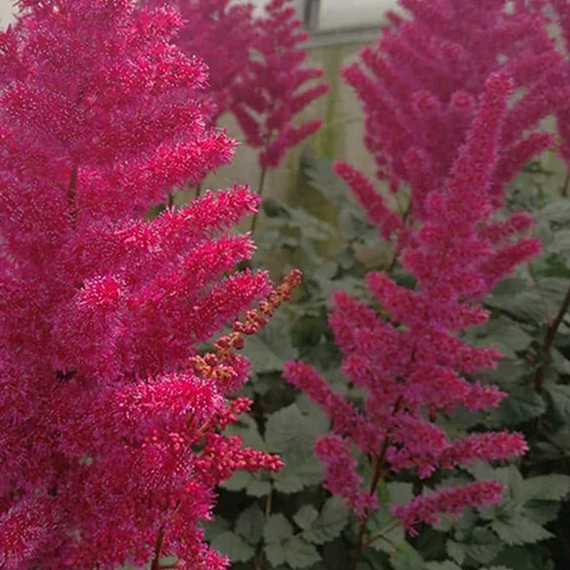


Astilbe chinensis 'Visions Volcano' is a compact, award-worthy shade perennial that brings an eruption of vivid color to the parts of the garden where most flowering plants struggle. Part of the popular Visions Series of Chinese astilbes, this dwarf cultivar produces dense, upright plumes of brilliant hot pink to fuchsia flowers from early to mid summer, held above neat mounds of glossy, finely cut, emerald green compound foliage with attractively dark stems. Maturing at just 12 to 14 inches tall and 10 to 14 inches wide, 'Visions Volcano' fits naturally at the front of shaded borders, along woodland garden pathways, and in mixed container plantings where its vivid blooms contrast beautifully with bold-leafed companions like hostas and heucheras. Hardy in USDA zones 4 through 8, it thrives in partial to full shade with consistently moist, humus-rich soil, and its Chinese astilbe heritage gives it slightly better heat and drought tolerance than many other astilbe hybrids. Virtually pest- and disease-resistant, it shrugs off deer and rabbits while attracting butterflies and other pollinators to its fragrant plumes. Whether massed for a dramatic summer color display, planted along pond edges and water features, or used as an elegant cut flower, Astilbe 'Visions Volcano' is one of the most versatile and reliable shade perennials available for Pacific Coast and mountain-climate gardens.
Astilbe chinensis 'Visions Volcano' is a herbaceous perennial belonging to the Saxifragaceae (saxifrage) family and commonly known as False Spirea or Chinese Astilbe. This compact cultivar is part of the Visions Series and stands out for its strikingly vivid hot pink to fuchsia flower plumes, which are technically panicles made up of hundreds of tiny individual florets arranged along arching branches. This intricate structure gives the blooms a feathery, cloud-like appearance that moves gracefully in the breeze. The dark, upright stems and deeply cut, ferny, glossy emerald green compound foliage provide a refined backdrop to the brilliant flower color. Leaves remain an attractive green throughout the entire growing season, and the plant dies back completely to the ground in winter before re-emerging reliably each spring. The chinensis species background lends 'Visions Volcano' a slightly greater tolerance for heat and periods of reduced moisture compared to arendsii hybrids, making it a particularly resilient choice in variable Pacific Coast climates.
| Characteristic | Measurement |
|---|---|
| Mature Height | 12-14 inches |
| Mature Spread | 10-14 inches |
| Recommended Spacing | 12-15 inches on center |
| Growth Habit | Upright, compact mounding |
| Growth Rate | Medium |
| Plant Type | Deciduous/Herbaceous Perennial |
Astilbe 'Visions Volcano' is reliably cold-hardy in USDA Plant Hardiness Zones 4 through 8, making it well suited to a wide range of climates across the Pacific Coast and Inland regions of Southern Oregon and Northern California. In colder zones, the plant dies back completely to the ground after frost and re-emerges each spring from its hardy crown. In the warmer end of its range (zones 7-8), afternoon shade, consistent irrigation, and a 2-3 inch layer of mulch to keep roots cool are especially important for long-term success. Gardeners in hotter, drier inland areas should prioritize siting this plant where it receives protection from intense afternoon sun.
Visions Volcano Astilbe performs best in partial shade to full shade. The ideal exposure is dappled sunlight or morning sun with afternoon shade, providing roughly 3 to 6 hours of indirect or gentle direct light per day. This classic woodland edge condition produces the most vigorous plants, longest-lasting blooms, and richest foliage color. The plant will grow in full shade but may bloom less prolifically in very deep or all-day shade. As a Chinese astilbe, 'Visions Volcano' is slightly more sun-tolerant than arendsii hybrids and can handle a few hours of direct sun provided the soil remains consistently and evenly moist. Hot afternoon sun without adequate soil moisture will cause leaf edges to brown and crisp, and flower plumes to collapse prematurely. In Southern Oregon and Northern California gardens, siting this plant beneath deciduous trees or on the north or east side of structures delivers excellent results.
This astilbe thrives in rich, consistently moist, well-drained soil with a pH between 6.0 and 6.8 (slightly acidic to near-neutral). It adapts reasonably well to a range of soil types, including average garden loam, but always performs best when the soil has been enriched with generous amounts of organic matter such as compost or aged leaf mold before planting. Sandy soils should be heavily amended to improve water retention. While 'Visions Volcano' can tolerate brief periods of standing moisture and performs well near water features and pond edges, it should not be planted in poorly drained areas prone to prolonged waterlogging, which can cause root rot. If your native soil is clay-heavy and slow to drain, incorporating coarse organic matter and ensuring the planting bed has adequate slope will help. This plant also has some tolerance for salt in the soil, making it more adaptable than many shade perennials in a variety of landscape situations.
Consistent soil moisture is the single most important cultural requirement for Astilbe 'Visions Volcano'. This plant does not develop meaningful drought tolerance with age and must have evenly moist soil throughout the growing season. Allow the top inch of soil to be moist but not saturated at all times. During the active growing and blooming season, aim to provide approximately 1 inch of water per week, increasing to 1.5 inches per week during hot spells or in sunnier exposures. Water deeply two to three times per week rather than with frequent shallow irrigation to encourage deep root growth into cooler, moister soil layers. Drip irrigation or soaker hoses are ideal as they deliver water directly to the root zone without wetting foliage, reducing the risk of fungal disease. Applying a 2-3 inch layer of mulch around plants dramatically reduces evaporation and helps maintain the consistent moisture this perennial needs. When the soil dries out, the edges of the leaves will quickly turn brown and crispy — a reliable early warning sign to water immediately and deeply.
Astilbe 'Visions Volcano' benefits from a modest, well-timed fertilizing program. Apply a balanced slow-release granular fertilizer, such as a 10-10-10 formulation, in early spring as new foliage begins to emerge. Follow label directions for rate. A second light application in early June can extend the plant's energy through bud development and the full bloom period. Avoid high-nitrogen fertilizers in midsummer, as excess nitrogen encourages leafy growth at the expense of flower production. An excellent alternative or supplement to synthetic fertilizer is a generous 1-2 inch top-dressing of well-rotted compost applied each spring. This improves soil structure, feeds beneficial soil organisms, and releases nutrients gradually throughout the season. Avoid fertilizing in late summer or fall, as this can stimulate tender new growth that is vulnerable to early frost damage.
Astilbe 'Visions Volcano' requires very little pruning and is one of the easiest shade perennials to maintain. After blooming, do not deadhead the spent flower plumes — unlike many perennials, removing the spent blooms will not trigger reblooming. Instead, leave the plumes standing through fall and winter, as their papery, branched architecture remains attractively ornamental through frost and snow and provides seeds for small songbirds. In late winter or very early spring — February to March depending on your location — cut all old stems cleanly to the ground at the base using sharp, clean pruners as new growth begins to emerge from the crown. If the crown has heaved up above soil level over time, gently press it back down and top-dress with a layer of organic matter to keep it at the correct depth. Divide clumps every 3 to 4 years in early spring to maintain vigor and prolific flowering, as the woody central portion of older clumps can become unproductive. Divisions should be made before new growth exceeds 4 inches tall. Remove and replant only the vigorous outer portions of the clump, discarding the woody center.
Astilbe 'Visions Volcano' delivers multi-season interest from spring through winter. In spring, attractive ferny, emerald green foliage emerges from the ground and fills in quickly, forming a neat, tidy mound. The main floral display begins in early to mid summer when vivid hot pink plumes rise above the foliage and remain showy for several weeks — longer in cool or shaded conditions. In late summer and fall, the spent plumes transition to warm papery tan and brown tones, adding a soft, feathery textural element to the autumn garden. Through winter, the dried seed heads persist and provide architectural detail and wildlife value until the old stems are removed in late winter as new growth returns. The foliage remains a rich, clean green throughout the entire growing season without significant color change in fall before dying back after frost.
The compact, refined habit of 'Visions Volcano' makes it one of the most versatile astilbes for landscape and garden design. Recommended uses include:
Astilbe 'Visions Volcano' pairs exceptionally well with other shade-loving and moisture-tolerant plants that share its preference for partial shade and consistently moist, humus-rich soil. Outstanding companions include:
Astilbe 'Visions Volcano' is an excellent candidate for container growing thanks to its compact, tidy habit and the dramatic floral display it delivers even in a pot. Choose a container that is at least 12-14 inches in diameter with adequate drainage holes. Use a high-quality, moisture-retentive potting mix enriched with compost or peat-based amendments. Because containers dry out significantly faster than in-ground soil — especially during warm summer weather — daily watering is often necessary during the bloom season. Check soil moisture by inserting a finger 2 inches into the potting mix; if it is dry at that depth, water immediately and thoroughly until water drains freely from the bottom. Position containers in a spot that receives morning sun and afternoon shade, or in bright indirect light. Apply a slow-release granular fertilizer at planting time and supplement with a liquid balanced fertilizer every four to six weeks through the growing season. In zones 4-6, containers can be overwintered by moving them to a protected but unheated garage or burying the pot in the ground to protect roots from hard freezing. Divide and repot container-grown plants every 2-3 years to refresh the potting medium and maintain vigor.
Astilbe 'Visions Volcano' is notably resistant to many common garden pests and diseases, and when planted in the right conditions, it is largely trouble-free. The following issues can occasionally arise:
Astilbe 'Visions Volcano' offers meaningful benefits to garden wildlife while also being resistant to browsing pressure from larger animals. The fragrant, nectar-rich flower plumes are attractive to butterflies and other beneficial pollinators, including native bees, during the summer bloom period. The persistent dried seed heads that remain standing through fall and winter provide a natural food source for small songbirds such as sparrows and finches. Deer, rabbits, and groundhogs consistently avoid this plant, making it a reliable choice for naturalistic landscapes and gardens located near open spaces where wildlife pressure is common. By supporting pollinators and providing winter bird food while resisting damage from browsing mammals, 'Visions Volcano' strikes an excellent balance of ecological value and garden durability.
Astilbe chinensis 'Visions Volcano' is a compact, award-worthy shade perennial that brings an eruption of vivid color to the parts of the garden where most flowering plants struggle. Part of the popular Visions Series of Chinese astilbes, this dwarf cultivar produces dense, upright plumes of brilliant hot pink to fuchsia flowers from early to mid summer, held above neat mounds of glossy, finely cut, emerald green compound foliage with attractively dark stems. Maturing at just 12 to 14 inches tall and 10 to 14 inches wide, 'Visions Volcano' fits naturally at the front of shaded borders, along woodland garden pathways, and in mixed container plantings where its vivid blooms contrast beautifully with bold-leafed companions like hostas and heucheras. Hardy in USDA zones 4 through 8, it thrives in partial to full shade with consistently moist, humus-rich soil, and its Chinese astilbe heritage gives it slightly better heat and drought tolerance than many other astilbe hybrids. Virtually pest- and disease-resistant, it shrugs off deer and rabbits while attracting butterflies and other pollinators to its fragrant plumes. Whether massed for a dramatic summer color display, planted along pond edges and water features, or used as an elegant cut flower, Astilbe 'Visions Volcano' is one of the most versatile and reliable shade perennials available for Pacific Coast and mountain-climate gardens.
Astilbe chinensis 'Visions Volcano' is a herbaceous perennial belonging to the Saxifragaceae (saxifrage) family and commonly known as False Spirea or Chinese Astilbe. This compact cultivar is part of the Visions Series and stands out for its strikingly vivid hot pink to fuchsia flower plumes, which are technically panicles made up of hundreds of tiny individual florets arranged along arching branches. This intricate structure gives the blooms a feathery, cloud-like appearance that moves gracefully in the breeze. The dark, upright stems and deeply cut, ferny, glossy emerald green compound foliage provide a refined backdrop to the brilliant flower color. Leaves remain an attractive green throughout the entire growing season, and the plant dies back completely to the ground in winter before re-emerging reliably each spring. The chinensis species background lends 'Visions Volcano' a slightly greater tolerance for heat and periods of reduced moisture compared to arendsii hybrids, making it a particularly resilient choice in variable Pacific Coast climates.
| Characteristic | Measurement |
|---|---|
| Mature Height | 12-14 inches |
| Mature Spread | 10-14 inches |
| Recommended Spacing | 12-15 inches on center |
| Growth Habit | Upright, compact mounding |
| Growth Rate | Medium |
| Plant Type | Deciduous/Herbaceous Perennial |
Astilbe 'Visions Volcano' is reliably cold-hardy in USDA Plant Hardiness Zones 4 through 8, making it well suited to a wide range of climates across the Pacific Coast and Inland regions of Southern Oregon and Northern California. In colder zones, the plant dies back completely to the ground after frost and re-emerges each spring from its hardy crown. In the warmer end of its range (zones 7-8), afternoon shade, consistent irrigation, and a 2-3 inch layer of mulch to keep roots cool are especially important for long-term success. Gardeners in hotter, drier inland areas should prioritize siting this plant where it receives protection from intense afternoon sun.
Visions Volcano Astilbe performs best in partial shade to full shade. The ideal exposure is dappled sunlight or morning sun with afternoon shade, providing roughly 3 to 6 hours of indirect or gentle direct light per day. This classic woodland edge condition produces the most vigorous plants, longest-lasting blooms, and richest foliage color. The plant will grow in full shade but may bloom less prolifically in very deep or all-day shade. As a Chinese astilbe, 'Visions Volcano' is slightly more sun-tolerant than arendsii hybrids and can handle a few hours of direct sun provided the soil remains consistently and evenly moist. Hot afternoon sun without adequate soil moisture will cause leaf edges to brown and crisp, and flower plumes to collapse prematurely. In Southern Oregon and Northern California gardens, siting this plant beneath deciduous trees or on the north or east side of structures delivers excellent results.
This astilbe thrives in rich, consistently moist, well-drained soil with a pH between 6.0 and 6.8 (slightly acidic to near-neutral). It adapts reasonably well to a range of soil types, including average garden loam, but always performs best when the soil has been enriched with generous amounts of organic matter such as compost or aged leaf mold before planting. Sandy soils should be heavily amended to improve water retention. While 'Visions Volcano' can tolerate brief periods of standing moisture and performs well near water features and pond edges, it should not be planted in poorly drained areas prone to prolonged waterlogging, which can cause root rot. If your native soil is clay-heavy and slow to drain, incorporating coarse organic matter and ensuring the planting bed has adequate slope will help. This plant also has some tolerance for salt in the soil, making it more adaptable than many shade perennials in a variety of landscape situations.
Consistent soil moisture is the single most important cultural requirement for Astilbe 'Visions Volcano'. This plant does not develop meaningful drought tolerance with age and must have evenly moist soil throughout the growing season. Allow the top inch of soil to be moist but not saturated at all times. During the active growing and blooming season, aim to provide approximately 1 inch of water per week, increasing to 1.5 inches per week during hot spells or in sunnier exposures. Water deeply two to three times per week rather than with frequent shallow irrigation to encourage deep root growth into cooler, moister soil layers. Drip irrigation or soaker hoses are ideal as they deliver water directly to the root zone without wetting foliage, reducing the risk of fungal disease. Applying a 2-3 inch layer of mulch around plants dramatically reduces evaporation and helps maintain the consistent moisture this perennial needs. When the soil dries out, the edges of the leaves will quickly turn brown and crispy — a reliable early warning sign to water immediately and deeply.
Astilbe 'Visions Volcano' benefits from a modest, well-timed fertilizing program. Apply a balanced slow-release granular fertilizer, such as a 10-10-10 formulation, in early spring as new foliage begins to emerge. Follow label directions for rate. A second light application in early June can extend the plant's energy through bud development and the full bloom period. Avoid high-nitrogen fertilizers in midsummer, as excess nitrogen encourages leafy growth at the expense of flower production. An excellent alternative or supplement to synthetic fertilizer is a generous 1-2 inch top-dressing of well-rotted compost applied each spring. This improves soil structure, feeds beneficial soil organisms, and releases nutrients gradually throughout the season. Avoid fertilizing in late summer or fall, as this can stimulate tender new growth that is vulnerable to early frost damage.
Astilbe 'Visions Volcano' requires very little pruning and is one of the easiest shade perennials to maintain. After blooming, do not deadhead the spent flower plumes — unlike many perennials, removing the spent blooms will not trigger reblooming. Instead, leave the plumes standing through fall and winter, as their papery, branched architecture remains attractively ornamental through frost and snow and provides seeds for small songbirds. In late winter or very early spring — February to March depending on your location — cut all old stems cleanly to the ground at the base using sharp, clean pruners as new growth begins to emerge from the crown. If the crown has heaved up above soil level over time, gently press it back down and top-dress with a layer of organic matter to keep it at the correct depth. Divide clumps every 3 to 4 years in early spring to maintain vigor and prolific flowering, as the woody central portion of older clumps can become unproductive. Divisions should be made before new growth exceeds 4 inches tall. Remove and replant only the vigorous outer portions of the clump, discarding the woody center.
Astilbe 'Visions Volcano' delivers multi-season interest from spring through winter. In spring, attractive ferny, emerald green foliage emerges from the ground and fills in quickly, forming a neat, tidy mound. The main floral display begins in early to mid summer when vivid hot pink plumes rise above the foliage and remain showy for several weeks — longer in cool or shaded conditions. In late summer and fall, the spent plumes transition to warm papery tan and brown tones, adding a soft, feathery textural element to the autumn garden. Through winter, the dried seed heads persist and provide architectural detail and wildlife value until the old stems are removed in late winter as new growth returns. The foliage remains a rich, clean green throughout the entire growing season without significant color change in fall before dying back after frost.
The compact, refined habit of 'Visions Volcano' makes it one of the most versatile astilbes for landscape and garden design. Recommended uses include:
Astilbe 'Visions Volcano' pairs exceptionally well with other shade-loving and moisture-tolerant plants that share its preference for partial shade and consistently moist, humus-rich soil. Outstanding companions include:
Astilbe 'Visions Volcano' is an excellent candidate for container growing thanks to its compact, tidy habit and the dramatic floral display it delivers even in a pot. Choose a container that is at least 12-14 inches in diameter with adequate drainage holes. Use a high-quality, moisture-retentive potting mix enriched with compost or peat-based amendments. Because containers dry out significantly faster than in-ground soil — especially during warm summer weather — daily watering is often necessary during the bloom season. Check soil moisture by inserting a finger 2 inches into the potting mix; if it is dry at that depth, water immediately and thoroughly until water drains freely from the bottom. Position containers in a spot that receives morning sun and afternoon shade, or in bright indirect light. Apply a slow-release granular fertilizer at planting time and supplement with a liquid balanced fertilizer every four to six weeks through the growing season. In zones 4-6, containers can be overwintered by moving them to a protected but unheated garage or burying the pot in the ground to protect roots from hard freezing. Divide and repot container-grown plants every 2-3 years to refresh the potting medium and maintain vigor.
Astilbe 'Visions Volcano' is notably resistant to many common garden pests and diseases, and when planted in the right conditions, it is largely trouble-free. The following issues can occasionally arise:
Astilbe 'Visions Volcano' offers meaningful benefits to garden wildlife while also being resistant to browsing pressure from larger animals. The fragrant, nectar-rich flower plumes are attractive to butterflies and other beneficial pollinators, including native bees, during the summer bloom period. The persistent dried seed heads that remain standing through fall and winter provide a natural food source for small songbirds such as sparrows and finches. Deer, rabbits, and groundhogs consistently avoid this plant, making it a reliable choice for naturalistic landscapes and gardens located near open spaces where wildlife pressure is common. By supporting pollinators and providing winter bird food while resisting damage from browsing mammals, 'Visions Volcano' strikes an excellent balance of ecological value and garden durability.