
Zoom the image with the mouse
Tuxedo Black Tie Hydrangea - 2 Gallon
SKU:
2153180
UPC:
014949073193
$44.99
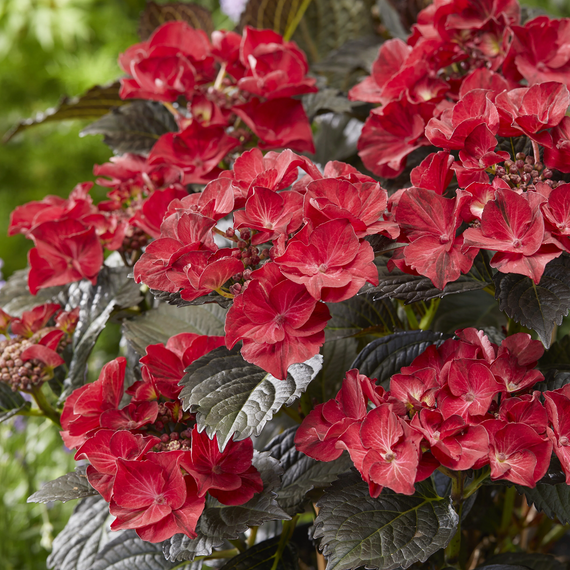
- Striking nearly black foliage — the darkest in the Tuxedo series — provides bold, dramatic contrast in the landscape even when the plant is not in bloom.
- Large, deep ruby-red mophead flowers sit atop sturdy, upright stems that resist flopping, keeping the plant looking neat and structured all season long.
- Compact, rounded mounding habit reaches just under 3 feet tall and wide, making it an ideal choice for containers, small garden beds, and patio plantings.
- A versatile, low-maintenance deciduous shrub suited to partial shade gardens, cottage borders, woodland edges, and mixed hedges in USDA Zones 5-9.
Tuxedo Black Tie Hydrangea (Hydrangea macrophylla 'Black Tie') is a showstopping bigleaf hydrangea that redefines garden drama with its lustrous, near-black foliage — the deepest, darkest of the entire Tuxedo series — set against vivid, deep ruby-red mophead blooms that emerge from spring through summer. Unlike many mophead hydrangeas with weak canes that bend under the weight of their flower heads, Black Tie features exceptionally sturdy, upright stems that hold the large blooms erect for a tidy, architectural appearance throughout the season. Growing into a dense, compact mound of roughly 2 to 3 feet tall and wide at a moderate rate, this well-mannered shrub is perfectly scaled for smaller landscapes, raised planting beds, and large decorative containers on patios and decks. Its foliage alone makes a stunning visual statement across the entire growing season, pairing beautifully with the rich red flower heads that appear in spring and carry on into summer. As a bigleaf hydrangea, Black Tie blooms on old wood, thriving in dappled sunlight to partial shade with consistently moist, well-drained, organically rich soil. Whether showcased as a bold focal point in a shaded border, massed along a woodland edge, or paired with light-colored companions for maximum contrast, Tuxedo Black Tie Hydrangea delivers sophisticated, formal elegance with minimal effort — a true garden statement plant for Southern Oregon and Northern California landscapes.
Plant Description
Tuxedo Black Tie Hydrangea is a compact deciduous shrub belonging to the bigleaf hydrangea species (Hydrangea macrophylla). It is the most dramatically foliaged member of the Tuxedo series, displaying lustrous, nearly jet-black leaves that hold their deep coloration from spring through fall. The large, rounded mophead flower clusters are a rich ruby-red, creating a striking formal contrast against the dark foliage. Sturdy, upright stems support the blooms without flopping, giving the plant a consistently neat, structured silhouette. This is a rare shrub that commands attention in the garden whether it is in bloom or not, earning it recognition as both a foliage plant and a flowering specimen of the highest order.
Mature Size and Growth Rate
| Characteristic | Detail |
|---|---|
| Mature Height | 2 to 3 feet |
| Mature Spread | 2 to 3 feet |
| Growth Rate | Moderate |
| Habit | Compact, rounded mound |
| Stem Strength | Sturdy and upright; does not flop |
Hardiness Zones
Tuxedo Black Tie Hydrangea is reliably hardy in USDA Hardiness Zones 5 through 9, with some sources citing optimal performance in Zones 6-9. In colder zones, late frosts can damage overwintered buds set on old wood, reducing bloom. In Southern Oregon and Northern California, most locations fall comfortably within Zones 7-9, making this hydrangea an excellent year-round garden shrub. Applying a layer of organic mulch around the root zone before winter helps insulate the roots and protects the base of the stems where next year's flower buds are forming. In inland areas with hotter summers, afternoon shade is especially beneficial.
Sunlight Requirements
For best performance, plant Tuxedo Black Tie Hydrangea in a location that receives dappled sunlight to partial shade. Morning sun with afternoon shade is the ideal exposure, particularly in the warmer inland valleys of Southern Oregon and Northern California where intense afternoon sun can scorch the dark foliage and stress the plant. Too much deep shade will reduce blooming; too much direct afternoon sun can cause wilting and leaf burn. A position beneath the high canopy of a deciduous tree or along the east-facing side of a structure provides the ideal balance of light and protection.
Soil and pH Preferences
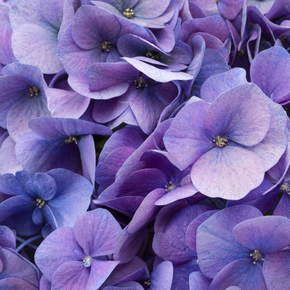
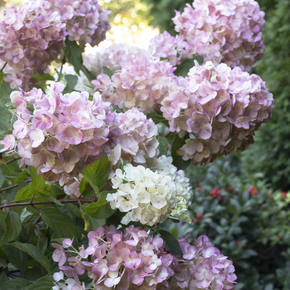
Tuxedo Black Tie Hydrangea performs best in moist, well-drained soil that is rich in organic matter. It tolerates a range of soil textures including clay, loam, and sandy soils, as long as drainage is adequate and moisture is consistent. The ideal soil pH range is slightly acidic to neutral (approximately 5.5 to 7.0). As a bigleaf hydrangea, soil pH directly influences flower color: acidic soils (pH below 6.0) tend to shift blooms toward deeper red-pink or purplish tones, while more alkaline soils (pH above 7.0) can shift colors toward pinker hues. Amending the planting area with compost at establishment will improve soil structure, drainage, and long-term fertility.
Watering Guide
Consistent moisture is critical for Tuxedo Black Tie Hydrangea, especially during the heat of summer and the first two growing seasons as the plant establishes its root system. Water deeply and regularly, keeping the soil evenly moist but never waterlogged. A 2 to 3 inch layer of organic mulch such as shredded bark or compost applied around the root zone will help retain soil moisture, moderate soil temperature, and reduce the frequency of watering needed. Plants growing in more sun exposure or in containers will require more frequent watering than those in shaded, in-ground situations. Wilting in the afternoon on hot days is normal; if the plant does not recover by morning, increase irrigation frequency.
Fertilizing
Feed Tuxedo Black Tie Hydrangea in early spring as new growth begins to emerge, using a balanced, slow-release granular fertilizer or a generous top-dressing of finished compost worked lightly into the soil around the drip line. A fertilizer formulated for acid-loving shrubs is also appropriate and can help maintain the slightly acidic soil conditions that favor good foliage coloration and bloom. Avoid fertilizing in late summer or fall, as encouraging new soft growth close to the first frost can lead to cold damage on the tender stems. Do not over-fertilize with high-nitrogen products, as this can promote lush foliage at the expense of flower production.
Pruning and Maintenance
Tuxedo Black Tie Hydrangea blooms on old wood, meaning the flower buds for the coming season are set on stems that grew the previous year. Because of this, timing of pruning is critical. Prune only immediately after the flowers have finished blooming in summer — never in fall, winter, or early spring, as this removes the buds for next season's blooms. For most gardeners in Southern Oregon and Northern California, this means a light pruning in mid to late summer. Deadheading spent flower clusters encourages a tidy appearance. Due to its naturally compact, mounded growth habit, heavy pruning to control size is rarely needed. Simply remove dead or damaged stems in early spring once new growth makes identification easy.
Bloom Time and Seasonal Interest
Tuxedo Black Tie Hydrangea offers multi-season garden interest. The near-black foliage emerges in spring and remains a striking landscape feature through the entire growing season. Deep ruby-red mophead flower clusters appear in spring and persist through summer, developing in rich, jewel-toned shades that sit in dramatic contrast to the dark leaves. As temperatures cool in fall, the foliage may take on additional warm tones before dropping for winter. Even the dried flower heads can be left on the plant through fall for additional textural interest and to provide a measure of frost protection for the buds below. In winter, the bare stem framework adds subtle structure to the garden.
Planting Instructions
- Select a site with morning sun and afternoon shade, or dappled light, with well-drained soil and protection from harsh afternoon heat.
- Dig a planting hole two to three times as wide as the root ball and the same depth as the container height — never plant too deep.
- Amend the backfill soil with compost at a ratio of roughly one part compost to two parts native soil to improve drainage and fertility.
- Remove the plant from its container, gently loosen any circling roots, and set it in the hole so the top of the root ball is level with or very slightly above the surrounding soil grade.
- Backfill with the amended soil, firming gently to eliminate air pockets.
- Water thoroughly at planting and apply a 2 to 3 inch layer of organic mulch over the root zone, keeping mulch 2 to 3 inches away from the main stem to prevent rot.
- Water regularly throughout the first growing season to establish a deep, strong root system.
Container Growing
Tuxedo Black Tie Hydrangea's compact, mounded form and dramatic foliage make it an outstanding container specimen for patios, decks, and entryways. Choose a large container (at least 14 to 18 inches in diameter) with excellent drainage holes. Use a high-quality, well-draining potting mix amended with compost. Container-grown plants dry out much more quickly than in-ground specimens, so monitor soil moisture closely and water whenever the top inch of soil feels dry. Feed container plants with a slow-release fertilizer in spring and supplement with a liquid fertilizer through the growing season for best results. In USDA Zone 7 and colder, provide some winter protection for container plants — move them to a sheltered, unheated space or against a wall to protect the roots from hard freezes.
Landscape Uses
- Bold accent or focal point in shaded borders and woodland garden beds
- Front-of-border specimen where the dramatic foliage can be fully appreciated
- Mixed shrub borders paired with contrasting silver, chartreuse, or white-foliaged plants
- Informal low hedges or mass plantings for deep-season interest
- Cottage and woodland-style garden designs
- Container planting for patios, decks, and entryways
- Underplanting beneath deciduous trees with high canopies
- Color anchor in shaded rain garden perimeters where moisture is reliable
Companion Plants
The near-black foliage and deep red blooms of Tuxedo Black Tie Hydrangea provide excellent contrast opportunities in the garden. Consider pairing it with plants that feature light, silvery, or chartreuse foliage to maximize the dramatic effect. Excellent companions include Japanese forest grass (Hakonechloa macra 'Aureola') for a golden foil, hostas with wide, bright green or blue-green leaves for textural contrast, astilbes for feathery plumes that echo the shade-tolerant preference, and hellebores for complementary spring color in the same shaded conditions. Ferns, bleeding heart (Lamprocapnos spectabilis), coral bells (Heuchera), and white-flowered impatiens or begonias all make strong supporting companions. Avoid placing it next to other dark-foliaged plants where the drama of the near-black leaves could be lost.
Pests and Diseases
Tuxedo Black Tie Hydrangea is generally regarded as a robust and pest-resistant variety within the Tuxedo series. However, as with most bigleaf hydrangeas, there are a few potential issues to monitor:
- Powdery Mildew: Can occur in conditions of poor air circulation or prolonged humidity. Ensure adequate spacing and avoid overhead watering. Treat with a horticultural oil or sulfur-based fungicide if needed.
- Botrytis Blight: Gray mold can affect spent flower heads in cool, wet conditions. Remove spent blooms promptly and improve air flow.
- Aphids: Occasionally feed on new growth. A strong spray of water or an insecticidal soap application is usually sufficient to control them.
- Spider Mites: More common in hot, dry conditions. Keep plants adequately watered and use miticide sprays if infestations are heavy.
- Slugs and Snails: May feed on foliage in moist, shaded conditions. Iron phosphate baits are effective and pet-safe.
Toxicity
All parts of Tuxedo Black Tie Hydrangea are considered mildly toxic if ingested by humans, dogs, or cats. The plant contains cyanogenic glycosides, which can cause gastrointestinal upset, nausea, and discomfort if leaves, buds, or flowers are eaten in quantity. The plant is not typically considered severely dangerous, but it is best to keep it out of reach of small children and pets that may be inclined to chew on plant material. Wash hands after extensive handling of the plant, especially after pruning or deadheading.
Wildlife Value
While Tuxedo Black Tie Hydrangea is not a primary wildlife food source or significant native host plant, it does offer some ecosystem benefits in the garden. The large mophead flower clusters can attract pollinators including bees and butterflies when in bloom, providing a modest nectar and pollen resource. The dense, leafy mounding habit may offer shelter and nesting opportunities for small songbirds and beneficial insects. The dried flower heads, if left on the plant through winter, can provide minor winter interest and micro-habitat. For a wildlife-friendly shade garden, consider pairing this hydrangea with native understory shrubs and perennials that provide stronger pollinator and wildlife support.
- Striking nearly black foliage — the darkest in the Tuxedo series — provides bold, dramatic contrast in the landscape even when the plant is not in bloom.
- Large, deep ruby-red mophead flowers sit atop sturdy, upright stems that resist flopping, keeping the plant looking neat and structured all season long.
- Compact, rounded mounding habit reaches just under 3 feet tall and wide, making it an ideal choice for containers, small garden beds, and patio plantings.
- A versatile, low-maintenance deciduous shrub suited to partial shade gardens, cottage borders, woodland edges, and mixed hedges in USDA Zones 5-9.
Tuxedo Black Tie Hydrangea (Hydrangea macrophylla 'Black Tie') is a showstopping bigleaf hydrangea that redefines garden drama with its lustrous, near-black foliage — the deepest, darkest of the entire Tuxedo series — set against vivid, deep ruby-red mophead blooms that emerge from spring through summer. Unlike many mophead hydrangeas with weak canes that bend under the weight of their flower heads, Black Tie features exceptionally sturdy, upright stems that hold the large blooms erect for a tidy, architectural appearance throughout the season. Growing into a dense, compact mound of roughly 2 to 3 feet tall and wide at a moderate rate, this well-mannered shrub is perfectly scaled for smaller landscapes, raised planting beds, and large decorative containers on patios and decks. Its foliage alone makes a stunning visual statement across the entire growing season, pairing beautifully with the rich red flower heads that appear in spring and carry on into summer. As a bigleaf hydrangea, Black Tie blooms on old wood, thriving in dappled sunlight to partial shade with consistently moist, well-drained, organically rich soil. Whether showcased as a bold focal point in a shaded border, massed along a woodland edge, or paired with light-colored companions for maximum contrast, Tuxedo Black Tie Hydrangea delivers sophisticated, formal elegance with minimal effort — a true garden statement plant for Southern Oregon and Northern California landscapes.
Plant Description
Tuxedo Black Tie Hydrangea is a compact deciduous shrub belonging to the bigleaf hydrangea species (Hydrangea macrophylla). It is the most dramatically foliaged member of the Tuxedo series, displaying lustrous, nearly jet-black leaves that hold their deep coloration from spring through fall. The large, rounded mophead flower clusters are a rich ruby-red, creating a striking formal contrast against the dark foliage. Sturdy, upright stems support the blooms without flopping, giving the plant a consistently neat, structured silhouette. This is a rare shrub that commands attention in the garden whether it is in bloom or not, earning it recognition as both a foliage plant and a flowering specimen of the highest order.
Mature Size and Growth Rate
| Characteristic | Detail |
|---|---|
| Mature Height | 2 to 3 feet |
| Mature Spread | 2 to 3 feet |
| Growth Rate | Moderate |
| Habit | Compact, rounded mound |
| Stem Strength | Sturdy and upright; does not flop |
Hardiness Zones
Tuxedo Black Tie Hydrangea is reliably hardy in USDA Hardiness Zones 5 through 9, with some sources citing optimal performance in Zones 6-9. In colder zones, late frosts can damage overwintered buds set on old wood, reducing bloom. In Southern Oregon and Northern California, most locations fall comfortably within Zones 7-9, making this hydrangea an excellent year-round garden shrub. Applying a layer of organic mulch around the root zone before winter helps insulate the roots and protects the base of the stems where next year's flower buds are forming. In inland areas with hotter summers, afternoon shade is especially beneficial.
Sunlight Requirements
For best performance, plant Tuxedo Black Tie Hydrangea in a location that receives dappled sunlight to partial shade. Morning sun with afternoon shade is the ideal exposure, particularly in the warmer inland valleys of Southern Oregon and Northern California where intense afternoon sun can scorch the dark foliage and stress the plant. Too much deep shade will reduce blooming; too much direct afternoon sun can cause wilting and leaf burn. A position beneath the high canopy of a deciduous tree or along the east-facing side of a structure provides the ideal balance of light and protection.
Soil and pH Preferences
Tuxedo Black Tie Hydrangea performs best in moist, well-drained soil that is rich in organic matter. It tolerates a range of soil textures including clay, loam, and sandy soils, as long as drainage is adequate and moisture is consistent. The ideal soil pH range is slightly acidic to neutral (approximately 5.5 to 7.0). As a bigleaf hydrangea, soil pH directly influences flower color: acidic soils (pH below 6.0) tend to shift blooms toward deeper red-pink or purplish tones, while more alkaline soils (pH above 7.0) can shift colors toward pinker hues. Amending the planting area with compost at establishment will improve soil structure, drainage, and long-term fertility.
Watering Guide
Consistent moisture is critical for Tuxedo Black Tie Hydrangea, especially during the heat of summer and the first two growing seasons as the plant establishes its root system. Water deeply and regularly, keeping the soil evenly moist but never waterlogged. A 2 to 3 inch layer of organic mulch such as shredded bark or compost applied around the root zone will help retain soil moisture, moderate soil temperature, and reduce the frequency of watering needed. Plants growing in more sun exposure or in containers will require more frequent watering than those in shaded, in-ground situations. Wilting in the afternoon on hot days is normal; if the plant does not recover by morning, increase irrigation frequency.
Fertilizing
Feed Tuxedo Black Tie Hydrangea in early spring as new growth begins to emerge, using a balanced, slow-release granular fertilizer or a generous top-dressing of finished compost worked lightly into the soil around the drip line. A fertilizer formulated for acid-loving shrubs is also appropriate and can help maintain the slightly acidic soil conditions that favor good foliage coloration and bloom. Avoid fertilizing in late summer or fall, as encouraging new soft growth close to the first frost can lead to cold damage on the tender stems. Do not over-fertilize with high-nitrogen products, as this can promote lush foliage at the expense of flower production.
Pruning and Maintenance
Tuxedo Black Tie Hydrangea blooms on old wood, meaning the flower buds for the coming season are set on stems that grew the previous year. Because of this, timing of pruning is critical. Prune only immediately after the flowers have finished blooming in summer — never in fall, winter, or early spring, as this removes the buds for next season's blooms. For most gardeners in Southern Oregon and Northern California, this means a light pruning in mid to late summer. Deadheading spent flower clusters encourages a tidy appearance. Due to its naturally compact, mounded growth habit, heavy pruning to control size is rarely needed. Simply remove dead or damaged stems in early spring once new growth makes identification easy.
Bloom Time and Seasonal Interest
Tuxedo Black Tie Hydrangea offers multi-season garden interest. The near-black foliage emerges in spring and remains a striking landscape feature through the entire growing season. Deep ruby-red mophead flower clusters appear in spring and persist through summer, developing in rich, jewel-toned shades that sit in dramatic contrast to the dark leaves. As temperatures cool in fall, the foliage may take on additional warm tones before dropping for winter. Even the dried flower heads can be left on the plant through fall for additional textural interest and to provide a measure of frost protection for the buds below. In winter, the bare stem framework adds subtle structure to the garden.
Planting Instructions
- Select a site with morning sun and afternoon shade, or dappled light, with well-drained soil and protection from harsh afternoon heat.
- Dig a planting hole two to three times as wide as the root ball and the same depth as the container height — never plant too deep.
- Amend the backfill soil with compost at a ratio of roughly one part compost to two parts native soil to improve drainage and fertility.
- Remove the plant from its container, gently loosen any circling roots, and set it in the hole so the top of the root ball is level with or very slightly above the surrounding soil grade.
- Backfill with the amended soil, firming gently to eliminate air pockets.
- Water thoroughly at planting and apply a 2 to 3 inch layer of organic mulch over the root zone, keeping mulch 2 to 3 inches away from the main stem to prevent rot.
- Water regularly throughout the first growing season to establish a deep, strong root system.
Container Growing
Tuxedo Black Tie Hydrangea's compact, mounded form and dramatic foliage make it an outstanding container specimen for patios, decks, and entryways. Choose a large container (at least 14 to 18 inches in diameter) with excellent drainage holes. Use a high-quality, well-draining potting mix amended with compost. Container-grown plants dry out much more quickly than in-ground specimens, so monitor soil moisture closely and water whenever the top inch of soil feels dry. Feed container plants with a slow-release fertilizer in spring and supplement with a liquid fertilizer through the growing season for best results. In USDA Zone 7 and colder, provide some winter protection for container plants — move them to a sheltered, unheated space or against a wall to protect the roots from hard freezes.
Landscape Uses
- Bold accent or focal point in shaded borders and woodland garden beds
- Front-of-border specimen where the dramatic foliage can be fully appreciated
- Mixed shrub borders paired with contrasting silver, chartreuse, or white-foliaged plants
- Informal low hedges or mass plantings for deep-season interest
- Cottage and woodland-style garden designs
- Container planting for patios, decks, and entryways
- Underplanting beneath deciduous trees with high canopies
- Color anchor in shaded rain garden perimeters where moisture is reliable
Companion Plants
The near-black foliage and deep red blooms of Tuxedo Black Tie Hydrangea provide excellent contrast opportunities in the garden. Consider pairing it with plants that feature light, silvery, or chartreuse foliage to maximize the dramatic effect. Excellent companions include Japanese forest grass (Hakonechloa macra 'Aureola') for a golden foil, hostas with wide, bright green or blue-green leaves for textural contrast, astilbes for feathery plumes that echo the shade-tolerant preference, and hellebores for complementary spring color in the same shaded conditions. Ferns, bleeding heart (Lamprocapnos spectabilis), coral bells (Heuchera), and white-flowered impatiens or begonias all make strong supporting companions. Avoid placing it next to other dark-foliaged plants where the drama of the near-black leaves could be lost.
Pests and Diseases
Tuxedo Black Tie Hydrangea is generally regarded as a robust and pest-resistant variety within the Tuxedo series. However, as with most bigleaf hydrangeas, there are a few potential issues to monitor:
- Powdery Mildew: Can occur in conditions of poor air circulation or prolonged humidity. Ensure adequate spacing and avoid overhead watering. Treat with a horticultural oil or sulfur-based fungicide if needed.
- Botrytis Blight: Gray mold can affect spent flower heads in cool, wet conditions. Remove spent blooms promptly and improve air flow.
- Aphids: Occasionally feed on new growth. A strong spray of water or an insecticidal soap application is usually sufficient to control them.
- Spider Mites: More common in hot, dry conditions. Keep plants adequately watered and use miticide sprays if infestations are heavy.
- Slugs and Snails: May feed on foliage in moist, shaded conditions. Iron phosphate baits are effective and pet-safe.
Toxicity
All parts of Tuxedo Black Tie Hydrangea are considered mildly toxic if ingested by humans, dogs, or cats. The plant contains cyanogenic glycosides, which can cause gastrointestinal upset, nausea, and discomfort if leaves, buds, or flowers are eaten in quantity. The plant is not typically considered severely dangerous, but it is best to keep it out of reach of small children and pets that may be inclined to chew on plant material. Wash hands after extensive handling of the plant, especially after pruning or deadheading.
Wildlife Value
While Tuxedo Black Tie Hydrangea is not a primary wildlife food source or significant native host plant, it does offer some ecosystem benefits in the garden. The large mophead flower clusters can attract pollinators including bees and butterflies when in bloom, providing a modest nectar and pollen resource. The dense, leafy mounding habit may offer shelter and nesting opportunities for small songbirds and beneficial insects. The dried flower heads, if left on the plant through winter, can provide minor winter interest and micro-habitat. For a wildlife-friendly shade garden, consider pairing this hydrangea with native understory shrubs and perennials that provide stronger pollinator and wildlife support.