

Zoom the image with the mouse
Roman Beauty Rosemary - 1 Gallon
SKU:
2102460
UPC:
014949355459
$18.99
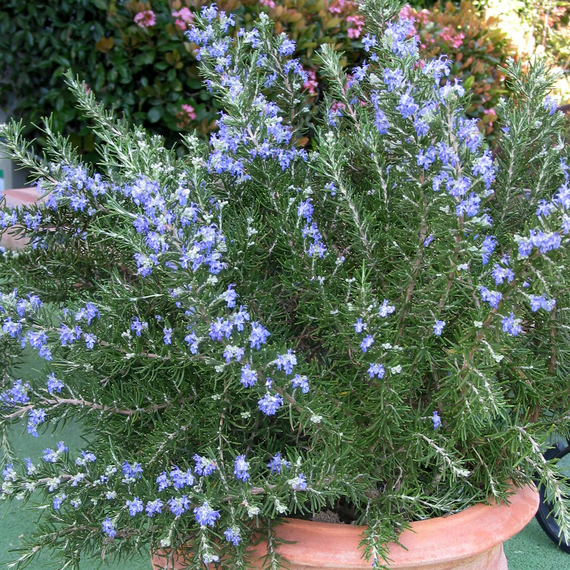
- Compact, semi-trailing evergreen herb with gracefully arching stems, needle-like mid-green foliage, and showy violet-blue spring blooms — beautiful enough for ornamental borders yet perfectly at home in the kitchen garden.
- Specially selected for its exceptionally high essential oil content and bold, spicy flavor, making it the top choice for culinary enthusiasts who want outstanding taste straight from the garden or patio.
- Tough and low-maintenance once established — deer resistant, drought tolerant, and salt spray tolerant, thriving in the hot, dry summers of Southern Oregon and Northern California with minimal fuss.
- A pollinator magnet: the prolific violet-blue blossoms draw bees, butterflies, and other beneficial insects, adding wildlife value to herb gardens, rock gardens, and mixed borders alike.
Roman Beauty Rosemary (Salvia rosmarinus 'Roman Beauty', also marketed as Chef's Choice Rosemary) is a standout compact, mounding evergreen shrub that delivers exceptional ornamental beauty and culinary performance in equal measure. Bred through open pollination within the Prostratus Group and awarded US Plant Patent PP18,192, this specially selected cultivar produces arching, semi-trailing stems clothed in densely packed, needle-like mid-green leaves that release an intensely aromatic, spicy fragrance whenever brushed or harvested. In spring, the plant erupts in clusters of delicate two-lipped violet-blue flowers that spill along each stem and draw swarms of bees, butterflies, and other pollinators, extending the season of interest well beyond foliage alone. Unlike sprawling rosemary varieties that can overwhelm a garden border, Roman Beauty maintains a tidy, manageable mounding habit — reaching roughly 12 to 24 inches tall and wide — making it ideal for herb gardens, raised beds, rock gardens, Mediterranean-style landscapes, patio containers, and low informal hedges throughout USDA Hardiness Zones 7 to 11. Its notably higher essential oil content sets it apart from common rosemary selections, rewarding the home cook with bolder, spicier flavor in roasted meats, stews, breads, herbal butters, and infused oils. Established plants shrug off drought, poor soils, salt spray, and deer browsing with ease, making Roman Beauty Rosemary an outstanding, year-round performer for the gardens and landscapes of the Pacific Northwest and Northern California.
Plant Description
Roman Beauty Rosemary is a broadleaf evergreen shrub in the mint family (Lamiaceae) native to the dry, rocky scrublands and coastal cliffs of the Mediterranean. The cultivar 'Roman Beauty' — sold under the trade name Chef's Choice — was developed through open pollination among select plants of the Salvia rosmarinus Prostratus Group and patented in 2007 (US PP18,192). It features a compact, mounding habit with gracefully arching stems that give it a subtle cascading quality without the aggressive spread of true trailing rosemaries. The stems are densely clothed in linear, needle-like leaves up to 1.5 inches long that are deep mid-green on top and lighter beneath. Foliage is intensely aromatic with a notably spicy, resinous fragrance attributed to its higher essential oil content — the trait for which this variety was specifically selected. In spring, tiny, two-lipped violet-blue flowers bloom in axillary clusters along the prior year's growth, creating a spectacular floral display. The plant is botanically synonymous with Rosmarinus officinalis and is sometimes listed under both names.
Mature Size
| Attribute | Measurement |
|---|---|
| Mature Height | 12 to 24 inches (typically 2 feet) |
| Mature Spread | 12 to 24 inches (typically 2 feet) |
| Growth Habit | Compact mounding with arching, semi-trailing stems |
| Growth Rate | Slow to moderate |
| Plant Type | Broadleaf evergreen shrub / culinary herb |
Roman Beauty is notably more restrained than many rosemary varieties, staying a manageable 2 feet by 2 feet at maturity. This makes it one of the most practical choices for herb gardens, mixed borders, and container plantings where space is at a premium. The arching stem habit creates a gently cascading silhouette that looks beautiful draping over the edge of a raised bed, retaining wall, or large patio pot.
Hardiness Zones & Climate
Roman Beauty Rosemary is rated for USDA Hardiness Zones 7 to 11, tolerating winter temperatures down to approximately 10 to 20 degrees F (-12 to -7 degrees C). It is ideally suited to the mild, dry summers and wet winters of Southern Oregon and Northern California, where it typically performs as a long-lived, hardy perennial evergreen. In gardens at the cooler edge of Zone 7, applying a light layer of mulch around the root zone and positioning the plant against a south- or west-facing wall to capture a warm microclimate will significantly improve winter survival. The plant is native to the Mediterranean basin and naturally thrives in climates with warm, dry summers and cool, wet winters — conditions closely mirrored across much of the Pacific Coast region. It does not tolerate prolonged freezes, waterlogged soils, or cold, wet winter conditions, which are more damaging than low temperatures alone.
Sunlight Requirements
Roman Beauty Rosemary performs best in full sun, requiring a minimum of 6 to 8 hours of direct sunlight per day. Full sun promotes the most vigorous growth, densest foliage, strongest aromatic oil production, and most prolific flowering. While the plant will tolerate very light partial shade, reduced sun typically results in looser, leggier growth, diminished fragrance, fewer blooms, and increased susceptibility to fungal issues. For best culinary results, situate the plant in the sunniest, most open spot available with good air circulation. In the hot inland valleys of Southern Oregon and Northern California, afternoon shade from intense summer heat is generally not necessary, as this Mediterranean native handles heat very well.
Soil & pH Preferences
- Prefers light, well-draining soils — sandy, gritty, or loamy textures are ideal.
- Optimal soil pH is 6.0 to 7.0 (slightly acidic to neutral).
- Tolerates poor, lean soils and does not require rich, heavily amended ground to thrive.
- Performs poorly in heavy clay soils; if clay is present, amend generously with coarse grit, perlite, or decomposed bark before planting, or opt for a raised bed.
- Will not tolerate consistently wet, poorly drained soils — standing water around the roots, particularly in winter, is usually fatal.
- A slightly elevated planting site or raised bed is beneficial in areas with heavy winter rainfall to ensure excellent drainage year-round.
Watering Guide
Once established (typically after the first full growing season), Roman Beauty Rosemary has excellent drought tolerance and requires minimal supplemental irrigation. During the establishment period, water regularly to keep the soil evenly moist but never waterlogged, allowing the top inch or two of soil to dry out between waterings. Overwatering is the single most common cause of failure with rosemary — consistently wet roots lead quickly to root rot and plant death. In the ground in Southern Oregon and Northern California, established plants often survive on winter rainfall alone with little to no summer irrigation once rooted in. Container-grown plants dry out more quickly and will need more frequent watering, but always check that the top of the growing mix has dried before watering again. Terracotta containers are especially well suited because they allow excess moisture to wick away through the pot walls, reducing the risk of overwatering.
Fertilizing
Roman Beauty Rosemary is not a heavy feeder and actually prefers lean soil conditions. Excessive fertilizing, particularly with high-nitrogen products, encourages soft, lush growth that is less aromatic, less flavorful, and more prone to pest and disease problems. A single light application of a balanced, slow-release granular fertilizer or a top-dressing of compost or aged organic matter in early spring as new growth begins is all that is typically needed for in-ground plants. Container-grown plants exhaust available nutrients more quickly and benefit from a light feeding of balanced fertilizer after the spring bloom period, perhaps once again in midsummer. Avoid fertilizing in late summer or fall, as pushing new growth late in the season increases vulnerability to cold damage.
Pruning & Maintenance
- The ideal time to prune for shaping and to encourage dense, bushy new growth is immediately after the spring bloom period concludes.
- Light tip pruning or harvesting of stem tips throughout the growing season also helps maintain a compact, tidy habit and stimulates fresh growth.
- Always cut above a leaf node or set of leaves — never cut into bare, old woody stems below the green growth, as rosemary does not reliably regenerate from old wood.
- Remove any dead, damaged, or crossing stems as noticed to maintain plant health and air circulation.
- Avoid heavy "hard pruning" that removes more than one-third of the plant at a time.
- After about 5 to 7 years, plants may become increasingly woody and less productive; replacing with a fresh plant at that point is recommended.
- No deadheading is required, but light trimming after bloom can encourage a second flush of sporadic flowers later in the season.
Planting Instructions
- Choose a planting site in full sun with excellent drainage. Avoid low spots or areas prone to standing water.
- If soil is heavy clay, amend a broad planting area (not just the planting hole) with coarse grit, perlite, or coarse compost to improve drainage throughout the root zone.
- Dig a planting hole twice as wide as the root ball and at the same depth — do not plant deeper than the plant was growing in its nursery container.
- Remove the plant from its container, gently loosen any circling roots, and set it in the hole so the crown sits at or very slightly above the surrounding soil level to aid drainage.
- Backfill with the native soil (amended if needed), firming gently around the roots to eliminate air pockets.
- Water in thoroughly after planting to settle the soil.
- Space plants approximately 18 to 24 inches apart for individual specimens, or 12 to 18 inches apart for a low informal hedge or knot garden planting.
- A light layer of gravel mulch around (but not touching) the crown helps retain soil warmth, reduce weeds, and improve drainage at the soil surface. Avoid thick organic mulch directly against the crown.
- Spring planting is ideal in the Pacific Northwest; fall planting also works well in the milder areas of Northern California where winters are mild and wet.
Culinary Uses & Harvesting
Roman Beauty Rosemary was specifically selected for its elevated essential oil content and boldly spicy, resinous flavor, setting it apart from common rosemary varieties. It is a premier culinary herb for the home cook and gardening enthusiast alike. Begin harvesting lightly once the plant is well established — typically 6 months or more after planting. Snip young, tender stem tips as needed, always cutting above a leaf node to encourage branching and fresh growth. The most flavorful harvest comes from soft new growth tips in spring and summer. Do not harvest more than one-third of the plant at any one time. Fresh leaves and stems can be used immediately in an enormous range of culinary applications, including:
- Roasted and grilled meats — lamb, chicken, pork, and beef
- Roasted vegetables, potatoes, and root vegetables
- Breads, focaccia, and savory baked goods
- Soups, stews, and sauces
- Herbal butters, infused olive oils, and vinegars
- Herb rubs and marinades
- Garnishes for salads and charcuterie boards (flowers are also edible with a delicate, slightly sweet flavor)
To dry rosemary, bundle stems and hang upside down in a warm, dry, well-ventilated area out of direct sun. Once fully dry, strip the leaves and store in a sealed jar away from light and heat. Dried rosemary retains excellent flavor for up to a year.
Seasonal Interest
| Season | What to Expect |
|---|---|
| Spring | Peak bloom — showy violet-blue flowers smother arching stems; pollinators are highly active around the plant; strongest new foliage growth begins |
| Summer | Lush, aromatic evergreen foliage at its most productive for harvesting; possible sporadic rebloom if lightly trimmed after spring flush; handles heat and drought with ease |
| Fall | Foliage remains deep, attractive mid-green; continued harvest possible; possible light secondary bloom on trimmed plants |
| Winter | Fully evergreen, providing structure and color in the dormant garden; in mild winters plants remain handsome and harvestable throughout the season |
Landscape Uses
The compact, mounding habit and year-round evergreen presence of Roman Beauty Rosemary make it one of the most versatile plants available for Pacific Coast gardens. Suggested landscape applications include:
- Herb gardens and kitchen gardens — a natural centerpiece or edging plant where beauty and function combine
- Mediterranean, drought-tolerant, or xeriscape gardens alongside lavender, salvia, and ornamental grasses
- Rock gardens and dry slopes where its tolerance of lean, well-drained soils shines
- Low informal hedges or edging along pathways and garden borders
- Knot gardens and formal herb parterres
- Seaside gardens — notably tolerant of salt spray
- Mixed shrub borders as a fragrant, deer-resistant filler
- Raised garden beds for easy access to harvests
- Patio and deck containers as a "thriller" specimen in combination plantings, positioned toward the center-back of large pots with lower-growing herbs or annuals surrounding it
- Planted along south- or west-facing walls to capture radiated warmth in cooler microclimates
Container Growing
Roman Beauty Rosemary is an outstanding container plant and one of the most recommended rosemary varieties for pots due to its naturally compact, manageable size. Use a container with ample drainage holes — a minimum of 12 inches in diameter for a single plant, and 18 to 20 inches or larger if combining with companion plants. Terracotta or unglazed clay pots are particularly well suited because their porous walls allow moisture to evaporate and help prevent overwatering. Use a fast-draining potting mix, ideally one formulated for cacti or herbs, or blend a standard potting mix with 20 to 30 percent coarse perlite or grit to ensure rapid drainage. Position containers in the sunniest available location. Container plants dry out more quickly than in-ground plants, so check moisture levels regularly — water thoroughly when the top inch of mix is dry, then allow to drain completely. Feed lightly with a balanced fertilizer after spring bloom and once in midsummer. In areas at the borderline of Zone 7, move containers to a sheltered location — such as against a warm wall or under a covered patio — during hard freezes. The arching stems drape attractively over container edges, making Roman Beauty an elegant focal point on patios, decks, and front entries.
Companion Plants
Roman Beauty Rosemary pairs beautifully with plants that share its Mediterranean heritage and preference for full sun, excellent drainage, and lean to moderately fertile soil. Excellent companions include:
- Lavender — A classic Mediterranean pairing; both share identical soil, sun, and water needs and create a stunning fragrant combination in borders and containers
- Ornamental Sage (Salvia) — Closely related, same growing requirements; purple-flowered salvias complement rosemary's violet-blue blooms beautifully
- Thyme — Low-growing, drought-tolerant, and culinary; creeping thyme doubles as a weed-suppressing ground cover between rosemary plants
- Oregano — Another sun-loving, drought-tolerant Mediterranean herb that pairs well in herb gardens
- Marigolds — Share similar site requirements and provide excellent natural pest deterrence in the kitchen garden
- Penstemon — Drought-tolerant, pollinator-friendly, and visually complementary with spiky flower forms
- Geraniums (Pelargonium) — Drought-tolerant, with showy blooms that elevate the visual appeal of rosemary plantings
- Beans — In the vegetable garden, nitrogen-fixing beans improve surrounding soil while rosemary's scent deters bean beetles
- Carrots and Brassicas — Rosemary's strong fragrance helps confuse and repel carrot flies and cabbage moths
Avoid planting rosemary alongside moisture-loving herbs such as basil, cilantro, or mint, and steer clear of pairing it with vegetables that require consistently moist soil, as the watering conflict will compromise both plants.
Wildlife Value
Despite being highly deer resistant — the strong aromatic oils in the foliage are unpalatable to deer — Roman Beauty Rosemary is a valuable plant for beneficial wildlife. The abundant violet-blue spring flowers are a rich early-season nectar source and are highly attractive to honeybees, native bumblebees, and a wide variety of solitary bee species. Butterflies, particularly smaller species, are also frequently observed nectaring on the blossoms. The extended bloom period provides important early-spring resources for pollinators emerging from winter dormancy, making Roman Beauty Rosemary an excellent contribution to any pollinator-friendly or wildlife garden. The dense, twiggy structure of established plants can also provide shelter for small beneficial insects. The plant's strong fragrance acts as a natural deterrent to many common garden pests, benefiting surrounding plants in the landscape as well.
Pests & Diseases
Roman Beauty Rosemary is generally a tough, low-maintenance plant with few serious pest or disease problems when grown in appropriate conditions. The following issues may occasionally arise:
- Root Rot (Phytophthora and Pythium spp.) — The most serious and common problem; caused entirely by overwatering or poorly drained soil. Ensure excellent drainage and allow soil to dry between waterings to prevent this fatal condition.
- Powdery Mildew — A fungal issue that develops in humid conditions with poor air circulation. Plant in open, breezy locations, avoid overhead irrigation, and space plants adequately. More common on container plants kept indoors.
- Botrytis (Gray Mold) — May occur during prolonged wet, cool weather. Improve air circulation and avoid wetting foliage late in the day.
- Aphids — Occasionally infest new growth; typically controlled by a strong blast of water from a hose or the presence of natural predators such as ladybugs and lacewings.
- Spider Mites — More common on container plants kept in dry indoor conditions; increase humidity slightly and rinse foliage regularly.
- Mealybugs and Whiteflies — Occasional indoor container plant pests; treat with insecticidal soap or neem oil if infestations develop.
- Deer — Deer strongly avoid rosemary due to its aromatic oils, making it an excellent choice for gardens in deer-prone areas of Southern Oregon and Northern California.
Non-Culinary Uses & Garden History
Beyond its outstanding culinary reputation, Roman Beauty Rosemary offers a rich tradition of additional uses that gardeners and homeowners may enjoy. The intensely fragrant foliage has long been valued in sachets, potpourri, and dried herb arrangements, releasing its distinctive scent for months after drying. Rosemary essential oil is used commercially in perfumes, soaps, shampoos, and lotions. The plant has a storied history in herbal tradition — the genus name Salvia comes from the Latin word salveo meaning "to save or heal," reflecting rosemary's long association with medicinal and restorative properties. The specific epithet rosmarinus translates to "dew of the sea," a poetic nod to its native coastal Mediterranean habitat where plants thrive on rocky cliffs bathed in sea mist. In the language of flowers, rosemary is a traditional symbol of remembrance and fidelity. Sprigs of fresh or dried rosemary are commonly used in floral arrangements, wreaths, and holiday decorations, and the plant makes a charming and fragrant seasonal gift when grown in a decorative container.
- Compact, semi-trailing evergreen herb with gracefully arching stems, needle-like mid-green foliage, and showy violet-blue spring blooms — beautiful enough for ornamental borders yet perfectly at home in the kitchen garden.
- Specially selected for its exceptionally high essential oil content and bold, spicy flavor, making it the top choice for culinary enthusiasts who want outstanding taste straight from the garden or patio.
- Tough and low-maintenance once established — deer resistant, drought tolerant, and salt spray tolerant, thriving in the hot, dry summers of Southern Oregon and Northern California with minimal fuss.
- A pollinator magnet: the prolific violet-blue blossoms draw bees, butterflies, and other beneficial insects, adding wildlife value to herb gardens, rock gardens, and mixed borders alike.
Roman Beauty Rosemary (Salvia rosmarinus 'Roman Beauty', also marketed as Chef's Choice Rosemary) is a standout compact, mounding evergreen shrub that delivers exceptional ornamental beauty and culinary performance in equal measure. Bred through open pollination within the Prostratus Group and awarded US Plant Patent PP18,192, this specially selected cultivar produces arching, semi-trailing stems clothed in densely packed, needle-like mid-green leaves that release an intensely aromatic, spicy fragrance whenever brushed or harvested. In spring, the plant erupts in clusters of delicate two-lipped violet-blue flowers that spill along each stem and draw swarms of bees, butterflies, and other pollinators, extending the season of interest well beyond foliage alone. Unlike sprawling rosemary varieties that can overwhelm a garden border, Roman Beauty maintains a tidy, manageable mounding habit — reaching roughly 12 to 24 inches tall and wide — making it ideal for herb gardens, raised beds, rock gardens, Mediterranean-style landscapes, patio containers, and low informal hedges throughout USDA Hardiness Zones 7 to 11. Its notably higher essential oil content sets it apart from common rosemary selections, rewarding the home cook with bolder, spicier flavor in roasted meats, stews, breads, herbal butters, and infused oils. Established plants shrug off drought, poor soils, salt spray, and deer browsing with ease, making Roman Beauty Rosemary an outstanding, year-round performer for the gardens and landscapes of the Pacific Northwest and Northern California.
Plant Description
Roman Beauty Rosemary is a broadleaf evergreen shrub in the mint family (Lamiaceae) native to the dry, rocky scrublands and coastal cliffs of the Mediterranean. The cultivar 'Roman Beauty' — sold under the trade name Chef's Choice — was developed through open pollination among select plants of the Salvia rosmarinus Prostratus Group and patented in 2007 (US PP18,192). It features a compact, mounding habit with gracefully arching stems that give it a subtle cascading quality without the aggressive spread of true trailing rosemaries. The stems are densely clothed in linear, needle-like leaves up to 1.5 inches long that are deep mid-green on top and lighter beneath. Foliage is intensely aromatic with a notably spicy, resinous fragrance attributed to its higher essential oil content — the trait for which this variety was specifically selected. In spring, tiny, two-lipped violet-blue flowers bloom in axillary clusters along the prior year's growth, creating a spectacular floral display. The plant is botanically synonymous with Rosmarinus officinalis and is sometimes listed under both names.
Mature Size
| Attribute | Measurement |
|---|---|
| Mature Height | 12 to 24 inches (typically 2 feet) |
| Mature Spread | 12 to 24 inches (typically 2 feet) |
| Growth Habit | Compact mounding with arching, semi-trailing stems |
| Growth Rate | Slow to moderate |
| Plant Type | Broadleaf evergreen shrub / culinary herb |
Roman Beauty is notably more restrained than many rosemary varieties, staying a manageable 2 feet by 2 feet at maturity. This makes it one of the most practical choices for herb gardens, mixed borders, and container plantings where space is at a premium. The arching stem habit creates a gently cascading silhouette that looks beautiful draping over the edge of a raised bed, retaining wall, or large patio pot.
Hardiness Zones & Climate
Roman Beauty Rosemary is rated for USDA Hardiness Zones 7 to 11, tolerating winter temperatures down to approximately 10 to 20 degrees F (-12 to -7 degrees C). It is ideally suited to the mild, dry summers and wet winters of Southern Oregon and Northern California, where it typically performs as a long-lived, hardy perennial evergreen. In gardens at the cooler edge of Zone 7, applying a light layer of mulch around the root zone and positioning the plant against a south- or west-facing wall to capture a warm microclimate will significantly improve winter survival. The plant is native to the Mediterranean basin and naturally thrives in climates with warm, dry summers and cool, wet winters — conditions closely mirrored across much of the Pacific Coast region. It does not tolerate prolonged freezes, waterlogged soils, or cold, wet winter conditions, which are more damaging than low temperatures alone.
Sunlight Requirements
Roman Beauty Rosemary performs best in full sun, requiring a minimum of 6 to 8 hours of direct sunlight per day. Full sun promotes the most vigorous growth, densest foliage, strongest aromatic oil production, and most prolific flowering. While the plant will tolerate very light partial shade, reduced sun typically results in looser, leggier growth, diminished fragrance, fewer blooms, and increased susceptibility to fungal issues. For best culinary results, situate the plant in the sunniest, most open spot available with good air circulation. In the hot inland valleys of Southern Oregon and Northern California, afternoon shade from intense summer heat is generally not necessary, as this Mediterranean native handles heat very well.
Soil & pH Preferences
- Prefers light, well-draining soils — sandy, gritty, or loamy textures are ideal.
- Optimal soil pH is 6.0 to 7.0 (slightly acidic to neutral).
- Tolerates poor, lean soils and does not require rich, heavily amended ground to thrive.
- Performs poorly in heavy clay soils; if clay is present, amend generously with coarse grit, perlite, or decomposed bark before planting, or opt for a raised bed.
- Will not tolerate consistently wet, poorly drained soils — standing water around the roots, particularly in winter, is usually fatal.
- A slightly elevated planting site or raised bed is beneficial in areas with heavy winter rainfall to ensure excellent drainage year-round.
Watering Guide
Once established (typically after the first full growing season), Roman Beauty Rosemary has excellent drought tolerance and requires minimal supplemental irrigation. During the establishment period, water regularly to keep the soil evenly moist but never waterlogged, allowing the top inch or two of soil to dry out between waterings. Overwatering is the single most common cause of failure with rosemary — consistently wet roots lead quickly to root rot and plant death. In the ground in Southern Oregon and Northern California, established plants often survive on winter rainfall alone with little to no summer irrigation once rooted in. Container-grown plants dry out more quickly and will need more frequent watering, but always check that the top of the growing mix has dried before watering again. Terracotta containers are especially well suited because they allow excess moisture to wick away through the pot walls, reducing the risk of overwatering.
Fertilizing
Roman Beauty Rosemary is not a heavy feeder and actually prefers lean soil conditions. Excessive fertilizing, particularly with high-nitrogen products, encourages soft, lush growth that is less aromatic, less flavorful, and more prone to pest and disease problems. A single light application of a balanced, slow-release granular fertilizer or a top-dressing of compost or aged organic matter in early spring as new growth begins is all that is typically needed for in-ground plants. Container-grown plants exhaust available nutrients more quickly and benefit from a light feeding of balanced fertilizer after the spring bloom period, perhaps once again in midsummer. Avoid fertilizing in late summer or fall, as pushing new growth late in the season increases vulnerability to cold damage.
Pruning & Maintenance
- The ideal time to prune for shaping and to encourage dense, bushy new growth is immediately after the spring bloom period concludes.
- Light tip pruning or harvesting of stem tips throughout the growing season also helps maintain a compact, tidy habit and stimulates fresh growth.
- Always cut above a leaf node or set of leaves — never cut into bare, old woody stems below the green growth, as rosemary does not reliably regenerate from old wood.
- Remove any dead, damaged, or crossing stems as noticed to maintain plant health and air circulation.
- Avoid heavy "hard pruning" that removes more than one-third of the plant at a time.
- After about 5 to 7 years, plants may become increasingly woody and less productive; replacing with a fresh plant at that point is recommended.
- No deadheading is required, but light trimming after bloom can encourage a second flush of sporadic flowers later in the season.
Planting Instructions
- Choose a planting site in full sun with excellent drainage. Avoid low spots or areas prone to standing water.
- If soil is heavy clay, amend a broad planting area (not just the planting hole) with coarse grit, perlite, or coarse compost to improve drainage throughout the root zone.
- Dig a planting hole twice as wide as the root ball and at the same depth — do not plant deeper than the plant was growing in its nursery container.
- Remove the plant from its container, gently loosen any circling roots, and set it in the hole so the crown sits at or very slightly above the surrounding soil level to aid drainage.
- Backfill with the native soil (amended if needed), firming gently around the roots to eliminate air pockets.
- Water in thoroughly after planting to settle the soil.
- Space plants approximately 18 to 24 inches apart for individual specimens, or 12 to 18 inches apart for a low informal hedge or knot garden planting.
- A light layer of gravel mulch around (but not touching) the crown helps retain soil warmth, reduce weeds, and improve drainage at the soil surface. Avoid thick organic mulch directly against the crown.
- Spring planting is ideal in the Pacific Northwest; fall planting also works well in the milder areas of Northern California where winters are mild and wet.
Culinary Uses & Harvesting
Roman Beauty Rosemary was specifically selected for its elevated essential oil content and boldly spicy, resinous flavor, setting it apart from common rosemary varieties. It is a premier culinary herb for the home cook and gardening enthusiast alike. Begin harvesting lightly once the plant is well established — typically 6 months or more after planting. Snip young, tender stem tips as needed, always cutting above a leaf node to encourage branching and fresh growth. The most flavorful harvest comes from soft new growth tips in spring and summer. Do not harvest more than one-third of the plant at any one time. Fresh leaves and stems can be used immediately in an enormous range of culinary applications, including:
- Roasted and grilled meats — lamb, chicken, pork, and beef
- Roasted vegetables, potatoes, and root vegetables
- Breads, focaccia, and savory baked goods
- Soups, stews, and sauces
- Herbal butters, infused olive oils, and vinegars
- Herb rubs and marinades
- Garnishes for salads and charcuterie boards (flowers are also edible with a delicate, slightly sweet flavor)
To dry rosemary, bundle stems and hang upside down in a warm, dry, well-ventilated area out of direct sun. Once fully dry, strip the leaves and store in a sealed jar away from light and heat. Dried rosemary retains excellent flavor for up to a year.
Seasonal Interest
| Season | What to Expect |
|---|---|
| Spring | Peak bloom — showy violet-blue flowers smother arching stems; pollinators are highly active around the plant; strongest new foliage growth begins |
| Summer | Lush, aromatic evergreen foliage at its most productive for harvesting; possible sporadic rebloom if lightly trimmed after spring flush; handles heat and drought with ease |
| Fall | Foliage remains deep, attractive mid-green; continued harvest possible; possible light secondary bloom on trimmed plants |
| Winter | Fully evergreen, providing structure and color in the dormant garden; in mild winters plants remain handsome and harvestable throughout the season |
Landscape Uses
The compact, mounding habit and year-round evergreen presence of Roman Beauty Rosemary make it one of the most versatile plants available for Pacific Coast gardens. Suggested landscape applications include:
- Herb gardens and kitchen gardens — a natural centerpiece or edging plant where beauty and function combine
- Mediterranean, drought-tolerant, or xeriscape gardens alongside lavender, salvia, and ornamental grasses
- Rock gardens and dry slopes where its tolerance of lean, well-drained soils shines
- Low informal hedges or edging along pathways and garden borders
- Knot gardens and formal herb parterres
- Seaside gardens — notably tolerant of salt spray
- Mixed shrub borders as a fragrant, deer-resistant filler
- Raised garden beds for easy access to harvests
- Patio and deck containers as a "thriller" specimen in combination plantings, positioned toward the center-back of large pots with lower-growing herbs or annuals surrounding it
- Planted along south- or west-facing walls to capture radiated warmth in cooler microclimates
Container Growing
Roman Beauty Rosemary is an outstanding container plant and one of the most recommended rosemary varieties for pots due to its naturally compact, manageable size. Use a container with ample drainage holes — a minimum of 12 inches in diameter for a single plant, and 18 to 20 inches or larger if combining with companion plants. Terracotta or unglazed clay pots are particularly well suited because their porous walls allow moisture to evaporate and help prevent overwatering. Use a fast-draining potting mix, ideally one formulated for cacti or herbs, or blend a standard potting mix with 20 to 30 percent coarse perlite or grit to ensure rapid drainage. Position containers in the sunniest available location. Container plants dry out more quickly than in-ground plants, so check moisture levels regularly — water thoroughly when the top inch of mix is dry, then allow to drain completely. Feed lightly with a balanced fertilizer after spring bloom and once in midsummer. In areas at the borderline of Zone 7, move containers to a sheltered location — such as against a warm wall or under a covered patio — during hard freezes. The arching stems drape attractively over container edges, making Roman Beauty an elegant focal point on patios, decks, and front entries.
Companion Plants
Roman Beauty Rosemary pairs beautifully with plants that share its Mediterranean heritage and preference for full sun, excellent drainage, and lean to moderately fertile soil. Excellent companions include:
- Lavender — A classic Mediterranean pairing; both share identical soil, sun, and water needs and create a stunning fragrant combination in borders and containers
- Ornamental Sage (Salvia) — Closely related, same growing requirements; purple-flowered salvias complement rosemary's violet-blue blooms beautifully
- Thyme — Low-growing, drought-tolerant, and culinary; creeping thyme doubles as a weed-suppressing ground cover between rosemary plants
- Oregano — Another sun-loving, drought-tolerant Mediterranean herb that pairs well in herb gardens
- Marigolds — Share similar site requirements and provide excellent natural pest deterrence in the kitchen garden
- Penstemon — Drought-tolerant, pollinator-friendly, and visually complementary with spiky flower forms
- Geraniums (Pelargonium) — Drought-tolerant, with showy blooms that elevate the visual appeal of rosemary plantings
- Beans — In the vegetable garden, nitrogen-fixing beans improve surrounding soil while rosemary's scent deters bean beetles
- Carrots and Brassicas — Rosemary's strong fragrance helps confuse and repel carrot flies and cabbage moths
Avoid planting rosemary alongside moisture-loving herbs such as basil, cilantro, or mint, and steer clear of pairing it with vegetables that require consistently moist soil, as the watering conflict will compromise both plants.
Wildlife Value
Despite being highly deer resistant — the strong aromatic oils in the foliage are unpalatable to deer — Roman Beauty Rosemary is a valuable plant for beneficial wildlife. The abundant violet-blue spring flowers are a rich early-season nectar source and are highly attractive to honeybees, native bumblebees, and a wide variety of solitary bee species. Butterflies, particularly smaller species, are also frequently observed nectaring on the blossoms. The extended bloom period provides important early-spring resources for pollinators emerging from winter dormancy, making Roman Beauty Rosemary an excellent contribution to any pollinator-friendly or wildlife garden. The dense, twiggy structure of established plants can also provide shelter for small beneficial insects. The plant's strong fragrance acts as a natural deterrent to many common garden pests, benefiting surrounding plants in the landscape as well.
Pests & Diseases
Roman Beauty Rosemary is generally a tough, low-maintenance plant with few serious pest or disease problems when grown in appropriate conditions. The following issues may occasionally arise:
- Root Rot (Phytophthora and Pythium spp.) — The most serious and common problem; caused entirely by overwatering or poorly drained soil. Ensure excellent drainage and allow soil to dry between waterings to prevent this fatal condition.
- Powdery Mildew — A fungal issue that develops in humid conditions with poor air circulation. Plant in open, breezy locations, avoid overhead irrigation, and space plants adequately. More common on container plants kept indoors.
- Botrytis (Gray Mold) — May occur during prolonged wet, cool weather. Improve air circulation and avoid wetting foliage late in the day.
- Aphids — Occasionally infest new growth; typically controlled by a strong blast of water from a hose or the presence of natural predators such as ladybugs and lacewings.
- Spider Mites — More common on container plants kept in dry indoor conditions; increase humidity slightly and rinse foliage regularly.
- Mealybugs and Whiteflies — Occasional indoor container plant pests; treat with insecticidal soap or neem oil if infestations develop.
- Deer — Deer strongly avoid rosemary due to its aromatic oils, making it an excellent choice for gardens in deer-prone areas of Southern Oregon and Northern California.
Non-Culinary Uses & Garden History
Beyond its outstanding culinary reputation, Roman Beauty Rosemary offers a rich tradition of additional uses that gardeners and homeowners may enjoy. The intensely fragrant foliage has long been valued in sachets, potpourri, and dried herb arrangements, releasing its distinctive scent for months after drying. Rosemary essential oil is used commercially in perfumes, soaps, shampoos, and lotions. The plant has a storied history in herbal tradition — the genus name Salvia comes from the Latin word salveo meaning "to save or heal," reflecting rosemary's long association with medicinal and restorative properties. The specific epithet rosmarinus translates to "dew of the sea," a poetic nod to its native coastal Mediterranean habitat where plants thrive on rocky cliffs bathed in sea mist. In the language of flowers, rosemary is a traditional symbol of remembrance and fidelity. Sprigs of fresh or dried rosemary are commonly used in floral arrangements, wreaths, and holiday decorations, and the plant makes a charming and fragrant seasonal gift when grown in a decorative container.