

Zoom the image with the mouse
Yumi (Beauty) Itoh Peony - 5 Gallon
SKU:
1931635
UPC:
014949250358
$99.99
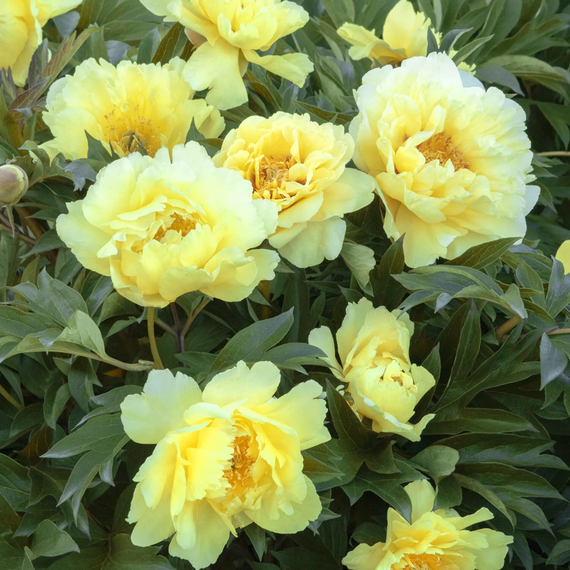
- Breathtaking double blooms up to 8 inches across in luminous, nearly translucent yellow — among the showiest flowers in any late-spring garden
- Robust intersectional hybrid with self-supporting stems that need no staking, combining the hardiness of herbaceous peonies with the dramatic flowers of tree peonies
- Exceptionally long-lived perennial — thriving for 20 years or more — with rich, deeply lobed dark green foliage that remains attractive from spring through fall
- Deer resistant and low maintenance with outstanding cold hardiness from USDA Zones 3a to 8, making it a reliable performer across a wide range of climates
The Yumi Itoh Peony (Paeonia 'Beauty') is a collector-worthy intersectional hybrid that masterfully blends the best traits of herbaceous garden peonies and tree peonies into one extraordinary garden perennial. Each late-spring to early-summer season, this compact, rounded mound of lush, deeply lobed dark green foliage becomes a stage for dozens of opulent double flowers measuring up to 8 inches across, their masses of radiant yellow petals possessing a nearly translucent, luminous quality that catches the light like few other blooms in the garden. A delicate, pleasant fragrance adds yet another layer of sensory delight, making cut stems a prized addition to bouquets and floral arrangements. Unlike traditional herbaceous peonies, Yumi produces multiple buds per stem — a primary bud flanked by secondary side buds that open in succession, extending the blooming display over several weeks. Its stout, self-supporting stems require no staking, a hallmark of the Itoh hybrid class. After flowering, the lush, finely lobed foliage remains handsome and problem-free right into autumn before dying back cleanly to the ground for winter. Hardy from USDA Zones 3a through 8, deer resistant, and remarkably tolerant of urban conditions, Paeonia 'Yumi Beauty' is an outstanding choice for perennial borders, cottage gardens, foundation plantings, and cutting gardens throughout Southern Oregon and Northern California.
Plant Description
Yumi is a member of the prestigious Itoh (intersectional) hybrid group — a cross between the common herbaceous peony (Paeonia lactiflora) and the tree peony (Paeonia x lemoinei / suffruticosa). First developed by Japanese horticulturist Toichi Itoh in the 1940s and later popularized in the United States, Itoh peonies represent the pinnacle of peony breeding, combining the reliable die-back habit of herbaceous types with the bold, oversized blooms and unique color range of tree peonies. Yumi (also sold under the trade name 'Beauty') produces extravagant fully double flowers up to 8 inches wide in a rich, sunny yellow. The individual petals have an almost translucent quality, glowing warmly in sunlight. The blooms carry a light, pleasant fragrance and are held upright on strong, stiff stems above a compact, rounded mound of compound, deeply lobed dark green foliage. Each stem produces one primary bud plus several side buds that open in succession, prolonging the display. This is an herbaceous perennial that dies back to the ground each winter and reliably re-sprouts from its fleshy root system each spring.
Mature Size
| Attribute | Measurement |
|---|---|
| Mature Height | Approximately 30 inches (2.5 feet) |
| Mature Spread | Approximately 30 inches (2.5 feet) |
| Growth Rate | Slow to moderate; takes 2-3 years to reach full flowering potential |
| Form | Compact, rounded, clump-forming mound |
| Longevity | 20+ years with proper care; a permanent garden investment |
Hardiness Zones
Yumi Itoh Peony is reliably hardy in USDA Hardiness Zones 3a through 8. This exceptional cold hardiness — one of the key advantages of the Itoh hybrid class — means it performs well across a very wide range of climates, from the coldest continental regions to warm temperate areas. In Zones 3 and 4, apply an extra layer of mulch in late fall to insulate the crown through severe winters. In the warmer end of its range (Zone 8 and the milder parts of Zone 8b in Northern California and Southern Oregon), select a planting site with some afternoon shade to protect blooms from intense summer heat and to help ensure sufficient winter chill hours for vigorous flowering. Peonies require a period of winter cold to set buds properly; in areas with very mild winters, bloom performance may be reduced.
Sunlight Requirements
For the largest, most abundant blooms, plant Yumi in a location that receives full sun — at least 6 to 8 hours of direct sunlight per day. Full sun exposure encourages the strongest stems, the most prolific bud set, and the best overall plant vigor. In regions with very hot summers, such as inland valleys of Northern California, a site with morning sun and light afternoon shade is ideal; this protects the delicate petals from scorching and extends the life of individual flowers. In partial shade (4 to 6 hours of sun), the plant will still grow and bloom but will produce fewer flowers and may develop weaker stems. Avoid deep or full shade, where flowering will be significantly diminished and the plant will gradually decline over time.
Soil and pH Preferences
Yumi Itoh Peony grows best in organically rich, well-drained soil with a slightly acidic to neutral pH between 6.5 and 7.0. Good drainage is non-negotiable — standing water around the crown will cause root and crown rot and quickly kill the plant. In native clay soils, amend generously with compost, perlite, or aged bark to improve drainage and aeration. In sandy soils, incorporate 2 to 4 inches of fully decomposed compost or aged manure to improve moisture retention and nutritional content. Healthy soil structure to a depth of at least 18 to 24 inches gives the extensive root system the best foundation. Avoid highly compacted soils, which restrict oxygen flow to the roots. An annual top-dressing of organic compost around (but not touching) the crown will continually improve soil structure and fertility over time.
Watering Guide
Consistent, moderate moisture is the key to keeping Yumi healthy and flowering freely. During the first growing season after planting, water deeply and regularly — approximately once or twice per week — to help establish a deep, extensive root system. Once established, water the equivalent of about 1 inch per week, from rain or supplemental irrigation combined. Water at the base of the plant, directing water to the root zone rather than wetting the foliage, which can encourage fungal disease. During dry spells in spring and early summer (the active growth and blooming period), never allow the soil to dry out completely, as moisture stress will cause bud drop and leaf dieback. Reduce watering slightly in fall as the plant enters dormancy. The Yumi Itoh Peony has some tolerance for short periods of drought once established, but prolonged dry conditions will result in reduced flowering and premature leaf drop. Never allow water to pool around the crown or sit in the root zone.
Fertilizing
Yumi benefits from a thoughtful fertilizing program that supports both lush foliage and spectacular blooming without promoting excessive, weak green growth. Choose a fertilizer that is relatively low in nitrogen and higher in phosphorus and potassium to encourage robust root development and prolific flowering. A slow-release granular formula such as a 5-10-10 or 5-20-20 organic blend is ideal. Apply fertilizer as new growth emerges in early spring, pushing it gently into the soil around the drip line — never placing it directly against the crown. A second, lighter application as buds begin to form will support the energy demands of flowering. In late summer, a third light feeding with a low-nitrogen, phosphorus-rich supplement (such as kelp meal, bone meal, or fish emulsion) helps replenish energy reserves stored in the fleshy roots for next year's performance. Avoid high-nitrogen fertilizers, which encourage lush leafy growth at the expense of flowers and can weaken stems. An annual side dressing of finished compost around the plant provides gentle, ongoing nutrition throughout the growing season.
Pruning and Maintenance
Yumi Itoh Peony is notably low maintenance, but a few simple seasonal tasks will keep it performing beautifully for decades.
- Deadheading: Remove spent blooms promptly after flowering to keep the plant tidy and encourage any remaining side buds to develop fully. Deadheading also prevents the plant from expending energy on seed production.
- Summer tidying: If any stems begin to flop after their first bloom, they can be cut back to the base to encourage fresh growth from the crown.
- Fall cutback: After the first hard frost kills the foliage, cut all stems and leaves back to ground level. Do not leave dead foliage in place over winter, as it can harbor fungal spores that may affect the following season.
- Mulching: Apply 2 to 3 inches of organic mulch around the plant after cutting back in fall to insulate the crown and retain moisture. Pull mulch back slightly from the crown itself to prevent rot. In zones 3 and 4, a heavier mulch layer of 4 to 6 inches provides extra protection against deep freezes.
- Spring emergence: Take care not to disturb the crown area in early spring before new shoots emerge, as the tender emerging red shoots can be easily damaged by digging or foot traffic.
- Division: Itoh peonies rarely need dividing but can be divided in early fall if the clump becomes very large or flowering declines. Expect a year or two of reduced blooming after division while the plant re-establishes.
Planting Instructions
- Choose a site with full sun (6 to 8 hours daily) and excellent drainage. Avoid low spots where water collects.
- Dig a planting hole at least twice as wide as the root ball and deep enough so that the crown of the plant (where stems meet roots) sits right at or no more than 1 inch below the soil surface. Planting too deeply is the most common reason peonies fail to flower.
- Amend the backfill soil generously with compost or aged organic matter and mix thoroughly.
- Set the plant in the hole, ensuring the crown is at the correct depth, then backfill with amended soil, firming gently to eliminate air pockets.
- Water thoroughly after planting to settle the soil around the roots.
- Space plants at least 26 to 36 inches apart from other plants to allow for good air circulation and mature spread.
- Apply a 2- to 3-inch layer of mulch around the plant, keeping it a few inches away from the crown itself.
- For nursery starts planted in spring, expect the plant to focus on root establishment the first season. Blooming may be limited the first year but will increase dramatically in years two and three as the plant matures.
Seasonal Interest
Yumi Itoh Peony offers outstanding multi-season ornamental value in the garden throughout the growing year.
- Early Spring: Distinctive deep red or burgundy shoots push through the soil, providing early color and signaling the start of another spectacular season. The emerging foliage is ornamental in its own right.
- Mid to Late Spring: The deeply lobed, rich dark green compound foliage forms a lush, full mound that provides excellent texture in the border. Buds begin to develop rapidly.
- Late Spring to Early Summer (Peak Bloom): The main flowering display arrives, typically in May through early June, covering the mound in spectacular double yellow blooms up to 8 inches across. Multiple buds per stem open in succession, extending the show over several weeks.
- Summer: After flowering, the handsome dark green foliage continues to provide attractive, fine-textured mounding form throughout summer — a far superior foliar display to that of most traditional herbaceous peonies, which can look ragged by midsummer.
- Fall: Foliage may take on hints of yellow or orange coloration before dying back after the first hard frosts, offering a final seasonal flourish before winter dormancy.
- Winter: The plant rests completely dormant, with no above-ground presence. The fleshy root system remains safely insulated underground, poised to re-emerge in spring.
Landscape Uses
Yumi Itoh Peony is an extremely versatile landscape plant that fits naturally into a wide range of garden styles and applications.
- Perennial and Mixed Borders: Its compact, self-supporting mounding form and long season of foliar interest make it an anchor plant in sunny perennial borders. Plant it toward the mid-border where its foliage can fill the space before and after bloom.
- Cottage and English-Style Gardens: The lush double blooms and romantic fragrance fit perfectly into the informal, flower-filled aesthetic of cottage garden design.
- Foundation Plantings: The dense, rounded form and reliable performance make it suitable as a foundation specimen alongside other shrubs and perennials.
- Mass Plantings: Planted in groups of three or more, Yumi creates a breathtaking seasonal display. A mass planting in full bloom is among the most striking sights in any garden.
- Cutting Gardens: The large, fragrant, long-stemmed blooms are exceptional for cutting, with individual flowers lasting several days in a vase when cut at the bud stage.
- Specimen Plant: Striking enough to stand alone as a focal point in a dedicated garden bed or container planting.
- Low-Maintenance Landscapes: Once established, its deer resistance, good disease tolerance, and minimal care requirements make it a smart choice for low-input landscape situations.
Companion Plants
Yumi's late-spring to early-summer bloom season and lush dark green summer foliage pair beautifully with a wide variety of garden companions. Consider the following for complementary color, texture, and sequential bloom interest:
- Salvia nemorosa (Perennial Salvia): The rich purple spikes of ornamental sage bloom at the same time as Yumi and provide a striking color contrast to the yellow blooms.
- Geranium (Hardy Cranesbill): Low-growing hardy geraniums in blue, violet, or pink tones make elegant companions at the feet of peonies, masking the lower stems and filling gaps.
- Allium (Ornamental Onion): Round purple or violet allium flower heads emerge alongside peony blooms in late spring, creating a classic and dramatic pairing.
- Baptisia australis (False Indigo): A similarly long-lived, low-maintenance perennial with blue-purple spikes that complement the yellow peony flowers beautifully.
- Iris germanica (Bearded Iris): Tall bearded iris blooms at roughly the same time and pairs naturally in the spring border, offering contrasting form and color range.
- Nepeta (Catmint): Soft lavender-blue catmint provides a frothy, cottage-style base planting around peonies and blooms both before and after the peony display.
- Astilbe: For partially shaded spots, astilbe provides feathery summer plumes in pink, red, or white tones that bridge the gap after peony bloom.
- Spring Bulbs (Tulips, Daffodils): Plant bulbs among and around the peony to provide color before the peony emerges, then let the expanding peony foliage mask the ripening bulb leaves.
Pests and Diseases
Yumi Itoh Peony is notably more disease resistant than traditional herbaceous peonies, but a few issues may occasionally arise:
- Botrytis Blight (Gray Mold): The most common peony disease, caused by the fungus Botrytis cinerea. Symptoms include brown or blackened stem bases, wilting shoots, and a gray fuzzy mold on affected tissues. It is most prevalent in cool, damp spring conditions with poor air circulation. Prevent it by spacing plants properly, avoiding overhead watering, removing spent flowers promptly, and cutting all foliage to the ground in fall. Treat early outbreaks by removing and disposing of infected plant parts and applying a copper-based or other approved fungicide.
- Powdery Mildew: A gray-white powdery coating on leaves, stems, and buds, most common during warm days and cool nights with low airflow. Improve air circulation and treat early infections with a horticultural oil such as neem oil, following label directions carefully to protect pollinators.
- Phytophthora Crown and Root Rot: Caused by overly wet or poorly drained soil conditions. Prevent by ensuring excellent drainage at the planting site and never allowing water to pool around the crown.
- Ants: Ants are frequently seen on peony buds and are completely harmless. They are attracted to the sweet nectar secreted by the buds and do not damage the plant or blooms. No control is needed.
- Deer: Yumi Itoh Peony is considered deer resistant, though no plant is fully deer-proof under all conditions. Peonies are generally low on the list of deer preferences.
Container Growing
While Yumi Itoh Peony is primarily a garden perennial that thrives best in the ground, it can be grown successfully in a large container with proper care. Choose a container at least 18 to 24 inches in diameter and equally deep to accommodate the extensive root system. Ensure the container has ample drainage holes. Use a high-quality, well-draining potting mix amended with additional perlite for drainage. Plant with the crown at the same depth as it sits in the nursery pot — avoid burying it deeper. Container-grown Itoh peonies require more frequent watering than in-ground plants, as pots dry out more quickly; check soil moisture regularly and water when the top inch feels dry. Fertilize monthly during the growing season with a balanced, low-nitrogen liquid fertilizer. In colder climates, move containers to a protected but cold location over winter (an unheated garage or shed is ideal) to provide the necessary chilling period while protecting the container from freezing and cracking. In the mild winters of Zones 7 to 8, containers can typically remain outdoors in a sheltered spot. Repot every 2 to 3 years or when the plant appears to be outgrowing its container.
Wildlife Value and Garden Benefits
Yumi Itoh Peony provides meaningful ecological and sensory value in the home garden:
- Pollinators: The large, open flowers attract bees, butterflies, and other beneficial pollinators. Bumble bees in particular are drawn to the abundant pollen of the prominent yellow stamens at the center of each bloom.
- Ants: Ants visit the nectar-producing buds and are a harmless, natural part of the peony's life cycle. Some evidence suggests that ants may deter other pest insects from the plant.
- Deer Resistance: Peonies are not preferred by deer, making Yumi a practical choice for gardens in areas where deer browsing is a challenge.
- Cut Flower Value: The large, fragrant blooms are among the finest cut flowers available from the home garden, providing exceptional vase life when harvested at the bud-just-beginning-to-open stage.
- Long-Term Landscape Investment: With a lifespan of 20 years or more, Yumi becomes a permanent, ever-improving feature of the garden landscape, producing more and more blooms with each passing season as the root system matures.
- Breathtaking double blooms up to 8 inches across in luminous, nearly translucent yellow — among the showiest flowers in any late-spring garden
- Robust intersectional hybrid with self-supporting stems that need no staking, combining the hardiness of herbaceous peonies with the dramatic flowers of tree peonies
- Exceptionally long-lived perennial — thriving for 20 years or more — with rich, deeply lobed dark green foliage that remains attractive from spring through fall
- Deer resistant and low maintenance with outstanding cold hardiness from USDA Zones 3a to 8, making it a reliable performer across a wide range of climates
The Yumi Itoh Peony (Paeonia 'Beauty') is a collector-worthy intersectional hybrid that masterfully blends the best traits of herbaceous garden peonies and tree peonies into one extraordinary garden perennial. Each late-spring to early-summer season, this compact, rounded mound of lush, deeply lobed dark green foliage becomes a stage for dozens of opulent double flowers measuring up to 8 inches across, their masses of radiant yellow petals possessing a nearly translucent, luminous quality that catches the light like few other blooms in the garden. A delicate, pleasant fragrance adds yet another layer of sensory delight, making cut stems a prized addition to bouquets and floral arrangements. Unlike traditional herbaceous peonies, Yumi produces multiple buds per stem — a primary bud flanked by secondary side buds that open in succession, extending the blooming display over several weeks. Its stout, self-supporting stems require no staking, a hallmark of the Itoh hybrid class. After flowering, the lush, finely lobed foliage remains handsome and problem-free right into autumn before dying back cleanly to the ground for winter. Hardy from USDA Zones 3a through 8, deer resistant, and remarkably tolerant of urban conditions, Paeonia 'Yumi Beauty' is an outstanding choice for perennial borders, cottage gardens, foundation plantings, and cutting gardens throughout Southern Oregon and Northern California.
Plant Description
Yumi is a member of the prestigious Itoh (intersectional) hybrid group — a cross between the common herbaceous peony (Paeonia lactiflora) and the tree peony (Paeonia x lemoinei / suffruticosa). First developed by Japanese horticulturist Toichi Itoh in the 1940s and later popularized in the United States, Itoh peonies represent the pinnacle of peony breeding, combining the reliable die-back habit of herbaceous types with the bold, oversized blooms and unique color range of tree peonies. Yumi (also sold under the trade name 'Beauty') produces extravagant fully double flowers up to 8 inches wide in a rich, sunny yellow. The individual petals have an almost translucent quality, glowing warmly in sunlight. The blooms carry a light, pleasant fragrance and are held upright on strong, stiff stems above a compact, rounded mound of compound, deeply lobed dark green foliage. Each stem produces one primary bud plus several side buds that open in succession, prolonging the display. This is an herbaceous perennial that dies back to the ground each winter and reliably re-sprouts from its fleshy root system each spring.
Mature Size
| Attribute | Measurement |
|---|---|
| Mature Height | Approximately 30 inches (2.5 feet) |
| Mature Spread | Approximately 30 inches (2.5 feet) |
| Growth Rate | Slow to moderate; takes 2-3 years to reach full flowering potential |
| Form | Compact, rounded, clump-forming mound |
| Longevity | 20+ years with proper care; a permanent garden investment |
Hardiness Zones
Yumi Itoh Peony is reliably hardy in USDA Hardiness Zones 3a through 8. This exceptional cold hardiness — one of the key advantages of the Itoh hybrid class — means it performs well across a very wide range of climates, from the coldest continental regions to warm temperate areas. In Zones 3 and 4, apply an extra layer of mulch in late fall to insulate the crown through severe winters. In the warmer end of its range (Zone 8 and the milder parts of Zone 8b in Northern California and Southern Oregon), select a planting site with some afternoon shade to protect blooms from intense summer heat and to help ensure sufficient winter chill hours for vigorous flowering. Peonies require a period of winter cold to set buds properly; in areas with very mild winters, bloom performance may be reduced.
Sunlight Requirements
For the largest, most abundant blooms, plant Yumi in a location that receives full sun — at least 6 to 8 hours of direct sunlight per day. Full sun exposure encourages the strongest stems, the most prolific bud set, and the best overall plant vigor. In regions with very hot summers, such as inland valleys of Northern California, a site with morning sun and light afternoon shade is ideal; this protects the delicate petals from scorching and extends the life of individual flowers. In partial shade (4 to 6 hours of sun), the plant will still grow and bloom but will produce fewer flowers and may develop weaker stems. Avoid deep or full shade, where flowering will be significantly diminished and the plant will gradually decline over time.
Soil and pH Preferences
Yumi Itoh Peony grows best in organically rich, well-drained soil with a slightly acidic to neutral pH between 6.5 and 7.0. Good drainage is non-negotiable — standing water around the crown will cause root and crown rot and quickly kill the plant. In native clay soils, amend generously with compost, perlite, or aged bark to improve drainage and aeration. In sandy soils, incorporate 2 to 4 inches of fully decomposed compost or aged manure to improve moisture retention and nutritional content. Healthy soil structure to a depth of at least 18 to 24 inches gives the extensive root system the best foundation. Avoid highly compacted soils, which restrict oxygen flow to the roots. An annual top-dressing of organic compost around (but not touching) the crown will continually improve soil structure and fertility over time.
Watering Guide
Consistent, moderate moisture is the key to keeping Yumi healthy and flowering freely. During the first growing season after planting, water deeply and regularly — approximately once or twice per week — to help establish a deep, extensive root system. Once established, water the equivalent of about 1 inch per week, from rain or supplemental irrigation combined. Water at the base of the plant, directing water to the root zone rather than wetting the foliage, which can encourage fungal disease. During dry spells in spring and early summer (the active growth and blooming period), never allow the soil to dry out completely, as moisture stress will cause bud drop and leaf dieback. Reduce watering slightly in fall as the plant enters dormancy. The Yumi Itoh Peony has some tolerance for short periods of drought once established, but prolonged dry conditions will result in reduced flowering and premature leaf drop. Never allow water to pool around the crown or sit in the root zone.
Fertilizing
Yumi benefits from a thoughtful fertilizing program that supports both lush foliage and spectacular blooming without promoting excessive, weak green growth. Choose a fertilizer that is relatively low in nitrogen and higher in phosphorus and potassium to encourage robust root development and prolific flowering. A slow-release granular formula such as a 5-10-10 or 5-20-20 organic blend is ideal. Apply fertilizer as new growth emerges in early spring, pushing it gently into the soil around the drip line — never placing it directly against the crown. A second, lighter application as buds begin to form will support the energy demands of flowering. In late summer, a third light feeding with a low-nitrogen, phosphorus-rich supplement (such as kelp meal, bone meal, or fish emulsion) helps replenish energy reserves stored in the fleshy roots for next year's performance. Avoid high-nitrogen fertilizers, which encourage lush leafy growth at the expense of flowers and can weaken stems. An annual side dressing of finished compost around the plant provides gentle, ongoing nutrition throughout the growing season.
Pruning and Maintenance
Yumi Itoh Peony is notably low maintenance, but a few simple seasonal tasks will keep it performing beautifully for decades.
- Deadheading: Remove spent blooms promptly after flowering to keep the plant tidy and encourage any remaining side buds to develop fully. Deadheading also prevents the plant from expending energy on seed production.
- Summer tidying: If any stems begin to flop after their first bloom, they can be cut back to the base to encourage fresh growth from the crown.
- Fall cutback: After the first hard frost kills the foliage, cut all stems and leaves back to ground level. Do not leave dead foliage in place over winter, as it can harbor fungal spores that may affect the following season.
- Mulching: Apply 2 to 3 inches of organic mulch around the plant after cutting back in fall to insulate the crown and retain moisture. Pull mulch back slightly from the crown itself to prevent rot. In zones 3 and 4, a heavier mulch layer of 4 to 6 inches provides extra protection against deep freezes.
- Spring emergence: Take care not to disturb the crown area in early spring before new shoots emerge, as the tender emerging red shoots can be easily damaged by digging or foot traffic.
- Division: Itoh peonies rarely need dividing but can be divided in early fall if the clump becomes very large or flowering declines. Expect a year or two of reduced blooming after division while the plant re-establishes.
Planting Instructions
- Choose a site with full sun (6 to 8 hours daily) and excellent drainage. Avoid low spots where water collects.
- Dig a planting hole at least twice as wide as the root ball and deep enough so that the crown of the plant (where stems meet roots) sits right at or no more than 1 inch below the soil surface. Planting too deeply is the most common reason peonies fail to flower.
- Amend the backfill soil generously with compost or aged organic matter and mix thoroughly.
- Set the plant in the hole, ensuring the crown is at the correct depth, then backfill with amended soil, firming gently to eliminate air pockets.
- Water thoroughly after planting to settle the soil around the roots.
- Space plants at least 26 to 36 inches apart from other plants to allow for good air circulation and mature spread.
- Apply a 2- to 3-inch layer of mulch around the plant, keeping it a few inches away from the crown itself.
- For nursery starts planted in spring, expect the plant to focus on root establishment the first season. Blooming may be limited the first year but will increase dramatically in years two and three as the plant matures.
Seasonal Interest
Yumi Itoh Peony offers outstanding multi-season ornamental value in the garden throughout the growing year.
- Early Spring: Distinctive deep red or burgundy shoots push through the soil, providing early color and signaling the start of another spectacular season. The emerging foliage is ornamental in its own right.
- Mid to Late Spring: The deeply lobed, rich dark green compound foliage forms a lush, full mound that provides excellent texture in the border. Buds begin to develop rapidly.
- Late Spring to Early Summer (Peak Bloom): The main flowering display arrives, typically in May through early June, covering the mound in spectacular double yellow blooms up to 8 inches across. Multiple buds per stem open in succession, extending the show over several weeks.
- Summer: After flowering, the handsome dark green foliage continues to provide attractive, fine-textured mounding form throughout summer — a far superior foliar display to that of most traditional herbaceous peonies, which can look ragged by midsummer.
- Fall: Foliage may take on hints of yellow or orange coloration before dying back after the first hard frosts, offering a final seasonal flourish before winter dormancy.
- Winter: The plant rests completely dormant, with no above-ground presence. The fleshy root system remains safely insulated underground, poised to re-emerge in spring.
Landscape Uses
Yumi Itoh Peony is an extremely versatile landscape plant that fits naturally into a wide range of garden styles and applications.
- Perennial and Mixed Borders: Its compact, self-supporting mounding form and long season of foliar interest make it an anchor plant in sunny perennial borders. Plant it toward the mid-border where its foliage can fill the space before and after bloom.
- Cottage and English-Style Gardens: The lush double blooms and romantic fragrance fit perfectly into the informal, flower-filled aesthetic of cottage garden design.
- Foundation Plantings: The dense, rounded form and reliable performance make it suitable as a foundation specimen alongside other shrubs and perennials.
- Mass Plantings: Planted in groups of three or more, Yumi creates a breathtaking seasonal display. A mass planting in full bloom is among the most striking sights in any garden.
- Cutting Gardens: The large, fragrant, long-stemmed blooms are exceptional for cutting, with individual flowers lasting several days in a vase when cut at the bud stage.
- Specimen Plant: Striking enough to stand alone as a focal point in a dedicated garden bed or container planting.
- Low-Maintenance Landscapes: Once established, its deer resistance, good disease tolerance, and minimal care requirements make it a smart choice for low-input landscape situations.
Companion Plants
Yumi's late-spring to early-summer bloom season and lush dark green summer foliage pair beautifully with a wide variety of garden companions. Consider the following for complementary color, texture, and sequential bloom interest:
- Salvia nemorosa (Perennial Salvia): The rich purple spikes of ornamental sage bloom at the same time as Yumi and provide a striking color contrast to the yellow blooms.
- Geranium (Hardy Cranesbill): Low-growing hardy geraniums in blue, violet, or pink tones make elegant companions at the feet of peonies, masking the lower stems and filling gaps.
- Allium (Ornamental Onion): Round purple or violet allium flower heads emerge alongside peony blooms in late spring, creating a classic and dramatic pairing.
- Baptisia australis (False Indigo): A similarly long-lived, low-maintenance perennial with blue-purple spikes that complement the yellow peony flowers beautifully.
- Iris germanica (Bearded Iris): Tall bearded iris blooms at roughly the same time and pairs naturally in the spring border, offering contrasting form and color range.
- Nepeta (Catmint): Soft lavender-blue catmint provides a frothy, cottage-style base planting around peonies and blooms both before and after the peony display.
- Astilbe: For partially shaded spots, astilbe provides feathery summer plumes in pink, red, or white tones that bridge the gap after peony bloom.
- Spring Bulbs (Tulips, Daffodils): Plant bulbs among and around the peony to provide color before the peony emerges, then let the expanding peony foliage mask the ripening bulb leaves.
Pests and Diseases
Yumi Itoh Peony is notably more disease resistant than traditional herbaceous peonies, but a few issues may occasionally arise:
- Botrytis Blight (Gray Mold): The most common peony disease, caused by the fungus Botrytis cinerea. Symptoms include brown or blackened stem bases, wilting shoots, and a gray fuzzy mold on affected tissues. It is most prevalent in cool, damp spring conditions with poor air circulation. Prevent it by spacing plants properly, avoiding overhead watering, removing spent flowers promptly, and cutting all foliage to the ground in fall. Treat early outbreaks by removing and disposing of infected plant parts and applying a copper-based or other approved fungicide.
- Powdery Mildew: A gray-white powdery coating on leaves, stems, and buds, most common during warm days and cool nights with low airflow. Improve air circulation and treat early infections with a horticultural oil such as neem oil, following label directions carefully to protect pollinators.
- Phytophthora Crown and Root Rot: Caused by overly wet or poorly drained soil conditions. Prevent by ensuring excellent drainage at the planting site and never allowing water to pool around the crown.
- Ants: Ants are frequently seen on peony buds and are completely harmless. They are attracted to the sweet nectar secreted by the buds and do not damage the plant or blooms. No control is needed.
- Deer: Yumi Itoh Peony is considered deer resistant, though no plant is fully deer-proof under all conditions. Peonies are generally low on the list of deer preferences.
Container Growing
While Yumi Itoh Peony is primarily a garden perennial that thrives best in the ground, it can be grown successfully in a large container with proper care. Choose a container at least 18 to 24 inches in diameter and equally deep to accommodate the extensive root system. Ensure the container has ample drainage holes. Use a high-quality, well-draining potting mix amended with additional perlite for drainage. Plant with the crown at the same depth as it sits in the nursery pot — avoid burying it deeper. Container-grown Itoh peonies require more frequent watering than in-ground plants, as pots dry out more quickly; check soil moisture regularly and water when the top inch feels dry. Fertilize monthly during the growing season with a balanced, low-nitrogen liquid fertilizer. In colder climates, move containers to a protected but cold location over winter (an unheated garage or shed is ideal) to provide the necessary chilling period while protecting the container from freezing and cracking. In the mild winters of Zones 7 to 8, containers can typically remain outdoors in a sheltered spot. Repot every 2 to 3 years or when the plant appears to be outgrowing its container.
Wildlife Value and Garden Benefits
Yumi Itoh Peony provides meaningful ecological and sensory value in the home garden:
- Pollinators: The large, open flowers attract bees, butterflies, and other beneficial pollinators. Bumble bees in particular are drawn to the abundant pollen of the prominent yellow stamens at the center of each bloom.
- Ants: Ants visit the nectar-producing buds and are a harmless, natural part of the peony's life cycle. Some evidence suggests that ants may deter other pest insects from the plant.
- Deer Resistance: Peonies are not preferred by deer, making Yumi a practical choice for gardens in areas where deer browsing is a challenge.
- Cut Flower Value: The large, fragrant blooms are among the finest cut flowers available from the home garden, providing exceptional vase life when harvested at the bud-just-beginning-to-open stage.
- Long-Term Landscape Investment: With a lifespan of 20 years or more, Yumi becomes a permanent, ever-improving feature of the garden landscape, producing more and more blooms with each passing season as the root system matures.