

Zoom the image with the mouse
Summerlasting Strawberry Crape Myrtle - 2 Gallon
SKU:
2155765
UPC:
014949474846
$39.99
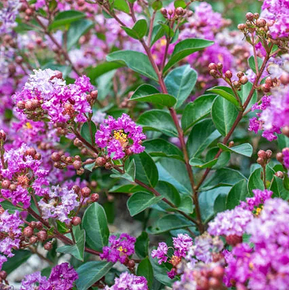
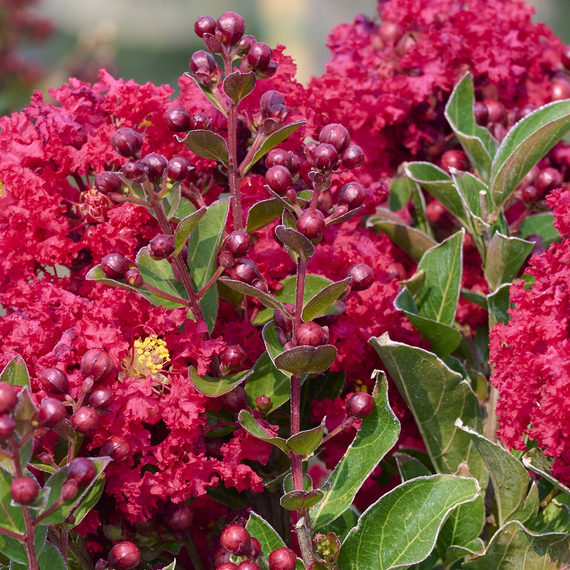
- Incredibly dense panicles of vivid strawberry-pink blooms light up the landscape from late spring through late summer, emerging from eye-catching dark red buds for months of nonstop color.
- Compact, mounded habit reaching just 3 to 4 feet tall and wide makes it an ideal choice for small gardens, foundation plantings, low borders, and mixed container arrangements.
- Outstanding four-season appeal: brick-red new foliage matures to glossy green, turns brilliant orange-red in fall, and exfoliating two-tone bark adds sculptural winter interest.
- Excellent powdery mildew resistance and strong tolerance of urban pollution make this an exceptionally low-maintenance shrub for a wide range of landscape conditions.
Summerlasting Strawberry Crape Myrtle (Lagerstroemia indica 'HOCH266', PP34124) is a showstopping dwarf deciduous shrub that delivers an unmatched floral display and multi-season garden interest in a tidy, manageable size. Belonging to the trademarked Summerlasting series, this compact cultivar is cloaked from late spring through late summer in extraordinarily dense panicles of frilly, bright pink flowers with warm strawberry-red overtones, each cluster emerging from distinctive dark red buds that add to the drama before a single petal opens. Beyond its spectacular bloom season, the shrub earns its keep year-round: foliage emerges brick red in spring, deepens to rich glossy green through the summer months, and then ignites in shades of orange and red as temperatures cool in fall. Even in winter, the attractive two-tone exfoliating bark provides visual interest and structure long after the leaves have fallen. Reaching a mature height and spread of 3 to 4 feet with a naturally mounded, dense form, this patented selection is perfectly scaled for small urban gardens, front-of-border plantings, mass landscape displays, and large patio containers. Its proven resistance to powdery mildew, combined with a high tolerance for urban pollution, makes Summerlasting Strawberry one of the most versatile and carefree flowering shrubs available for USDA Hardiness Zones 7 through 10.
Plant Description
Summerlasting Strawberry Crape Myrtle is a dense, multi-stemmed deciduous shrub with a naturally mounded, rounded form. It is part of the patented Summerlasting series (PP34124), selected for its unusually compact habit and extraordinarily prolific bloom production. The flower panicles are notably denser than those found on standard crape myrtle varieties, producing masses of small, frilly, crepe-paper-textured blossoms in a vivid bright pink with strawberry-red overtones. Flower clusters emerge from dark red buds at the tips of new growth, creating a two-tone ornamental effect even before the blooms fully open. The relatively fine leaf texture gives the shrub a refined, polished look that sets it apart from coarser-textured landscape plants. Its compact, ground-hugging shape means it naturally fills in to the base without requiring filler plants in front, and it transitions beautifully through every season.
Mature Size and Growth Rate
| Characteristic | Detail |
|---|---|
| Mature Height | 3 to 4 feet |
| Mature Spread | 3 to 4 feet |
| Growth Habit | Dense, mounded, rounded |
| Growth Rate | Moderate |
| Plant Type | Deciduous shrub |
| Recommended Spacing | Approximately 4 feet on center |
| Expected Lifespan | Approximately 20 years under ideal conditions |
Hardiness Zones
Summerlasting Strawberry Crape Myrtle is rated for USDA Hardiness Zones 7a through 10b, making it a strong performer across a wide swath of warm-climate regions in the southern and western United States. In Zone 7, plants may die back to the ground in severe winters but typically resprout reliably from the root system in spring. In Zones 8 through 10, the shrub generally remains woody through winter with minimal die-back. In the warmer climates of Southern Oregon and Northern California, this cultivar is well-suited to lower elevation sites where hard winter freezes are infrequent. Avoid exposed sites with no protection from harsh desiccating winds in the coldest end of its hardiness range.
Sunlight Requirements
Full sun is strongly preferred and essential for achieving the best flowering performance. A minimum of 6 hours of direct sunlight per day is required; 8 or more hours per day produces the densest bloom display and the most compact, vigorous growth. Planting in partial shade will result in noticeably reduced flower production, a more open and lax growth habit, and a significant increase in susceptibility to powdery mildew. Choose the sunniest available location in the garden, and avoid siting directly beneath overhanging trees or in spots that receive heavy afternoon shade from buildings or fences. Good air circulation around the plant, in addition to full sun, is one of the best preventive measures against fungal disease.
Soil and pH Preferences
Summerlasting Strawberry performs best in well-drained loamy or sandy soils with a slightly acidic to neutral pH. It is notably fussy about soil conditions compared to many other shrubs and will perform poorly in highly alkaline soils, where it is prone to chlorosis — a yellowing of the foliage caused by an inability to absorb iron and other micronutrients at high pH levels. For best results, aim for the following soil conditions:
- Soil pH: 5.0 to 6.5 (slightly acidic is ideal; neutral is acceptable)
- Soil type: Loamy or sandy loam with good drainage; avoid heavy clay unless drainage is improved
- Organic matter: Incorporate compost at planting time to improve both drainage in clay soils and moisture retention in sandy soils
- Drainage: Standing water around the root zone must be avoided; root rot will occur in chronically wet conditions
If your native soil is alkaline, consider amending the planting area with sulfur or acidifying fertilizers, or growing the plant in a container with a formulated acidic potting mix. A soil pH test before planting is recommended if you are unsure of your soil's natural acidity.
Watering Guide
Consistent moisture is important during the establishment period, but Summerlasting Strawberry becomes moderately drought-tolerant once its root system is fully established after the first growing season.
- First season: Water deeply once or twice per week whenever rainfall is insufficient, encouraging deep root development rather than shallow surface roots. Water at the base of the plant rather than overhead to keep foliage dry and reduce the risk of powdery mildew.
- Established plants: Once established, deep watering every 1 to 2 weeks during dry periods is generally sufficient. Prolonged summer drought can shorten the bloom period and cause temporary leaf drop, so occasional deep watering during extended dry spells is beneficial.
- Container plants: Plants grown in containers will require more frequent watering than those in the ground — check the soil moisture daily during hot weather and water as soon as the top 1 to 2 inches of potting mix begin to dry out.
- Do not overwater: This plant prefers a slightly drier soil profile and is rated for low soil moisture. Chronically wet or waterlogged soil will lead to root rot and plant decline.
Fertilizing
Summerlasting Strawberry Crape Myrtle is a relatively light feeder and will often perform well in average garden soils with minimal supplemental fertilization. Overfeeding, particularly with high-nitrogen products, is counterproductive — it stimulates excessive leafy vegetative growth at the direct expense of flower production and increases susceptibility to aphids and powdery mildew.
- Timing: Apply fertilizer once in early spring as new growth begins to emerge. Do not fertilize after mid-summer, as late-season growth stimulation produces soft tissue that will not harden before the first frost.
- Product selection: Use a balanced, slow-release granular fertilizer formulated for flowering shrubs or trees (e.g., a 10-10-10 analysis or a dedicated bloom-boosting fertilizer with a higher middle phosphorus number). Avoid high-nitrogen lawn fertilizers.
- Poor soils and containers: Plants in sandy, nutrient-poor soils or in containers benefit most from regular feeding. A bloom-boosting fertilizer applied periodically from early spring through mid-summer will support the best flowering performance.
- Soil pH and nutrient uptake: If foliage appears yellow despite adequate fertilization, check soil pH — chlorosis in alkaline soils prevents nutrient absorption and should be corrected with acidifying amendments or chelated iron rather than additional fertilizer.
Pruning and Maintenance
One of the major advantages of this compact dwarf selection is that it requires very little pruning to maintain its naturally attractive mounded form. Heavy topping or severe cutbacks — the infamous practice known as "crape murder" — is unnecessary and harmful, destroying the plant's natural structure and producing weakly attached regrowth that is more prone to disease and wind damage. Follow these simple maintenance guidelines instead:
- Late winter / early spring: Remove any dead, damaged, or crossing branches cleanly before new growth resumes. This is the ideal time for any light structural shaping.
- Deadheading: Trim off spent flower panicles after they fade to encourage repeat blooming later in the season. This optional step can noticeably extend the overall flowering period.
- Suckers: Remove any shoots emerging from the base or root zone at any time during the growing season to keep energy directed to the main plant framework.
- Avoid late-season pruning: Pruning after mid-summer stimulates new growth that will not have time to harden before cold weather arrives, increasing frost damage risk.
- General tidiness: Rake up fallen leaves in autumn to reduce overwintering habitat for fungal spores and pest eggs.
Planting Instructions
- Select a site that receives a minimum of 6 hours of direct sunlight daily with good air circulation. Avoid low-lying areas where water pools after rain.
- Test soil pH if uncertain. Amend with sulfur or acidic compost if pH exceeds 6.5.
- Dig a planting hole two to three times as wide as the root ball but no deeper than the root ball height. The top of the root ball should sit level with or very slightly above the surrounding soil grade.
- Loosen the sides of the hole to encourage outward root spread. In clay-heavy soils, consider mounding the planting area slightly to improve drainage.
- Remove the plant from its container and gently loosen any circling or tightly bound roots.
- Backfill with the removed native soil amended with quality compost. Firm gently around the root ball to eliminate air pockets.
- Water thoroughly and deeply immediately after planting.
- Apply a 3- to 4-inch layer of organic mulch — such as bark chips, wood chips, or pine straw — over the root zone, keeping mulch pulled back 3 to 4 inches from the main stem to prevent collar rot.
- For mass planting or hedging, space plants approximately 4 feet on center.
Seasonal Interest
| Season | Ornamental Feature |
|---|---|
| Spring | Striking brick-red new foliage emerges as temperatures warm, providing vivid contrast before transitioning to deep glossy green |
| Late Spring through Late Summer | Masses of dense, frilly bright pink flower panicles with strawberry-red overtones emerge from dark red buds at the tips of branches; exceptionally long and prolific bloom season |
| Fall | Glossy oval leaves shift to warm shades of orange and red, providing a vivid autumn color display |
| Winter | Attractive two-tone exfoliating bark adds structure and visual interest to the dormant garden; red stem color remains ornamental through the cold months |
Landscape Uses
The compact size, tidy mounded habit, and extraordinary seasonal appeal of Summerlasting Strawberry make it one of the most versatile flowering shrubs for a wide range of landscape applications:
- Foundation plantings: Its manageable mature size and dense habit make it an outstanding choice for planting along house foundations without the worry of overgrowth.
- Low flowering hedges and borders: Plant in a row for a continuous summer-long ribbon of bright pink color along walkways, fences, or garden perimeters.
- Mass plantings: Repeat plantings create a bold, unified landscape statement during bloom season and provide excellent coverage as a low-maintenance groundcover alternative on slopes and banks.
- Specimen or focal point: Use as a standalone accent plant in smaller gardens or courtyards where a single plant can be appreciated in all its seasonal glory.
- Mixed border: Pairs beautifully with ornamental grasses, perennials, and other flowering shrubs in a layered border design.
- Container planting: Well-suited for large patio pots and containers, where it can serve as a bold "thriller" component; substantial enough to be planted alone in a large container as a feature plant.
- Urban gardens: Its high tolerance for pollution and urban environmental stresses makes it a reliable performer in city gardens, courtyard spaces, and streetside plantings.
Container Growing
Summerlasting Strawberry is an excellent candidate for container cultivation, offering dramatic seasonal color on patios, decks, entryways, and balconies. When growing in a container, keep the following in mind:
- Container size: Choose a large, sturdy container with adequate drainage holes — a minimum of 15 to 20 gallons is recommended to support healthy root development and moisture stability.
- Potting mix: Use a high-quality, well-draining potting mix formulated for acid-loving plants or add perlite to a standard mix to ensure excellent drainage.
- Watering: Container plants dry out much faster than in-ground plants; check soil moisture daily in warm weather and water whenever the top 1 to 2 inches of mix feel dry. Never allow the root ball to dry out completely during the growing season.
- Fertilizing: Feed with a slow-release bloom fertilizer at the start of the growing season, and supplement with a liquid bloom-boosting fertilizer every 3 to 4 weeks through mid-summer for best flower production.
- Winter care: In Zone 7 climates, move containers to a sheltered, unheated garage or protected porch during the coldest months, or insulate the pot with burlap wrap and mulch to protect roots from hard freezing.
- Design tip: In a combination container, position this plant as the central "thriller," surrounded by trailing and mounding companion plants that spill over the edges for a full, lush look.
Companion Plants
Summerlasting Strawberry pairs beautifully with a wide range of sun-loving plants that complement its form, bloom time, and seasonal color. Consider these companions for cohesive and visually dynamic garden combinations:
- Salvia (Salvia nemorosa or S. greggii): Purple or blue salvias offer a bold color contrast to the bright pink blooms and share the same love of full sun and well-drained soil.
- Ornamental grasses (Pennisetum or Muhlenbergia): Fine-textured grasses provide graceful movement and contrast with the dense, mounded form of the crape myrtle, especially attractive in fall when both display their best color simultaneously.
- Lavender (Lavandula angustifolia): Complementary silver-gray foliage and purple flower spikes pair elegantly with the pink blooms and share similar full-sun, well-drained, drought-tolerant preferences.
- Black-eyed Susan (Rudbeckia hirta): Golden-yellow daisy flowers bloom at the same time and create a warm, vibrant summer color combination.
- Catmint (Nepeta): Blue-purple flower spikes and soft, gray-green foliage contrast beautifully with the bright pink crape myrtle blooms throughout summer.
- Coneflower (Echinacea purpurea): Bold, long-lasting summer blooms in pinks and purples complement and echo the color palette of the Summerlasting Strawberry while attracting pollinators throughout the season.
- Dwarf ornamental shrubs (e.g., dwarf nandina or compact spirea): Low-growing companion shrubs with contrasting foliage color or texture add multi-season interest and cohesion to foundation or border plantings.
Pests and Diseases
Summerlasting Strawberry has been selected for excellent powdery mildew resistance, making it considerably more disease-resistant than many older crape myrtle varieties. However, as with any garden plant, occasional pest and disease issues may arise:
- Powdery mildew: Although this cultivar has strong resistance, mildew can still occur on plants sited in shaded, poorly ventilated locations. Prevent problems by ensuring full sun exposure and good air circulation. If mildew appears, treat with neem oil or potassium bicarbonate fungicide at the first sign of infection.
- Crape myrtle aphids (Tinocallis kahawaluokalani): These tiny, pale yellow insects colonize the undersides of leaves in late spring and summer, excreting sticky honeydew that leads to unsightly black sooty mold. Natural predators such as ladybugs and lacewings typically manage populations. For persistent infestations, treat with insecticidal soap or a strong jet of water directed at the undersides of leaves.
- Crape myrtle bark scale: A relatively newer pest appearing as white or gray waxy encrustations on bark, especially at branch junctions. Heavy infestations produce honeydew and sooty mold. Treat with horticultural oil during winter dormancy or systemic insecticides as directed for severe cases.
- Leaf spot: Fungal leaf spot diseases can appear during unusually wet conditions. Improve air circulation, avoid overhead irrigation, and remove and dispose of affected foliage promptly. Rarely causes serious long-term harm to established plants.
- Chlorosis: Yellowing of foliage — especially between leaf veins — is typically caused by alkaline soil conditions preventing nutrient uptake rather than a true pest or disease. Address with soil acidification or chelated iron applications.
Wildlife Value and Deer Resistance
Summerlasting Strawberry Crape Myrtle offers meaningful value to local wildlife while remaining relatively unattractive to browsing deer:
- Pollinators: The prolific, nectar-rich flower clusters are a significant draw for bees — including honeybees and native bumblebees — as well as butterflies and other beneficial insects throughout the long bloom season from late spring to late summer.
- Birds: Seed capsules that follow the flowers can attract seed-eating birds in late summer and fall, providing a natural food source as part of a wildlife-friendly garden.
- Deer resistance: While no plant is completely deer-proof under all conditions, crape myrtles are generally considered a low-preference species for deer, who tend to pass them over in favor of more palatable plants. This makes Summerlasting Strawberry a more reliable choice in landscapes where deer browsing is a recurring concern.
- Beneficial insects: The open flower structure and extended bloom period support beneficial predatory insects such as lacewings and parasitic wasps, which in turn help naturally control pest populations in the surrounding garden.
- Incredibly dense panicles of vivid strawberry-pink blooms light up the landscape from late spring through late summer, emerging from eye-catching dark red buds for months of nonstop color.
- Compact, mounded habit reaching just 3 to 4 feet tall and wide makes it an ideal choice for small gardens, foundation plantings, low borders, and mixed container arrangements.
- Outstanding four-season appeal: brick-red new foliage matures to glossy green, turns brilliant orange-red in fall, and exfoliating two-tone bark adds sculptural winter interest.
- Excellent powdery mildew resistance and strong tolerance of urban pollution make this an exceptionally low-maintenance shrub for a wide range of landscape conditions.
Summerlasting Strawberry Crape Myrtle (Lagerstroemia indica 'HOCH266', PP34124) is a showstopping dwarf deciduous shrub that delivers an unmatched floral display and multi-season garden interest in a tidy, manageable size. Belonging to the trademarked Summerlasting series, this compact cultivar is cloaked from late spring through late summer in extraordinarily dense panicles of frilly, bright pink flowers with warm strawberry-red overtones, each cluster emerging from distinctive dark red buds that add to the drama before a single petal opens. Beyond its spectacular bloom season, the shrub earns its keep year-round: foliage emerges brick red in spring, deepens to rich glossy green through the summer months, and then ignites in shades of orange and red as temperatures cool in fall. Even in winter, the attractive two-tone exfoliating bark provides visual interest and structure long after the leaves have fallen. Reaching a mature height and spread of 3 to 4 feet with a naturally mounded, dense form, this patented selection is perfectly scaled for small urban gardens, front-of-border plantings, mass landscape displays, and large patio containers. Its proven resistance to powdery mildew, combined with a high tolerance for urban pollution, makes Summerlasting Strawberry one of the most versatile and carefree flowering shrubs available for USDA Hardiness Zones 7 through 10.
Plant Description
Summerlasting Strawberry Crape Myrtle is a dense, multi-stemmed deciduous shrub with a naturally mounded, rounded form. It is part of the patented Summerlasting series (PP34124), selected for its unusually compact habit and extraordinarily prolific bloom production. The flower panicles are notably denser than those found on standard crape myrtle varieties, producing masses of small, frilly, crepe-paper-textured blossoms in a vivid bright pink with strawberry-red overtones. Flower clusters emerge from dark red buds at the tips of new growth, creating a two-tone ornamental effect even before the blooms fully open. The relatively fine leaf texture gives the shrub a refined, polished look that sets it apart from coarser-textured landscape plants. Its compact, ground-hugging shape means it naturally fills in to the base without requiring filler plants in front, and it transitions beautifully through every season.
Mature Size and Growth Rate
| Characteristic | Detail |
|---|---|
| Mature Height | 3 to 4 feet |
| Mature Spread | 3 to 4 feet |
| Growth Habit | Dense, mounded, rounded |
| Growth Rate | Moderate |
| Plant Type | Deciduous shrub |
| Recommended Spacing | Approximately 4 feet on center |
| Expected Lifespan | Approximately 20 years under ideal conditions |
Hardiness Zones
Summerlasting Strawberry Crape Myrtle is rated for USDA Hardiness Zones 7a through 10b, making it a strong performer across a wide swath of warm-climate regions in the southern and western United States. In Zone 7, plants may die back to the ground in severe winters but typically resprout reliably from the root system in spring. In Zones 8 through 10, the shrub generally remains woody through winter with minimal die-back. In the warmer climates of Southern Oregon and Northern California, this cultivar is well-suited to lower elevation sites where hard winter freezes are infrequent. Avoid exposed sites with no protection from harsh desiccating winds in the coldest end of its hardiness range.
Sunlight Requirements
Full sun is strongly preferred and essential for achieving the best flowering performance. A minimum of 6 hours of direct sunlight per day is required; 8 or more hours per day produces the densest bloom display and the most compact, vigorous growth. Planting in partial shade will result in noticeably reduced flower production, a more open and lax growth habit, and a significant increase in susceptibility to powdery mildew. Choose the sunniest available location in the garden, and avoid siting directly beneath overhanging trees or in spots that receive heavy afternoon shade from buildings or fences. Good air circulation around the plant, in addition to full sun, is one of the best preventive measures against fungal disease.
Soil and pH Preferences
Summerlasting Strawberry performs best in well-drained loamy or sandy soils with a slightly acidic to neutral pH. It is notably fussy about soil conditions compared to many other shrubs and will perform poorly in highly alkaline soils, where it is prone to chlorosis — a yellowing of the foliage caused by an inability to absorb iron and other micronutrients at high pH levels. For best results, aim for the following soil conditions:
- Soil pH: 5.0 to 6.5 (slightly acidic is ideal; neutral is acceptable)
- Soil type: Loamy or sandy loam with good drainage; avoid heavy clay unless drainage is improved
- Organic matter: Incorporate compost at planting time to improve both drainage in clay soils and moisture retention in sandy soils
- Drainage: Standing water around the root zone must be avoided; root rot will occur in chronically wet conditions
If your native soil is alkaline, consider amending the planting area with sulfur or acidifying fertilizers, or growing the plant in a container with a formulated acidic potting mix. A soil pH test before planting is recommended if you are unsure of your soil's natural acidity.
Watering Guide
Consistent moisture is important during the establishment period, but Summerlasting Strawberry becomes moderately drought-tolerant once its root system is fully established after the first growing season.
- First season: Water deeply once or twice per week whenever rainfall is insufficient, encouraging deep root development rather than shallow surface roots. Water at the base of the plant rather than overhead to keep foliage dry and reduce the risk of powdery mildew.
- Established plants: Once established, deep watering every 1 to 2 weeks during dry periods is generally sufficient. Prolonged summer drought can shorten the bloom period and cause temporary leaf drop, so occasional deep watering during extended dry spells is beneficial.
- Container plants: Plants grown in containers will require more frequent watering than those in the ground — check the soil moisture daily during hot weather and water as soon as the top 1 to 2 inches of potting mix begin to dry out.
- Do not overwater: This plant prefers a slightly drier soil profile and is rated for low soil moisture. Chronically wet or waterlogged soil will lead to root rot and plant decline.
Fertilizing
Summerlasting Strawberry Crape Myrtle is a relatively light feeder and will often perform well in average garden soils with minimal supplemental fertilization. Overfeeding, particularly with high-nitrogen products, is counterproductive — it stimulates excessive leafy vegetative growth at the direct expense of flower production and increases susceptibility to aphids and powdery mildew.
- Timing: Apply fertilizer once in early spring as new growth begins to emerge. Do not fertilize after mid-summer, as late-season growth stimulation produces soft tissue that will not harden before the first frost.
- Product selection: Use a balanced, slow-release granular fertilizer formulated for flowering shrubs or trees (e.g., a 10-10-10 analysis or a dedicated bloom-boosting fertilizer with a higher middle phosphorus number). Avoid high-nitrogen lawn fertilizers.
- Poor soils and containers: Plants in sandy, nutrient-poor soils or in containers benefit most from regular feeding. A bloom-boosting fertilizer applied periodically from early spring through mid-summer will support the best flowering performance.
- Soil pH and nutrient uptake: If foliage appears yellow despite adequate fertilization, check soil pH — chlorosis in alkaline soils prevents nutrient absorption and should be corrected with acidifying amendments or chelated iron rather than additional fertilizer.
Pruning and Maintenance
One of the major advantages of this compact dwarf selection is that it requires very little pruning to maintain its naturally attractive mounded form. Heavy topping or severe cutbacks — the infamous practice known as "crape murder" — is unnecessary and harmful, destroying the plant's natural structure and producing weakly attached regrowth that is more prone to disease and wind damage. Follow these simple maintenance guidelines instead:
- Late winter / early spring: Remove any dead, damaged, or crossing branches cleanly before new growth resumes. This is the ideal time for any light structural shaping.
- Deadheading: Trim off spent flower panicles after they fade to encourage repeat blooming later in the season. This optional step can noticeably extend the overall flowering period.
- Suckers: Remove any shoots emerging from the base or root zone at any time during the growing season to keep energy directed to the main plant framework.
- Avoid late-season pruning: Pruning after mid-summer stimulates new growth that will not have time to harden before cold weather arrives, increasing frost damage risk.
- General tidiness: Rake up fallen leaves in autumn to reduce overwintering habitat for fungal spores and pest eggs.
Planting Instructions
- Select a site that receives a minimum of 6 hours of direct sunlight daily with good air circulation. Avoid low-lying areas where water pools after rain.
- Test soil pH if uncertain. Amend with sulfur or acidic compost if pH exceeds 6.5.
- Dig a planting hole two to three times as wide as the root ball but no deeper than the root ball height. The top of the root ball should sit level with or very slightly above the surrounding soil grade.
- Loosen the sides of the hole to encourage outward root spread. In clay-heavy soils, consider mounding the planting area slightly to improve drainage.
- Remove the plant from its container and gently loosen any circling or tightly bound roots.
- Backfill with the removed native soil amended with quality compost. Firm gently around the root ball to eliminate air pockets.
- Water thoroughly and deeply immediately after planting.
- Apply a 3- to 4-inch layer of organic mulch — such as bark chips, wood chips, or pine straw — over the root zone, keeping mulch pulled back 3 to 4 inches from the main stem to prevent collar rot.
- For mass planting or hedging, space plants approximately 4 feet on center.
Seasonal Interest
| Season | Ornamental Feature |
|---|---|
| Spring | Striking brick-red new foliage emerges as temperatures warm, providing vivid contrast before transitioning to deep glossy green |
| Late Spring through Late Summer | Masses of dense, frilly bright pink flower panicles with strawberry-red overtones emerge from dark red buds at the tips of branches; exceptionally long and prolific bloom season |
| Fall | Glossy oval leaves shift to warm shades of orange and red, providing a vivid autumn color display |
| Winter | Attractive two-tone exfoliating bark adds structure and visual interest to the dormant garden; red stem color remains ornamental through the cold months |
Landscape Uses
The compact size, tidy mounded habit, and extraordinary seasonal appeal of Summerlasting Strawberry make it one of the most versatile flowering shrubs for a wide range of landscape applications:
- Foundation plantings: Its manageable mature size and dense habit make it an outstanding choice for planting along house foundations without the worry of overgrowth.
- Low flowering hedges and borders: Plant in a row for a continuous summer-long ribbon of bright pink color along walkways, fences, or garden perimeters.
- Mass plantings: Repeat plantings create a bold, unified landscape statement during bloom season and provide excellent coverage as a low-maintenance groundcover alternative on slopes and banks.
- Specimen or focal point: Use as a standalone accent plant in smaller gardens or courtyards where a single plant can be appreciated in all its seasonal glory.
- Mixed border: Pairs beautifully with ornamental grasses, perennials, and other flowering shrubs in a layered border design.
- Container planting: Well-suited for large patio pots and containers, where it can serve as a bold "thriller" component; substantial enough to be planted alone in a large container as a feature plant.
- Urban gardens: Its high tolerance for pollution and urban environmental stresses makes it a reliable performer in city gardens, courtyard spaces, and streetside plantings.
Container Growing
Summerlasting Strawberry is an excellent candidate for container cultivation, offering dramatic seasonal color on patios, decks, entryways, and balconies. When growing in a container, keep the following in mind:
- Container size: Choose a large, sturdy container with adequate drainage holes — a minimum of 15 to 20 gallons is recommended to support healthy root development and moisture stability.
- Potting mix: Use a high-quality, well-draining potting mix formulated for acid-loving plants or add perlite to a standard mix to ensure excellent drainage.
- Watering: Container plants dry out much faster than in-ground plants; check soil moisture daily in warm weather and water whenever the top 1 to 2 inches of mix feel dry. Never allow the root ball to dry out completely during the growing season.
- Fertilizing: Feed with a slow-release bloom fertilizer at the start of the growing season, and supplement with a liquid bloom-boosting fertilizer every 3 to 4 weeks through mid-summer for best flower production.
- Winter care: In Zone 7 climates, move containers to a sheltered, unheated garage or protected porch during the coldest months, or insulate the pot with burlap wrap and mulch to protect roots from hard freezing.
- Design tip: In a combination container, position this plant as the central "thriller," surrounded by trailing and mounding companion plants that spill over the edges for a full, lush look.
Companion Plants
Summerlasting Strawberry pairs beautifully with a wide range of sun-loving plants that complement its form, bloom time, and seasonal color. Consider these companions for cohesive and visually dynamic garden combinations:
- Salvia (Salvia nemorosa or S. greggii): Purple or blue salvias offer a bold color contrast to the bright pink blooms and share the same love of full sun and well-drained soil.
- Ornamental grasses (Pennisetum or Muhlenbergia): Fine-textured grasses provide graceful movement and contrast with the dense, mounded form of the crape myrtle, especially attractive in fall when both display their best color simultaneously.
- Lavender (Lavandula angustifolia): Complementary silver-gray foliage and purple flower spikes pair elegantly with the pink blooms and share similar full-sun, well-drained, drought-tolerant preferences.
- Black-eyed Susan (Rudbeckia hirta): Golden-yellow daisy flowers bloom at the same time and create a warm, vibrant summer color combination.
- Catmint (Nepeta): Blue-purple flower spikes and soft, gray-green foliage contrast beautifully with the bright pink crape myrtle blooms throughout summer.
- Coneflower (Echinacea purpurea): Bold, long-lasting summer blooms in pinks and purples complement and echo the color palette of the Summerlasting Strawberry while attracting pollinators throughout the season.
- Dwarf ornamental shrubs (e.g., dwarf nandina or compact spirea): Low-growing companion shrubs with contrasting foliage color or texture add multi-season interest and cohesion to foundation or border plantings.
Pests and Diseases
Summerlasting Strawberry has been selected for excellent powdery mildew resistance, making it considerably more disease-resistant than many older crape myrtle varieties. However, as with any garden plant, occasional pest and disease issues may arise:
- Powdery mildew: Although this cultivar has strong resistance, mildew can still occur on plants sited in shaded, poorly ventilated locations. Prevent problems by ensuring full sun exposure and good air circulation. If mildew appears, treat with neem oil or potassium bicarbonate fungicide at the first sign of infection.
- Crape myrtle aphids (Tinocallis kahawaluokalani): These tiny, pale yellow insects colonize the undersides of leaves in late spring and summer, excreting sticky honeydew that leads to unsightly black sooty mold. Natural predators such as ladybugs and lacewings typically manage populations. For persistent infestations, treat with insecticidal soap or a strong jet of water directed at the undersides of leaves.
- Crape myrtle bark scale: A relatively newer pest appearing as white or gray waxy encrustations on bark, especially at branch junctions. Heavy infestations produce honeydew and sooty mold. Treat with horticultural oil during winter dormancy or systemic insecticides as directed for severe cases.
- Leaf spot: Fungal leaf spot diseases can appear during unusually wet conditions. Improve air circulation, avoid overhead irrigation, and remove and dispose of affected foliage promptly. Rarely causes serious long-term harm to established plants.
- Chlorosis: Yellowing of foliage — especially between leaf veins — is typically caused by alkaline soil conditions preventing nutrient uptake rather than a true pest or disease. Address with soil acidification or chelated iron applications.
Wildlife Value and Deer Resistance
Summerlasting Strawberry Crape Myrtle offers meaningful value to local wildlife while remaining relatively unattractive to browsing deer:
- Pollinators: The prolific, nectar-rich flower clusters are a significant draw for bees — including honeybees and native bumblebees — as well as butterflies and other beneficial insects throughout the long bloom season from late spring to late summer.
- Birds: Seed capsules that follow the flowers can attract seed-eating birds in late summer and fall, providing a natural food source as part of a wildlife-friendly garden.
- Deer resistance: While no plant is completely deer-proof under all conditions, crape myrtles are generally considered a low-preference species for deer, who tend to pass them over in favor of more palatable plants. This makes Summerlasting Strawberry a more reliable choice in landscapes where deer browsing is a recurring concern.
- Beneficial insects: The open flower structure and extended bloom period support beneficial predatory insects such as lacewings and parasitic wasps, which in turn help naturally control pest populations in the surrounding garden.