
Zoom the image with the mouse
Bellini Raspberry Crape Myrtle - 2 Gallon
SKU:
2325160
UPC:
014949466582
$39.99
- Vibrant rose-pink flower clusters bloom from late spring through late summer on an exceptionally compact, naturally mounded 3-4 foot shrub — one of the earliest-blooming crape myrtles available
- Remarkably cold-hardy for a crape myrtle, thriving in USDA Zones 5-9, making it suitable for gardens well beyond the traditional crape myrtle belt
- Outstanding resistance to powdery mildew and deer browsing means less maintenance and more season-long beauty
- Versatile enough for foundation plantings, low hedges, mixed borders, and large containers on sunny patios and decks
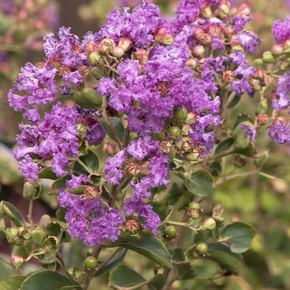
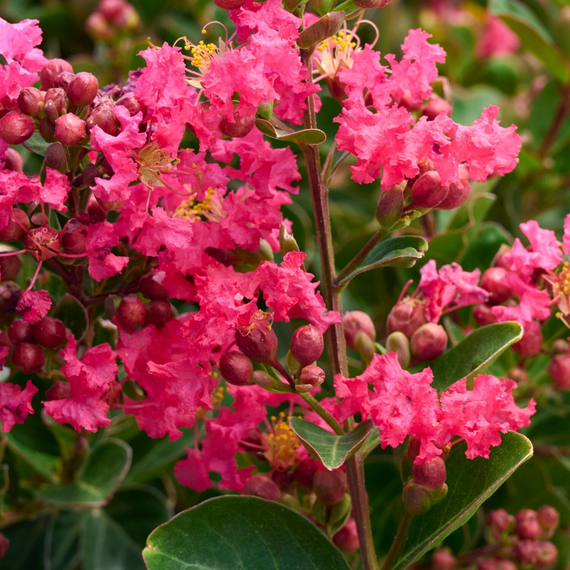
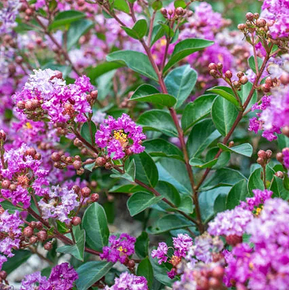
Bellini Raspberry Crape Myrtle (Lagerstroemia indica 'Conlagras' PP 29,006) is a breakthrough dwarf crape myrtle that delivers all the summertime drama of its full-sized relatives in a tidy, naturally rounded package just 3 to 4 feet tall and equally wide. Part of the Bellini series bred specifically for compact habit, superior cold tolerance, and early color, this deciduous flowering shrub opens its distinctive dark red buds into frilly, rich rose-pink flower panicles — often a full two weeks ahead of other crape myrtle varieties on the market — providing weeks of saturated color from late spring all the way through late summer. The vivid blooms pop brilliantly against the dark green, glossy oval foliage, and as cooler temperatures arrive in autumn the leaves transition to warm shades of orange and yellow before the plant slips gracefully into winter dormancy. Extremely easy to grow in full sun with average, well-drained soil, Bellini Raspberry requires minimal pruning, tolerates heat and urban conditions with ease, and becomes notably drought tolerant once established. Its naturally tidy size means it fits beautifully in spots where a standard crape myrtle would quickly overwhelm — along home foundations, as a colorful low hedge flanking a walkway, as a pollinator-friendly accent in a mixed shrub border, or as a stunning thriller in a large patio container. With season-long color, deer resistance, exceptional hardiness, and virtually no need for aggressive pruning, Bellini Raspberry Crape Myrtle is an outstanding low-maintenance choice for Southern Oregon and Northern California gardens seeking bold summer color in a compact form.
Plant Description
Bellini Raspberry Crape Myrtle is a dwarf, deciduous flowering shrub belonging to the Bellini series — a line of crape myrtles specifically bred for breakthrough compact size, cold hardiness, early bloom time, and vivid color. Botanically known as Lagerstroemia indica 'Conlagras' (U.S. Plant Patent PP 29,006), it produces densely packed panicles of frilly, rose-pink flowers with subtle red overtones, emerging from distinctive dark red buds. The blooms appear on new growth of the current season, beginning in late spring and continuing through late summer — starting roughly two weeks earlier than most other crape myrtle varieties. The shrub develops a dense, naturally mounded form that fills out all the way to the ground, making it tidy and self-contained without heavy pruning intervention. Foliage is glossy, dark green, and oval in shape through the growing season, providing a lush backdrop for the bright blossoms. In autumn, the leaves turn attractive shades of orange and yellow before dropping for winter. The plant is deciduous and goes fully dormant in winter, re-emerging reliably from the roots each spring.
Mature Size and Growth Habit
| Characteristic | Detail |
|---|---|
| Mature Height | 3 to 4 feet |
| Mature Spread | 3 to 4 feet |
| Growth Habit | Dense, bushy, naturally rounded mound |
| Growth Rate | Medium |
| Plant Type | Deciduous flowering shrub |
| Expected Lifespan | Approximately 20 years under ideal conditions |
The naturally low, mounded habit means this shrub fills out to the ground on its own and rarely needs corrective pruning to look neat. Its fine leaf texture gives it a more refined, delicate appearance compared to many other landscape shrubs of similar size.
Hardiness Zones
Bellini Raspberry Crape Myrtle is rated for USDA Plant Hardiness Zones 5 through 9, making it one of the most cold-tolerant crape myrtles on the market. It is root-hardy down to approximately -20°F (Zone 5), where it will die back to the ground in severe winters but re-flush from the roots and bloom in the same season. In the milder winters typical of Southern Oregon and Northern California (generally Zones 7-9), the shrub typically experiences little to no winter dieback, leafing out reliably each spring. In Zone 9 and warmer, it thrives in the summer heat and reliably produces its earliest-of-season blooms. At the colder end of its range, applying a 3- to 4-inch layer of mulch over the root zone before the first hard freeze will help insulate the roots and encourage vigorous spring regrowth.
Sunlight Requirements
Bellini Raspberry Crape Myrtle performs best in full sun, receiving a minimum of 6 hours of direct sunlight per day. The more sun it receives, the more profuse and vibrant the flower display will be. Flowering becomes noticeably reduced in shadier conditions, and heavy shade can also increase susceptibility to powdery mildew and sooty mold by reducing air circulation and drying of foliage. While the plant can tolerate partial sun (4-6 hours), it will not achieve its full blooming potential in those conditions. For best results in the landscape or in containers, choose the sunniest available site — a south- or west-facing exposure is ideal in most Pacific Northwest and Northern California garden settings.
Soil and pH Preferences
This crape myrtle is adaptable to a range of soil types, including clay (provided it drains well), loam, sandy, and silty soils. It does require good drainage — standing water and permanently saturated soils can lead to root rot. The ideal soil pH range is 5.0 to 6.5 (acidic to slightly acidic). In alkaline soils above a pH of 7.0, the plant may develop chlorosis — a yellowing of the foliage caused by the inability to absorb iron and other micronutrients. If your native soil is on the alkaline side, amending the planting area with sulfur or an acidifying fertilizer blend can help bring the pH into the preferred range. Incorporating compost or other organic matter broadly throughout the planting area — rather than just in the planting hole — improves drainage in clay soils and moisture retention in sandy soils, supporting healthier root development.
Watering Guide
Water Bellini Raspberry Crape Myrtle deeply and regularly during its first growing season to help the root system establish. For the first two months after planting, water thoroughly once a week in the absence of rainfall. Once established — typically after the first full growing season — this shrub becomes quite drought tolerant and requires supplemental water only during extended dry periods. During a prolonged dry summer spell, water deeply when the top 2 to 3 inches of soil are dry or when you notice afternoon wilting of new growth. Avoid frequent shallow watering, which encourages surface roots and less drought-resilient plants. Overhead watering late in the day can promote fungal issues; drip irrigation or soaker hoses at the base of the plant are preferred. Add 3 to 4 inches of mulch around the root zone (keeping it away from the base of the trunk) to conserve soil moisture between waterings.
Fertilizing
Feed Bellini Raspberry Crape Myrtle once in early spring — just as the plant begins to wake from dormancy and before significant new leaf development — using a balanced, complete garden fertilizer such as a 10-10-10 or 12-4-8 formulation. Alternatively, a slow-release granular fertilizer or a bloom-boosting formula with slightly elevated phosphorus (e.g., 5-10-5) can help maximize the flower display. Apply granular fertilizer evenly across the root zone out to the drip line, keeping it away from direct contact with the trunk, then water in thoroughly. Avoid fertilizing after mid-summer, as late-season nitrogen stimulates tender new growth that may not harden off before the first frost. Over-fertilization — particularly with excess nitrogen — leads to lush foliage at the expense of flowers, so err on the side of less rather than more. Organic amendments such as compost or a light application of fish emulsion can also be used to support overall soil health and steady nutrient availability.
Pruning and Maintenance
One of the best features of Bellini Raspberry Crape Myrtle is its naturally compact, rounded form — it requires very little pruning to maintain a tidy appearance. Avoid severe, heavy cutting ("crape murder"), which is entirely unnecessary with this variety and leads to weak, crowded regrowth and increased pest and disease pressure. If any pruning is desired, follow these simple steps:
- In late winter or early spring before new growth emerges, lightly shape the plant by shortening any long or wayward stems to help maintain a dense, rounded outline.
- Remove any suckers arising from the base of the plant as soon as they appear to keep the shrub's compact form intact.
- During the blooming season, deadhead spent flower clusters by trimming back to just above a leaf node to encourage additional flushes of new blooms.
- Do not prune in late summer or early fall, as this stimulates new growth that cannot harden off before winter frosts.
- Remove any dead, damaged, or crossing stems in early spring once you can see where new growth is emerging.
Because Bellini Raspberry blooms on the current season's new growth, even plants that experience some winter dieback will recover and bloom reliably in the same year.
Planting Instructions
- Choose a planting site in full sun with well-drained soil. Avoid low spots where water collects after rain.
- Dig a planting hole at least two times wider than the root ball but no deeper than the height of the root ball. The top of the root ball should sit level with or very slightly above the surrounding grade to prevent crown rot.
- Backfill using the native soil removed from the hole, breaking apart any large clods. Research shows that adding organic amendments only into the planting hole can cause roots to circle and stay confined — if amending, incorporate compost broadly throughout the surrounding planting area instead.
- Water the plant in thoroughly after planting to settle the soil and eliminate air pockets around the roots.
- Apply a 3- to 4-inch layer of mulch (pine bark, shredded hardwood, or similar) over the planting area, keeping it a few inches away from the base of the trunk to prevent rot.
- For hedge plantings, space plants 3 feet apart on center for a dense, continuous low hedge. For individual specimens with some separation between plants, space 5 to 6 feet apart. For container planting, use a pot at least 18 inches in diameter with drainage holes and a high-quality, well-draining potting mix.
Seasonal Interest
Bellini Raspberry Crape Myrtle offers multiple seasons of visual interest in the landscape:
- Spring: Dark red flower buds form early — typically 2 weeks ahead of other crape myrtle varieties — offering an exciting preview of the blooms to come. Fresh, glossy dark green leaves emerge as the plant breaks dormancy.
- Late Spring through Late Summer: The primary season of peak interest, with dense clusters of frilly, rich rose-pink flowers covering the mounded shrub for an exceptionally long display. Deadheading spent panicles encourages repeat bloom flushes through the season.
- Fall: As temperatures cool, the glossy oval leaves transition to warm tones of orange and yellow, providing soft autumn color before the plant drops its leaves.
- Winter: The plant enters full dormancy. While it lacks the ornamental exfoliating bark of some larger tree-form crape myrtles, its tidy branching structure contributes subtle textural interest in the dormant garden, and any persistent seedheads can add quiet visual appeal before the new season begins.
Landscape Uses
The compact, naturally mounded habit and long flowering season of Bellini Raspberry make it one of the most versatile small flowering shrubs available for sunny landscapes. Recommended uses include:
- Foundation Planting: Its 3-4 foot mature size is ideal for planting beneath windows without blocking light or views — a common problem with larger crape myrtle varieties.
- Low Hedge or Border Edging: Plant in a row spaced 3 feet apart for a colorful, low hedge along driveways, walkways, or property lines.
- Mixed Shrub Border: Use as a mid-border blooming accent paired with summer-flowering companions of varying heights and textures.
- Mass Planting: Groupings of 3 or more create bold, season-long color drifts in large beds or along slopes.
- Container Growing: Suitable for large patio pots and planters (18-inch diameter or larger) on sunny decks, patios, and entryways.
- Cottage and Pink Theme Gardens: The warm rose-pink flowers blend beautifully into romantic cottage-style plantings.
- Pollinator Gardens: A valuable source of summer nectar for bees and butterflies when many other plants are past their prime bloom.
Companion Plants
Bellini Raspberry pairs beautifully with a range of sun-loving perennials, shrubs, and annuals. Consider these companions to extend visual interest and create cohesive plantings:
- Butterfly Bush (Buddleia): Taller varieties provide a lush purple or white backdrop behind the rose-pink crape myrtle blooms and attract the same pollinators.
- Russian Sage (Perovskia atriplicifolia): Soft, silvery-blue spikes contrast elegantly with the warm pink flowers and share the same love of full sun and good drainage.
- Sedum / Stonecrop: Low-growing sedums fill the foreground beautifully and extend late-season interest after the crape myrtle finishes blooming.
- Salvia (Salvia nemorosa cultivars): Deep purple salvias provide a rich complementary color next to the rose-pink blooms.
- Ornamental Grasses (e.g., Blue Oat Grass, Feather Reed Grass): Offer fine textural contrast and movement that highlights the dense mounding form of Bellini Raspberry.
- Lantana: A heat-loving companion that blooms alongside Bellini Raspberry through summer; excellent in container combinations as a spilling element around the base.
- Coneflower (Echinacea): Native-friendly perennial that blooms in summer alongside crape myrtle and supports local pollinator populations.
Pests and Diseases
Bellini Raspberry Crape Myrtle is bred for excellent resistance to powdery mildew — one of the most common diseases affecting crape myrtles — making it significantly easier to maintain than older, more susceptible varieties. However, gardeners should still be aware of the following potential issues:
- Powdery Mildew: While this variety has strong built-in resistance, extremely humid conditions with poor air circulation can still present a minor risk. Planting in full sun with good spacing promotes drying of foliage and minimizes risk. Avoid overhead watering late in the day.
- Crape Myrtle Aphids: Small, pale yellow aphids can cluster on new growth and undersides of leaves, excreting honeydew that leads to sooty mold. Inspect plants regularly in spring and early summer; a strong spray of water or insecticidal soap can control light infestations. Severe aggressive pruning increases aphid pressure by stimulating the tender growth they prefer, so maintain the natural form.
- Sooty Mold: A black, superficial fungal coating that grows on aphid honeydew deposits. It is not directly harmful but can reduce photosynthesis. Control the underlying aphid infestation to eliminate sooty mold.
- Cercospora Leaf Spot: A fungal leaf spot that can cause dark brown spots on lower leaves and premature defoliation in wet, humid summers. Selecting resistant varieties and ensuring good air circulation are the best prevention strategies.
- Root Rot: Caused by planting in poorly drained or constantly wet soils. Always plant in well-drained locations and avoid overwatering, especially in heavy clay.
- Deer: Bellini Raspberry is considered deer-resistant — a significant advantage in rural and suburban gardens where deer pressure is common.
Container Growing
Bellini Raspberry Crape Myrtle is well-suited for growing in large outdoor containers, making it an excellent choice for sunny patios, decks, and entryways where in-ground planting is not possible. Follow these guidelines for success in containers:
- Use a container with a minimum rim diameter of 18 inches and ensure it has adequate drainage holes. Larger containers (24 inches or more) support more robust growth and reduce the frequency of watering needed.
- Fill with a high-quality, well-draining potting mix — avoid using native garden soil, which compacts too heavily in containers.
- Place the container in a location receiving at least 6 hours of direct sun daily for best flowering.
- Container-grown plants dry out more quickly than in-ground plants; check soil moisture frequently during hot summer weather and water when the top inch of potting mix feels dry.
- Feed container plants with a slow-release granular fertilizer at the start of the season, or supplement with a diluted liquid fertilizer every 3-4 weeks during the active growing season.
- In USDA Zones 7 and colder, move containers to a sheltered, unheated garage or shed for winter protection, or wrap them with insulating material, as container root systems are more vulnerable to hard freezes than in-ground roots.
- As a "thriller" in combination container plantings, pair with trailing lantana, calibrachoa, or verbena for a striking summer display of complementary colors.
Wildlife Value
Bellini Raspberry Crape Myrtle is a valuable addition to pollinator-friendly gardens. The abundant rose-pink flower clusters are rich in nectar and pollen, attracting a variety of beneficial insects throughout the long bloom season from late spring through late summer — a critical window when many other flowering shrubs have already finished blooming. Bees, including honeybees and native bumblebees, are particularly attracted to the flowers. Butterflies also visit regularly, making this shrub an excellent component of a dedicated butterfly or pollinator garden. The plant is notably deer-resistant, so it will remain intact and flowering even in landscapes with heavy deer pressure. Birds may occasionally visit the shrub for the small seedheads that persist after blooming, providing a minor late-season food source.
- Vibrant rose-pink flower clusters bloom from late spring through late summer on an exceptionally compact, naturally mounded 3-4 foot shrub — one of the earliest-blooming crape myrtles available
- Remarkably cold-hardy for a crape myrtle, thriving in USDA Zones 5-9, making it suitable for gardens well beyond the traditional crape myrtle belt
- Outstanding resistance to powdery mildew and deer browsing means less maintenance and more season-long beauty
- Versatile enough for foundation plantings, low hedges, mixed borders, and large containers on sunny patios and decks
Bellini Raspberry Crape Myrtle (Lagerstroemia indica 'Conlagras' PP 29,006) is a breakthrough dwarf crape myrtle that delivers all the summertime drama of its full-sized relatives in a tidy, naturally rounded package just 3 to 4 feet tall and equally wide. Part of the Bellini series bred specifically for compact habit, superior cold tolerance, and early color, this deciduous flowering shrub opens its distinctive dark red buds into frilly, rich rose-pink flower panicles — often a full two weeks ahead of other crape myrtle varieties on the market — providing weeks of saturated color from late spring all the way through late summer. The vivid blooms pop brilliantly against the dark green, glossy oval foliage, and as cooler temperatures arrive in autumn the leaves transition to warm shades of orange and yellow before the plant slips gracefully into winter dormancy. Extremely easy to grow in full sun with average, well-drained soil, Bellini Raspberry requires minimal pruning, tolerates heat and urban conditions with ease, and becomes notably drought tolerant once established. Its naturally tidy size means it fits beautifully in spots where a standard crape myrtle would quickly overwhelm — along home foundations, as a colorful low hedge flanking a walkway, as a pollinator-friendly accent in a mixed shrub border, or as a stunning thriller in a large patio container. With season-long color, deer resistance, exceptional hardiness, and virtually no need for aggressive pruning, Bellini Raspberry Crape Myrtle is an outstanding low-maintenance choice for Southern Oregon and Northern California gardens seeking bold summer color in a compact form.
Plant Description
Bellini Raspberry Crape Myrtle is a dwarf, deciduous flowering shrub belonging to the Bellini series — a line of crape myrtles specifically bred for breakthrough compact size, cold hardiness, early bloom time, and vivid color. Botanically known as Lagerstroemia indica 'Conlagras' (U.S. Plant Patent PP 29,006), it produces densely packed panicles of frilly, rose-pink flowers with subtle red overtones, emerging from distinctive dark red buds. The blooms appear on new growth of the current season, beginning in late spring and continuing through late summer — starting roughly two weeks earlier than most other crape myrtle varieties. The shrub develops a dense, naturally mounded form that fills out all the way to the ground, making it tidy and self-contained without heavy pruning intervention. Foliage is glossy, dark green, and oval in shape through the growing season, providing a lush backdrop for the bright blossoms. In autumn, the leaves turn attractive shades of orange and yellow before dropping for winter. The plant is deciduous and goes fully dormant in winter, re-emerging reliably from the roots each spring.
Mature Size and Growth Habit
| Characteristic | Detail |
|---|---|
| Mature Height | 3 to 4 feet |
| Mature Spread | 3 to 4 feet |
| Growth Habit | Dense, bushy, naturally rounded mound |
| Growth Rate | Medium |
| Plant Type | Deciduous flowering shrub |
| Expected Lifespan | Approximately 20 years under ideal conditions |
The naturally low, mounded habit means this shrub fills out to the ground on its own and rarely needs corrective pruning to look neat. Its fine leaf texture gives it a more refined, delicate appearance compared to many other landscape shrubs of similar size.
Hardiness Zones
Bellini Raspberry Crape Myrtle is rated for USDA Plant Hardiness Zones 5 through 9, making it one of the most cold-tolerant crape myrtles on the market. It is root-hardy down to approximately -20°F (Zone 5), where it will die back to the ground in severe winters but re-flush from the roots and bloom in the same season. In the milder winters typical of Southern Oregon and Northern California (generally Zones 7-9), the shrub typically experiences little to no winter dieback, leafing out reliably each spring. In Zone 9 and warmer, it thrives in the summer heat and reliably produces its earliest-of-season blooms. At the colder end of its range, applying a 3- to 4-inch layer of mulch over the root zone before the first hard freeze will help insulate the roots and encourage vigorous spring regrowth.
Sunlight Requirements
Bellini Raspberry Crape Myrtle performs best in full sun, receiving a minimum of 6 hours of direct sunlight per day. The more sun it receives, the more profuse and vibrant the flower display will be. Flowering becomes noticeably reduced in shadier conditions, and heavy shade can also increase susceptibility to powdery mildew and sooty mold by reducing air circulation and drying of foliage. While the plant can tolerate partial sun (4-6 hours), it will not achieve its full blooming potential in those conditions. For best results in the landscape or in containers, choose the sunniest available site — a south- or west-facing exposure is ideal in most Pacific Northwest and Northern California garden settings.
Soil and pH Preferences
This crape myrtle is adaptable to a range of soil types, including clay (provided it drains well), loam, sandy, and silty soils. It does require good drainage — standing water and permanently saturated soils can lead to root rot. The ideal soil pH range is 5.0 to 6.5 (acidic to slightly acidic). In alkaline soils above a pH of 7.0, the plant may develop chlorosis — a yellowing of the foliage caused by the inability to absorb iron and other micronutrients. If your native soil is on the alkaline side, amending the planting area with sulfur or an acidifying fertilizer blend can help bring the pH into the preferred range. Incorporating compost or other organic matter broadly throughout the planting area — rather than just in the planting hole — improves drainage in clay soils and moisture retention in sandy soils, supporting healthier root development.
Watering Guide
Water Bellini Raspberry Crape Myrtle deeply and regularly during its first growing season to help the root system establish. For the first two months after planting, water thoroughly once a week in the absence of rainfall. Once established — typically after the first full growing season — this shrub becomes quite drought tolerant and requires supplemental water only during extended dry periods. During a prolonged dry summer spell, water deeply when the top 2 to 3 inches of soil are dry or when you notice afternoon wilting of new growth. Avoid frequent shallow watering, which encourages surface roots and less drought-resilient plants. Overhead watering late in the day can promote fungal issues; drip irrigation or soaker hoses at the base of the plant are preferred. Add 3 to 4 inches of mulch around the root zone (keeping it away from the base of the trunk) to conserve soil moisture between waterings.
Fertilizing
Feed Bellini Raspberry Crape Myrtle once in early spring — just as the plant begins to wake from dormancy and before significant new leaf development — using a balanced, complete garden fertilizer such as a 10-10-10 or 12-4-8 formulation. Alternatively, a slow-release granular fertilizer or a bloom-boosting formula with slightly elevated phosphorus (e.g., 5-10-5) can help maximize the flower display. Apply granular fertilizer evenly across the root zone out to the drip line, keeping it away from direct contact with the trunk, then water in thoroughly. Avoid fertilizing after mid-summer, as late-season nitrogen stimulates tender new growth that may not harden off before the first frost. Over-fertilization — particularly with excess nitrogen — leads to lush foliage at the expense of flowers, so err on the side of less rather than more. Organic amendments such as compost or a light application of fish emulsion can also be used to support overall soil health and steady nutrient availability.
Pruning and Maintenance
One of the best features of Bellini Raspberry Crape Myrtle is its naturally compact, rounded form — it requires very little pruning to maintain a tidy appearance. Avoid severe, heavy cutting ("crape murder"), which is entirely unnecessary with this variety and leads to weak, crowded regrowth and increased pest and disease pressure. If any pruning is desired, follow these simple steps:
- In late winter or early spring before new growth emerges, lightly shape the plant by shortening any long or wayward stems to help maintain a dense, rounded outline.
- Remove any suckers arising from the base of the plant as soon as they appear to keep the shrub's compact form intact.
- During the blooming season, deadhead spent flower clusters by trimming back to just above a leaf node to encourage additional flushes of new blooms.
- Do not prune in late summer or early fall, as this stimulates new growth that cannot harden off before winter frosts.
- Remove any dead, damaged, or crossing stems in early spring once you can see where new growth is emerging.
Because Bellini Raspberry blooms on the current season's new growth, even plants that experience some winter dieback will recover and bloom reliably in the same year.
Planting Instructions
- Choose a planting site in full sun with well-drained soil. Avoid low spots where water collects after rain.
- Dig a planting hole at least two times wider than the root ball but no deeper than the height of the root ball. The top of the root ball should sit level with or very slightly above the surrounding grade to prevent crown rot.
- Backfill using the native soil removed from the hole, breaking apart any large clods. Research shows that adding organic amendments only into the planting hole can cause roots to circle and stay confined — if amending, incorporate compost broadly throughout the surrounding planting area instead.
- Water the plant in thoroughly after planting to settle the soil and eliminate air pockets around the roots.
- Apply a 3- to 4-inch layer of mulch (pine bark, shredded hardwood, or similar) over the planting area, keeping it a few inches away from the base of the trunk to prevent rot.
- For hedge plantings, space plants 3 feet apart on center for a dense, continuous low hedge. For individual specimens with some separation between plants, space 5 to 6 feet apart. For container planting, use a pot at least 18 inches in diameter with drainage holes and a high-quality, well-draining potting mix.
Seasonal Interest
Bellini Raspberry Crape Myrtle offers multiple seasons of visual interest in the landscape:
- Spring: Dark red flower buds form early — typically 2 weeks ahead of other crape myrtle varieties — offering an exciting preview of the blooms to come. Fresh, glossy dark green leaves emerge as the plant breaks dormancy.
- Late Spring through Late Summer: The primary season of peak interest, with dense clusters of frilly, rich rose-pink flowers covering the mounded shrub for an exceptionally long display. Deadheading spent panicles encourages repeat bloom flushes through the season.
- Fall: As temperatures cool, the glossy oval leaves transition to warm tones of orange and yellow, providing soft autumn color before the plant drops its leaves.
- Winter: The plant enters full dormancy. While it lacks the ornamental exfoliating bark of some larger tree-form crape myrtles, its tidy branching structure contributes subtle textural interest in the dormant garden, and any persistent seedheads can add quiet visual appeal before the new season begins.
Landscape Uses
The compact, naturally mounded habit and long flowering season of Bellini Raspberry make it one of the most versatile small flowering shrubs available for sunny landscapes. Recommended uses include:
- Foundation Planting: Its 3-4 foot mature size is ideal for planting beneath windows without blocking light or views — a common problem with larger crape myrtle varieties.
- Low Hedge or Border Edging: Plant in a row spaced 3 feet apart for a colorful, low hedge along driveways, walkways, or property lines.
- Mixed Shrub Border: Use as a mid-border blooming accent paired with summer-flowering companions of varying heights and textures.
- Mass Planting: Groupings of 3 or more create bold, season-long color drifts in large beds or along slopes.
- Container Growing: Suitable for large patio pots and planters (18-inch diameter or larger) on sunny decks, patios, and entryways.
- Cottage and Pink Theme Gardens: The warm rose-pink flowers blend beautifully into romantic cottage-style plantings.
- Pollinator Gardens: A valuable source of summer nectar for bees and butterflies when many other plants are past their prime bloom.
Companion Plants
Bellini Raspberry pairs beautifully with a range of sun-loving perennials, shrubs, and annuals. Consider these companions to extend visual interest and create cohesive plantings:
- Butterfly Bush (Buddleia): Taller varieties provide a lush purple or white backdrop behind the rose-pink crape myrtle blooms and attract the same pollinators.
- Russian Sage (Perovskia atriplicifolia): Soft, silvery-blue spikes contrast elegantly with the warm pink flowers and share the same love of full sun and good drainage.
- Sedum / Stonecrop: Low-growing sedums fill the foreground beautifully and extend late-season interest after the crape myrtle finishes blooming.
- Salvia (Salvia nemorosa cultivars): Deep purple salvias provide a rich complementary color next to the rose-pink blooms.
- Ornamental Grasses (e.g., Blue Oat Grass, Feather Reed Grass): Offer fine textural contrast and movement that highlights the dense mounding form of Bellini Raspberry.
- Lantana: A heat-loving companion that blooms alongside Bellini Raspberry through summer; excellent in container combinations as a spilling element around the base.
- Coneflower (Echinacea): Native-friendly perennial that blooms in summer alongside crape myrtle and supports local pollinator populations.
Pests and Diseases
Bellini Raspberry Crape Myrtle is bred for excellent resistance to powdery mildew — one of the most common diseases affecting crape myrtles — making it significantly easier to maintain than older, more susceptible varieties. However, gardeners should still be aware of the following potential issues:
- Powdery Mildew: While this variety has strong built-in resistance, extremely humid conditions with poor air circulation can still present a minor risk. Planting in full sun with good spacing promotes drying of foliage and minimizes risk. Avoid overhead watering late in the day.
- Crape Myrtle Aphids: Small, pale yellow aphids can cluster on new growth and undersides of leaves, excreting honeydew that leads to sooty mold. Inspect plants regularly in spring and early summer; a strong spray of water or insecticidal soap can control light infestations. Severe aggressive pruning increases aphid pressure by stimulating the tender growth they prefer, so maintain the natural form.
- Sooty Mold: A black, superficial fungal coating that grows on aphid honeydew deposits. It is not directly harmful but can reduce photosynthesis. Control the underlying aphid infestation to eliminate sooty mold.
- Cercospora Leaf Spot: A fungal leaf spot that can cause dark brown spots on lower leaves and premature defoliation in wet, humid summers. Selecting resistant varieties and ensuring good air circulation are the best prevention strategies.
- Root Rot: Caused by planting in poorly drained or constantly wet soils. Always plant in well-drained locations and avoid overwatering, especially in heavy clay.
- Deer: Bellini Raspberry is considered deer-resistant — a significant advantage in rural and suburban gardens where deer pressure is common.
Container Growing
Bellini Raspberry Crape Myrtle is well-suited for growing in large outdoor containers, making it an excellent choice for sunny patios, decks, and entryways where in-ground planting is not possible. Follow these guidelines for success in containers:
- Use a container with a minimum rim diameter of 18 inches and ensure it has adequate drainage holes. Larger containers (24 inches or more) support more robust growth and reduce the frequency of watering needed.
- Fill with a high-quality, well-draining potting mix — avoid using native garden soil, which compacts too heavily in containers.
- Place the container in a location receiving at least 6 hours of direct sun daily for best flowering.
- Container-grown plants dry out more quickly than in-ground plants; check soil moisture frequently during hot summer weather and water when the top inch of potting mix feels dry.
- Feed container plants with a slow-release granular fertilizer at the start of the season, or supplement with a diluted liquid fertilizer every 3-4 weeks during the active growing season.
- In USDA Zones 7 and colder, move containers to a sheltered, unheated garage or shed for winter protection, or wrap them with insulating material, as container root systems are more vulnerable to hard freezes than in-ground roots.
- As a "thriller" in combination container plantings, pair with trailing lantana, calibrachoa, or verbena for a striking summer display of complementary colors.
Wildlife Value
Bellini Raspberry Crape Myrtle is a valuable addition to pollinator-friendly gardens. The abundant rose-pink flower clusters are rich in nectar and pollen, attracting a variety of beneficial insects throughout the long bloom season from late spring through late summer — a critical window when many other flowering shrubs have already finished blooming. Bees, including honeybees and native bumblebees, are particularly attracted to the flowers. Butterflies also visit regularly, making this shrub an excellent component of a dedicated butterfly or pollinator garden. The plant is notably deer-resistant, so it will remain intact and flowering even in landscapes with heavy deer pressure. Birds may occasionally visit the shrub for the small seedheads that persist after blooming, providing a minor late-season food source.
Related Products