

Zoom the image with the mouse
Summerlasting Raspberry Crape Myrtle - 2 Gallon
SKU:
2055880
UPC:
014949474907
$39.99
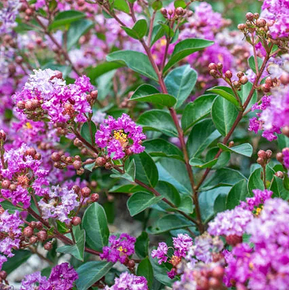
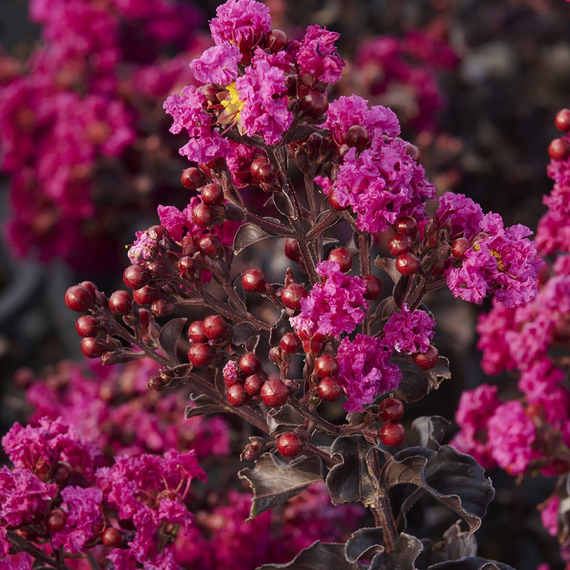
- Vivid hot-pink to raspberry blooms emerge weeks earlier than most dark-foliage crape myrtle varieties and rebloom continuously from midsummer all the way to frost — no deadheading required.
- Dramatically dark, near-black to deep maroon foliage creates a stunning high-contrast backdrop that makes the bright raspberry-pink flower clusters pop with standout visual impact.
- True dwarf habit reaches just 2-3 feet tall and wide, making it ideal for small gardens, front-of-border plantings, low hedges, patio containers, and mass landscape displays.
- Deer and rabbit resistant, heat and drought tolerant once established, and adaptable to a wide range of soil types — a tough, low-maintenance showstopper for Southern Oregon and Northern California landscapes.
Lagerstroemia indica 'HOCH631' — sold under the trade name Summerlasting Raspberry — is a breakthrough dwarf crape myrtle that redefines what a compact ornamental shrub can do in the summer garden. Unlike many dark-foliage crape myrtle selections that make you wait for color, Summerlasting Raspberry bursts into bloom earlier in the season and keeps going with wave after wave of crinkly, crepe-paper-textured hot-pink to raspberry-hued flower panicles that last clear through to the first frost without any deadheading. The foliage itself is one of the most dramatic in the crape myrtle world — deep, near-black to dark maroon leaves that serve as a bold, rich canvas for the vivid blooms, creating a color contrast rarely matched in the dwarf shrub category. Topping out at a tidy 2-3 feet in both height and spread, this deciduous beauty is perfectly proportioned for smaller landscapes, foundation plantings, low borders, mass plantings, and container arrangements on patios and entryways. Smooth, cinnamon-colored bark adds year-round ornamental interest even after the leaves drop in fall. Hardy in USDA Zones 7-10, Summerlasting Raspberry crape myrtle thrives in full sun and is tolerant of heat, drought (once established), air pollution, deer, and a wide range of well-drained soil types, making it an outstanding choice for the warm, sun-drenched summers of Southern Oregon and Northern California.
Plant Description
Summerlasting Raspberry is a compact, multi-stemmed deciduous shrub belonging to the Lythraceae (loosestrife) family. Its botanical name is Lagerstroemia indica 'HOCH631' and it is sold under the Summerlasting trade name. This cultivar stands apart from other dwarf crape myrtles through the exceptional combination of deeply pigmented, near-black to dark maroon foliage and vivid raspberry-pink to hot-pink flower panicles that appear weeks earlier than comparable dark-foliaged varieties. Each individual flower displays the signature crinkled, crepe-paper texture characteristic of the crape myrtle genus, and they are borne in large, showy clusters at the branch tips throughout the long blooming season. The foliage maintains its rich dark color throughout the growing season, providing an unusual and eye-catching backdrop that intensifies the visual effect of the bright blooms. Smooth, cinnamon-toned bark on the multi-stemmed framework adds tactile and visual interest, particularly in the winter months after leaf drop. This is a deciduous plant, meaning it drops its leaves in fall and enters dormancy through winter before re-leafing with vigor in spring.
Mature Size
| Characteristic | Measurement |
|---|---|
| Mature Height | 2-3 feet |
| Mature Spread | 2-3 feet |
| Growth Habit | Compact, dense, multi-stemmed, dwarf |
| Growth Rate | Medium |
| Plant Type | Deciduous shrub |
Summerlasting Raspberry is a true dwarf crape myrtle, maintaining a tidy, nearly symmetrical mounded form that rarely requires pruning to stay in bounds. Its naturally compact size makes it one of the best-behaved crape myrtles available for smaller residential landscapes, and eliminates the temptation to resort to harmful topping practices. Spacing plants 2-3 feet apart creates a seamless, lush mass planting effect.
Hardiness Zones
| Detail | Value |
|---|---|
| USDA Hardiness Zone (Minimum) | Zone 7a |
| USDA Hardiness Zone (Maximum) | Zone 10b |
| AHS Heat Zones | 7-9 |
Summerlasting Raspberry is well-suited to the warm summers and mild winters of Southern Oregon and Northern California, where it falls comfortably within its hardiness range across most of the region. In areas at the cooler edge of Zone 7, planting in a sheltered location with good southern or western exposure, and applying a 3-4 inch layer of organic mulch over the root zone in late fall, will provide additional winter protection. Like all crape myrtles, this cultivar flowers on new wood each season, so even if top growth is damaged by an unusual cold snap, the plant typically resprouts vigorously from the root zone in spring and will still bloom that same summer.
Sunlight Requirements
Summerlasting Raspberry crape myrtle is a full-sun plant and performs best with a minimum of 6 hours of direct sunlight per day. For the richest flower production, deepest foliage color, and the most compact, tidy growth habit, aim for 8 or more hours of direct sun. Planting in too much shade will result in noticeably reduced flowering, looser and more open growth, diminished foliage color, and significantly increased vulnerability to powdery mildew. Good air circulation around the plant is nearly as important as sunlight — avoid planting in enclosed corners or areas with stagnant air, as this creates conditions favorable to fungal disease. In the hot inland valleys of Southern Oregon and Northern California, this cultivar thrives and flowers most prolifically, rewarding the intense summer heat with an extended and spectacular blooming season.
Soil and pH Preferences
| Soil Factor | Preference |
|---|---|
| Soil Type | Loam, clay, sand, or chalk — adaptable to most types with adequate drainage |
| Soil Drainage | Well-drained; will not tolerate standing water or waterlogged conditions |
| Ideal Soil pH | 5.0-6.5 (slightly acidic preferred) |
| pH Tolerance | Tolerates near-neutral to slightly alkaline soils, though alkaline conditions may cause leaf yellowing (chlorosis) |
| Soil Organic Matter | Benefits from moderate organic content; avoid overly rich, highly fertile soils that push foliage at the expense of flowers |
Summerlasting Raspberry is notably adaptable and will grow in clay-heavy soils, sandy soils, and amended garden beds as long as water does not pool around the roots. Avoid planting in low-lying areas where water collects after rain. If your soil is compacted clay, incorporating coarse horticultural grit or creating a slightly raised planting mound will improve drainage and establishment. Overly fertile soils high in nitrogen can result in lush, dark-green growth but fewer blooms.
Watering Guide
Newly Planted: Water deeply and consistently for the first full growing season — typically once or twice per week whenever rainfall is insufficient. The goal is to encourage the root system to grow deep into the soil. Water at the base of the plant rather than overhead to keep foliage dry and reduce the risk of powdery mildew. Apply a 3-4 inch layer of organic mulch (bark chips, wood chips, or similar) over the root zone, keeping it pulled back 3-4 inches from the main stems, to help retain soil moisture and moderate root-zone temperatures.
Established Plants: Once established — generally from the second growing season onward — Summerlasting Raspberry becomes genuinely drought tolerant. In most conditions it can go several weeks between waterings, making it an outstanding choice for low-water landscapes. That said, plants bloom best and maintain healthiest foliage with occasional deep watering during extended dry spells in summer, particularly during the extreme heat events common to Southern Oregon and Northern California inland valleys. Avoid frequent, shallow watering which encourages surface roots. Deep, infrequent irrigation is always preferable.
Fertilizing
Summerlasting Raspberry is a relatively light feeder and will often perform well with no supplemental fertilizer in reasonably fertile, well-amended garden soils. When feeding is beneficial — particularly for plants in lean, sandy, or container soils — follow these guidelines:
- Apply a balanced, slow-release granular fertilizer (such as a 10-10-10 or similar formulation) once in early spring, just before new growth begins to emerge.
- Avoid fertilizers with very high nitrogen ratios. Excess nitrogen drives vegetative growth at the expense of flower production and can increase susceptibility to aphids and powdery mildew.
- Do not fertilize after midsummer (July). Late-season feeding stimulates soft new growth that will not harden off adequately before winter, increasing cold injury risk.
- Container-grown plants benefit from a slow-release fertilizer applied in spring, supplemented by an occasional liquid fertilizer during the active growing season, as nutrients leach more quickly from containers with regular watering.
- A soil test is the most reliable way to determine whether and what nutrients your specific soil may be lacking before adding any amendments.
Pruning and Maintenance
One of the most appealing features of Summerlasting Raspberry is how little pruning it actually needs. Its naturally dwarf, compact growth habit means it stays tidy without heavy intervention. Follow these guidelines for the best results:
- When to prune: Late winter or very early spring — after the coldest weather has passed but before new growth begins. This gives you a clear view of the branch structure and any winter damage, and ensures cuts are quickly covered by fresh foliage.
- What to remove: Trim out any dead, damaged, or crossing branches. Remove any suckers or shoots sprouting from the base. Lightly thin the canopy if needed to improve air circulation.
- Avoid topping ("crape murder"): Never cut all main stems back to thick stubs — a practice known as "crape murder" that destroys the natural form, produces weakly attached regrowth, and reduces flowering quality. The dwarf size of Summerlasting Raspberry makes this temptation easy to resist, but it bears emphasizing.
- Summer deadheading: Spent flower clusters can be removed after each blooming flush to encourage additional rebloom, though this plant is bred to rebloom prolifically even without deadheading.
- Minimal annual maintenance: Beyond light late-winter tidying, this shrub requires very little ongoing attention — one of its most valuable qualities for busy homeowners and commercial landscapes alike.
Planting Instructions
- Choose a site that receives at least 6-8 hours of full, direct sun daily with good air circulation. Avoid low-lying areas where water collects.
- Dig a planting hole two to three times as wide as the root ball but no deeper than the root ball itself. The top of the root ball should sit level with or very slightly above the surrounding soil grade — planting too deep is a leading cause of establishment failure.
- Loosen the sides of the hole to encourage lateral root spread. In heavy clay soils, mix in coarse horticultural grit or create a gently raised planting mound to improve drainage rather than relying solely on soil amendment.
- Remove the plant from its container and gently loosen any circling or tightly bound roots before setting it in the hole.
- Backfill with the removed native soil, optionally amended with compost if the soil is very poor. Firm the soil gently around the root ball to eliminate air pockets.
- Water thoroughly at planting to settle the soil and saturate the entire root zone.
- Apply a 3-4 inch layer of organic mulch (bark chips, shredded wood, or pine straw) in a wide ring over the root zone. Keep mulch pulled back 3-4 inches from the main stems to prevent rot and pest harborage.
- For mass plantings or low hedges, space plants 2-3 feet apart on center for eventual full coverage.
- Water consistently for the first full growing season to establish a deep root system before reducing to drought-tolerant maintenance levels.
Seasonal Interest
| Season | Ornamental Interest |
|---|---|
| Spring | Dark maroon to near-black foliage emerges with the warming temperatures, providing rich foliar color before blooms appear |
| Summer | Primary bloom season — large clusters of crinkly, hot-pink to raspberry-hued flowers bloom from early-to-midsummer continuously through to frost; dark foliage creates dramatic contrast with vivid blooms |
| Fall | Continued blooming into fall; foliage may develop warm orange and red tones as temperatures cool before leaf drop |
| Winter | Smooth, attractive cinnamon-colored bark on the multi-stemmed framework provides structural and textural winter interest after leaf drop |
Summerlasting Raspberry delivers genuine multi-season garden value. The earliest-blooming quality among dark-foliage crape myrtle varieties extends the window of color, and the continuous rebloom without deadheading ensures the garden stays vibrant from early summer well into autumn — a notably long and showy performance for a plant of this compact size.
Landscape Uses
The compact size and bold color combination of Summerlasting Raspberry make it exceptionally versatile in designed landscapes. Ideal applications include:
- Mass planting: Plant in drifts of three or more for a dramatic, high-contrast statement in residential or commercial landscapes
- Low border or edging: Use along walkways, driveways, fence lines, or the front edge of mixed shrub borders
- Foundation planting: Excellent choice for planting against walls or building foundations where a tidy, compact, flowering shrub is desired
- Specimen or accent plant: Works beautifully as a focal point in smaller garden beds or courtyard spaces
- Patio and entryway feature: Grow in large containers for a portable summer-to-fall color display near doors, on decks, or along patios
- Pollinator garden: The nectar-rich flowers attract butterflies, bees, and other beneficial pollinators throughout the bloom season
- Low informal hedge: When planted in a row at 2-foot spacing, creates a colorful seasonal hedge or low screen along borders
- Color-contrast garden: Pairs naturally with silver, chartreuse, or bright green foliage plants that play off the dark leaves
Companion Plants
The near-black foliage and hot-pink flowers of Summerlasting Raspberry pair beautifully with a range of perennials, grasses, and shrubs that complement or contrast its bold color palette. Consider these companion plant combinations:
- Hemerocallis (Daylilies): Yellow, orange, or gold varieties create a vibrant warm-season contrast against the dark foliage
- Agapanthus (African Lily): Cool blue or white flower spikes harmonize elegantly with the raspberry-pink blooms
- Rudbeckia fulgida (Black-Eyed Susan): Golden-yellow daisy flowers with dark centers echo the bold color contrasts of the crape myrtle itself
- Festuca glauca (Blue Fescue) or other blue-gray ornamental grasses: The fine silver-blue texture provides a soft, cooling counterpoint to the dark foliage
- Salvia nemorosa (Ornamental Sage): Deep purple-blue flower spikes in summer complement raspberry-pink tones beautifully
- Pennisetum setaceum 'Rubrum' (Purple Fountain Grass): Deep burgundy foliage and arching plumes echo and amplify the dark-foliage theme
- Echinacea purpurea (Purple Coneflower): Rosy-purple summer blooms and shared drought tolerance make this a natural pairing
- Catmint (Nepeta): Soft lavender-blue flowers and fine-textured gray-green foliage provide gentle contrast along borders
Pests and Diseases
Summerlasting Raspberry is a tough and resilient cultivar, but like all crape myrtles it can be affected by a handful of common issues. Understanding these in advance makes prevention and management straightforward:
- Powdery Mildew: The most common disease problem on crape myrtles, appearing as a white or grayish powdery coating on new leaves and buds. Most prevalent in shaded locations or areas with poor air circulation. Prevention is far more effective than treatment — site plants in full sun with good airflow. For any active infections, neem oil or potassium bicarbonate fungicide applied at the first sign of symptoms can slow spread.
- Crape Myrtle Aphids (Tinocallis kahawaluokalani): A species-specific aphid that colonizes the undersides of leaves, particularly in late spring and early summer. Heavy infestations produce sticky honeydew, which can lead to black sooty mold on foliage and surfaces below the plant. Natural predators (ladybugs, lacewings, parasitic wasps) often control populations without intervention. A strong jet of water or insecticidal soap spray targeting the undersides of leaves is effective for persistent cases.
- Crape Myrtle Bark Scale (Acanthococcus lagerstroemiae): A more recently introduced scale insect that encrusts bark and twigs with white, waxy masses, often accompanied by black sooty mold. Remove and dispose of heavily infested stems. Horticultural oil or systemic treatments can help manage active infestations.
- Flea Beetles: Small, jumping beetles that create tiny holes in the foliage. Usually cosmetic and not life-threatening to an established plant.
- Chlorosis (Leaf Yellowing): Can occur if the plant is grown in highly alkaline soils. Correct with soil acidification or chelated iron applications.
The best defense against nearly all of these issues is correct siting — full sun, good air circulation, and well-drained soil. Avoid overhead irrigation and excessive nitrogen fertilization, both of which worsen pest and disease pressure.
Container Growing
The dwarf, compact habit of Summerlasting Raspberry makes it one of the most suitable crape myrtle cultivars for container culture. Its manageable size eliminates the need for aggressive root pruning and allows it to thrive in large pots for several seasons. Follow these tips for success in containers:
- Choose a container at least 15-18 inches in diameter with generous drainage holes. A large, heavy pot also provides the stability needed to prevent tipping in wind.
- Use a high-quality, well-draining potting mix. Avoid garden soil in containers, as it compacts and drains poorly.
- Position in the sunniest location available — a south or west-facing patio or deck is ideal for maximizing bloom production.
- Container-grown plants dry out more rapidly than in-ground plants and will require more frequent watering, especially during summer heat. Check moisture levels regularly and water when the top inch of soil feels dry.
- Fertilize with a slow-release granular fertilizer each spring, supplemented by occasional diluted liquid fertilizer applications through summer to compensate for nutrient leaching.
- In areas at the cooler edge of its hardiness zone (Zone 7), move containers to a protected, unheated structure (garage, shed) or against a south-facing wall during the coldest winter months to prevent root zone freeze damage.
- Repot into a slightly larger container every 2-3 years or when the plant becomes root-bound, typically in late winter before growth resumes.
Wildlife Value
Summerlasting Raspberry crape myrtle offers valuable ecological benefits to the garden ecosystem throughout its long bloom season:
- Pollinators: The nectar-rich flower panicles are highly attractive to honeybees, native bees, and various butterfly species throughout summer and into fall, providing an important food source during the peak of the warm season.
- Beneficial insects: The plant supports populations of predatory beneficial insects — including ladybugs, lacewings, and parasitic wasps — that help naturally manage pest populations in the surrounding garden.
- Birds: The small, capsule-type seed pods that follow flowering may attract seed-eating songbirds in fall and winter. The dense, multi-stemmed structure also provides sheltered perching and potential nesting habitat.
- Deer and rabbit resistant: Lagerstroemia indica and its cultivars are generally not favored by deer or rabbits, making Summerlasting Raspberry a reliable choice in landscapes where browsing animals are a concern. As with any plant, hungry wildlife in areas with high pressure may still sample new growth, but crape myrtles are consistently rated among the more resistant ornamental shrubs.
- Vivid hot-pink to raspberry blooms emerge weeks earlier than most dark-foliage crape myrtle varieties and rebloom continuously from midsummer all the way to frost — no deadheading required.
- Dramatically dark, near-black to deep maroon foliage creates a stunning high-contrast backdrop that makes the bright raspberry-pink flower clusters pop with standout visual impact.
- True dwarf habit reaches just 2-3 feet tall and wide, making it ideal for small gardens, front-of-border plantings, low hedges, patio containers, and mass landscape displays.
- Deer and rabbit resistant, heat and drought tolerant once established, and adaptable to a wide range of soil types — a tough, low-maintenance showstopper for Southern Oregon and Northern California landscapes.
Lagerstroemia indica 'HOCH631' — sold under the trade name Summerlasting Raspberry — is a breakthrough dwarf crape myrtle that redefines what a compact ornamental shrub can do in the summer garden. Unlike many dark-foliage crape myrtle selections that make you wait for color, Summerlasting Raspberry bursts into bloom earlier in the season and keeps going with wave after wave of crinkly, crepe-paper-textured hot-pink to raspberry-hued flower panicles that last clear through to the first frost without any deadheading. The foliage itself is one of the most dramatic in the crape myrtle world — deep, near-black to dark maroon leaves that serve as a bold, rich canvas for the vivid blooms, creating a color contrast rarely matched in the dwarf shrub category. Topping out at a tidy 2-3 feet in both height and spread, this deciduous beauty is perfectly proportioned for smaller landscapes, foundation plantings, low borders, mass plantings, and container arrangements on patios and entryways. Smooth, cinnamon-colored bark adds year-round ornamental interest even after the leaves drop in fall. Hardy in USDA Zones 7-10, Summerlasting Raspberry crape myrtle thrives in full sun and is tolerant of heat, drought (once established), air pollution, deer, and a wide range of well-drained soil types, making it an outstanding choice for the warm, sun-drenched summers of Southern Oregon and Northern California.
Plant Description
Summerlasting Raspberry is a compact, multi-stemmed deciduous shrub belonging to the Lythraceae (loosestrife) family. Its botanical name is Lagerstroemia indica 'HOCH631' and it is sold under the Summerlasting trade name. This cultivar stands apart from other dwarf crape myrtles through the exceptional combination of deeply pigmented, near-black to dark maroon foliage and vivid raspberry-pink to hot-pink flower panicles that appear weeks earlier than comparable dark-foliaged varieties. Each individual flower displays the signature crinkled, crepe-paper texture characteristic of the crape myrtle genus, and they are borne in large, showy clusters at the branch tips throughout the long blooming season. The foliage maintains its rich dark color throughout the growing season, providing an unusual and eye-catching backdrop that intensifies the visual effect of the bright blooms. Smooth, cinnamon-toned bark on the multi-stemmed framework adds tactile and visual interest, particularly in the winter months after leaf drop. This is a deciduous plant, meaning it drops its leaves in fall and enters dormancy through winter before re-leafing with vigor in spring.
Mature Size
| Characteristic | Measurement |
|---|---|
| Mature Height | 2-3 feet |
| Mature Spread | 2-3 feet |
| Growth Habit | Compact, dense, multi-stemmed, dwarf |
| Growth Rate | Medium |
| Plant Type | Deciduous shrub |
Summerlasting Raspberry is a true dwarf crape myrtle, maintaining a tidy, nearly symmetrical mounded form that rarely requires pruning to stay in bounds. Its naturally compact size makes it one of the best-behaved crape myrtles available for smaller residential landscapes, and eliminates the temptation to resort to harmful topping practices. Spacing plants 2-3 feet apart creates a seamless, lush mass planting effect.
Hardiness Zones
| Detail | Value |
|---|---|
| USDA Hardiness Zone (Minimum) | Zone 7a |
| USDA Hardiness Zone (Maximum) | Zone 10b |
| AHS Heat Zones | 7-9 |
Summerlasting Raspberry is well-suited to the warm summers and mild winters of Southern Oregon and Northern California, where it falls comfortably within its hardiness range across most of the region. In areas at the cooler edge of Zone 7, planting in a sheltered location with good southern or western exposure, and applying a 3-4 inch layer of organic mulch over the root zone in late fall, will provide additional winter protection. Like all crape myrtles, this cultivar flowers on new wood each season, so even if top growth is damaged by an unusual cold snap, the plant typically resprouts vigorously from the root zone in spring and will still bloom that same summer.
Sunlight Requirements
Summerlasting Raspberry crape myrtle is a full-sun plant and performs best with a minimum of 6 hours of direct sunlight per day. For the richest flower production, deepest foliage color, and the most compact, tidy growth habit, aim for 8 or more hours of direct sun. Planting in too much shade will result in noticeably reduced flowering, looser and more open growth, diminished foliage color, and significantly increased vulnerability to powdery mildew. Good air circulation around the plant is nearly as important as sunlight — avoid planting in enclosed corners or areas with stagnant air, as this creates conditions favorable to fungal disease. In the hot inland valleys of Southern Oregon and Northern California, this cultivar thrives and flowers most prolifically, rewarding the intense summer heat with an extended and spectacular blooming season.
Soil and pH Preferences
| Soil Factor | Preference |
|---|---|
| Soil Type | Loam, clay, sand, or chalk — adaptable to most types with adequate drainage |
| Soil Drainage | Well-drained; will not tolerate standing water or waterlogged conditions |
| Ideal Soil pH | 5.0-6.5 (slightly acidic preferred) |
| pH Tolerance | Tolerates near-neutral to slightly alkaline soils, though alkaline conditions may cause leaf yellowing (chlorosis) |
| Soil Organic Matter | Benefits from moderate organic content; avoid overly rich, highly fertile soils that push foliage at the expense of flowers |
Summerlasting Raspberry is notably adaptable and will grow in clay-heavy soils, sandy soils, and amended garden beds as long as water does not pool around the roots. Avoid planting in low-lying areas where water collects after rain. If your soil is compacted clay, incorporating coarse horticultural grit or creating a slightly raised planting mound will improve drainage and establishment. Overly fertile soils high in nitrogen can result in lush, dark-green growth but fewer blooms.
Watering Guide
Newly Planted: Water deeply and consistently for the first full growing season — typically once or twice per week whenever rainfall is insufficient. The goal is to encourage the root system to grow deep into the soil. Water at the base of the plant rather than overhead to keep foliage dry and reduce the risk of powdery mildew. Apply a 3-4 inch layer of organic mulch (bark chips, wood chips, or similar) over the root zone, keeping it pulled back 3-4 inches from the main stems, to help retain soil moisture and moderate root-zone temperatures.
Established Plants: Once established — generally from the second growing season onward — Summerlasting Raspberry becomes genuinely drought tolerant. In most conditions it can go several weeks between waterings, making it an outstanding choice for low-water landscapes. That said, plants bloom best and maintain healthiest foliage with occasional deep watering during extended dry spells in summer, particularly during the extreme heat events common to Southern Oregon and Northern California inland valleys. Avoid frequent, shallow watering which encourages surface roots. Deep, infrequent irrigation is always preferable.
Fertilizing
Summerlasting Raspberry is a relatively light feeder and will often perform well with no supplemental fertilizer in reasonably fertile, well-amended garden soils. When feeding is beneficial — particularly for plants in lean, sandy, or container soils — follow these guidelines:
- Apply a balanced, slow-release granular fertilizer (such as a 10-10-10 or similar formulation) once in early spring, just before new growth begins to emerge.
- Avoid fertilizers with very high nitrogen ratios. Excess nitrogen drives vegetative growth at the expense of flower production and can increase susceptibility to aphids and powdery mildew.
- Do not fertilize after midsummer (July). Late-season feeding stimulates soft new growth that will not harden off adequately before winter, increasing cold injury risk.
- Container-grown plants benefit from a slow-release fertilizer applied in spring, supplemented by an occasional liquid fertilizer during the active growing season, as nutrients leach more quickly from containers with regular watering.
- A soil test is the most reliable way to determine whether and what nutrients your specific soil may be lacking before adding any amendments.
Pruning and Maintenance
One of the most appealing features of Summerlasting Raspberry is how little pruning it actually needs. Its naturally dwarf, compact growth habit means it stays tidy without heavy intervention. Follow these guidelines for the best results:
- When to prune: Late winter or very early spring — after the coldest weather has passed but before new growth begins. This gives you a clear view of the branch structure and any winter damage, and ensures cuts are quickly covered by fresh foliage.
- What to remove: Trim out any dead, damaged, or crossing branches. Remove any suckers or shoots sprouting from the base. Lightly thin the canopy if needed to improve air circulation.
- Avoid topping ("crape murder"): Never cut all main stems back to thick stubs — a practice known as "crape murder" that destroys the natural form, produces weakly attached regrowth, and reduces flowering quality. The dwarf size of Summerlasting Raspberry makes this temptation easy to resist, but it bears emphasizing.
- Summer deadheading: Spent flower clusters can be removed after each blooming flush to encourage additional rebloom, though this plant is bred to rebloom prolifically even without deadheading.
- Minimal annual maintenance: Beyond light late-winter tidying, this shrub requires very little ongoing attention — one of its most valuable qualities for busy homeowners and commercial landscapes alike.
Planting Instructions
- Choose a site that receives at least 6-8 hours of full, direct sun daily with good air circulation. Avoid low-lying areas where water collects.
- Dig a planting hole two to three times as wide as the root ball but no deeper than the root ball itself. The top of the root ball should sit level with or very slightly above the surrounding soil grade — planting too deep is a leading cause of establishment failure.
- Loosen the sides of the hole to encourage lateral root spread. In heavy clay soils, mix in coarse horticultural grit or create a gently raised planting mound to improve drainage rather than relying solely on soil amendment.
- Remove the plant from its container and gently loosen any circling or tightly bound roots before setting it in the hole.
- Backfill with the removed native soil, optionally amended with compost if the soil is very poor. Firm the soil gently around the root ball to eliminate air pockets.
- Water thoroughly at planting to settle the soil and saturate the entire root zone.
- Apply a 3-4 inch layer of organic mulch (bark chips, shredded wood, or pine straw) in a wide ring over the root zone. Keep mulch pulled back 3-4 inches from the main stems to prevent rot and pest harborage.
- For mass plantings or low hedges, space plants 2-3 feet apart on center for eventual full coverage.
- Water consistently for the first full growing season to establish a deep root system before reducing to drought-tolerant maintenance levels.
Seasonal Interest
| Season | Ornamental Interest |
|---|---|
| Spring | Dark maroon to near-black foliage emerges with the warming temperatures, providing rich foliar color before blooms appear |
| Summer | Primary bloom season — large clusters of crinkly, hot-pink to raspberry-hued flowers bloom from early-to-midsummer continuously through to frost; dark foliage creates dramatic contrast with vivid blooms |
| Fall | Continued blooming into fall; foliage may develop warm orange and red tones as temperatures cool before leaf drop |
| Winter | Smooth, attractive cinnamon-colored bark on the multi-stemmed framework provides structural and textural winter interest after leaf drop |
Summerlasting Raspberry delivers genuine multi-season garden value. The earliest-blooming quality among dark-foliage crape myrtle varieties extends the window of color, and the continuous rebloom without deadheading ensures the garden stays vibrant from early summer well into autumn — a notably long and showy performance for a plant of this compact size.
Landscape Uses
The compact size and bold color combination of Summerlasting Raspberry make it exceptionally versatile in designed landscapes. Ideal applications include:
- Mass planting: Plant in drifts of three or more for a dramatic, high-contrast statement in residential or commercial landscapes
- Low border or edging: Use along walkways, driveways, fence lines, or the front edge of mixed shrub borders
- Foundation planting: Excellent choice for planting against walls or building foundations where a tidy, compact, flowering shrub is desired
- Specimen or accent plant: Works beautifully as a focal point in smaller garden beds or courtyard spaces
- Patio and entryway feature: Grow in large containers for a portable summer-to-fall color display near doors, on decks, or along patios
- Pollinator garden: The nectar-rich flowers attract butterflies, bees, and other beneficial pollinators throughout the bloom season
- Low informal hedge: When planted in a row at 2-foot spacing, creates a colorful seasonal hedge or low screen along borders
- Color-contrast garden: Pairs naturally with silver, chartreuse, or bright green foliage plants that play off the dark leaves
Companion Plants
The near-black foliage and hot-pink flowers of Summerlasting Raspberry pair beautifully with a range of perennials, grasses, and shrubs that complement or contrast its bold color palette. Consider these companion plant combinations:
- Hemerocallis (Daylilies): Yellow, orange, or gold varieties create a vibrant warm-season contrast against the dark foliage
- Agapanthus (African Lily): Cool blue or white flower spikes harmonize elegantly with the raspberry-pink blooms
- Rudbeckia fulgida (Black-Eyed Susan): Golden-yellow daisy flowers with dark centers echo the bold color contrasts of the crape myrtle itself
- Festuca glauca (Blue Fescue) or other blue-gray ornamental grasses: The fine silver-blue texture provides a soft, cooling counterpoint to the dark foliage
- Salvia nemorosa (Ornamental Sage): Deep purple-blue flower spikes in summer complement raspberry-pink tones beautifully
- Pennisetum setaceum 'Rubrum' (Purple Fountain Grass): Deep burgundy foliage and arching plumes echo and amplify the dark-foliage theme
- Echinacea purpurea (Purple Coneflower): Rosy-purple summer blooms and shared drought tolerance make this a natural pairing
- Catmint (Nepeta): Soft lavender-blue flowers and fine-textured gray-green foliage provide gentle contrast along borders
Pests and Diseases
Summerlasting Raspberry is a tough and resilient cultivar, but like all crape myrtles it can be affected by a handful of common issues. Understanding these in advance makes prevention and management straightforward:
- Powdery Mildew: The most common disease problem on crape myrtles, appearing as a white or grayish powdery coating on new leaves and buds. Most prevalent in shaded locations or areas with poor air circulation. Prevention is far more effective than treatment — site plants in full sun with good airflow. For any active infections, neem oil or potassium bicarbonate fungicide applied at the first sign of symptoms can slow spread.
- Crape Myrtle Aphids (Tinocallis kahawaluokalani): A species-specific aphid that colonizes the undersides of leaves, particularly in late spring and early summer. Heavy infestations produce sticky honeydew, which can lead to black sooty mold on foliage and surfaces below the plant. Natural predators (ladybugs, lacewings, parasitic wasps) often control populations without intervention. A strong jet of water or insecticidal soap spray targeting the undersides of leaves is effective for persistent cases.
- Crape Myrtle Bark Scale (Acanthococcus lagerstroemiae): A more recently introduced scale insect that encrusts bark and twigs with white, waxy masses, often accompanied by black sooty mold. Remove and dispose of heavily infested stems. Horticultural oil or systemic treatments can help manage active infestations.
- Flea Beetles: Small, jumping beetles that create tiny holes in the foliage. Usually cosmetic and not life-threatening to an established plant.
- Chlorosis (Leaf Yellowing): Can occur if the plant is grown in highly alkaline soils. Correct with soil acidification or chelated iron applications.
The best defense against nearly all of these issues is correct siting — full sun, good air circulation, and well-drained soil. Avoid overhead irrigation and excessive nitrogen fertilization, both of which worsen pest and disease pressure.
Container Growing
The dwarf, compact habit of Summerlasting Raspberry makes it one of the most suitable crape myrtle cultivars for container culture. Its manageable size eliminates the need for aggressive root pruning and allows it to thrive in large pots for several seasons. Follow these tips for success in containers:
- Choose a container at least 15-18 inches in diameter with generous drainage holes. A large, heavy pot also provides the stability needed to prevent tipping in wind.
- Use a high-quality, well-draining potting mix. Avoid garden soil in containers, as it compacts and drains poorly.
- Position in the sunniest location available — a south or west-facing patio or deck is ideal for maximizing bloom production.
- Container-grown plants dry out more rapidly than in-ground plants and will require more frequent watering, especially during summer heat. Check moisture levels regularly and water when the top inch of soil feels dry.
- Fertilize with a slow-release granular fertilizer each spring, supplemented by occasional diluted liquid fertilizer applications through summer to compensate for nutrient leaching.
- In areas at the cooler edge of its hardiness zone (Zone 7), move containers to a protected, unheated structure (garage, shed) or against a south-facing wall during the coldest winter months to prevent root zone freeze damage.
- Repot into a slightly larger container every 2-3 years or when the plant becomes root-bound, typically in late winter before growth resumes.
Wildlife Value
Summerlasting Raspberry crape myrtle offers valuable ecological benefits to the garden ecosystem throughout its long bloom season:
- Pollinators: The nectar-rich flower panicles are highly attractive to honeybees, native bees, and various butterfly species throughout summer and into fall, providing an important food source during the peak of the warm season.
- Beneficial insects: The plant supports populations of predatory beneficial insects — including ladybugs, lacewings, and parasitic wasps — that help naturally manage pest populations in the surrounding garden.
- Birds: The small, capsule-type seed pods that follow flowering may attract seed-eating songbirds in fall and winter. The dense, multi-stemmed structure also provides sheltered perching and potential nesting habitat.
- Deer and rabbit resistant: Lagerstroemia indica and its cultivars are generally not favored by deer or rabbits, making Summerlasting Raspberry a reliable choice in landscapes where browsing animals are a concern. As with any plant, hungry wildlife in areas with high pressure may still sample new growth, but crape myrtles are consistently rated among the more resistant ornamental shrubs.