Zoom the image with the mouse
Prima Saffron Coneflower - 1 Gallon
SKU:
2098990
UPC:
014949486764
$12.99
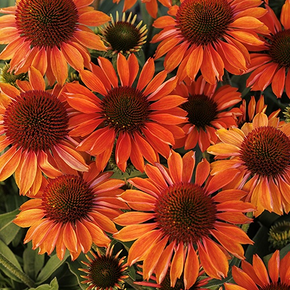
- Vivid, saffron-golden-orange blooms up to 4 inches wide light up the garden from early summer all the way through fall frost, delivering months of non-stop color.
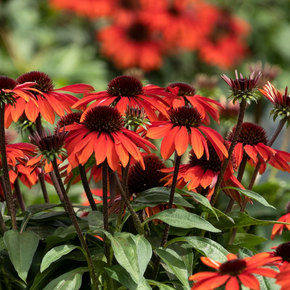
- Ultra-compact, mounding habit stays just 12 inches tall in foliage and reaches only 18 inches in flower, making it a perfect fit for containers, front-of-border placements, and small-space gardens.
- A certified wildlife magnet that draws butterflies, bees, and hummingbirds to its nectar-rich blooms, while the seed-laden cones feed songbirds and finches through winter.
- Tough, low-maintenance, and deer resistant — thrives in heat, humidity, and drought once established, with no staking required and very little fuss.
Echinacea Prima Saffron is a standout dwarf coneflower that punches far above its weight class, producing a non-stop parade of large, semi-double, saffron-golden-orange daisy-like flowers with distinctive orange-brown center cones from early summer right through the first frost of fall. Part of the award-winning PRIMA Collection, this compact hybrid was bred specifically for its extraordinarily short, tidy mounding habit — foliage stays at just 12 inches tall while sturdy flower stems rise to 18 inches, and the plant spreads a generous 20 inches wide — making it an exceptional choice for patio containers, mixed perennial borders, small urban gardens, and cottage-style landscapes alike. The rich, warm flower color pairs beautifully with the deep green foliage, and the blooms are lightly fragrant, superb for cutting and fresh arrangements as well as dried floral work. Rated hardy across USDA Zones 4 through 9, Prima Saffron is remarkably adaptable, tolerating heat, humidity, drought, and a range of soil conditions once established, while its deer resistance and low-maintenance nature make it a reliable performer season after season. Pollinators of all kinds — from monarch butterflies and swallowtails to bumblebees and hummingbirds — are drawn in throughout the blooming season, and if the spent cones are left standing into winter they become a vital seed source for goldfinches and other songbirds, extending the garden value of this exceptional perennial well beyond the last flower. Whether massed at the front of a sunny border, showcased as a container specimen on the patio, or naturalized into a pollinator meadow planting, Echinacea Prima Saffron delivers season-long vibrancy, ecological value, and effortless beauty year after year.
Plant Description
Echinacea Prima Saffron is a compact, clump-forming hybrid coneflower belonging to the Asteraceae family. It produces masses of large, semi-double, daisy-like flowers measuring 3 to 4 inches across, featuring bright saffron-golden-orange ray petals that radiate outward from a prominent, raised orange-brown center cone. The flowers are lightly fragrant and carried on sturdy upright stems above a dense mound of dark green, lance-shaped foliage. Unlike taller coneflower species, this dwarf selection was specifically bred to maintain an exceptionally short, neat habit without sacrificing flower size or quantity. It blooms prolifically from the very first year after planting and returns reliably each season, with blooms that last from early summer through fall frost. The seed heads that follow the flowers are architecturally attractive and persist well into winter.
Mature Size
| Dimension | Measurement |
|---|---|
| Foliage Height | Approximately 12 inches |
| Height in Bloom | Approximately 18 inches |
| Spread / Width | 18 to 20 inches |
| Recommended Spacing | 18 to 20 inches apart for mass plantings |
| Growth Habit | Upright, mounding clump with multiple crowns |
| Growth Rate | Fast; blooms in its first year |
Hardiness Zones
Echinacea Prima Saffron is rated for USDA Plant Hardiness Zones 4 through 9 (Zone 4a through 9b), tolerating minimum winter temperatures as low as -30 degrees Fahrenheit. This wide hardiness range makes it a reliable perennial across the vast majority of the continental United States, including the hot-summer climates of the Deep South and the cold-winter regions of the upper Midwest and Mountain West. Here in Southern Oregon and Northern California, it is exceptionally well suited to local conditions and will return dependably each spring. It is also tolerant of significant summer heat and humidity, making it a versatile performer across a broad range of climate types.
Sunlight Requirements
Prima Saffron performs best in full sun, receiving a minimum of 6 hours of direct sunlight per day. In warmer inland climates, it will also tolerate a part-shade position receiving at least 4 to 5 hours of direct sun, though flowering will be most abundant and stems most sturdy in full sun. Inadequate light can result in a more open, leggy habit and reduced bloom count. In the hottest inland valleys of Southern Oregon and Northern California, a site with morning sun and light afternoon shade can help protect the blooms from excessive heat fade while still promoting a healthy, floriferous plant.
Soil and pH Preferences
This coneflower is adaptable to a wide range of soil conditions but thrives best in average to slightly lean, well-drained soils. It performs well in loam, sandy loam, and even moderately rocky or gravelly soils. Rich, overly fertile soils can promote lush foliage at the expense of flowers and may cause the plant to flop. Heavy clay soils should be amended with compost or coarse grit to improve drainage before planting, as consistently waterlogged roots are the most common cause of plant loss. The preferred soil pH range is 6.0 to 7.5 (moderately acidic to slightly alkaline). A pH below 5.8 can be harmful; always verify soil pH before planting and amend with lime if necessary to raise pH into the acceptable range.
Watering Guide
Once established in the landscape, Echinacea Prima Saffron is notably drought tolerant and has low to average water needs. During the first growing season, water regularly to help the root system establish — typically once or twice per week depending on soil type and summer heat. After the first season, supplemental irrigation can be reduced significantly; deep, infrequent watering is preferred over frequent shallow watering. Allow the soil to dry out moderately between watering sessions, as consistently moist or waterlogged conditions invite root rot caused by Pythium and Phytophthora. Avoid overhead irrigation whenever possible; water at the base of the plant to keep foliage dry and discourage fungal diseases. In the heat of a Southern Oregon or Northern California summer, monitor plants during prolonged heat waves and provide supplemental water as needed to prevent stress.
Fertilizing
Echinacea Prima Saffron is not a heavy feeder and performs well in soils of average fertility. Over-fertilizing, especially with high-nitrogen products, encourages excessive leafy growth at the expense of flowers and can weaken the plant's natural drought tolerance. A light application of a balanced, slow-release granular fertilizer formulated for flowering perennials in early spring as new growth emerges is typically all that is needed. An application rate of approximately 1 pound of a 12-6-6 slow-release fertilizer per 100 square feet of planting area works well. Organic options such as compost top-dressing or a balanced organic flower food are equally effective. Avoid late-season fertilizer applications, as these can push tender new growth that is vulnerable to early frost damage and may interfere with the plant's natural hardening-off process before winter dormancy.
Pruning and Maintenance
Echinacea Prima Saffron is a low-maintenance perennial that requires very little pruning to look its best. Deadheading spent blooms throughout the summer encourages the plant to produce additional flower buds and extends the blooming period significantly. However, leaving some spent flower heads in place in late summer and fall allows seeds to develop, providing an important food source for goldfinches, chickadees, and other seed-eating birds through the winter months. The attractive dark cones also provide structural winter interest in the garden. In late fall or early spring, cut back the old foliage and stems to within a few inches of the ground to tidy the plant and encourage vigorous new growth. Divide clumps every 3 to 4 years in spring or fall to prevent overcrowding, maintain plant vigor, and generate new plants for expanding the planting.
Planting Instructions
- Choose a planting site that receives at least 6 hours of direct sunlight daily and has well-drained soil.
- Prepare the planting area by loosening the soil to a depth of 12 to 15 inches and incorporating compost if needed to improve drainage in clay-heavy soils.
- Dig a hole approximately twice as wide as the root ball and the same depth — it is critical not to plant too deeply; the crown of the plant should sit at or just slightly above the surrounding soil level, as burying the crown is the most common cause of failure in coneflowers.
- Set the plant in the hole, backfill with the original soil, and gently firm around the base to eliminate air pockets.
- Water thoroughly immediately after planting to settle the soil and initiate root establishment.
- Space multiple plants 18 to 20 inches apart when planting in groupings or mass plantings.
- Apply a 2- to 3-inch layer of organic mulch around the base of the plant — keeping mulch a few inches away from the crown — to retain soil moisture, moderate soil temperature, and suppress weeds.
- Water regularly through the first growing season until the plant is well established.
Seasonal Interest
Echinacea Prima Saffron delivers exceptional garden interest across multiple seasons. In spring, fresh mounds of deep green foliage emerge from dormancy, providing a tidy, attractive base. Flower buds begin forming in late spring to early summer, and the saffron-golden-orange blooms open fully by early June, continuing in an uninterrupted succession through July, August, September, and into October with deadheading. As the ray petals mature they deepen in color before giving way to ornamental seed-laden cones that persist through winter, turning a deep chocolate-brown and providing sculptural interest in the dormant garden as well as a food source for overwintering birds. The plant enters a clean winter dormancy before reemerging reliably the following spring.
Landscape Uses
The compact size and bold color of Prima Saffron open up a wide range of landscape applications that larger coneflowers cannot fill. Suggested uses include:
- Front-of-border accent in sunny perennial beds and mixed borders
- Mass plantings for a bold sweep of warm color in garden beds
- Patio and deck container gardens, either solo or in mixed arrangements with complementary annuals and grasses
- Small-space and urban gardens where compact habit is essential
- Butterfly and pollinator gardens
- Hummingbird and bird-attraction gardens
- Cut-flower and cottage-style gardens
- Prairie and meadow-style naturalized plantings
- Gravel gardens and low-water-use landscape designs
- Orange-themed or warm-toned color-themed garden designs
Container Growing
Prima Saffron is an excellent container plant and was specifically recognized by its breeders as being ideal for patio pot culture. Its compact size means it does not quickly outgrow its container, and it provides months of showy blooms from a single pot. Use a well-draining potting mix formulated for outdoor container perennials and select a container with adequate drainage holes — at least 12 to 14 inches in diameter to allow for proper root development. In containers, plants dry out more quickly than in the ground, so monitor soil moisture closely during summer heat and water when the top inch of the mix feels dry. Feed container-grown plants with a balanced, slow-release granular fertilizer applied in spring, or supplement with a diluted liquid fertilizer for flowering plants every 3 to 4 weeks through the blooming season. In USDA Zones 4 through 6, move containers to a sheltered location — such as an unheated garage — during winter, or overwinter plants in the ground by sinking the container into a garden bed and mulching heavily.
Wildlife Value
Echinacea Prima Saffron is a powerhouse for wildlife in the garden. Throughout its long blooming season the flowers provide abundant nectar and pollen for a wide variety of beneficial insects and birds, including:
- Butterflies — including monarchs, swallowtails, painted ladies, and fritillaries — which use the flat flower heads as landing platforms while feeding on nectar
- Native bumblebees, honey bees, and other native bee species that collect both pollen and nectar
- Hummingbirds, which are drawn to the bright orange-saffron flower color
- Goldfinches, chickadees, sparrows, and other seed-eating songbirds that visit the seed-rich cones from late summer through winter
Despite its irresistible appeal to beneficial wildlife, Prima Saffron is reliably deer resistant and also shows resistance to rabbit browsing, making it a practical choice for gardens in areas where deer and rabbit pressure is a challenge.
Pests and Diseases
Echinacea Prima Saffron is generally a robust, trouble-free perennial when grown in the right conditions. Being aware of potential issues helps keep plants healthy and vigorous:
- Powdery Mildew: Can appear in humid conditions or where air circulation is poor. Prevent by spacing plants adequately (18-20 inches apart) and avoiding overhead watering. Remove affected foliage promptly.
- Root and Crown Rot (Pythium / Phytophthora): The most common serious problem, caused by overwatering or poorly draining soils. Ensure excellent drainage and allow the soil to dry moderately between waterings.
- Botrytis (Gray Mold): Can occur in cool, wet conditions. Improve spacing and airflow, and water in the morning so foliage dries before nightfall.
- Aster Yellows: A disease transmitted by leafhoppers that causes distorted, green-tinted flowers and stunted growth. There is no cure; remove and destroy infected plants immediately to prevent spread and control leafhopper populations.
- Aphids: Occasional infestations on tender new growth; treat with a strong stream of water or insecticidal soap spray applied 2 to 3 times at 5- to 7-day intervals.
- Eriophyid Mites: Microscopic mites that live inside flower buds, causing distorted, tufted growth. Cut affected plants to the ground in fall and remove all debris.
- Japanese Beetles: May feed on flowers and foliage in regions where they are present. Handpick adults in the morning when they are sluggish, or use an appropriate labeled insecticide.
Companion Plants
Echinacea Prima Saffron's warm saffron and orange tones combine beautifully with a wide range of sun-loving perennials and ornamental grasses. Consider these complementary planting partners:
- Achillea (Yarrow) — Flat-topped yellow or red flower clusters echo the warm tones and similarly attract pollinators; shares the same sun and drought-tolerance preferences.
- Agastache (Hyssop) — Spiky blue-purple or orange flower spikes create a striking color contrast and are equally beloved by hummingbirds and bees.
- Helenium (Sneezeweed) — Rich orange, gold, and red daisy flowers in late summer and fall extend the warm-toned display and complement the saffron blooms beautifully.
- Kniphofia (Red Hot Poker) — Bold vertical flower torches in fiery orange and yellow add dramatic height contrast to the compact mounds of Prima Saffron.
- Monarda (Bee Balm) — Shaggy red or pink flowers bloom at the same time and attract many of the same pollinators, creating a lively, wildlife-rich border.
- Salvia nemorosa (Ornamental Sage) — Deep blue-purple spikes provide a vibrant color contrast to the warm orange blooms and thrive in the same full-sun, well-drained conditions.
- Pennisetum or Panicum (Ornamental Grasses) — Feathery or upright grasses add movement and textural contrast while framing the bold coneflower blooms.
- Rudbeckia (Black-Eyed Susan) — Golden-yellow daisy flowers harmonize naturally with the saffron tones and create a classic, long-blooming prairie combination.
- Vivid, saffron-golden-orange blooms up to 4 inches wide light up the garden from early summer all the way through fall frost, delivering months of non-stop color.
- Ultra-compact, mounding habit stays just 12 inches tall in foliage and reaches only 18 inches in flower, making it a perfect fit for containers, front-of-border placements, and small-space gardens.
- A certified wildlife magnet that draws butterflies, bees, and hummingbirds to its nectar-rich blooms, while the seed-laden cones feed songbirds and finches through winter.
- Tough, low-maintenance, and deer resistant — thrives in heat, humidity, and drought once established, with no staking required and very little fuss.
Echinacea Prima Saffron is a standout dwarf coneflower that punches far above its weight class, producing a non-stop parade of large, semi-double, saffron-golden-orange daisy-like flowers with distinctive orange-brown center cones from early summer right through the first frost of fall. Part of the award-winning PRIMA Collection, this compact hybrid was bred specifically for its extraordinarily short, tidy mounding habit — foliage stays at just 12 inches tall while sturdy flower stems rise to 18 inches, and the plant spreads a generous 20 inches wide — making it an exceptional choice for patio containers, mixed perennial borders, small urban gardens, and cottage-style landscapes alike. The rich, warm flower color pairs beautifully with the deep green foliage, and the blooms are lightly fragrant, superb for cutting and fresh arrangements as well as dried floral work. Rated hardy across USDA Zones 4 through 9, Prima Saffron is remarkably adaptable, tolerating heat, humidity, drought, and a range of soil conditions once established, while its deer resistance and low-maintenance nature make it a reliable performer season after season. Pollinators of all kinds — from monarch butterflies and swallowtails to bumblebees and hummingbirds — are drawn in throughout the blooming season, and if the spent cones are left standing into winter they become a vital seed source for goldfinches and other songbirds, extending the garden value of this exceptional perennial well beyond the last flower. Whether massed at the front of a sunny border, showcased as a container specimen on the patio, or naturalized into a pollinator meadow planting, Echinacea Prima Saffron delivers season-long vibrancy, ecological value, and effortless beauty year after year.
Plant Description
Echinacea Prima Saffron is a compact, clump-forming hybrid coneflower belonging to the Asteraceae family. It produces masses of large, semi-double, daisy-like flowers measuring 3 to 4 inches across, featuring bright saffron-golden-orange ray petals that radiate outward from a prominent, raised orange-brown center cone. The flowers are lightly fragrant and carried on sturdy upright stems above a dense mound of dark green, lance-shaped foliage. Unlike taller coneflower species, this dwarf selection was specifically bred to maintain an exceptionally short, neat habit without sacrificing flower size or quantity. It blooms prolifically from the very first year after planting and returns reliably each season, with blooms that last from early summer through fall frost. The seed heads that follow the flowers are architecturally attractive and persist well into winter.
Mature Size
| Dimension | Measurement |
|---|---|
| Foliage Height | Approximately 12 inches |
| Height in Bloom | Approximately 18 inches |
| Spread / Width | 18 to 20 inches |
| Recommended Spacing | 18 to 20 inches apart for mass plantings |
| Growth Habit | Upright, mounding clump with multiple crowns |
| Growth Rate | Fast; blooms in its first year |
Hardiness Zones
Echinacea Prima Saffron is rated for USDA Plant Hardiness Zones 4 through 9 (Zone 4a through 9b), tolerating minimum winter temperatures as low as -30 degrees Fahrenheit. This wide hardiness range makes it a reliable perennial across the vast majority of the continental United States, including the hot-summer climates of the Deep South and the cold-winter regions of the upper Midwest and Mountain West. Here in Southern Oregon and Northern California, it is exceptionally well suited to local conditions and will return dependably each spring. It is also tolerant of significant summer heat and humidity, making it a versatile performer across a broad range of climate types.
Sunlight Requirements
Prima Saffron performs best in full sun, receiving a minimum of 6 hours of direct sunlight per day. In warmer inland climates, it will also tolerate a part-shade position receiving at least 4 to 5 hours of direct sun, though flowering will be most abundant and stems most sturdy in full sun. Inadequate light can result in a more open, leggy habit and reduced bloom count. In the hottest inland valleys of Southern Oregon and Northern California, a site with morning sun and light afternoon shade can help protect the blooms from excessive heat fade while still promoting a healthy, floriferous plant.
Soil and pH Preferences
This coneflower is adaptable to a wide range of soil conditions but thrives best in average to slightly lean, well-drained soils. It performs well in loam, sandy loam, and even moderately rocky or gravelly soils. Rich, overly fertile soils can promote lush foliage at the expense of flowers and may cause the plant to flop. Heavy clay soils should be amended with compost or coarse grit to improve drainage before planting, as consistently waterlogged roots are the most common cause of plant loss. The preferred soil pH range is 6.0 to 7.5 (moderately acidic to slightly alkaline). A pH below 5.8 can be harmful; always verify soil pH before planting and amend with lime if necessary to raise pH into the acceptable range.
Watering Guide
Once established in the landscape, Echinacea Prima Saffron is notably drought tolerant and has low to average water needs. During the first growing season, water regularly to help the root system establish — typically once or twice per week depending on soil type and summer heat. After the first season, supplemental irrigation can be reduced significantly; deep, infrequent watering is preferred over frequent shallow watering. Allow the soil to dry out moderately between watering sessions, as consistently moist or waterlogged conditions invite root rot caused by Pythium and Phytophthora. Avoid overhead irrigation whenever possible; water at the base of the plant to keep foliage dry and discourage fungal diseases. In the heat of a Southern Oregon or Northern California summer, monitor plants during prolonged heat waves and provide supplemental water as needed to prevent stress.
Fertilizing
Echinacea Prima Saffron is not a heavy feeder and performs well in soils of average fertility. Over-fertilizing, especially with high-nitrogen products, encourages excessive leafy growth at the expense of flowers and can weaken the plant's natural drought tolerance. A light application of a balanced, slow-release granular fertilizer formulated for flowering perennials in early spring as new growth emerges is typically all that is needed. An application rate of approximately 1 pound of a 12-6-6 slow-release fertilizer per 100 square feet of planting area works well. Organic options such as compost top-dressing or a balanced organic flower food are equally effective. Avoid late-season fertilizer applications, as these can push tender new growth that is vulnerable to early frost damage and may interfere with the plant's natural hardening-off process before winter dormancy.
Pruning and Maintenance
Echinacea Prima Saffron is a low-maintenance perennial that requires very little pruning to look its best. Deadheading spent blooms throughout the summer encourages the plant to produce additional flower buds and extends the blooming period significantly. However, leaving some spent flower heads in place in late summer and fall allows seeds to develop, providing an important food source for goldfinches, chickadees, and other seed-eating birds through the winter months. The attractive dark cones also provide structural winter interest in the garden. In late fall or early spring, cut back the old foliage and stems to within a few inches of the ground to tidy the plant and encourage vigorous new growth. Divide clumps every 3 to 4 years in spring or fall to prevent overcrowding, maintain plant vigor, and generate new plants for expanding the planting.
Planting Instructions
- Choose a planting site that receives at least 6 hours of direct sunlight daily and has well-drained soil.
- Prepare the planting area by loosening the soil to a depth of 12 to 15 inches and incorporating compost if needed to improve drainage in clay-heavy soils.
- Dig a hole approximately twice as wide as the root ball and the same depth — it is critical not to plant too deeply; the crown of the plant should sit at or just slightly above the surrounding soil level, as burying the crown is the most common cause of failure in coneflowers.
- Set the plant in the hole, backfill with the original soil, and gently firm around the base to eliminate air pockets.
- Water thoroughly immediately after planting to settle the soil and initiate root establishment.
- Space multiple plants 18 to 20 inches apart when planting in groupings or mass plantings.
- Apply a 2- to 3-inch layer of organic mulch around the base of the plant — keeping mulch a few inches away from the crown — to retain soil moisture, moderate soil temperature, and suppress weeds.
- Water regularly through the first growing season until the plant is well established.
Seasonal Interest
Echinacea Prima Saffron delivers exceptional garden interest across multiple seasons. In spring, fresh mounds of deep green foliage emerge from dormancy, providing a tidy, attractive base. Flower buds begin forming in late spring to early summer, and the saffron-golden-orange blooms open fully by early June, continuing in an uninterrupted succession through July, August, September, and into October with deadheading. As the ray petals mature they deepen in color before giving way to ornamental seed-laden cones that persist through winter, turning a deep chocolate-brown and providing sculptural interest in the dormant garden as well as a food source for overwintering birds. The plant enters a clean winter dormancy before reemerging reliably the following spring.
Landscape Uses
The compact size and bold color of Prima Saffron open up a wide range of landscape applications that larger coneflowers cannot fill. Suggested uses include:
- Front-of-border accent in sunny perennial beds and mixed borders
- Mass plantings for a bold sweep of warm color in garden beds
- Patio and deck container gardens, either solo or in mixed arrangements with complementary annuals and grasses
- Small-space and urban gardens where compact habit is essential
- Butterfly and pollinator gardens
- Hummingbird and bird-attraction gardens
- Cut-flower and cottage-style gardens
- Prairie and meadow-style naturalized plantings
- Gravel gardens and low-water-use landscape designs
- Orange-themed or warm-toned color-themed garden designs
Container Growing
Prima Saffron is an excellent container plant and was specifically recognized by its breeders as being ideal for patio pot culture. Its compact size means it does not quickly outgrow its container, and it provides months of showy blooms from a single pot. Use a well-draining potting mix formulated for outdoor container perennials and select a container with adequate drainage holes — at least 12 to 14 inches in diameter to allow for proper root development. In containers, plants dry out more quickly than in the ground, so monitor soil moisture closely during summer heat and water when the top inch of the mix feels dry. Feed container-grown plants with a balanced, slow-release granular fertilizer applied in spring, or supplement with a diluted liquid fertilizer for flowering plants every 3 to 4 weeks through the blooming season. In USDA Zones 4 through 6, move containers to a sheltered location — such as an unheated garage — during winter, or overwinter plants in the ground by sinking the container into a garden bed and mulching heavily.
Wildlife Value
Echinacea Prima Saffron is a powerhouse for wildlife in the garden. Throughout its long blooming season the flowers provide abundant nectar and pollen for a wide variety of beneficial insects and birds, including:
- Butterflies — including monarchs, swallowtails, painted ladies, and fritillaries — which use the flat flower heads as landing platforms while feeding on nectar
- Native bumblebees, honey bees, and other native bee species that collect both pollen and nectar
- Hummingbirds, which are drawn to the bright orange-saffron flower color
- Goldfinches, chickadees, sparrows, and other seed-eating songbirds that visit the seed-rich cones from late summer through winter
Despite its irresistible appeal to beneficial wildlife, Prima Saffron is reliably deer resistant and also shows resistance to rabbit browsing, making it a practical choice for gardens in areas where deer and rabbit pressure is a challenge.
Pests and Diseases
Echinacea Prima Saffron is generally a robust, trouble-free perennial when grown in the right conditions. Being aware of potential issues helps keep plants healthy and vigorous:
- Powdery Mildew: Can appear in humid conditions or where air circulation is poor. Prevent by spacing plants adequately (18-20 inches apart) and avoiding overhead watering. Remove affected foliage promptly.
- Root and Crown Rot (Pythium / Phytophthora): The most common serious problem, caused by overwatering or poorly draining soils. Ensure excellent drainage and allow the soil to dry moderately between waterings.
- Botrytis (Gray Mold): Can occur in cool, wet conditions. Improve spacing and airflow, and water in the morning so foliage dries before nightfall.
- Aster Yellows: A disease transmitted by leafhoppers that causes distorted, green-tinted flowers and stunted growth. There is no cure; remove and destroy infected plants immediately to prevent spread and control leafhopper populations.
- Aphids: Occasional infestations on tender new growth; treat with a strong stream of water or insecticidal soap spray applied 2 to 3 times at 5- to 7-day intervals.
- Eriophyid Mites: Microscopic mites that live inside flower buds, causing distorted, tufted growth. Cut affected plants to the ground in fall and remove all debris.
- Japanese Beetles: May feed on flowers and foliage in regions where they are present. Handpick adults in the morning when they are sluggish, or use an appropriate labeled insecticide.
Companion Plants
Echinacea Prima Saffron's warm saffron and orange tones combine beautifully with a wide range of sun-loving perennials and ornamental grasses. Consider these complementary planting partners:
- Achillea (Yarrow) — Flat-topped yellow or red flower clusters echo the warm tones and similarly attract pollinators; shares the same sun and drought-tolerance preferences.
- Agastache (Hyssop) — Spiky blue-purple or orange flower spikes create a striking color contrast and are equally beloved by hummingbirds and bees.
- Helenium (Sneezeweed) — Rich orange, gold, and red daisy flowers in late summer and fall extend the warm-toned display and complement the saffron blooms beautifully.
- Kniphofia (Red Hot Poker) — Bold vertical flower torches in fiery orange and yellow add dramatic height contrast to the compact mounds of Prima Saffron.
- Monarda (Bee Balm) — Shaggy red or pink flowers bloom at the same time and attract many of the same pollinators, creating a lively, wildlife-rich border.
- Salvia nemorosa (Ornamental Sage) — Deep blue-purple spikes provide a vibrant color contrast to the warm orange blooms and thrive in the same full-sun, well-drained conditions.
- Pennisetum or Panicum (Ornamental Grasses) — Feathery or upright grasses add movement and textural contrast while framing the bold coneflower blooms.
- Rudbeckia (Black-Eyed Susan) — Golden-yellow daisy flowers harmonize naturally with the saffron tones and create a classic, long-blooming prairie combination.