
Zoom the image with the mouse
Kismet Raspberry Coneflower - 1 Gallon
SKU:
2098890
UPC:
014949481400
$12.99
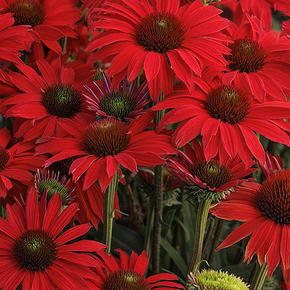
- Vivid raspberry-pink blooms with a golden-brown central cone flower continuously from early summer all the way through the first hard frost — one of the longest bloom seasons of any coneflower available.
- Compact, tidy habit reaching just 16-18 inches tall and 20-24 inches wide makes it a perfect fit for small gardens, front-of-border plantings, and patio containers without staking or fussing.
- Exceptionally tough and deer resistant — thrives in heat, humidity, and drought once established, and is reliably cold-hardy through USDA Zone 4, even surviving Zone 3 winters in university trials.
- A powerful pollinator magnet that draws bees, butterflies, and hummingbirds all season long, and in fall and winter the persistent seed cones feed goldfinches and other seed-eating birds.
Echinacea Kismet Raspberry (Kismet Raspberry Coneflower, Echinacea 'TNECHKR' PP28768) is a patented, award-winning dwarf coneflower that redefines what a compact perennial can deliver. Part of the elite Kismet Series, this outstanding hybrid produces an extraordinary abundance of large, richly saturated raspberry-pink daisy-form blooms, each centered by a striking golden-brown cone that deepens to coppery orange as the season progresses. Unlike many coneflowers whose petals fade quickly, Kismet Raspberry holds its deep, saturated color for weeks per bloom, and the plant continuously sets new buds from June through the first killing frost — an impressive five-month display that earns its place as a standout in sunny perennial borders, pollinator gardens, cottage-style landscapes, prairie-inspired meadow plantings, and patio containers. Growing to a tidy 16-18 inches tall with a naturally mounding, upright habit and a spread of 20-24 inches, it fits neatly at the front of a border or in a mixed container without ever needing staking or pinching. Named a Trial Manager Favorite at the Missouri Botanical Garden in 2017 and highlighted among top fast-growing perennials by national gardening media, Kismet Raspberry combines exceptional bloom performance with outstanding garden-tough durability — tolerating drought, heat, humidity, clay soils, and deer browsing with ease. Hardy in USDA Zones 4-9, it is an ideal low-maintenance perennial for gardeners across Southern Oregon and Northern California who want season-long color, wildlife value, and long-lasting cut flowers all from a single, reliable plant.
Plant Description
Kismet Raspberry Coneflower is a compact herbaceous perennial belonging to the Asteraceae (daisy) family and the Echinacea genus. This patented hybrid (PP28768, sold under the trade name KISMET Raspberry, cultivar 'TNECHKR') is part of the Kismet Series bred by Terra Nova Nurseries. It produces a dense mound of upright stems clothed in dark green, lance-shaped leaves that are slightly rough to the touch — typical of the coneflower genus. Each stem is topped with a single large composite flower featuring broad, slightly reflexed raspberry-pink ray petals surrounding a prominent, spiny central cone that transitions from golden-yellow to a rich copper-orange as it matures. The genus name Echinacea derives from the Greek word echinos, meaning hedgehog or sea urchin, a reference to the bristly texture of those distinctive central cones. Flowers are lightly fragrant and maintain their vivid color without significant fading throughout a remarkably long bloom season. The plant is deciduous, dying back to the ground each winter and re-emerging vigorously each spring.
Mature Size
| Attribute | Measurement |
|---|---|
| Mature Height | 16-18 inches |
| Mature Spread | 20-24 inches |
| Flower Stem Height | Approximately 18 inches |
| Growth Habit | Upright, mounding, compact |
| Growth Rate | Fast |
| Spacing (in-ground) | 24 inches on center |
Hardiness and Climate Zones
Kismet Raspberry Coneflower is rated for USDA Hardiness Zones 4-9, making it exceptionally tough and well-suited for a wide range of climates. In trials at the University of Minnesota West Central Research and Outreach Center, plants achieved 100% survival through the harsh winter of 2017, demonstrating cold tolerance beyond the standard Zone 4 rating. It also performs reliably in the heat and humidity of the Deep South (Zone 8-9). For gardeners in Southern Oregon and Northern California, this plant thrives across the full range of local microclimates from inland valleys to higher-elevation zones. The plant is dormant in winter and re-emerges reliably each spring. It is also well-suited to AHS Heat Zones 1-9.
Sunlight Requirements
Kismet Raspberry Coneflower performs best in full sun, receiving a minimum of 6-8 hours of direct sunlight per day. Full sun encourages the most prolific blooming, the most compact and upright habit, and the richest, most saturated flower color. It can tolerate part shade (4-6 hours of direct sun), but flowering will be somewhat reduced and stems may become slightly more lax in lower light conditions. In Southern Oregon and Northern California, a full-sun location is strongly recommended for maximum summer-long bloom performance. Avoid planting in dense shade, which will significantly diminish flowering and overall plant vigor.
Soil and pH Preferences
This coneflower is highly adaptable to a wide range of soil types, including chalk, loam, and sandy soils. It even tolerates clay soils better than many perennials, as long as drainage is adequate. The most critical soil requirement is good drainage — poorly drained or consistently waterlogged soils can lead to root rot and are the most common cause of plant failure. Average to lean fertility is preferred; overly rich soils can produce lush foliage at the expense of blooms.
- Preferred soil pH: 5.8-7.3 (acidic to neutral to slightly alkaline)
- Soil type: Well-drained loam, sandy loam, or amended clay
- Avoid: Consistently wet, waterlogged, or poorly drained sites
- Note: Extremely low pH (below 5.8) can be detrimental to plant health — do not allow soil to become overly acidic
Watering Guide
Newly planted Kismet Raspberry Coneflower requires regular watering during the establishment period — typically the first growing season — to help the root system develop. Water deeply once or twice per week, allowing the soil to dry moderately between waterings. Wet-and-dry cycles are important for overall plant health and root development. Once established, this coneflower is notably drought tolerant and thrives with low to average moisture. Overwatering or constantly soggy soil is far more harmful than underwatering. Applying a 2-3 inch layer of mulch around the base of the plant helps retain soil moisture, moderate soil temperature, and reduce watering frequency during hot, dry summers common in Southern Oregon and Northern California.
Fertilizing
Kismet Raspberry Coneflower is a low-fertility plant that performs well without heavy fertilization. In most garden soils, little to no fertilizer is needed once established. Overfertilizing — particularly with high-nitrogen products — can encourage excessive leafy growth at the expense of blooms and may make plants more susceptible to disease. If your soil is poor or sandy, a light application of a balanced, slow-release granular fertilizer (such as a 10-10-10 formula) in early spring as new growth emerges is sufficient to support vigorous flowering. Avoid late-season applications of fertilizer, which can stimulate soft new growth that is more vulnerable to early frosts.
Bloom Season and Seasonal Interest
Kismet Raspberry is one of the longest-blooming coneflowers available, delivering outstanding garden color across multiple seasons:
- Early Summer (June): First blooms open, with vivid raspberry-pink ray petals and bright golden central cones.
- Mid-Summer (July-August): Peak bloom — plants are covered in large, richly colored flowers that attract a constant parade of pollinators.
- Late Summer into Fall (September-October): Flowering continues strong right through September and October until the first hard frost, long after many perennials have finished.
- Winter: After frost kills the foliage, the persistent, darkened seed cones remain on upright stems throughout winter, providing architectural interest and valuable food for goldfinches and other seed-eating birds.
Pruning and Maintenance
Kismet Raspberry Coneflower is a low-maintenance perennial that requires minimal care to look its best.
- Deadheading: Removing spent flowers promptly encourages faster rebloom and keeps the plant looking tidy. However, deadheading is not strictly required — plants will continue to produce new buds even without it.
- Fall Cutback: You may cut stems back to the ground in late fall after frost, or leave the seed heads standing through winter to feed birds and provide structure. Cut back any remaining stems in early spring before new growth emerges.
- Division: Divide overcrowded clumps every 4-5 years in spring or early fall to maintain vigor and improve air circulation. Division is the preferred method of propagation, as it preserves the exact characteristics of this patented hybrid variety.
- Staking: Not required — Kismet Raspberry has a naturally sturdy, self-supporting upright habit.
Planting Instructions
- Choose a full-sun location with well-drained soil. Amend heavy clay soils with compost or grit to improve drainage before planting.
- Dig a hole twice as wide as the root ball and equal in depth. It is critical not to plant too deeply — the crown of the plant must sit at or slightly above the surrounding soil level. Covering the crown is the most common cause of Echinacea losses.
- Set the plant in the hole, ensuring the soil level of the plant matches the surrounding garden soil level exactly.
- Backfill with native soil, firm gently around the roots, and water in well to eliminate air pockets.
- Apply a 2-3 inch layer of mulch around the plant, keeping mulch a few inches away from the crown to prevent rot.
- Space plants 24 inches apart for best air circulation and mature spread.
- Water regularly through the first season while roots establish. Reduce watering frequency once the plant is well established.
Landscape Uses
Kismet Raspberry Coneflower is a highly versatile perennial that suits a wide variety of garden styles and landscape applications:
- Perennial borders: Ideal at the front to middle of a sunny mixed border, where its compact size and long bloom season create reliable, season-long color.
- Mass plantings: Planting in groups of three or more creates a stunning, high-impact display and maximizes pollinator activity.
- Pollinator and wildlife gardens: An exceptional choice for gardens designed to support bees, butterflies, hummingbirds, and birds.
- Prairie and meadow gardens: Its naturalistic, wildflower character blends beautifully in informal prairie-style plantings.
- Cottage gardens: The warm raspberry tones and relaxed flower form are quintessential cottage garden plants.
- Patio and container gardens: Its compact habit makes it one of the few coneflowers genuinely well-suited to large patio containers and mixed planters.
- Rock and gravel gardens: Drought tolerance and preference for well-drained soil make it a natural fit in xeric or gravel-mulched garden designs.
- Cut and dried flower gardens: Blooms are outstanding in fresh-cut arrangements and the seed heads are excellent in dried arrangements.
Companion Plants
Kismet Raspberry Coneflower pairs beautifully with other sun-loving perennials and ornamental grasses that share its preference for well-drained soil and full sun. Consider these complementary companions for season-long color and ecological value:
- Black-Eyed Susan (Rudbeckia): Golden-yellow blooms create a vibrant, classic color contrast with the raspberry tones and bloom at the same time.
- Ornamental Grasses (Panicum, Pennisetum, Calamagrostis): Airy grass textures provide movement and a naturalistic backdrop that sets off the bold coneflower blooms beautifully.
- Salvia (Salvia nemorosa): Deep blue-purple spikes create a stunning complementary color combination and extend the pollinator season.
- Yarrow (Achillea): Flat-topped flower clusters in yellow, gold, or white pair well in texture and share drought tolerance and tough constitutions.
- Bee Balm (Monarda): Shaggy, nectar-rich blooms attract the same pollinators and bloom in overlapping seasons.
- Catmint (Nepeta): Lavender-blue flowers cascade at the border edge and complement raspberry tones while repelling some pest insects naturally.
- Red Hot Poker (Kniphofia): Bold, torch-like blooms in fiery orange and yellow create dramatic contrast in late summer.
- Sneezeweed (Helenium): Rich amber and bronze daisy blooms echo the warm tones of the Kismet Raspberry cone and extend the late-summer-to-fall display.
Wildlife Value
Kismet Raspberry Coneflower is a powerhouse for garden wildlife, providing food and habitat resources from early summer well into winter:
- Bees: Honey bees, bumblebees, and native solitary bees are drawn in large numbers to the abundant pollen and nectar of the prominent central cone throughout the entire bloom period.
- Butterflies: Swallowtails, fritillaries, monarchs, and skippers regularly visit the blooms for nectar.
- Hummingbirds: Ruby-throated and other hummingbirds are attracted to the nectar-rich blooms from midsummer onward.
- Seed-eating birds: Goldfinches and other finches actively feed on the nutritious seeds in the persistent winter seed cones — an excellent reason to leave stems standing through the cold season rather than cutting them back in fall.
- Deer resistance: The slightly rough, aromatic foliage is unpalatable to deer, making it a reliable choice in landscapes where deer browsing is a concern.
Pests and Diseases
Kismet Raspberry Coneflower is generally tough and resistant to most pest and disease problems, especially when planted in well-drained soil with good air circulation. Be aware of the following occasional issues:
- Aphids: May occasionally cluster on new growth. A strong spray of water or an application of insecticidal soap resolves most infestations easily.
- Japanese Beetles: Can chew on flowers and foliage in mid-summer. Hand-picking in the morning or applying neem-based products helps manage populations.
- Thrips: Small thrips can occasionally damage flowers as they open. Maintain good airflow and water at the base of plants rather than overhead.
- Eriophyid (Erythroid) Mites: Watch for distorted growth, which can be a sign of mite feeding. Remove and destroy affected growth promptly.
- Powdery Mildew: Can appear in late summer, especially in humid conditions with poor air circulation. Proper spacing (24 inches apart) and avoiding overhead irrigation significantly reduces risk.
- Aster Yellows: A phytoplasma disease spread by leafhoppers that causes distorted, yellowed growth and deformed cones. There is no cure — remove and destroy infected plants immediately and control leafhopper populations.
- Root and Crown Rot (Pythium, Phytophthora): The most serious threat, caused by overwatering or poorly drained soil. Always ensure excellent drainage and allow soil to dry moderately between waterings.
Container Growing
Kismet Raspberry is one of the most container-friendly coneflowers available, thanks to its naturally compact, mounding habit. It makes a stunning solo specimen in a large patio pot or a bold centerpiece in a mixed container planting.
- Choose a container at least 12-16 inches in diameter with drainage holes to prevent waterlogging.
- Use a well-draining, high-quality potting mix. Adding perlite or coarse sand improves drainage.
- Container plants dry out more quickly than in-ground plants — check soil moisture regularly and water when the top inch of soil is dry, but never allow the container to sit in standing water.
- Fertilize container-grown plants with a diluted balanced liquid fertilizer every 4-6 weeks during the active growing season, as nutrients leach from containers more quickly.
- In colder climates, container plants may need extra winter protection (moving to an unheated garage or insulating the pot) since roots in containers are more exposed to freezing temperatures than in-ground roots.
- Pairs beautifully in containers with ornamental grasses, trailing verbena, calibrachoa, or annual salvias for season-long color combinations.
Cut Flower Use
Kismet Raspberry Coneflower is an excellent cut flower, producing sturdy, upright stems topped with large, long-lasting blooms that hold their color exceptionally well in arrangements. To get the most from cut flowers:
- Cut stems in the morning when flowers are fully open and the central cone is firm to the touch.
- Use sharp, clean pruners or scissors and cut stems at a 45-degree angle.
- Place cut stems immediately into a bucket of cool water and allow them to condition for several hours before arranging.
- Remove all foliage that would fall below the waterline in the vase to prevent bacterial growth and extend vase life.
- Change vase water every two days for maximum longevity — blooms can last 7-14 days in a vase.
- The seed cones can also be dried and used in dried arrangements — harvest stems just before or at peak bloom and hang them upside down in a cool, dry, well-ventilated location to dry.
- Vivid raspberry-pink blooms with a golden-brown central cone flower continuously from early summer all the way through the first hard frost — one of the longest bloom seasons of any coneflower available.
- Compact, tidy habit reaching just 16-18 inches tall and 20-24 inches wide makes it a perfect fit for small gardens, front-of-border plantings, and patio containers without staking or fussing.
- Exceptionally tough and deer resistant — thrives in heat, humidity, and drought once established, and is reliably cold-hardy through USDA Zone 4, even surviving Zone 3 winters in university trials.
- A powerful pollinator magnet that draws bees, butterflies, and hummingbirds all season long, and in fall and winter the persistent seed cones feed goldfinches and other seed-eating birds.
Echinacea Kismet Raspberry (Kismet Raspberry Coneflower, Echinacea 'TNECHKR' PP28768) is a patented, award-winning dwarf coneflower that redefines what a compact perennial can deliver. Part of the elite Kismet Series, this outstanding hybrid produces an extraordinary abundance of large, richly saturated raspberry-pink daisy-form blooms, each centered by a striking golden-brown cone that deepens to coppery orange as the season progresses. Unlike many coneflowers whose petals fade quickly, Kismet Raspberry holds its deep, saturated color for weeks per bloom, and the plant continuously sets new buds from June through the first killing frost — an impressive five-month display that earns its place as a standout in sunny perennial borders, pollinator gardens, cottage-style landscapes, prairie-inspired meadow plantings, and patio containers. Growing to a tidy 16-18 inches tall with a naturally mounding, upright habit and a spread of 20-24 inches, it fits neatly at the front of a border or in a mixed container without ever needing staking or pinching. Named a Trial Manager Favorite at the Missouri Botanical Garden in 2017 and highlighted among top fast-growing perennials by national gardening media, Kismet Raspberry combines exceptional bloom performance with outstanding garden-tough durability — tolerating drought, heat, humidity, clay soils, and deer browsing with ease. Hardy in USDA Zones 4-9, it is an ideal low-maintenance perennial for gardeners across Southern Oregon and Northern California who want season-long color, wildlife value, and long-lasting cut flowers all from a single, reliable plant.
Plant Description
Kismet Raspberry Coneflower is a compact herbaceous perennial belonging to the Asteraceae (daisy) family and the Echinacea genus. This patented hybrid (PP28768, sold under the trade name KISMET Raspberry, cultivar 'TNECHKR') is part of the Kismet Series bred by Terra Nova Nurseries. It produces a dense mound of upright stems clothed in dark green, lance-shaped leaves that are slightly rough to the touch — typical of the coneflower genus. Each stem is topped with a single large composite flower featuring broad, slightly reflexed raspberry-pink ray petals surrounding a prominent, spiny central cone that transitions from golden-yellow to a rich copper-orange as it matures. The genus name Echinacea derives from the Greek word echinos, meaning hedgehog or sea urchin, a reference to the bristly texture of those distinctive central cones. Flowers are lightly fragrant and maintain their vivid color without significant fading throughout a remarkably long bloom season. The plant is deciduous, dying back to the ground each winter and re-emerging vigorously each spring.
Mature Size
| Attribute | Measurement |
|---|---|
| Mature Height | 16-18 inches |
| Mature Spread | 20-24 inches |
| Flower Stem Height | Approximately 18 inches |
| Growth Habit | Upright, mounding, compact |
| Growth Rate | Fast |
| Spacing (in-ground) | 24 inches on center |
Hardiness and Climate Zones
Kismet Raspberry Coneflower is rated for USDA Hardiness Zones 4-9, making it exceptionally tough and well-suited for a wide range of climates. In trials at the University of Minnesota West Central Research and Outreach Center, plants achieved 100% survival through the harsh winter of 2017, demonstrating cold tolerance beyond the standard Zone 4 rating. It also performs reliably in the heat and humidity of the Deep South (Zone 8-9). For gardeners in Southern Oregon and Northern California, this plant thrives across the full range of local microclimates from inland valleys to higher-elevation zones. The plant is dormant in winter and re-emerges reliably each spring. It is also well-suited to AHS Heat Zones 1-9.
Sunlight Requirements
Kismet Raspberry Coneflower performs best in full sun, receiving a minimum of 6-8 hours of direct sunlight per day. Full sun encourages the most prolific blooming, the most compact and upright habit, and the richest, most saturated flower color. It can tolerate part shade (4-6 hours of direct sun), but flowering will be somewhat reduced and stems may become slightly more lax in lower light conditions. In Southern Oregon and Northern California, a full-sun location is strongly recommended for maximum summer-long bloom performance. Avoid planting in dense shade, which will significantly diminish flowering and overall plant vigor.
Soil and pH Preferences
This coneflower is highly adaptable to a wide range of soil types, including chalk, loam, and sandy soils. It even tolerates clay soils better than many perennials, as long as drainage is adequate. The most critical soil requirement is good drainage — poorly drained or consistently waterlogged soils can lead to root rot and are the most common cause of plant failure. Average to lean fertility is preferred; overly rich soils can produce lush foliage at the expense of blooms.
- Preferred soil pH: 5.8-7.3 (acidic to neutral to slightly alkaline)
- Soil type: Well-drained loam, sandy loam, or amended clay
- Avoid: Consistently wet, waterlogged, or poorly drained sites
- Note: Extremely low pH (below 5.8) can be detrimental to plant health — do not allow soil to become overly acidic
Watering Guide
Newly planted Kismet Raspberry Coneflower requires regular watering during the establishment period — typically the first growing season — to help the root system develop. Water deeply once or twice per week, allowing the soil to dry moderately between waterings. Wet-and-dry cycles are important for overall plant health and root development. Once established, this coneflower is notably drought tolerant and thrives with low to average moisture. Overwatering or constantly soggy soil is far more harmful than underwatering. Applying a 2-3 inch layer of mulch around the base of the plant helps retain soil moisture, moderate soil temperature, and reduce watering frequency during hot, dry summers common in Southern Oregon and Northern California.
Fertilizing
Kismet Raspberry Coneflower is a low-fertility plant that performs well without heavy fertilization. In most garden soils, little to no fertilizer is needed once established. Overfertilizing — particularly with high-nitrogen products — can encourage excessive leafy growth at the expense of blooms and may make plants more susceptible to disease. If your soil is poor or sandy, a light application of a balanced, slow-release granular fertilizer (such as a 10-10-10 formula) in early spring as new growth emerges is sufficient to support vigorous flowering. Avoid late-season applications of fertilizer, which can stimulate soft new growth that is more vulnerable to early frosts.
Bloom Season and Seasonal Interest
Kismet Raspberry is one of the longest-blooming coneflowers available, delivering outstanding garden color across multiple seasons:
- Early Summer (June): First blooms open, with vivid raspberry-pink ray petals and bright golden central cones.
- Mid-Summer (July-August): Peak bloom — plants are covered in large, richly colored flowers that attract a constant parade of pollinators.
- Late Summer into Fall (September-October): Flowering continues strong right through September and October until the first hard frost, long after many perennials have finished.
- Winter: After frost kills the foliage, the persistent, darkened seed cones remain on upright stems throughout winter, providing architectural interest and valuable food for goldfinches and other seed-eating birds.
Pruning and Maintenance
Kismet Raspberry Coneflower is a low-maintenance perennial that requires minimal care to look its best.
- Deadheading: Removing spent flowers promptly encourages faster rebloom and keeps the plant looking tidy. However, deadheading is not strictly required — plants will continue to produce new buds even without it.
- Fall Cutback: You may cut stems back to the ground in late fall after frost, or leave the seed heads standing through winter to feed birds and provide structure. Cut back any remaining stems in early spring before new growth emerges.
- Division: Divide overcrowded clumps every 4-5 years in spring or early fall to maintain vigor and improve air circulation. Division is the preferred method of propagation, as it preserves the exact characteristics of this patented hybrid variety.
- Staking: Not required — Kismet Raspberry has a naturally sturdy, self-supporting upright habit.
Planting Instructions
- Choose a full-sun location with well-drained soil. Amend heavy clay soils with compost or grit to improve drainage before planting.
- Dig a hole twice as wide as the root ball and equal in depth. It is critical not to plant too deeply — the crown of the plant must sit at or slightly above the surrounding soil level. Covering the crown is the most common cause of Echinacea losses.
- Set the plant in the hole, ensuring the soil level of the plant matches the surrounding garden soil level exactly.
- Backfill with native soil, firm gently around the roots, and water in well to eliminate air pockets.
- Apply a 2-3 inch layer of mulch around the plant, keeping mulch a few inches away from the crown to prevent rot.
- Space plants 24 inches apart for best air circulation and mature spread.
- Water regularly through the first season while roots establish. Reduce watering frequency once the plant is well established.
Landscape Uses
Kismet Raspberry Coneflower is a highly versatile perennial that suits a wide variety of garden styles and landscape applications:
- Perennial borders: Ideal at the front to middle of a sunny mixed border, where its compact size and long bloom season create reliable, season-long color.
- Mass plantings: Planting in groups of three or more creates a stunning, high-impact display and maximizes pollinator activity.
- Pollinator and wildlife gardens: An exceptional choice for gardens designed to support bees, butterflies, hummingbirds, and birds.
- Prairie and meadow gardens: Its naturalistic, wildflower character blends beautifully in informal prairie-style plantings.
- Cottage gardens: The warm raspberry tones and relaxed flower form are quintessential cottage garden plants.
- Patio and container gardens: Its compact habit makes it one of the few coneflowers genuinely well-suited to large patio containers and mixed planters.
- Rock and gravel gardens: Drought tolerance and preference for well-drained soil make it a natural fit in xeric or gravel-mulched garden designs.
- Cut and dried flower gardens: Blooms are outstanding in fresh-cut arrangements and the seed heads are excellent in dried arrangements.
Companion Plants
Kismet Raspberry Coneflower pairs beautifully with other sun-loving perennials and ornamental grasses that share its preference for well-drained soil and full sun. Consider these complementary companions for season-long color and ecological value:
- Black-Eyed Susan (Rudbeckia): Golden-yellow blooms create a vibrant, classic color contrast with the raspberry tones and bloom at the same time.
- Ornamental Grasses (Panicum, Pennisetum, Calamagrostis): Airy grass textures provide movement and a naturalistic backdrop that sets off the bold coneflower blooms beautifully.
- Salvia (Salvia nemorosa): Deep blue-purple spikes create a stunning complementary color combination and extend the pollinator season.
- Yarrow (Achillea): Flat-topped flower clusters in yellow, gold, or white pair well in texture and share drought tolerance and tough constitutions.
- Bee Balm (Monarda): Shaggy, nectar-rich blooms attract the same pollinators and bloom in overlapping seasons.
- Catmint (Nepeta): Lavender-blue flowers cascade at the border edge and complement raspberry tones while repelling some pest insects naturally.
- Red Hot Poker (Kniphofia): Bold, torch-like blooms in fiery orange and yellow create dramatic contrast in late summer.
- Sneezeweed (Helenium): Rich amber and bronze daisy blooms echo the warm tones of the Kismet Raspberry cone and extend the late-summer-to-fall display.
Wildlife Value
Kismet Raspberry Coneflower is a powerhouse for garden wildlife, providing food and habitat resources from early summer well into winter:
- Bees: Honey bees, bumblebees, and native solitary bees are drawn in large numbers to the abundant pollen and nectar of the prominent central cone throughout the entire bloom period.
- Butterflies: Swallowtails, fritillaries, monarchs, and skippers regularly visit the blooms for nectar.
- Hummingbirds: Ruby-throated and other hummingbirds are attracted to the nectar-rich blooms from midsummer onward.
- Seed-eating birds: Goldfinches and other finches actively feed on the nutritious seeds in the persistent winter seed cones — an excellent reason to leave stems standing through the cold season rather than cutting them back in fall.
- Deer resistance: The slightly rough, aromatic foliage is unpalatable to deer, making it a reliable choice in landscapes where deer browsing is a concern.
Pests and Diseases
Kismet Raspberry Coneflower is generally tough and resistant to most pest and disease problems, especially when planted in well-drained soil with good air circulation. Be aware of the following occasional issues:
- Aphids: May occasionally cluster on new growth. A strong spray of water or an application of insecticidal soap resolves most infestations easily.
- Japanese Beetles: Can chew on flowers and foliage in mid-summer. Hand-picking in the morning or applying neem-based products helps manage populations.
- Thrips: Small thrips can occasionally damage flowers as they open. Maintain good airflow and water at the base of plants rather than overhead.
- Eriophyid (Erythroid) Mites: Watch for distorted growth, which can be a sign of mite feeding. Remove and destroy affected growth promptly.
- Powdery Mildew: Can appear in late summer, especially in humid conditions with poor air circulation. Proper spacing (24 inches apart) and avoiding overhead irrigation significantly reduces risk.
- Aster Yellows: A phytoplasma disease spread by leafhoppers that causes distorted, yellowed growth and deformed cones. There is no cure — remove and destroy infected plants immediately and control leafhopper populations.
- Root and Crown Rot (Pythium, Phytophthora): The most serious threat, caused by overwatering or poorly drained soil. Always ensure excellent drainage and allow soil to dry moderately between waterings.
Container Growing
Kismet Raspberry is one of the most container-friendly coneflowers available, thanks to its naturally compact, mounding habit. It makes a stunning solo specimen in a large patio pot or a bold centerpiece in a mixed container planting.
- Choose a container at least 12-16 inches in diameter with drainage holes to prevent waterlogging.
- Use a well-draining, high-quality potting mix. Adding perlite or coarse sand improves drainage.
- Container plants dry out more quickly than in-ground plants — check soil moisture regularly and water when the top inch of soil is dry, but never allow the container to sit in standing water.
- Fertilize container-grown plants with a diluted balanced liquid fertilizer every 4-6 weeks during the active growing season, as nutrients leach from containers more quickly.
- In colder climates, container plants may need extra winter protection (moving to an unheated garage or insulating the pot) since roots in containers are more exposed to freezing temperatures than in-ground roots.
- Pairs beautifully in containers with ornamental grasses, trailing verbena, calibrachoa, or annual salvias for season-long color combinations.
Cut Flower Use
Kismet Raspberry Coneflower is an excellent cut flower, producing sturdy, upright stems topped with large, long-lasting blooms that hold their color exceptionally well in arrangements. To get the most from cut flowers:
- Cut stems in the morning when flowers are fully open and the central cone is firm to the touch.
- Use sharp, clean pruners or scissors and cut stems at a 45-degree angle.
- Place cut stems immediately into a bucket of cool water and allow them to condition for several hours before arranging.
- Remove all foliage that would fall below the waterline in the vase to prevent bacterial growth and extend vase life.
- Change vase water every two days for maximum longevity — blooms can last 7-14 days in a vase.
- The seed cones can also be dried and used in dried arrangements — harvest stems just before or at peak bloom and hang them upside down in a cool, dry, well-ventilated location to dry.