Zoom the image with the mouse
Pink Jasmine
SKU:
104975-P
UPC:
014949465813
$16.99 - $52.99
- Masses of pink buds opening to intensely fragrant white flowers from late winter into early summer.
- Fast‑growing, twining vine; quickly climbs 20–25 ft. with support or can be used as a sprawling groundcover.
- Evergreen to semi‑evergreen in mild climates; glossy green foliage provides year‑round texture.
- Versatile for trellises, arbors, fences, containers, and hanging baskets; excellent near windows and entries for scent.
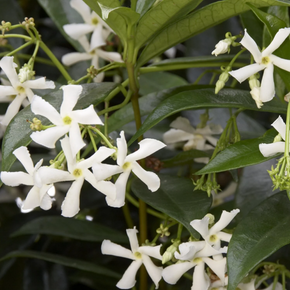
Pink Jasmine (Jasminum polyanthum) is prized for a spectacular display of rosy buds and sweetly scented white blooms that appear as early as late winter and continue into early summer. A vigorous, twining climber, it quickly clothes supports or can be trained as a groundcover, delivering months of fragrance and a graceful, lacy look. Plant in full to partial sun and evenly moist, well‑drained soil; in hotter inland sites, light afternoon shade keeps plants fresh while maintaining abundant bloom in USDA Zones 8–11.
Botanical Name
Jasminum polyanthum — commonly called Pink Jasmine; family Oleaceae.
Plant Type & Habit
Fast‑growing, twining vine with glossy, compound leaves; can be trained vertically or allowed to sprawl as a fragrant groundcover.
Mature Size
Vines typically reach 20–25 ft. with support; spread varies by training and structure.
Hardiness
USDA Zones 8–11; evergreen in frost‑free areas, semi‑evergreen where light frost occurs.
Light & Exposure
Full sun to partial sun. Best flowering in full sun; provide light afternoon shade in hot, dry inland climates.
Soil & Water
Thrives in enriched, well‑drained, lightly moist soils. Keep soil moist but not soggy, especially during establishment.
Bloom & Fragrance
Late winter through early summer; buds are pink and open to highly fragrant white flowers, often with buds and blossoms showing together for a bicolor effect.
Uses & Placements
- Trellises, arbors, fences, posts, and gateways.
- Espalier on walls or screens for scented coverage.
- Containers & hanging baskets where cascading growth and fragrance can be enjoyed up close.
- Groundcover in large, sunny spaces with guidance to keep within bounds.
Companion Ideas
Pairs beautifully with Clematis, Hibiscus, Crape Myrtle (Lagerstroemia), Roses, and Nandina for complementary color, form, and seasonal interest.
Training & Pruning
Provide a sturdy support and guide young stems early. Prune after flowering to shape, control size, and encourage new flowering wood.
Containers & Indoors
Excellent in large containers with a trellis or hoop. In cold regions, grow outdoors in warm months and overwinter indoors in bright light.
Wildlife & Pets
Attractive to pollinators; listed as non‑toxic to cats and dogs. Always confirm for your locale and pets.
Regional Notes
Performs best in sheltered, frost‑free exposures. In Zone 8, protect from hard freezes and mulch roots during cold snaps.
Planting & Spacing
Plant at the same depth as in the nursery container near the intended support. Space plants 4–6 ft. apart along fences or trellises for quick coverage and airflow.
Care Tips
Feed lightly in spring if soils are lean. Avoid waterlogging; ensure consistent moisture through the main bloom window. Refresh mulch annually, keeping it off stems.
- Masses of pink buds opening to intensely fragrant white flowers from late winter into early summer.
- Fast‑growing, twining vine; quickly climbs 20–25 ft. with support or can be used as a sprawling groundcover.
- Evergreen to semi‑evergreen in mild climates; glossy green foliage provides year‑round texture.
- Versatile for trellises, arbors, fences, containers, and hanging baskets; excellent near windows and entries for scent.
Pink Jasmine (Jasminum polyanthum) is prized for a spectacular display of rosy buds and sweetly scented white blooms that appear as early as late winter and continue into early summer. A vigorous, twining climber, it quickly clothes supports or can be trained as a groundcover, delivering months of fragrance and a graceful, lacy look. Plant in full to partial sun and evenly moist, well‑drained soil; in hotter inland sites, light afternoon shade keeps plants fresh while maintaining abundant bloom in USDA Zones 8–11.
Botanical Name
Jasminum polyanthum — commonly called Pink Jasmine; family Oleaceae.
Plant Type & Habit
Fast‑growing, twining vine with glossy, compound leaves; can be trained vertically or allowed to sprawl as a fragrant groundcover.
Mature Size
Vines typically reach 20–25 ft. with support; spread varies by training and structure.
Hardiness
USDA Zones 8–11; evergreen in frost‑free areas, semi‑evergreen where light frost occurs.
Light & Exposure
Full sun to partial sun. Best flowering in full sun; provide light afternoon shade in hot, dry inland climates.
Soil & Water
Thrives in enriched, well‑drained, lightly moist soils. Keep soil moist but not soggy, especially during establishment.
Bloom & Fragrance
Late winter through early summer; buds are pink and open to highly fragrant white flowers, often with buds and blossoms showing together for a bicolor effect.
Uses & Placements
- Trellises, arbors, fences, posts, and gateways.
- Espalier on walls or screens for scented coverage.
- Containers & hanging baskets where cascading growth and fragrance can be enjoyed up close.
- Groundcover in large, sunny spaces with guidance to keep within bounds.
Companion Ideas
Pairs beautifully with Clematis, Hibiscus, Crape Myrtle (Lagerstroemia), Roses, and Nandina for complementary color, form, and seasonal interest.
Training & Pruning
Provide a sturdy support and guide young stems early. Prune after flowering to shape, control size, and encourage new flowering wood.
Containers & Indoors
Excellent in large containers with a trellis or hoop. In cold regions, grow outdoors in warm months and overwinter indoors in bright light.
Wildlife & Pets
Attractive to pollinators; listed as non‑toxic to cats and dogs. Always confirm for your locale and pets.
Regional Notes
Performs best in sheltered, frost‑free exposures. In Zone 8, protect from hard freezes and mulch roots during cold snaps.
Planting & Spacing
Plant at the same depth as in the nursery container near the intended support. Space plants 4–6 ft. apart along fences or trellises for quick coverage and airflow.
Care Tips
Feed lightly in spring if soils are lean. Avoid waterlogging; ensure consistent moisture through the main bloom window. Refresh mulch annually, keeping it off stems.
Related Products