

Zoom the image with the mouse
Pink Jasmine - 2 Gallon
SKU:
2008080
UPC:
541537004852
$39.99
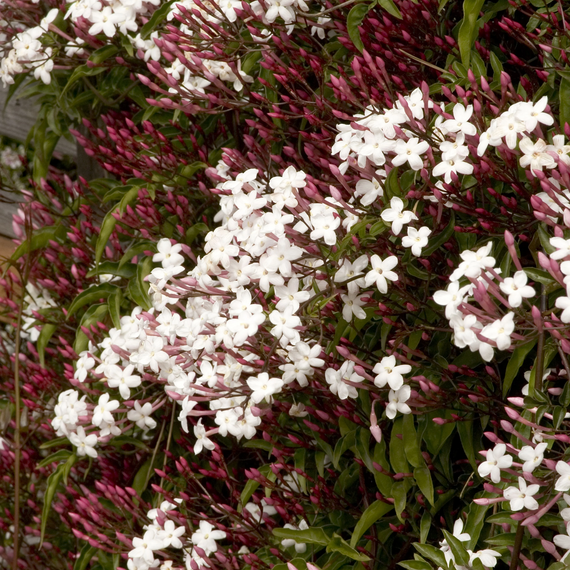
- Intoxicatingly fragrant evergreen vine smothered in clusters of deep rose-pink buds that open to starry white flowers from late winter through spring
- Fast-growing twining climber that quickly transforms trellises, arbors, fences, and pergolas into stunning fragrant focal points
- Versatile performer equally at home in the ground or in a container on a patio, deck, or balcony in USDA Zones 8-11
- Low-maintenance and easy to grow with a well-earned Royal Horticultural Society Award of Garden Merit for exceptional ornamental value
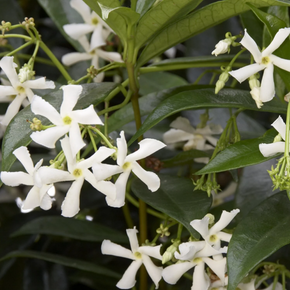
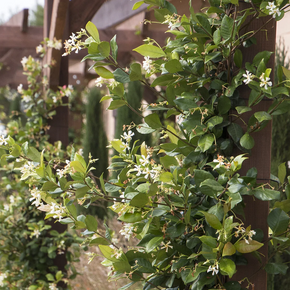
Pink Jasmine (Jasminum polyanthum), also known as Many-Flowered Jasmine, is one of the most beloved fragrant vines in cultivation, and it is easy to see why gardeners in Southern Oregon and Northern California return to it season after season. Native to south-central China and Myanmar, this vigorous evergreen twining vine produces an absolutely breathtaking floral display each late winter and spring, when long, arching stems become blanketed in dense clusters of rosy-pink buds that unfurl into 1-inch, five-petaled, star-shaped white flowers releasing a rich, sweet, unmistakably classic jasmine perfume that can fill an entire outdoor space. The dark green, pinnately compound leaves with five to seven leaflets provide an attractive backdrop year-round, and the rapid growth rate means a newly planted vine can cover a trellis, arbor, wall, or fence in a single growing season. Given a sunny to partly shaded site with fertile, well-drained soil and consistent moisture while establishing, Pink Jasmine rewards gardeners with a spectacular seasonal show that pollinators including butterflies and hummingbirds flock to. Its adaptability to container culture makes it an excellent choice for patios, covered porches, and entryways, where its legendary fragrance can be enjoyed up close. Whether used as a climbing screen for privacy, a romantic accent on a garden structure, or a fragrant patio showpiece, Jasminum polyanthum is a truly exceptional flowering vine that delivers both beauty and sensory delight season after season.
Plant Description
Pink Jasmine (Jasminum polyanthum) is a vigorous, evergreen to semi-evergreen twining vine in the olive family (Oleaceae). Its slender, flexible stems clothe themselves in attractive pinnately compound leaves, each made up of five to seven elliptical, dark green leaflets with a slightly paler underside. From late winter into spring, the plant produces abundant panicles of tubular flower buds in a rich, rosy pink that open progressively to reveal bright white, star-shaped blooms approximately 1 inch (2.5 cm) across. Each flower releases a powerfully sweet, classic jasmine fragrance that is widely considered among the finest of any flowering vine. The species name polyanthum literally means "many-flowered," an apt description of this plant's ability to produce hundreds, and on a mature plant thousands, of blooms in a single flush. The Royal Horticultural Society has recognized this vine with its prestigious Award of Garden Merit, reflecting its outstanding ornamental value and reliable performance in cultivation.
Mature Size
| Attribute | Measurement |
|---|---|
| Mature Height (in ground) | 15 to 25 ft (4.5 to 7.6 m) |
| Typical Spread | 6 to 10 ft (1.8 to 3 m), depending on support and pruning |
| Growth Rate | Fast; can cover a large trellis or fence in one to two growing seasons |
| Vine Type | Twining climber; needs a support structure to climb |
| Container Size | More compact and manageable when grown in a pot; responds well to pruning to maintain a desired size |
Because Pink Jasmine is a twining vine rather than a self-clinging climber, it requires a trellis, arbor, fence, obelisk, or wires to climb. Space multiple plants at least 10 feet apart to allow room for each vine to develop its full framework without crowding.
Hardiness Zones and Climate
Pink Jasmine is best suited to USDA Hardiness Zones 8 through 11, which covers most of Southern Oregon's Rogue Valley and the majority of Northern California. It tolerates brief cold snaps down to approximately 10 to 15 degrees F (-9 to -12 degrees C), but sustained hard frosts will damage or kill the plant. In the cooler end of Zone 8, planting against a south- or west-facing wall offers helpful frost protection and extra warmth. In inland areas with intense summer heat, afternoon shade improves performance and prevents leaf scorch. This vine thrives along the Pacific Coast and in mild inland valleys where winters are gentle and summers are warm but not extreme. In colder climates outside its hardiness range, Pink Jasmine can be grown in a container and moved indoors before the first hard frost, where it performs well in a conservatory or very bright sunroom. An important note for bud initiation: Pink Jasmine requires a period of cooler nighttime temperatures in the 50 to 59 degrees F (10 to 15 degrees C) range during fall and early winter to trigger its spectacular bloom the following late winter and spring.
Sunlight Requirements
Pink Jasmine flowers most freely and grows most vigorously in full sun to part shade, with a minimum of 4 to 6 hours of direct sunlight per day. Morning sun with some afternoon shade is ideal, especially in hotter inland locations where intense afternoon sun can scorch the foliage. Along the coast and in mild climates, full sun exposure is well tolerated. Insufficient light is one of the most common reasons Pink Jasmine fails to bloom; plants growing in deep shade will become leggy and produce few or no flowers. When growing in a container, rotate the pot periodically so all sides of the vine receive even light exposure. Indoors, place the plant directly in front of the brightest available window, ideally one with eastern or southern exposure.
Soil and pH Preferences
Pink Jasmine performs best in fertile, humus-rich, well-drained soil. Good drainage is absolutely essential, as waterlogged soil quickly leads to root rot and plant decline. While this vine is adaptable to a range of soil types, loamy or sandy loam soil is ideal because it retains adequate moisture without becoming soggy. Amending heavy clay soils with generous amounts of compost, perlite, or coarse sand before planting will greatly improve drainage and plant performance. The optimal soil pH range is 6.5 to 7.5 (slightly acidic to neutral). For container culture, use a high-quality, well-draining potting mix amended with perlite or pumice for additional aeration. Adding a layer of organic compost at planting time and refreshing the mulch layer each spring provides a steady supply of nutrients and helps moderate soil temperature and moisture levels.
Watering Guide
- Newly planted vines: Water consistently and deeply during the first one to two growing seasons to establish a strong root system. Check soil moisture every few days, especially during warm or windy weather.
- Established plants in the ground: Water deeply every 1 to 2 weeks during the active growing season, allowing the top 1 to 2 inches of soil to dry slightly between waterings. A deep, infrequent soak encourages roots to grow downward, increasing drought resilience.
- Container plants: Require more frequent monitoring and watering than in-ground plants. Water thoroughly when the top inch of the potting mix feels dry, and always empty saucers of standing water within 30 minutes of watering.
- Fall and winter: Reduce watering frequency as growth slows. Keep soil from drying out completely, but avoid keeping it consistently wet during cooler months.
- Overwatering signs: Yellowing leaves, wilting despite moist soil, mushy stems at the base, and a sour smell from the soil indicate excess moisture and potential root rot.
- Underwatering signs: Wilting, crispy or brown leaf edges, and flower bud drop signal the plant needs more consistent moisture.
Fertilizing
Pink Jasmine is not a heavy feeder, but regular fertilization during the growing season promotes stronger growth and more abundant flowering. Apply a balanced, slow-release granular fertilizer or a phosphorus-rich liquid fertilizer in early spring as new growth begins. A second light feeding immediately after the bloom period can help the plant rebuild energy for the following year. Avoid fertilizers with excessive nitrogen, as this encourages lush vegetative growth at the direct expense of flower production. Do not fertilize in late fall or winter when the plant is in its rest period, as feeding at this time can cause fertilizer burn and weak, unproductive growth. Organic options such as a top-dressing of well-aged compost in early spring are an excellent low-maintenance alternative to synthetic fertilizers and support long-term soil health.
Pruning and Maintenance
Regular pruning is essential for keeping Pink Jasmine looking its best, maintaining manageable size, and encouraging the densest flowering. The most important rule is to prune immediately after flowering concludes in late spring or early summer, as the vine blooms on wood produced the previous season. Cutting at the wrong time, particularly in late summer or fall, risks removing the developing flower buds for the following year's display.
- Post-bloom pruning: Cut back long, flowered stems by one-third to one-half to shape the vine and stimulate vigorous new growth that will carry next season's flowers.
- Thinning: Remove a portion of older, woody canes at the base each year to maintain an open framework with good air circulation and to rejuvenate the plant.
- Light tidying: Remove spent flowers and any dead or damaged stems throughout the growing season to keep the plant tidy and discourage pests and disease.
- Pinching: Pinch growing tips on young or container plants to encourage bushier, more compact growth.
- Tool hygiene: Always use clean, sharp pruning shears. Wipe blades with rubbing alcohol between cuts when working around diseased material to prevent spreading pathogens.
In very vigorous situations, Pink Jasmine may benefit from two to three light trimmings per year. Without any pruning, the vine can become a dense, tangled mass that is prone to poor air circulation and self-smothering.
Planting Instructions
- Choose a site that receives at least 4 to 6 hours of direct sunlight with some protection from intense afternoon sun in hot inland areas. A sheltered location near a wall or fence is ideal in areas with occasional frost.
- Install the support structure (trellis, arbor, obelisk, or wall wires) before planting so you can immediately guide the young vine upward without disturbing the root zone.
- Dig a planting hole twice as wide and equal in depth to the root ball. Amend the native soil with compost if it is poor or heavy with clay.
- Plant the vine approximately 12 inches away from any wall or fence so the roots have access to rainfall and are not trapped in dry foundation soil.
- Loosen any circling roots gently before placing the plant in the hole. Set the crown at the same depth it was growing in its nursery container.
- Backfill with the amended soil, firm gently to eliminate air pockets, and water deeply and thoroughly.
- Apply a 2 to 3 inch layer of organic mulch (wood chips, bark, or shredded leaves) over the root zone, keeping mulch several inches away from the base of the stem.
- Loosely tie the main stems to the support structure and begin guiding growth in the desired direction. The vine will begin twining on its own once the stems contact the support.
- Best planting time in Southern Oregon and Northern California is spring through early fall for in-ground planting, allowing the vine to establish roots before winter.
Seasonal Interest
| Season | What to Expect |
|---|---|
| Late Winter (Feb-Mar) | Deep rose-pink flower buds begin forming and opening; fragrance is first noticeable on warm days. This is one of the earliest fragrant flowering vines of the year. |
| Spring (Mar-May) | Peak flowering display; the vine is densely covered in clusters of starry white flowers with an intense, sweet jasmine fragrance. Pollinators are highly active at this time. |
| Late Spring - Early Summer | Blooming begins to taper; ideal time for post-bloom pruning and shaping. Vigorous new growth emerges that will carry next year's flower buds. |
| Summer | Lush dark green foliage provides attractive coverage and privacy screening. Occasional sporadic blooms may appear. Continue training new growth onto the support structure. |
| Fall | Foliage remains evergreen in mild climates. Cooler nighttime temperatures during this period are important for setting next season's flower buds. Reduce watering and fertilizing. |
| Winter | Stays evergreen in Zones 8-11. Flower bud development continues through the cool season; buds may be visible by mid-to-late winter in mild locations. |
Landscape Uses
- Trellises and arbors: One of the finest vines for covering a garden structure quickly with both foliage and spectacular fragrant blooms.
- Fences and walls: Softens hard structures and creates a lush, flowering privacy screen along property lines, especially effective against south- or west-facing masonry walls that provide warmth.
- Pergolas and patio overheads: Trained overhead, the vine creates a living canopy that fills the entire outdoor living area with fragrance during bloom season.
- Entryways and doorways: Planted beside a gate, doorway, or front entrance, Pink Jasmine perfumes the air for anyone passing through.
- Containers on patios and decks: Excellent in large pots fitted with an obelisk or hoop support; easily moved indoors if frost threatens in colder microclimates.
- Hillside and slope coverage: Can be left to sprawl without support as a flowering groundcover on a bank or slope where foot traffic is not a concern.
- Mixed borders: Use as a backdrop climber behind lower-growing shrubs and perennials, providing vertical interest and fragrance above the border planting.
Container Growing
Pink Jasmine is an outstanding container plant, making it ideal for patios, decks, balconies, and covered porches throughout Southern Oregon and Northern California. When growing in a pot, keep the following guidelines in mind:
- Choose a generous container with ample drainage holes. A pot that is too small will restrict root development and reduce blooming; however, Pink Jasmine blooms reasonably well when slightly pot-bound.
- Use a high-quality, well-draining potting mix. Amend with perlite or pumice (roughly 20 to 25% by volume) to improve aeration and prevent the mix from compacting over time.
- Install a sturdy trellis, obelisk, or hoop support directly in the container so stems have something to twine around from the start.
- Container plants dry out more quickly than in-ground plants, especially in warm or windy locations. Check soil moisture frequently and water thoroughly when the top inch of the mix is dry.
- Fertilize more frequently than in-ground plantings, every two to four weeks with a diluted liquid fertilizer during spring and summer, as nutrients leach out of containers with regular watering.
- Repot every one to two years in spring when roots begin circling the pot or emerging from drainage holes. Move up one pot size at a time.
- In areas with occasional frost, the container can be moved to a sheltered location, covered porch, or bright indoor space before temperatures drop below 15 degrees F.
Pests and Diseases
Pink Jasmine is generally a robust and trouble-free vine with good resistance to most pests and diseases when grown in appropriate conditions. The most common issues are as follows:
| Problem | Symptoms | Management |
|---|---|---|
| Aphids | Clusters of small soft-bodied insects on tender new shoots and flower buds; sticky honeydew residue on leaves below | Blast off with a strong stream of water; apply insecticidal soap or neem oil spray as needed |
| Spider Mites | Fine webbing on undersides of leaves; stippled, yellowed, or bronzed foliage; most common in hot, dry conditions | Increase humidity and air circulation; apply neem oil or insecticidal soap; avoid drought stress |
| Mealybugs | White cottony masses in leaf axils and on stems, especially on indoor or container plants | Remove manually with a cotton swab dipped in rubbing alcohol; treat with neem oil or insecticidal soap |
| Scale Insects | Brown or tan bumpy encrustations on stems; yellowing foliage and weakened growth | Scrape off manually; treat with horticultural oil spray in spring |
| Root Rot | Yellowing and wilting despite moist soil; soft, dark, mushy roots; foul odor from soil | Improve drainage immediately; allow soil to dry; remove affected roots and repot in fresh well-draining mix |
| Leaf Spot / Leaf Rust | Brown or rust-colored spots on foliage; most often associated with overly wet foliage or poor air circulation | Avoid overhead watering; improve air circulation through pruning; remove and dispose of affected leaves |
| Powdery Mildew | White, powdery coating on leaves and stems; most prevalent in warm days with cool nights and poor air flow | Improve air circulation; avoid wetting foliage; treat with neem oil or a sulfur-based fungicide if severe |
Wildlife Value
Pink Jasmine is a valuable plant for supporting garden wildlife during its late winter and early spring bloom period, a time when few other nectar sources are available. Its fragrant flowers are attractive to beneficial pollinators including butterflies and hummingbirds, which are drawn to the abundant, nectar-rich blooms. Bees also visit the flowers on warm days during the bloom season, providing an important early-season forage source before many other flowering plants have begun their growing season. The dense, evergreen foliage provides year-round cover and nesting habitat for small birds. Pink Jasmine is considered non-toxic to dogs, cats, and horses according to ASPCA guidelines, making it a generally pet-friendly choice for garden landscapes. Note that while the plant is not classified as toxic, ingestion of plant material in large quantities may still cause mild gastrointestinal upset in sensitive animals.
Companion Plants
Pink Jasmine pairs beautifully with a wide range of plants that complement its late-winter to spring bloom time, its fragrance, and its need for a sunny to partly shaded site. Consider these companion planting combinations:
- Wisteria: Shares a similar structural role as a vigorous climbing vine; plant them on separate structures to prevent competition, creating a succession of fragrant blooms from late winter through late spring.
- Clematis: Particularly spring-blooming varieties like Clematis armandii (Evergreen Clematis), which offers a complementary fragrant white flower display alongside the jasmine.
- Roses (climbing varieties): Combine beautifully on a shared arbor or pergola; the jasmine provides late-winter bloom while climbing roses take over in late spring and summer.
- Lavender: Planted at the base of a jasmine-covered wall or trellis, lavender provides contrasting purple summer color and a complementary fragrance.
- Ceanothus (California Lilac): A regional favorite in Northern California and Southern Oregon that blooms at a similar time in shades of blue and purple, creating a stunning color contrast with the white and pink jasmine flowers.
- Salvia: Low-growing salvias planted at the jasmine's feet provide season-long color and additional pollinator support once the jasmine finishes blooming.
- Mexican Orange Blossom (Choisya ternata): A fragrant evergreen shrub with white spring blooms that pairs naturally with the jasmine's flowering season and sun requirements.
- Ornamental grasses: Planted nearby, grasses provide textural contrast throughout the season and help soften the base of a trellis or fence where the jasmine grows.
Propagation
Pink Jasmine can be readily propagated at home using two reliable methods:
- Semi-hardwood stem cuttings (preferred method): Take cuttings 4 to 6 inches long from the current season's growth in late spring through early summer, after flowering. Each cutting should have at least two to three leaf nodes. Remove the lower leaves, dip the cut end in rooting hormone powder or gel, and insert the cutting 1 to 2 inches deep into a pot filled with a moist, well-draining propagation mix (equal parts perlite and peat or coco coir works well). Cover the pot loosely with a clear plastic bag or place in a propagation tray with a humidity dome to retain moisture. Keep in bright, indirect light at temperatures between 65 and 75 degrees F until roots form, typically within 4 to 8 weeks. Remove the humidity cover gradually once rooting is established to acclimate the cutting to ambient conditions.
- Layering: Select a long, flexible stem and bend it to ground level. Make a small wound on the underside of the stem at a leaf node, apply rooting hormone to the wound, and bury that section 2 to 3 inches deep in moist soil while still attached to the parent plant. Secure with a U-shaped pin or stone. Keep the buried section moist until roots develop, usually within a few months. Once a strong root system has formed, sever the new plant from the parent and transplant to its permanent location.
- Intoxicatingly fragrant evergreen vine smothered in clusters of deep rose-pink buds that open to starry white flowers from late winter through spring
- Fast-growing twining climber that quickly transforms trellises, arbors, fences, and pergolas into stunning fragrant focal points
- Versatile performer equally at home in the ground or in a container on a patio, deck, or balcony in USDA Zones 8-11
- Low-maintenance and easy to grow with a well-earned Royal Horticultural Society Award of Garden Merit for exceptional ornamental value
Pink Jasmine (Jasminum polyanthum), also known as Many-Flowered Jasmine, is one of the most beloved fragrant vines in cultivation, and it is easy to see why gardeners in Southern Oregon and Northern California return to it season after season. Native to south-central China and Myanmar, this vigorous evergreen twining vine produces an absolutely breathtaking floral display each late winter and spring, when long, arching stems become blanketed in dense clusters of rosy-pink buds that unfurl into 1-inch, five-petaled, star-shaped white flowers releasing a rich, sweet, unmistakably classic jasmine perfume that can fill an entire outdoor space. The dark green, pinnately compound leaves with five to seven leaflets provide an attractive backdrop year-round, and the rapid growth rate means a newly planted vine can cover a trellis, arbor, wall, or fence in a single growing season. Given a sunny to partly shaded site with fertile, well-drained soil and consistent moisture while establishing, Pink Jasmine rewards gardeners with a spectacular seasonal show that pollinators including butterflies and hummingbirds flock to. Its adaptability to container culture makes it an excellent choice for patios, covered porches, and entryways, where its legendary fragrance can be enjoyed up close. Whether used as a climbing screen for privacy, a romantic accent on a garden structure, or a fragrant patio showpiece, Jasminum polyanthum is a truly exceptional flowering vine that delivers both beauty and sensory delight season after season.
Plant Description
Pink Jasmine (Jasminum polyanthum) is a vigorous, evergreen to semi-evergreen twining vine in the olive family (Oleaceae). Its slender, flexible stems clothe themselves in attractive pinnately compound leaves, each made up of five to seven elliptical, dark green leaflets with a slightly paler underside. From late winter into spring, the plant produces abundant panicles of tubular flower buds in a rich, rosy pink that open progressively to reveal bright white, star-shaped blooms approximately 1 inch (2.5 cm) across. Each flower releases a powerfully sweet, classic jasmine fragrance that is widely considered among the finest of any flowering vine. The species name polyanthum literally means "many-flowered," an apt description of this plant's ability to produce hundreds, and on a mature plant thousands, of blooms in a single flush. The Royal Horticultural Society has recognized this vine with its prestigious Award of Garden Merit, reflecting its outstanding ornamental value and reliable performance in cultivation.
Mature Size
| Attribute | Measurement |
|---|---|
| Mature Height (in ground) | 15 to 25 ft (4.5 to 7.6 m) |
| Typical Spread | 6 to 10 ft (1.8 to 3 m), depending on support and pruning |
| Growth Rate | Fast; can cover a large trellis or fence in one to two growing seasons |
| Vine Type | Twining climber; needs a support structure to climb |
| Container Size | More compact and manageable when grown in a pot; responds well to pruning to maintain a desired size |
Because Pink Jasmine is a twining vine rather than a self-clinging climber, it requires a trellis, arbor, fence, obelisk, or wires to climb. Space multiple plants at least 10 feet apart to allow room for each vine to develop its full framework without crowding.
Hardiness Zones and Climate
Pink Jasmine is best suited to USDA Hardiness Zones 8 through 11, which covers most of Southern Oregon's Rogue Valley and the majority of Northern California. It tolerates brief cold snaps down to approximately 10 to 15 degrees F (-9 to -12 degrees C), but sustained hard frosts will damage or kill the plant. In the cooler end of Zone 8, planting against a south- or west-facing wall offers helpful frost protection and extra warmth. In inland areas with intense summer heat, afternoon shade improves performance and prevents leaf scorch. This vine thrives along the Pacific Coast and in mild inland valleys where winters are gentle and summers are warm but not extreme. In colder climates outside its hardiness range, Pink Jasmine can be grown in a container and moved indoors before the first hard frost, where it performs well in a conservatory or very bright sunroom. An important note for bud initiation: Pink Jasmine requires a period of cooler nighttime temperatures in the 50 to 59 degrees F (10 to 15 degrees C) range during fall and early winter to trigger its spectacular bloom the following late winter and spring.
Sunlight Requirements
Pink Jasmine flowers most freely and grows most vigorously in full sun to part shade, with a minimum of 4 to 6 hours of direct sunlight per day. Morning sun with some afternoon shade is ideal, especially in hotter inland locations where intense afternoon sun can scorch the foliage. Along the coast and in mild climates, full sun exposure is well tolerated. Insufficient light is one of the most common reasons Pink Jasmine fails to bloom; plants growing in deep shade will become leggy and produce few or no flowers. When growing in a container, rotate the pot periodically so all sides of the vine receive even light exposure. Indoors, place the plant directly in front of the brightest available window, ideally one with eastern or southern exposure.
Soil and pH Preferences
Pink Jasmine performs best in fertile, humus-rich, well-drained soil. Good drainage is absolutely essential, as waterlogged soil quickly leads to root rot and plant decline. While this vine is adaptable to a range of soil types, loamy or sandy loam soil is ideal because it retains adequate moisture without becoming soggy. Amending heavy clay soils with generous amounts of compost, perlite, or coarse sand before planting will greatly improve drainage and plant performance. The optimal soil pH range is 6.5 to 7.5 (slightly acidic to neutral). For container culture, use a high-quality, well-draining potting mix amended with perlite or pumice for additional aeration. Adding a layer of organic compost at planting time and refreshing the mulch layer each spring provides a steady supply of nutrients and helps moderate soil temperature and moisture levels.
Watering Guide
- Newly planted vines: Water consistently and deeply during the first one to two growing seasons to establish a strong root system. Check soil moisture every few days, especially during warm or windy weather.
- Established plants in the ground: Water deeply every 1 to 2 weeks during the active growing season, allowing the top 1 to 2 inches of soil to dry slightly between waterings. A deep, infrequent soak encourages roots to grow downward, increasing drought resilience.
- Container plants: Require more frequent monitoring and watering than in-ground plants. Water thoroughly when the top inch of the potting mix feels dry, and always empty saucers of standing water within 30 minutes of watering.
- Fall and winter: Reduce watering frequency as growth slows. Keep soil from drying out completely, but avoid keeping it consistently wet during cooler months.
- Overwatering signs: Yellowing leaves, wilting despite moist soil, mushy stems at the base, and a sour smell from the soil indicate excess moisture and potential root rot.
- Underwatering signs: Wilting, crispy or brown leaf edges, and flower bud drop signal the plant needs more consistent moisture.
Fertilizing
Pink Jasmine is not a heavy feeder, but regular fertilization during the growing season promotes stronger growth and more abundant flowering. Apply a balanced, slow-release granular fertilizer or a phosphorus-rich liquid fertilizer in early spring as new growth begins. A second light feeding immediately after the bloom period can help the plant rebuild energy for the following year. Avoid fertilizers with excessive nitrogen, as this encourages lush vegetative growth at the direct expense of flower production. Do not fertilize in late fall or winter when the plant is in its rest period, as feeding at this time can cause fertilizer burn and weak, unproductive growth. Organic options such as a top-dressing of well-aged compost in early spring are an excellent low-maintenance alternative to synthetic fertilizers and support long-term soil health.
Pruning and Maintenance
Regular pruning is essential for keeping Pink Jasmine looking its best, maintaining manageable size, and encouraging the densest flowering. The most important rule is to prune immediately after flowering concludes in late spring or early summer, as the vine blooms on wood produced the previous season. Cutting at the wrong time, particularly in late summer or fall, risks removing the developing flower buds for the following year's display.
- Post-bloom pruning: Cut back long, flowered stems by one-third to one-half to shape the vine and stimulate vigorous new growth that will carry next season's flowers.
- Thinning: Remove a portion of older, woody canes at the base each year to maintain an open framework with good air circulation and to rejuvenate the plant.
- Light tidying: Remove spent flowers and any dead or damaged stems throughout the growing season to keep the plant tidy and discourage pests and disease.
- Pinching: Pinch growing tips on young or container plants to encourage bushier, more compact growth.
- Tool hygiene: Always use clean, sharp pruning shears. Wipe blades with rubbing alcohol between cuts when working around diseased material to prevent spreading pathogens.
In very vigorous situations, Pink Jasmine may benefit from two to three light trimmings per year. Without any pruning, the vine can become a dense, tangled mass that is prone to poor air circulation and self-smothering.
Planting Instructions
- Choose a site that receives at least 4 to 6 hours of direct sunlight with some protection from intense afternoon sun in hot inland areas. A sheltered location near a wall or fence is ideal in areas with occasional frost.
- Install the support structure (trellis, arbor, obelisk, or wall wires) before planting so you can immediately guide the young vine upward without disturbing the root zone.
- Dig a planting hole twice as wide and equal in depth to the root ball. Amend the native soil with compost if it is poor or heavy with clay.
- Plant the vine approximately 12 inches away from any wall or fence so the roots have access to rainfall and are not trapped in dry foundation soil.
- Loosen any circling roots gently before placing the plant in the hole. Set the crown at the same depth it was growing in its nursery container.
- Backfill with the amended soil, firm gently to eliminate air pockets, and water deeply and thoroughly.
- Apply a 2 to 3 inch layer of organic mulch (wood chips, bark, or shredded leaves) over the root zone, keeping mulch several inches away from the base of the stem.
- Loosely tie the main stems to the support structure and begin guiding growth in the desired direction. The vine will begin twining on its own once the stems contact the support.
- Best planting time in Southern Oregon and Northern California is spring through early fall for in-ground planting, allowing the vine to establish roots before winter.
Seasonal Interest
| Season | What to Expect |
|---|---|
| Late Winter (Feb-Mar) | Deep rose-pink flower buds begin forming and opening; fragrance is first noticeable on warm days. This is one of the earliest fragrant flowering vines of the year. |
| Spring (Mar-May) | Peak flowering display; the vine is densely covered in clusters of starry white flowers with an intense, sweet jasmine fragrance. Pollinators are highly active at this time. |
| Late Spring - Early Summer | Blooming begins to taper; ideal time for post-bloom pruning and shaping. Vigorous new growth emerges that will carry next year's flower buds. |
| Summer | Lush dark green foliage provides attractive coverage and privacy screening. Occasional sporadic blooms may appear. Continue training new growth onto the support structure. |
| Fall | Foliage remains evergreen in mild climates. Cooler nighttime temperatures during this period are important for setting next season's flower buds. Reduce watering and fertilizing. |
| Winter | Stays evergreen in Zones 8-11. Flower bud development continues through the cool season; buds may be visible by mid-to-late winter in mild locations. |
Landscape Uses
- Trellises and arbors: One of the finest vines for covering a garden structure quickly with both foliage and spectacular fragrant blooms.
- Fences and walls: Softens hard structures and creates a lush, flowering privacy screen along property lines, especially effective against south- or west-facing masonry walls that provide warmth.
- Pergolas and patio overheads: Trained overhead, the vine creates a living canopy that fills the entire outdoor living area with fragrance during bloom season.
- Entryways and doorways: Planted beside a gate, doorway, or front entrance, Pink Jasmine perfumes the air for anyone passing through.
- Containers on patios and decks: Excellent in large pots fitted with an obelisk or hoop support; easily moved indoors if frost threatens in colder microclimates.
- Hillside and slope coverage: Can be left to sprawl without support as a flowering groundcover on a bank or slope where foot traffic is not a concern.
- Mixed borders: Use as a backdrop climber behind lower-growing shrubs and perennials, providing vertical interest and fragrance above the border planting.
Container Growing
Pink Jasmine is an outstanding container plant, making it ideal for patios, decks, balconies, and covered porches throughout Southern Oregon and Northern California. When growing in a pot, keep the following guidelines in mind:
- Choose a generous container with ample drainage holes. A pot that is too small will restrict root development and reduce blooming; however, Pink Jasmine blooms reasonably well when slightly pot-bound.
- Use a high-quality, well-draining potting mix. Amend with perlite or pumice (roughly 20 to 25% by volume) to improve aeration and prevent the mix from compacting over time.
- Install a sturdy trellis, obelisk, or hoop support directly in the container so stems have something to twine around from the start.
- Container plants dry out more quickly than in-ground plants, especially in warm or windy locations. Check soil moisture frequently and water thoroughly when the top inch of the mix is dry.
- Fertilize more frequently than in-ground plantings, every two to four weeks with a diluted liquid fertilizer during spring and summer, as nutrients leach out of containers with regular watering.
- Repot every one to two years in spring when roots begin circling the pot or emerging from drainage holes. Move up one pot size at a time.
- In areas with occasional frost, the container can be moved to a sheltered location, covered porch, or bright indoor space before temperatures drop below 15 degrees F.
Pests and Diseases
Pink Jasmine is generally a robust and trouble-free vine with good resistance to most pests and diseases when grown in appropriate conditions. The most common issues are as follows:
| Problem | Symptoms | Management |
|---|---|---|
| Aphids | Clusters of small soft-bodied insects on tender new shoots and flower buds; sticky honeydew residue on leaves below | Blast off with a strong stream of water; apply insecticidal soap or neem oil spray as needed |
| Spider Mites | Fine webbing on undersides of leaves; stippled, yellowed, or bronzed foliage; most common in hot, dry conditions | Increase humidity and air circulation; apply neem oil or insecticidal soap; avoid drought stress |
| Mealybugs | White cottony masses in leaf axils and on stems, especially on indoor or container plants | Remove manually with a cotton swab dipped in rubbing alcohol; treat with neem oil or insecticidal soap |
| Scale Insects | Brown or tan bumpy encrustations on stems; yellowing foliage and weakened growth | Scrape off manually; treat with horticultural oil spray in spring |
| Root Rot | Yellowing and wilting despite moist soil; soft, dark, mushy roots; foul odor from soil | Improve drainage immediately; allow soil to dry; remove affected roots and repot in fresh well-draining mix |
| Leaf Spot / Leaf Rust | Brown or rust-colored spots on foliage; most often associated with overly wet foliage or poor air circulation | Avoid overhead watering; improve air circulation through pruning; remove and dispose of affected leaves |
| Powdery Mildew | White, powdery coating on leaves and stems; most prevalent in warm days with cool nights and poor air flow | Improve air circulation; avoid wetting foliage; treat with neem oil or a sulfur-based fungicide if severe |
Wildlife Value
Pink Jasmine is a valuable plant for supporting garden wildlife during its late winter and early spring bloom period, a time when few other nectar sources are available. Its fragrant flowers are attractive to beneficial pollinators including butterflies and hummingbirds, which are drawn to the abundant, nectar-rich blooms. Bees also visit the flowers on warm days during the bloom season, providing an important early-season forage source before many other flowering plants have begun their growing season. The dense, evergreen foliage provides year-round cover and nesting habitat for small birds. Pink Jasmine is considered non-toxic to dogs, cats, and horses according to ASPCA guidelines, making it a generally pet-friendly choice for garden landscapes. Note that while the plant is not classified as toxic, ingestion of plant material in large quantities may still cause mild gastrointestinal upset in sensitive animals.
Companion Plants
Pink Jasmine pairs beautifully with a wide range of plants that complement its late-winter to spring bloom time, its fragrance, and its need for a sunny to partly shaded site. Consider these companion planting combinations:
- Wisteria: Shares a similar structural role as a vigorous climbing vine; plant them on separate structures to prevent competition, creating a succession of fragrant blooms from late winter through late spring.
- Clematis: Particularly spring-blooming varieties like Clematis armandii (Evergreen Clematis), which offers a complementary fragrant white flower display alongside the jasmine.
- Roses (climbing varieties): Combine beautifully on a shared arbor or pergola; the jasmine provides late-winter bloom while climbing roses take over in late spring and summer.
- Lavender: Planted at the base of a jasmine-covered wall or trellis, lavender provides contrasting purple summer color and a complementary fragrance.
- Ceanothus (California Lilac): A regional favorite in Northern California and Southern Oregon that blooms at a similar time in shades of blue and purple, creating a stunning color contrast with the white and pink jasmine flowers.
- Salvia: Low-growing salvias planted at the jasmine's feet provide season-long color and additional pollinator support once the jasmine finishes blooming.
- Mexican Orange Blossom (Choisya ternata): A fragrant evergreen shrub with white spring blooms that pairs naturally with the jasmine's flowering season and sun requirements.
- Ornamental grasses: Planted nearby, grasses provide textural contrast throughout the season and help soften the base of a trellis or fence where the jasmine grows.
Propagation
Pink Jasmine can be readily propagated at home using two reliable methods:
- Semi-hardwood stem cuttings (preferred method): Take cuttings 4 to 6 inches long from the current season's growth in late spring through early summer, after flowering. Each cutting should have at least two to three leaf nodes. Remove the lower leaves, dip the cut end in rooting hormone powder or gel, and insert the cutting 1 to 2 inches deep into a pot filled with a moist, well-draining propagation mix (equal parts perlite and peat or coco coir works well). Cover the pot loosely with a clear plastic bag or place in a propagation tray with a humidity dome to retain moisture. Keep in bright, indirect light at temperatures between 65 and 75 degrees F until roots form, typically within 4 to 8 weeks. Remove the humidity cover gradually once rooting is established to acclimate the cutting to ambient conditions.
- Layering: Select a long, flexible stem and bend it to ground level. Make a small wound on the underside of the stem at a leaf node, apply rooting hormone to the wound, and bury that section 2 to 3 inches deep in moist soil while still attached to the parent plant. Secure with a U-shaped pin or stone. Keep the buried section moist until roots develop, usually within a few months. Once a strong root system has formed, sever the new plant from the parent and transplant to its permanent location.
Related Products