Zoom the image with the mouse
Madagascar Jasmine - 2 Gallon
SKU:
2319285
UPC:
014949263952
$49.99
- Intensely fragrant, pure white waxy blooms appear in clusters from late spring through summer, filling the air with a sweet jasmine-vanilla scent beloved in wedding bouquets and floral arrangements
- Lustrous, deep green oval leaves remain evergreen year-round, providing lush tropical foliage even when the plant is not in flower
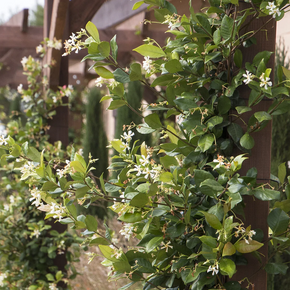
- Vigorous twining vine that climbs eagerly on trellises, wire frames, arbors, and fences — equally stunning as a trained container specimen on a patio or indoors near a bright window
- Non-toxic to cats, dogs, and humans, and a recipient of the prestigious Royal Horticultural Society Award of Garden Merit
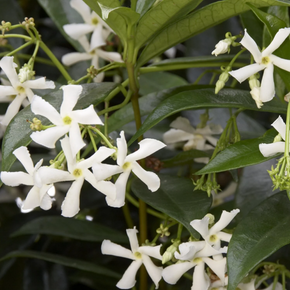
Madagascar Jasmine (Stephanotis floribunda), also known as Bridal Wreath, Wax Flower, and Hawaiian Wedding Flower, is one of the most exquisitely fragrant flowering vines in the tropical plant world, celebrated for its clusters of tubular, star-faced, snow-white blossoms that carry an intoxicating sweet scent reminiscent of jasmine and vanilla. Native to the tropical forests of Madagascar and a proud member of the Apocynaceae family, this evergreen woody twining vine produces thick, leathery, glossy oval leaves arranged in opposite pairs along flexible, trainable stems — making it as handsome out of bloom as it is breathtaking in flower. Blooming primarily from late spring through summer and sometimes into fall, the 2-inch tubular flowers appear in bouquet-like clusters and are arguably the finest fragrant white flowers available for container growing, patio display, or indoor growing in bright rooms. In frost-free climates (USDA Zones 10-11), Madagascar Jasmine can be grown outdoors as a permanent landscape climber on trellises, fences, and arbors, where it can reach impressive heights with the right support. In cooler climates, it thrives as a beloved houseplant or greenhouse vine when given bright indirect light, consistent warmth, and adequate humidity. Whether you are a collector of fragrant tropical plants, a bride planning a garden wedding, or simply someone who wants to fill a sunny patio with heavenly scent, Madagascar Jasmine is an unforgettable, award-winning classic that delivers exceptional beauty and fragrance season after season.
Plant Description
Stephanotis floribunda is a woody, twining evergreen vine native to the tropical forests of Madagascar. It belongs to the Apocynaceae family — the same plant family as oleander, hoya, and plumeria — and shares with them waxy, oppositely arranged leaves and tubular floral forms. The genus name Stephanotis is derived from the Greek word meaning "woman's crown," a fitting nod to the plant's long history as a bridal and ceremonial flower. The stems are sturdy yet flexible enough to be trained around wire hoops, trellises, and other support structures, giving growers the ability to shape the plant into elegant forms. The overall effect is lush, tropical, and deeply romantic.
Flowers and Fragrance
The flowers of Madagascar Jasmine are the plant's crowning glory. Pure white and waxy in texture, each individual bloom is approximately 2 inches long — tubular at the base, opening into a five-petaled star shape at the face. The blossoms appear in peduncle-borne clusters of 4 to 8 florets, creating a bouquet-like effect directly on the vine. The fragrance is intensely sweet, floral, and warm — often described as a blend of classic jasmine and vanilla — and is potent enough to perfume an entire room or patio. Blooming peaks from late spring through summer and can extend into early fall under ideal conditions. Indoors, with sufficient light, warmth, and humidity, flowering can occasionally occur at other times of year as well. After blooming, the plant may produce elongated, pear-shaped seed pods up to 4 inches in length, each containing 65 to 100 flattened, winged seeds, though pod production is uncommon under typical growing conditions.
Foliage and Form
Even when not in bloom, Madagascar Jasmine earns its place in any collection through its exceptional foliage. The leaves are thick, leathery, and deep glossy green with a smooth, almost polished surface. Each oval-shaped leaf can reach up to 4 inches in length and is arranged oppositely along the stems, giving the vine a tidy, architectural quality. The undersides of the leaves are equally attractive — an important feature when the plant is trained around a wire hoop or frame, where the leaf backs are often visible. Stems are sturdy, slightly woody at maturity, and flexible enough to be guided and trained with ease.
Mature Size
| Setting | Typical Size |
|---|---|
| Outdoor landscape (frost-free zones) | Can reach 15 to 20 feet in length with proper support |
| Container or indoor plant (trained on hoop/trellis) | Typically 3 to 4 feet; can grow larger with regular repotting and support |
| Growth rate | Moderate; several feet per year under ideal conditions |
| Habit | Twining, climbing evergreen vine |
Hardiness Zones and Climate
Madagascar Jasmine is hardy in USDA Zones 10 through 11 as an outdoor landscape plant. It is not frost-tolerant and should be protected from temperatures below 45°F (7°C). In Southern Oregon and Northern California, it is best grown as a container plant that can be brought indoors or under shelter during cold spells, or as a year-round indoor or greenhouse vine. It thrives in consistently warm, humid tropical to subtropical environments and performs best when temperatures remain between 65°F and 80°F (18°C to 26°C) during the growing season. A brief cooler rest period of around 55°F to 60°F (13°C to 15°C) during late winter can help stimulate spring and summer blooming.
Sunlight Requirements
Madagascar Jasmine requires bright light to thrive and bloom. Outdoors, a location with full sun to partial shade is ideal — it benefits from at least 6 hours of direct sunlight per day, with some protection from harsh afternoon sun in the hottest months to prevent leaf scorch. Indoors, position the plant near an east- or south-facing window where it receives bright, indirect or filtered light throughout the day. A sheer curtain can be used to diffuse intense direct sun from a south or west-facing window. Insufficient light is one of the most common reasons for poor or absent flowering, so prioritize the brightest available spot.
Watering Guide
During the active growing season (spring through summer), water Madagascar Jasmine thoroughly whenever the top inch of soil feels dry. The goal is to keep the soil consistently moist but never waterlogged, as standing water around roots leads to root rot. In winter, when the plant's growth slows, reduce watering significantly — allow the top 2 to 3 inches of soil to dry out between waterings. Wherever possible, use rainwater or distilled water, especially in hard-water areas, as mineral buildup from tap water can cause yellowing leaves. Avoid dramatic swings between drought and overwatering, as sudden changes in moisture levels can trigger bud and flower drop.
Soil and pH Preferences
Madagascar Jasmine performs best in a rich, well-draining potting mix with good moisture retention. A blend of 2 parts peat moss and 1 part perlite works very well, as does a general-purpose potting soil amended with peat and perlite to improve drainage and aeration. Loamy soils with high organic matter are recommended for in-ground planting. The plant tolerates a moderate pH range — slightly acidic to neutral (approximately pH 5.5 to 7.0) is ideal, though it can adapt to mildly alkaline conditions. Good drainage is essential; waterlogged or compacted soils will quickly lead to root and stem rot.
Temperature and Humidity
This vine is a true tropical at heart and thrives in warmth and moisture. Ideal growing temperatures range from 65°F to 80°F (18°C to 26°C) during spring and summer. Protect the plant from cold drafts, sudden temperature drops, and air conditioning vents, all of which can cause stress, leaf yellowing, and bud drop. High humidity is essential for healthy growth and successful blooming. In dry indoor environments, raise humidity by misting the foliage regularly with room-temperature water, setting the pot on a tray of moist pebbles, or placing a humidifier nearby. Avoid wetting the flowers themselves when misting, as this can shorten bloom life.
Fertilizing
Feed Madagascar Jasmine with a balanced, water-soluble liquid fertilizer every two weeks throughout the growing season (spring through summer). As the plant approaches its blooming period, switch to a fertilizer that is higher in phosphorus (the middle number in the N-P-K ratio) to encourage robust flower production. Avoid high-nitrogen fertilizers close to bloom time, as excess nitrogen promotes lush leafy growth at the expense of flowers. Reduce feeding to once a month in fall, and allow the plant a rest from fertilizing during winter. Always apply fertilizer to moist soil to prevent root burn.
Pruning and Maintenance
Madagascar Jasmine requires minimal but thoughtful pruning. Light tidying after the main flush of flowering helps maintain a clean shape and removes spent flower clusters. Any weak, damaged, or poorly leafed stems can be cut back in early spring before the new growing season begins. When trimming side shoots, leave at least half an inch of stem above a node to allow dormant buds room to develop. Avoid heavy pruning, as this vine does not regenerate vigorously the way some other climbers do. Regularly check that the support structure is adequate for the vine's weight as it matures, and gently guide new growth onto the trellis or frame rather than letting it tangle.
Planting and Repotting Instructions
When planting Madagascar Jasmine in a container, choose a pot with adequate drainage holes and fill it with a rich, well-draining potting mix. Install a trellis, wire hoop, or other support structure at planting time so that you can begin training the vine immediately without disturbing the root zone later. Repot every 2 years in spring, moving up only one pot size at a time. Interestingly, Madagascar Jasmine tends to bloom better when slightly pot-bound — avoid drastically oversizing the container, as too much extra soil can hold excess moisture and can actually reduce flowering. If planting in the ground outdoors in a frost-free climate, spring is the ideal time, allowing full establishment during the warm growing season.
Container and Patio Growing
Madagascar Jasmine is exceptionally well-suited to container growing, making it a perfect choice for patios, decks, and covered outdoor living spaces in Southern Oregon and Northern California where winters can be too cool for it to stay outdoors year-round. Train it up a decorative trellis, wire obelisk, or bamboo hoop for an elegant focal point in any outdoor seating area. The fragrance from even a single well-grown container specimen is extraordinary on warm summer evenings. Move containers indoors to a bright, sunny room or heated greenhouse before temperatures drop below 50°F in the fall, and return them to their outdoor spot once all danger of cool temperatures has passed in spring. A pot-bound plant will often bloom more freely than one with excess root space.
Landscape Uses
In frost-free climates, Madagascar Jasmine shines as an ornamental climbing vine for a wide range of landscape applications. Its versatility and elegance make it one of the most coveted tropical vines for:
- Training on trellises, pergolas, arbors, and archways as a fragrant overhead canopy
- Covering walls and fences with dense, glossy evergreen foliage
- Creating a romantic, fragrant entryway when planted to frame a gate or doorway
- Featuring in cutting gardens, where the blooms are harvested for wedding bouquets, corsages, and floral arrangements
- Displaying as a dramatic container specimen on covered patios and in atriums
- Incorporating into conservatory or greenhouse plantings for year-round tropical ambiance
Pests and Diseases
Madagascar Jasmine is susceptible to a handful of common pests and diseases, particularly when growing conditions are suboptimal. Regular inspection is the best form of prevention.
- Mealybugs: The most common pest on this plant. Look for white cottony deposits in leaf axils and on stems. Treat with insecticidal soap or neem oil, applying thoroughly to all plant surfaces.
- Spider Mites: Fine webbing and stippled, dull leaves indicate spider mite activity, especially in hot, dry conditions. Increase humidity and treat with neem oil or insecticidal soap.
- Aphids and Scale: Both can appear on new growth and stems. Remove with a strong stream of water or treat with insecticidal soap.
- Root Rot: Caused by overwatering or poor drainage. Symptoms include yellowing leaves, wilting, and a musty smell at the soil surface. Remove affected roots, allow the soil to dry, and repot in fresh, well-draining mix.
- Powdery Mildew: A white powdery coating on leaves, typically linked to poor air circulation or excessive overhead moisture. Improve airflow and treat with an appropriate fungicide if necessary.
- Bud and Flower Drop: Often triggered by moving the plant to a new location, sudden temperature changes, drafts, or inconsistent watering. Stability in environment and watering routine is key to keeping buds on the vine.
Toxicity and Safety
Madagascar Jasmine is considered non-toxic to humans, cats, and dogs, making it a welcome choice for households with pets and children. Unlike some members of the Apocynaceae family, no toxic effects have been documented for Stephanotis floribunda. That said, it is always wise to discourage pets and young children from chewing on any houseplant, and to wash hands after handling the plant's milky sap, which can occasionally cause minor skin irritation in sensitive individuals.
Seasonal Interest and Bloom Triggers
Madagascar Jasmine's peak season of interest runs from late spring through summer, when the fragrant white flower clusters are at their most prolific. The glossy evergreen foliage provides year-round ornamental value even outside of blooming season. To maximize flowering, provide a cooler, drier rest period during late winter — reducing watering and allowing temperatures to drop to around 55°F to 60°F for 4 to 6 weeks before the onset of spring. This cool rest mimics seasonal fluctuations in the plant's native habitat and is one of the most effective techniques for triggering a generous bloom cycle. Transitioning the plant back to warmth, bright light, and regular watering in early spring signals the start of the growing season and encourages bud formation.
Companion Plants
Madagascar Jasmine pairs beautifully with other tropical and subtropical plants that share its preference for warmth, humidity, and rich, well-drained soil. Consider pairing it with:
- Mandevilla: Another fragrant tropical climber with showy pink or red blooms that complement the pure white of Madagascar Jasmine
- Gardenia: Shares the same love of warmth, humidity, and acidic soil, and adds a complementary heady fragrance
- Hoya (Wax Plant): A botanical relative with similarly waxy foliage; both thrive in bright indoor settings
- Bird of Paradise (Strelitzia reginae): Bold tropical foliage and striking orange blooms create a dramatic contrast with the delicate white Stephanotis flowers
- Jasmine (Jasminum polyanthum): A fragrant companion that extends the bloom season and reinforces the sweet-scented garden theme
- Plumeria: A fellow Apocynaceae family member with similarly intoxicating tropical blooms, ideal for warm patio combinations
- Intensely fragrant, pure white waxy blooms appear in clusters from late spring through summer, filling the air with a sweet jasmine-vanilla scent beloved in wedding bouquets and floral arrangements
- Lustrous, deep green oval leaves remain evergreen year-round, providing lush tropical foliage even when the plant is not in flower
- Vigorous twining vine that climbs eagerly on trellises, wire frames, arbors, and fences — equally stunning as a trained container specimen on a patio or indoors near a bright window
- Non-toxic to cats, dogs, and humans, and a recipient of the prestigious Royal Horticultural Society Award of Garden Merit
Madagascar Jasmine (Stephanotis floribunda), also known as Bridal Wreath, Wax Flower, and Hawaiian Wedding Flower, is one of the most exquisitely fragrant flowering vines in the tropical plant world, celebrated for its clusters of tubular, star-faced, snow-white blossoms that carry an intoxicating sweet scent reminiscent of jasmine and vanilla. Native to the tropical forests of Madagascar and a proud member of the Apocynaceae family, this evergreen woody twining vine produces thick, leathery, glossy oval leaves arranged in opposite pairs along flexible, trainable stems — making it as handsome out of bloom as it is breathtaking in flower. Blooming primarily from late spring through summer and sometimes into fall, the 2-inch tubular flowers appear in bouquet-like clusters and are arguably the finest fragrant white flowers available for container growing, patio display, or indoor growing in bright rooms. In frost-free climates (USDA Zones 10-11), Madagascar Jasmine can be grown outdoors as a permanent landscape climber on trellises, fences, and arbors, where it can reach impressive heights with the right support. In cooler climates, it thrives as a beloved houseplant or greenhouse vine when given bright indirect light, consistent warmth, and adequate humidity. Whether you are a collector of fragrant tropical plants, a bride planning a garden wedding, or simply someone who wants to fill a sunny patio with heavenly scent, Madagascar Jasmine is an unforgettable, award-winning classic that delivers exceptional beauty and fragrance season after season.
Plant Description
Stephanotis floribunda is a woody, twining evergreen vine native to the tropical forests of Madagascar. It belongs to the Apocynaceae family — the same plant family as oleander, hoya, and plumeria — and shares with them waxy, oppositely arranged leaves and tubular floral forms. The genus name Stephanotis is derived from the Greek word meaning "woman's crown," a fitting nod to the plant's long history as a bridal and ceremonial flower. The stems are sturdy yet flexible enough to be trained around wire hoops, trellises, and other support structures, giving growers the ability to shape the plant into elegant forms. The overall effect is lush, tropical, and deeply romantic.
Flowers and Fragrance
The flowers of Madagascar Jasmine are the plant's crowning glory. Pure white and waxy in texture, each individual bloom is approximately 2 inches long — tubular at the base, opening into a five-petaled star shape at the face. The blossoms appear in peduncle-borne clusters of 4 to 8 florets, creating a bouquet-like effect directly on the vine. The fragrance is intensely sweet, floral, and warm — often described as a blend of classic jasmine and vanilla — and is potent enough to perfume an entire room or patio. Blooming peaks from late spring through summer and can extend into early fall under ideal conditions. Indoors, with sufficient light, warmth, and humidity, flowering can occasionally occur at other times of year as well. After blooming, the plant may produce elongated, pear-shaped seed pods up to 4 inches in length, each containing 65 to 100 flattened, winged seeds, though pod production is uncommon under typical growing conditions.
Foliage and Form
Even when not in bloom, Madagascar Jasmine earns its place in any collection through its exceptional foliage. The leaves are thick, leathery, and deep glossy green with a smooth, almost polished surface. Each oval-shaped leaf can reach up to 4 inches in length and is arranged oppositely along the stems, giving the vine a tidy, architectural quality. The undersides of the leaves are equally attractive — an important feature when the plant is trained around a wire hoop or frame, where the leaf backs are often visible. Stems are sturdy, slightly woody at maturity, and flexible enough to be guided and trained with ease.
Mature Size
| Setting | Typical Size |
|---|---|
| Outdoor landscape (frost-free zones) | Can reach 15 to 20 feet in length with proper support |
| Container or indoor plant (trained on hoop/trellis) | Typically 3 to 4 feet; can grow larger with regular repotting and support |
| Growth rate | Moderate; several feet per year under ideal conditions |
| Habit | Twining, climbing evergreen vine |
Hardiness Zones and Climate
Madagascar Jasmine is hardy in USDA Zones 10 through 11 as an outdoor landscape plant. It is not frost-tolerant and should be protected from temperatures below 45°F (7°C). In Southern Oregon and Northern California, it is best grown as a container plant that can be brought indoors or under shelter during cold spells, or as a year-round indoor or greenhouse vine. It thrives in consistently warm, humid tropical to subtropical environments and performs best when temperatures remain between 65°F and 80°F (18°C to 26°C) during the growing season. A brief cooler rest period of around 55°F to 60°F (13°C to 15°C) during late winter can help stimulate spring and summer blooming.
Sunlight Requirements
Madagascar Jasmine requires bright light to thrive and bloom. Outdoors, a location with full sun to partial shade is ideal — it benefits from at least 6 hours of direct sunlight per day, with some protection from harsh afternoon sun in the hottest months to prevent leaf scorch. Indoors, position the plant near an east- or south-facing window where it receives bright, indirect or filtered light throughout the day. A sheer curtain can be used to diffuse intense direct sun from a south or west-facing window. Insufficient light is one of the most common reasons for poor or absent flowering, so prioritize the brightest available spot.
Watering Guide
During the active growing season (spring through summer), water Madagascar Jasmine thoroughly whenever the top inch of soil feels dry. The goal is to keep the soil consistently moist but never waterlogged, as standing water around roots leads to root rot. In winter, when the plant's growth slows, reduce watering significantly — allow the top 2 to 3 inches of soil to dry out between waterings. Wherever possible, use rainwater or distilled water, especially in hard-water areas, as mineral buildup from tap water can cause yellowing leaves. Avoid dramatic swings between drought and overwatering, as sudden changes in moisture levels can trigger bud and flower drop.
Soil and pH Preferences
Madagascar Jasmine performs best in a rich, well-draining potting mix with good moisture retention. A blend of 2 parts peat moss and 1 part perlite works very well, as does a general-purpose potting soil amended with peat and perlite to improve drainage and aeration. Loamy soils with high organic matter are recommended for in-ground planting. The plant tolerates a moderate pH range — slightly acidic to neutral (approximately pH 5.5 to 7.0) is ideal, though it can adapt to mildly alkaline conditions. Good drainage is essential; waterlogged or compacted soils will quickly lead to root and stem rot.
Temperature and Humidity
This vine is a true tropical at heart and thrives in warmth and moisture. Ideal growing temperatures range from 65°F to 80°F (18°C to 26°C) during spring and summer. Protect the plant from cold drafts, sudden temperature drops, and air conditioning vents, all of which can cause stress, leaf yellowing, and bud drop. High humidity is essential for healthy growth and successful blooming. In dry indoor environments, raise humidity by misting the foliage regularly with room-temperature water, setting the pot on a tray of moist pebbles, or placing a humidifier nearby. Avoid wetting the flowers themselves when misting, as this can shorten bloom life.
Fertilizing
Feed Madagascar Jasmine with a balanced, water-soluble liquid fertilizer every two weeks throughout the growing season (spring through summer). As the plant approaches its blooming period, switch to a fertilizer that is higher in phosphorus (the middle number in the N-P-K ratio) to encourage robust flower production. Avoid high-nitrogen fertilizers close to bloom time, as excess nitrogen promotes lush leafy growth at the expense of flowers. Reduce feeding to once a month in fall, and allow the plant a rest from fertilizing during winter. Always apply fertilizer to moist soil to prevent root burn.
Pruning and Maintenance
Madagascar Jasmine requires minimal but thoughtful pruning. Light tidying after the main flush of flowering helps maintain a clean shape and removes spent flower clusters. Any weak, damaged, or poorly leafed stems can be cut back in early spring before the new growing season begins. When trimming side shoots, leave at least half an inch of stem above a node to allow dormant buds room to develop. Avoid heavy pruning, as this vine does not regenerate vigorously the way some other climbers do. Regularly check that the support structure is adequate for the vine's weight as it matures, and gently guide new growth onto the trellis or frame rather than letting it tangle.
Planting and Repotting Instructions
When planting Madagascar Jasmine in a container, choose a pot with adequate drainage holes and fill it with a rich, well-draining potting mix. Install a trellis, wire hoop, or other support structure at planting time so that you can begin training the vine immediately without disturbing the root zone later. Repot every 2 years in spring, moving up only one pot size at a time. Interestingly, Madagascar Jasmine tends to bloom better when slightly pot-bound — avoid drastically oversizing the container, as too much extra soil can hold excess moisture and can actually reduce flowering. If planting in the ground outdoors in a frost-free climate, spring is the ideal time, allowing full establishment during the warm growing season.
Container and Patio Growing
Madagascar Jasmine is exceptionally well-suited to container growing, making it a perfect choice for patios, decks, and covered outdoor living spaces in Southern Oregon and Northern California where winters can be too cool for it to stay outdoors year-round. Train it up a decorative trellis, wire obelisk, or bamboo hoop for an elegant focal point in any outdoor seating area. The fragrance from even a single well-grown container specimen is extraordinary on warm summer evenings. Move containers indoors to a bright, sunny room or heated greenhouse before temperatures drop below 50°F in the fall, and return them to their outdoor spot once all danger of cool temperatures has passed in spring. A pot-bound plant will often bloom more freely than one with excess root space.
Landscape Uses
In frost-free climates, Madagascar Jasmine shines as an ornamental climbing vine for a wide range of landscape applications. Its versatility and elegance make it one of the most coveted tropical vines for:
- Training on trellises, pergolas, arbors, and archways as a fragrant overhead canopy
- Covering walls and fences with dense, glossy evergreen foliage
- Creating a romantic, fragrant entryway when planted to frame a gate or doorway
- Featuring in cutting gardens, where the blooms are harvested for wedding bouquets, corsages, and floral arrangements
- Displaying as a dramatic container specimen on covered patios and in atriums
- Incorporating into conservatory or greenhouse plantings for year-round tropical ambiance
Pests and Diseases
Madagascar Jasmine is susceptible to a handful of common pests and diseases, particularly when growing conditions are suboptimal. Regular inspection is the best form of prevention.
- Mealybugs: The most common pest on this plant. Look for white cottony deposits in leaf axils and on stems. Treat with insecticidal soap or neem oil, applying thoroughly to all plant surfaces.
- Spider Mites: Fine webbing and stippled, dull leaves indicate spider mite activity, especially in hot, dry conditions. Increase humidity and treat with neem oil or insecticidal soap.
- Aphids and Scale: Both can appear on new growth and stems. Remove with a strong stream of water or treat with insecticidal soap.
- Root Rot: Caused by overwatering or poor drainage. Symptoms include yellowing leaves, wilting, and a musty smell at the soil surface. Remove affected roots, allow the soil to dry, and repot in fresh, well-draining mix.
- Powdery Mildew: A white powdery coating on leaves, typically linked to poor air circulation or excessive overhead moisture. Improve airflow and treat with an appropriate fungicide if necessary.
- Bud and Flower Drop: Often triggered by moving the plant to a new location, sudden temperature changes, drafts, or inconsistent watering. Stability in environment and watering routine is key to keeping buds on the vine.
Toxicity and Safety
Madagascar Jasmine is considered non-toxic to humans, cats, and dogs, making it a welcome choice for households with pets and children. Unlike some members of the Apocynaceae family, no toxic effects have been documented for Stephanotis floribunda. That said, it is always wise to discourage pets and young children from chewing on any houseplant, and to wash hands after handling the plant's milky sap, which can occasionally cause minor skin irritation in sensitive individuals.
Seasonal Interest and Bloom Triggers
Madagascar Jasmine's peak season of interest runs from late spring through summer, when the fragrant white flower clusters are at their most prolific. The glossy evergreen foliage provides year-round ornamental value even outside of blooming season. To maximize flowering, provide a cooler, drier rest period during late winter — reducing watering and allowing temperatures to drop to around 55°F to 60°F for 4 to 6 weeks before the onset of spring. This cool rest mimics seasonal fluctuations in the plant's native habitat and is one of the most effective techniques for triggering a generous bloom cycle. Transitioning the plant back to warmth, bright light, and regular watering in early spring signals the start of the growing season and encourages bud formation.
Companion Plants
Madagascar Jasmine pairs beautifully with other tropical and subtropical plants that share its preference for warmth, humidity, and rich, well-drained soil. Consider pairing it with:
- Mandevilla: Another fragrant tropical climber with showy pink or red blooms that complement the pure white of Madagascar Jasmine
- Gardenia: Shares the same love of warmth, humidity, and acidic soil, and adds a complementary heady fragrance
- Hoya (Wax Plant): A botanical relative with similarly waxy foliage; both thrive in bright indoor settings
- Bird of Paradise (Strelitzia reginae): Bold tropical foliage and striking orange blooms create a dramatic contrast with the delicate white Stephanotis flowers
- Jasmine (Jasminum polyanthum): A fragrant companion that extends the bloom season and reinforces the sweet-scented garden theme
- Plumeria: A fellow Apocynaceae family member with similarly intoxicating tropical blooms, ideal for warm patio combinations
Related Products