

Zoom the image with the mouse
Star Jasmine - 5 Gallon
SKU:
2094480
UPC:
014949442616
$135.99
- Intensely fragrant, star-shaped white flowers bloom from late spring through summer, perfuming patios, entryways, and garden paths with a rich, sweet scent
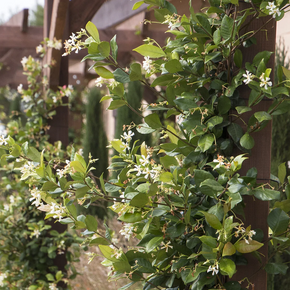
- Incredibly versatile evergreen — train it as a climbing vine on trellises, arbors, and fences, clip it into a tidy hedge or espalier, or let it spread as a lush, weed-suppressing ground cover
- Glossy, deep green foliage provides year-round structure and beauty, often flushing bronze-red in cooler weather for added seasonal interest
- Low-maintenance and drought-tolerant once established, with excellent deer resistance and no toxicity concerns for dogs, cats, or horses
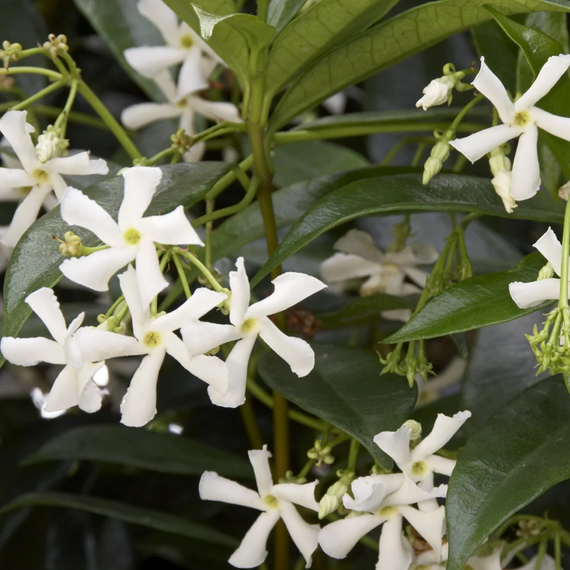
Star Jasmine (Trachelospermum jasminoides) is one of the most beloved and hardworking evergreen vines in the western garden, prized for its glossy, leathery foliage and the intoxicating, gardenia-like fragrance that pours from its clusters of pinwheel-shaped white flowers each late spring and summer. Native to China and Japan and honored with the Royal Horticultural Society's Award of Garden Merit, this vigorous twining vine thrives in USDA Zones 8-10 and performs beautifully throughout Southern Oregon and Northern California, where mild winters and warm summers suit it perfectly. Growing 10 to 20 feet tall with support, Star Jasmine scales trellises, pergolas, arbors, and fences with ease, while without support it spreads into a dense, polished ground cover ideal for slopes, borders, and difficult-to-plant areas. Its deep green leaves often take on rich bronze-red tones during cooler months, ensuring multi-season garden interest even when blooms are not present. Star Jasmine is adaptable to full sun or partial shade, tolerates a range of well-drained soil types, and once established becomes notably drought-tolerant — requiring only occasional deep watering during prolonged heat or dry spells. Whether you are framing an entrance, softening a masonry wall, covering a hillside, or creating a fragrant privacy screen, Star Jasmine delivers enduring beauty, effortless elegance, and a sensory experience that few plants can rival.
Plant Description
Star Jasmine (Trachelospermum jasminoides) is a woody evergreen vine with slender, twining stems clad in pairs of glossy, oblong, dark green leaves with pointed tips. Though commonly called a jasmine, it is not a true jasmine — it belongs to the Apocynaceae (dogbane) family, making it a relative of oleander and periwinkle rather than the genus Jasminum. In bloom, the plant produces abundant clusters of small, star-shaped, five-petaled flowers that open bright white and gradually age to a creamy ivory. The fragrance is exceptionally rich and sweet, often described as reminiscent of gardenia, and is especially pronounced on warm evenings. Stems will exude a milky sap when cut, which can irritate sensitive skin, so wearing gloves when pruning is recommended. The plant follows a classic "sleep, creep, leap" growth pattern — modest in its first year, more energetic in its second, and then capable of putting on 3 to 6 feet or more of new growth per season once fully established.
Mature Size
| Growth Form | Typical Height | Typical Spread |
|---|---|---|
| Climbing vine (with support) | 10 to 20 ft. | Up to 20 ft. |
| Ground cover (without support) | 1 to 2 ft. | 10 to 20 ft. |
| Clipped shrub or hedge form | 3 to 6 ft. | 4 to 8 ft. |
| Container with trellis | 6 to 10 ft. | Variable |
Mature size is highly dependent on how the plant is grown, trained, and pruned. In ideal conditions with full sun and fertile, well-drained soil, Star Jasmine is a vigorous grower that responds well to regular pruning to maintain whatever size and form suits your landscape.
Hardiness Zones and Climate
Star Jasmine is best suited to USDA Hardiness Zones 8 through 10, and can sometimes overwinter in sheltered Zone 7 sites with minimal damage. It is well adapted to the mild winters and warm summers throughout Southern Oregon and Northern California. Established plants can tolerate brief temperatures down to approximately 10°F, but prolonged hard freezes or exposure to drying winter winds can cause significant foliage browning or dieback. In cooler microclimates, planting against a south- or west-facing wall provides added warmth and protection. Container-grown plants are more vulnerable to cold than those planted in the ground and should be moved to a sheltered, frost-free location during severe winter weather.
Sunlight Requirements
Star Jasmine thrives in full sun to partial shade. For the heaviest bloom and densest, most vigorous growth, provide at least 6 hours of direct sunlight per day. In hotter inland locations, some afternoon shade helps protect the foliage from scorch and stress. Plants grown in too much shade will remain attractive and evergreen but tend to produce fewer flowers and grow more slowly. Morning sun with afternoon shade is an excellent compromise in warm, dry climates, while coastal and mild-summer gardens can typically accommodate full sun exposure without issue.
Soil and pH Preferences
Star Jasmine adapts to a wide range of soil types but performs best in fertile, organically rich, well-drained soil. Poor drainage is the most common cause of decline — roots sitting in waterlogged soil are highly susceptible to root rot. A slightly acidic to neutral soil pH of 6.0 to 7.0 is ideal. Before planting, loosen the soil thoroughly and incorporate compost or other organic matter to improve both drainage and fertility. In heavy clay soils, raise the planting area or amend generously to promote drainage. In sandy soils, added organic matter will help retain adequate moisture between waterings.
Watering Guide
- First growing season: Water regularly and deeply to encourage a strong, deep root system. Check the top 1 to 2 inches of soil and water when it begins to dry out.
- Established plants: Star Jasmine is moderately drought tolerant once established. Water deeply but infrequently, allowing the soil to partially dry between waterings rather than keeping it constantly moist.
- During heat and drought: Increase watering frequency during prolonged hot, dry periods. Drought stress can cause leaf bronzing, drop, or reduced flowering.
- Container plants: Pots dry out much faster than in-ground plantings and will need more frequent watering — check the soil every couple of days during warm weather and water when the top inch feels dry.
- What to avoid: Overwatering and poorly drained soil are more damaging than underwatering for established plants. Never let roots sit in standing water.
Fertilizing
Star Jasmine is not a heavy feeder and performs well with minimal supplemental fertilization when planted in organically amended soil. Apply a balanced, slow-release fertilizer in early spring as new growth begins, following the product label directions. A thin top-dressing of compost around the root zone each spring is an excellent, gentle alternative that also improves soil health and moisture retention. Avoid fertilizing with high-nitrogen formulas, as excess nitrogen promotes lush leafy growth at the expense of flowers. Do not fertilize in late summer or fall, as the resulting flush of tender new growth may not harden off before cold weather arrives. For plants showing yellowing foliage, a soil test can help identify whether a nutrient deficiency is the cause.
Pruning and Maintenance
Star Jasmine is amenable to pruning and responds well to shaping, thinning, and hard cutting back if needed. The most important pruning guideline is timing — prune right after the main flowering period in early to midsummer to avoid removing the following season's flower buds. Key pruning tasks include:
- As a vine: Shorten long, wandering shoots after bloom and tie in new growth to the support structure to maintain even coverage.
- As a hedge or espalier: Shear lightly after the main bloom flush, then touch up as needed through late summer to maintain a crisp, defined outline.
- As a ground cover: Trim spreading runners at the edges to keep the planting within its intended boundaries and out of neighboring beds or paths.
- General: Remove dead, weak, or tangled growth at any time. Pinching stem tips encourages branching and a fuller, denser habit.
- Safety note: Wear gloves and old clothing when pruning — the milky sap can be sticky, may stain fabric, and can irritate sensitive skin.
Planting Instructions
- Choose a site with well-drained soil and at least partial sun. Install any trellis, arbor, or wire support structure before planting to avoid disturbing roots later.
- Dig a planting hole slightly wider than the root ball and the same depth, or just a touch shallower, so the crown of the plant sits at or slightly above the surrounding soil level.
- Remove the plant from its nursery container and gently tease apart any circling or pot-bound roots. Score the root ball lightly with a trowel if the plant is very root-bound.
- Backfill with the native soil, mixing in compost if the soil is particularly poor or compacted. Tamp lightly to eliminate large air pockets without over-compacting the soil.
- Water thoroughly immediately after planting to settle the soil around the roots.
- Apply a 2 to 3 inch layer of mulch over the root zone, keeping mulch a few inches away from the main stem to prevent rot and pest issues.
- Water regularly throughout the first growing season. Begin guiding young stems to their support as soon as they are long enough to tie in loosely.
- Spacing: Space plants 3 to 5 feet apart for a hedge or espalier; 5 to 10 feet apart for vertical climbers; and 5 feet or more apart when used as a ground cover.
- Best planting times: Spring (after last frost risk) and fall (at least 4 to 6 weeks before the first expected frost) are ideal for establishment in our region.
Landscape Uses
- Pergolas and arbors: Train Star Jasmine over a pergola or arbor to create a fragrant, shady garden retreat draped in glossy evergreen foliage.
- Fences and trellises: An excellent choice for covering chain-link, wood, or wire fences, creating a living privacy screen with seasonal bloom and year-round greenery.
- Espalier: Train flat against a wall or fence using horizontal wires for a refined, fragrant architectural feature.
- Ground cover: Plant on slopes, hillsides, and broad planting beds for a dense, weed-suppressing evergreen carpet that also helps control erosion.
- Fragrant border: Plant along walkways, entry paths, or near outdoor seating areas so the heavenly scent can be enjoyed up close during bloom season.
- Low hedge or edging: Clip into a tidy, fragrant evergreen border or low-growing shrub form to define garden spaces and edges.
- Container specimen: Grow in a large container with an obelisk or trellis insert to create a moveable, fragrant vertical accent for patios and courtyards.
- Moon garden: The white flowers and heavy evening fragrance make Star Jasmine a natural companion plant for moonlit garden spaces.
Companion Plants
Star Jasmine pairs beautifully with plants that share its preference for well-drained soil and sun-to-part-shade conditions, and that complement its glossy evergreen texture and white floral palette. Consider these combinations:
- Lavender (Lavandula spp.): The silver-gray foliage and purple blooms of lavender create a striking color contrast against Star Jasmine's dark green leaves and white flowers, while both enjoy similar sun and drainage conditions.
- Roses: Classic garden companions — climbing roses and Star Jasmine can be interplanted on the same fence or pergola for a layered display of fragrance and color.
- Agapanthus: The bold blue-purple flower heads of agapanthus provide dramatic color contrast in summer when planted at the base of a Star Jasmine-covered wall or trellis.
- Gaura (Oenothera lindheimeri): Airy, delicate texture and soft pink-to-white flowers make gaura an excellent low-growing partner in mixed borders near star jasmine plantings.
- Salvia: Shrubby salvias with blue, purple, or red flower spikes provide vivid color contrast and attract pollinators alongside the sweet-scented blooms of Star Jasmine.
- Ornamental grasses: Fine-textured grasses like blue oat grass (Helictotrichon sempervirens) or Mexican feather grass add movement and contrast in texture at the feet of Star Jasmine plantings.
- Wisteria: For truly dramatic fragrant coverage on large structures, combining wisteria (in controlled situations) with Star Jasmine extends the season of fragrant bloom on pergolas and strong arbors.
Pests and Diseases
Star Jasmine is generally a robust, low-maintenance plant with few serious pest or disease problems, especially when grown in appropriate conditions. The following issues may occasionally arise:
- Scale insects: The most common pest problem. Scale can appear as small, waxy brown or white bumps on stems and foliage. Heavy infestations lead to sticky honeydew deposits and subsequent sooty mold growth, which coats leaves with a black, powdery film. Treat with horticultural oil or neem oil applied when scales are in their crawler stage.
- Aphids: Clusters of small soft-bodied insects may appear on new growth in spring. A strong spray of water or an application of insecticidal soap is usually sufficient to control them.
- Mealybugs: White, cottony masses on stems and leaf joints. Treat with neem oil or insecticidal soap, or dab individual clusters with a cotton swab dipped in rubbing alcohol.
- Spider mites: More likely during hot, dry conditions. Fine webbing and stippled, dull foliage are telltale signs. Increase humidity around the plant and apply horticultural oil or neem oil.
- Root rot: Caused by overwatering or poorly drained soil. Affected plants may show sudden wilting, yellowing foliage, and collapse of stems. Prevention through good drainage is the best strategy — there is no effective cure once root rot is advanced.
- Leaf spot: Occasional fungal leaf spots may appear during periods of high humidity or if foliage stays wet. Improve air circulation through pruning and avoid overhead irrigation where possible.
- Sooty mold: A secondary fungal issue that develops on honeydew left behind by sap-sucking insects. It is not directly harmful to the plant but reduces photosynthesis and is unsightly. Controlling the underlying insect pest resolves the mold over time.
Container Growing
Star Jasmine is well-suited to container culture and makes a stunning patio or courtyard specimen when grown in a large pot with a sturdy climbing structure. Follow these guidelines for success:
- Choose a container that is at least 15 to 20 inches in diameter with ample drainage holes. Larger containers retain moisture more evenly and give roots room to develop.
- Use a high-quality, fast-draining potting mix rather than garden soil, which compacts and drains poorly in pots.
- Install a trellis, obelisk, or stake cage at planting time. Star Jasmine is a vigorous twiner and will need something to climb from the start.
- Water more frequently than in-ground plants — check the top inch of potting mix every couple of days during warm weather and water when it begins to dry out. Never allow the pot to sit in standing water.
- Fertilize container plants in spring and possibly again in early summer with a balanced slow-release formula, as nutrients leach out of containers more quickly than from garden soil.
- Refresh the top 2 to 3 inches of potting mix each spring, or repot into a slightly larger container every 2 to 3 years when the plant becomes root-bound.
- In areas colder than Zone 8, move container plants to a bright, frost-free location indoors or in a sheltered greenhouse during winter. Return outdoors after the last frost risk has passed.
Wildlife Value
Star Jasmine is a valuable plant for pollinators and beneficial garden wildlife. Its heavy, sweet floral fragrance is particularly attractive to bees — both honeybees and native bees actively forage the flowers during the blooming season. The plant also draws hummingbirds and various beneficial insects to the garden. The dense, evergreen foliage structure provides year-round shelter and nesting cover for small birds and beneficial insects seeking refuge. Star Jasmine is generally considered deer-resistant — the strong fragrance acts as a deterrent in most situations, though highly hungry deer will eat almost any plant. Rabbits rarely cause serious damage to mature, established plants. For gardeners seeking to create a more wildlife-friendly landscape, Star Jasmine is a beautiful, low-effort addition that supports pollinators while simultaneously deterring browsing animals.
Seasonal Interest
| Season | What to Expect |
|---|---|
| Spring | New growth emerges, often with attractive bronze-tinged young leaves. Flower buds develop and the first blooms open in mid-to-late spring, releasing their signature rich fragrance. |
| Summer | Peak bloom season with abundant clusters of white, star-shaped flowers. Fragrance is most pronounced on warm evenings. Vigorous new stem growth occurs throughout the season. |
| Fall | Bloom gradually tapers but foliage remains lush and glossy. Cooler temperatures may cause foliage to develop attractive bronze or reddish tones. Occasional seed pods may form on some plants. |
| Winter | Stays evergreen in Zones 8-10, providing year-round structure and greenery. Foliage may deepen to bronze-red in cold weather, adding seasonal color to walls, fences, and garden beds. |
- Intensely fragrant, star-shaped white flowers bloom from late spring through summer, perfuming patios, entryways, and garden paths with a rich, sweet scent
- Incredibly versatile evergreen — train it as a climbing vine on trellises, arbors, and fences, clip it into a tidy hedge or espalier, or let it spread as a lush, weed-suppressing ground cover
- Glossy, deep green foliage provides year-round structure and beauty, often flushing bronze-red in cooler weather for added seasonal interest
- Low-maintenance and drought-tolerant once established, with excellent deer resistance and no toxicity concerns for dogs, cats, or horses
Star Jasmine (Trachelospermum jasminoides) is one of the most beloved and hardworking evergreen vines in the western garden, prized for its glossy, leathery foliage and the intoxicating, gardenia-like fragrance that pours from its clusters of pinwheel-shaped white flowers each late spring and summer. Native to China and Japan and honored with the Royal Horticultural Society's Award of Garden Merit, this vigorous twining vine thrives in USDA Zones 8-10 and performs beautifully throughout Southern Oregon and Northern California, where mild winters and warm summers suit it perfectly. Growing 10 to 20 feet tall with support, Star Jasmine scales trellises, pergolas, arbors, and fences with ease, while without support it spreads into a dense, polished ground cover ideal for slopes, borders, and difficult-to-plant areas. Its deep green leaves often take on rich bronze-red tones during cooler months, ensuring multi-season garden interest even when blooms are not present. Star Jasmine is adaptable to full sun or partial shade, tolerates a range of well-drained soil types, and once established becomes notably drought-tolerant — requiring only occasional deep watering during prolonged heat or dry spells. Whether you are framing an entrance, softening a masonry wall, covering a hillside, or creating a fragrant privacy screen, Star Jasmine delivers enduring beauty, effortless elegance, and a sensory experience that few plants can rival.
Plant Description
Star Jasmine (Trachelospermum jasminoides) is a woody evergreen vine with slender, twining stems clad in pairs of glossy, oblong, dark green leaves with pointed tips. Though commonly called a jasmine, it is not a true jasmine — it belongs to the Apocynaceae (dogbane) family, making it a relative of oleander and periwinkle rather than the genus Jasminum. In bloom, the plant produces abundant clusters of small, star-shaped, five-petaled flowers that open bright white and gradually age to a creamy ivory. The fragrance is exceptionally rich and sweet, often described as reminiscent of gardenia, and is especially pronounced on warm evenings. Stems will exude a milky sap when cut, which can irritate sensitive skin, so wearing gloves when pruning is recommended. The plant follows a classic "sleep, creep, leap" growth pattern — modest in its first year, more energetic in its second, and then capable of putting on 3 to 6 feet or more of new growth per season once fully established.
Mature Size
| Growth Form | Typical Height | Typical Spread |
|---|---|---|
| Climbing vine (with support) | 10 to 20 ft. | Up to 20 ft. |
| Ground cover (without support) | 1 to 2 ft. | 10 to 20 ft. |
| Clipped shrub or hedge form | 3 to 6 ft. | 4 to 8 ft. |
| Container with trellis | 6 to 10 ft. | Variable |
Mature size is highly dependent on how the plant is grown, trained, and pruned. In ideal conditions with full sun and fertile, well-drained soil, Star Jasmine is a vigorous grower that responds well to regular pruning to maintain whatever size and form suits your landscape.
Hardiness Zones and Climate
Star Jasmine is best suited to USDA Hardiness Zones 8 through 10, and can sometimes overwinter in sheltered Zone 7 sites with minimal damage. It is well adapted to the mild winters and warm summers throughout Southern Oregon and Northern California. Established plants can tolerate brief temperatures down to approximately 10°F, but prolonged hard freezes or exposure to drying winter winds can cause significant foliage browning or dieback. In cooler microclimates, planting against a south- or west-facing wall provides added warmth and protection. Container-grown plants are more vulnerable to cold than those planted in the ground and should be moved to a sheltered, frost-free location during severe winter weather.
Sunlight Requirements
Star Jasmine thrives in full sun to partial shade. For the heaviest bloom and densest, most vigorous growth, provide at least 6 hours of direct sunlight per day. In hotter inland locations, some afternoon shade helps protect the foliage from scorch and stress. Plants grown in too much shade will remain attractive and evergreen but tend to produce fewer flowers and grow more slowly. Morning sun with afternoon shade is an excellent compromise in warm, dry climates, while coastal and mild-summer gardens can typically accommodate full sun exposure without issue.
Soil and pH Preferences
Star Jasmine adapts to a wide range of soil types but performs best in fertile, organically rich, well-drained soil. Poor drainage is the most common cause of decline — roots sitting in waterlogged soil are highly susceptible to root rot. A slightly acidic to neutral soil pH of 6.0 to 7.0 is ideal. Before planting, loosen the soil thoroughly and incorporate compost or other organic matter to improve both drainage and fertility. In heavy clay soils, raise the planting area or amend generously to promote drainage. In sandy soils, added organic matter will help retain adequate moisture between waterings.
Watering Guide
- First growing season: Water regularly and deeply to encourage a strong, deep root system. Check the top 1 to 2 inches of soil and water when it begins to dry out.
- Established plants: Star Jasmine is moderately drought tolerant once established. Water deeply but infrequently, allowing the soil to partially dry between waterings rather than keeping it constantly moist.
- During heat and drought: Increase watering frequency during prolonged hot, dry periods. Drought stress can cause leaf bronzing, drop, or reduced flowering.
- Container plants: Pots dry out much faster than in-ground plantings and will need more frequent watering — check the soil every couple of days during warm weather and water when the top inch feels dry.
- What to avoid: Overwatering and poorly drained soil are more damaging than underwatering for established plants. Never let roots sit in standing water.
Fertilizing
Star Jasmine is not a heavy feeder and performs well with minimal supplemental fertilization when planted in organically amended soil. Apply a balanced, slow-release fertilizer in early spring as new growth begins, following the product label directions. A thin top-dressing of compost around the root zone each spring is an excellent, gentle alternative that also improves soil health and moisture retention. Avoid fertilizing with high-nitrogen formulas, as excess nitrogen promotes lush leafy growth at the expense of flowers. Do not fertilize in late summer or fall, as the resulting flush of tender new growth may not harden off before cold weather arrives. For plants showing yellowing foliage, a soil test can help identify whether a nutrient deficiency is the cause.
Pruning and Maintenance
Star Jasmine is amenable to pruning and responds well to shaping, thinning, and hard cutting back if needed. The most important pruning guideline is timing — prune right after the main flowering period in early to midsummer to avoid removing the following season's flower buds. Key pruning tasks include:
- As a vine: Shorten long, wandering shoots after bloom and tie in new growth to the support structure to maintain even coverage.
- As a hedge or espalier: Shear lightly after the main bloom flush, then touch up as needed through late summer to maintain a crisp, defined outline.
- As a ground cover: Trim spreading runners at the edges to keep the planting within its intended boundaries and out of neighboring beds or paths.
- General: Remove dead, weak, or tangled growth at any time. Pinching stem tips encourages branching and a fuller, denser habit.
- Safety note: Wear gloves and old clothing when pruning — the milky sap can be sticky, may stain fabric, and can irritate sensitive skin.
Planting Instructions
- Choose a site with well-drained soil and at least partial sun. Install any trellis, arbor, or wire support structure before planting to avoid disturbing roots later.
- Dig a planting hole slightly wider than the root ball and the same depth, or just a touch shallower, so the crown of the plant sits at or slightly above the surrounding soil level.
- Remove the plant from its nursery container and gently tease apart any circling or pot-bound roots. Score the root ball lightly with a trowel if the plant is very root-bound.
- Backfill with the native soil, mixing in compost if the soil is particularly poor or compacted. Tamp lightly to eliminate large air pockets without over-compacting the soil.
- Water thoroughly immediately after planting to settle the soil around the roots.
- Apply a 2 to 3 inch layer of mulch over the root zone, keeping mulch a few inches away from the main stem to prevent rot and pest issues.
- Water regularly throughout the first growing season. Begin guiding young stems to their support as soon as they are long enough to tie in loosely.
- Spacing: Space plants 3 to 5 feet apart for a hedge or espalier; 5 to 10 feet apart for vertical climbers; and 5 feet or more apart when used as a ground cover.
- Best planting times: Spring (after last frost risk) and fall (at least 4 to 6 weeks before the first expected frost) are ideal for establishment in our region.
Landscape Uses
- Pergolas and arbors: Train Star Jasmine over a pergola or arbor to create a fragrant, shady garden retreat draped in glossy evergreen foliage.
- Fences and trellises: An excellent choice for covering chain-link, wood, or wire fences, creating a living privacy screen with seasonal bloom and year-round greenery.
- Espalier: Train flat against a wall or fence using horizontal wires for a refined, fragrant architectural feature.
- Ground cover: Plant on slopes, hillsides, and broad planting beds for a dense, weed-suppressing evergreen carpet that also helps control erosion.
- Fragrant border: Plant along walkways, entry paths, or near outdoor seating areas so the heavenly scent can be enjoyed up close during bloom season.
- Low hedge or edging: Clip into a tidy, fragrant evergreen border or low-growing shrub form to define garden spaces and edges.
- Container specimen: Grow in a large container with an obelisk or trellis insert to create a moveable, fragrant vertical accent for patios and courtyards.
- Moon garden: The white flowers and heavy evening fragrance make Star Jasmine a natural companion plant for moonlit garden spaces.
Companion Plants
Star Jasmine pairs beautifully with plants that share its preference for well-drained soil and sun-to-part-shade conditions, and that complement its glossy evergreen texture and white floral palette. Consider these combinations:
- Lavender (Lavandula spp.): The silver-gray foliage and purple blooms of lavender create a striking color contrast against Star Jasmine's dark green leaves and white flowers, while both enjoy similar sun and drainage conditions.
- Roses: Classic garden companions — climbing roses and Star Jasmine can be interplanted on the same fence or pergola for a layered display of fragrance and color.
- Agapanthus: The bold blue-purple flower heads of agapanthus provide dramatic color contrast in summer when planted at the base of a Star Jasmine-covered wall or trellis.
- Gaura (Oenothera lindheimeri): Airy, delicate texture and soft pink-to-white flowers make gaura an excellent low-growing partner in mixed borders near star jasmine plantings.
- Salvia: Shrubby salvias with blue, purple, or red flower spikes provide vivid color contrast and attract pollinators alongside the sweet-scented blooms of Star Jasmine.
- Ornamental grasses: Fine-textured grasses like blue oat grass (Helictotrichon sempervirens) or Mexican feather grass add movement and contrast in texture at the feet of Star Jasmine plantings.
- Wisteria: For truly dramatic fragrant coverage on large structures, combining wisteria (in controlled situations) with Star Jasmine extends the season of fragrant bloom on pergolas and strong arbors.
Pests and Diseases
Star Jasmine is generally a robust, low-maintenance plant with few serious pest or disease problems, especially when grown in appropriate conditions. The following issues may occasionally arise:
- Scale insects: The most common pest problem. Scale can appear as small, waxy brown or white bumps on stems and foliage. Heavy infestations lead to sticky honeydew deposits and subsequent sooty mold growth, which coats leaves with a black, powdery film. Treat with horticultural oil or neem oil applied when scales are in their crawler stage.
- Aphids: Clusters of small soft-bodied insects may appear on new growth in spring. A strong spray of water or an application of insecticidal soap is usually sufficient to control them.
- Mealybugs: White, cottony masses on stems and leaf joints. Treat with neem oil or insecticidal soap, or dab individual clusters with a cotton swab dipped in rubbing alcohol.
- Spider mites: More likely during hot, dry conditions. Fine webbing and stippled, dull foliage are telltale signs. Increase humidity around the plant and apply horticultural oil or neem oil.
- Root rot: Caused by overwatering or poorly drained soil. Affected plants may show sudden wilting, yellowing foliage, and collapse of stems. Prevention through good drainage is the best strategy — there is no effective cure once root rot is advanced.
- Leaf spot: Occasional fungal leaf spots may appear during periods of high humidity or if foliage stays wet. Improve air circulation through pruning and avoid overhead irrigation where possible.
- Sooty mold: A secondary fungal issue that develops on honeydew left behind by sap-sucking insects. It is not directly harmful to the plant but reduces photosynthesis and is unsightly. Controlling the underlying insect pest resolves the mold over time.
Container Growing
Star Jasmine is well-suited to container culture and makes a stunning patio or courtyard specimen when grown in a large pot with a sturdy climbing structure. Follow these guidelines for success:
- Choose a container that is at least 15 to 20 inches in diameter with ample drainage holes. Larger containers retain moisture more evenly and give roots room to develop.
- Use a high-quality, fast-draining potting mix rather than garden soil, which compacts and drains poorly in pots.
- Install a trellis, obelisk, or stake cage at planting time. Star Jasmine is a vigorous twiner and will need something to climb from the start.
- Water more frequently than in-ground plants — check the top inch of potting mix every couple of days during warm weather and water when it begins to dry out. Never allow the pot to sit in standing water.
- Fertilize container plants in spring and possibly again in early summer with a balanced slow-release formula, as nutrients leach out of containers more quickly than from garden soil.
- Refresh the top 2 to 3 inches of potting mix each spring, or repot into a slightly larger container every 2 to 3 years when the plant becomes root-bound.
- In areas colder than Zone 8, move container plants to a bright, frost-free location indoors or in a sheltered greenhouse during winter. Return outdoors after the last frost risk has passed.
Wildlife Value
Star Jasmine is a valuable plant for pollinators and beneficial garden wildlife. Its heavy, sweet floral fragrance is particularly attractive to bees — both honeybees and native bees actively forage the flowers during the blooming season. The plant also draws hummingbirds and various beneficial insects to the garden. The dense, evergreen foliage structure provides year-round shelter and nesting cover for small birds and beneficial insects seeking refuge. Star Jasmine is generally considered deer-resistant — the strong fragrance acts as a deterrent in most situations, though highly hungry deer will eat almost any plant. Rabbits rarely cause serious damage to mature, established plants. For gardeners seeking to create a more wildlife-friendly landscape, Star Jasmine is a beautiful, low-effort addition that supports pollinators while simultaneously deterring browsing animals.
Seasonal Interest
| Season | What to Expect |
|---|---|
| Spring | New growth emerges, often with attractive bronze-tinged young leaves. Flower buds develop and the first blooms open in mid-to-late spring, releasing their signature rich fragrance. |
| Summer | Peak bloom season with abundant clusters of white, star-shaped flowers. Fragrance is most pronounced on warm evenings. Vigorous new stem growth occurs throughout the season. |
| Fall | Bloom gradually tapers but foliage remains lush and glossy. Cooler temperatures may cause foliage to develop attractive bronze or reddish tones. Occasional seed pods may form on some plants. |
| Winter | Stays evergreen in Zones 8-10, providing year-round structure and greenery. Foliage may deepen to bronze-red in cold weather, adding seasonal color to walls, fences, and garden beds. |
Related Products


