

Zoom the image with the mouse
Narrowleaf Milkweed - 1 Gallon
SKU:
1721920
UPC:
014949463376
$13.99
- Native western milkweed with lavender-tinted white flower clusters that support wildlife gardens
- Fast-growing, upright stems with narrow, whorled leaves for a light, airy texture
- Extremely drought tolerant once established—no supplemental water needed in many landscapes
- Adaptable to sandy, clay, and even saline soils; great for naturalized areas and meadows
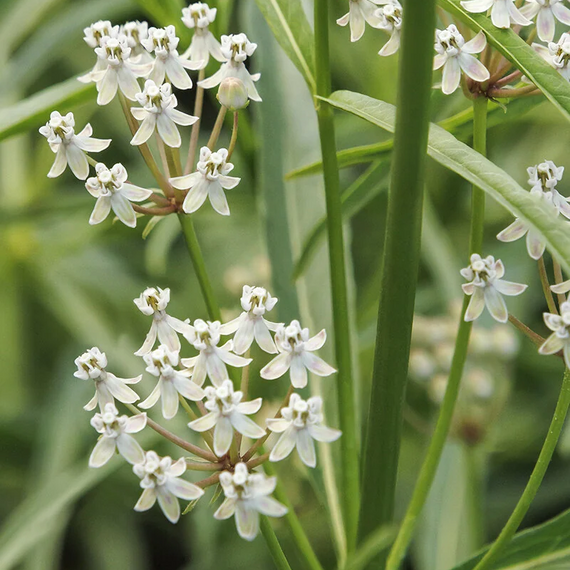
Narrowleaf Milkweed (Asclepias fascicularis) is a western North American native and a must-have for pollinator and wildlife gardens. In summer, clusters of lavender-tinted white flowers bloom above slender upright stems lined with narrow, pointed leaves arranged in whorls, creating a soft, graceful look in the landscape. This easy-care, fast-growing perennial is remarkably adaptable—tolerating a wide range of soils, including sandy, clay, and saline conditions—and becomes highly drought tolerant once established. Plant it in full sun to naturalize in meadows, borders, and habitat plantings, then enjoy its long seasonal interest and low-input performance year after year.
Overview
A fast-growing, native milkweed for sunny wildlife gardens, valued for drought tolerance and summer flower clusters.
- Botanical name: Asclepias fascicularis
- Plant type: Herbaceous perennial
- Growth habit: Upright
- Growth rate: Fast
Blooms & Fragrance
Summer blooms appear in clustered sprays of lavender-tinted white flowers with a light fragrance.
- Bloom time: Summer
- Flower color: White (lavender-tinted)
- Flower attributes: Fragrant; showy flowers
Plant Size
A narrow, upright perennial that adds height without taking up much horizontal space—ideal for mixing into borders and meadows.
- Mature height: 2–3 ft.
- Mature width: About 1 ft.
Sunlight
Full sun is best for strong stems, abundant flowering, and long-term performance.
- Light: Full sun
Water
Water to establish, then enjoy a truly low-water perennial that thrives through dry periods.
- Establishment: Water well the first month to establish
- After establishment: Does not need water in many landscapes
- Drought tolerance: High
Soil & Drainage
Extremely adaptable—handles a wide range of soil types, including challenging sites.
- Soil tolerance: Sandy, clay, and saline soils
- Seasonal tolerance: Can tolerate boggy soils in winter and dry drought periods in summer
- Mulch: Mulch heavily to support establishment and conserve moisture
Cold Hardiness
A dependable perennial across a wide zone range, returning each season in suitable climates.
- USDA zones: 6–10
- Seasonal behavior: Herbaceous perennial
Where to Plant
Best used in sunny, naturalistic plantings where it can blend into habitat and meadow-style designs.
- Naturalized areas and meadow plantings
- Sunny borders and wildlife gardens
- Dry gardens and low-water landscapes once established
- Coastal and challenging soils where other perennials may struggle
Design Tips
Use its narrow form to weave height and movement through pollinator plantings without blocking neighboring plants.
- Plant in drifts for a natural meadow effect
- Mix with grasses and daisies for an easy, habitat-forward look
- Place toward the mid-to-back of borders for airy vertical texture
- Great for informal, native, and waterwise garden styles
Maintenance
Low maintenance once established—seasonal cleanup is simple and flexible.
- Remove dried stems in late fall when they can easily break off at the ground
- Or leave dried stems in place as nesting material for birds
- Mulch heavily after planting to support establishment
Wildlife & Resistance
A wildlife-garden essential that supports pollinators and handles tough conditions.
- Attracts: Butterflies; pollinators
- Resistance / tolerance: Rabbit resistant; drought tolerant; coastal exposure tolerant
- Special features: North American native; waterwise; easy care
Pairs Well With
Pair with sun-loving pollinator favorites and meadow companions for a long-season habitat planting.
- Yarrow (Achillea)
- Blue Fescue (Festuca)
- Tickseed (Coreopsis)
- Coneflower (Echinacea)
- Butterfly Bush (Buddleja)
- Trumpet Vine (Campsis)
- Bee Balm (Monarda)
- Native western milkweed with lavender-tinted white flower clusters that support wildlife gardens
- Fast-growing, upright stems with narrow, whorled leaves for a light, airy texture
- Extremely drought tolerant once established—no supplemental water needed in many landscapes
- Adaptable to sandy, clay, and even saline soils; great for naturalized areas and meadows
Narrowleaf Milkweed (Asclepias fascicularis) is a western North American native and a must-have for pollinator and wildlife gardens. In summer, clusters of lavender-tinted white flowers bloom above slender upright stems lined with narrow, pointed leaves arranged in whorls, creating a soft, graceful look in the landscape. This easy-care, fast-growing perennial is remarkably adaptable—tolerating a wide range of soils, including sandy, clay, and saline conditions—and becomes highly drought tolerant once established. Plant it in full sun to naturalize in meadows, borders, and habitat plantings, then enjoy its long seasonal interest and low-input performance year after year.
Overview
A fast-growing, native milkweed for sunny wildlife gardens, valued for drought tolerance and summer flower clusters.
- Botanical name: Asclepias fascicularis
- Plant type: Herbaceous perennial
- Growth habit: Upright
- Growth rate: Fast
Blooms & Fragrance
Summer blooms appear in clustered sprays of lavender-tinted white flowers with a light fragrance.
- Bloom time: Summer
- Flower color: White (lavender-tinted)
- Flower attributes: Fragrant; showy flowers
Plant Size
A narrow, upright perennial that adds height without taking up much horizontal space—ideal for mixing into borders and meadows.
- Mature height: 2–3 ft.
- Mature width: About 1 ft.
Sunlight
Full sun is best for strong stems, abundant flowering, and long-term performance.
- Light: Full sun
Water
Water to establish, then enjoy a truly low-water perennial that thrives through dry periods.
- Establishment: Water well the first month to establish
- After establishment: Does not need water in many landscapes
- Drought tolerance: High
Soil & Drainage
Extremely adaptable—handles a wide range of soil types, including challenging sites.
- Soil tolerance: Sandy, clay, and saline soils
- Seasonal tolerance: Can tolerate boggy soils in winter and dry drought periods in summer
- Mulch: Mulch heavily to support establishment and conserve moisture
Cold Hardiness
A dependable perennial across a wide zone range, returning each season in suitable climates.
- USDA zones: 6–10
- Seasonal behavior: Herbaceous perennial
Where to Plant
Best used in sunny, naturalistic plantings where it can blend into habitat and meadow-style designs.
- Naturalized areas and meadow plantings
- Sunny borders and wildlife gardens
- Dry gardens and low-water landscapes once established
- Coastal and challenging soils where other perennials may struggle
Design Tips
Use its narrow form to weave height and movement through pollinator plantings without blocking neighboring plants.
- Plant in drifts for a natural meadow effect
- Mix with grasses and daisies for an easy, habitat-forward look
- Place toward the mid-to-back of borders for airy vertical texture
- Great for informal, native, and waterwise garden styles
Maintenance
Low maintenance once established—seasonal cleanup is simple and flexible.
- Remove dried stems in late fall when they can easily break off at the ground
- Or leave dried stems in place as nesting material for birds
- Mulch heavily after planting to support establishment
Wildlife & Resistance
A wildlife-garden essential that supports pollinators and handles tough conditions.
- Attracts: Butterflies; pollinators
- Resistance / tolerance: Rabbit resistant; drought tolerant; coastal exposure tolerant
- Special features: North American native; waterwise; easy care
Pairs Well With
Pair with sun-loving pollinator favorites and meadow companions for a long-season habitat planting.
- Yarrow (Achillea)
- Blue Fescue (Festuca)
- Tickseed (Coreopsis)
- Coneflower (Echinacea)
- Butterfly Bush (Buddleja)
- Trumpet Vine (Campsis)
- Bee Balm (Monarda)
Related Products