


Zoom the image with the mouse
Mickie Rock Rose - 2 Gallon
SKU:
2094530
UPC:
014949480274
$39.99
- Brilliantly variegated gold and green evergreen foliage delivers vibrant, year-round color in a low, ground-hugging mound — even in lean, dry soils where other plants struggle.
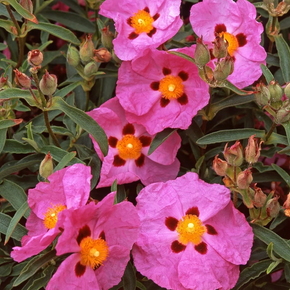
- Dainty white crepe-paper flowers with golden centers emerge from late spring through early summer, creating a stunning contrast against the flashy foliage.
- Exceptionally tough and low-maintenance: proven deer resistant, drought tolerant once established, heat tolerant, seaside and salt tolerant, and resistant to verticillium wilt.
- A fast-growing, versatile performer suited to rock gardens, dry borders, mass plantings, and mixed containers — thriving with minimal water in USDA Zones 7-10.
Cistus x hybridus 'Mickie' (PP#23024), commonly known as Mickie Rock Rose, is a standout patented evergreen shrub that brings bold, season-long color to water-wise and low-maintenance landscapes. This stable variegated selection of Cistus x hybridus features striking foliage splashed with bright golden-yellow margins surrounding rich green centers — an effect likened to an evergreen coleus. Unlike the all-green species, 'Mickie' holds its vivid variegation reliably throughout the year, with leaves developing attractive pink tints in fall and winter for additional seasonal interest. In late spring to early summer, dainty white flowers with delicate, crinkled petals and bright yellow centers burst through the colorful foliage in a charming floral display that lasts for several weeks. Originating from northern Washington State, this cultivar has demonstrated exceptional cold hardiness for a rockrose, surviving brutal Pacific Northwest winters well beyond what is typical of its Mediterranean relatives. Growing to approximately 18 inches tall and spreading up to 36 inches wide in a tidy, self-branching mounding form, Mickie Rock Rose is perfectly sized for front-of-border plantings, rock and alpine gardens, dry slopes, coastal gardens, and large containers. It thrives in full sun with well-drained, poor to moderately fertile soil and requires very little supplemental irrigation once established, making it an outstanding choice for xeric, fire-wise, and water-conservation landscapes throughout Southern Oregon, Northern California, and beyond.
Plant Description
Mickie Rock Rose is a broadleaf evergreen shrub and a stable variegated form of Cistus x hybridus. Its foliage is the primary attraction: each leaf is rich green at the center and boldly edged in bright golden-yellow, creating a vivid two-toned effect that persists year-round. In autumn and winter, the leaves take on additional rosy-pink tints that add yet another layer of seasonal interest. The plant has a naturally dense, low, mounding habit that fills in right to the ground without the need for facing plants. In late spring through early summer, an abundance of delicate white flowers with crinkled, crepe-paper-like petals and sunny yellow centers emerge above the foliage, punctuating the display beautifully. The flowers open in the morning and drop their petals by afternoon, with a fresh flush of blooms appearing each day over the course of several weeks. The foliage of Cistus is mildly aromatic, particularly on warm days, adding a pleasant sensory quality to the garden even outside of bloom time.
Mature Size
| Dimension | Measurement |
|---|---|
| Mature Height | Approximately 18 inches |
| Mature Spread | Up to 36 inches wide |
| Growth Rate | Fast |
| Growth Habit | Low, ground-hugging mound |
| Plant Type | Broadleaf evergreen shrub |
Hardiness Zones and Climate
Mickie Rock Rose is rated for USDA Hardiness Zones 7a through 10b, making it well suited for gardens in Southern Oregon and Northern California. This cultivar was selected from northern Washington State and has demonstrated notably strong cold tolerance for a rockrose, surviving harsh winters that would damage less hardy selections. Like all Cistus, it thrives in a Mediterranean-type climate with warm, dry summers and mild winters. It is not suited to areas with prolonged hard freezes below roughly 0-10 degrees F. In maritime or coastal climates it performs exceptionally well, and its heat tolerance makes it equally reliable in hot, sunny inland valleys. It is one of the tougher Cistus hybrids available, with excellent longevity in the landscape when given proper growing conditions.
Sunlight Requirements
Mickie Rock Rose demands full sun for best performance. It should receive a minimum of 6 to 8 hours of direct sunlight per day. Full sun brings out the brightest golden-yellow foliage coloration and produces the most prolific flower display. In too much shade, the variegation becomes muted, the plant grows loosely and weakly, and flowering is significantly reduced. South- or west-facing exposures are ideal, particularly against a warm wall or on an open, sunny slope. It is not suited for shady spots or the understory of trees.
Soil and pH Preferences
One of the most adaptable aspects of Mickie Rock Rose is its tolerance of a wide range of soil types and pH levels. It actually prefers lean, poor-to-moderately fertile soil with excellent drainage. Rich soils can promote excessive, lax growth that detracts from the plant's naturally compact form. Acceptable soil types include:
- Rocky or gravelly soils
- Sandy or gritty soils
- Average garden loam
- Clay, provided drainage is adequate
- Lean, low-nutrient soils where many other shrubs fail
Soil pH is accepted across a broad range, from mildly acidic to moderately alkaline (approximately 6.5 to 8.5). Excellent drainage is the single most critical soil requirement — waterlogged or consistently moist soils, especially in summer, are the primary cause of failure and can predispose the plant to root and crown rot diseases.
Watering Guide
Mickie Rock Rose is highly drought tolerant once established in the landscape. Proper watering management is key to long-term success:
- At planting: Water thoroughly at planting and during the first establishment season (generally the first spring and summer) to help the root system develop.
- Once established: Water deeply and infrequently. Allow the soil to dry out substantially between waterings. In most Pacific Northwest and Northern California climates, established plants require little to no supplemental irrigation once summer sets in.
- Summer watering caution: Avoid regular summer irrigation. Watering Cistus frequently in summer is the most common gardening mistake — it produces excessive, unwanted growth, weakens the plant's form, and greatly increases the risk of root rot and crown diseases. Dry summers are actually preferred.
- In containers: Allow the growing medium to dry out between waterings. Never allow pots to sit in standing water.
Fertilizing
Mickie Rock Rose thrives in poor to moderately fertile soil and generally requires very little fertilization in a garden setting. Over-fertilizing encourages excessive soft, leafy growth at the expense of the plant's naturally compact, mounding form and can reduce flower production. Follow these guidelines for best results:
- In the landscape, little to no fertilizer is typically needed. If the soil is extremely poor and the plant shows signs of nutrient deficiency, a light application of a balanced, slow-release fertilizer in early spring is sufficient.
- Avoid high-nitrogen fertilizers, which push lush, floppy growth that is uncharacteristic of the plant and more susceptible to disease.
- In containers, a dilute balanced fertilizer can be applied once in spring to replenish nutrients used up over winter. Do not fertilize in summer or fall.
- Mulching with gravel or decomposed granite around the base is preferable to organic mulches, as it keeps the root crown dry and mimics the plant's preferred rocky, dry native habitat.
Pruning and Maintenance
Mickie Rock Rose is naturally self-branching and requires minimal pruning to maintain its shape. It is important to understand the plant's unique pruning requirements, as improper cutting is the most common cause of decline:
- Do not hard prune: Cistus does not regenerate from old, bare wood. Cutting back hard into old stems typically causes irreversible decline or death of the plant. Never shear or cut back to bare stems.
- Light trim only: After the main flush of bloom finishes in early to mid-summer, a light tip-trim of the soft, green new growth is acceptable and can help maintain a tidy, compact habit. Trim only into green, leafy growth.
- Remove damaged growth: In late winter or early spring, remove any stems damaged by frost, cutting back to healthy green wood.
- No pinching required: 'Mickie' is naturally well-branched and self-branching; pinching is not necessary to encourage fullness.
- Overall, the less pruning the better. The plant is most attractive and longest-lived when left to grow into its natural mounding form.
Planting Instructions
Follow these steps for a successful planting:
- Timing: Fall planting is ideal in mild-winter climates, as it allows the root system to establish before summer heat and drought arrive. Spring planting is also acceptable with diligent watering through the first season.
- Site selection: Choose a location in full sun with excellent drainage. South- or west-facing slopes, raised beds, rock gardens, and dry banks are ideal. Avoid low spots where water collects.
- Soil preparation: Amend heavy clay soils with coarse grit, pea gravel, or coarse sand to improve drainage. Do not add heavy organic matter or rich compost — lean soil is preferred.
- Planting depth: Set the plant at the same depth it was growing in its container. Do not bury the crown.
- Spacing: Space plants approximately 24 to 36 inches apart for ground cover use, or allow a single plant to spread as an accent.
- Mulching: Mulch with gravel, decomposed granite, or coarse bark to keep the crown dry and suppress weeds. Keep mulch away from direct contact with the stem.
- Initial watering: Water thoroughly at planting and regularly through the first growing season. Taper off watering as the plant establishes.
Seasonal Interest
| Season | Features |
|---|---|
| Spring | Most active growth period; white flowers with yellow centers emerge; bold gold and green foliage at its freshest |
| Early Summer | Continued flowering through June and into July; crepe-paper blooms appear each morning over several weeks |
| Summer | Dense, colorful evergreen foliage provides vivid gold and green accent even after bloom; thrives in summer heat and drought |
| Fall | Foliage develops attractive pink and rosy tints, adding a third color dimension to the variegated display |
| Winter | Remains fully evergreen; pink leaf tints often persist; provides year-round structural color in the garden |
Landscape Uses
Mickie Rock Rose is a highly versatile low-growing shrub with numerous landscape applications, particularly in water-wise, low-maintenance, and Mediterranean-style gardens:
- Rock and alpine gardens: The plant's preference for lean, rocky, well-drained soil makes it a natural fit in rock gardens and dry stone wall plantings.
- Dry slopes and banks: Its spreading, ground-hugging form makes it effective for stabilizing and covering dry, sunny slopes where irrigation is not practical.
- Border edging and front-of-border accent: The compact 18-inch height and vibrant foliage make it an eye-catching edging plant along sunny borders.
- Mass planting: Plant in groups for a bold sweep of year-round gold and green color in unirrigated landscapes.
- Mixed containers: Widely used in combination container plantings, especially in fall and winter arrangements, where the pink foliage tints add seasonal flair.
- Xeric and water-conservation gardens: An excellent low-water-use shrub for sustainable, drought-tolerant landscapes.
- Coastal gardens: Tolerates salt spray and seaside conditions, making it suitable for oceanside plantings.
- Accent or specimen plant: The striking variegated foliage earns it a prominent place as a single specimen focal point in the landscape.
Companion Plants
Mickie Rock Rose pairs naturally with other drought-tolerant, sun-loving plants that share its preference for lean, well-drained soil and dry summer conditions. Excellent companions include:
- Lavender (Lavandula spp.): Complementary Mediterranean native with fragrant silvery foliage and purple flowers that contrast beautifully with 'Mickie's' gold tones.
- Rosemary (Salvia rosmarinus): Shares identical cultural needs; dark green, aromatic foliage and blue flowers are a classic partner.
- Ceanothus (California Lilac): Bold blue flower color and equally drought tolerant; creates a striking color contrast in dry shrub borders.
- Manzanita (Arctostaphylos spp.): Pacific Northwest and California native with sculptural form and similar xeric requirements.
- Ornamental grasses (e.g., Festuca glauca, Stipa tenuissima): Fine-textured, drought-tolerant grasses provide a soft, airy contrast to the bold foliage mound.
- Salvia (ornamental sage): Many drought-tolerant salvias thrive in the same conditions and provide colorful floral companions throughout summer.
- Other Cistus cultivars: Grouping with white- or pink-flowered Cistus relatives creates a cohesive Mediterranean shrub planting.
- Euphorbia (spurge): Architectural drought-tolerant perennials with chartreuse bracts that harmonize with 'Mickie's' gold variegation.
Pests and Diseases
Mickie Rock Rose is generally a very trouble-free shrub with strong natural resistance to most common pests and diseases. Key points to be aware of include:
- Root rot and crown rot: The most significant threat to Cistus in general. Caused by Phytophthora and similar water mold pathogens when plants are grown in poorly drained soil or subjected to excessive summer irrigation. Prevention through proper site selection and watering practices is the best strategy.
- Verticillium wilt: 'Mickie' is specifically noted to be resistant to verticillium wilt, a soil-borne fungal disease that affects many other shrubs.
- Deer: Rated deer resistant. The aromatic foliage is generally avoided by deer, making it suitable for gardens in areas with high deer pressure.
- Snails and slugs: Also noted as resistant or unattractive to snails and slugs.
- Aphids and other insects: Occasionally may attract aphids, but heavy infestations are uncommon on healthy, well-sited plants. A strong spray of water or insecticidal soap can address minor infestations if needed.
- General tip: Plants grown in appropriate conditions — full sun, lean well-drained soil, and minimal summer water — are the most vigorous and least susceptible to any disease or pest issues.
Container Growing
Mickie Rock Rose is an excellent choice for container culture, particularly prized in mixed autumn and winter arrangements where its pink-tinted foliage adds outstanding color. Tips for container success:
- Container selection: Choose a pot with ample drainage holes. Terracotta or other breathable materials help prevent waterlogging. The container should be large enough to allow 12-18 months of root growth.
- Potting mix: Use a well-draining potting mix. Blend in coarse perlite, pumice, or grit at a ratio of roughly 1 part grit to 3 parts mix to ensure fast drainage. Avoid moisture-retaining mixes.
- Placement: Position in full sun. At least 6 hours of direct sun per day is needed for the best foliage color and flowering.
- Watering: Allow the potting mix to dry out thoroughly between waterings. In summer, containers may need watering once or twice a week; in cool or wet weather, water far less frequently. Never allow the pot to sit in a saucer of standing water.
- Fertilizing: Apply a diluted balanced fertilizer once in spring. Avoid overfeeding, which promotes weak, floppy growth.
- Winter protection: In Zone 7 or colder microclimates, move containers to a sheltered location near a south-facing wall or into a cool garage during hard freezes.
- Mixed plantings: 'Mickie' is particularly popular in combination containers in Japan and other markets for its rich fall pink tints; pair with other drought-tolerant Mediterranean plants for a cohesive, low-water container design.
Wildlife Value
While Mickie Rock Rose is celebrated for its pest resistance, it also offers meaningful value to beneficial wildlife:
- Bees: The white flowers are attractive to native bees and honeybees, which visit to collect pollen. Cistus blooms are a reliable early-to-mid-season nectar and pollen source.
- Butterflies: Butterflies are drawn to the open, accessible flower form, and the plant is a good addition to pollinator-friendly garden designs.
- Deer resistance: The strongly aromatic foliage makes the plant unpalatable to deer, reducing browse damage in areas where deer are a concern.
- Habitat value: The dense, low mounding form provides ground-level shelter and nesting cover for small beneficial insects and garden fauna.
- Fire-wise value: When grown without supplemental summer irrigation as intended, Cistus plants are significantly less fire-prone than many other landscape shrubs, contributing to fire-wise landscape planning in high-risk regions of Southern Oregon and Northern California.
- Brilliantly variegated gold and green evergreen foliage delivers vibrant, year-round color in a low, ground-hugging mound — even in lean, dry soils where other plants struggle.
- Dainty white crepe-paper flowers with golden centers emerge from late spring through early summer, creating a stunning contrast against the flashy foliage.
- Exceptionally tough and low-maintenance: proven deer resistant, drought tolerant once established, heat tolerant, seaside and salt tolerant, and resistant to verticillium wilt.
- A fast-growing, versatile performer suited to rock gardens, dry borders, mass plantings, and mixed containers — thriving with minimal water in USDA Zones 7-10.
Cistus x hybridus 'Mickie' (PP#23024), commonly known as Mickie Rock Rose, is a standout patented evergreen shrub that brings bold, season-long color to water-wise and low-maintenance landscapes. This stable variegated selection of Cistus x hybridus features striking foliage splashed with bright golden-yellow margins surrounding rich green centers — an effect likened to an evergreen coleus. Unlike the all-green species, 'Mickie' holds its vivid variegation reliably throughout the year, with leaves developing attractive pink tints in fall and winter for additional seasonal interest. In late spring to early summer, dainty white flowers with delicate, crinkled petals and bright yellow centers burst through the colorful foliage in a charming floral display that lasts for several weeks. Originating from northern Washington State, this cultivar has demonstrated exceptional cold hardiness for a rockrose, surviving brutal Pacific Northwest winters well beyond what is typical of its Mediterranean relatives. Growing to approximately 18 inches tall and spreading up to 36 inches wide in a tidy, self-branching mounding form, Mickie Rock Rose is perfectly sized for front-of-border plantings, rock and alpine gardens, dry slopes, coastal gardens, and large containers. It thrives in full sun with well-drained, poor to moderately fertile soil and requires very little supplemental irrigation once established, making it an outstanding choice for xeric, fire-wise, and water-conservation landscapes throughout Southern Oregon, Northern California, and beyond.
Plant Description
Mickie Rock Rose is a broadleaf evergreen shrub and a stable variegated form of Cistus x hybridus. Its foliage is the primary attraction: each leaf is rich green at the center and boldly edged in bright golden-yellow, creating a vivid two-toned effect that persists year-round. In autumn and winter, the leaves take on additional rosy-pink tints that add yet another layer of seasonal interest. The plant has a naturally dense, low, mounding habit that fills in right to the ground without the need for facing plants. In late spring through early summer, an abundance of delicate white flowers with crinkled, crepe-paper-like petals and sunny yellow centers emerge above the foliage, punctuating the display beautifully. The flowers open in the morning and drop their petals by afternoon, with a fresh flush of blooms appearing each day over the course of several weeks. The foliage of Cistus is mildly aromatic, particularly on warm days, adding a pleasant sensory quality to the garden even outside of bloom time.
Mature Size
| Dimension | Measurement |
|---|---|
| Mature Height | Approximately 18 inches |
| Mature Spread | Up to 36 inches wide |
| Growth Rate | Fast |
| Growth Habit | Low, ground-hugging mound |
| Plant Type | Broadleaf evergreen shrub |
Hardiness Zones and Climate
Mickie Rock Rose is rated for USDA Hardiness Zones 7a through 10b, making it well suited for gardens in Southern Oregon and Northern California. This cultivar was selected from northern Washington State and has demonstrated notably strong cold tolerance for a rockrose, surviving harsh winters that would damage less hardy selections. Like all Cistus, it thrives in a Mediterranean-type climate with warm, dry summers and mild winters. It is not suited to areas with prolonged hard freezes below roughly 0-10 degrees F. In maritime or coastal climates it performs exceptionally well, and its heat tolerance makes it equally reliable in hot, sunny inland valleys. It is one of the tougher Cistus hybrids available, with excellent longevity in the landscape when given proper growing conditions.
Sunlight Requirements
Mickie Rock Rose demands full sun for best performance. It should receive a minimum of 6 to 8 hours of direct sunlight per day. Full sun brings out the brightest golden-yellow foliage coloration and produces the most prolific flower display. In too much shade, the variegation becomes muted, the plant grows loosely and weakly, and flowering is significantly reduced. South- or west-facing exposures are ideal, particularly against a warm wall or on an open, sunny slope. It is not suited for shady spots or the understory of trees.
Soil and pH Preferences
One of the most adaptable aspects of Mickie Rock Rose is its tolerance of a wide range of soil types and pH levels. It actually prefers lean, poor-to-moderately fertile soil with excellent drainage. Rich soils can promote excessive, lax growth that detracts from the plant's naturally compact form. Acceptable soil types include:
- Rocky or gravelly soils
- Sandy or gritty soils
- Average garden loam
- Clay, provided drainage is adequate
- Lean, low-nutrient soils where many other shrubs fail
Soil pH is accepted across a broad range, from mildly acidic to moderately alkaline (approximately 6.5 to 8.5). Excellent drainage is the single most critical soil requirement — waterlogged or consistently moist soils, especially in summer, are the primary cause of failure and can predispose the plant to root and crown rot diseases.
Watering Guide
Mickie Rock Rose is highly drought tolerant once established in the landscape. Proper watering management is key to long-term success:
- At planting: Water thoroughly at planting and during the first establishment season (generally the first spring and summer) to help the root system develop.
- Once established: Water deeply and infrequently. Allow the soil to dry out substantially between waterings. In most Pacific Northwest and Northern California climates, established plants require little to no supplemental irrigation once summer sets in.
- Summer watering caution: Avoid regular summer irrigation. Watering Cistus frequently in summer is the most common gardening mistake — it produces excessive, unwanted growth, weakens the plant's form, and greatly increases the risk of root rot and crown diseases. Dry summers are actually preferred.
- In containers: Allow the growing medium to dry out between waterings. Never allow pots to sit in standing water.
Fertilizing
Mickie Rock Rose thrives in poor to moderately fertile soil and generally requires very little fertilization in a garden setting. Over-fertilizing encourages excessive soft, leafy growth at the expense of the plant's naturally compact, mounding form and can reduce flower production. Follow these guidelines for best results:
- In the landscape, little to no fertilizer is typically needed. If the soil is extremely poor and the plant shows signs of nutrient deficiency, a light application of a balanced, slow-release fertilizer in early spring is sufficient.
- Avoid high-nitrogen fertilizers, which push lush, floppy growth that is uncharacteristic of the plant and more susceptible to disease.
- In containers, a dilute balanced fertilizer can be applied once in spring to replenish nutrients used up over winter. Do not fertilize in summer or fall.
- Mulching with gravel or decomposed granite around the base is preferable to organic mulches, as it keeps the root crown dry and mimics the plant's preferred rocky, dry native habitat.
Pruning and Maintenance
Mickie Rock Rose is naturally self-branching and requires minimal pruning to maintain its shape. It is important to understand the plant's unique pruning requirements, as improper cutting is the most common cause of decline:
- Do not hard prune: Cistus does not regenerate from old, bare wood. Cutting back hard into old stems typically causes irreversible decline or death of the plant. Never shear or cut back to bare stems.
- Light trim only: After the main flush of bloom finishes in early to mid-summer, a light tip-trim of the soft, green new growth is acceptable and can help maintain a tidy, compact habit. Trim only into green, leafy growth.
- Remove damaged growth: In late winter or early spring, remove any stems damaged by frost, cutting back to healthy green wood.
- No pinching required: 'Mickie' is naturally well-branched and self-branching; pinching is not necessary to encourage fullness.
- Overall, the less pruning the better. The plant is most attractive and longest-lived when left to grow into its natural mounding form.
Planting Instructions
Follow these steps for a successful planting:
- Timing: Fall planting is ideal in mild-winter climates, as it allows the root system to establish before summer heat and drought arrive. Spring planting is also acceptable with diligent watering through the first season.
- Site selection: Choose a location in full sun with excellent drainage. South- or west-facing slopes, raised beds, rock gardens, and dry banks are ideal. Avoid low spots where water collects.
- Soil preparation: Amend heavy clay soils with coarse grit, pea gravel, or coarse sand to improve drainage. Do not add heavy organic matter or rich compost — lean soil is preferred.
- Planting depth: Set the plant at the same depth it was growing in its container. Do not bury the crown.
- Spacing: Space plants approximately 24 to 36 inches apart for ground cover use, or allow a single plant to spread as an accent.
- Mulching: Mulch with gravel, decomposed granite, or coarse bark to keep the crown dry and suppress weeds. Keep mulch away from direct contact with the stem.
- Initial watering: Water thoroughly at planting and regularly through the first growing season. Taper off watering as the plant establishes.
Seasonal Interest
| Season | Features |
|---|---|
| Spring | Most active growth period; white flowers with yellow centers emerge; bold gold and green foliage at its freshest |
| Early Summer | Continued flowering through June and into July; crepe-paper blooms appear each morning over several weeks |
| Summer | Dense, colorful evergreen foliage provides vivid gold and green accent even after bloom; thrives in summer heat and drought |
| Fall | Foliage develops attractive pink and rosy tints, adding a third color dimension to the variegated display |
| Winter | Remains fully evergreen; pink leaf tints often persist; provides year-round structural color in the garden |
Landscape Uses
Mickie Rock Rose is a highly versatile low-growing shrub with numerous landscape applications, particularly in water-wise, low-maintenance, and Mediterranean-style gardens:
- Rock and alpine gardens: The plant's preference for lean, rocky, well-drained soil makes it a natural fit in rock gardens and dry stone wall plantings.
- Dry slopes and banks: Its spreading, ground-hugging form makes it effective for stabilizing and covering dry, sunny slopes where irrigation is not practical.
- Border edging and front-of-border accent: The compact 18-inch height and vibrant foliage make it an eye-catching edging plant along sunny borders.
- Mass planting: Plant in groups for a bold sweep of year-round gold and green color in unirrigated landscapes.
- Mixed containers: Widely used in combination container plantings, especially in fall and winter arrangements, where the pink foliage tints add seasonal flair.
- Xeric and water-conservation gardens: An excellent low-water-use shrub for sustainable, drought-tolerant landscapes.
- Coastal gardens: Tolerates salt spray and seaside conditions, making it suitable for oceanside plantings.
- Accent or specimen plant: The striking variegated foliage earns it a prominent place as a single specimen focal point in the landscape.
Companion Plants
Mickie Rock Rose pairs naturally with other drought-tolerant, sun-loving plants that share its preference for lean, well-drained soil and dry summer conditions. Excellent companions include:
- Lavender (Lavandula spp.): Complementary Mediterranean native with fragrant silvery foliage and purple flowers that contrast beautifully with 'Mickie's' gold tones.
- Rosemary (Salvia rosmarinus): Shares identical cultural needs; dark green, aromatic foliage and blue flowers are a classic partner.
- Ceanothus (California Lilac): Bold blue flower color and equally drought tolerant; creates a striking color contrast in dry shrub borders.
- Manzanita (Arctostaphylos spp.): Pacific Northwest and California native with sculptural form and similar xeric requirements.
- Ornamental grasses (e.g., Festuca glauca, Stipa tenuissima): Fine-textured, drought-tolerant grasses provide a soft, airy contrast to the bold foliage mound.
- Salvia (ornamental sage): Many drought-tolerant salvias thrive in the same conditions and provide colorful floral companions throughout summer.
- Other Cistus cultivars: Grouping with white- or pink-flowered Cistus relatives creates a cohesive Mediterranean shrub planting.
- Euphorbia (spurge): Architectural drought-tolerant perennials with chartreuse bracts that harmonize with 'Mickie's' gold variegation.
Pests and Diseases
Mickie Rock Rose is generally a very trouble-free shrub with strong natural resistance to most common pests and diseases. Key points to be aware of include:
- Root rot and crown rot: The most significant threat to Cistus in general. Caused by Phytophthora and similar water mold pathogens when plants are grown in poorly drained soil or subjected to excessive summer irrigation. Prevention through proper site selection and watering practices is the best strategy.
- Verticillium wilt: 'Mickie' is specifically noted to be resistant to verticillium wilt, a soil-borne fungal disease that affects many other shrubs.
- Deer: Rated deer resistant. The aromatic foliage is generally avoided by deer, making it suitable for gardens in areas with high deer pressure.
- Snails and slugs: Also noted as resistant or unattractive to snails and slugs.
- Aphids and other insects: Occasionally may attract aphids, but heavy infestations are uncommon on healthy, well-sited plants. A strong spray of water or insecticidal soap can address minor infestations if needed.
- General tip: Plants grown in appropriate conditions — full sun, lean well-drained soil, and minimal summer water — are the most vigorous and least susceptible to any disease or pest issues.
Container Growing
Mickie Rock Rose is an excellent choice for container culture, particularly prized in mixed autumn and winter arrangements where its pink-tinted foliage adds outstanding color. Tips for container success:
- Container selection: Choose a pot with ample drainage holes. Terracotta or other breathable materials help prevent waterlogging. The container should be large enough to allow 12-18 months of root growth.
- Potting mix: Use a well-draining potting mix. Blend in coarse perlite, pumice, or grit at a ratio of roughly 1 part grit to 3 parts mix to ensure fast drainage. Avoid moisture-retaining mixes.
- Placement: Position in full sun. At least 6 hours of direct sun per day is needed for the best foliage color and flowering.
- Watering: Allow the potting mix to dry out thoroughly between waterings. In summer, containers may need watering once or twice a week; in cool or wet weather, water far less frequently. Never allow the pot to sit in a saucer of standing water.
- Fertilizing: Apply a diluted balanced fertilizer once in spring. Avoid overfeeding, which promotes weak, floppy growth.
- Winter protection: In Zone 7 or colder microclimates, move containers to a sheltered location near a south-facing wall or into a cool garage during hard freezes.
- Mixed plantings: 'Mickie' is particularly popular in combination containers in Japan and other markets for its rich fall pink tints; pair with other drought-tolerant Mediterranean plants for a cohesive, low-water container design.
Wildlife Value
While Mickie Rock Rose is celebrated for its pest resistance, it also offers meaningful value to beneficial wildlife:
- Bees: The white flowers are attractive to native bees and honeybees, which visit to collect pollen. Cistus blooms are a reliable early-to-mid-season nectar and pollen source.
- Butterflies: Butterflies are drawn to the open, accessible flower form, and the plant is a good addition to pollinator-friendly garden designs.
- Deer resistance: The strongly aromatic foliage makes the plant unpalatable to deer, reducing browse damage in areas where deer are a concern.
- Habitat value: The dense, low mounding form provides ground-level shelter and nesting cover for small beneficial insects and garden fauna.
- Fire-wise value: When grown without supplemental summer irrigation as intended, Cistus plants are significantly less fire-prone than many other landscape shrubs, contributing to fire-wise landscape planning in high-risk regions of Southern Oregon and Northern California.


