

Zoom the image with the mouse
Purple Rock Rose - 5 Gallon
SKU:
105840
UPC:
753768003140
$34.99
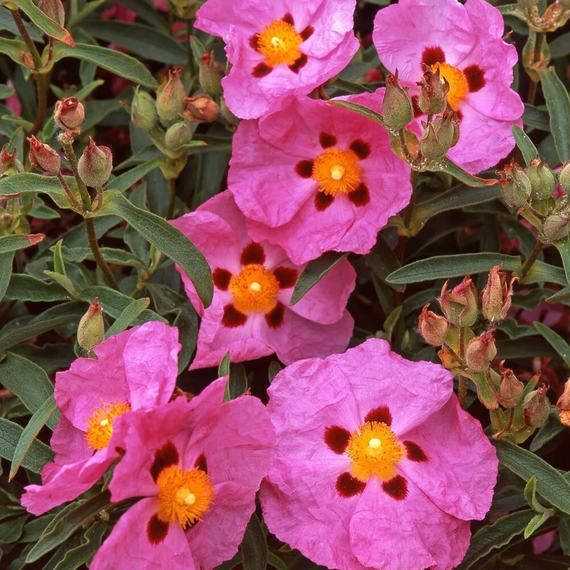
- Showstopping purplish-pink, 3-inch blooms with distinctive dark plum-red blotches bloom in succession for 6-8 weeks from late spring into early summer, attracting butterflies and beneficial pollinators.
- Exceptionally drought-tolerant and deer-resistant once established, thriving in heat, poor soils, and coastal conditions where many other shrubs struggle.
- A tidy, mounding evergreen shrub with aromatic, wavy-edged foliage that provides year-round structure and Mediterranean character in the landscape.
- Royal Horticultural Society Award of Garden Merit recipient — a low-maintenance, long-lived shrub ideal for water-wise, coastal, and rock garden designs.
Purple Rock Rose (Cistus x purpureus) is one of the most striking and resilient evergreen shrubs available for water-wise gardens in the West, bringing a bold Mediterranean flair to any sunny landscape. This vigorous hybrid — a cross between Cistus ladanifer and Cistus creticus — forms a dense, bushy mound of narrow, slightly wavy, aromatic grey-green foliage that remains attractive year-round. From late spring into early summer, the plant erupts in a dazzling succession of large, silky, purplish-pink flowers measuring up to 3 inches across, each petal marked at its base with a rich plum-red blotch surrounding a boss of golden stamens. Though each papery bloom is fleeting — lasting just a single day — the plant produces hundreds of flowers in continuous succession over 6 to 8 weeks, delivering a spectacular and prolonged color display. Exceptionally tolerant of heat, drought, salt spray, wind, and poor soils, Purple Rock Rose is a standout performer for slopes, banks, rock gardens, coastal gardens, informal borders, and Mediterranean-style landscapes throughout USDA Hardiness Zones 7-10. Its deer resistance, near-zero pest and disease issues, and minimal water needs after establishment make it a top choice for gardeners in Southern Oregon and Northern California seeking bold color with minimal upkeep.
Plant Description
Purple Rock Rose is a compact, bushy evergreen shrub with a naturally mounding habit. Its narrow, slightly wavy-edged leaves are dull grey-green on top and paler or grey-green beneath, with a pleasant resinous fragrance — a characteristic of the labdanum-producing Cistus genus that has been prized in Mediterranean perfumery for centuries. The plant's overall texture is dense and slightly coarse, giving it a robust, naturalistic appearance even when not in bloom. It is a hybrid (Cistus x purpureus) resulting from a cross between Cistus ladanifer (gum rockrose) and Cistus creticus, first recorded in cultivation as early as 1819. The combination of striking flowers, aromatic evergreen foliage, and outstanding toughness has earned this plant the prestigious Award of Garden Merit from the Royal Horticultural Society.
Mature Size
| Attribute | Measurement |
|---|---|
| Mature Height | 4 to 6 feet |
| Mature Spread | 4 to 6 feet |
| Growth Rate | Moderate |
| Growth Habit | Dense, bushy, mounding |
| Recommended Spacing | 5 to 6 feet on center |
Purple Rock Rose establishes quickly and fills in with a full, rounded form. Allow adequate spacing at planting to accommodate its eventual spread and to ensure good air circulation, which keeps the plant vigorous and healthy over the long term.
Hardiness Zones and Climate
Purple Rock Rose is hardy in USDA Hardiness Zones 7 through 10 and has been documented to tolerate temperatures down to approximately 15 degrees F (-9 degrees C). It thrives in the warm, dry summer climates of Southern Oregon and Northern California, where it is exceptionally well adapted. It performs best in Mediterranean-type climates with hot, dry summers and cool, wet winters. In areas with occasional hard freezes, providing a sheltered planting site with protection from cold, drying winds will help the plant come through winter in good condition. Sunset Climate Zones 4-9 and 14-24 are also suitable.
Sunlight Requirements
Full sun is essential for Purple Rock Rose to perform at its best. It requires a minimum of 6 to 8 hours of direct sunlight per day. A southern or western exposure is ideal, particularly in locations with mild coastal influences. Ample sunlight encourages the most prolific flowering, the most compact growth habit, and the strongest drought tolerance. Planting in shadier conditions will result in leggier growth, reduced flowering, and increased susceptibility to moisture-related problems. This is a sun-worshipping shrub — the more sun, the better.
Soil and pH Preferences
- Soil Types: Adapts well to a wide range of soil types including sand, loam, chalk, and even clay, provided drainage is good.
- Drainage: Well-draining soil is the single most critical requirement. Purple Rock Rose will not tolerate standing water or persistently wet roots, which leads to root rot and rapid decline.
- Soil Fertility: Thrives in poor to moderately fertile soils. Rich, highly amended soils can actually promote excessive, floppy growth and reduced blooming.
- Soil pH: Highly adaptable — tolerates acidic, neutral, and alkaline pH levels (approximately 6.0 to 8.0).
- Amendments: In heavy clay soils, incorporate coarse sand, pea gravel, or grit into the planting area to improve drainage. Avoid adding large quantities of organic matter, which retains moisture.
Watering Guide
Purple Rock Rose is highly drought-tolerant once established, making it an outstanding choice for low-water and xeriscape gardens. During the first 2 to 3 months after planting, water regularly to help the root system establish — aim for deep, infrequent irrigations rather than frequent shallow watering. Once established (typically after the first growing season), the plant requires minimal supplemental irrigation. In most of Southern Oregon and Northern California, established plants can thrive on natural rainfall alone during the cooler months. During hot, dry summers, an occasional deep watering once or twice a month is sufficient. Overwatering is the most common cause of decline — always allow the soil to dry out partially between waterings. Reduce watering significantly in winter when the plant is semi-dormant. Container-grown specimens will need more frequent attention than in-ground plants.
Fertilizing
Purple Rock Rose is a light feeder and actually performs best in lean soil conditions. Heavy fertilization encourages rank, soft growth that is more prone to flopping and less floriferous. In most garden settings, no regular fertilization is necessary. If desired, a light application of a balanced, slow-release granular fertilizer in early spring can support healthy growth as the plant breaks dormancy. Avoid high-nitrogen fertilizers, which push excessive foliage at the expense of flowers. In very poor soils or container plantings, a diluted all-purpose fertilizer applied once at the start of the growing season is sufficient.
Pruning and Maintenance
One of the most low-maintenance shrubs available for Western gardens, Purple Rock Rose requires very little pruning to remain attractive. Follow these key guidelines:
- Light shaping: After the main flowering period ends in early summer, lightly trim the tips of the branches to encourage a bushier, more compact form. Never remove more than one-third of the plant at a time.
- Deadheading: Not necessary — spent blooms drop cleanly on their own.
- Hard pruning: Avoid cutting back into old, woody stems. Unlike many shrubs, Cistus does not regenerate well from hard pruning into bare wood and may die back if cut too severely.
- Aging plants: Over time (typically after 10 to 15 years), the plant may become woody and open at the center. At that point, replacement with a new plant is preferable to attempting rejuvenation pruning.
- General tidying: Remove any dead, damaged, or diseased branches as needed throughout the year.
Planting Instructions
- Choose a site with full sun and well-draining soil. Avoid low spots or areas where water pools after rain.
- Dig a planting hole two to three times as wide as the root ball and the same depth — do not plant deeper than the nursery container.
- If your soil is heavy clay, work coarse sand or fine gravel into the backfill to improve drainage. Do not add large amounts of compost or peat.
- Remove the plant from its container and gently loosen any circling roots.
- Set the plant so the top of the root ball is level with or very slightly above the surrounding soil grade.
- Backfill with native soil (amended as needed), firming gently to eliminate air pockets.
- Water thoroughly after planting to settle the soil.
- Apply a 2-inch layer of gravel mulch around — but not touching — the base of the plant to help conserve moisture while maintaining good drainage at the crown. Avoid thick organic mulch, which holds too much moisture around the crown.
- Water regularly during the establishment period of 2 to 3 months, then gradually reduce frequency as the plant settles in.
Seasonal Interest
| Season | What to Expect |
|---|---|
| Spring (Late) | Peak flowering begins — masses of large purplish-pink blooms with plum-red blotches open in daily succession, creating a spectacular display. |
| Early Summer | Flowering continues for a total of 6 to 8 weeks. Plant maintains full, dense evergreen foliage. |
| Summer (Mid to Late) | Flowering slows and stops as heat intensifies. The plant remains evergreen and aromatic. Small brown seed capsules form on the branches. |
| Fall | Foliage remains attractive and evergreen. Aromatic grey-green leaves provide quiet texture in the autumn garden. |
| Winter | Evergreen foliage provides year-round structure and greenery. The plant rests during the cooler, wetter months. |
Landscape Uses
- Slopes and Banks: One of the finest shrubs for erosion control and slope stabilization on dry, sunny hillsides.
- Rock Gardens: Perfectly at home among boulders and gravel in naturalistic rock garden designs.
- Mediterranean and Xeriscape Gardens: A cornerstone plant for low-water landscape designs throughout the West.
- Informal Hedging and Dividers: Dense, mounding habit makes it ideal as a low informal hedge or property divider.
- Mass Planting: Planted in drifts, Purple Rock Rose creates a breathtaking floral spectacle during its bloom period.
- Coastal Gardens: Excellent salt spray, wind, and sandy soil tolerance makes it a top performer in coastal settings.
- Borders and Mixed Beds: Works beautifully at the back of a sunny mixed border alongside other drought-tolerant perennials and shrubs.
- Courtyard and City Gardens: Thrives in the reflected heat and challenging conditions of urban garden settings.
Companion Plants
Purple Rock Rose pairs beautifully with other drought-tolerant, Mediterranean-climate plants that share its preference for full sun, excellent drainage, and lean soils. Ideal companions include:
- Spanish Lavender (Lavandula stoechas) — shared color palette and fragrance; blooms in complementary sequence.
- Rosemary (Salvia rosmarinus) — evergreen texture contrast and similar cultural needs.
- Santolina — silver-grey foliage provides a stunning contrast to the purple-pink blooms.
- Germander (Teucrium) — low, tidy companion for the front of a border planting.
- Catmint (Nepeta) — soft blue-purple flowers extend seasonal interest before and after rock rose bloom.
- Phlomis — bold, architectural foliage complement in a Mediterranean-themed planting.
- Artemisia — silvery foliage provides a luminous backdrop for the vivid pink flowers.
- Sun Rose (Helianthemum) — a smaller relative offering complementary flower color and form at the garden's edge.
- Red Valerian (Centranthus ruber) — cheerful self-seeding perennial that naturalizes well in the same sunny, dry conditions.
Pests and Diseases
Purple Rock Rose is notably resistant to pests and diseases, and in the right growing conditions it is essentially trouble-free. When problems do occur, they are almost always linked to poor drainage, overwatering, or insufficient sunlight.
- Root Rot (Phytophthora, Pythium spp.): The most serious threat. Caused entirely by overly wet soil or poor drainage. Prevention through proper site selection and restrained irrigation is the only remedy — there is no effective treatment once it sets in.
- Spider Mites: Occasionally appear during hot, dry spells, particularly on stressed plants. A strong spray of water or an application of neem oil will address minor infestations.
- Whiteflies: Rarely problematic on healthy, established plants. Treat with insecticidal soap if an infestation becomes noticeable.
- General Notes: Deer consistently avoid this plant. It is also considered non-toxic to humans, dogs, and cats, making it a safe choice for family and pet-friendly gardens.
Wildlife Value
Despite its Mediterranean origins, Purple Rock Rose provides meaningful ecological value in Western garden settings. Its abundant flowers are a rich source of nectar and pollen, attracting bees — including native bumblebees and honeybees — butterflies, and other beneficial insects during its 6 to 8 week bloom period in late spring and early summer. It is reliably deer-resistant, making it a particularly practical choice for gardens in foothill and rural areas where deer pressure is high. The dense, twiggy structure also provides light cover for small songbirds. When planted in mass, it offers an important pollinator resource corridor during the transitional period between spring bulbs and summer-blooming perennials.
Container Growing
Purple Rock Rose can be grown successfully in containers, making it a versatile option for patios, courtyards, and entryways. Keep the following in mind for container success:
- Choose a large container with generous drainage holes — at least 15 to 18 inches in diameter.
- Use a fast-draining potting mix blended with perlite or coarse sand (approximately 30% amendment by volume) to ensure excellent drainage.
- Place containers in the sunniest available location — minimum 6 hours of direct sun per day.
- Water more frequently than in-ground plants, but always allow the top half of the soil to dry between waterings.
- Apply a light, balanced slow-release fertilizer at the start of the growing season to compensate for nutrients lost through container watering.
- Repot every 2 to 3 years in late summer or early fall as the plant outgrows its container, using fresh, well-draining potting mix.
- In areas with hard freezes, move containers to a sheltered location or against a south-facing wall for winter protection.
- Showstopping purplish-pink, 3-inch blooms with distinctive dark plum-red blotches bloom in succession for 6-8 weeks from late spring into early summer, attracting butterflies and beneficial pollinators.
- Exceptionally drought-tolerant and deer-resistant once established, thriving in heat, poor soils, and coastal conditions where many other shrubs struggle.
- A tidy, mounding evergreen shrub with aromatic, wavy-edged foliage that provides year-round structure and Mediterranean character in the landscape.
- Royal Horticultural Society Award of Garden Merit recipient — a low-maintenance, long-lived shrub ideal for water-wise, coastal, and rock garden designs.
Purple Rock Rose (Cistus x purpureus) is one of the most striking and resilient evergreen shrubs available for water-wise gardens in the West, bringing a bold Mediterranean flair to any sunny landscape. This vigorous hybrid — a cross between Cistus ladanifer and Cistus creticus — forms a dense, bushy mound of narrow, slightly wavy, aromatic grey-green foliage that remains attractive year-round. From late spring into early summer, the plant erupts in a dazzling succession of large, silky, purplish-pink flowers measuring up to 3 inches across, each petal marked at its base with a rich plum-red blotch surrounding a boss of golden stamens. Though each papery bloom is fleeting — lasting just a single day — the plant produces hundreds of flowers in continuous succession over 6 to 8 weeks, delivering a spectacular and prolonged color display. Exceptionally tolerant of heat, drought, salt spray, wind, and poor soils, Purple Rock Rose is a standout performer for slopes, banks, rock gardens, coastal gardens, informal borders, and Mediterranean-style landscapes throughout USDA Hardiness Zones 7-10. Its deer resistance, near-zero pest and disease issues, and minimal water needs after establishment make it a top choice for gardeners in Southern Oregon and Northern California seeking bold color with minimal upkeep.
Plant Description
Purple Rock Rose is a compact, bushy evergreen shrub with a naturally mounding habit. Its narrow, slightly wavy-edged leaves are dull grey-green on top and paler or grey-green beneath, with a pleasant resinous fragrance — a characteristic of the labdanum-producing Cistus genus that has been prized in Mediterranean perfumery for centuries. The plant's overall texture is dense and slightly coarse, giving it a robust, naturalistic appearance even when not in bloom. It is a hybrid (Cistus x purpureus) resulting from a cross between Cistus ladanifer (gum rockrose) and Cistus creticus, first recorded in cultivation as early as 1819. The combination of striking flowers, aromatic evergreen foliage, and outstanding toughness has earned this plant the prestigious Award of Garden Merit from the Royal Horticultural Society.
Mature Size
| Attribute | Measurement |
|---|---|
| Mature Height | 4 to 6 feet |
| Mature Spread | 4 to 6 feet |
| Growth Rate | Moderate |
| Growth Habit | Dense, bushy, mounding |
| Recommended Spacing | 5 to 6 feet on center |
Purple Rock Rose establishes quickly and fills in with a full, rounded form. Allow adequate spacing at planting to accommodate its eventual spread and to ensure good air circulation, which keeps the plant vigorous and healthy over the long term.
Hardiness Zones and Climate
Purple Rock Rose is hardy in USDA Hardiness Zones 7 through 10 and has been documented to tolerate temperatures down to approximately 15 degrees F (-9 degrees C). It thrives in the warm, dry summer climates of Southern Oregon and Northern California, where it is exceptionally well adapted. It performs best in Mediterranean-type climates with hot, dry summers and cool, wet winters. In areas with occasional hard freezes, providing a sheltered planting site with protection from cold, drying winds will help the plant come through winter in good condition. Sunset Climate Zones 4-9 and 14-24 are also suitable.
Sunlight Requirements
Full sun is essential for Purple Rock Rose to perform at its best. It requires a minimum of 6 to 8 hours of direct sunlight per day. A southern or western exposure is ideal, particularly in locations with mild coastal influences. Ample sunlight encourages the most prolific flowering, the most compact growth habit, and the strongest drought tolerance. Planting in shadier conditions will result in leggier growth, reduced flowering, and increased susceptibility to moisture-related problems. This is a sun-worshipping shrub — the more sun, the better.
Soil and pH Preferences
- Soil Types: Adapts well to a wide range of soil types including sand, loam, chalk, and even clay, provided drainage is good.
- Drainage: Well-draining soil is the single most critical requirement. Purple Rock Rose will not tolerate standing water or persistently wet roots, which leads to root rot and rapid decline.
- Soil Fertility: Thrives in poor to moderately fertile soils. Rich, highly amended soils can actually promote excessive, floppy growth and reduced blooming.
- Soil pH: Highly adaptable — tolerates acidic, neutral, and alkaline pH levels (approximately 6.0 to 8.0).
- Amendments: In heavy clay soils, incorporate coarse sand, pea gravel, or grit into the planting area to improve drainage. Avoid adding large quantities of organic matter, which retains moisture.
Watering Guide
Purple Rock Rose is highly drought-tolerant once established, making it an outstanding choice for low-water and xeriscape gardens. During the first 2 to 3 months after planting, water regularly to help the root system establish — aim for deep, infrequent irrigations rather than frequent shallow watering. Once established (typically after the first growing season), the plant requires minimal supplemental irrigation. In most of Southern Oregon and Northern California, established plants can thrive on natural rainfall alone during the cooler months. During hot, dry summers, an occasional deep watering once or twice a month is sufficient. Overwatering is the most common cause of decline — always allow the soil to dry out partially between waterings. Reduce watering significantly in winter when the plant is semi-dormant. Container-grown specimens will need more frequent attention than in-ground plants.
Fertilizing
Purple Rock Rose is a light feeder and actually performs best in lean soil conditions. Heavy fertilization encourages rank, soft growth that is more prone to flopping and less floriferous. In most garden settings, no regular fertilization is necessary. If desired, a light application of a balanced, slow-release granular fertilizer in early spring can support healthy growth as the plant breaks dormancy. Avoid high-nitrogen fertilizers, which push excessive foliage at the expense of flowers. In very poor soils or container plantings, a diluted all-purpose fertilizer applied once at the start of the growing season is sufficient.
Pruning and Maintenance
One of the most low-maintenance shrubs available for Western gardens, Purple Rock Rose requires very little pruning to remain attractive. Follow these key guidelines:
- Light shaping: After the main flowering period ends in early summer, lightly trim the tips of the branches to encourage a bushier, more compact form. Never remove more than one-third of the plant at a time.
- Deadheading: Not necessary — spent blooms drop cleanly on their own.
- Hard pruning: Avoid cutting back into old, woody stems. Unlike many shrubs, Cistus does not regenerate well from hard pruning into bare wood and may die back if cut too severely.
- Aging plants: Over time (typically after 10 to 15 years), the plant may become woody and open at the center. At that point, replacement with a new plant is preferable to attempting rejuvenation pruning.
- General tidying: Remove any dead, damaged, or diseased branches as needed throughout the year.
Planting Instructions
- Choose a site with full sun and well-draining soil. Avoid low spots or areas where water pools after rain.
- Dig a planting hole two to three times as wide as the root ball and the same depth — do not plant deeper than the nursery container.
- If your soil is heavy clay, work coarse sand or fine gravel into the backfill to improve drainage. Do not add large amounts of compost or peat.
- Remove the plant from its container and gently loosen any circling roots.
- Set the plant so the top of the root ball is level with or very slightly above the surrounding soil grade.
- Backfill with native soil (amended as needed), firming gently to eliminate air pockets.
- Water thoroughly after planting to settle the soil.
- Apply a 2-inch layer of gravel mulch around — but not touching — the base of the plant to help conserve moisture while maintaining good drainage at the crown. Avoid thick organic mulch, which holds too much moisture around the crown.
- Water regularly during the establishment period of 2 to 3 months, then gradually reduce frequency as the plant settles in.
Seasonal Interest
| Season | What to Expect |
|---|---|
| Spring (Late) | Peak flowering begins — masses of large purplish-pink blooms with plum-red blotches open in daily succession, creating a spectacular display. |
| Early Summer | Flowering continues for a total of 6 to 8 weeks. Plant maintains full, dense evergreen foliage. |
| Summer (Mid to Late) | Flowering slows and stops as heat intensifies. The plant remains evergreen and aromatic. Small brown seed capsules form on the branches. |
| Fall | Foliage remains attractive and evergreen. Aromatic grey-green leaves provide quiet texture in the autumn garden. |
| Winter | Evergreen foliage provides year-round structure and greenery. The plant rests during the cooler, wetter months. |
Landscape Uses
- Slopes and Banks: One of the finest shrubs for erosion control and slope stabilization on dry, sunny hillsides.
- Rock Gardens: Perfectly at home among boulders and gravel in naturalistic rock garden designs.
- Mediterranean and Xeriscape Gardens: A cornerstone plant for low-water landscape designs throughout the West.
- Informal Hedging and Dividers: Dense, mounding habit makes it ideal as a low informal hedge or property divider.
- Mass Planting: Planted in drifts, Purple Rock Rose creates a breathtaking floral spectacle during its bloom period.
- Coastal Gardens: Excellent salt spray, wind, and sandy soil tolerance makes it a top performer in coastal settings.
- Borders and Mixed Beds: Works beautifully at the back of a sunny mixed border alongside other drought-tolerant perennials and shrubs.
- Courtyard and City Gardens: Thrives in the reflected heat and challenging conditions of urban garden settings.
Companion Plants
Purple Rock Rose pairs beautifully with other drought-tolerant, Mediterranean-climate plants that share its preference for full sun, excellent drainage, and lean soils. Ideal companions include:
- Spanish Lavender (Lavandula stoechas) — shared color palette and fragrance; blooms in complementary sequence.
- Rosemary (Salvia rosmarinus) — evergreen texture contrast and similar cultural needs.
- Santolina — silver-grey foliage provides a stunning contrast to the purple-pink blooms.
- Germander (Teucrium) — low, tidy companion for the front of a border planting.
- Catmint (Nepeta) — soft blue-purple flowers extend seasonal interest before and after rock rose bloom.
- Phlomis — bold, architectural foliage complement in a Mediterranean-themed planting.
- Artemisia — silvery foliage provides a luminous backdrop for the vivid pink flowers.
- Sun Rose (Helianthemum) — a smaller relative offering complementary flower color and form at the garden's edge.
- Red Valerian (Centranthus ruber) — cheerful self-seeding perennial that naturalizes well in the same sunny, dry conditions.
Pests and Diseases
Purple Rock Rose is notably resistant to pests and diseases, and in the right growing conditions it is essentially trouble-free. When problems do occur, they are almost always linked to poor drainage, overwatering, or insufficient sunlight.
- Root Rot (Phytophthora, Pythium spp.): The most serious threat. Caused entirely by overly wet soil or poor drainage. Prevention through proper site selection and restrained irrigation is the only remedy — there is no effective treatment once it sets in.
- Spider Mites: Occasionally appear during hot, dry spells, particularly on stressed plants. A strong spray of water or an application of neem oil will address minor infestations.
- Whiteflies: Rarely problematic on healthy, established plants. Treat with insecticidal soap if an infestation becomes noticeable.
- General Notes: Deer consistently avoid this plant. It is also considered non-toxic to humans, dogs, and cats, making it a safe choice for family and pet-friendly gardens.
Wildlife Value
Despite its Mediterranean origins, Purple Rock Rose provides meaningful ecological value in Western garden settings. Its abundant flowers are a rich source of nectar and pollen, attracting bees — including native bumblebees and honeybees — butterflies, and other beneficial insects during its 6 to 8 week bloom period in late spring and early summer. It is reliably deer-resistant, making it a particularly practical choice for gardens in foothill and rural areas where deer pressure is high. The dense, twiggy structure also provides light cover for small songbirds. When planted in mass, it offers an important pollinator resource corridor during the transitional period between spring bulbs and summer-blooming perennials.
Container Growing
Purple Rock Rose can be grown successfully in containers, making it a versatile option for patios, courtyards, and entryways. Keep the following in mind for container success:
- Choose a large container with generous drainage holes — at least 15 to 18 inches in diameter.
- Use a fast-draining potting mix blended with perlite or coarse sand (approximately 30% amendment by volume) to ensure excellent drainage.
- Place containers in the sunniest available location — minimum 6 hours of direct sun per day.
- Water more frequently than in-ground plants, but always allow the top half of the soil to dry between waterings.
- Apply a light, balanced slow-release fertilizer at the start of the growing season to compensate for nutrients lost through container watering.
- Repot every 2 to 3 years in late summer or early fall as the plant outgrows its container, using fresh, well-draining potting mix.
- In areas with hard freezes, move containers to a sheltered location or against a south-facing wall for winter protection.
Related Products


