

Zoom the image with the mouse
Rock & Roll Peruvian Lily - 2 Gallon
SKU:
2319245
UPC:
014949357637
$35.99
- Award-winning herbaceous perennial featuring bold, cream-and-green variegated foliage that delivers year-round visual interest even between bloom cycles
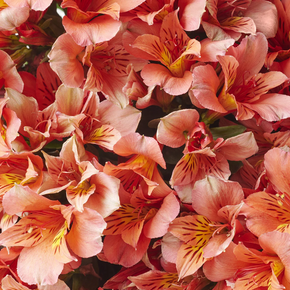
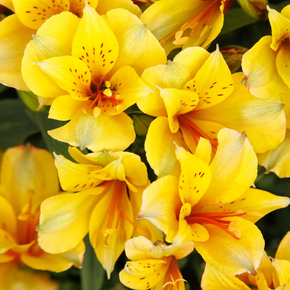
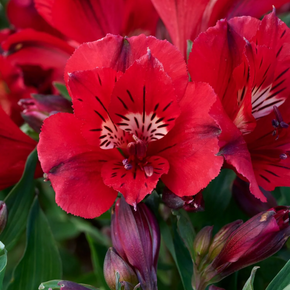
- Produces vivid scarlet-orange trumpet-shaped flowers with gold throats and burgundy-spotted markings continuously from late spring through fall frost
- Exceptionally long-lasting cut flowers with a vase life of 12-16 days, making it one of the finest choices for fresh-cut arrangements and cutting gardens
- Compact, clump-forming habit suits mixed perennial borders, patio containers, and cottage-style gardens equally well in USDA Zones 6-10
Rock & Roll Peruvian Lily (Alstroemeria x 'AlsDun01', PP #21,001) is a patented, award-winning herbaceous perennial that delivers a rare double performance: spectacular cream-and-green variegated foliage that lights up the garden from the moment new growth emerges in spring, followed by an extended, season-long parade of vivid scarlet-orange blooms with golden yellow throats and distinctive burgundy-spotted markings. Native to the mountainous regions of South America and belonging to the family Alstroemeriaceae, this compact clump-forming cultivar reaches approximately 24 inches of foliage height with flower spikes extending to 32 inches, spreading roughly 24 inches wide at maturity. Unlike many perennials that offer only a brief floral window, Rock & Roll blooms continuously from late spring well into fall, producing sturdy, non-lodging stems that are prized by florists and home arrangers alike for their exceptional 12-to-16-day vase life. The lance-shaped leaves emerge chartreuse-yellow in early spring before maturing to a striking creamy-white edged with rich green margins, ensuring the plant remains ornamentally valuable whether in bloom or not. Perfectly suited for the mild climates of Southern Oregon and Northern California, this versatile perennial thrives in full sun to partial shade in well-drained, organically enriched soil and performs beautifully in landscape beds, mixed borders, cottage gardens, and large decorative containers.
Plant Description
Rock & Roll Peruvian Lily is a boldly ornamental herbaceous perennial in the family Alstroemeriaceae, native to the mountainous regions of South America. Registered under the cultivar name Alstroemeria x 'AlsDun01' and carrying Plant Patent #21,001, this award-winning variety was developed specifically for its extraordinary combination of variegated foliage and long-season floral display. The lance-shaped leaves emerge in a bright chartreuse-yellow in early spring, gradually transitioning to a striking creamy-white with crisp, dark green margins as the season progresses. Against this luminous foliage, clusters of scarlet-orange, trumpet-shaped flowers appear at the tips of cream-colored flower stems, each bloom measuring approximately 2.75 inches across and displaying vivid gold throats accented with deep burgundy spots. A unique botanical trait of all Alstroemeria is leaf resupination - the leaves twist 180 degrees on the stem so the underside faces upward - a characteristic visible on close inspection. The plant grows from fleshy underground rhizomes that slowly expand to form tidy, well-behaved clumps over time, returning reliably each season in suitable climates.
Mature Size
| Measurement | Dimension |
|---|---|
| Foliage Height | Approximately 24 inches |
| Flower Stem Height | Up to 32 inches |
| Spread | Approximately 24 inches |
| Recommended Spacing | 18-24 inches between plants |
| Time to Reach Mature Size | 2-5 years for full clump development |
Rock & Roll forms compact, upright clumps that expand slowly outward at a rate of approximately 3-4 inches per year from the rhizomes. Unlike some perennials, it does not spread aggressively by runners and stays neatly within its allotted space, making it suitable for both small garden vignettes and larger mixed borders without becoming invasive.
Hardiness Zones & Climate
Rock & Roll Peruvian Lily is reliably winter hardy in USDA Zones 6a through 10, making it an excellent long-term perennial for the mild climates of Southern Oregon and Northern California. In Zone 6, the crowns benefit from a 3-4 inch layer of shredded bark mulch applied after the ground freezes in late fall, which should be carefully removed in early spring once soil temperatures rise above 45°F at 2-inch depth. In Zones 7 and warmer, plants typically require only minimal winter mulch protection. In Zones 8-10, foliage may remain semi-evergreen through mild winters. This cultivar demonstrates noteworthy heat tolerance as well, maintaining flower color and petal integrity at temperatures up to approximately 92°F when roots are kept cool with organic mulch or when some afternoon shade is provided. In all zones, good drainage is the single most critical factor for long-term survival, as prolonged wet conditions around the rhizomes during cool weather are far more damaging than cold temperatures alone.
Sunlight Requirements
Rock & Roll Peruvian Lily performs best in full sun to partial shade, requiring a minimum of 6 hours of direct sunlight each day to produce its best floral display. In the mild, Mediterranean-influenced climates of Southern Oregon and Northern California, a full-sun position typically yields the most abundant and continuous blooms. In warmer inland areas where summer afternoon temperatures regularly exceed 90°F, a site that receives morning sun with dappled afternoon shade from around 2-4 pm is ideal - studies have shown that afternoon shade in hot climates can extend bloom longevity by more than 20% and prevents petal scorch. The variegated foliage retains its crisp creamy-white and green coloration best in bright light; deep shade will dull the leaf contrast and significantly reduce flowering. A west-, east-, or south-facing aspect in a sheltered position provides the best overall growing conditions.
Soil & pH Preferences
This Peruvian lily thrives in fertile, well-drained soil enriched with organic matter. Drainage is the single most non-negotiable requirement - rhizomes sitting in saturated soil even briefly during cool weather are highly susceptible to root rot pathogens. The ideal soil is loose, loamy, and moisture-retentive without being waterlogged, similar in feel to a wrung-out sponge. Sandy loam or loam amended with compost, leaf mold, or well-rotted bark is ideal. Heavy clay soils must be thoroughly amended with coarse sand, perlite, or pine bark fines to open up the structure and improve drainage before planting. Soil pH should fall in the slightly acidic to neutral range of 6.0 to 6.8. Below a pH of 5.8, excess iron availability can cause leaf chlorosis even in full sun; above 7.2, phosphorus becomes less available and flower bud initiation is inhibited. It is worthwhile to test soil pH before planting and amend as needed with elemental sulfur to lower pH or gypsum to gently raise it.
Watering Guide
Rock & Roll requires consistent, moderate moisture throughout the growing season - never drought-stressed and never waterlogged. The goal is to maintain soil at field capacity: evenly moist but well-aerated. Use the finger test: if the top 1-2 inches of soil feel dry, it is time to water. General seasonal guidelines for in-ground plants in full sun are as follows:
- Spring (60-70°F): Approximately 1 inch of water per week applied in one deep session rather than multiple light waterings
- Summer (75-90°F): Increase to 1.25-1.5 inches per week; check more frequently during extended heat waves above 90°F
- Fall (50-65°F): Reduce to approximately 0.75 inches per week; taper off watering after the first light frost
- Winter dormancy: No supplemental irrigation needed in most climates once plants have died back
Always water at the base of the plant rather than overhead to keep foliage dry and reduce the risk of fungal diseases. Drip irrigation or soaker hoses placed a few inches from the crown are the most effective and efficient delivery method. Container-grown plants dry out significantly faster than in-ground plants and may require daily watering during hot summer weather; check containers every day in peak summer heat.
Fertilizing
Feeding Rock & Roll correctly encourages maximum bloom production without triggering the excessive, disease-prone foliage growth that results from over-fertilizing. Avoid high-nitrogen fertilizers such as blood meal or 20-20-20 formulations, as excess nitrogen consistently reduces flower counts and increases susceptibility to spider mites.
- At planting: Incorporate a slow-release balanced fertilizer (such as 15-9-12 or similar) into the planting hole at the recommended label rate
- Early spring: Apply a balanced slow-release granular fertilizer around established clumps as new growth emerges
- Early summer: Side-dress with a light application of calcium nitrate to support steady growth without excess acidity
- Midsummer: Switch to a low-nitrogen, high-potassium fertilizer (such as 0-52-34 monopotassium phosphate diluted in water) to boost flower bud initiation and strengthen stems
- After mid-August: Stop all fertilization to allow the plant to harden off before dormancy; late-season feeding delays hardening and increases frost damage risk
Container-grown plants benefit from monthly liquid feeding with a balanced fertilizer from April through July only. Because containers are a closed system, nutrients leach out with each watering and must be replenished more regularly than for in-ground plants.
Pruning & Maintenance
Proper deadheading is the single most important maintenance task for keeping Rock & Roll blooming continuously from late spring through fall. Each flowering stem produces 3-5 sequential blooms over 10-14 days. Once the last flower on a stem fades, that stem will not rebloom - leaving spent stems in place diverts the plant's energy away from producing new flowering shoots.
Correct deadheading technique: Do not simply snip off spent flower heads. Instead, trace the flowering stem down to its point of emergence at the crown or soil line and pull it cleanly from the base, or cut it flush with a sharp pair of bypass pruners. Avoid leaving stubs, which become entry points for fungal pathogens. Repeat this process every few days throughout the main bloom season.
Seasonal cleanup: In fall after frost kills back the foliage, cut or remove dead stems and apply a layer of protective mulch over the crown in colder parts of the growing range. In early spring, remove any remaining dead foliage and pull back the mulch as new pink shoot tips begin to emerge from the soil.
Clump division: Every 3-4 years in early spring, lift and divide mature clumps to rejuvenate vigor and bloom production. Discard old, spent center sections and replant only firm, healthy outer rhizome portions that have visible growth eyes. Do not divide in fall, as divided rhizomes will not establish before dormancy sets in.
Planting Instructions
- Select a site with full sun to partial shade, excellent drainage, and shelter from harsh winds.
- Test soil pH and amend to a target range of 6.0-6.8 as needed. Incorporate 3-4 inches of compost or composted bark into the top 12 inches of soil, especially in heavy clay.
- Dig a planting hole large enough to accommodate the root ball without cramping the roots.
- Set the plant so the crown sits approximately 2 inches below the finished soil surface. Planting too shallow risks frost heave and rhizome desiccation; planting too deep delays sprouting and reduces bloom counts.
- Backfill, firm the soil gently to eliminate air pockets, and water thoroughly.
- Apply a 2-3 inch layer of organic mulch such as shredded bark or wood chips over the root zone, keeping mulch pulled back 2 inches from the crown to prevent rot.
- Space multiple plants 18-24 inches apart to allow for eventual clump expansion and to ensure adequate air circulation between foliage.
- Water regularly during the first growing season to establish a deep, healthy root system. Young plants benefit most from being left undisturbed while establishing - avoid dividing or transplanting during the first two years.
Best planting times for Southern Oregon and Northern California: Early spring after the last frost threat has passed and soil has warmed to at least 55°F, or in early fall to allow establishment before winter. Avoid planting during heat waves above 90°F.
Seasonal Interest
| Season | What to Expect |
|---|---|
| Early Spring | New shoots emerge from the soil with a bright chartreuse-yellow coloration, adding fresh color to the waking garden |
| Late Spring | Foliage matures to creamy-white with crisp dark green margins; first flower buds begin to form on cream-colored stems |
| Summer | Peak bloom season with continuous clusters of scarlet-orange, gold-throated flowers with burgundy spots; foliage remains highly ornamental |
| Fall | Blooming continues through fall until the first hard frost; foliage remains attractive as long as temperatures stay above freezing |
| Winter | Dies back to the ground after frost; in the mildest areas (Zones 9-10), may remain semi-evergreen through a mild winter |
Landscape Uses
Rock & Roll Peruvian Lily is a highly versatile landscape plant that adapts to a wide variety of garden styles and settings:
- Mixed perennial borders: The variegated foliage provides excellent contrast against green-leaved neighbors, while the long bloom season fills the color gap between spring bulbs and late-season perennials
- Cutting gardens: One of the finest perennials for fresh-cut flowers, producing abundant stems over a 14-18 week window; stems last 12-16 days in a vase
- Cottage gardens: The relaxed, clump-forming habit and exuberant flower color blend naturally into informal cottage-style plantings
- Container planting: Performs beautifully in large pots, urns, and planters on patios, decks, and entryways; use a minimum 12-inch-diameter, 12-inch-deep container with drainage holes
- Pathway and patio edges: Plant near seating areas and walking paths to enjoy both the striking foliage and the vivid blooms up close throughout the season
- Underplanting: Works well as an underplanting beneath open-canopied shrubs and roses, where it receives dappled light and benefits from the shelter
- City and courtyard gardens: Compact size and container adaptability make it well suited to urban gardening environments with limited space
Companion Plants
Rock & Roll Peruvian Lily pairs beautifully with plants that complement its bold, variegated foliage and vivid scarlet-orange flowers. Consider these combinations for the Southern Oregon and Northern California garden:
- Roses: Old-fashioned shrub roses and hybrid teas in soft pink, cream, or deep red tones harmonize beautifully with the scarlet-orange blooms and provide a classic cottage-garden pairing
- Peonies: The lush, full flowers of peonies share a similar romantic quality; plant peonies to carry on the show as alstroemeria's first blooms are emerging
- Salvia: Blue and purple salvias create a stunning complementary color contrast with the warm orange-red of Rock & Roll's flowers and echo the long bloom season
- Agapanthus: The cool blue or white globes of Lily of the Nile create a dramatic contrast of color and form alongside the scarlet Peruvian lily clusters
- Heuchera (Coral Bells): Dark-leaved or chartreuse heuchera varieties echo or contrast the variegated foliage and create a layered, textural ground planting
- Lavender: The silvery-gray foliage and purple spikes of lavender offer a soft, complementary backdrop and thrive in the same well-drained, sun-drenched conditions
- Ornamental grasses: Upright or arching grasses provide movement and textural contrast alongside the upright clumps of alstroemeria
- Lilacs and daylilies: Classic companions that share similar cultural requirements and extend the season of interest before and after the Peruvian lily's main bloom flush
Pests & Diseases
Rock & Roll Peruvian Lily is considered relatively resistant to most common pests and diseases when grown in appropriate conditions. The majority of problems arise from cultural issues such as poor drainage, overwatering, or inadequate air circulation rather than from inherent susceptibility.
Common Pests:
- Aphids: May cluster on new growth, especially during spring. Knock off with a strong stream of water or apply insecticidal soap at the first sign of infestation
- Two-spotted spider mites: Thrive in hot, dry conditions; look for stippled, dusty-looking foliage and fine webbing on leaf undersides. Treat with miticide soap - not neem oil, which can disrupt beneficial predatory mite populations
- Thrips: Tiny insects that rasp flower petals and foliage; control with insecticidal soap or spinosad-based products
- Slugs and snails: May feed on new shoots, especially in moist conditions. Hand-pick at night or use iron phosphate bait
Common Diseases:
- Botrytis blight (gray mold): Fluffy gray-brown spores appear on foliage and stems in warm, humid conditions. Prevent by ensuring good air circulation and watering at the base only; remove and destroy affected tissue promptly
- Root rot (Pythium and Phytophthora): Almost always caused by poor drainage or overwatering. No cure once established; prevention through well-drained soil is essential. Remove and destroy affected plants
- Rhizoctonia root rot: Causes dry, wiry basal stems; improve drainage and remove affected plants if spread continues
- Mosaic viruses: Spread by aphids and thrips; cause irregular mottling or mosaic patterns on foliage. There is no cure - remove and destroy infected plants immediately and disinfect all tools with a bleach solution
Container Growing
Rock & Roll Peruvian Lily is an outstanding choice for large patio containers, planters, and decorative urns, and its compact form and bold foliage make it one of the most effective perennials for container displays in Southern Oregon and Northern California gardens.
- Container size: Use a minimum 12-inch-diameter, 12-inch-deep pot with drainage holes. Larger containers retain moisture more evenly and reduce the frequency of watering
- Potting mix: Avoid standard peat-heavy potting soils, which retain excess moisture and can acidify over time. Use a blend of 50% pine bark fines, 30% coarse perlite, and 20% composted leaf mold for excellent drainage and aeration
- Watering: Containers dry out much faster than the ground, especially in summer heat. Check soil moisture daily in peak summer and water when the top inch feels dry
- Fertilizing: Feed monthly with a balanced liquid fertilizer from April through July. Stop feeding by mid-August to allow the plant to slow for the season
- Winter care: In areas that experience frost, move containers against a south-facing wall or into a sheltered area. In colder zones, wrap pots in bubble wrap or burlap and insulate the root zone. Water sparingly over winter - just enough to prevent the rhizomes from completely desiccating
- Repotting: Every 3-4 years, refresh container-grown plants by dividing the rhizomes and replanting into fresh potting mix. This restores vigor and bloom production
Cut Flower Use & Vase Life
Rock & Roll Peruvian Lily is widely regarded as one of the finest perennial cut flowers available for the home garden, and it is a staple of professional florists for good reason. Its sturdy, non-lodging stems average 24-30 inches in length and bear bold clusters of blooms that hold exceptionally well after harvest.
- Vase life: Harvested stems last 12-16 days in fresh, cool water - significantly longer than most garden perennials and comparable to commercially grown florist stems
- Harvest timing: Cut stems when the first 1-2 flowers in a cluster are fully open and the remaining buds are showing color. Early morning harvest, when stems are fully hydrated, yields the longest vase life
- Harvesting technique: Rather than cutting stems with shears at a random point, pull each stem cleanly from the base near the crown to encourage the growth of new shoots and maximize ongoing production from the clump. Trim to desired length with sharp shears after pulling
- Conditioning: Immediately place cut stems in cool water and allow them to hydrate in a cool, shaded location for at least 2 hours before arranging. Remove all foliage from the lower portion of the stem to keep vase water clean
- Storage: Stems can be held in cool water at 38-42°F for short-term storage before use in arrangements
- Arrangement uses: Works beautifully as both a focal flower and a filler in mixed arrangements; the variegated foliage on the stems adds textural interest without additional greens
Rock & Roll blooms symbolize friendship and lasting bonds in floral tradition, making it a meaningful and beautiful choice for gifts, celebrations, and special occasion arrangements.
Wildlife Value & Toxicity
Wildlife Benefits:
Rock & Roll Peruvian Lily is recognized as a pollinator-friendly plant. The deep-throated, brightly colored flowers are particularly attractive to bumblebees and hummingbirds, both of which are effective pollinators of the Alstroemeria flower form. While honeybees are less drawn to the blooms due to the absence of conventional nectar guides, bumblebees forage them readily. Hummingbirds are reliably attracted to the vivid scarlet-orange color. This makes the plant a valuable addition to wildlife-friendly and pollinator-support gardens.
Deer & Rabbit Resistance:
The foliage of Alstroemeria contains naturally occurring compounds including tuliposides and alstroemerin that make the plant mildly toxic and generally unpalatable to deer, rabbits, and other browsing wildlife. While no plant is completely deer-proof, Rock & Roll is considered relatively resistant to mammal browsing compared to many other popular perennials.
Toxicity Caution:
All parts of Alstroemeria are considered mildly toxic to humans, dogs, and cats. Ingestion can cause oral irritation, vomiting, and digestive upset. Skin contact with the sap may cause contact dermatitis in sensitive individuals. Always wear gloves when handling, cutting, or dividing this plant, and wash hands thoroughly after. Keep plants out of reach of curious pets and young children.
- Award-winning herbaceous perennial featuring bold, cream-and-green variegated foliage that delivers year-round visual interest even between bloom cycles
- Produces vivid scarlet-orange trumpet-shaped flowers with gold throats and burgundy-spotted markings continuously from late spring through fall frost
- Exceptionally long-lasting cut flowers with a vase life of 12-16 days, making it one of the finest choices for fresh-cut arrangements and cutting gardens
- Compact, clump-forming habit suits mixed perennial borders, patio containers, and cottage-style gardens equally well in USDA Zones 6-10
Rock & Roll Peruvian Lily (Alstroemeria x 'AlsDun01', PP #21,001) is a patented, award-winning herbaceous perennial that delivers a rare double performance: spectacular cream-and-green variegated foliage that lights up the garden from the moment new growth emerges in spring, followed by an extended, season-long parade of vivid scarlet-orange blooms with golden yellow throats and distinctive burgundy-spotted markings. Native to the mountainous regions of South America and belonging to the family Alstroemeriaceae, this compact clump-forming cultivar reaches approximately 24 inches of foliage height with flower spikes extending to 32 inches, spreading roughly 24 inches wide at maturity. Unlike many perennials that offer only a brief floral window, Rock & Roll blooms continuously from late spring well into fall, producing sturdy, non-lodging stems that are prized by florists and home arrangers alike for their exceptional 12-to-16-day vase life. The lance-shaped leaves emerge chartreuse-yellow in early spring before maturing to a striking creamy-white edged with rich green margins, ensuring the plant remains ornamentally valuable whether in bloom or not. Perfectly suited for the mild climates of Southern Oregon and Northern California, this versatile perennial thrives in full sun to partial shade in well-drained, organically enriched soil and performs beautifully in landscape beds, mixed borders, cottage gardens, and large decorative containers.
Plant Description
Rock & Roll Peruvian Lily is a boldly ornamental herbaceous perennial in the family Alstroemeriaceae, native to the mountainous regions of South America. Registered under the cultivar name Alstroemeria x 'AlsDun01' and carrying Plant Patent #21,001, this award-winning variety was developed specifically for its extraordinary combination of variegated foliage and long-season floral display. The lance-shaped leaves emerge in a bright chartreuse-yellow in early spring, gradually transitioning to a striking creamy-white with crisp, dark green margins as the season progresses. Against this luminous foliage, clusters of scarlet-orange, trumpet-shaped flowers appear at the tips of cream-colored flower stems, each bloom measuring approximately 2.75 inches across and displaying vivid gold throats accented with deep burgundy spots. A unique botanical trait of all Alstroemeria is leaf resupination - the leaves twist 180 degrees on the stem so the underside faces upward - a characteristic visible on close inspection. The plant grows from fleshy underground rhizomes that slowly expand to form tidy, well-behaved clumps over time, returning reliably each season in suitable climates.
Mature Size
| Measurement | Dimension |
|---|---|
| Foliage Height | Approximately 24 inches |
| Flower Stem Height | Up to 32 inches |
| Spread | Approximately 24 inches |
| Recommended Spacing | 18-24 inches between plants |
| Time to Reach Mature Size | 2-5 years for full clump development |
Rock & Roll forms compact, upright clumps that expand slowly outward at a rate of approximately 3-4 inches per year from the rhizomes. Unlike some perennials, it does not spread aggressively by runners and stays neatly within its allotted space, making it suitable for both small garden vignettes and larger mixed borders without becoming invasive.
Hardiness Zones & Climate
Rock & Roll Peruvian Lily is reliably winter hardy in USDA Zones 6a through 10, making it an excellent long-term perennial for the mild climates of Southern Oregon and Northern California. In Zone 6, the crowns benefit from a 3-4 inch layer of shredded bark mulch applied after the ground freezes in late fall, which should be carefully removed in early spring once soil temperatures rise above 45°F at 2-inch depth. In Zones 7 and warmer, plants typically require only minimal winter mulch protection. In Zones 8-10, foliage may remain semi-evergreen through mild winters. This cultivar demonstrates noteworthy heat tolerance as well, maintaining flower color and petal integrity at temperatures up to approximately 92°F when roots are kept cool with organic mulch or when some afternoon shade is provided. In all zones, good drainage is the single most critical factor for long-term survival, as prolonged wet conditions around the rhizomes during cool weather are far more damaging than cold temperatures alone.
Sunlight Requirements
Rock & Roll Peruvian Lily performs best in full sun to partial shade, requiring a minimum of 6 hours of direct sunlight each day to produce its best floral display. In the mild, Mediterranean-influenced climates of Southern Oregon and Northern California, a full-sun position typically yields the most abundant and continuous blooms. In warmer inland areas where summer afternoon temperatures regularly exceed 90°F, a site that receives morning sun with dappled afternoon shade from around 2-4 pm is ideal - studies have shown that afternoon shade in hot climates can extend bloom longevity by more than 20% and prevents petal scorch. The variegated foliage retains its crisp creamy-white and green coloration best in bright light; deep shade will dull the leaf contrast and significantly reduce flowering. A west-, east-, or south-facing aspect in a sheltered position provides the best overall growing conditions.
Soil & pH Preferences
This Peruvian lily thrives in fertile, well-drained soil enriched with organic matter. Drainage is the single most non-negotiable requirement - rhizomes sitting in saturated soil even briefly during cool weather are highly susceptible to root rot pathogens. The ideal soil is loose, loamy, and moisture-retentive without being waterlogged, similar in feel to a wrung-out sponge. Sandy loam or loam amended with compost, leaf mold, or well-rotted bark is ideal. Heavy clay soils must be thoroughly amended with coarse sand, perlite, or pine bark fines to open up the structure and improve drainage before planting. Soil pH should fall in the slightly acidic to neutral range of 6.0 to 6.8. Below a pH of 5.8, excess iron availability can cause leaf chlorosis even in full sun; above 7.2, phosphorus becomes less available and flower bud initiation is inhibited. It is worthwhile to test soil pH before planting and amend as needed with elemental sulfur to lower pH or gypsum to gently raise it.
Watering Guide
Rock & Roll requires consistent, moderate moisture throughout the growing season - never drought-stressed and never waterlogged. The goal is to maintain soil at field capacity: evenly moist but well-aerated. Use the finger test: if the top 1-2 inches of soil feel dry, it is time to water. General seasonal guidelines for in-ground plants in full sun are as follows:
- Spring (60-70°F): Approximately 1 inch of water per week applied in one deep session rather than multiple light waterings
- Summer (75-90°F): Increase to 1.25-1.5 inches per week; check more frequently during extended heat waves above 90°F
- Fall (50-65°F): Reduce to approximately 0.75 inches per week; taper off watering after the first light frost
- Winter dormancy: No supplemental irrigation needed in most climates once plants have died back
Always water at the base of the plant rather than overhead to keep foliage dry and reduce the risk of fungal diseases. Drip irrigation or soaker hoses placed a few inches from the crown are the most effective and efficient delivery method. Container-grown plants dry out significantly faster than in-ground plants and may require daily watering during hot summer weather; check containers every day in peak summer heat.
Fertilizing
Feeding Rock & Roll correctly encourages maximum bloom production without triggering the excessive, disease-prone foliage growth that results from over-fertilizing. Avoid high-nitrogen fertilizers such as blood meal or 20-20-20 formulations, as excess nitrogen consistently reduces flower counts and increases susceptibility to spider mites.
- At planting: Incorporate a slow-release balanced fertilizer (such as 15-9-12 or similar) into the planting hole at the recommended label rate
- Early spring: Apply a balanced slow-release granular fertilizer around established clumps as new growth emerges
- Early summer: Side-dress with a light application of calcium nitrate to support steady growth without excess acidity
- Midsummer: Switch to a low-nitrogen, high-potassium fertilizer (such as 0-52-34 monopotassium phosphate diluted in water) to boost flower bud initiation and strengthen stems
- After mid-August: Stop all fertilization to allow the plant to harden off before dormancy; late-season feeding delays hardening and increases frost damage risk
Container-grown plants benefit from monthly liquid feeding with a balanced fertilizer from April through July only. Because containers are a closed system, nutrients leach out with each watering and must be replenished more regularly than for in-ground plants.
Pruning & Maintenance
Proper deadheading is the single most important maintenance task for keeping Rock & Roll blooming continuously from late spring through fall. Each flowering stem produces 3-5 sequential blooms over 10-14 days. Once the last flower on a stem fades, that stem will not rebloom - leaving spent stems in place diverts the plant's energy away from producing new flowering shoots.
Correct deadheading technique: Do not simply snip off spent flower heads. Instead, trace the flowering stem down to its point of emergence at the crown or soil line and pull it cleanly from the base, or cut it flush with a sharp pair of bypass pruners. Avoid leaving stubs, which become entry points for fungal pathogens. Repeat this process every few days throughout the main bloom season.
Seasonal cleanup: In fall after frost kills back the foliage, cut or remove dead stems and apply a layer of protective mulch over the crown in colder parts of the growing range. In early spring, remove any remaining dead foliage and pull back the mulch as new pink shoot tips begin to emerge from the soil.
Clump division: Every 3-4 years in early spring, lift and divide mature clumps to rejuvenate vigor and bloom production. Discard old, spent center sections and replant only firm, healthy outer rhizome portions that have visible growth eyes. Do not divide in fall, as divided rhizomes will not establish before dormancy sets in.
Planting Instructions
- Select a site with full sun to partial shade, excellent drainage, and shelter from harsh winds.
- Test soil pH and amend to a target range of 6.0-6.8 as needed. Incorporate 3-4 inches of compost or composted bark into the top 12 inches of soil, especially in heavy clay.
- Dig a planting hole large enough to accommodate the root ball without cramping the roots.
- Set the plant so the crown sits approximately 2 inches below the finished soil surface. Planting too shallow risks frost heave and rhizome desiccation; planting too deep delays sprouting and reduces bloom counts.
- Backfill, firm the soil gently to eliminate air pockets, and water thoroughly.
- Apply a 2-3 inch layer of organic mulch such as shredded bark or wood chips over the root zone, keeping mulch pulled back 2 inches from the crown to prevent rot.
- Space multiple plants 18-24 inches apart to allow for eventual clump expansion and to ensure adequate air circulation between foliage.
- Water regularly during the first growing season to establish a deep, healthy root system. Young plants benefit most from being left undisturbed while establishing - avoid dividing or transplanting during the first two years.
Best planting times for Southern Oregon and Northern California: Early spring after the last frost threat has passed and soil has warmed to at least 55°F, or in early fall to allow establishment before winter. Avoid planting during heat waves above 90°F.
Seasonal Interest
| Season | What to Expect |
|---|---|
| Early Spring | New shoots emerge from the soil with a bright chartreuse-yellow coloration, adding fresh color to the waking garden |
| Late Spring | Foliage matures to creamy-white with crisp dark green margins; first flower buds begin to form on cream-colored stems |
| Summer | Peak bloom season with continuous clusters of scarlet-orange, gold-throated flowers with burgundy spots; foliage remains highly ornamental |
| Fall | Blooming continues through fall until the first hard frost; foliage remains attractive as long as temperatures stay above freezing |
| Winter | Dies back to the ground after frost; in the mildest areas (Zones 9-10), may remain semi-evergreen through a mild winter |
Landscape Uses
Rock & Roll Peruvian Lily is a highly versatile landscape plant that adapts to a wide variety of garden styles and settings:
- Mixed perennial borders: The variegated foliage provides excellent contrast against green-leaved neighbors, while the long bloom season fills the color gap between spring bulbs and late-season perennials
- Cutting gardens: One of the finest perennials for fresh-cut flowers, producing abundant stems over a 14-18 week window; stems last 12-16 days in a vase
- Cottage gardens: The relaxed, clump-forming habit and exuberant flower color blend naturally into informal cottage-style plantings
- Container planting: Performs beautifully in large pots, urns, and planters on patios, decks, and entryways; use a minimum 12-inch-diameter, 12-inch-deep container with drainage holes
- Pathway and patio edges: Plant near seating areas and walking paths to enjoy both the striking foliage and the vivid blooms up close throughout the season
- Underplanting: Works well as an underplanting beneath open-canopied shrubs and roses, where it receives dappled light and benefits from the shelter
- City and courtyard gardens: Compact size and container adaptability make it well suited to urban gardening environments with limited space
Companion Plants
Rock & Roll Peruvian Lily pairs beautifully with plants that complement its bold, variegated foliage and vivid scarlet-orange flowers. Consider these combinations for the Southern Oregon and Northern California garden:
- Roses: Old-fashioned shrub roses and hybrid teas in soft pink, cream, or deep red tones harmonize beautifully with the scarlet-orange blooms and provide a classic cottage-garden pairing
- Peonies: The lush, full flowers of peonies share a similar romantic quality; plant peonies to carry on the show as alstroemeria's first blooms are emerging
- Salvia: Blue and purple salvias create a stunning complementary color contrast with the warm orange-red of Rock & Roll's flowers and echo the long bloom season
- Agapanthus: The cool blue or white globes of Lily of the Nile create a dramatic contrast of color and form alongside the scarlet Peruvian lily clusters
- Heuchera (Coral Bells): Dark-leaved or chartreuse heuchera varieties echo or contrast the variegated foliage and create a layered, textural ground planting
- Lavender: The silvery-gray foliage and purple spikes of lavender offer a soft, complementary backdrop and thrive in the same well-drained, sun-drenched conditions
- Ornamental grasses: Upright or arching grasses provide movement and textural contrast alongside the upright clumps of alstroemeria
- Lilacs and daylilies: Classic companions that share similar cultural requirements and extend the season of interest before and after the Peruvian lily's main bloom flush
Pests & Diseases
Rock & Roll Peruvian Lily is considered relatively resistant to most common pests and diseases when grown in appropriate conditions. The majority of problems arise from cultural issues such as poor drainage, overwatering, or inadequate air circulation rather than from inherent susceptibility.
Common Pests:
- Aphids: May cluster on new growth, especially during spring. Knock off with a strong stream of water or apply insecticidal soap at the first sign of infestation
- Two-spotted spider mites: Thrive in hot, dry conditions; look for stippled, dusty-looking foliage and fine webbing on leaf undersides. Treat with miticide soap - not neem oil, which can disrupt beneficial predatory mite populations
- Thrips: Tiny insects that rasp flower petals and foliage; control with insecticidal soap or spinosad-based products
- Slugs and snails: May feed on new shoots, especially in moist conditions. Hand-pick at night or use iron phosphate bait
Common Diseases:
- Botrytis blight (gray mold): Fluffy gray-brown spores appear on foliage and stems in warm, humid conditions. Prevent by ensuring good air circulation and watering at the base only; remove and destroy affected tissue promptly
- Root rot (Pythium and Phytophthora): Almost always caused by poor drainage or overwatering. No cure once established; prevention through well-drained soil is essential. Remove and destroy affected plants
- Rhizoctonia root rot: Causes dry, wiry basal stems; improve drainage and remove affected plants if spread continues
- Mosaic viruses: Spread by aphids and thrips; cause irregular mottling or mosaic patterns on foliage. There is no cure - remove and destroy infected plants immediately and disinfect all tools with a bleach solution
Container Growing
Rock & Roll Peruvian Lily is an outstanding choice for large patio containers, planters, and decorative urns, and its compact form and bold foliage make it one of the most effective perennials for container displays in Southern Oregon and Northern California gardens.
- Container size: Use a minimum 12-inch-diameter, 12-inch-deep pot with drainage holes. Larger containers retain moisture more evenly and reduce the frequency of watering
- Potting mix: Avoid standard peat-heavy potting soils, which retain excess moisture and can acidify over time. Use a blend of 50% pine bark fines, 30% coarse perlite, and 20% composted leaf mold for excellent drainage and aeration
- Watering: Containers dry out much faster than the ground, especially in summer heat. Check soil moisture daily in peak summer and water when the top inch feels dry
- Fertilizing: Feed monthly with a balanced liquid fertilizer from April through July. Stop feeding by mid-August to allow the plant to slow for the season
- Winter care: In areas that experience frost, move containers against a south-facing wall or into a sheltered area. In colder zones, wrap pots in bubble wrap or burlap and insulate the root zone. Water sparingly over winter - just enough to prevent the rhizomes from completely desiccating
- Repotting: Every 3-4 years, refresh container-grown plants by dividing the rhizomes and replanting into fresh potting mix. This restores vigor and bloom production
Cut Flower Use & Vase Life
Rock & Roll Peruvian Lily is widely regarded as one of the finest perennial cut flowers available for the home garden, and it is a staple of professional florists for good reason. Its sturdy, non-lodging stems average 24-30 inches in length and bear bold clusters of blooms that hold exceptionally well after harvest.
- Vase life: Harvested stems last 12-16 days in fresh, cool water - significantly longer than most garden perennials and comparable to commercially grown florist stems
- Harvest timing: Cut stems when the first 1-2 flowers in a cluster are fully open and the remaining buds are showing color. Early morning harvest, when stems are fully hydrated, yields the longest vase life
- Harvesting technique: Rather than cutting stems with shears at a random point, pull each stem cleanly from the base near the crown to encourage the growth of new shoots and maximize ongoing production from the clump. Trim to desired length with sharp shears after pulling
- Conditioning: Immediately place cut stems in cool water and allow them to hydrate in a cool, shaded location for at least 2 hours before arranging. Remove all foliage from the lower portion of the stem to keep vase water clean
- Storage: Stems can be held in cool water at 38-42°F for short-term storage before use in arrangements
- Arrangement uses: Works beautifully as both a focal flower and a filler in mixed arrangements; the variegated foliage on the stems adds textural interest without additional greens
Rock & Roll blooms symbolize friendship and lasting bonds in floral tradition, making it a meaningful and beautiful choice for gifts, celebrations, and special occasion arrangements.
Wildlife Value & Toxicity
Wildlife Benefits:
Rock & Roll Peruvian Lily is recognized as a pollinator-friendly plant. The deep-throated, brightly colored flowers are particularly attractive to bumblebees and hummingbirds, both of which are effective pollinators of the Alstroemeria flower form. While honeybees are less drawn to the blooms due to the absence of conventional nectar guides, bumblebees forage them readily. Hummingbirds are reliably attracted to the vivid scarlet-orange color. This makes the plant a valuable addition to wildlife-friendly and pollinator-support gardens.
Deer & Rabbit Resistance:
The foliage of Alstroemeria contains naturally occurring compounds including tuliposides and alstroemerin that make the plant mildly toxic and generally unpalatable to deer, rabbits, and other browsing wildlife. While no plant is completely deer-proof, Rock & Roll is considered relatively resistant to mammal browsing compared to many other popular perennials.
Toxicity Caution:
All parts of Alstroemeria are considered mildly toxic to humans, dogs, and cats. Ingestion can cause oral irritation, vomiting, and digestive upset. Skin contact with the sap may cause contact dermatitis in sensitive individuals. Always wear gloves when handling, cutting, or dividing this plant, and wash hands thoroughly after. Keep plants out of reach of curious pets and young children.