Zoom the image with the mouse
Magenta Rock Rose - 2 Gallon
SKU:
1931455
UPC:
014949424100
$39.99
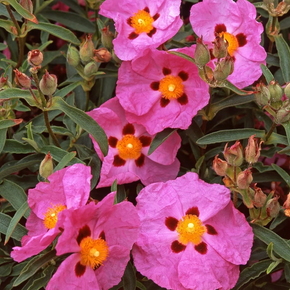
- Brilliant cerise-magenta blooms with golden centers put on a dazzling show from late spring through summer, forming a vivid floral carpet across a low, wide-spreading evergreen mound.
- Exceptionally drought-tolerant and deer-resistant once established, making it an ideal low-maintenance choice for water-wise and Mediterranean-style landscapes.
- Wide-spreading, groundcover habit reaches up to 6-8 feet wide while staying just 2-3 feet tall, perfect for covering slopes, banks, and large dry garden areas with season-long color.
- Thrives in poor, rocky, or sandy soils with full sun and tolerates coastal salt spray and heat, asking very little while delivering spectacular seasonal impact.
Cistus x pulverulentus 'Sunset' Magenta Rock Rose is a standout evergreen shrub prized for its electrifying display of rich cerise-magenta flowers, each measuring about 2 inches across and featuring a cheerful cluster of golden anthers at the center. A vigorous hybrid resulting from a cross between Cistus albidus and Cistus crispus, this award-winning Mediterranean shrub has been dazzling gardens since its discovery in 1929 and holds the prestigious Royal Horticultural Society Award of Garden Merit. Though each papery, crepe-textured bloom lasts only a single day, the plant produces flowers in prolific succession from late spring through late summer, ensuring weeks of vibrant color. Its compact, low-spreading mound of slightly wavy-edged, felty gray-green aromatic foliage remains attractive year-round, even when not in bloom. Magenta Rock Rose is a superb choice for sunny slopes, dry borders, coastal gardens, rock gardens, and Mediterranean-inspired landscapes throughout USDA Hardiness Zones 8-10, and it excels in the heat and dry summers characteristic of Southern Oregon and Northern California. Once established, it requires minimal irrigation, tolerates poor and rocky soils, shrugs off coastal salt spray, and is virtually pest- and disease-free, making it one of the most carefree and rewarding drought-tolerant shrubs available for Western gardens.
Plant Description
Magenta Rock Rose is a hybrid evergreen shrub in the Cistaceae family, originating as a cross between Cistus albidus and Cistus crispus. First discovered in 1929, it has become one of the most admired ornamental rock roses in cultivation and is a recipient of the Royal Horticultural Society's Award of Garden Merit. The plant forms a graceful, low-spreading mound clothed in slightly wavy-edged, felty gray-green leaves that are mildly aromatic, especially on warm days when their pleasant fragrance drifts through the garden. From late spring through late summer, the shrub is blanketed in rich cerise-magenta flowers, each about 2 inches across with delicate, crepe-paper-like petals surrounding a central burst of golden yellow anthers. While each individual flower is short-lived, the plant produces them in prolific succession, providing a continuous and eye-catching show for weeks. The foliage provides year-round evergreen structure and textural interest even outside the bloom period.
Mature Size
| Attribute | Measurement |
|---|---|
| Mature Height | 2-3 feet |
| Mature Spread | 6-8 feet |
| Growth Habit | Low, wide-spreading mound |
| Growth Rate | Moderately fast |
| Recommended Spacing | Approximately 8 feet on center |
Magenta Rock Rose grows much wider than it is tall, making it an excellent low groundcover-style shrub for filling large areas. Its wide, spreading habit naturally suppresses weeds and covers difficult terrain with minimal effort.
Hardiness Zones and Climate
Magenta Rock Rose is reliably hardy in USDA Hardiness Zones 8-10, making it well-suited to the mild winters and hot, dry summers of Southern Oregon and Northern California. It is especially adapted to Mediterranean climates, where summers are warm and dry and winters are cool and wet. The plant has excellent heat tolerance and thrives in the kind of intense summer sun and low summer rainfall that characterizes the inland valleys and foothills of the Pacific Coast region. It appreciates some protection from harsh, cold, drying winds in the colder end of its hardiness range. In borderline Zone 7b microclimates, a sheltered, south-facing position with excellent drainage can sometimes allow it to overwinter successfully.
Sunlight Requirements
Full sun is essential for Magenta Rock Rose to perform at its best. It requires a minimum of 6 hours of direct sunlight per day, and more is always better. In full sun, the plant produces the most abundant blooms, maintains a tight and compact growth habit, and stays healthiest. Placing it in partial shade leads to reduced flowering, looser, less attractive growth, and an increased susceptibility to fungal issues such as powdery mildew. Choose the sunniest spot in the garden — south- or west-facing slopes, rocky banks, and open borders are ideal locations. This plant positively thrives in the kind of hot, reflective heat found near stone walls, gravel paths, and paved surfaces.
Soil and pH Preferences
One of the great virtues of Magenta Rock Rose is its tolerance of poor soils. It actually performs better in lean, infertile soils than in rich, fertile ones, which can promote overly lush and weak growth at the expense of flowering. The most important soil requirement is excellent drainage — waterlogged or consistently moist soils will cause root rot and decline. It adapts readily to a wide range of soil types including sandy, gravelly, loam, chalk, and even clay soils, as long as drainage is adequate. The plant tolerates both acidic and alkaline soil pH and is not particular about soil chemistry. Rocky slopes, raised beds, and gravel gardens are ideal planting sites. Amending heavy clay soils with coarse grit or gravel at planting time will greatly improve drainage and plant performance.
Watering Guide
Magenta Rock Rose is highly drought-tolerant once established and is perfectly suited to low-water and water-wise gardens. During the first growing season, water regularly — approximately once a week with a deep, thorough soaking — to help the plant develop a strong and deep root system. In the second year, reduce watering to once every two to three weeks. Once fully established, the plant can typically survive on natural rainfall alone in most of its hardiness range, making it an outstanding choice for areas with hot, dry summers. The single most important watering rule is to avoid overwatering: soggy soil is far more harmful than drought. Always allow the soil to dry out between waterings. Do not use drip systems set to water frequently, as consistent moisture promotes root rot and weak growth.
Fertilizing
Magenta Rock Rose is a light feeder and does not require or benefit from heavy fertilization. In fact, too much fertilizer — especially high-nitrogen formulas — encourages excessive leafy growth at the expense of flowers and can make the plant more susceptible to pests and diseases. If fertilization is desired, apply a single light application of a balanced, slow-release granular fertilizer formulated for flowering shrubs once per year in early spring. Sprinkle the granules on the soil surface beneath the plant's canopy and lightly rake them into the top inch of soil. Follow with a thorough watering to help nutrients reach the root zone. Alternatively, a light top dressing of compost in spring provides gentle, natural nutrition without the risk of over-feeding. Established plants in typical garden conditions generally need no supplemental fertilization at all.
Pruning and Maintenance
Magenta Rock Rose is a low-maintenance shrub but benefits from occasional light pruning to keep it looking its best. The key rule to follow is to never prune hard — cutting back into old, woody stems can severely damage or kill the plant, as it does not regenerate reliably from hard cuts the way many other shrubs do. Light pruning is best done after the main flush of blooms has finished. Use clean, sharp shears to lightly shear the plant back, removing spent flower stems and trimming back the soft tips of branches to encourage a bushier, more compact form for the following season. In early spring, inspect the plant and remove any stems that suffered frost damage over winter by cutting back to healthy green wood. As the plant ages and branches become excessively woody and stop flowering, selectively remove those older stems at the base to encourage fresh new growth from the center of the plant.
Planting Instructions
- Select a planting site that receives full sun all day and has well-draining soil. Avoid low spots, poorly drained areas, or locations with overhead irrigation from other plants.
- The ideal planting time is fall in the Southern Oregon and Northern California region, giving roots time to establish before summer heat arrives. Spring planting is also successful with attentive watering during the first season.
- Dig a planting hole as deep as the root ball and two to three times as wide. If soil is heavy clay, mix in generous amounts of coarse grit, pea gravel, or crushed pumice to improve drainage.
- Before planting, inspect the root ball and use clean shears to cut through any circling roots. Gently loosen and tease the outer roots outward to encourage them to spread into the surrounding soil.
- Set the plant so the top of the root ball is level with or very slightly above the surrounding soil surface. Never plant too deep.
- Backfill with native soil (amended if needed), firming gently around the roots to eliminate air pockets.
- Water thoroughly immediately after planting. Apply a 2-3 inch layer of gravel or coarse bark mulch around the base, keeping it a few inches away from the main stem to prevent moisture from collecting against the crown.
- Space multiple plants approximately 8 feet apart to allow for their mature spread.
Seasonal Interest
Magenta Rock Rose offers multi-season appeal in the garden. The main show begins in late spring when the plant erupts into its spectacular display of vibrant cerise-magenta blooms. Flowering continues in succession through early, mid, and late summer, providing many weeks of intense color. Even as individual flowers drop each evening, fresh buds open every morning to replace them. The slightly wavy, felty gray-green foliage provides attractive texture and evergreen presence throughout the fall and winter months when the plant is not in bloom. The aromatic leaves become particularly fragrant on warm days, releasing a pleasant herbal scent throughout the garden. Overall, this plant earns its place in the landscape across all four seasons, with its most dramatic display from late May through August in the Southern Oregon and Northern California climate.
Landscape Uses
Magenta Rock Rose is one of the most versatile drought-tolerant shrubs for warm, sunny gardens. Its wide, low-spreading habit and vigorous coverage make it especially well-suited for:
- Dry slopes and banks where erosion control and low maintenance are priorities
- Water-wise and xeriscape gardens as a bold flowering groundcover
- Mediterranean, gravel, and rock garden designs
- Coastal gardens where salt spray and wind tolerance are needed
- Mixed shrub borders as a low-growing front-of-border specimen
- Informal and cottage-style garden beds
- Planting beneath tall drought-tolerant trees or large shrubs
- Hillside and wall-side borders where its spreading habit can flow naturally over edges
- Mass plantings for dramatic seasonal color impact across large areas
- City and courtyard gardens with heat-reflecting surfaces
Companion Plants
Magenta Rock Rose pairs beautifully with other drought-tolerant, sun-loving plants that share its Mediterranean heritage and care requirements. Consider combining it with:
- Spanish Lavender (Lavandula stoechas) - shares the same sun and drainage requirements and provides complementary purple blooms and fragrance
- Red Valerian (Centranthus ruber) - a tough, free-flowering perennial that echoes the magenta color palette and thrives in similar dry conditions
- Rosemary (Salvia rosmarinus) - a classic Mediterranean companion that offers contrasting fine-textured evergreen foliage
- Ornamental Sages (Salvia spp.) - provide vertical interest and pollinator value alongside the spreading mounds of rock rose
- Golden Marguerite (Anthemis tinctoria) - the bright yellow daisy flowers create a vivid contrast against the cerise blooms
- Licorice Plant (Helichrysum petiolare) - silvery foliage creates a striking textural backdrop for the bold magenta flowers
- Artemisia species - silvery, drought-tolerant foliage plants that harmonize naturally with the gray-green leaves of rock rose
- Penstemon and ornamental grasses - add height and movement when planted behind the low-spreading mounds
Pests and Diseases
Magenta Rock Rose is remarkably trouble-free in the landscape and is rarely affected by serious pests or diseases when planted in the right conditions. It is one of its greatest selling points for low-maintenance gardeners. When problems do arise, they are almost always linked to poor cultural conditions, particularly overwatering or insufficient sunlight:
- Aphids: Occasional infestations can appear, especially on plants that are overwatered or grown in low light. A strong blast of water or an application of insecticidal soap usually resolves the issue quickly.
- Root Rot: The most serious threat to rock roses. Caused entirely by overly wet or poorly drained soils. Prevention through proper site selection and restrained watering is the best approach, as affected plants rarely recover fully.
- Powdery Mildew: Can occur on plants growing in shaded conditions or receiving poor air circulation. Ensure full sun placement and good spacing to keep foliage dry and air moving freely around the plant.
- Deer: Magenta Rock Rose is considered deer-resistant, making it an excellent choice for gardens in rural areas of Southern Oregon and Northern California where deer browsing is a persistent challenge.
Wildlife Value
Magenta Rock Rose is a valuable plant for pollinators and beneficial garden wildlife. The large, open-faced flowers with their prominent golden anthers are highly attractive to bees, providing easy access to pollen and nectar. Butterflies are also frequent visitors to the blooms throughout the long summer flowering period. The dense, evergreen mounding habit of the plant can provide low-level shelter for small beneficial insects and ground-nesting wildlife. While the plant is deer-resistant and unlikely to be browsed, it is not known to be toxic to humans or animals. Its value as a pollinator plant makes it an excellent component of wildlife-friendly, habitat garden designs alongside other Mediterranean herbs and flowering shrubs.
Propagation
Magenta Rock Rose is most reliably propagated from softwood stem cuttings taken in summer. Select healthy, non-flowering shoot tips approximately 3-4 inches in length from the current season's growth. Remove the lower leaves to expose at least two nodes, then dip the cut end in rooting hormone powder or gel. Insert the cuttings into small pots filled with a well-draining propagation mix such as a blend of perlite and peat or coir. Place the pots in a warm, bright location out of direct intense sun and maintain even moisture without waterlogging. Rooting typically occurs within several weeks. Once well-rooted, the young plants can be potted up individually and grown on before transplanting to their permanent garden location the following spring. Seed propagation is possible but results in variable plants, and cuttings are strongly preferred for maintaining the ornamental characteristics of this cultivar.
- Brilliant cerise-magenta blooms with golden centers put on a dazzling show from late spring through summer, forming a vivid floral carpet across a low, wide-spreading evergreen mound.
- Exceptionally drought-tolerant and deer-resistant once established, making it an ideal low-maintenance choice for water-wise and Mediterranean-style landscapes.
- Wide-spreading, groundcover habit reaches up to 6-8 feet wide while staying just 2-3 feet tall, perfect for covering slopes, banks, and large dry garden areas with season-long color.
- Thrives in poor, rocky, or sandy soils with full sun and tolerates coastal salt spray and heat, asking very little while delivering spectacular seasonal impact.
Cistus x pulverulentus 'Sunset' Magenta Rock Rose is a standout evergreen shrub prized for its electrifying display of rich cerise-magenta flowers, each measuring about 2 inches across and featuring a cheerful cluster of golden anthers at the center. A vigorous hybrid resulting from a cross between Cistus albidus and Cistus crispus, this award-winning Mediterranean shrub has been dazzling gardens since its discovery in 1929 and holds the prestigious Royal Horticultural Society Award of Garden Merit. Though each papery, crepe-textured bloom lasts only a single day, the plant produces flowers in prolific succession from late spring through late summer, ensuring weeks of vibrant color. Its compact, low-spreading mound of slightly wavy-edged, felty gray-green aromatic foliage remains attractive year-round, even when not in bloom. Magenta Rock Rose is a superb choice for sunny slopes, dry borders, coastal gardens, rock gardens, and Mediterranean-inspired landscapes throughout USDA Hardiness Zones 8-10, and it excels in the heat and dry summers characteristic of Southern Oregon and Northern California. Once established, it requires minimal irrigation, tolerates poor and rocky soils, shrugs off coastal salt spray, and is virtually pest- and disease-free, making it one of the most carefree and rewarding drought-tolerant shrubs available for Western gardens.
Plant Description
Magenta Rock Rose is a hybrid evergreen shrub in the Cistaceae family, originating as a cross between Cistus albidus and Cistus crispus. First discovered in 1929, it has become one of the most admired ornamental rock roses in cultivation and is a recipient of the Royal Horticultural Society's Award of Garden Merit. The plant forms a graceful, low-spreading mound clothed in slightly wavy-edged, felty gray-green leaves that are mildly aromatic, especially on warm days when their pleasant fragrance drifts through the garden. From late spring through late summer, the shrub is blanketed in rich cerise-magenta flowers, each about 2 inches across with delicate, crepe-paper-like petals surrounding a central burst of golden yellow anthers. While each individual flower is short-lived, the plant produces them in prolific succession, providing a continuous and eye-catching show for weeks. The foliage provides year-round evergreen structure and textural interest even outside the bloom period.
Mature Size
| Attribute | Measurement |
|---|---|
| Mature Height | 2-3 feet |
| Mature Spread | 6-8 feet |
| Growth Habit | Low, wide-spreading mound |
| Growth Rate | Moderately fast |
| Recommended Spacing | Approximately 8 feet on center |
Magenta Rock Rose grows much wider than it is tall, making it an excellent low groundcover-style shrub for filling large areas. Its wide, spreading habit naturally suppresses weeds and covers difficult terrain with minimal effort.
Hardiness Zones and Climate
Magenta Rock Rose is reliably hardy in USDA Hardiness Zones 8-10, making it well-suited to the mild winters and hot, dry summers of Southern Oregon and Northern California. It is especially adapted to Mediterranean climates, where summers are warm and dry and winters are cool and wet. The plant has excellent heat tolerance and thrives in the kind of intense summer sun and low summer rainfall that characterizes the inland valleys and foothills of the Pacific Coast region. It appreciates some protection from harsh, cold, drying winds in the colder end of its hardiness range. In borderline Zone 7b microclimates, a sheltered, south-facing position with excellent drainage can sometimes allow it to overwinter successfully.
Sunlight Requirements
Full sun is essential for Magenta Rock Rose to perform at its best. It requires a minimum of 6 hours of direct sunlight per day, and more is always better. In full sun, the plant produces the most abundant blooms, maintains a tight and compact growth habit, and stays healthiest. Placing it in partial shade leads to reduced flowering, looser, less attractive growth, and an increased susceptibility to fungal issues such as powdery mildew. Choose the sunniest spot in the garden — south- or west-facing slopes, rocky banks, and open borders are ideal locations. This plant positively thrives in the kind of hot, reflective heat found near stone walls, gravel paths, and paved surfaces.
Soil and pH Preferences
One of the great virtues of Magenta Rock Rose is its tolerance of poor soils. It actually performs better in lean, infertile soils than in rich, fertile ones, which can promote overly lush and weak growth at the expense of flowering. The most important soil requirement is excellent drainage — waterlogged or consistently moist soils will cause root rot and decline. It adapts readily to a wide range of soil types including sandy, gravelly, loam, chalk, and even clay soils, as long as drainage is adequate. The plant tolerates both acidic and alkaline soil pH and is not particular about soil chemistry. Rocky slopes, raised beds, and gravel gardens are ideal planting sites. Amending heavy clay soils with coarse grit or gravel at planting time will greatly improve drainage and plant performance.
Watering Guide
Magenta Rock Rose is highly drought-tolerant once established and is perfectly suited to low-water and water-wise gardens. During the first growing season, water regularly — approximately once a week with a deep, thorough soaking — to help the plant develop a strong and deep root system. In the second year, reduce watering to once every two to three weeks. Once fully established, the plant can typically survive on natural rainfall alone in most of its hardiness range, making it an outstanding choice for areas with hot, dry summers. The single most important watering rule is to avoid overwatering: soggy soil is far more harmful than drought. Always allow the soil to dry out between waterings. Do not use drip systems set to water frequently, as consistent moisture promotes root rot and weak growth.
Fertilizing
Magenta Rock Rose is a light feeder and does not require or benefit from heavy fertilization. In fact, too much fertilizer — especially high-nitrogen formulas — encourages excessive leafy growth at the expense of flowers and can make the plant more susceptible to pests and diseases. If fertilization is desired, apply a single light application of a balanced, slow-release granular fertilizer formulated for flowering shrubs once per year in early spring. Sprinkle the granules on the soil surface beneath the plant's canopy and lightly rake them into the top inch of soil. Follow with a thorough watering to help nutrients reach the root zone. Alternatively, a light top dressing of compost in spring provides gentle, natural nutrition without the risk of over-feeding. Established plants in typical garden conditions generally need no supplemental fertilization at all.
Pruning and Maintenance
Magenta Rock Rose is a low-maintenance shrub but benefits from occasional light pruning to keep it looking its best. The key rule to follow is to never prune hard — cutting back into old, woody stems can severely damage or kill the plant, as it does not regenerate reliably from hard cuts the way many other shrubs do. Light pruning is best done after the main flush of blooms has finished. Use clean, sharp shears to lightly shear the plant back, removing spent flower stems and trimming back the soft tips of branches to encourage a bushier, more compact form for the following season. In early spring, inspect the plant and remove any stems that suffered frost damage over winter by cutting back to healthy green wood. As the plant ages and branches become excessively woody and stop flowering, selectively remove those older stems at the base to encourage fresh new growth from the center of the plant.
Planting Instructions
- Select a planting site that receives full sun all day and has well-draining soil. Avoid low spots, poorly drained areas, or locations with overhead irrigation from other plants.
- The ideal planting time is fall in the Southern Oregon and Northern California region, giving roots time to establish before summer heat arrives. Spring planting is also successful with attentive watering during the first season.
- Dig a planting hole as deep as the root ball and two to three times as wide. If soil is heavy clay, mix in generous amounts of coarse grit, pea gravel, or crushed pumice to improve drainage.
- Before planting, inspect the root ball and use clean shears to cut through any circling roots. Gently loosen and tease the outer roots outward to encourage them to spread into the surrounding soil.
- Set the plant so the top of the root ball is level with or very slightly above the surrounding soil surface. Never plant too deep.
- Backfill with native soil (amended if needed), firming gently around the roots to eliminate air pockets.
- Water thoroughly immediately after planting. Apply a 2-3 inch layer of gravel or coarse bark mulch around the base, keeping it a few inches away from the main stem to prevent moisture from collecting against the crown.
- Space multiple plants approximately 8 feet apart to allow for their mature spread.
Seasonal Interest
Magenta Rock Rose offers multi-season appeal in the garden. The main show begins in late spring when the plant erupts into its spectacular display of vibrant cerise-magenta blooms. Flowering continues in succession through early, mid, and late summer, providing many weeks of intense color. Even as individual flowers drop each evening, fresh buds open every morning to replace them. The slightly wavy, felty gray-green foliage provides attractive texture and evergreen presence throughout the fall and winter months when the plant is not in bloom. The aromatic leaves become particularly fragrant on warm days, releasing a pleasant herbal scent throughout the garden. Overall, this plant earns its place in the landscape across all four seasons, with its most dramatic display from late May through August in the Southern Oregon and Northern California climate.
Landscape Uses
Magenta Rock Rose is one of the most versatile drought-tolerant shrubs for warm, sunny gardens. Its wide, low-spreading habit and vigorous coverage make it especially well-suited for:
- Dry slopes and banks where erosion control and low maintenance are priorities
- Water-wise and xeriscape gardens as a bold flowering groundcover
- Mediterranean, gravel, and rock garden designs
- Coastal gardens where salt spray and wind tolerance are needed
- Mixed shrub borders as a low-growing front-of-border specimen
- Informal and cottage-style garden beds
- Planting beneath tall drought-tolerant trees or large shrubs
- Hillside and wall-side borders where its spreading habit can flow naturally over edges
- Mass plantings for dramatic seasonal color impact across large areas
- City and courtyard gardens with heat-reflecting surfaces
Companion Plants
Magenta Rock Rose pairs beautifully with other drought-tolerant, sun-loving plants that share its Mediterranean heritage and care requirements. Consider combining it with:
- Spanish Lavender (Lavandula stoechas) - shares the same sun and drainage requirements and provides complementary purple blooms and fragrance
- Red Valerian (Centranthus ruber) - a tough, free-flowering perennial that echoes the magenta color palette and thrives in similar dry conditions
- Rosemary (Salvia rosmarinus) - a classic Mediterranean companion that offers contrasting fine-textured evergreen foliage
- Ornamental Sages (Salvia spp.) - provide vertical interest and pollinator value alongside the spreading mounds of rock rose
- Golden Marguerite (Anthemis tinctoria) - the bright yellow daisy flowers create a vivid contrast against the cerise blooms
- Licorice Plant (Helichrysum petiolare) - silvery foliage creates a striking textural backdrop for the bold magenta flowers
- Artemisia species - silvery, drought-tolerant foliage plants that harmonize naturally with the gray-green leaves of rock rose
- Penstemon and ornamental grasses - add height and movement when planted behind the low-spreading mounds
Pests and Diseases
Magenta Rock Rose is remarkably trouble-free in the landscape and is rarely affected by serious pests or diseases when planted in the right conditions. It is one of its greatest selling points for low-maintenance gardeners. When problems do arise, they are almost always linked to poor cultural conditions, particularly overwatering or insufficient sunlight:
- Aphids: Occasional infestations can appear, especially on plants that are overwatered or grown in low light. A strong blast of water or an application of insecticidal soap usually resolves the issue quickly.
- Root Rot: The most serious threat to rock roses. Caused entirely by overly wet or poorly drained soils. Prevention through proper site selection and restrained watering is the best approach, as affected plants rarely recover fully.
- Powdery Mildew: Can occur on plants growing in shaded conditions or receiving poor air circulation. Ensure full sun placement and good spacing to keep foliage dry and air moving freely around the plant.
- Deer: Magenta Rock Rose is considered deer-resistant, making it an excellent choice for gardens in rural areas of Southern Oregon and Northern California where deer browsing is a persistent challenge.
Wildlife Value
Magenta Rock Rose is a valuable plant for pollinators and beneficial garden wildlife. The large, open-faced flowers with their prominent golden anthers are highly attractive to bees, providing easy access to pollen and nectar. Butterflies are also frequent visitors to the blooms throughout the long summer flowering period. The dense, evergreen mounding habit of the plant can provide low-level shelter for small beneficial insects and ground-nesting wildlife. While the plant is deer-resistant and unlikely to be browsed, it is not known to be toxic to humans or animals. Its value as a pollinator plant makes it an excellent component of wildlife-friendly, habitat garden designs alongside other Mediterranean herbs and flowering shrubs.
Propagation
Magenta Rock Rose is most reliably propagated from softwood stem cuttings taken in summer. Select healthy, non-flowering shoot tips approximately 3-4 inches in length from the current season's growth. Remove the lower leaves to expose at least two nodes, then dip the cut end in rooting hormone powder or gel. Insert the cuttings into small pots filled with a well-draining propagation mix such as a blend of perlite and peat or coir. Place the pots in a warm, bright location out of direct intense sun and maintain even moisture without waterlogging. Rooting typically occurs within several weeks. Once well-rooted, the young plants can be potted up individually and grown on before transplanting to their permanent garden location the following spring. Seed propagation is possible but results in variable plants, and cuttings are strongly preferred for maintaining the ornamental characteristics of this cultivar.