

Zoom the image with the mouse
Kilian Donahue Clematis - 2 Gallon
SKU:
1876840
UPC:
014949212080
$39.99
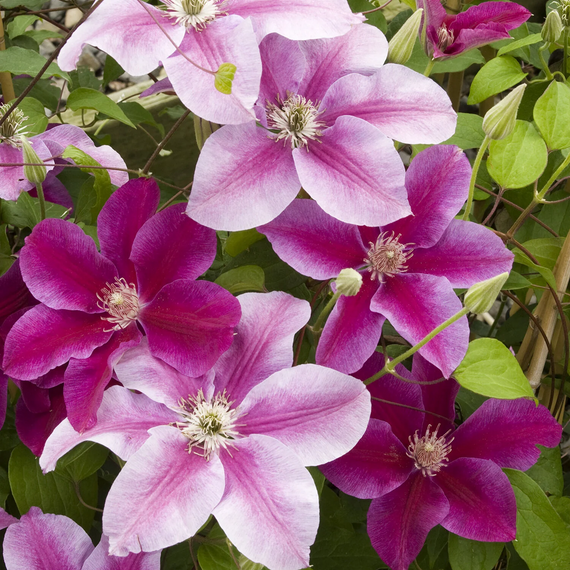
- Breathtaking bicolor blooms up to 5 inches across shift dramatically from deep ruby red and fuchsia at opening to soft lavender with a pink bar as they mature — giving the look of two vines in one.
- A prolific repeat bloomer, producing flowers from late spring through late summer on both old and new wood for months of continuous color in the garden.
- Compact and versatile, topping out at 8-12 feet tall and just 2-3 feet wide, making it equally stunning on a trellis, arbor, fence, or in a patio container.
- Deer and rabbit resistant, and a magnet for butterflies, bees, and hummingbirds — beautiful and wildlife-friendly all season long.
Clematis 'Kilian Donahue' (Clematis x 'Kilian Donahue') is one of the most dramatic flowering vines available to home gardeners, earning its place as a showstopper in any landscape. Belonging to the Early Large-Flowered Group (Pruning Group 2), this deciduous perennial climber produces an extraordinary succession of massive 5-inch blooms that undergo a stunning color transformation — opening deep ruby red at the center and transitioning to vibrant fuchsia with orchid-edged petals, before aging gracefully to soft lavender adorned with a pink central bar and a bouquet of white anthers tipped in burgundy. Because flowers at various stages of this color journey appear simultaneously on the vine, the display is endlessly dynamic and layered, creating a living tapestry of purplish-pink tones from late spring all the way through late summer. Hardy in USDA Zones 4-9, this low-maintenance climber thrives in full sun to partial shade and adapts to a wide range of well-drained soils, reaching a manageable 8-12 feet in height — perfectly suited for trellises, arbors, pergolas, fences, mailbox posts, and even large containers. Its lightly twining habit means it pairs beautifully with climbing roses or can be guided through the branches of flowering shrubs for a naturalistic effect. Resistant to deer and rabbits, attractive to pollinators, and requiring only minimal spring pruning, Clematis 'Kilian Donahue' is an outstanding choice for gardeners of all experience levels who want extraordinary vertical color with very little effort.
Plant Description
Clematis 'Kilian Donahue' is a deciduous, woody-stemmed perennial climbing vine belonging to the Early Large-Flowered Group. It is celebrated for its exceptionally large bicolor flowers, each measuring up to 5 inches in diameter, that undergo a remarkable color evolution as they age. Blooms open with a deep ruby red center surrounded by fuchsia petals edged in orchid pink, then mature to lavender with a distinctive pink central bar. Each flower features a striking central bouquet of creamy white anthers tipped in burgundy. Because flowers at different stages of color development coexist on the vine simultaneously, the overall effect is a rich, ever-changing tapestry of warm and cool tones. The foliage consists of attractive mid-green palmate to pinnate leaves that clothe the twining stems throughout the growing season. This is a hybrid cultivar developed specifically for ornamental use, prized equally for its flower size, color range, and reliable repeat blooming habit.
Mature Size
| Characteristic | Measurement |
|---|---|
| Mature Height | 8-12 feet |
| Mature Spread | 2-4 feet |
| Recommended Spacing (plant to plant) | 2-4 feet on center |
| Growth Rate | Moderate to fast once established |
| Plant Type | Deciduous perennial climbing vine |
The comparatively compact spread of this clematis makes it one of the easier large-flowered varieties to site in smaller gardens, narrow side yards, or patio containers without it overwhelming neighboring plants.
Hardiness and Climate
Clematis 'Kilian Donahue' is reliably cold hardy in USDA Plant Hardiness Zones 4 through 9, and performs well across AHS Heat Zones 5 through 9. This broad range means it is well suited to the diverse climates of Southern Oregon and Northern California, from the cool mountain valleys to the warmer inland foothills. In hotter inland gardens (Zones 8-9), planting where the vine receives some afternoon shade will help protect the blossoms and extend their color display. In colder regions it dies back to the ground each winter but rebounds vigorously from the root system each spring. Applying a layer of mulch over the root zone in late fall provides added protection in the coldest portions of its range and helps moderate soil temperature year-round.
Sunlight Requirements
Clematis 'Kilian Donahue' thrives in full sun to partial shade, ideally receiving a minimum of 5-6 hours of direct sunlight per day for the best flower production. However, following the classic clematis principle — "head in the sun, feet in the shade" — is highly recommended. The vine's top growth benefits from ample sunlight, while the root zone should be kept cool and shaded. This can be achieved by planting low-growing annuals or a small spreading perennial around the base of the vine, laying flat stones over the root zone, or applying a generous layer of organic mulch. In regions with hot, intense summers, a planting location with morning sun and light afternoon shade will help prevent flower fading and heat stress while still supporting vigorous growth and abundant repeat blooming.
Soil and pH Preferences
- Soil type: Adaptable to chalk, clay, loam, or sandy soils, provided drainage is adequate. Loosening the soil to a depth of 2 feet at planting and amending with compost, peat, or coarse sand significantly improves establishment.
- Drainage: Moist but well-drained is essential — soggy or waterlogged conditions can lead to root rot and clematis wilt.
- Soil pH: Prefers a neutral to slightly alkaline pH. Avoid highly acidic soils. If your native soil is acidic, amending with garden lime before planting can help bring the pH into the preferred range.
- Organic matter: Incorporating compost or aged manure into the planting hole enriches the soil and supports consistent moisture retention without waterlogging.
- Depth consideration: Plant the crown 1-2 inches below the original soil line. This encourages budding from below the soil surface, helps prevent clematis wilt damage, and protects the crown from frost-thaw heaving cycles.
Watering Guide
Clematis 'Kilian Donahue' prefers consistently even moisture, especially during its first two to three growing seasons as it establishes a deep root system. Water deeply whenever the top inch of soil feels dry, soaking the root zone thoroughly rather than watering shallowly and frequently. During hot or dry spells, aim to water deeply at least once per week. Avoid letting the plant dry out completely, as drought stress can reduce flowering and make the plant more susceptible to pests and disease. Once established, the vine becomes more resilient, but supplemental watering during extended summer dry periods — common in Southern Oregon and Northern California — remains beneficial for prolonging the bloom season and maintaining plant vigor. Always water at the base of the plant rather than overhead to minimize the risk of foliar disease.
Fertilizing
Clematis 'Kilian Donahue' is not a heavy feeder and can often be adequately maintained with organic soil amendments alone. Follow these guidelines for best results:
- Organic approach: Top-dress the root zone with compost or aged cow manure each spring as new growth emerges. This provides a slow, steady supply of nutrients throughout the season.
- Granular fertilizer: If supplemental feeding is desired, apply a balanced, controlled-release granular fertilizer once in spring at the labeled rate. Avoid over-fertilizing with high-nitrogen products, which promote lush foliage at the expense of flowering.
- Liquid fertilizer: A balanced liquid fertilizer applied monthly from April through July can support vigorous growth and flowering during the active season. Stop liquid feeding after midsummer to allow stems to harden off before winter.
- Avoid excess nitrogen: Too much nitrogen encourages leafy growth while suppressing flower bud formation. Look for fertilizers where phosphorus and potassium are balanced with or slightly higher than nitrogen for best bloom performance.
Pruning and Maintenance (Pruning Group 2)
Clematis 'Kilian Donahue' belongs to Pruning Group 2 (Early Large-Flowered Group), which means it blooms first in late spring on the previous season's old wood, then rebounds with a second flush in summer on new growth. Understanding this is key to preserving its impressive floral display.
- First-year pruning: After planting, prune back all stems to approximately 10-12 inches from the ground in the first spring. This critical step encourages branching low on the plant and sets up a fuller, more floriferous vine in subsequent years.
- Established plants — early spring: Before new growth begins, remove any dead or weak stems. Work down each stem from the tip until you reach a pair of healthy, swelling buds, then prune just above them. Avoid heavy pruning at this stage or you will sacrifice the first flush of late-spring flowers.
- After the first bloom flush: Once the late-spring flowers have faded, lightly prune stems back to strong buds or healthy side shoots just below the spent blooms. This tidies the plant and encourages the second wave of summer flowers on new growth.
- Renovation pruning: Overgrown or tangled plants can be hard pruned to 12-18 inches from the ground every 3-4 years in late winter. Expect only one bloom cycle the first year following renovation.
- Tying in: As new growth emerges in spring, loosely tie stems to their support structure to guide them upward and improve air circulation throughout the vine.
Planting Instructions
- Choose the right site: Select a location with 5-6 hours of sunlight and with room to provide shade to the root zone. Ensure the nearby support structure (trellis, arbor, fence, post) is sturdy and in place before planting.
- Prepare the soil: Dig a planting hole at least 18-24 inches wide and 2 feet deep. Mix the removed soil with compost, peat moss, and coarse sand to improve drainage and organic content.
- Set the plant depth: Position the plant so that the crown sits 1-2 inches below the surrounding soil level. This protects against clematis wilt and frost heaving and promotes shoots to emerge from below ground, creating a bushier base.
- Backfill and water: Fill the hole with the amended soil mix, firm gently around the roots, and water thoroughly to eliminate air pockets.
- Mulch the root zone: Apply a 2-3 inch layer of organic mulch (bark, wood chips, or straw) around the base, keeping mulch a few inches back from the main stem to prevent rot. This keeps roots cool and moist.
- Stake and guide: Insert a stake angled toward the permanent support and loosely tie the stems to direct early growth. Avoid tying too tightly, as stems can be brittle.
- Best planting time: Spring, early summer, or early fall are ideal planting windows for Southern Oregon and Northern California.
Seasonal Interest
| Season | What to Expect |
|---|---|
| Early to Late Spring | Fresh mid-green foliage emerges; the first major flush of large 5-inch bicolor blooms opens on the previous year's old wood, displaying ruby red, fuchsia, orchid, and lavender all at once. |
| Early to Late Summer | A reliable second (and often third) wave of blooms appears on new season growth, continuing the colorful display well into late summer. Flowers provide nectar for bees, butterflies, and hummingbirds. |
| Fall | Foliage remains attractive through autumn; sporadic late blooms may appear in mild climates. Feathery seed heads can add light ornamental texture as the season winds down. |
| Winter | The vine goes dormant and dies back; the woody framework should be left in place until late winter pruning. Mulching the crown provides cold protection in colder zones. |
Landscape Uses
The versatile and relatively compact nature of Clematis 'Kilian Donahue' makes it one of the most adaptable large-flowered clematis for a wide range of landscape settings:
- Trellises and obelisks: Ideal for freestanding garden structures where the full length and color display can be appreciated up close.
- Arbors and pergolas: Trains beautifully overhead and along supporting beams, creating a dramatic floral canopy.
- Fences and walls: Softens hard surfaces with cascading color; works well along wooden, metal, or wire fencing.
- Growing through shrubs: Plant alongside roses, hydrangeas, or other flowering or evergreen shrubs and allow the clematis to weave through, adding color to plants that may not be in bloom at the same time.
- Mailbox and lamppost wraps: Its manageable spread makes it perfect for vertical accents on narrow garden posts.
- Containers: Grows well in large containers (minimum 15-gallon) on a trellis or stake — ideal for patios, decks, and entryways.
- Ground cover: Without vertical support, stems will sprawl attractively as a colorful ground cover over slopes or banks.
- Cut flower garden: Blooms make striking and long-lasting cut flowers; float individual flowers in a bowl for a simple and elegant display.
Companion Plants
Clematis 'Kilian Donahue' pairs beautifully with a wide range of garden plants. The best companions either provide shade to its root zone, complement its pink-to-lavender color palette, or bloom at contrasting times to extend the season of interest:
- Climbing roses: A classic pairing — the clematis weaves through rose canes and fills in bloom gaps. Choose roses with pink, red, or white flowers for a harmonious palette.
- Hydrangea (Hydrangea spp.): Large-leaved shrubby hydrangeas provide excellent root shade and a contrasting floral form alongside the clematis blooms.
- Salvia (Salvia x sylvestris): Deep purple salvias planted at the base complement the fuchsia and lavender tones of the clematis flowers.
- Bee Balm (Monarda spp.): Bold, vibrant summer blooms create an energetic contrast while also attracting the same pollinators the clematis draws in.
- Daylily (Hemerocallis spp.): Low-growing foliage helps shade the clematis roots while their mid-summer blooms coincide beautifully with the second flush of clematis flowers.
- Japanese Maple (Acer palmatum): The delicate, contrasting foliage of a Japanese maple provides a stunning backdrop for the large, colorful clematis flowers.
- Black-Eyed Susan (Rudbeckia fulgida): Warm yellow-gold tones provide a vivid late-summer contrast to the softer pink and lavender clematis blooms.
- Butterfly Bush (Buddleia davidii): Shares a love of sun and pollinators; their simultaneous summer bloom creates a wildlife-friendly flowering duo.
Container Growing
Clematis 'Kilian Donahue' is one of the most container-friendly large-flowered clematis, thanks to its manageable size and compact spread. Follow these tips for successful patio growing:
- Container size: Use a large container with a minimum capacity of 15 gallons. The pot must be deep enough to accommodate the naturally long, deep root system — at least 18 inches deep is preferred.
- Potting mix: Use a high-quality, well-draining potting mix amended with perlite for drainage. Avoid heavy garden soil, which compacts in containers and impedes drainage.
- Support: Install a sturdy trellis, obelisk, or bamboo stake framework directly in the container before or at planting time. The vine will need to be loosely tied or guided to its support as it grows.
- Watering: Containers dry out faster than in-ground plantings. Check soil moisture regularly and water whenever the top inch feels dry — this may mean watering every 1-2 days during hot summer weather.
- Fertilizing: Container-grown plants benefit from more frequent feeding. Apply a balanced liquid fertilizer every 2-3 weeks from spring through midsummer.
- Root insulation: In colder climates, move containers to a sheltered, unheated garage or shed over winter to protect the roots from freezing solid. In Southern Oregon and Northern California, most patio locations are mild enough to leave containers outdoors year-round with light mulching of the soil surface.
Pests and Diseases
Clematis 'Kilian Donahue' is generally a robust and low-maintenance plant, but there are a few pests and diseases to be aware of:
- Clematis Wilt (Phoma clematidina): The most commonly feared clematis problem, where stems suddenly wilt and collapse. This is largely preventable by planting the crown 1-2 inches below soil level, which protects dormant buds. Affected stems should be cut back to healthy tissue at the base; the plant will typically resprout from below ground. Good air circulation helps reduce incidence.
- Powdery Mildew: A fungal issue that can appear on foliage in warm, dry conditions with poor air circulation, presenting as a white powdery coating on leaves. Treat with neem oil or a potassium bicarbonate-based fungicide. Ensuring adequate spacing and avoiding overhead watering helps prevent outbreaks.
- Aphids: Small colonies may appear on tender new growth in spring. Knock off with a strong stream of water or treat with insecticidal soap. Natural predators such as ladybugs and lacewings typically keep populations in check.
- Slugs and Snails: Can damage emerging stems and young growth in early spring, especially in moist conditions. Use iron phosphate-based slug bait around the base of the plant as a pet- and wildlife-safe option.
- Earwigs: Occasionally feed on petals and foliage. Trapping with damp newspaper rolls placed near the base can reduce populations organically.
Wildlife Value
Clematis 'Kilian Donahue' is an excellent plant for supporting garden wildlife, particularly during its long bloom season from late spring through late summer:
- Bees: The large, open flowers with prominent anthers are highly accessible to both honeybees and native bumblebees seeking pollen and nectar throughout the summer months.
- Butterflies: The flat, wide flower structure and abundant nectar make it a popular landing spot for swallowtails, fritillaries, and other garden butterflies.
- Hummingbirds: The vibrant fuchsia and ruby red tones of the freshly opened blooms are particularly attractive to hummingbirds foraging along garden borders and fences.
- Deer and rabbit resistance: Unlike many flowering perennials, Clematis 'Kilian Donahue' is generally avoided by deer and rabbits, making it an especially valuable choice in rural and semi-rural gardens where browsing pressure is high.
- Seed heads: As flowers fade in autumn, feathery seed heads form and can provide minimal but attractive late-season interest for seed-foraging birds before winter.
- Breathtaking bicolor blooms up to 5 inches across shift dramatically from deep ruby red and fuchsia at opening to soft lavender with a pink bar as they mature — giving the look of two vines in one.
- A prolific repeat bloomer, producing flowers from late spring through late summer on both old and new wood for months of continuous color in the garden.
- Compact and versatile, topping out at 8-12 feet tall and just 2-3 feet wide, making it equally stunning on a trellis, arbor, fence, or in a patio container.
- Deer and rabbit resistant, and a magnet for butterflies, bees, and hummingbirds — beautiful and wildlife-friendly all season long.
Clematis 'Kilian Donahue' (Clematis x 'Kilian Donahue') is one of the most dramatic flowering vines available to home gardeners, earning its place as a showstopper in any landscape. Belonging to the Early Large-Flowered Group (Pruning Group 2), this deciduous perennial climber produces an extraordinary succession of massive 5-inch blooms that undergo a stunning color transformation — opening deep ruby red at the center and transitioning to vibrant fuchsia with orchid-edged petals, before aging gracefully to soft lavender adorned with a pink central bar and a bouquet of white anthers tipped in burgundy. Because flowers at various stages of this color journey appear simultaneously on the vine, the display is endlessly dynamic and layered, creating a living tapestry of purplish-pink tones from late spring all the way through late summer. Hardy in USDA Zones 4-9, this low-maintenance climber thrives in full sun to partial shade and adapts to a wide range of well-drained soils, reaching a manageable 8-12 feet in height — perfectly suited for trellises, arbors, pergolas, fences, mailbox posts, and even large containers. Its lightly twining habit means it pairs beautifully with climbing roses or can be guided through the branches of flowering shrubs for a naturalistic effect. Resistant to deer and rabbits, attractive to pollinators, and requiring only minimal spring pruning, Clematis 'Kilian Donahue' is an outstanding choice for gardeners of all experience levels who want extraordinary vertical color with very little effort.
Plant Description
Clematis 'Kilian Donahue' is a deciduous, woody-stemmed perennial climbing vine belonging to the Early Large-Flowered Group. It is celebrated for its exceptionally large bicolor flowers, each measuring up to 5 inches in diameter, that undergo a remarkable color evolution as they age. Blooms open with a deep ruby red center surrounded by fuchsia petals edged in orchid pink, then mature to lavender with a distinctive pink central bar. Each flower features a striking central bouquet of creamy white anthers tipped in burgundy. Because flowers at different stages of color development coexist on the vine simultaneously, the overall effect is a rich, ever-changing tapestry of warm and cool tones. The foliage consists of attractive mid-green palmate to pinnate leaves that clothe the twining stems throughout the growing season. This is a hybrid cultivar developed specifically for ornamental use, prized equally for its flower size, color range, and reliable repeat blooming habit.
Mature Size
| Characteristic | Measurement |
|---|---|
| Mature Height | 8-12 feet |
| Mature Spread | 2-4 feet |
| Recommended Spacing (plant to plant) | 2-4 feet on center |
| Growth Rate | Moderate to fast once established |
| Plant Type | Deciduous perennial climbing vine |
The comparatively compact spread of this clematis makes it one of the easier large-flowered varieties to site in smaller gardens, narrow side yards, or patio containers without it overwhelming neighboring plants.
Hardiness and Climate
Clematis 'Kilian Donahue' is reliably cold hardy in USDA Plant Hardiness Zones 4 through 9, and performs well across AHS Heat Zones 5 through 9. This broad range means it is well suited to the diverse climates of Southern Oregon and Northern California, from the cool mountain valleys to the warmer inland foothills. In hotter inland gardens (Zones 8-9), planting where the vine receives some afternoon shade will help protect the blossoms and extend their color display. In colder regions it dies back to the ground each winter but rebounds vigorously from the root system each spring. Applying a layer of mulch over the root zone in late fall provides added protection in the coldest portions of its range and helps moderate soil temperature year-round.
Sunlight Requirements
Clematis 'Kilian Donahue' thrives in full sun to partial shade, ideally receiving a minimum of 5-6 hours of direct sunlight per day for the best flower production. However, following the classic clematis principle — "head in the sun, feet in the shade" — is highly recommended. The vine's top growth benefits from ample sunlight, while the root zone should be kept cool and shaded. This can be achieved by planting low-growing annuals or a small spreading perennial around the base of the vine, laying flat stones over the root zone, or applying a generous layer of organic mulch. In regions with hot, intense summers, a planting location with morning sun and light afternoon shade will help prevent flower fading and heat stress while still supporting vigorous growth and abundant repeat blooming.
Soil and pH Preferences
- Soil type: Adaptable to chalk, clay, loam, or sandy soils, provided drainage is adequate. Loosening the soil to a depth of 2 feet at planting and amending with compost, peat, or coarse sand significantly improves establishment.
- Drainage: Moist but well-drained is essential — soggy or waterlogged conditions can lead to root rot and clematis wilt.
- Soil pH: Prefers a neutral to slightly alkaline pH. Avoid highly acidic soils. If your native soil is acidic, amending with garden lime before planting can help bring the pH into the preferred range.
- Organic matter: Incorporating compost or aged manure into the planting hole enriches the soil and supports consistent moisture retention without waterlogging.
- Depth consideration: Plant the crown 1-2 inches below the original soil line. This encourages budding from below the soil surface, helps prevent clematis wilt damage, and protects the crown from frost-thaw heaving cycles.
Watering Guide
Clematis 'Kilian Donahue' prefers consistently even moisture, especially during its first two to three growing seasons as it establishes a deep root system. Water deeply whenever the top inch of soil feels dry, soaking the root zone thoroughly rather than watering shallowly and frequently. During hot or dry spells, aim to water deeply at least once per week. Avoid letting the plant dry out completely, as drought stress can reduce flowering and make the plant more susceptible to pests and disease. Once established, the vine becomes more resilient, but supplemental watering during extended summer dry periods — common in Southern Oregon and Northern California — remains beneficial for prolonging the bloom season and maintaining plant vigor. Always water at the base of the plant rather than overhead to minimize the risk of foliar disease.
Fertilizing
Clematis 'Kilian Donahue' is not a heavy feeder and can often be adequately maintained with organic soil amendments alone. Follow these guidelines for best results:
- Organic approach: Top-dress the root zone with compost or aged cow manure each spring as new growth emerges. This provides a slow, steady supply of nutrients throughout the season.
- Granular fertilizer: If supplemental feeding is desired, apply a balanced, controlled-release granular fertilizer once in spring at the labeled rate. Avoid over-fertilizing with high-nitrogen products, which promote lush foliage at the expense of flowering.
- Liquid fertilizer: A balanced liquid fertilizer applied monthly from April through July can support vigorous growth and flowering during the active season. Stop liquid feeding after midsummer to allow stems to harden off before winter.
- Avoid excess nitrogen: Too much nitrogen encourages leafy growth while suppressing flower bud formation. Look for fertilizers where phosphorus and potassium are balanced with or slightly higher than nitrogen for best bloom performance.
Pruning and Maintenance (Pruning Group 2)
Clematis 'Kilian Donahue' belongs to Pruning Group 2 (Early Large-Flowered Group), which means it blooms first in late spring on the previous season's old wood, then rebounds with a second flush in summer on new growth. Understanding this is key to preserving its impressive floral display.
- First-year pruning: After planting, prune back all stems to approximately 10-12 inches from the ground in the first spring. This critical step encourages branching low on the plant and sets up a fuller, more floriferous vine in subsequent years.
- Established plants — early spring: Before new growth begins, remove any dead or weak stems. Work down each stem from the tip until you reach a pair of healthy, swelling buds, then prune just above them. Avoid heavy pruning at this stage or you will sacrifice the first flush of late-spring flowers.
- After the first bloom flush: Once the late-spring flowers have faded, lightly prune stems back to strong buds or healthy side shoots just below the spent blooms. This tidies the plant and encourages the second wave of summer flowers on new growth.
- Renovation pruning: Overgrown or tangled plants can be hard pruned to 12-18 inches from the ground every 3-4 years in late winter. Expect only one bloom cycle the first year following renovation.
- Tying in: As new growth emerges in spring, loosely tie stems to their support structure to guide them upward and improve air circulation throughout the vine.
Planting Instructions
- Choose the right site: Select a location with 5-6 hours of sunlight and with room to provide shade to the root zone. Ensure the nearby support structure (trellis, arbor, fence, post) is sturdy and in place before planting.
- Prepare the soil: Dig a planting hole at least 18-24 inches wide and 2 feet deep. Mix the removed soil with compost, peat moss, and coarse sand to improve drainage and organic content.
- Set the plant depth: Position the plant so that the crown sits 1-2 inches below the surrounding soil level. This protects against clematis wilt and frost heaving and promotes shoots to emerge from below ground, creating a bushier base.
- Backfill and water: Fill the hole with the amended soil mix, firm gently around the roots, and water thoroughly to eliminate air pockets.
- Mulch the root zone: Apply a 2-3 inch layer of organic mulch (bark, wood chips, or straw) around the base, keeping mulch a few inches back from the main stem to prevent rot. This keeps roots cool and moist.
- Stake and guide: Insert a stake angled toward the permanent support and loosely tie the stems to direct early growth. Avoid tying too tightly, as stems can be brittle.
- Best planting time: Spring, early summer, or early fall are ideal planting windows for Southern Oregon and Northern California.
Seasonal Interest
| Season | What to Expect |
|---|---|
| Early to Late Spring | Fresh mid-green foliage emerges; the first major flush of large 5-inch bicolor blooms opens on the previous year's old wood, displaying ruby red, fuchsia, orchid, and lavender all at once. |
| Early to Late Summer | A reliable second (and often third) wave of blooms appears on new season growth, continuing the colorful display well into late summer. Flowers provide nectar for bees, butterflies, and hummingbirds. |
| Fall | Foliage remains attractive through autumn; sporadic late blooms may appear in mild climates. Feathery seed heads can add light ornamental texture as the season winds down. |
| Winter | The vine goes dormant and dies back; the woody framework should be left in place until late winter pruning. Mulching the crown provides cold protection in colder zones. |
Landscape Uses
The versatile and relatively compact nature of Clematis 'Kilian Donahue' makes it one of the most adaptable large-flowered clematis for a wide range of landscape settings:
- Trellises and obelisks: Ideal for freestanding garden structures where the full length and color display can be appreciated up close.
- Arbors and pergolas: Trains beautifully overhead and along supporting beams, creating a dramatic floral canopy.
- Fences and walls: Softens hard surfaces with cascading color; works well along wooden, metal, or wire fencing.
- Growing through shrubs: Plant alongside roses, hydrangeas, or other flowering or evergreen shrubs and allow the clematis to weave through, adding color to plants that may not be in bloom at the same time.
- Mailbox and lamppost wraps: Its manageable spread makes it perfect for vertical accents on narrow garden posts.
- Containers: Grows well in large containers (minimum 15-gallon) on a trellis or stake — ideal for patios, decks, and entryways.
- Ground cover: Without vertical support, stems will sprawl attractively as a colorful ground cover over slopes or banks.
- Cut flower garden: Blooms make striking and long-lasting cut flowers; float individual flowers in a bowl for a simple and elegant display.
Companion Plants
Clematis 'Kilian Donahue' pairs beautifully with a wide range of garden plants. The best companions either provide shade to its root zone, complement its pink-to-lavender color palette, or bloom at contrasting times to extend the season of interest:
- Climbing roses: A classic pairing — the clematis weaves through rose canes and fills in bloom gaps. Choose roses with pink, red, or white flowers for a harmonious palette.
- Hydrangea (Hydrangea spp.): Large-leaved shrubby hydrangeas provide excellent root shade and a contrasting floral form alongside the clematis blooms.
- Salvia (Salvia x sylvestris): Deep purple salvias planted at the base complement the fuchsia and lavender tones of the clematis flowers.
- Bee Balm (Monarda spp.): Bold, vibrant summer blooms create an energetic contrast while also attracting the same pollinators the clematis draws in.
- Daylily (Hemerocallis spp.): Low-growing foliage helps shade the clematis roots while their mid-summer blooms coincide beautifully with the second flush of clematis flowers.
- Japanese Maple (Acer palmatum): The delicate, contrasting foliage of a Japanese maple provides a stunning backdrop for the large, colorful clematis flowers.
- Black-Eyed Susan (Rudbeckia fulgida): Warm yellow-gold tones provide a vivid late-summer contrast to the softer pink and lavender clematis blooms.
- Butterfly Bush (Buddleia davidii): Shares a love of sun and pollinators; their simultaneous summer bloom creates a wildlife-friendly flowering duo.
Container Growing
Clematis 'Kilian Donahue' is one of the most container-friendly large-flowered clematis, thanks to its manageable size and compact spread. Follow these tips for successful patio growing:
- Container size: Use a large container with a minimum capacity of 15 gallons. The pot must be deep enough to accommodate the naturally long, deep root system — at least 18 inches deep is preferred.
- Potting mix: Use a high-quality, well-draining potting mix amended with perlite for drainage. Avoid heavy garden soil, which compacts in containers and impedes drainage.
- Support: Install a sturdy trellis, obelisk, or bamboo stake framework directly in the container before or at planting time. The vine will need to be loosely tied or guided to its support as it grows.
- Watering: Containers dry out faster than in-ground plantings. Check soil moisture regularly and water whenever the top inch feels dry — this may mean watering every 1-2 days during hot summer weather.
- Fertilizing: Container-grown plants benefit from more frequent feeding. Apply a balanced liquid fertilizer every 2-3 weeks from spring through midsummer.
- Root insulation: In colder climates, move containers to a sheltered, unheated garage or shed over winter to protect the roots from freezing solid. In Southern Oregon and Northern California, most patio locations are mild enough to leave containers outdoors year-round with light mulching of the soil surface.
Pests and Diseases
Clematis 'Kilian Donahue' is generally a robust and low-maintenance plant, but there are a few pests and diseases to be aware of:
- Clematis Wilt (Phoma clematidina): The most commonly feared clematis problem, where stems suddenly wilt and collapse. This is largely preventable by planting the crown 1-2 inches below soil level, which protects dormant buds. Affected stems should be cut back to healthy tissue at the base; the plant will typically resprout from below ground. Good air circulation helps reduce incidence.
- Powdery Mildew: A fungal issue that can appear on foliage in warm, dry conditions with poor air circulation, presenting as a white powdery coating on leaves. Treat with neem oil or a potassium bicarbonate-based fungicide. Ensuring adequate spacing and avoiding overhead watering helps prevent outbreaks.
- Aphids: Small colonies may appear on tender new growth in spring. Knock off with a strong stream of water or treat with insecticidal soap. Natural predators such as ladybugs and lacewings typically keep populations in check.
- Slugs and Snails: Can damage emerging stems and young growth in early spring, especially in moist conditions. Use iron phosphate-based slug bait around the base of the plant as a pet- and wildlife-safe option.
- Earwigs: Occasionally feed on petals and foliage. Trapping with damp newspaper rolls placed near the base can reduce populations organically.
Wildlife Value
Clematis 'Kilian Donahue' is an excellent plant for supporting garden wildlife, particularly during its long bloom season from late spring through late summer:
- Bees: The large, open flowers with prominent anthers are highly accessible to both honeybees and native bumblebees seeking pollen and nectar throughout the summer months.
- Butterflies: The flat, wide flower structure and abundant nectar make it a popular landing spot for swallowtails, fritillaries, and other garden butterflies.
- Hummingbirds: The vibrant fuchsia and ruby red tones of the freshly opened blooms are particularly attractive to hummingbirds foraging along garden borders and fences.
- Deer and rabbit resistance: Unlike many flowering perennials, Clematis 'Kilian Donahue' is generally avoided by deer and rabbits, making it an especially valuable choice in rural and semi-rural gardens where browsing pressure is high.
- Seed heads: As flowers fade in autumn, feathery seed heads form and can provide minimal but attractive late-season interest for seed-foraging birds before winter.