
Zoom the image with the mouse
Hania Clematis - 2 Gallon
SKU:
1932860
UPC:
014949210314
$44.99
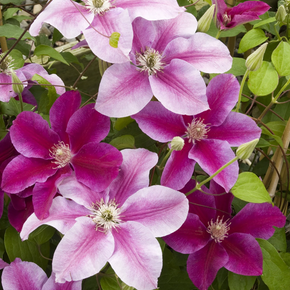
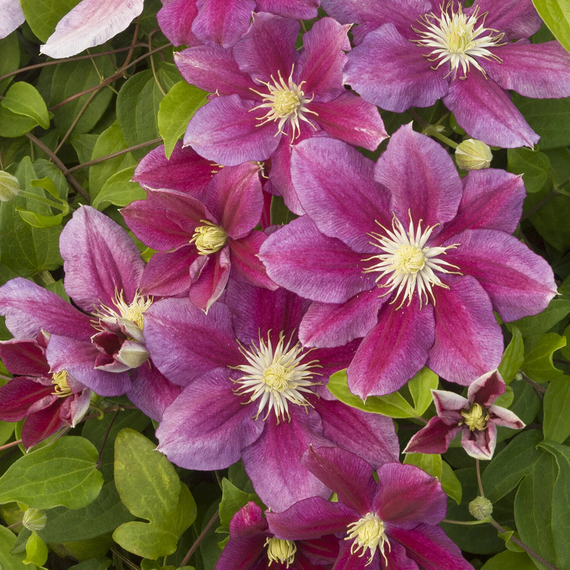
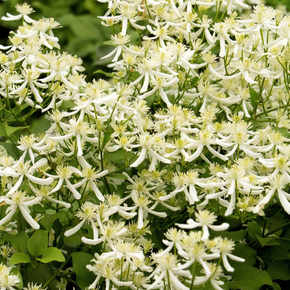
- Stunning 5-7" star-shaped blooms showcase velvety red-violet petals with distinctive pale pink, undulating margins and contrasting creamy-gold stamens - flowering twice yearly from late spring through early fall
- Compact and versatile grower reaching 5-8 feet tall, making it ideal for trellises, fences, arbors, containers, and small-space gardens
- Award-winning Polish cultivar (Pruning Group 2) bred by Szczepan Marczynski in 2000, honored with a bronze prize in Holland in 2002 and admired worldwide for its repeat-blooming reliability
- Hardy in USDA Zones 4-9 and a proven pollinator magnet, attracting bees, butterflies, and hummingbirds throughout the growing season
Clematis 'Hania' is a breathtaking large-flowered deciduous climbing vine that brings bold, two-toned color to any garden from late spring well into early fall. Belonging to Pruning Group 2, this compact Polish hybrid produces an abundant first flush of magnificent 5 to 7 inch star-shaped flowers in late spring to early summer, followed by a welcome second bloom in late summer to early fall. Each flower features rich, velvety red-violet tepals rimmed with softly undulating pale pink margins and accented by a central cluster of creamy-yellow stamens, creating an elegant bicolor effect that stands out against the vine's lush, dark green deciduous foliage. Bred by renowned clematis hybridizer Szczepan Marczynski in Poland in 2000 and named in honor of his mother Hanna, 'Hania' earned a bronze prize at a Dutch horticultural exhibition in 2002 and has since earned a devoted following among gardeners at all skill levels. Reaching a mature height of 5 to 8 feet with a tidy spread of 1.5 to 3 feet, this well-mannered climber suits trellises, fences, arbors, obelisks, and patio containers equally well, and performs reliably across USDA Hardiness Zones 4 through 9, making it an outstanding choice for gardens throughout Southern Oregon and Northern California.
Plant Description
Clematis 'Hania' is a deciduous, large-flowered hybrid climbing vine in the Ranunculaceae (buttercup) family. It is classified as an Early Large-Flowered clematis (EL group), meaning its primary bloom is produced on short shoots that develop from the previous season's wood, with a secondary flush later in summer on new growth. The plant climbs by twining its leaf petioles around any available support and produces a dense canopy of compound, dark green, oval leaves with pointed tips. The overall habit is upright and twining, making it well-suited for vertical structures. In winter, the vine goes fully dormant, dying back to its woody framework before re-emerging with vigor in spring. The cultivar was bred in Poland in 2000 by Szczepan Marczynski and received horticultural recognition at a 2002 Dutch exhibition.
Flower Details and Bloom Time
The blooms of 'Hania' are among its most striking features. Each flower measures 5 to 7 inches (approximately 15-17 cm) in diameter and consists of 6 broad, star-shaped tepals that are deep red-violet to magenta-crimson in color, with softly wavy, paler pink edges that create a luminous bicolor effect. The center of each bloom is adorned with a prominent cluster of creamy to golden-yellow stamens that provide an eye-catching contrast. Flowering occurs in two distinct flushes:
- First Flush: Late spring to early summer (typically May through June) - the most prolific bloom on the previous season's wood
- Second Flush: Late summer to early fall (typically August through September) - a secondary bloom on new season's growth
The repeat-blooming nature of 'Hania' provides extended ornamental interest throughout the warmer months, making it one of the more rewarding large-flowered clematis for home gardeners.
Mature Size
| Attribute | Measurement |
|---|---|
| Mature Height | 5 to 8 feet (approximately 1.5 to 2.5 meters) |
| Mature Spread | 1.5 to 3 feet (approximately 0.5 to 1 meter) |
| Growth Rate | Medium |
| Time to Mature Size | 2 to 5 years |
| Lifespan | Approximately 20 years under ideal conditions |
'Hania' is considered a compact clematis compared to many large-flowered hybrids, making it well-suited to smaller gardens, patios, and container plantings without sacrificing the wow factor of its large, showy blooms.
Hardiness Zones and Climate
Clematis 'Hania' is rated hardy in USDA Hardiness Zones 4 through 9 (approximately -30°F to 20°F minimum winter temperatures), corresponding to an RHS hardiness rating of H6. This wide range makes it an excellent performer throughout Southern Oregon and Northern California, where winter temperatures are generally mild. The plant is fully cold-hardy in most of the region's valley floors and foothills. In hotter inland areas, providing afternoon shade can help protect the flowers from bleaching and extend bloom quality. 'Hania' is somewhat tolerant of urban conditions and appreciates a sheltered location that protects it from harsh, drying winds, while still allowing good air circulation around the foliage.
Sunlight Requirements
For best flowering performance, plant Clematis 'Hania' in a location that receives full sun to partial shade, ideally 6 or more hours of direct sunlight per day. Follow the classic clematis gardening principle: "head in the sun, feet in the shade." This means the climbing stems and foliage should be in full sun to encourage abundant flowering, while the root zone should be kept cool and shaded - achieved by underplanting with low-growing ground covers, placing flat stones around the base, or applying a generous layer of mulch. East-facing, south-facing, or west-facing aspects are all suitable. Avoid deep shade, which will significantly reduce flowering. In hotter climates or during peak summer heat, light afternoon shade can help preserve the rich color of the blooms and prevent petal fading.
Soil and pH Preferences
Clematis 'Hania' thrives in moisture-retentive but well-drained soil that is rich in organic matter. It is adaptable to chalk, clay, loam, and sandy soils, provided drainage is adequate - it will not tolerate waterlogged or standing-water conditions. The preferred soil pH is neutral to slightly alkaline, ideally around 6.5 to 7.0. When planting, amend heavy clay soils with compost and coarse grit to improve drainage, or enrich sandy soils with generous additions of compost or aged manure to boost moisture retention and fertility. A well-prepared planting hole approximately 24 inches wide and 24 inches deep, incorporating a layer of drainage material at the bottom in heavy soils, will set the plant up for long-term success. Avoid soils with a strongly acidic pH, as this can inhibit nutrient uptake and overall vigor.
Watering Guide
Consistent, even moisture is key to keeping Clematis 'Hania' healthy and blooming. Follow these general watering guidelines:
- Newly planted vines: Water deeply 1 to 3 times per week during the first growing season to establish a strong root system. Apply 1 to 4 gallons per watering session, depending on plant size and weather conditions.
- Established plants: Water regularly during dry spells, providing approximately 1 inch of water per week in the absence of rainfall. Deep, infrequent watering encourages deep root development.
- Hot, dry summers: Increase watering frequency during extended dry or hot periods, particularly for plants in containers or sandy soils.
- Avoid overwatering: Never allow roots to sit in waterlogged soil, as this can lead to root rot and clematis wilt. Ensure drainage is always adequate.
- Watering method: Water at the base of the plant rather than overhead to minimize fungal disease risk and avoid wetting foliage unnecessarily.
Applying a 2 to 3 inch layer of organic mulch around the root zone helps conserve soil moisture, regulate soil temperature, and reduce the need for frequent watering.
Fertilizing
Clematis 'Hania' is a moderate to heavy feeder that benefits from regular fertilization during the growing season to support vigorous growth and prolific blooming. Follow this general schedule:
- At planting: Incorporate compost, aged manure, or a slow-release balanced fertilizer into the planting hole. No additional fertilizing is needed in the first season if the soil has been well amended.
- Early spring: As new growth emerges, apply a balanced, slow-release granular fertilizer (such as a 10-10-10 or a formula designed for flowering vines) scratched lightly into the soil surface around the root zone.
- Bud formation: Switch to a fertilizer with a higher potassium content to support flowering as buds develop.
- After the first flush of blooms: Apply a phosphorus-rich fertilizer to promote root development and support the second flowering cycle.
- Late summer: Cease heavy feeding by late summer to avoid stimulating tender new growth that could be damaged by early frosts.
For container-grown plants, fertilize more frequently with a diluted liquid fertilizer, as regular watering leaches nutrients from the potting mix more quickly than in-ground growing.
Pruning and Maintenance (Pruning Group 2)
Clematis 'Hania' belongs to Pruning Group 2, which includes large-flowered hybrids that bloom primarily on the previous season's wood in early summer, with a secondary flush on new growth later in the season. Correct pruning is essential to maintain the plant's framework and maximize flowering at both times of year.
- First year after planting: Prune hard in early spring (late February to March) to approximately 12 inches above soil level, cutting just above a strong pair of leaf buds. This encourages the plant to develop multiple strong stems from the base rather than a single leggy shoot.
- Late winter / early spring (established plants): Remove any dead or weak stems by working down from the top until you reach a pair of healthy, plump buds. Cut just above those buds. Avoid heavy pruning at this stage to protect the old wood that will carry the first flush of flowers.
- After the first flush of flowers (early to midsummer): Prune back some of the flowered stems to a pair of strong buds or a healthy side shoot just below the spent blooms. This stimulates fresh growth that will produce the second flush of flowers in late summer and fall.
- Every 3 to 4 years: If the plant becomes overgrown or top-heavy, it can be renovated by cutting more severely (back to 12-36 inches) in late winter. Expect only a single flush of blooms in the year following hard renovation.
Always use clean, sharp pruning tools to minimize the risk of disease transmission. Wipe blades with rubbing alcohol between cuts if disease is suspected.
Planting Instructions
Follow these steps for a successful planting:
- Choose the right site: Select a location with at least 6 hours of sunlight per day, sheltered from strong winds, with well-drained soil. Avoid low-lying areas where water pools.
- Prepare the planting hole: Dig a hole approximately 24 inches wide and 24 inches deep. In heavy clay soils, add a 3 to 4 inch drainage layer of coarse gravel at the bottom.
- Amend the backfill: Mix the removed soil with generous amounts of compost or aged manure. Optionally, add a small amount of lime if soil is acidic, to achieve a near-neutral pH.
- Plant deep: Set the crown of the plant 2 to 4 inches below the soil surface. Deep planting encourages the vine to produce new shoots from below ground, which can help the plant recover if clematis wilt or other damage occurs at the surface.
- Water in thoroughly: After backfilling, water deeply to settle the soil and eliminate air pockets around the roots.
- Mulch generously: Apply a 2 to 3 inch layer of organic mulch (bark chips, shredded leaves, or pine bark) around the base, keeping the mulch a few inches away from the main stem to prevent rot.
- Install a support: Place a trellis, fence, obelisk, or wire frame near the planting site before growth begins, positioning it within easy reach of the new shoots. Space the plant at least 6 to 12 inches from walls or solid fences to allow for adequate airflow.
- Train young shoots: As new growth emerges, gently guide and loosely tie the young stems to the support, spacing them evenly to encourage good coverage.
Container Growing
Clematis 'Hania' is an excellent candidate for container growing thanks to its compact size and spectacular blooms. It performs beautifully on patios, decks, and small urban gardens when given proper care in a pot.
- Container size: Choose a container at least 18 inches deep and 12 to 18 inches wide. The pot must have adequate drainage holes. Unglazed clay or terracotta pots are ideal as they allow moisture to transpire and help keep roots cool.
- Potting mix: Use a rich, well-draining potting mix: approximately 2 parts quality potting soil, 1 part compost or aged manure, and 1 part perlite or coarse sand for aeration and drainage. Avoid dense, water-retaining mixes.
- Planting depth: Set the crown 2 to 3 inches below the soil surface, just as you would when planting in the ground.
- Support: Insert a trellis, obelisk, or set of bamboo canes into the container at planting time to provide climbing support.
- Watering: Container-grown plants dry out faster than in-ground specimens. Check soil moisture daily and water thoroughly when the top inch feels dry. Never let the pot stand in a saucer of water.
- Fertilizing: Feed container plants with a balanced liquid fertilizer every 2 weeks during the growing season, or use a slow-release granular fertilizer scratched into the potting mix in spring and again after the first bloom flush.
- Repotting: Repot into a slightly larger container every 2 to 3 years, or refresh the top layer of potting mix annually to replenish nutrients.
- Winter care: In colder microclimates, move containers to a sheltered, frost-free location or wrap the pot in burlap to insulate the root zone during winter.
Landscape Uses
The compact, repeat-blooming nature of Clematis 'Hania' makes it one of the most versatile large-flowered clematis available for home landscapes. Recommended uses include:
- Trellises and fences: Ideal for covering vertical structures with bold color; space the plant at least 6 inches from solid walls to ensure airflow.
- Arbors and pergolas: Train up and over overhead structures for a dramatic flowering canopy effect.
- Obelisks and plant towers: A freestanding obelisk in a garden bed creates a stunning focal point when adorned with 'Hania' in full bloom.
- Through shrubs and small trees: Allow the vine to scramble naturally through the branches of a robust shrub or small ornamental tree for a naturalistic effect.
- Containers on patios and decks: Grows beautifully in large pots with a trellis or obelisk support, bringing color to paved areas.
- Hedges and screening: Planted along a fence line, multiple plants can create a colorful flowering screen.
- Accent and specimen planting: Use as a dramatic focal point in mixed borders or cottage-style garden beds.
- Retaining walls: Allow it to cascade gracefully over a retaining wall edge for a soft, trailing effect.
Companion Plants
Pairing Clematis 'Hania' with the right companions enhances its visual impact, protects its root zone, and creates a cohesive garden design. Consider the following combinations:
- Climbing and shrub roses: A classic pairing - the bold blooms of 'Hania' weave beautifully through rose canes, and the rose's woody base helps shade the clematis roots. Choose varieties with complementary pink, deep red, or white flowers.
- Peonies: Peony foliage is lush enough to shade clematis roots while the blooms of both plants complement each other in late spring.
- Hardy geraniums (Cranesbill): Low-growing geraniums are ideal for underplanting, shading the root zone while adding a carpet of soft color.
- Hostas: The bold, broad leaves of hostas make excellent root-shading companions in partial shade situations, providing textural contrast.
- Lavender: Planted at the base, lavender provides root shade, excellent drainage, and a fragrant, color-contrasting partner.
- Phlox: Tall garden phlox offers mid-summer color that bridges the two bloom flushes of 'Hania' while sharing its preference for rich, moist soil.
- Other clematis varieties: Interplanting with complementary clematis from different pruning groups extends the overall season of bloom and creates layered floral interest.
- Ornamental grasses: Fine-textured grasses planted nearby provide movement and contrast against the bold clematis flowers.
Pests and Diseases
Clematis 'Hania', as a large-flowered hybrid, is moderately susceptible to certain pests and diseases. Awareness and good cultural practices are the best prevention.
- Clematis Wilt (Ascochyta clematidina): The most serious disease affecting large-flowered clematis hybrids. Symptoms include sudden and rapid wilting and blackening of one or more stems, often just as the buds are about to open. The fungus spreads via splashing water and requires a wound to infect the plant. Treatment: Cut affected stems well below ground level and destroy. Do not compost. Treat the remaining plant and surrounding soil with an appropriate fungicide (such as myclobutanil). Because 'Hania' is planted deeply, it can often regenerate from below-ground buds after an attack.
- Aphids: Small, soft-bodied insects that cluster on new growth and buds, causing distortion and weakening of shoots. Control with a strong jet of water, insecticidal soap, or by encouraging natural predators such as ladybugs and lacewings.
- Slugs and Snails: Particularly damaging to young, tender new growth in spring. Use organic slug controls, barrier methods, or hand-pick at night.
- Caterpillars: Occasional chewing damage to foliage. Hand-pick or treat with an appropriate organic or conventional insecticide if infestations are severe.
- Powdery Mildew: A fungal coating on leaves that can develop in conditions of poor air circulation or dry soil combined with humid air. Improve air flow by ensuring adequate spacing and avoiding dense, overcrowded planting.
- Honey Fungus and Slime Flux: Rare but possible; ensure good drainage and avoid injuring the root zone.
General prevention: Keep the planting area free of debris, avoid overhead watering, maintain good air circulation, and plant deeply so the crown can regenerate if the top growth is lost to disease.
Wildlife Value
Clematis 'Hania' is a valuable pollinator plant throughout its extended blooming season. Its large, open, star-shaped flowers make nectar and pollen readily accessible to a wide variety of beneficial wildlife:
- Bees: Both honeybees and native bumblebees are frequent visitors, attracted by the abundant pollen-rich stamens at the center of each bloom.
- Butterflies: The large, flat flower face provides an ideal landing platform for butterflies feeding on nectar.
- Hummingbirds: The rich color and abundance of blooms can attract hummingbirds, particularly during the two peak bloom periods.
Including Clematis 'Hania' in a garden planting supports local pollinator populations, contributing to the overall health of the garden ecosystem and improving fruit and vegetable set in nearby food gardens.
Toxicity and Handling
Like all plants in the Ranunculaceae (buttercup) family, Clematis 'Hania' contains compounds that can cause skin irritation in sensitive individuals. When pruning or handling the plant, it is recommended to wear gardening gloves and wash hands thoroughly after contact. Avoid touching eyes or mucous membranes after handling plant material. The plant is also considered harmful if eaten by pets, particularly rabbits. Keep curious pets away from the plant, and ensure it is planted in a location where livestock or pets cannot readily access and consume significant quantities of foliage or stems.
Propagation
Clematis 'Hania' can be propagated at home using the following methods. Note that this is a named cultivar, so seed-grown plants will not reliably reproduce the parent's characteristics.
- Semi-hardwood cuttings (recommended): Take cuttings from the middle portion of a healthy stem in late spring to early summer. Each cutting should include two nodes (leaf joints) and one internode. Leave about 2 inches of stem above the top node and 4 inches below the lower node. Treat cut ends with a rooting hormone powder or gel, and insert into a moist mix of equal parts perlite and peat (or peat substitute). Cover with a clear plastic bag or propagator lid to maintain humidity. Keep at 68-72°F, ventilating regularly. Rooting typically takes 4 to 8 weeks.
- Layering: In early spring, select a long, flexible stem and press it into a shallow trench dug in the soil nearby. Pin it in place with wire staples at one or more nodes, leaving the growing tip above ground. Cover the buried section with soil and compost and keep moist. New roots will form at the buried nodes. Once well-rooted (usually by autumn), sever the new plant from the parent and transplant.
Seed propagation is not recommended for maintaining the named cultivar's distinctive flower characteristics.
- Stunning 5-7" star-shaped blooms showcase velvety red-violet petals with distinctive pale pink, undulating margins and contrasting creamy-gold stamens - flowering twice yearly from late spring through early fall
- Compact and versatile grower reaching 5-8 feet tall, making it ideal for trellises, fences, arbors, containers, and small-space gardens
- Award-winning Polish cultivar (Pruning Group 2) bred by Szczepan Marczynski in 2000, honored with a bronze prize in Holland in 2002 and admired worldwide for its repeat-blooming reliability
- Hardy in USDA Zones 4-9 and a proven pollinator magnet, attracting bees, butterflies, and hummingbirds throughout the growing season
Clematis 'Hania' is a breathtaking large-flowered deciduous climbing vine that brings bold, two-toned color to any garden from late spring well into early fall. Belonging to Pruning Group 2, this compact Polish hybrid produces an abundant first flush of magnificent 5 to 7 inch star-shaped flowers in late spring to early summer, followed by a welcome second bloom in late summer to early fall. Each flower features rich, velvety red-violet tepals rimmed with softly undulating pale pink margins and accented by a central cluster of creamy-yellow stamens, creating an elegant bicolor effect that stands out against the vine's lush, dark green deciduous foliage. Bred by renowned clematis hybridizer Szczepan Marczynski in Poland in 2000 and named in honor of his mother Hanna, 'Hania' earned a bronze prize at a Dutch horticultural exhibition in 2002 and has since earned a devoted following among gardeners at all skill levels. Reaching a mature height of 5 to 8 feet with a tidy spread of 1.5 to 3 feet, this well-mannered climber suits trellises, fences, arbors, obelisks, and patio containers equally well, and performs reliably across USDA Hardiness Zones 4 through 9, making it an outstanding choice for gardens throughout Southern Oregon and Northern California.
Plant Description
Clematis 'Hania' is a deciduous, large-flowered hybrid climbing vine in the Ranunculaceae (buttercup) family. It is classified as an Early Large-Flowered clematis (EL group), meaning its primary bloom is produced on short shoots that develop from the previous season's wood, with a secondary flush later in summer on new growth. The plant climbs by twining its leaf petioles around any available support and produces a dense canopy of compound, dark green, oval leaves with pointed tips. The overall habit is upright and twining, making it well-suited for vertical structures. In winter, the vine goes fully dormant, dying back to its woody framework before re-emerging with vigor in spring. The cultivar was bred in Poland in 2000 by Szczepan Marczynski and received horticultural recognition at a 2002 Dutch exhibition.
Flower Details and Bloom Time
The blooms of 'Hania' are among its most striking features. Each flower measures 5 to 7 inches (approximately 15-17 cm) in diameter and consists of 6 broad, star-shaped tepals that are deep red-violet to magenta-crimson in color, with softly wavy, paler pink edges that create a luminous bicolor effect. The center of each bloom is adorned with a prominent cluster of creamy to golden-yellow stamens that provide an eye-catching contrast. Flowering occurs in two distinct flushes:
- First Flush: Late spring to early summer (typically May through June) - the most prolific bloom on the previous season's wood
- Second Flush: Late summer to early fall (typically August through September) - a secondary bloom on new season's growth
The repeat-blooming nature of 'Hania' provides extended ornamental interest throughout the warmer months, making it one of the more rewarding large-flowered clematis for home gardeners.
Mature Size
| Attribute | Measurement |
|---|---|
| Mature Height | 5 to 8 feet (approximately 1.5 to 2.5 meters) |
| Mature Spread | 1.5 to 3 feet (approximately 0.5 to 1 meter) |
| Growth Rate | Medium |
| Time to Mature Size | 2 to 5 years |
| Lifespan | Approximately 20 years under ideal conditions |
'Hania' is considered a compact clematis compared to many large-flowered hybrids, making it well-suited to smaller gardens, patios, and container plantings without sacrificing the wow factor of its large, showy blooms.
Hardiness Zones and Climate
Clematis 'Hania' is rated hardy in USDA Hardiness Zones 4 through 9 (approximately -30°F to 20°F minimum winter temperatures), corresponding to an RHS hardiness rating of H6. This wide range makes it an excellent performer throughout Southern Oregon and Northern California, where winter temperatures are generally mild. The plant is fully cold-hardy in most of the region's valley floors and foothills. In hotter inland areas, providing afternoon shade can help protect the flowers from bleaching and extend bloom quality. 'Hania' is somewhat tolerant of urban conditions and appreciates a sheltered location that protects it from harsh, drying winds, while still allowing good air circulation around the foliage.
Sunlight Requirements
For best flowering performance, plant Clematis 'Hania' in a location that receives full sun to partial shade, ideally 6 or more hours of direct sunlight per day. Follow the classic clematis gardening principle: "head in the sun, feet in the shade." This means the climbing stems and foliage should be in full sun to encourage abundant flowering, while the root zone should be kept cool and shaded - achieved by underplanting with low-growing ground covers, placing flat stones around the base, or applying a generous layer of mulch. East-facing, south-facing, or west-facing aspects are all suitable. Avoid deep shade, which will significantly reduce flowering. In hotter climates or during peak summer heat, light afternoon shade can help preserve the rich color of the blooms and prevent petal fading.
Soil and pH Preferences
Clematis 'Hania' thrives in moisture-retentive but well-drained soil that is rich in organic matter. It is adaptable to chalk, clay, loam, and sandy soils, provided drainage is adequate - it will not tolerate waterlogged or standing-water conditions. The preferred soil pH is neutral to slightly alkaline, ideally around 6.5 to 7.0. When planting, amend heavy clay soils with compost and coarse grit to improve drainage, or enrich sandy soils with generous additions of compost or aged manure to boost moisture retention and fertility. A well-prepared planting hole approximately 24 inches wide and 24 inches deep, incorporating a layer of drainage material at the bottom in heavy soils, will set the plant up for long-term success. Avoid soils with a strongly acidic pH, as this can inhibit nutrient uptake and overall vigor.
Watering Guide
Consistent, even moisture is key to keeping Clematis 'Hania' healthy and blooming. Follow these general watering guidelines:
- Newly planted vines: Water deeply 1 to 3 times per week during the first growing season to establish a strong root system. Apply 1 to 4 gallons per watering session, depending on plant size and weather conditions.
- Established plants: Water regularly during dry spells, providing approximately 1 inch of water per week in the absence of rainfall. Deep, infrequent watering encourages deep root development.
- Hot, dry summers: Increase watering frequency during extended dry or hot periods, particularly for plants in containers or sandy soils.
- Avoid overwatering: Never allow roots to sit in waterlogged soil, as this can lead to root rot and clematis wilt. Ensure drainage is always adequate.
- Watering method: Water at the base of the plant rather than overhead to minimize fungal disease risk and avoid wetting foliage unnecessarily.
Applying a 2 to 3 inch layer of organic mulch around the root zone helps conserve soil moisture, regulate soil temperature, and reduce the need for frequent watering.
Fertilizing
Clematis 'Hania' is a moderate to heavy feeder that benefits from regular fertilization during the growing season to support vigorous growth and prolific blooming. Follow this general schedule:
- At planting: Incorporate compost, aged manure, or a slow-release balanced fertilizer into the planting hole. No additional fertilizing is needed in the first season if the soil has been well amended.
- Early spring: As new growth emerges, apply a balanced, slow-release granular fertilizer (such as a 10-10-10 or a formula designed for flowering vines) scratched lightly into the soil surface around the root zone.
- Bud formation: Switch to a fertilizer with a higher potassium content to support flowering as buds develop.
- After the first flush of blooms: Apply a phosphorus-rich fertilizer to promote root development and support the second flowering cycle.
- Late summer: Cease heavy feeding by late summer to avoid stimulating tender new growth that could be damaged by early frosts.
For container-grown plants, fertilize more frequently with a diluted liquid fertilizer, as regular watering leaches nutrients from the potting mix more quickly than in-ground growing.
Pruning and Maintenance (Pruning Group 2)
Clematis 'Hania' belongs to Pruning Group 2, which includes large-flowered hybrids that bloom primarily on the previous season's wood in early summer, with a secondary flush on new growth later in the season. Correct pruning is essential to maintain the plant's framework and maximize flowering at both times of year.
- First year after planting: Prune hard in early spring (late February to March) to approximately 12 inches above soil level, cutting just above a strong pair of leaf buds. This encourages the plant to develop multiple strong stems from the base rather than a single leggy shoot.
- Late winter / early spring (established plants): Remove any dead or weak stems by working down from the top until you reach a pair of healthy, plump buds. Cut just above those buds. Avoid heavy pruning at this stage to protect the old wood that will carry the first flush of flowers.
- After the first flush of flowers (early to midsummer): Prune back some of the flowered stems to a pair of strong buds or a healthy side shoot just below the spent blooms. This stimulates fresh growth that will produce the second flush of flowers in late summer and fall.
- Every 3 to 4 years: If the plant becomes overgrown or top-heavy, it can be renovated by cutting more severely (back to 12-36 inches) in late winter. Expect only a single flush of blooms in the year following hard renovation.
Always use clean, sharp pruning tools to minimize the risk of disease transmission. Wipe blades with rubbing alcohol between cuts if disease is suspected.
Planting Instructions
Follow these steps for a successful planting:
- Choose the right site: Select a location with at least 6 hours of sunlight per day, sheltered from strong winds, with well-drained soil. Avoid low-lying areas where water pools.
- Prepare the planting hole: Dig a hole approximately 24 inches wide and 24 inches deep. In heavy clay soils, add a 3 to 4 inch drainage layer of coarse gravel at the bottom.
- Amend the backfill: Mix the removed soil with generous amounts of compost or aged manure. Optionally, add a small amount of lime if soil is acidic, to achieve a near-neutral pH.
- Plant deep: Set the crown of the plant 2 to 4 inches below the soil surface. Deep planting encourages the vine to produce new shoots from below ground, which can help the plant recover if clematis wilt or other damage occurs at the surface.
- Water in thoroughly: After backfilling, water deeply to settle the soil and eliminate air pockets around the roots.
- Mulch generously: Apply a 2 to 3 inch layer of organic mulch (bark chips, shredded leaves, or pine bark) around the base, keeping the mulch a few inches away from the main stem to prevent rot.
- Install a support: Place a trellis, fence, obelisk, or wire frame near the planting site before growth begins, positioning it within easy reach of the new shoots. Space the plant at least 6 to 12 inches from walls or solid fences to allow for adequate airflow.
- Train young shoots: As new growth emerges, gently guide and loosely tie the young stems to the support, spacing them evenly to encourage good coverage.
Container Growing
Clematis 'Hania' is an excellent candidate for container growing thanks to its compact size and spectacular blooms. It performs beautifully on patios, decks, and small urban gardens when given proper care in a pot.
- Container size: Choose a container at least 18 inches deep and 12 to 18 inches wide. The pot must have adequate drainage holes. Unglazed clay or terracotta pots are ideal as they allow moisture to transpire and help keep roots cool.
- Potting mix: Use a rich, well-draining potting mix: approximately 2 parts quality potting soil, 1 part compost or aged manure, and 1 part perlite or coarse sand for aeration and drainage. Avoid dense, water-retaining mixes.
- Planting depth: Set the crown 2 to 3 inches below the soil surface, just as you would when planting in the ground.
- Support: Insert a trellis, obelisk, or set of bamboo canes into the container at planting time to provide climbing support.
- Watering: Container-grown plants dry out faster than in-ground specimens. Check soil moisture daily and water thoroughly when the top inch feels dry. Never let the pot stand in a saucer of water.
- Fertilizing: Feed container plants with a balanced liquid fertilizer every 2 weeks during the growing season, or use a slow-release granular fertilizer scratched into the potting mix in spring and again after the first bloom flush.
- Repotting: Repot into a slightly larger container every 2 to 3 years, or refresh the top layer of potting mix annually to replenish nutrients.
- Winter care: In colder microclimates, move containers to a sheltered, frost-free location or wrap the pot in burlap to insulate the root zone during winter.
Landscape Uses
The compact, repeat-blooming nature of Clematis 'Hania' makes it one of the most versatile large-flowered clematis available for home landscapes. Recommended uses include:
- Trellises and fences: Ideal for covering vertical structures with bold color; space the plant at least 6 inches from solid walls to ensure airflow.
- Arbors and pergolas: Train up and over overhead structures for a dramatic flowering canopy effect.
- Obelisks and plant towers: A freestanding obelisk in a garden bed creates a stunning focal point when adorned with 'Hania' in full bloom.
- Through shrubs and small trees: Allow the vine to scramble naturally through the branches of a robust shrub or small ornamental tree for a naturalistic effect.
- Containers on patios and decks: Grows beautifully in large pots with a trellis or obelisk support, bringing color to paved areas.
- Hedges and screening: Planted along a fence line, multiple plants can create a colorful flowering screen.
- Accent and specimen planting: Use as a dramatic focal point in mixed borders or cottage-style garden beds.
- Retaining walls: Allow it to cascade gracefully over a retaining wall edge for a soft, trailing effect.
Companion Plants
Pairing Clematis 'Hania' with the right companions enhances its visual impact, protects its root zone, and creates a cohesive garden design. Consider the following combinations:
- Climbing and shrub roses: A classic pairing - the bold blooms of 'Hania' weave beautifully through rose canes, and the rose's woody base helps shade the clematis roots. Choose varieties with complementary pink, deep red, or white flowers.
- Peonies: Peony foliage is lush enough to shade clematis roots while the blooms of both plants complement each other in late spring.
- Hardy geraniums (Cranesbill): Low-growing geraniums are ideal for underplanting, shading the root zone while adding a carpet of soft color.
- Hostas: The bold, broad leaves of hostas make excellent root-shading companions in partial shade situations, providing textural contrast.
- Lavender: Planted at the base, lavender provides root shade, excellent drainage, and a fragrant, color-contrasting partner.
- Phlox: Tall garden phlox offers mid-summer color that bridges the two bloom flushes of 'Hania' while sharing its preference for rich, moist soil.
- Other clematis varieties: Interplanting with complementary clematis from different pruning groups extends the overall season of bloom and creates layered floral interest.
- Ornamental grasses: Fine-textured grasses planted nearby provide movement and contrast against the bold clematis flowers.
Pests and Diseases
Clematis 'Hania', as a large-flowered hybrid, is moderately susceptible to certain pests and diseases. Awareness and good cultural practices are the best prevention.
- Clematis Wilt (Ascochyta clematidina): The most serious disease affecting large-flowered clematis hybrids. Symptoms include sudden and rapid wilting and blackening of one or more stems, often just as the buds are about to open. The fungus spreads via splashing water and requires a wound to infect the plant. Treatment: Cut affected stems well below ground level and destroy. Do not compost. Treat the remaining plant and surrounding soil with an appropriate fungicide (such as myclobutanil). Because 'Hania' is planted deeply, it can often regenerate from below-ground buds after an attack.
- Aphids: Small, soft-bodied insects that cluster on new growth and buds, causing distortion and weakening of shoots. Control with a strong jet of water, insecticidal soap, or by encouraging natural predators such as ladybugs and lacewings.
- Slugs and Snails: Particularly damaging to young, tender new growth in spring. Use organic slug controls, barrier methods, or hand-pick at night.
- Caterpillars: Occasional chewing damage to foliage. Hand-pick or treat with an appropriate organic or conventional insecticide if infestations are severe.
- Powdery Mildew: A fungal coating on leaves that can develop in conditions of poor air circulation or dry soil combined with humid air. Improve air flow by ensuring adequate spacing and avoiding dense, overcrowded planting.
- Honey Fungus and Slime Flux: Rare but possible; ensure good drainage and avoid injuring the root zone.
General prevention: Keep the planting area free of debris, avoid overhead watering, maintain good air circulation, and plant deeply so the crown can regenerate if the top growth is lost to disease.
Wildlife Value
Clematis 'Hania' is a valuable pollinator plant throughout its extended blooming season. Its large, open, star-shaped flowers make nectar and pollen readily accessible to a wide variety of beneficial wildlife:
- Bees: Both honeybees and native bumblebees are frequent visitors, attracted by the abundant pollen-rich stamens at the center of each bloom.
- Butterflies: The large, flat flower face provides an ideal landing platform for butterflies feeding on nectar.
- Hummingbirds: The rich color and abundance of blooms can attract hummingbirds, particularly during the two peak bloom periods.
Including Clematis 'Hania' in a garden planting supports local pollinator populations, contributing to the overall health of the garden ecosystem and improving fruit and vegetable set in nearby food gardens.
Toxicity and Handling
Like all plants in the Ranunculaceae (buttercup) family, Clematis 'Hania' contains compounds that can cause skin irritation in sensitive individuals. When pruning or handling the plant, it is recommended to wear gardening gloves and wash hands thoroughly after contact. Avoid touching eyes or mucous membranes after handling plant material. The plant is also considered harmful if eaten by pets, particularly rabbits. Keep curious pets away from the plant, and ensure it is planted in a location where livestock or pets cannot readily access and consume significant quantities of foliage or stems.
Propagation
Clematis 'Hania' can be propagated at home using the following methods. Note that this is a named cultivar, so seed-grown plants will not reliably reproduce the parent's characteristics.
- Semi-hardwood cuttings (recommended): Take cuttings from the middle portion of a healthy stem in late spring to early summer. Each cutting should include two nodes (leaf joints) and one internode. Leave about 2 inches of stem above the top node and 4 inches below the lower node. Treat cut ends with a rooting hormone powder or gel, and insert into a moist mix of equal parts perlite and peat (or peat substitute). Cover with a clear plastic bag or propagator lid to maintain humidity. Keep at 68-72°F, ventilating regularly. Rooting typically takes 4 to 8 weeks.
- Layering: In early spring, select a long, flexible stem and press it into a shallow trench dug in the soil nearby. Pin it in place with wire staples at one or more nodes, leaving the growing tip above ground. Cover the buried section with soil and compost and keep moist. New roots will form at the buried nodes. Once well-rooted (usually by autumn), sever the new plant from the parent and transplant.
Seed propagation is not recommended for maintaining the named cultivar's distinctive flower characteristics.