Zoom the image with the mouse
Arabella Perennial Clematis - 2 Gallon
SKU:
1876835
UPC:
014949041543
$39.99
- Award-winning, non-vining perennial clematis producing an extraordinary abundance of open-faced, azure-blue to violet-blue flowers, each 2-4 inches across, from late spring all the way through fall
- Uniquely versatile growth habit - use it as a sprawling ground cover, weave it through roses and shrubs in the perennial border, or gently tie it to a trellis or obelisk for a stunning vertical accent
- Exceptionally long-blooming and remontant - cut back after the first flowering flush and it rebounds with fresh blooms in as little as 6 weeks, delivering up to 4-5 months of continuous color
- Hardy, low-maintenance, and highly adaptable across USDA Zones 4-9 with strong resistance to clematis wilt and noted tolerance of deer and rabbits once established
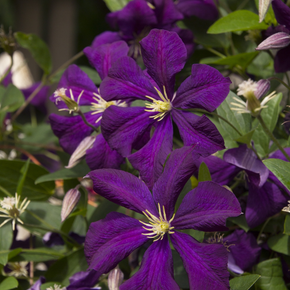
Clematis 'Arabella' (Clematis integrifolia 'Arabella') is a globally celebrated, award-winning perennial bred by renowned British clematis breeder Barry Fretwell, earning the prestigious Royal Horticultural Society Award of Garden Merit for its exceptional garden performance. Unlike traditional vining clematis, 'Arabella' belongs to the Integrifolia Group and produces semi-herbaceous, sprawling stems that scramble rather than cling, making it one of the most versatile flowering perennials available. From late spring through fall - a breathtaking 4 to 5 months - the plant is smothered in open, disc-shaped blooms measuring 2 to 4 inches across, displaying a mesmerizing azure-blue to violet-blue color with soft creamy-yellow central anthers that create a subtle bicolor effect. Flowers open with a rich purple-blue cast and gradually mature to a softer sky blue as they age, ensuring ever-changing visual interest throughout the season. With its unique combination of a near-flat, large-flowered bloom form on a relaxed, non-clinging, rambling plant, 'Arabella' excels as a ground cover, a weaver through mixed perennial borders, a companion scrambling through roses and shrubs, or a striking container specimen. Considered by many experts to be among the longest-blooming clematis cultivars in existence, it is also quickly remontant - cut it back after its first flush and fresh blooms return in approximately six weeks. Tough and adaptable across USDA Hardiness Zones 4-9, 'Arabella' is a must-have perennial for Southern Oregon and Northern California gardens seeking season-long color with minimal fuss.
Plant Description
Clematis 'Arabella' is a semi-herbaceous perennial belonging to the Integrifolia Group - a class of clematis that does not vine or cling. Bred in England by the acclaimed clematis specialist Barry Fretwell, 'Arabella' is a hybrid that bridges the gap between large-flowered clematis and the classic herbaceous integrifolia types, combining the striking flat, disc-shaped blooms of the former with the relaxed, sprawling growth habit of the latter. The result is a plant that is both floriferous and uniquely adaptable. Its flexible stems are self-supporting when young but become somewhat woody and semi-erect at maturity. The foliage is dark green with ovate to lanceolate leaves arranged in pairs along the stems, providing a lush, leafy backdrop that sets off the vivid flowers beautifully. 'Arabella' has earned the prestigious Award of Garden Merit from the Royal Horticultural Society, a recognition reserved for plants that perform reliably and outstandingly in garden conditions. It is widely regarded as one of the longest-blooming clematis cultivars available.
Flower Details
The flowers of Clematis 'Arabella' are among its most celebrated features. Each bloom measures 2 to 4 inches (5-10 cm) in diameter and consists of 6 to 8 broad sepals that are strongly ribbed and feature gently wavy, slightly upturned edges that add a sense of texture and movement. The color opens as a rich purple-blue with a subtle reddish cast and gradually transitions to a vivid azure-blue, then mellows to a soft, luminous mauve-blue as each flower matures - meaning a single plant can display multiple shades simultaneously. At the center of each flower sits a prominent tuft of creamy stamens tipped with pale yellow anthers, creating an eye-catching bicolor contrast against the cool blue petals. The slender, elongated buds open gradually, extending the display over a long period. Individually beautiful and collectively breathtaking when the plant is in full bloom, the flowers also serve as an excellent nectar source, attracting bees, butterflies, and hummingbirds throughout the growing season.
Mature Size
| Characteristic | Measurement |
|---|---|
| Height (as ground cover / rambler) | 2-3 feet |
| Height (with vertical support) | 5-9 feet |
| Spread | 2-3 feet (up to 5-7 feet when rambling) |
| Spacing (garden planting) | Approximately 36 inches apart |
| Growth Rate | Vigorous |
| Plant Form | Non-vining, semi-herbaceous, sprawling/rambling |
The ultimate size of 'Arabella' varies considerably based on how it is grown. When allowed to sprawl as a ground cover in a perennial border, plants typically reach 2 to 3 feet in height with a wide, spreading footprint. When given a trellis, obelisk, fence, or neighboring shrubs to lean on and grow through, stems can reach 5 to 9 feet tall, creating a dynamic vertical display. Unlike true vining clematis, 'Arabella' does not attach itself to supports with clinging tendrils - it simply leans and weaves, so tying stems loosely to supports will be needed for vertical growth.
Hardiness and Climate
Clematis 'Arabella' is reliably hardy across a wide geographic range and is well-suited to gardens throughout Southern Oregon and Northern California. It thrives in USDA Hardiness Zones 4 through 9, tolerating winter lows from approximately -30 degrees F (-34 degrees C) in zone 4 through the mild winters of zone 9. Its semi-herbaceous nature means the top growth dies back to the ground in colder winters, and the plant reemerges vigorously each spring from its established root system. In milder climates (Zones 8-9), some of the lower stems may remain semi-woody over winter. 'Arabella' is notably more heat and cold tolerant than many large-flowered clematis hybrids and adapts well to the range of conditions found in inland valleys, foothill elevations, and coastal-influenced gardens of the Pacific Northwest and Northern California. Its roots appreciate cool soil conditions even when the upper plant is growing in warm sun, so mulching the root zone is particularly beneficial in hotter summer climates.
Sunlight Requirements
Clematis 'Arabella' performs best in full sun to partial shade. For maximum flower production, aim to provide at least 6 to 8 hours of direct sunlight per day. A classic guideline for clematis is "heads in the sun, feet in the shade" - the flowering stems benefit from warm, sunny conditions while the root zone thrives when kept cool and shaded. This can be achieved by planting low-growing companion plants, ground covers, or a layer of mulch around the base. In hot inland garden climates, some afternoon shade can help extend the life of individual blooms and reduce heat stress on the plant. In coastal or cooler foothill gardens, a full-sun location is ideal to maximize blooming. Avoid deep, dense shade, which will significantly reduce flowering and cause weak, leggy growth.
Soil and pH Preferences
Clematis 'Arabella' is adaptable to a range of soil types including loam, chalk, clay, and sandy soils, provided drainage is adequate. For best results, plant in fertile, humus-rich, moist but well-drained soil. Heavy clay soils should be amended with compost or coarse grit to improve drainage. Sandy soils benefit from generous additions of organic matter to improve moisture retention and nutrient supply. The ideal soil pH range is 6.0 to 7.5, with slightly alkaline to neutral conditions (around 6.5 to 7.0) considered optimal. 'Arabella' does not perform well in waterlogged or compacted soils, which can cause root rot and decline. Enriching the planting area with well-rotted compost or aged manure before planting sets the plant up for long-term success. Good soil preparation at planting time is one of the most important investments for a thriving clematis.
Watering Guide
Consistent moisture is key to keeping Clematis 'Arabella' healthy and blooming throughout its long season. Water regularly, particularly during dry spells, hot weather, and the first season after planting while the plant is establishing its root system. Deep, infrequent watering is preferred over shallow, frequent irrigation - encouraging the roots to grow deeper into the soil where moisture is more stable and temperatures are cooler. Allow the top inch or two of soil to dry slightly between waterings, but do not let the plant wilt or become severely drought-stressed. Waterlogged or poorly drained soil should be avoided, as it can lead to root rot. A 2 to 3 inch layer of organic mulch around the base of the plant (kept a few inches away from the stems themselves) helps retain soil moisture, moderate soil temperature, and reduce the frequency of supplemental watering needed during summer heat.
Fertilizing
Feeding Clematis 'Arabella' appropriately supports its vigorous growth and extraordinarily long blooming season. Follow these fertilizing steps for best results:
- Early spring: Apply a balanced, slow-release granular fertilizer as new growth emerges from the ground. A formulation such as 10-10-10 or a specialty clematis and climber food (such as a 3-5-4 formulation) is ideal to support initial shoot and root development.
- Pre-bloom / bud stage: Switch to or supplement with a low-nitrogen, phosphorus-forward fertilizer (such as 5-10-10) to encourage robust bud formation rather than excess leafy growth.
- Mid-summer: After the first bloom flush, apply a high-potassium fertilizer to fuel the plant's remontant rebloom cycle and sustain flowering through fall.
- Annual top-dressing: Each spring, top-dress the root zone with a generous layer of well-rotted compost or aged manure to improve soil structure and supply steady, gentle nutrition.
- Always water well before and after fertilizing to prevent root burn and help nutrients penetrate the root zone.
Pruning and Maintenance
Clematis 'Arabella' belongs to Pruning Group 3 (also called the "Green" pruning category), which includes clematis that bloom on new growth produced in the current season. This makes pruning simple and forgiving:
- Late winter to early spring: Before new growth begins, cut all stems back hard to a strong pair of buds approximately 12 inches (30 cm) above ground level. This is the primary annual pruning and it encourages the most vigorous new growth and flowering stems of the season.
- Mid-season deadheading / shaping: After the first flowering flush begins to wane, cut stems back by approximately one-half their length. The plant will quickly regenerate fresh stems and rebloom within approximately 6 weeks.
- Throughout the season: 'Arabella' tolerates additional trimming at any time to maintain a tidy shape, redirect growth, or remove spent stems. This flexibility makes it exceptionally easy to manage.
- Fall cleanup: In colder climates, leave the dead stems through winter to offer some crown protection, then cut back as part of the late-winter pruning routine. In milder zones, stems can be cleared in fall or left until spring.
- Because 'Arabella' is semi-herbaceous and dies back seasonally, there is no risk of pruning incorrectly - the plant is extremely forgiving.
Planting Instructions
- Select the site: Choose a location with at least 6 hours of sun per day, good air circulation, and well-drained soil. Ensure the root zone can be kept cool with mulch or neighboring low-growing plants.
- Prepare the soil: Dig the planting hole at least twice the width and depth of the root ball. Incorporate generous amounts of compost or well-rotted manure to improve drainage and fertility. Adjust soil pH to the 6.0-7.5 range if needed.
- Plant depth: For non-vining Integrifolia Group clematis like 'Arabella', plant so that the crown of the plant is just at or slightly below (1-2 inches) the soil surface. This encourages healthy new shoot emergence each season.
- Backfill and firm: Fill in around the root ball, gently firming the soil to eliminate air pockets. Water deeply and thoroughly after planting.
- Mulch: Apply a 2-3 inch layer of organic mulch (bark chips, shredded leaves, or compost) around the base, keeping mulch pulled a few inches back from the crown and stems to prevent rot.
- Support (optional): If you wish to grow 'Arabella' vertically, install a trellis, obelisk, or other support at planting time and begin gently tying stems as they grow. If growing as a ground cover or border scrambler, no support is needed.
- Spacing: Space plants approximately 36 inches apart in mass plantings or borders to allow adequate room for mature spread and good air circulation.
Seasonal Interest
Clematis 'Arabella' offers one of the most extended seasons of interest of any flowering perennial in its class:
- Early to mid-spring: Fresh new shoots emerge vigorously from the ground or base of the plant, with dark green foliage quickly filling in. The plant establishes rapidly and begins building the season's flowering framework.
- Late spring: The first flower buds appear, and blooming begins - opening a spectacular display of azure-blue to violet-blue disc-shaped flowers that are immediately eye-catching in the garden.
- Summer (early through late): Peak flowering season. The plant is covered in blooms, attracting bees, butterflies, and hummingbirds. After the initial flush, a mid-summer trim prompts vigorous reblooming within approximately six weeks.
- Fall: Continued flowering carries color deep into the season, well past many other perennials. As temperatures drop, the cool blue hues become even more vivid and striking against autumn foliage tones in the surrounding garden.
- Winter: The plant enters dormancy. In colder zones it dies back fully to the ground; in milder climates some basal woody growth may persist. The dormant plant requires minimal attention until late-winter pruning signals the start of a new cycle.
Landscape Uses
The non-clinging, rambling habit of Clematis 'Arabella' makes it one of the most versatile flowering perennials for the landscape. Consider these design applications:
- Perennial border weaver: Allow stems to scramble up through and over neighboring perennials and ornamental grasses for a naturalistic, cottage-garden effect.
- Rose companion: Plant alongside climbing, shrub, or pillar roses to create a classic blue-and-pink pairing. The flexible stems thread elegantly through rose canes without damaging them.
- Flowering ground cover: Left unsupported, 'Arabella' forms a low, flowering mat 2-3 feet tall that can cover bare slopes, disguise unsightly utilities, or fill gaps around tree stumps and boulders.
- Vertical accent: With a trellis, obelisk, arbor, or fence for support, 'Arabella' can reach 5-9 feet and provide a rich vertical column of blue flowers as a focal point or backdrop.
- Wall-side borders: Ideal for leaning against low walls, fences, or retaining structures where its flowing stems spill and cascade attractively.
- Container and patio displays: Grows beautifully in large containers on patios, decks, or courtyards with the addition of a small support structure.
- Mixed borders and cottage gardens: Its cool blue flowers harmonize with nearly any color palette, making it an outstanding blending and bridging plant in complex border schemes.
Companion Plants
Clematis 'Arabella' pairs beautifully with a wide range of garden plants. The best companions share similar preferences for consistently moist, well-drained, fertile soil and a neutral to slightly alkaline pH. Ideal companions include:
- Roses: The classic pairing - climbing, shrub, and pillar roses provide natural support for 'Arabella' stems while creating a stunning blue-and-pink or blue-and-red color contrast.
- Peonies: Bold peony blooms in pink, red, or white are spectacularly complemented by 'Arabella's' wispy, azure-blue flowers threading through their foliage.
- Hydrangeas: Sturdy hydrangea shrubs provide a natural scaffold for 'Arabella' and pair beautifully in color with its blue-violet hues.
- Catmint (Nepeta): A harmonious pairing of blue and lavender tones with complementary textures; both plants share sun and moisture preferences.
- Salvia: Purple and blue salvias reinforce 'Arabella's' cool-toned palette for a cohesive, pollinator-friendly planting.
- Coneflowers (Echinacea): Bold, warm-toned coneflowers create a vivid contrast with 'Arabella's' cool blue; both attract pollinators and bloom simultaneously.
- Daylilies (Hemerocallis): Orange, yellow, or red daylilies create a vibrant complementary contrast while providing low-growing foliage that helps shade 'Arabella's' root zone.
- Ornamental grasses: Fine-textured grasses provide graceful contrast in form and movement while helping keep the root zone cool.
- Lady's mantle (Alchemilla mollis): Low-growing and chartreuse-flowered, it is a superb root-shading companion that also picks up morning dew beautifully alongside 'Arabella'.
Pests and Diseases
Clematis 'Arabella' is notably more resilient than many clematis cultivars, particularly regarding the most feared problem - clematis wilt. As a member of the Integrifolia Group, it is rarely affected by this fungal disease that can devastate large-flowered hybrid types. That said, gardeners should be aware of the following:
- Clematis wilt (Calophoma clematidina): Very rarely an issue for 'Arabella' compared to large-flowered hybrids. If wilting occurs on stems, cut affected growth back to healthy tissue below the soil line; the plant almost always recovers fully.
- Powdery mildew: Can appear in hot, dry conditions or where air circulation is poor. Prevent by providing good spacing, avoiding overhead watering, and ensuring plants are not too densely crowded. Treat with a sulfur-based or potassium bicarbonate fungicide if needed.
- Aphids: May cluster on tender new spring growth. Dislodge with a strong stream of water or treat with insecticidal soap or neem oil. Avoid over-fertilizing with nitrogen, which produces the lush, soft growth aphids prefer.
- Spider mites: Occasional in hot, dry weather. Improve irrigation and humidity around the plant, or treat with neem oil or insecticidal soap.
- Rabbits: Young shoots in early spring can be attractive to rabbits. Protect new growth with wire mesh or other barriers until the plant is established and stems have toughened.
- Deer: Generally deer tolerant once established, though young plants may need protection in areas with heavy deer pressure.
Container Growing
Clematis 'Arabella' adapts well to container culture and makes a spectacular patio or deck specimen, allowing gardeners to enjoy its extraordinary blue flowers up close. Follow these guidelines for success in containers:
- Container size: Choose a large container - at least 18 to 24 inches in diameter and depth. Clematis roots run deep and need room to grow. Larger containers also retain moisture more evenly and stay cooler in summer heat.
- Potting mix: Use a high-quality, well-draining potting mix amended with compost. Avoid heavy garden soil in containers, as it compacts and drains poorly.
- Support: Provide a small trellis, obelisk, or stake cage within the container to support and direct the stems. Tie stems loosely as they grow.
- Watering: Containers dry out more quickly than garden beds. Check soil moisture frequently and water thoroughly when the top inch of the mix feels dry. Never allow the container to sit in standing water.
- Fertilizing: Container-grown plants require more frequent feeding than those in the ground. Apply a diluted balanced liquid fertilizer every two to three weeks during the growing season, or incorporate a slow-release granular fertilizer into the potting mix at the start of the season.
- Winter care: In cold climates, move containers to a sheltered but cool location (such as an unheated garage or shed) over winter to protect the root ball from hard freezes. Resume normal care in spring after the last frost date.
Wildlife Value
Clematis 'Arabella' is an outstanding pollinator plant that contributes meaningfully to the garden ecosystem throughout its exceptionally long blooming season. Its open, disc-shaped flowers provide easy access to nectar and pollen for a wide variety of beneficial insects and wildlife:
- Bees: Both honeybees and native bumblebees are strongly attracted to the abundant, open flowers of 'Arabella'. The long bloom season from late spring through fall makes it a valuable and sustained nectar source during periods when other plants may not be in flower.
- Butterflies: The wide, flat flower form provides an ideal landing platform for butterflies seeking nectar. 'Arabella' is particularly attractive to swallowtails, skippers, and fritillaries commonly found in Southern Oregon and Northern California gardens.
- Hummingbirds: The vivid blue-violet flowers are noted attractors of hummingbirds, including the Anna's hummingbird and rufous hummingbird common throughout the Pacific Coast region. Positioning 'Arabella' where it can be viewed from a window or patio allows for delightful wildlife observation.
- General wildlife: While the plant offers excellent foraging value for pollinators, it is generally resistant to browsing by deer and rabbits once established, maintaining its ornamental value even in areas with significant wildlife pressure.
Toxicity
As with all members of the Clematis genus and the broader Ranunculaceae (buttercup) family, Clematis 'Arabella' contains irritating compounds (including protoanemonin) that are considered toxic if ingested by humans, dogs, cats, and horses. All parts of the plant - including leaves, stems, and flowers - can cause irritation to the mouth and gastrointestinal tract if consumed. Contact with the sap can occasionally cause mild skin irritation in sensitive individuals. Gardeners are advised to wear gloves when handling the plant for extended periods, especially when pruning. Keep children and pets away from the plant and wash hands thoroughly after handling. As an ornamental plant, 'Arabella' has no recognized culinary or medicinal uses.
- Award-winning, non-vining perennial clematis producing an extraordinary abundance of open-faced, azure-blue to violet-blue flowers, each 2-4 inches across, from late spring all the way through fall
- Uniquely versatile growth habit - use it as a sprawling ground cover, weave it through roses and shrubs in the perennial border, or gently tie it to a trellis or obelisk for a stunning vertical accent
- Exceptionally long-blooming and remontant - cut back after the first flowering flush and it rebounds with fresh blooms in as little as 6 weeks, delivering up to 4-5 months of continuous color
- Hardy, low-maintenance, and highly adaptable across USDA Zones 4-9 with strong resistance to clematis wilt and noted tolerance of deer and rabbits once established
Clematis 'Arabella' (Clematis integrifolia 'Arabella') is a globally celebrated, award-winning perennial bred by renowned British clematis breeder Barry Fretwell, earning the prestigious Royal Horticultural Society Award of Garden Merit for its exceptional garden performance. Unlike traditional vining clematis, 'Arabella' belongs to the Integrifolia Group and produces semi-herbaceous, sprawling stems that scramble rather than cling, making it one of the most versatile flowering perennials available. From late spring through fall - a breathtaking 4 to 5 months - the plant is smothered in open, disc-shaped blooms measuring 2 to 4 inches across, displaying a mesmerizing azure-blue to violet-blue color with soft creamy-yellow central anthers that create a subtle bicolor effect. Flowers open with a rich purple-blue cast and gradually mature to a softer sky blue as they age, ensuring ever-changing visual interest throughout the season. With its unique combination of a near-flat, large-flowered bloom form on a relaxed, non-clinging, rambling plant, 'Arabella' excels as a ground cover, a weaver through mixed perennial borders, a companion scrambling through roses and shrubs, or a striking container specimen. Considered by many experts to be among the longest-blooming clematis cultivars in existence, it is also quickly remontant - cut it back after its first flush and fresh blooms return in approximately six weeks. Tough and adaptable across USDA Hardiness Zones 4-9, 'Arabella' is a must-have perennial for Southern Oregon and Northern California gardens seeking season-long color with minimal fuss.
Plant Description
Clematis 'Arabella' is a semi-herbaceous perennial belonging to the Integrifolia Group - a class of clematis that does not vine or cling. Bred in England by the acclaimed clematis specialist Barry Fretwell, 'Arabella' is a hybrid that bridges the gap between large-flowered clematis and the classic herbaceous integrifolia types, combining the striking flat, disc-shaped blooms of the former with the relaxed, sprawling growth habit of the latter. The result is a plant that is both floriferous and uniquely adaptable. Its flexible stems are self-supporting when young but become somewhat woody and semi-erect at maturity. The foliage is dark green with ovate to lanceolate leaves arranged in pairs along the stems, providing a lush, leafy backdrop that sets off the vivid flowers beautifully. 'Arabella' has earned the prestigious Award of Garden Merit from the Royal Horticultural Society, a recognition reserved for plants that perform reliably and outstandingly in garden conditions. It is widely regarded as one of the longest-blooming clematis cultivars available.
Flower Details
The flowers of Clematis 'Arabella' are among its most celebrated features. Each bloom measures 2 to 4 inches (5-10 cm) in diameter and consists of 6 to 8 broad sepals that are strongly ribbed and feature gently wavy, slightly upturned edges that add a sense of texture and movement. The color opens as a rich purple-blue with a subtle reddish cast and gradually transitions to a vivid azure-blue, then mellows to a soft, luminous mauve-blue as each flower matures - meaning a single plant can display multiple shades simultaneously. At the center of each flower sits a prominent tuft of creamy stamens tipped with pale yellow anthers, creating an eye-catching bicolor contrast against the cool blue petals. The slender, elongated buds open gradually, extending the display over a long period. Individually beautiful and collectively breathtaking when the plant is in full bloom, the flowers also serve as an excellent nectar source, attracting bees, butterflies, and hummingbirds throughout the growing season.
Mature Size
| Characteristic | Measurement |
|---|---|
| Height (as ground cover / rambler) | 2-3 feet |
| Height (with vertical support) | 5-9 feet |
| Spread | 2-3 feet (up to 5-7 feet when rambling) |
| Spacing (garden planting) | Approximately 36 inches apart |
| Growth Rate | Vigorous |
| Plant Form | Non-vining, semi-herbaceous, sprawling/rambling |
The ultimate size of 'Arabella' varies considerably based on how it is grown. When allowed to sprawl as a ground cover in a perennial border, plants typically reach 2 to 3 feet in height with a wide, spreading footprint. When given a trellis, obelisk, fence, or neighboring shrubs to lean on and grow through, stems can reach 5 to 9 feet tall, creating a dynamic vertical display. Unlike true vining clematis, 'Arabella' does not attach itself to supports with clinging tendrils - it simply leans and weaves, so tying stems loosely to supports will be needed for vertical growth.
Hardiness and Climate
Clematis 'Arabella' is reliably hardy across a wide geographic range and is well-suited to gardens throughout Southern Oregon and Northern California. It thrives in USDA Hardiness Zones 4 through 9, tolerating winter lows from approximately -30 degrees F (-34 degrees C) in zone 4 through the mild winters of zone 9. Its semi-herbaceous nature means the top growth dies back to the ground in colder winters, and the plant reemerges vigorously each spring from its established root system. In milder climates (Zones 8-9), some of the lower stems may remain semi-woody over winter. 'Arabella' is notably more heat and cold tolerant than many large-flowered clematis hybrids and adapts well to the range of conditions found in inland valleys, foothill elevations, and coastal-influenced gardens of the Pacific Northwest and Northern California. Its roots appreciate cool soil conditions even when the upper plant is growing in warm sun, so mulching the root zone is particularly beneficial in hotter summer climates.
Sunlight Requirements
Clematis 'Arabella' performs best in full sun to partial shade. For maximum flower production, aim to provide at least 6 to 8 hours of direct sunlight per day. A classic guideline for clematis is "heads in the sun, feet in the shade" - the flowering stems benefit from warm, sunny conditions while the root zone thrives when kept cool and shaded. This can be achieved by planting low-growing companion plants, ground covers, or a layer of mulch around the base. In hot inland garden climates, some afternoon shade can help extend the life of individual blooms and reduce heat stress on the plant. In coastal or cooler foothill gardens, a full-sun location is ideal to maximize blooming. Avoid deep, dense shade, which will significantly reduce flowering and cause weak, leggy growth.
Soil and pH Preferences
Clematis 'Arabella' is adaptable to a range of soil types including loam, chalk, clay, and sandy soils, provided drainage is adequate. For best results, plant in fertile, humus-rich, moist but well-drained soil. Heavy clay soils should be amended with compost or coarse grit to improve drainage. Sandy soils benefit from generous additions of organic matter to improve moisture retention and nutrient supply. The ideal soil pH range is 6.0 to 7.5, with slightly alkaline to neutral conditions (around 6.5 to 7.0) considered optimal. 'Arabella' does not perform well in waterlogged or compacted soils, which can cause root rot and decline. Enriching the planting area with well-rotted compost or aged manure before planting sets the plant up for long-term success. Good soil preparation at planting time is one of the most important investments for a thriving clematis.
Watering Guide
Consistent moisture is key to keeping Clematis 'Arabella' healthy and blooming throughout its long season. Water regularly, particularly during dry spells, hot weather, and the first season after planting while the plant is establishing its root system. Deep, infrequent watering is preferred over shallow, frequent irrigation - encouraging the roots to grow deeper into the soil where moisture is more stable and temperatures are cooler. Allow the top inch or two of soil to dry slightly between waterings, but do not let the plant wilt or become severely drought-stressed. Waterlogged or poorly drained soil should be avoided, as it can lead to root rot. A 2 to 3 inch layer of organic mulch around the base of the plant (kept a few inches away from the stems themselves) helps retain soil moisture, moderate soil temperature, and reduce the frequency of supplemental watering needed during summer heat.
Fertilizing
Feeding Clematis 'Arabella' appropriately supports its vigorous growth and extraordinarily long blooming season. Follow these fertilizing steps for best results:
- Early spring: Apply a balanced, slow-release granular fertilizer as new growth emerges from the ground. A formulation such as 10-10-10 or a specialty clematis and climber food (such as a 3-5-4 formulation) is ideal to support initial shoot and root development.
- Pre-bloom / bud stage: Switch to or supplement with a low-nitrogen, phosphorus-forward fertilizer (such as 5-10-10) to encourage robust bud formation rather than excess leafy growth.
- Mid-summer: After the first bloom flush, apply a high-potassium fertilizer to fuel the plant's remontant rebloom cycle and sustain flowering through fall.
- Annual top-dressing: Each spring, top-dress the root zone with a generous layer of well-rotted compost or aged manure to improve soil structure and supply steady, gentle nutrition.
- Always water well before and after fertilizing to prevent root burn and help nutrients penetrate the root zone.
Pruning and Maintenance
Clematis 'Arabella' belongs to Pruning Group 3 (also called the "Green" pruning category), which includes clematis that bloom on new growth produced in the current season. This makes pruning simple and forgiving:
- Late winter to early spring: Before new growth begins, cut all stems back hard to a strong pair of buds approximately 12 inches (30 cm) above ground level. This is the primary annual pruning and it encourages the most vigorous new growth and flowering stems of the season.
- Mid-season deadheading / shaping: After the first flowering flush begins to wane, cut stems back by approximately one-half their length. The plant will quickly regenerate fresh stems and rebloom within approximately 6 weeks.
- Throughout the season: 'Arabella' tolerates additional trimming at any time to maintain a tidy shape, redirect growth, or remove spent stems. This flexibility makes it exceptionally easy to manage.
- Fall cleanup: In colder climates, leave the dead stems through winter to offer some crown protection, then cut back as part of the late-winter pruning routine. In milder zones, stems can be cleared in fall or left until spring.
- Because 'Arabella' is semi-herbaceous and dies back seasonally, there is no risk of pruning incorrectly - the plant is extremely forgiving.
Planting Instructions
- Select the site: Choose a location with at least 6 hours of sun per day, good air circulation, and well-drained soil. Ensure the root zone can be kept cool with mulch or neighboring low-growing plants.
- Prepare the soil: Dig the planting hole at least twice the width and depth of the root ball. Incorporate generous amounts of compost or well-rotted manure to improve drainage and fertility. Adjust soil pH to the 6.0-7.5 range if needed.
- Plant depth: For non-vining Integrifolia Group clematis like 'Arabella', plant so that the crown of the plant is just at or slightly below (1-2 inches) the soil surface. This encourages healthy new shoot emergence each season.
- Backfill and firm: Fill in around the root ball, gently firming the soil to eliminate air pockets. Water deeply and thoroughly after planting.
- Mulch: Apply a 2-3 inch layer of organic mulch (bark chips, shredded leaves, or compost) around the base, keeping mulch pulled a few inches back from the crown and stems to prevent rot.
- Support (optional): If you wish to grow 'Arabella' vertically, install a trellis, obelisk, or other support at planting time and begin gently tying stems as they grow. If growing as a ground cover or border scrambler, no support is needed.
- Spacing: Space plants approximately 36 inches apart in mass plantings or borders to allow adequate room for mature spread and good air circulation.
Seasonal Interest
Clematis 'Arabella' offers one of the most extended seasons of interest of any flowering perennial in its class:
- Early to mid-spring: Fresh new shoots emerge vigorously from the ground or base of the plant, with dark green foliage quickly filling in. The plant establishes rapidly and begins building the season's flowering framework.
- Late spring: The first flower buds appear, and blooming begins - opening a spectacular display of azure-blue to violet-blue disc-shaped flowers that are immediately eye-catching in the garden.
- Summer (early through late): Peak flowering season. The plant is covered in blooms, attracting bees, butterflies, and hummingbirds. After the initial flush, a mid-summer trim prompts vigorous reblooming within approximately six weeks.
- Fall: Continued flowering carries color deep into the season, well past many other perennials. As temperatures drop, the cool blue hues become even more vivid and striking against autumn foliage tones in the surrounding garden.
- Winter: The plant enters dormancy. In colder zones it dies back fully to the ground; in milder climates some basal woody growth may persist. The dormant plant requires minimal attention until late-winter pruning signals the start of a new cycle.
Landscape Uses
The non-clinging, rambling habit of Clematis 'Arabella' makes it one of the most versatile flowering perennials for the landscape. Consider these design applications:
- Perennial border weaver: Allow stems to scramble up through and over neighboring perennials and ornamental grasses for a naturalistic, cottage-garden effect.
- Rose companion: Plant alongside climbing, shrub, or pillar roses to create a classic blue-and-pink pairing. The flexible stems thread elegantly through rose canes without damaging them.
- Flowering ground cover: Left unsupported, 'Arabella' forms a low, flowering mat 2-3 feet tall that can cover bare slopes, disguise unsightly utilities, or fill gaps around tree stumps and boulders.
- Vertical accent: With a trellis, obelisk, arbor, or fence for support, 'Arabella' can reach 5-9 feet and provide a rich vertical column of blue flowers as a focal point or backdrop.
- Wall-side borders: Ideal for leaning against low walls, fences, or retaining structures where its flowing stems spill and cascade attractively.
- Container and patio displays: Grows beautifully in large containers on patios, decks, or courtyards with the addition of a small support structure.
- Mixed borders and cottage gardens: Its cool blue flowers harmonize with nearly any color palette, making it an outstanding blending and bridging plant in complex border schemes.
Companion Plants
Clematis 'Arabella' pairs beautifully with a wide range of garden plants. The best companions share similar preferences for consistently moist, well-drained, fertile soil and a neutral to slightly alkaline pH. Ideal companions include:
- Roses: The classic pairing - climbing, shrub, and pillar roses provide natural support for 'Arabella' stems while creating a stunning blue-and-pink or blue-and-red color contrast.
- Peonies: Bold peony blooms in pink, red, or white are spectacularly complemented by 'Arabella's' wispy, azure-blue flowers threading through their foliage.
- Hydrangeas: Sturdy hydrangea shrubs provide a natural scaffold for 'Arabella' and pair beautifully in color with its blue-violet hues.
- Catmint (Nepeta): A harmonious pairing of blue and lavender tones with complementary textures; both plants share sun and moisture preferences.
- Salvia: Purple and blue salvias reinforce 'Arabella's' cool-toned palette for a cohesive, pollinator-friendly planting.
- Coneflowers (Echinacea): Bold, warm-toned coneflowers create a vivid contrast with 'Arabella's' cool blue; both attract pollinators and bloom simultaneously.
- Daylilies (Hemerocallis): Orange, yellow, or red daylilies create a vibrant complementary contrast while providing low-growing foliage that helps shade 'Arabella's' root zone.
- Ornamental grasses: Fine-textured grasses provide graceful contrast in form and movement while helping keep the root zone cool.
- Lady's mantle (Alchemilla mollis): Low-growing and chartreuse-flowered, it is a superb root-shading companion that also picks up morning dew beautifully alongside 'Arabella'.
Pests and Diseases
Clematis 'Arabella' is notably more resilient than many clematis cultivars, particularly regarding the most feared problem - clematis wilt. As a member of the Integrifolia Group, it is rarely affected by this fungal disease that can devastate large-flowered hybrid types. That said, gardeners should be aware of the following:
- Clematis wilt (Calophoma clematidina): Very rarely an issue for 'Arabella' compared to large-flowered hybrids. If wilting occurs on stems, cut affected growth back to healthy tissue below the soil line; the plant almost always recovers fully.
- Powdery mildew: Can appear in hot, dry conditions or where air circulation is poor. Prevent by providing good spacing, avoiding overhead watering, and ensuring plants are not too densely crowded. Treat with a sulfur-based or potassium bicarbonate fungicide if needed.
- Aphids: May cluster on tender new spring growth. Dislodge with a strong stream of water or treat with insecticidal soap or neem oil. Avoid over-fertilizing with nitrogen, which produces the lush, soft growth aphids prefer.
- Spider mites: Occasional in hot, dry weather. Improve irrigation and humidity around the plant, or treat with neem oil or insecticidal soap.
- Rabbits: Young shoots in early spring can be attractive to rabbits. Protect new growth with wire mesh or other barriers until the plant is established and stems have toughened.
- Deer: Generally deer tolerant once established, though young plants may need protection in areas with heavy deer pressure.
Container Growing
Clematis 'Arabella' adapts well to container culture and makes a spectacular patio or deck specimen, allowing gardeners to enjoy its extraordinary blue flowers up close. Follow these guidelines for success in containers:
- Container size: Choose a large container - at least 18 to 24 inches in diameter and depth. Clematis roots run deep and need room to grow. Larger containers also retain moisture more evenly and stay cooler in summer heat.
- Potting mix: Use a high-quality, well-draining potting mix amended with compost. Avoid heavy garden soil in containers, as it compacts and drains poorly.
- Support: Provide a small trellis, obelisk, or stake cage within the container to support and direct the stems. Tie stems loosely as they grow.
- Watering: Containers dry out more quickly than garden beds. Check soil moisture frequently and water thoroughly when the top inch of the mix feels dry. Never allow the container to sit in standing water.
- Fertilizing: Container-grown plants require more frequent feeding than those in the ground. Apply a diluted balanced liquid fertilizer every two to three weeks during the growing season, or incorporate a slow-release granular fertilizer into the potting mix at the start of the season.
- Winter care: In cold climates, move containers to a sheltered but cool location (such as an unheated garage or shed) over winter to protect the root ball from hard freezes. Resume normal care in spring after the last frost date.
Wildlife Value
Clematis 'Arabella' is an outstanding pollinator plant that contributes meaningfully to the garden ecosystem throughout its exceptionally long blooming season. Its open, disc-shaped flowers provide easy access to nectar and pollen for a wide variety of beneficial insects and wildlife:
- Bees: Both honeybees and native bumblebees are strongly attracted to the abundant, open flowers of 'Arabella'. The long bloom season from late spring through fall makes it a valuable and sustained nectar source during periods when other plants may not be in flower.
- Butterflies: The wide, flat flower form provides an ideal landing platform for butterflies seeking nectar. 'Arabella' is particularly attractive to swallowtails, skippers, and fritillaries commonly found in Southern Oregon and Northern California gardens.
- Hummingbirds: The vivid blue-violet flowers are noted attractors of hummingbirds, including the Anna's hummingbird and rufous hummingbird common throughout the Pacific Coast region. Positioning 'Arabella' where it can be viewed from a window or patio allows for delightful wildlife observation.
- General wildlife: While the plant offers excellent foraging value for pollinators, it is generally resistant to browsing by deer and rabbits once established, maintaining its ornamental value even in areas with significant wildlife pressure.
Toxicity
As with all members of the Clematis genus and the broader Ranunculaceae (buttercup) family, Clematis 'Arabella' contains irritating compounds (including protoanemonin) that are considered toxic if ingested by humans, dogs, cats, and horses. All parts of the plant - including leaves, stems, and flowers - can cause irritation to the mouth and gastrointestinal tract if consumed. Contact with the sap can occasionally cause mild skin irritation in sensitive individuals. Gardeners are advised to wear gloves when handling the plant for extended periods, especially when pruning. Keep children and pets away from the plant and wash hands thoroughly after handling. As an ornamental plant, 'Arabella' has no recognized culinary or medicinal uses.