Zoom the image with the mouse
Javelin Forte White Spanish Lavender - 1 Gallon
SKU:
1856015
UPC:
014949462683
$12.99
- Stunning rabbit-ear blooms — bold, green-veined white bracts crown dense, fragrant light-lilac flower heads from mid-spring through summer, delivering showstopping color over a long season.
- Exceptional heat and drought tolerance — once established, this compact evergreen subshrub thrives in hot, dry conditions, making it an ideal low-water choice for sunny Southern Oregon and Northern California landscapes.
- Improved cold and wet winter resilience — Javelin Forte White outperforms many Spanish lavenders in cool, damp winters, extending its usefulness across a wider range of garden climates.
- Outstanding disease resistance — bred with exceptional disease tolerance, this robust, well-branched selection stays healthy through the rigors of the growing season and into the garden with minimal intervention.
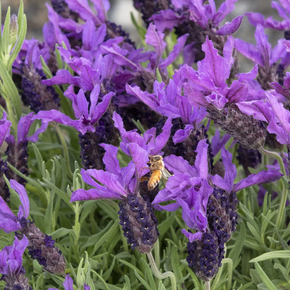
Javelin Forte White Spanish Lavender (Lavandula stoechas 'Javelin Forte White') is a standout selection in the Javelin Forte Series, celebrated for its profusion of large, eye-catching flower spikes that feature distinctive green-veined white "rabbit ear" bracts rising above dense, fragrant light-lilac blooms from mid-spring through summer. Forming a robust, rounded mounding habit of aromatic gray-green evergreen foliage, this compact subshrub grows to approximately 14 to 20 inches tall and 12 to 18 inches wide, making it an ideal fit for sunny borders, rock gardens, cottage-style plantings, and container displays. Unlike many Spanish lavenders, Javelin Forte White demonstrates improved tolerance of cold and wet winter conditions, broadening its appeal for Pacific Coast gardeners. Its exceptional heat and drought tolerance, combined with outstanding disease resistance and a long season of color, make it a versatile, low-maintenance addition to xeriscapes, Mediterranean-inspired gardens, and pollinator-friendly landscapes. Deer resistant and irresistible to bees and butterflies, Javelin Forte White Spanish Lavender delivers fragrance, beauty, and ecological value all in one refined, well-bred package.
Plant Description
Javelin Forte White Spanish Lavender is an evergreen subshrub belonging to the mint family (Lamiaceae), native to the Mediterranean region. It is part of the Javelin Forte Series bred for larger, showier blooms and stronger plant habits than standard Spanish lavender. The flowers are uniquely structured: dense, cone-shaped heads of tiny light-lilac florets are topped by elongated, showy white bracts with distinctive green veining — a hallmark "rabbit ear" or "butterfly wing" appearance unique to Lavandula stoechas. The aromatic gray-green foliage is narrow, needle-like, and softly textured, contributing fragrance even when the plant is not in bloom. The overall habit is mounded, dense, and well-branched, giving the plant a tidy, ornamental appearance throughout the year.
Mature Size
| Attribute | Measurement |
|---|---|
| Mature Height | 14 to 20 inches |
| Mature Spread | 12 to 18 inches |
| Growth Rate | Moderate |
| Plant Form | Dense, rounded mound |
| Lifespan | Approximately 10 years under ideal conditions |
Hardiness Zones and Climate
Javelin Forte White Spanish Lavender is well-suited to USDA Hardiness Zones 7 through 11, with the Javelin Forte Series noted for improved cold and wet winter resilience compared to standard Lavandula stoechas varieties. It thrives in the Mediterranean-like climates of Southern Oregon and Northern California, where hot, dry summers and mild winters align perfectly with its native growing conditions. It performs best in heat zones 8 through 9. While it tolerates cooler temperatures better than many Spanish lavenders, it benefits from excellent soil drainage during winter months to prevent root issues in colder or wetter conditions. In regions that experience occasional frost, a well-drained planting site and good air circulation will greatly improve winter survival.
Sunlight Requirements
This plant demands full sun and should receive a minimum of 6 to 8 hours of direct sunlight per day. Adequate sun exposure is critical for maximum flowering, compact growth, and the development of its characteristic fragrance. In partially shaded locations, plants tend to become leggy, produce fewer blooms, and are more susceptible to disease. Choose the sunniest available spot in the garden — south- or west-facing exposures are ideal. Good air circulation around the plant further reduces humidity-related problems and promotes overall plant health.
Soil and pH Preferences
Javelin Forte White Spanish Lavender thrives in poor to moderately fertile, light, sandy or loamy soils with excellent drainage. Standing water or consistently wet soil will cause root rot and rapid decline. This lavender tolerates a wide range of soil pH levels — including acidic, neutral, and alkaline conditions — but shows a slight preference for neutral to alkaline soils. It is also tolerant of rocky, chalky, and dry soils, making it an outstanding candidate for difficult planting areas, slopes, and gravel gardens. Avoid amending planting beds with heavy amounts of organic matter or rich compost, as overly fertile soil encourages lush, weak growth at the expense of flowering and fragrance. Environmental salt tolerance makes it suitable for coastal or urban settings as well.
Watering Guide
Once established, Javelin Forte White Spanish Lavender is notably drought tolerant and requires minimal supplemental irrigation. Allow the soil to go almost completely dry between waterings. During the first growing season after planting, water deeply once or twice per week to help the root system establish, then gradually reduce frequency. In the second year and beyond, deep, infrequent watering — approximately once per week during the active growing season — is generally sufficient. Reduce watering significantly in fall and winter. Overwatering is one of the most common causes of failure with this plant; always err on the dry side. In containers, check soil moisture more frequently, as pots dry out faster than in-ground plantings, but still allow the top inch or two to dry before watering again.
Fertilizing
Javelin Forte White Spanish Lavender is a light feeder that does not require rich soil or heavy fertilization. Excessive nutrients can lead to rank, floppy growth and reduced flowering. A single light application of a balanced, slow-release granular fertilizer (such as a 10-10-10 formulation) in early spring as new growth emerges is typically all that is needed. A second light feeding in early fall can be applied if desired. Avoid high-nitrogen fertilizers, which promote leafy growth at the expense of blooms. In containers, a diluted liquid fertilizer applied once in spring can help replenish nutrients in the potting mix. In naturally fertile garden soils, fertilizing may not be necessary at all.
Pruning and Maintenance
Regular pruning is important for keeping Javelin Forte White Spanish Lavender compact, attractive, and productive. Follow these guidelines for best results:
- After each main flush of bloom — typically in late spring to early summer — shear the plant back by up to one-third of its total size to tidy its shape and encourage a second flush of flowers.
- A more thorough pruning in late summer or early fall, after the final blooms have faded, helps maintain the mounded form and prepares the plant for winter.
- Always cut back into green, leafy wood. Never cut into old, bare, woody stems without foliage, as Lavandula stoechas does not reliably regenerate from leafless wood.
- Remove spent flower stalks promptly to keep the plant looking tidy and to redirect energy into new growth and bud development.
- Avoid heavy pruning in late fall or winter, as this can stress the plant heading into cold weather.
- This is a relatively low-maintenance shrub that can be lightly shaped at almost any time during the growing season without harm.
Planting Instructions
- Select a planting location that receives full sun (at least 6 to 8 hours daily) and has excellent drainage. Avoid low spots where water collects.
- Dig a hole twice as wide as the root ball but no deeper than the root ball itself. The crown of the plant should sit at or slightly above the surrounding soil level to prevent moisture from collecting around the base.
- If your native soil is heavy clay, amend it generously with coarse sand, pea gravel, or crushed granite to improve drainage. Avoid adding large amounts of compost or rich organic material.
- Remove the plant from its container and gently loosen any circling roots before placing it in the hole.
- Backfill with the amended native soil, firming gently to eliminate air pockets.
- Water thoroughly at planting to settle the soil. Add a thin layer (1 to 2 inches) of gravel mulch around the base to improve drainage, reduce moisture at the crown, and reflect heat — avoid organic mulches that retain moisture.
- When planting in groups, space plants approximately 12 to 18 inches apart to allow for mature spread and good air circulation.
Seasonal Interest
Javelin Forte White Spanish Lavender is one of the earliest lavenders to begin blooming, often producing its first flower spikes in mid-spring. The primary bloom season extends through summer, with the distinctive white-bracted flower heads providing weeks of continuous color and fragrance. Deadheading and light shearing after the first flush can encourage a second wave of bloom in late summer or early fall. Even when not in flower, the dense mound of aromatic gray-green foliage provides year-round evergreen structure and visual interest. In autumn, the foliage takes on subtle coppery-bronze tones that persist into winter, giving the plant a warm seasonal character. The dried flower stems also retain ornamental value and can be harvested for use in dried arrangements, sachets, and potpourri.
Landscape Uses
Javelin Forte White Spanish Lavender is a highly versatile landscape plant suited to a wide range of design applications. Its compact size, long bloom season, and tidy mounded form make it valuable in both formal and informal garden styles. Recommended uses include:
- Front-of-border or bed edging, where its low profile and continuous color create a polished, finished look
- Mass plantings for a bold sweep of fragrant white and lavender blooms across slopes, banks, or open areas
- Rock and alpine gardens, where its preference for sharp drainage and lean soil is easily accommodated
- Mediterranean, coastal, and gravel garden designs alongside other drought-tolerant plants
- Cottage garden borders combined with roses, salvias, and ornamental grasses
- Low informal hedges or fragrant pathway borders
- Container and patio plantings as a "filler" component in mixed arrangements
- Xeriscape and low-water-use garden designs
Container Growing
Javelin Forte White Spanish Lavender is well suited to growing in outdoor containers and pots. When growing in containers, keep the following in mind:
- Choose a container with multiple drainage holes to ensure excess water can escape freely. Terra cotta or clay pots are ideal as they allow the soil to breathe and dry more quickly than plastic.
- Use a gritty, fast-draining potting mix. Blend a standard potting mix with up to 30 to 50 percent coarse perlite, pumice, or coarse sand to improve drainage.
- Place containers in the sunniest available location — at least 6 hours of direct sun per day.
- Container plants dry out faster than in-ground plantings and will require more frequent monitoring, but always allow the top 1 to 2 inches of soil to dry before watering again.
- In colder winters, containers can be moved to a sheltered location such as a covered porch or unheated garage to protect roots from hard freezes.
- Repot every 2 to 3 years or when the plant becomes root-bound, refreshing the potting mix at the same time.
Companion Plants
Javelin Forte White Spanish Lavender combines beautifully with other plants that share its preference for full sun, lean soil, and dry to moderate moisture. Consider these companion planting ideas for cohesive, low-maintenance garden combinations:
- Rosemary — a natural companion that mirrors the lavender's Mediterranean origin, fragrant foliage, and drought tolerance
- Russian Sage (Salvia yangii) — tall, airy spikes of blue-purple flowers create a striking contrast to the white-bracted lavender
- Lamb's Ear (Stachys byzantina) — silver, velvety foliage echoes the gray-green tones of lavender and thrives in the same dry conditions
- Santolina (Lavender Cotton) — compact and aromatic, with silvery or green foliage and yellow button flowers that complement white lavender blooms
- Blue Fescue (Festuca glauca 'Elijah Blue') — silvery-blue ornamental grass adds fine texture and cool color contrast at the border edge
- Ornamental Alliums — spherical purple or white flower heads create bold vertical accents among the mounded lavender habit
- Thyme and Sage — low-growing culinary herbs with similar sun and drainage needs that blend seamlessly in herb or kitchen gardens
- Coneflower (Echinacea) — warm-season bloomers that partner well in mixed pollinator borders
Wildlife Value
Javelin Forte White Spanish Lavender is an outstanding plant for supporting local wildlife and pollinators. Its rich nectar and pollen make it a highly attractive food source for bees — including honeybees and native bumblebees — as well as butterflies, making it a welcome addition to any pollinator garden. The long bloom season from mid-spring through summer provides an extended foraging window during critical periods of pollinator activity. The strongly aromatic foliage is generally unappealing to deer and rabbits, which tend to avoid plants with potent fragrance and fuzzy, textured leaves. This makes it a practical choice for gardens where deer browsing is a concern. The dried flower heads can also provide minor seed interest for songbirds late in the season.
Pests and Diseases
One of the key attributes of Javelin Forte White is its exceptional disease resistance, which was specifically improved through its breeding program. Under proper growing conditions, this lavender experiences very few pest or disease problems. The most common issues to be aware of include:
- Root rot: The primary threat, caused by Phytophthora and Pythium species in poorly drained or consistently wet soils. Prevention through excellent drainage is the best approach — this condition cannot be easily reversed once established.
- Botrytis (gray mold): Can occur in humid conditions or when plants are crowded with poor air circulation. Pruning to open up the canopy and ensuring adequate spacing helps prevent this.
- Spittlebug (froghopper): Occasionally infests lavender stems, producing characteristic frothy masses. Affected stems can be removed, or the insects can be dislodged with a strong stream of water.
- Aphids: Rarely a serious problem; beneficial insects typically keep populations in check. A strong blast of water or insecticidal soap can control light infestations if necessary.
- Whitefly: Occasional in warm, sheltered conditions; treat with insecticidal soap or neem oil if populations become problematic.
The best overall pest and disease prevention strategy is to plant in well-drained soil, provide full sun, avoid overwatering, and prune regularly to maintain good air circulation.
Fragrance and Harvest
Like all Spanish lavenders, Javelin Forte White produces a strong, sweet, distinctly aromatic fragrance from both its flowers and foliage. The scent is released when foliage is gently brushed or bruised, making it a sensory delight when planted along pathways or at the edge of seating areas. The flower stems can be harvested for use in fresh or dried floral arrangements, sachets, wreaths, and potpourri. For best fragrance and longevity in dried arrangements, harvest flower stems just as the first florets begin to open, before the flowers reach full bloom. Bundle stems loosely and hang them upside down in a warm, dry, well-ventilated area out of direct sunlight. Dried lavender retains its fragrance for many months and is a beloved component of homemade sachets, drawer liners, and decorative bundles. Note that Lavandula stoechas is less commonly used for culinary purposes than English lavender (L. angustifolia) due to its more intense, camphor-like fragrance profile.
- Stunning rabbit-ear blooms — bold, green-veined white bracts crown dense, fragrant light-lilac flower heads from mid-spring through summer, delivering showstopping color over a long season.
- Exceptional heat and drought tolerance — once established, this compact evergreen subshrub thrives in hot, dry conditions, making it an ideal low-water choice for sunny Southern Oregon and Northern California landscapes.
- Improved cold and wet winter resilience — Javelin Forte White outperforms many Spanish lavenders in cool, damp winters, extending its usefulness across a wider range of garden climates.
- Outstanding disease resistance — bred with exceptional disease tolerance, this robust, well-branched selection stays healthy through the rigors of the growing season and into the garden with minimal intervention.
Javelin Forte White Spanish Lavender (Lavandula stoechas 'Javelin Forte White') is a standout selection in the Javelin Forte Series, celebrated for its profusion of large, eye-catching flower spikes that feature distinctive green-veined white "rabbit ear" bracts rising above dense, fragrant light-lilac blooms from mid-spring through summer. Forming a robust, rounded mounding habit of aromatic gray-green evergreen foliage, this compact subshrub grows to approximately 14 to 20 inches tall and 12 to 18 inches wide, making it an ideal fit for sunny borders, rock gardens, cottage-style plantings, and container displays. Unlike many Spanish lavenders, Javelin Forte White demonstrates improved tolerance of cold and wet winter conditions, broadening its appeal for Pacific Coast gardeners. Its exceptional heat and drought tolerance, combined with outstanding disease resistance and a long season of color, make it a versatile, low-maintenance addition to xeriscapes, Mediterranean-inspired gardens, and pollinator-friendly landscapes. Deer resistant and irresistible to bees and butterflies, Javelin Forte White Spanish Lavender delivers fragrance, beauty, and ecological value all in one refined, well-bred package.
Plant Description
Javelin Forte White Spanish Lavender is an evergreen subshrub belonging to the mint family (Lamiaceae), native to the Mediterranean region. It is part of the Javelin Forte Series bred for larger, showier blooms and stronger plant habits than standard Spanish lavender. The flowers are uniquely structured: dense, cone-shaped heads of tiny light-lilac florets are topped by elongated, showy white bracts with distinctive green veining — a hallmark "rabbit ear" or "butterfly wing" appearance unique to Lavandula stoechas. The aromatic gray-green foliage is narrow, needle-like, and softly textured, contributing fragrance even when the plant is not in bloom. The overall habit is mounded, dense, and well-branched, giving the plant a tidy, ornamental appearance throughout the year.
Mature Size
| Attribute | Measurement |
|---|---|
| Mature Height | 14 to 20 inches |
| Mature Spread | 12 to 18 inches |
| Growth Rate | Moderate |
| Plant Form | Dense, rounded mound |
| Lifespan | Approximately 10 years under ideal conditions |
Hardiness Zones and Climate
Javelin Forte White Spanish Lavender is well-suited to USDA Hardiness Zones 7 through 11, with the Javelin Forte Series noted for improved cold and wet winter resilience compared to standard Lavandula stoechas varieties. It thrives in the Mediterranean-like climates of Southern Oregon and Northern California, where hot, dry summers and mild winters align perfectly with its native growing conditions. It performs best in heat zones 8 through 9. While it tolerates cooler temperatures better than many Spanish lavenders, it benefits from excellent soil drainage during winter months to prevent root issues in colder or wetter conditions. In regions that experience occasional frost, a well-drained planting site and good air circulation will greatly improve winter survival.
Sunlight Requirements
This plant demands full sun and should receive a minimum of 6 to 8 hours of direct sunlight per day. Adequate sun exposure is critical for maximum flowering, compact growth, and the development of its characteristic fragrance. In partially shaded locations, plants tend to become leggy, produce fewer blooms, and are more susceptible to disease. Choose the sunniest available spot in the garden — south- or west-facing exposures are ideal. Good air circulation around the plant further reduces humidity-related problems and promotes overall plant health.
Soil and pH Preferences
Javelin Forte White Spanish Lavender thrives in poor to moderately fertile, light, sandy or loamy soils with excellent drainage. Standing water or consistently wet soil will cause root rot and rapid decline. This lavender tolerates a wide range of soil pH levels — including acidic, neutral, and alkaline conditions — but shows a slight preference for neutral to alkaline soils. It is also tolerant of rocky, chalky, and dry soils, making it an outstanding candidate for difficult planting areas, slopes, and gravel gardens. Avoid amending planting beds with heavy amounts of organic matter or rich compost, as overly fertile soil encourages lush, weak growth at the expense of flowering and fragrance. Environmental salt tolerance makes it suitable for coastal or urban settings as well.
Watering Guide
Once established, Javelin Forte White Spanish Lavender is notably drought tolerant and requires minimal supplemental irrigation. Allow the soil to go almost completely dry between waterings. During the first growing season after planting, water deeply once or twice per week to help the root system establish, then gradually reduce frequency. In the second year and beyond, deep, infrequent watering — approximately once per week during the active growing season — is generally sufficient. Reduce watering significantly in fall and winter. Overwatering is one of the most common causes of failure with this plant; always err on the dry side. In containers, check soil moisture more frequently, as pots dry out faster than in-ground plantings, but still allow the top inch or two to dry before watering again.
Fertilizing
Javelin Forte White Spanish Lavender is a light feeder that does not require rich soil or heavy fertilization. Excessive nutrients can lead to rank, floppy growth and reduced flowering. A single light application of a balanced, slow-release granular fertilizer (such as a 10-10-10 formulation) in early spring as new growth emerges is typically all that is needed. A second light feeding in early fall can be applied if desired. Avoid high-nitrogen fertilizers, which promote leafy growth at the expense of blooms. In containers, a diluted liquid fertilizer applied once in spring can help replenish nutrients in the potting mix. In naturally fertile garden soils, fertilizing may not be necessary at all.
Pruning and Maintenance
Regular pruning is important for keeping Javelin Forte White Spanish Lavender compact, attractive, and productive. Follow these guidelines for best results:
- After each main flush of bloom — typically in late spring to early summer — shear the plant back by up to one-third of its total size to tidy its shape and encourage a second flush of flowers.
- A more thorough pruning in late summer or early fall, after the final blooms have faded, helps maintain the mounded form and prepares the plant for winter.
- Always cut back into green, leafy wood. Never cut into old, bare, woody stems without foliage, as Lavandula stoechas does not reliably regenerate from leafless wood.
- Remove spent flower stalks promptly to keep the plant looking tidy and to redirect energy into new growth and bud development.
- Avoid heavy pruning in late fall or winter, as this can stress the plant heading into cold weather.
- This is a relatively low-maintenance shrub that can be lightly shaped at almost any time during the growing season without harm.
Planting Instructions
- Select a planting location that receives full sun (at least 6 to 8 hours daily) and has excellent drainage. Avoid low spots where water collects.
- Dig a hole twice as wide as the root ball but no deeper than the root ball itself. The crown of the plant should sit at or slightly above the surrounding soil level to prevent moisture from collecting around the base.
- If your native soil is heavy clay, amend it generously with coarse sand, pea gravel, or crushed granite to improve drainage. Avoid adding large amounts of compost or rich organic material.
- Remove the plant from its container and gently loosen any circling roots before placing it in the hole.
- Backfill with the amended native soil, firming gently to eliminate air pockets.
- Water thoroughly at planting to settle the soil. Add a thin layer (1 to 2 inches) of gravel mulch around the base to improve drainage, reduce moisture at the crown, and reflect heat — avoid organic mulches that retain moisture.
- When planting in groups, space plants approximately 12 to 18 inches apart to allow for mature spread and good air circulation.
Seasonal Interest
Javelin Forte White Spanish Lavender is one of the earliest lavenders to begin blooming, often producing its first flower spikes in mid-spring. The primary bloom season extends through summer, with the distinctive white-bracted flower heads providing weeks of continuous color and fragrance. Deadheading and light shearing after the first flush can encourage a second wave of bloom in late summer or early fall. Even when not in flower, the dense mound of aromatic gray-green foliage provides year-round evergreen structure and visual interest. In autumn, the foliage takes on subtle coppery-bronze tones that persist into winter, giving the plant a warm seasonal character. The dried flower stems also retain ornamental value and can be harvested for use in dried arrangements, sachets, and potpourri.
Landscape Uses
Javelin Forte White Spanish Lavender is a highly versatile landscape plant suited to a wide range of design applications. Its compact size, long bloom season, and tidy mounded form make it valuable in both formal and informal garden styles. Recommended uses include:
- Front-of-border or bed edging, where its low profile and continuous color create a polished, finished look
- Mass plantings for a bold sweep of fragrant white and lavender blooms across slopes, banks, or open areas
- Rock and alpine gardens, where its preference for sharp drainage and lean soil is easily accommodated
- Mediterranean, coastal, and gravel garden designs alongside other drought-tolerant plants
- Cottage garden borders combined with roses, salvias, and ornamental grasses
- Low informal hedges or fragrant pathway borders
- Container and patio plantings as a "filler" component in mixed arrangements
- Xeriscape and low-water-use garden designs
Container Growing
Javelin Forte White Spanish Lavender is well suited to growing in outdoor containers and pots. When growing in containers, keep the following in mind:
- Choose a container with multiple drainage holes to ensure excess water can escape freely. Terra cotta or clay pots are ideal as they allow the soil to breathe and dry more quickly than plastic.
- Use a gritty, fast-draining potting mix. Blend a standard potting mix with up to 30 to 50 percent coarse perlite, pumice, or coarse sand to improve drainage.
- Place containers in the sunniest available location — at least 6 hours of direct sun per day.
- Container plants dry out faster than in-ground plantings and will require more frequent monitoring, but always allow the top 1 to 2 inches of soil to dry before watering again.
- In colder winters, containers can be moved to a sheltered location such as a covered porch or unheated garage to protect roots from hard freezes.
- Repot every 2 to 3 years or when the plant becomes root-bound, refreshing the potting mix at the same time.
Companion Plants
Javelin Forte White Spanish Lavender combines beautifully with other plants that share its preference for full sun, lean soil, and dry to moderate moisture. Consider these companion planting ideas for cohesive, low-maintenance garden combinations:
- Rosemary — a natural companion that mirrors the lavender's Mediterranean origin, fragrant foliage, and drought tolerance
- Russian Sage (Salvia yangii) — tall, airy spikes of blue-purple flowers create a striking contrast to the white-bracted lavender
- Lamb's Ear (Stachys byzantina) — silver, velvety foliage echoes the gray-green tones of lavender and thrives in the same dry conditions
- Santolina (Lavender Cotton) — compact and aromatic, with silvery or green foliage and yellow button flowers that complement white lavender blooms
- Blue Fescue (Festuca glauca 'Elijah Blue') — silvery-blue ornamental grass adds fine texture and cool color contrast at the border edge
- Ornamental Alliums — spherical purple or white flower heads create bold vertical accents among the mounded lavender habit
- Thyme and Sage — low-growing culinary herbs with similar sun and drainage needs that blend seamlessly in herb or kitchen gardens
- Coneflower (Echinacea) — warm-season bloomers that partner well in mixed pollinator borders
Wildlife Value
Javelin Forte White Spanish Lavender is an outstanding plant for supporting local wildlife and pollinators. Its rich nectar and pollen make it a highly attractive food source for bees — including honeybees and native bumblebees — as well as butterflies, making it a welcome addition to any pollinator garden. The long bloom season from mid-spring through summer provides an extended foraging window during critical periods of pollinator activity. The strongly aromatic foliage is generally unappealing to deer and rabbits, which tend to avoid plants with potent fragrance and fuzzy, textured leaves. This makes it a practical choice for gardens where deer browsing is a concern. The dried flower heads can also provide minor seed interest for songbirds late in the season.
Pests and Diseases
One of the key attributes of Javelin Forte White is its exceptional disease resistance, which was specifically improved through its breeding program. Under proper growing conditions, this lavender experiences very few pest or disease problems. The most common issues to be aware of include:
- Root rot: The primary threat, caused by Phytophthora and Pythium species in poorly drained or consistently wet soils. Prevention through excellent drainage is the best approach — this condition cannot be easily reversed once established.
- Botrytis (gray mold): Can occur in humid conditions or when plants are crowded with poor air circulation. Pruning to open up the canopy and ensuring adequate spacing helps prevent this.
- Spittlebug (froghopper): Occasionally infests lavender stems, producing characteristic frothy masses. Affected stems can be removed, or the insects can be dislodged with a strong stream of water.
- Aphids: Rarely a serious problem; beneficial insects typically keep populations in check. A strong blast of water or insecticidal soap can control light infestations if necessary.
- Whitefly: Occasional in warm, sheltered conditions; treat with insecticidal soap or neem oil if populations become problematic.
The best overall pest and disease prevention strategy is to plant in well-drained soil, provide full sun, avoid overwatering, and prune regularly to maintain good air circulation.
Fragrance and Harvest
Like all Spanish lavenders, Javelin Forte White produces a strong, sweet, distinctly aromatic fragrance from both its flowers and foliage. The scent is released when foliage is gently brushed or bruised, making it a sensory delight when planted along pathways or at the edge of seating areas. The flower stems can be harvested for use in fresh or dried floral arrangements, sachets, wreaths, and potpourri. For best fragrance and longevity in dried arrangements, harvest flower stems just as the first florets begin to open, before the flowers reach full bloom. Bundle stems loosely and hang them upside down in a warm, dry, well-ventilated area out of direct sunlight. Dried lavender retains its fragrance for many months and is a beloved component of homemade sachets, drawer liners, and decorative bundles. Note that Lavandula stoechas is less commonly used for culinary purposes than English lavender (L. angustifolia) due to its more intense, camphor-like fragrance profile.