
Zoom the image with the mouse
Javelin Forte Deep Purple Spanish Lavender - 5 Gallon
SKU:
1933370
$29.99
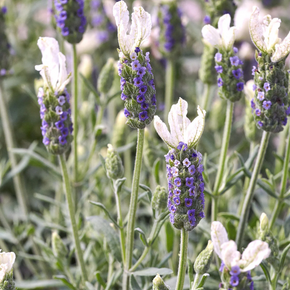
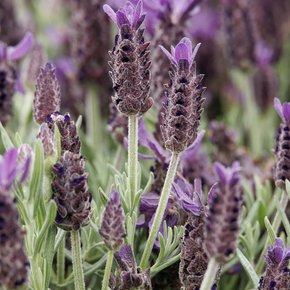
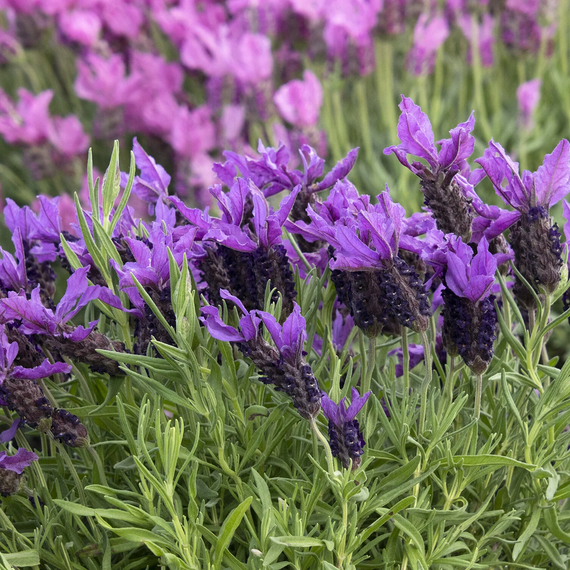
- Stunning deep purple flower spikes crowned with showy pinkish-purple rabbit-ear bracts bloom abundantly from mid-spring through early fall, providing months of vivid color.
- Exceptionally heat and drought tolerant once established, with improved cold hardiness and outstanding disease resistance compared to other Spanish lavender varieties.
- Compact, rounded mounding habit of richly fragrant silver-gray-green evergreen foliage makes it a standout in borders, rock gardens, cottage gardens, and patio containers.
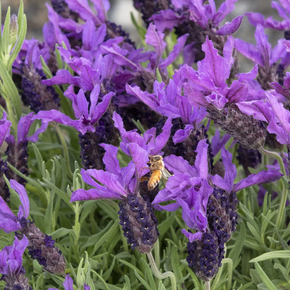
- A proven pollinator magnet that attracts bees and butterflies throughout the season, while its strong aromatic oils naturally deter deer and rabbits.
Lavandula stoechas Javelin Forte Deep Purple (PP #27,493) is a superior Syngenta-bred selection of Spanish lavender that raises the bar for the entire species with its vigorous, well-branched growth, exceptional disease resistance, and dramatically improved cold tolerance — reportedly sailing through temperatures as low as 11 degrees F in field trials. This early-flowering variety produces an abundance of fragrant, deep purple flower spikes topped by fluttering pinkish-purple bracts that rise above a tidy, rounded mound of aromatic silver-gray-green evergreen foliage from mid-spring all the way through early fall. Maturing at 14 to 20 inches tall and 12 to 18 inches wide, Javelin Forte Deep Purple Spanish Lavender is ideally sized for sunny perennial borders, coastal gardens, rock and gravel gardens, and mixed container plantings. Its extraordinary heat and drought tolerance, combined with the ability to handle cold and wet winter conditions better than most Spanish lavenders, makes it exceptionally well suited to the varied climates of Southern Oregon and Northern California, where it thrives in the long, warm, dry summers and mild-to-moderate winters of the region. The fragrant flowers are also excellent for cutting and drying, and the fine-textured silver foliage remains a handsome landscape feature year-round.
Plant Description
Javelin Forte Deep Purple is a dense, multi-stemmed evergreen shrub belonging to the Lamiaceae (mint) family. It is a select, patented cultivar (PP #27,493, sold under the trade name LABZ0004) from the Javelin Forte Series, bred in the Netherlands by Syngenta Flowers. The plant forms a tight, well-branched mound of narrow, linear, aromatic leaves in a soft silver-gray-green color. From mid-spring onward, it sends up numerous short, sturdy flower spikes, each bearing tightly packed, fragrant deep purple florets and topped by a cluster of showy, fluttering pinkish-purple sterile bracts — the distinctive "rabbit ears" that set Spanish lavender apart from other lavender species. The plant's lush texture and vivid two-tone flower display make it one of the most eye-catching lavenders available. Foliage remains evergreen through winter, giving the plant year-round landscape value. Its growth rate is moderate, and under ideal conditions it can live for approximately 10 years.
Mature Size
| Attribute | Measurement |
|---|---|
| Mature Height | 14 to 20 inches |
| Mature Width | 12 to 18 inches |
| Spacing (mass planting) | 12 to 16 inches apart |
| Growth Rate | Moderate |
| Time to Ultimate Size | 2 to 5 years |
Hardiness Zones and Cold Tolerance
Javelin Forte Deep Purple Spanish Lavender is hardy in USDA Zones 7 to 10, making it a reliable perennial throughout Southern Oregon and Northern California. It is notably more cold-hardy than typical Lavandula stoechas selections and has demonstrated survival at temperatures as low as 11 degrees F in documented trials — a remarkable feat for a Spanish lavender. It also tolerates cold, wet winter conditions better than most varieties in its class. In climates at the cooler edge of its hardiness range, planting in a sheltered, south- or west-facing location with excellent drainage will help ensure winter survival. In Zone 6 and colder, it is best grown as an annual or overwintered in containers indoors.
Sunlight Requirements
Javelin Forte Deep Purple thrives exclusively in full sun and should receive a minimum of 6 to 8 hours of direct sunlight per day. Adequate sun exposure is essential for producing the densest bloom display, maintaining the plant's compact mounded form, and ensuring the foliage develops its signature silver-gray color. Planting in too much shade will result in leggy, open growth, reduced flowering, and increased susceptibility to fungal issues. A south- or west-facing exposure in a sheltered spot is ideal in cooler coastal areas of Northern California. In the hotter inland valleys of Southern Oregon and Northern California, a location with full morning sun and light afternoon shade can be tolerated but is not required.
Soil and pH Preferences
This Spanish lavender performs best in lean, loose, fast-draining soils and will decline or rot in consistently wet or waterlogged conditions. It is well adapted to a range of soil types — from sandy and gravelly to loamy — as long as drainage is excellent. It is not particular about fertility and actually thrives in lower-nutrient soils, which is consistent with its Mediterranean origins. A slightly alkaline to neutral soil pH is preferred, generally in the range of 6.5 to 7.5. It is also notably tolerant of coastal salt conditions and urban pollution. Avoid heavy clay soils unless they are significantly amended with coarse sand or fine gravel to improve drainage. A gravel mulch around the crown helps keep moisture away from the base of the plant and reflects heat back upward, mimicking its native rocky hillside habitat.
Watering Guide
During the first growing season after planting, water regularly to help the root system establish — approximately once or twice per week depending on temperatures and soil type. Once established, Javelin Forte Deep Purple is considered drought tolerant and requires only occasional, deep watering. Allow the soil to go nearly dry between waterings, as overwatering is the most common cause of decline in lavender. Mature plants in Southern Oregon and Northern California typically need supplemental irrigation only during the driest summer months and perform very well on low-water or xeriscape irrigation schedules. Avoid overhead watering, which promotes fungal diseases; drip irrigation at the base of the plant is strongly preferred. Reduce watering frequency significantly in fall and winter.
Fertilizing
Javelin Forte Deep Purple Spanish Lavender is a light feeder and does not require heavy fertilization. Overly rich soil and excessive nitrogen will encourage lush, floppy growth at the expense of flowers and fragrance. A single light application of a balanced, slow-release fertilizer (such as a 10-10-10 granular formula) in early spring as new growth emerges is generally sufficient for the season. Alternatively, a light top-dressing of compost worked into the soil at planting time provides a gentle nutrient base. Avoid fertilizing in late summer or fall, as this can stimulate tender new growth that is susceptible to cold damage. If the plant is growing in poor, sandy soil, a second very light feeding in early summer may be beneficial.
Pruning and Maintenance
Regular light pruning keeps Javelin Forte Deep Purple compact, encourages a second flush of blooms, and extends the life of the plant considerably. The best times to prune are immediately after the main spring flush of blooms fades and again lightly in late summer or very early fall. Remove spent flower stems by cutting back to just above the topmost set of healthy foliage. A general light shaping can be done at any time during the growing season to maintain the rounded mound form. It is critical to avoid cutting back into old, woody growth below the green foliage zone, as lavender does not reliably regenerate from bare wood. Never cut below the lowest green leaves on any stem. In areas with wet winters, avoid heavy fall pruning, which can leave wounds susceptible to moisture and cold damage.
Planting Instructions
- Select a site in full sun with excellent soil drainage. If soil is heavy or compacted, amend generously with coarse sand, fine gravel, or pumice and work to a depth of at least 12 inches.
- Dig a planting hole approximately twice as wide as the root ball and no deeper than the root ball height.
- Position the plant so the crown sits slightly above the surrounding soil level to prevent moisture from pooling around the base.
- Backfill with the native soil or a lean, well-draining planting mix. Do not amend heavily with compost or rich organic matter.
- Water thoroughly at planting to settle the soil around the roots.
- Apply a 1 to 2 inch layer of fine gravel or pea gravel around the base as mulch, keeping it pulled slightly away from the crown. Avoid bark mulch, which retains too much moisture.
- Space plants 12 to 16 inches apart for mass plantings or border edging.
- Water on a regular schedule for the first growing season until established, then transition to a drought-tolerant watering schedule.
Seasonal Interest
Javelin Forte Deep Purple provides outstanding multi-season garden interest. In late winter and early spring, the compact mound of silver-gray-green foliage gives the garden a fresh, clean texture as many other plants are still dormant. Flower spikes begin emerging in mid-spring and bloom prolifically through early fall, providing months of vivid deep purple and pinkish-purple color — one of the longest bloom seasons of any lavender. Even when not in bloom, the aromatic, evergreen foliage maintains its silver-toned good looks through fall and winter. Some sources note that the fine needlelike foliage can take on attractive coppery-bronze tones in autumn, adding a warm note to the winter landscape. The persistent foliage texture makes it a valuable structural plant in the off-season garden as well.
Landscape Uses
- Sunny perennial borders and flower beds as a low-growing edging or mid-border accent
- Rock gardens and gravel or xeriscape gardens where drainage is naturally excellent
- Cottage and Mediterranean-style gardens
- Mass plantings for dramatic seasonal color drifts
- Low informal hedging or border definition
- Coastal gardens — tolerates salt air and wind well
- Hillside and slope plantings where erosion control and low maintenance are priorities
- Urban and courtyard gardens — highly tolerant of pollution and heat
- Cutting and drying gardens — flowers are excellent fresh-cut or dried for arrangements and potpourri
- Patio and container plantings — performs beautifully as a "filler" element in combination containers
Container Growing
Javelin Forte Deep Purple Spanish Lavender is an excellent choice for patio containers, window boxes, and large mixed planters. It works especially well as a fragrant "filler" element in the classic thriller-filler-spiller container design, providing a dense mound of textural silver foliage and vibrant purple flowers that set off bold thriller plants beautifully. Choose a container with multiple large drainage holes and use a very well-draining potting mix — consider blending a quality potting soil with 20 to 30 percent perlite or coarse grit to improve drainage. Container-grown plants will require more frequent watering than those in the ground, but allow the top inch or two of soil to dry out before watering again. Fertilize lightly once in spring with a slow-release balanced fertilizer. Repot into a slightly larger container every 2 to 3 years as needed. In borderline cold zones, containers can be moved to a sheltered, frost-free location for winter protection.
Wildlife Value and Pollinator Appeal
Javelin Forte Deep Purple is an exceptional pollinator plant and has been recognized as a "Plants for Pollinators" selection. Its long bloom season — from mid-spring through early fall — provides a continuous and highly valuable nectar and pollen source for honeybees, native bumblebees, solitary bees, and a wide range of butterfly species. The flowers are particularly attractive to western bumble bees and other specialist lavender-foraging pollinators common throughout Southern Oregon and Northern California. Unlike many flowering shrubs, this lavender's fragrant oils make it highly unappealing to deer and rabbits, so it typically goes unbrowsed even in landscapes where deer pressure is heavy. It is also generally avoided by most common garden pests, making it a naturally low-maintenance wildlife-friendly choice.
Companion Plants
Javelin Forte Deep Purple pairs beautifully with other plants that share its preference for full sun, lean soil, and low to moderate water. The silver-gray foliage and deep purple flowers create stunning combinations with a wide range of colors and textures. Consider the following companions:
- Rosemary (Salvia rosmarinus) — similar cultural needs, complementary silver-green foliage and blue flowers
- Yarrow (Achillea millefolium) — drought tolerant, comes in gold, white, and coral tones that pop against purple lavender
- Russian Sage (Perovskia atriplicifolia) — tall, airy purple-blue spikes that echo the lavender color palette
- Catmint (Nepeta spp.) — soft purple-blue flowers, similar low-water needs, great border companion
- Ornamental grasses such as blue fescue (Festuca glauca) — echo the silver-blue foliage tones
- Echinacea (coneflower) — bold pink or white blooms contrast beautifully with lavender purple
- Cistus (rockrose) — Mediterranean shrub with similar drainage and sun requirements
- Santolina — silver foliage texture that complements and echoes lavender's hues
- Salvia species — drought tolerant, pollinator friendly, and visually harmonious in color
- Sedum (Hylotelephium) — low water, late-season color to extend the display into fall
Pests and Diseases
Javelin Forte Deep Purple Spanish Lavender is notably disease resistant — a key trait that distinguishes it from many other Spanish lavender varieties. However, as with all lavenders, some issues can arise, especially when cultural conditions are not optimal:
- Root rot: The most serious threat, caused by overwatering or poorly draining soil. Ensure excellent drainage and avoid standing water around the crown at all times.
- Gray mold (Botrytis cinerea): Can occur in overly humid conditions or with overhead irrigation. Improve air circulation and avoid wetting foliage when watering.
- Rosemary beetle (Chrysolina americana): A pest that may feed on foliage in some regions; handpick adults and larvae if observed.
- Spittlebug (froghopper nymphs): May produce small frothy masses on stems; rarely cause serious damage and can be dislodged with a sharp stream of water.
- Honey fungus: Rare but possible in soils with decaying woody material; remove affected plants and improve drainage.
Overall, when grown in full sun with fast-draining soil and appropriate watering, Javelin Forte Deep Purple remains largely trouble-free throughout the season.
Fragrance and Cut Flower Use
Javelin Forte Deep Purple Spanish Lavender is prized for its richly aromatic qualities. Both the flowers and the foliage are intensely fragrant, releasing their signature lavender scent when touched or brushed. The fragrance is characteristic of the stoechas species — somewhat more camphorous and resinous than the sweeter scent of English lavender (Lavandula angustifolia), with bold herbal undertones. The long flower spikes are excellent for cutting and can be used fresh in floral arrangements, where they add both color and fragrance. For drying, cut stems just as the flower spikes are fully open but before the bracts begin to fade; bundle loosely and hang upside down in a warm, well-ventilated space. Dried sprigs and flowers retain their fragrance well and can be used in potpourri, sachets, wreaths, and dried arrangements. The aromatic foliage can also be used in culinary applications, though the stoechas species is considered more potent and less sweet than culinary English lavender varieties.
- Stunning deep purple flower spikes crowned with showy pinkish-purple rabbit-ear bracts bloom abundantly from mid-spring through early fall, providing months of vivid color.
- Exceptionally heat and drought tolerant once established, with improved cold hardiness and outstanding disease resistance compared to other Spanish lavender varieties.
- Compact, rounded mounding habit of richly fragrant silver-gray-green evergreen foliage makes it a standout in borders, rock gardens, cottage gardens, and patio containers.
- A proven pollinator magnet that attracts bees and butterflies throughout the season, while its strong aromatic oils naturally deter deer and rabbits.
Lavandula stoechas Javelin Forte Deep Purple (PP #27,493) is a superior Syngenta-bred selection of Spanish lavender that raises the bar for the entire species with its vigorous, well-branched growth, exceptional disease resistance, and dramatically improved cold tolerance — reportedly sailing through temperatures as low as 11 degrees F in field trials. This early-flowering variety produces an abundance of fragrant, deep purple flower spikes topped by fluttering pinkish-purple bracts that rise above a tidy, rounded mound of aromatic silver-gray-green evergreen foliage from mid-spring all the way through early fall. Maturing at 14 to 20 inches tall and 12 to 18 inches wide, Javelin Forte Deep Purple Spanish Lavender is ideally sized for sunny perennial borders, coastal gardens, rock and gravel gardens, and mixed container plantings. Its extraordinary heat and drought tolerance, combined with the ability to handle cold and wet winter conditions better than most Spanish lavenders, makes it exceptionally well suited to the varied climates of Southern Oregon and Northern California, where it thrives in the long, warm, dry summers and mild-to-moderate winters of the region. The fragrant flowers are also excellent for cutting and drying, and the fine-textured silver foliage remains a handsome landscape feature year-round.
Plant Description
Javelin Forte Deep Purple is a dense, multi-stemmed evergreen shrub belonging to the Lamiaceae (mint) family. It is a select, patented cultivar (PP #27,493, sold under the trade name LABZ0004) from the Javelin Forte Series, bred in the Netherlands by Syngenta Flowers. The plant forms a tight, well-branched mound of narrow, linear, aromatic leaves in a soft silver-gray-green color. From mid-spring onward, it sends up numerous short, sturdy flower spikes, each bearing tightly packed, fragrant deep purple florets and topped by a cluster of showy, fluttering pinkish-purple sterile bracts — the distinctive "rabbit ears" that set Spanish lavender apart from other lavender species. The plant's lush texture and vivid two-tone flower display make it one of the most eye-catching lavenders available. Foliage remains evergreen through winter, giving the plant year-round landscape value. Its growth rate is moderate, and under ideal conditions it can live for approximately 10 years.
Mature Size
| Attribute | Measurement |
|---|---|
| Mature Height | 14 to 20 inches |
| Mature Width | 12 to 18 inches |
| Spacing (mass planting) | 12 to 16 inches apart |
| Growth Rate | Moderate |
| Time to Ultimate Size | 2 to 5 years |
Hardiness Zones and Cold Tolerance
Javelin Forte Deep Purple Spanish Lavender is hardy in USDA Zones 7 to 10, making it a reliable perennial throughout Southern Oregon and Northern California. It is notably more cold-hardy than typical Lavandula stoechas selections and has demonstrated survival at temperatures as low as 11 degrees F in documented trials — a remarkable feat for a Spanish lavender. It also tolerates cold, wet winter conditions better than most varieties in its class. In climates at the cooler edge of its hardiness range, planting in a sheltered, south- or west-facing location with excellent drainage will help ensure winter survival. In Zone 6 and colder, it is best grown as an annual or overwintered in containers indoors.
Sunlight Requirements
Javelin Forte Deep Purple thrives exclusively in full sun and should receive a minimum of 6 to 8 hours of direct sunlight per day. Adequate sun exposure is essential for producing the densest bloom display, maintaining the plant's compact mounded form, and ensuring the foliage develops its signature silver-gray color. Planting in too much shade will result in leggy, open growth, reduced flowering, and increased susceptibility to fungal issues. A south- or west-facing exposure in a sheltered spot is ideal in cooler coastal areas of Northern California. In the hotter inland valleys of Southern Oregon and Northern California, a location with full morning sun and light afternoon shade can be tolerated but is not required.
Soil and pH Preferences
This Spanish lavender performs best in lean, loose, fast-draining soils and will decline or rot in consistently wet or waterlogged conditions. It is well adapted to a range of soil types — from sandy and gravelly to loamy — as long as drainage is excellent. It is not particular about fertility and actually thrives in lower-nutrient soils, which is consistent with its Mediterranean origins. A slightly alkaline to neutral soil pH is preferred, generally in the range of 6.5 to 7.5. It is also notably tolerant of coastal salt conditions and urban pollution. Avoid heavy clay soils unless they are significantly amended with coarse sand or fine gravel to improve drainage. A gravel mulch around the crown helps keep moisture away from the base of the plant and reflects heat back upward, mimicking its native rocky hillside habitat.
Watering Guide
During the first growing season after planting, water regularly to help the root system establish — approximately once or twice per week depending on temperatures and soil type. Once established, Javelin Forte Deep Purple is considered drought tolerant and requires only occasional, deep watering. Allow the soil to go nearly dry between waterings, as overwatering is the most common cause of decline in lavender. Mature plants in Southern Oregon and Northern California typically need supplemental irrigation only during the driest summer months and perform very well on low-water or xeriscape irrigation schedules. Avoid overhead watering, which promotes fungal diseases; drip irrigation at the base of the plant is strongly preferred. Reduce watering frequency significantly in fall and winter.
Fertilizing
Javelin Forte Deep Purple Spanish Lavender is a light feeder and does not require heavy fertilization. Overly rich soil and excessive nitrogen will encourage lush, floppy growth at the expense of flowers and fragrance. A single light application of a balanced, slow-release fertilizer (such as a 10-10-10 granular formula) in early spring as new growth emerges is generally sufficient for the season. Alternatively, a light top-dressing of compost worked into the soil at planting time provides a gentle nutrient base. Avoid fertilizing in late summer or fall, as this can stimulate tender new growth that is susceptible to cold damage. If the plant is growing in poor, sandy soil, a second very light feeding in early summer may be beneficial.
Pruning and Maintenance
Regular light pruning keeps Javelin Forte Deep Purple compact, encourages a second flush of blooms, and extends the life of the plant considerably. The best times to prune are immediately after the main spring flush of blooms fades and again lightly in late summer or very early fall. Remove spent flower stems by cutting back to just above the topmost set of healthy foliage. A general light shaping can be done at any time during the growing season to maintain the rounded mound form. It is critical to avoid cutting back into old, woody growth below the green foliage zone, as lavender does not reliably regenerate from bare wood. Never cut below the lowest green leaves on any stem. In areas with wet winters, avoid heavy fall pruning, which can leave wounds susceptible to moisture and cold damage.
Planting Instructions
- Select a site in full sun with excellent soil drainage. If soil is heavy or compacted, amend generously with coarse sand, fine gravel, or pumice and work to a depth of at least 12 inches.
- Dig a planting hole approximately twice as wide as the root ball and no deeper than the root ball height.
- Position the plant so the crown sits slightly above the surrounding soil level to prevent moisture from pooling around the base.
- Backfill with the native soil or a lean, well-draining planting mix. Do not amend heavily with compost or rich organic matter.
- Water thoroughly at planting to settle the soil around the roots.
- Apply a 1 to 2 inch layer of fine gravel or pea gravel around the base as mulch, keeping it pulled slightly away from the crown. Avoid bark mulch, which retains too much moisture.
- Space plants 12 to 16 inches apart for mass plantings or border edging.
- Water on a regular schedule for the first growing season until established, then transition to a drought-tolerant watering schedule.
Seasonal Interest
Javelin Forte Deep Purple provides outstanding multi-season garden interest. In late winter and early spring, the compact mound of silver-gray-green foliage gives the garden a fresh, clean texture as many other plants are still dormant. Flower spikes begin emerging in mid-spring and bloom prolifically through early fall, providing months of vivid deep purple and pinkish-purple color — one of the longest bloom seasons of any lavender. Even when not in bloom, the aromatic, evergreen foliage maintains its silver-toned good looks through fall and winter. Some sources note that the fine needlelike foliage can take on attractive coppery-bronze tones in autumn, adding a warm note to the winter landscape. The persistent foliage texture makes it a valuable structural plant in the off-season garden as well.
Landscape Uses
- Sunny perennial borders and flower beds as a low-growing edging or mid-border accent
- Rock gardens and gravel or xeriscape gardens where drainage is naturally excellent
- Cottage and Mediterranean-style gardens
- Mass plantings for dramatic seasonal color drifts
- Low informal hedging or border definition
- Coastal gardens — tolerates salt air and wind well
- Hillside and slope plantings where erosion control and low maintenance are priorities
- Urban and courtyard gardens — highly tolerant of pollution and heat
- Cutting and drying gardens — flowers are excellent fresh-cut or dried for arrangements and potpourri
- Patio and container plantings — performs beautifully as a "filler" element in combination containers
Container Growing
Javelin Forte Deep Purple Spanish Lavender is an excellent choice for patio containers, window boxes, and large mixed planters. It works especially well as a fragrant "filler" element in the classic thriller-filler-spiller container design, providing a dense mound of textural silver foliage and vibrant purple flowers that set off bold thriller plants beautifully. Choose a container with multiple large drainage holes and use a very well-draining potting mix — consider blending a quality potting soil with 20 to 30 percent perlite or coarse grit to improve drainage. Container-grown plants will require more frequent watering than those in the ground, but allow the top inch or two of soil to dry out before watering again. Fertilize lightly once in spring with a slow-release balanced fertilizer. Repot into a slightly larger container every 2 to 3 years as needed. In borderline cold zones, containers can be moved to a sheltered, frost-free location for winter protection.
Wildlife Value and Pollinator Appeal
Javelin Forte Deep Purple is an exceptional pollinator plant and has been recognized as a "Plants for Pollinators" selection. Its long bloom season — from mid-spring through early fall — provides a continuous and highly valuable nectar and pollen source for honeybees, native bumblebees, solitary bees, and a wide range of butterfly species. The flowers are particularly attractive to western bumble bees and other specialist lavender-foraging pollinators common throughout Southern Oregon and Northern California. Unlike many flowering shrubs, this lavender's fragrant oils make it highly unappealing to deer and rabbits, so it typically goes unbrowsed even in landscapes where deer pressure is heavy. It is also generally avoided by most common garden pests, making it a naturally low-maintenance wildlife-friendly choice.
Companion Plants
Javelin Forte Deep Purple pairs beautifully with other plants that share its preference for full sun, lean soil, and low to moderate water. The silver-gray foliage and deep purple flowers create stunning combinations with a wide range of colors and textures. Consider the following companions:
- Rosemary (Salvia rosmarinus) — similar cultural needs, complementary silver-green foliage and blue flowers
- Yarrow (Achillea millefolium) — drought tolerant, comes in gold, white, and coral tones that pop against purple lavender
- Russian Sage (Perovskia atriplicifolia) — tall, airy purple-blue spikes that echo the lavender color palette
- Catmint (Nepeta spp.) — soft purple-blue flowers, similar low-water needs, great border companion
- Ornamental grasses such as blue fescue (Festuca glauca) — echo the silver-blue foliage tones
- Echinacea (coneflower) — bold pink or white blooms contrast beautifully with lavender purple
- Cistus (rockrose) — Mediterranean shrub with similar drainage and sun requirements
- Santolina — silver foliage texture that complements and echoes lavender's hues
- Salvia species — drought tolerant, pollinator friendly, and visually harmonious in color
- Sedum (Hylotelephium) — low water, late-season color to extend the display into fall
Pests and Diseases
Javelin Forte Deep Purple Spanish Lavender is notably disease resistant — a key trait that distinguishes it from many other Spanish lavender varieties. However, as with all lavenders, some issues can arise, especially when cultural conditions are not optimal:
- Root rot: The most serious threat, caused by overwatering or poorly draining soil. Ensure excellent drainage and avoid standing water around the crown at all times.
- Gray mold (Botrytis cinerea): Can occur in overly humid conditions or with overhead irrigation. Improve air circulation and avoid wetting foliage when watering.
- Rosemary beetle (Chrysolina americana): A pest that may feed on foliage in some regions; handpick adults and larvae if observed.
- Spittlebug (froghopper nymphs): May produce small frothy masses on stems; rarely cause serious damage and can be dislodged with a sharp stream of water.
- Honey fungus: Rare but possible in soils with decaying woody material; remove affected plants and improve drainage.
Overall, when grown in full sun with fast-draining soil and appropriate watering, Javelin Forte Deep Purple remains largely trouble-free throughout the season.
Fragrance and Cut Flower Use
Javelin Forte Deep Purple Spanish Lavender is prized for its richly aromatic qualities. Both the flowers and the foliage are intensely fragrant, releasing their signature lavender scent when touched or brushed. The fragrance is characteristic of the stoechas species — somewhat more camphorous and resinous than the sweeter scent of English lavender (Lavandula angustifolia), with bold herbal undertones. The long flower spikes are excellent for cutting and can be used fresh in floral arrangements, where they add both color and fragrance. For drying, cut stems just as the flower spikes are fully open but before the bracts begin to fade; bundle loosely and hang upside down in a warm, well-ventilated space. Dried sprigs and flowers retain their fragrance well and can be used in potpourri, sachets, wreaths, and dried arrangements. The aromatic foliage can also be used in culinary applications, though the stoechas species is considered more potent and less sweet than culinary English lavender varieties.