

Zoom the image with the mouse
Javelin Forte Deep Purple Spanish Lavender - 1 Gallon
SKU:
1831440
UPC:
014949443446
$14.99
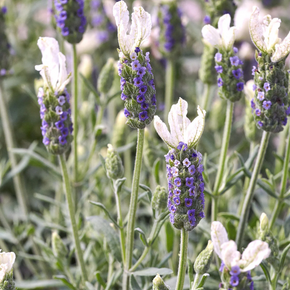
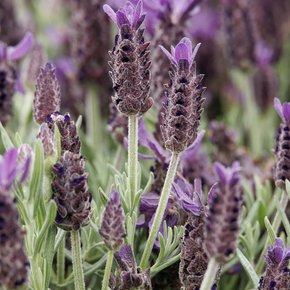
- Exceptionally showy deep purple flower spikes crowned with fluttering pinkish-purple bracts bloom prolifically from mid-spring through early fall, making this one of the longest-blooming Spanish lavenders available.
- Robust, well-branched mounding habit with intensely fragrant gray-green evergreen foliage delivers year-round color, texture, and aroma in the landscape or container.
- Outstanding heat, drought, and coastal salt tolerance combined with better cold and wet winter resilience than most Spanish lavenders makes it a true carefree performer in Western gardens.
- Naturally deer resistant and a powerful magnet for bees and butterflies, delivering beauty and pollinator value with minimal maintenance required.
Javelin Forte Deep Purple Spanish Lavender (Lavandula stoechas 'Javelin Forte Deep Purple') is a premium, vegetatively propagated selection from the Netherlands that sets a new standard for Spanish lavender performance in the garden. Developed by Syngenta Flowers as part of the award-winning Javelin Forte series, this compact evergreen subshrub produces a profusion of bold, deep purple flower spikes adorned with distinctive flag-like pinkish-purple sterile bracts that flutter in the breeze from mid-spring through early fall — an extended bloom season that far surpasses many comparable lavenders. The densely mounded, well-branched plant habit is draped in beautifully fragrant, silvery gray-green needle-like foliage that provides elegant texture and a cool contrast to hot-toned neighbors all season long, with foliage shifting to warm coppery-bronze tones in autumn for added seasonal interest. Maturing at approximately 14 to 20 inches tall and 15 to 18 inches wide, Javelin Forte Deep Purple is ideally scaled for front-of-border plantings, rock and alpine gardens, mass plantings, coastal exposures, hillside erosion control, cutting gardens, xeriscape designs, and stunning patio containers. It thrives in full sun with lean, fast-draining soil and, once established, tolerates moderate drought with ease — an exceptional quality for the dry summers of Southern Oregon and Northern California. Its exceptional resistance to deer, tolerance of urban pollution, coastal salt adaptability, and improved resistance to cold and wet winter conditions round out an impressive list of attributes that make this one of the most versatile and rewarding lavenders for Western gardeners.
Plant Description
Javelin Forte Deep Purple Spanish Lavender is a dense, multi-stemmed evergreen subshrub with a naturally rounded, mounding form. It belongs to the species Lavandula stoechas, commonly known as Spanish Lavender, and is distinguished from other lavender types by its distinctive pineapple-shaped flower heads topped with showy, flag-like sterile bracts. The Javelin Forte Deep Purple selection produces unusually large, richly colored deep purple flower spikes with fluttering pinkish-purple to deep purple bracts that create a striking visual display. The fine-textured, needle-like foliage is a soft silvery gray-green color, highly aromatic, and holds attractively year-round. Foliage may take on coppery-bronze tones in cooler fall weather, adding a secondary season of interest. This cultivar holds a U.S. Plant Patent (PP 27,493) and represents one of the most robust and floriferous selections in the Spanish lavender category.
Mature Size
| Attribute | Measurement |
|---|---|
| Mature Height | 14 to 20 inches |
| Mature Spread | 15 to 18 inches |
| Growth Rate | Slow to medium |
| Plant Habit | Dense, rounded mound; fills in to the ground |
| Spacing (mass planting) | Approximately 12 inches apart |
| Expected Lifespan | Approximately 10 years under ideal conditions |
Hardiness Zones
Javelin Forte Deep Purple Spanish Lavender is hardy in USDA Zones 7 through 10, making it an excellent perennial choice for Southern Oregon and Northern California where winters are mild to moderate. In Zone 7, plants appreciate a well-drained site and slight protection from prolonged wet, cold conditions. This variety has been specifically noted for improved tolerance of cold and wet winter conditions compared to many other Spanish lavender selections, giving it an edge in borderline climates. In colder zones (below Zone 7), it can be grown successfully as a container plant that is overwintered in a protected, frost-free location. In the warmest parts of its range (Zones 9-10), it performs as a reliable, long-lived evergreen perennial.
Sunlight Requirements
Javelin Forte Deep Purple Spanish Lavender demands full sun for best performance — a minimum of 6 to 8 hours of direct sunlight per day is essential. Full sun promotes the densest plant habit, the most abundant flowering, and the richest fragrance. In the hottest inland microclimates of Northern California, light afternoon shade may be tolerated without significantly impacting bloom, but consistently shaded locations will result in stretched, weak growth, reduced flowering, and increased susceptibility to root and stem diseases. Coastal sites with bright, reflective light are ideal. This is emphatically a sun-loving Mediterranean plant — do not attempt to grow it in shaded or partially shaded positions.
Soil and pH Preferences
Like all lavenders, Javelin Forte Deep Purple thrives in lean, loose, and fast-draining soils and will decline or die in heavy clay or waterlogged conditions. It performs best in soils that dry out between watering cycles. A slightly alkaline to neutral soil pH in the range of 6.5 to 7.5 is preferred, though it can adapt to a moderately wide pH range. Key soil requirements include:
- Excellent drainage is non-negotiable — amend heavy clay soils with coarse sand, pea gravel, or pumice before planting.
- Lean, low-fertility soil is preferred over rich, amended beds, which can promote lush, floppy growth prone to disease.
- A gravel or crushed rock mulch around the base of the plant helps reflect heat, keep the crown dry, and replicate its native Mediterranean hillside habitat.
- Avoid planting in areas where water pools or where irrigation sprinklers keep the foliage and crown consistently wet.
- The plant has good tolerance for salty soils and environmental salt spray, making it well suited for coastal garden conditions.
Watering Guide
Proper watering is one of the most important factors in successfully growing Javelin Forte Deep Purple Spanish Lavender. Overwatering is the most common cause of decline and death in lavenders.
- At planting and during establishment (first growing season): Water regularly to help the root system establish. Aim to keep the root zone consistently moist but never saturated. Check the soil before each irrigation and allow the top inch or two to dry between waterings.
- Once established: Reduce watering frequency significantly. Established plants tolerate moderate drought and thrive with deep, infrequent irrigation. In Southern Oregon and Northern California, supplemental irrigation during the dry summer months is beneficial for promoting extended bloom, but allow the soil to dry between cycles.
- Winter watering: Reduce watering substantially in fall and winter. Wet, cold soil over winter is one of the primary causes of root rot in Spanish lavenders.
- Avoid overhead irrigation: Water at the base of the plant rather than overhead to keep foliage and the crown dry, which reduces the risk of fungal diseases.
Fertilizing
Javelin Forte Deep Purple Spanish Lavender is not a heavy feeder and actually performs best in lean soils with minimal fertilization. Over-fertilizing, especially with high-nitrogen products, encourages excessive leafy growth at the expense of flowers and can make plants floppy and more disease-prone.
- At planting time, incorporate a small amount of low-nitrogen, phosphorus-rich starter fertilizer (such as a granular 4-3-3 or similar bio-based formula) to support initial root development and reduce transplant stress.
- For established plants, a single light application of a balanced, slow-release granular fertilizer in early spring as new growth begins is generally sufficient for the entire growing season.
- Avoid fertilizing in late summer or fall, as this can stimulate tender new growth that is vulnerable to cold damage.
- If the plant is growing in lean, fast-draining soil as recommended, modest annual feeding will keep it healthy and flowering well without promoting weak, floppy growth.
Pruning and Maintenance
Regular light pruning keeps Javelin Forte Deep Purple Spanish Lavender compact, tidy, and vigorously blooming season after season. Proper pruning technique is key, as lavenders do not reliably regenerate from old wood.
- After each bloom flush: Lightly trim spent flower stems back by about one-third to encourage branching and the next round of blooms.
- Primary annual pruning: After the main bloom period or in early spring before new growth begins, trim the plant back by up to one-third of its overall height to maintain a tidy, mounded form. Shape into a rounded dome to prevent the plant from becoming woody and open in the center.
- Avoid cutting into old, woody, leafless stems, as Spanish lavender does not readily regenerate from bare wood — always leave some green foliage on any stem you prune.
- This variety is noted as being prunable at any time of year if light shaping is needed, making it easy to manage.
- Remove any dead or damaged stems promptly to maintain plant health and appearance.
- No deadheading is required for re-bloom, but removing spent flower spikes improves the plant's appearance and encourages faster development of new blooms.
Planting Instructions
- Select a site with full sun (6 to 8 or more hours daily) and excellent soil drainage. Raised beds, slopes, or berms are ideal in heavier soils.
- If planting in clay or compacted soil, amend generously with coarse sand, pea gravel, or pumice to improve drainage before planting.
- Dig a hole approximately twice as wide as the root ball and just as deep — do not plant deeper than the original soil level.
- Set the plant so that the crown sits slightly above the surrounding soil grade to promote drainage away from the base and prevent rot.
- Backfill with the native soil (amended if needed) and firm gently around the root ball.
- Apply a 1- to 2-inch layer of gravel or crushed rock as mulch around the base — avoid organic mulches piled against the crown, which can trap moisture and promote rot.
- Water in thoroughly after planting and continue with a regular establishment watering schedule for the first growing season.
- For mass plantings, space plants approximately 12 inches apart for a dense, continuous effect.
Bloom Season and Seasonal Interest
Javelin Forte Deep Purple Spanish Lavender is one of the earliest-blooming Spanish lavenders, kicking off its spectacular display in mid-spring. Its exceptionally long bloom season is a defining characteristic of this cultivar:
- Mid-Spring through Early Fall: Masses of deep purple flower spikes tipped with fluttering pinkish-purple bracts create a bold, long-lasting floral display spanning late April or May through September in most of its range.
- Summer: Peak bloom occurs in late spring through summer; the plant continues to produce successive flushes of flowers, especially with light pruning after each bloom cycle.
- Fall: As temperatures cool, the fragrant gray-green foliage may shift to appealing coppery-bronze tones that persist into winter.
- Winter: The plant remains evergreen, providing year-round structure, foliage interest, and fragrance even when not in active bloom.
- Flowers are excellent for fresh cutting and can also be harvested and dried for use in sachets, wreaths, and floral arrangements.
Landscape Uses
The compact size, extended bloom season, and tough constitution of Javelin Forte Deep Purple Spanish Lavender make it one of the most versatile plants in the Western garden. Recommended uses include:
- Border edging and front-of-border plantings — its naturally mounding, ground-hugging habit needs no facer plants in front.
- Mass plantings — breathtaking when planted in drifts of three or more; creates sweeping waves of deep purple color.
- Rock and alpine gardens — thrives in the lean, fast-draining conditions typical of rock garden settings.
- Cottage and Mediterranean-style gardens — a natural fit for drought-adapted garden designs with rosemary, salvia, and ornamental grasses.
- Containers and patio pots — works beautifully as a filler element in mixed container designs, and can be maintained as a standalone specimen in a terracotta or unglazed pot with a well-draining mix.
- Hillside and slope plantings — the deep root system provides erosion control on dry slopes.
- Coastal gardens — tolerates salt spray and sandy soils along the coast.
- Cutting gardens — fragrant, long-lasting spikes are excellent for fresh and dried floral arrangements.
- Xeriscape and water-wise gardens — once established, requires minimal supplemental irrigation.
- Urban gardens — highly tolerant of air pollution and urban environmental stresses.
Companion Plants
Javelin Forte Deep Purple Spanish Lavender pairs beautifully with other drought-tolerant, sun-loving Mediterranean and Western garden plants that share its preference for fast-draining, lean soil. Consider combining it with:
- Salvia (Ornamental Sage) — shares the same cultural requirements and provides complementary flower colors in blues, purples, reds, and pinks.
- Rosmarinus / Salvia rosmarinus (Rosemary) — a natural companion with similar Mediterranean origins, fragrance, and care needs.
- Cistus (Rock Rose) — another Mediterranean native with showy blooms and excellent drought tolerance.
- Nepeta (Catmint) — soft, billowing blue-purple flowers complement lavender's form and color palette.
- Festuca glauca (Blue Fescue) — fine-textured blue foliage provides a beautiful foil to lavender's gray-green mounds.
- Echinacea (Coneflower) — bold, daisy-like blooms contrast well with lavender's fine texture and similar pollinator appeal.
- Achillea (Yarrow) — flat-topped flowers in golds, creams, and pinks contrast beautifully with lavender spikes.
- Penstemon — Western native with similar drought tolerance and complementary tubular flowers beloved by hummingbirds and bees.
- Ornamental grasses such as Nassella tenuissima (Mexican Feather Grass) or Pennisetum provide movement and textural contrast.
Wildlife Value
Javelin Forte Deep Purple Spanish Lavender is an outstanding plant for supporting local wildlife and pollinators in the Western garden:
- Bees: A premier nectar and pollen source for honeybees, bumblebees, and a wide variety of native solitary bees. The long bloom season provides food resources from spring through early fall.
- Butterflies: The nectar-rich flowers are highly attractive to a range of butterfly species, making this plant a valuable addition to pollinator gardens.
- Beneficial insects: The flowers also attract beneficial predatory and parasitic insects that help control common garden pests.
- Deer resistance: The intense aromatic fragrance of the foliage and flowers is highly repellent to deer, making it one of the most reliable deer-resistant plants for gardens in deer-pressure areas of Southern Oregon and Northern California.
- Rabbits: Similarly, the strong fragrance tends to deter rabbits from browsing on the plant.
Pests and Diseases
Javelin Forte Deep Purple Spanish Lavender has excellent disease resistance and is noted as one of the more robust selections in the Spanish lavender category. When grown in appropriate conditions — full sun and fast-draining soil — it has very few serious pest or disease problems. Be aware of the following:
- Root rot (Phytophthora, Pythium): The most common cause of decline in lavenders. Almost always caused by overwatering, poor drainage, or heavy clay soils. Prevent by planting in well-drained soil, avoiding overwatering, and keeping the crown dry.
- Botrytis (Gray Mold): Can affect plants in overly wet, humid, or overcrowded conditions. Ensure good air circulation and avoid overhead irrigation.
- Aphids: Occasionally cluster on new shoot tips. Knock off with a strong stream of water or treat with insecticidal soap if infestations are significant.
- Spider Mites: More common in hot, dry inland locations. Regular monitoring and overhead misting can deter mites; treat with horticultural oil or insecticidal soap if needed.
- Whiteflies: Occasionally a pest in warm climates. Yellow sticky traps and insecticidal soap are effective management tools.
- Spittlebug (Froghopper): The frothy "spit" masses on stems in early summer are unsightly but rarely cause serious harm; wash off with water.
Container Growing
Javelin Forte Deep Purple Spanish Lavender is exceptionally well-suited for container culture, making it a popular choice for patio pots, deck containers, and courtyard planters:
- Container selection: Choose a container with ample drainage holes. Unglazed terra cotta is ideal as it is porous and helps prevent overwatering. The pot should be at least 10 to 12 inches in diameter to accommodate mature root development.
- Potting mix: Use a fast-draining, high-quality potting mix blended with 20 to 30 percent perlite, coarse sand, or pumice to ensure excellent drainage. Avoid dense, moisture-retentive mixes.
- Placement: Position in the sunniest available spot — at least 6 to 8 hours of direct sun is needed for good flowering.
- Watering in containers: Containers dry out more quickly than garden beds. Check soil moisture regularly and water when the top inch of the mix is dry. Never allow the pot to sit in a saucer of standing water.
- Fertilizing in containers: Apply a dilute, balanced liquid fertilizer monthly during the growing season, as nutrients leach out faster in containers than in garden beds.
- Winter care in containers: In Zone 7 and colder, move containers to a protected but bright, frost-free location during winter months. In Zones 8 to 10, containers can remain outdoors year-round in a sheltered spot.
Fragrance and Cut Flower Use
Fragrance is one of the most beloved qualities of Javelin Forte Deep Purple Spanish Lavender. Both the foliage and flowers are intensely aromatic, releasing a classic, camphorous-sweet lavender scent when touched or brushed. The fragrance is strong enough to be noticeable in the garden without physical contact on warm, sunny days. This makes it an outstanding choice near walkways, garden paths, patios, or entryways where visitors will enjoy the scent as they pass.
The flower spikes are excellent for cutting. For longest vase life, cut stems early in the morning when flowers are just beginning to open. Bunches dry easily and retain their color and fragrance well for use in dried arrangements, wreaths, sachets, potpourri, and lavender wands. Harvest for drying before flowers are fully open for the best color and longest-lasting fragrance retention.
- Exceptionally showy deep purple flower spikes crowned with fluttering pinkish-purple bracts bloom prolifically from mid-spring through early fall, making this one of the longest-blooming Spanish lavenders available.
- Robust, well-branched mounding habit with intensely fragrant gray-green evergreen foliage delivers year-round color, texture, and aroma in the landscape or container.
- Outstanding heat, drought, and coastal salt tolerance combined with better cold and wet winter resilience than most Spanish lavenders makes it a true carefree performer in Western gardens.
- Naturally deer resistant and a powerful magnet for bees and butterflies, delivering beauty and pollinator value with minimal maintenance required.
Javelin Forte Deep Purple Spanish Lavender (Lavandula stoechas 'Javelin Forte Deep Purple') is a premium, vegetatively propagated selection from the Netherlands that sets a new standard for Spanish lavender performance in the garden. Developed by Syngenta Flowers as part of the award-winning Javelin Forte series, this compact evergreen subshrub produces a profusion of bold, deep purple flower spikes adorned with distinctive flag-like pinkish-purple sterile bracts that flutter in the breeze from mid-spring through early fall — an extended bloom season that far surpasses many comparable lavenders. The densely mounded, well-branched plant habit is draped in beautifully fragrant, silvery gray-green needle-like foliage that provides elegant texture and a cool contrast to hot-toned neighbors all season long, with foliage shifting to warm coppery-bronze tones in autumn for added seasonal interest. Maturing at approximately 14 to 20 inches tall and 15 to 18 inches wide, Javelin Forte Deep Purple is ideally scaled for front-of-border plantings, rock and alpine gardens, mass plantings, coastal exposures, hillside erosion control, cutting gardens, xeriscape designs, and stunning patio containers. It thrives in full sun with lean, fast-draining soil and, once established, tolerates moderate drought with ease — an exceptional quality for the dry summers of Southern Oregon and Northern California. Its exceptional resistance to deer, tolerance of urban pollution, coastal salt adaptability, and improved resistance to cold and wet winter conditions round out an impressive list of attributes that make this one of the most versatile and rewarding lavenders for Western gardeners.
Plant Description
Javelin Forte Deep Purple Spanish Lavender is a dense, multi-stemmed evergreen subshrub with a naturally rounded, mounding form. It belongs to the species Lavandula stoechas, commonly known as Spanish Lavender, and is distinguished from other lavender types by its distinctive pineapple-shaped flower heads topped with showy, flag-like sterile bracts. The Javelin Forte Deep Purple selection produces unusually large, richly colored deep purple flower spikes with fluttering pinkish-purple to deep purple bracts that create a striking visual display. The fine-textured, needle-like foliage is a soft silvery gray-green color, highly aromatic, and holds attractively year-round. Foliage may take on coppery-bronze tones in cooler fall weather, adding a secondary season of interest. This cultivar holds a U.S. Plant Patent (PP 27,493) and represents one of the most robust and floriferous selections in the Spanish lavender category.
Mature Size
| Attribute | Measurement |
|---|---|
| Mature Height | 14 to 20 inches |
| Mature Spread | 15 to 18 inches |
| Growth Rate | Slow to medium |
| Plant Habit | Dense, rounded mound; fills in to the ground |
| Spacing (mass planting) | Approximately 12 inches apart |
| Expected Lifespan | Approximately 10 years under ideal conditions |
Hardiness Zones
Javelin Forte Deep Purple Spanish Lavender is hardy in USDA Zones 7 through 10, making it an excellent perennial choice for Southern Oregon and Northern California where winters are mild to moderate. In Zone 7, plants appreciate a well-drained site and slight protection from prolonged wet, cold conditions. This variety has been specifically noted for improved tolerance of cold and wet winter conditions compared to many other Spanish lavender selections, giving it an edge in borderline climates. In colder zones (below Zone 7), it can be grown successfully as a container plant that is overwintered in a protected, frost-free location. In the warmest parts of its range (Zones 9-10), it performs as a reliable, long-lived evergreen perennial.
Sunlight Requirements
Javelin Forte Deep Purple Spanish Lavender demands full sun for best performance — a minimum of 6 to 8 hours of direct sunlight per day is essential. Full sun promotes the densest plant habit, the most abundant flowering, and the richest fragrance. In the hottest inland microclimates of Northern California, light afternoon shade may be tolerated without significantly impacting bloom, but consistently shaded locations will result in stretched, weak growth, reduced flowering, and increased susceptibility to root and stem diseases. Coastal sites with bright, reflective light are ideal. This is emphatically a sun-loving Mediterranean plant — do not attempt to grow it in shaded or partially shaded positions.
Soil and pH Preferences
Like all lavenders, Javelin Forte Deep Purple thrives in lean, loose, and fast-draining soils and will decline or die in heavy clay or waterlogged conditions. It performs best in soils that dry out between watering cycles. A slightly alkaline to neutral soil pH in the range of 6.5 to 7.5 is preferred, though it can adapt to a moderately wide pH range. Key soil requirements include:
- Excellent drainage is non-negotiable — amend heavy clay soils with coarse sand, pea gravel, or pumice before planting.
- Lean, low-fertility soil is preferred over rich, amended beds, which can promote lush, floppy growth prone to disease.
- A gravel or crushed rock mulch around the base of the plant helps reflect heat, keep the crown dry, and replicate its native Mediterranean hillside habitat.
- Avoid planting in areas where water pools or where irrigation sprinklers keep the foliage and crown consistently wet.
- The plant has good tolerance for salty soils and environmental salt spray, making it well suited for coastal garden conditions.
Watering Guide
Proper watering is one of the most important factors in successfully growing Javelin Forte Deep Purple Spanish Lavender. Overwatering is the most common cause of decline and death in lavenders.
- At planting and during establishment (first growing season): Water regularly to help the root system establish. Aim to keep the root zone consistently moist but never saturated. Check the soil before each irrigation and allow the top inch or two to dry between waterings.
- Once established: Reduce watering frequency significantly. Established plants tolerate moderate drought and thrive with deep, infrequent irrigation. In Southern Oregon and Northern California, supplemental irrigation during the dry summer months is beneficial for promoting extended bloom, but allow the soil to dry between cycles.
- Winter watering: Reduce watering substantially in fall and winter. Wet, cold soil over winter is one of the primary causes of root rot in Spanish lavenders.
- Avoid overhead irrigation: Water at the base of the plant rather than overhead to keep foliage and the crown dry, which reduces the risk of fungal diseases.
Fertilizing
Javelin Forte Deep Purple Spanish Lavender is not a heavy feeder and actually performs best in lean soils with minimal fertilization. Over-fertilizing, especially with high-nitrogen products, encourages excessive leafy growth at the expense of flowers and can make plants floppy and more disease-prone.
- At planting time, incorporate a small amount of low-nitrogen, phosphorus-rich starter fertilizer (such as a granular 4-3-3 or similar bio-based formula) to support initial root development and reduce transplant stress.
- For established plants, a single light application of a balanced, slow-release granular fertilizer in early spring as new growth begins is generally sufficient for the entire growing season.
- Avoid fertilizing in late summer or fall, as this can stimulate tender new growth that is vulnerable to cold damage.
- If the plant is growing in lean, fast-draining soil as recommended, modest annual feeding will keep it healthy and flowering well without promoting weak, floppy growth.
Pruning and Maintenance
Regular light pruning keeps Javelin Forte Deep Purple Spanish Lavender compact, tidy, and vigorously blooming season after season. Proper pruning technique is key, as lavenders do not reliably regenerate from old wood.
- After each bloom flush: Lightly trim spent flower stems back by about one-third to encourage branching and the next round of blooms.
- Primary annual pruning: After the main bloom period or in early spring before new growth begins, trim the plant back by up to one-third of its overall height to maintain a tidy, mounded form. Shape into a rounded dome to prevent the plant from becoming woody and open in the center.
- Avoid cutting into old, woody, leafless stems, as Spanish lavender does not readily regenerate from bare wood — always leave some green foliage on any stem you prune.
- This variety is noted as being prunable at any time of year if light shaping is needed, making it easy to manage.
- Remove any dead or damaged stems promptly to maintain plant health and appearance.
- No deadheading is required for re-bloom, but removing spent flower spikes improves the plant's appearance and encourages faster development of new blooms.
Planting Instructions
- Select a site with full sun (6 to 8 or more hours daily) and excellent soil drainage. Raised beds, slopes, or berms are ideal in heavier soils.
- If planting in clay or compacted soil, amend generously with coarse sand, pea gravel, or pumice to improve drainage before planting.
- Dig a hole approximately twice as wide as the root ball and just as deep — do not plant deeper than the original soil level.
- Set the plant so that the crown sits slightly above the surrounding soil grade to promote drainage away from the base and prevent rot.
- Backfill with the native soil (amended if needed) and firm gently around the root ball.
- Apply a 1- to 2-inch layer of gravel or crushed rock as mulch around the base — avoid organic mulches piled against the crown, which can trap moisture and promote rot.
- Water in thoroughly after planting and continue with a regular establishment watering schedule for the first growing season.
- For mass plantings, space plants approximately 12 inches apart for a dense, continuous effect.
Bloom Season and Seasonal Interest
Javelin Forte Deep Purple Spanish Lavender is one of the earliest-blooming Spanish lavenders, kicking off its spectacular display in mid-spring. Its exceptionally long bloom season is a defining characteristic of this cultivar:
- Mid-Spring through Early Fall: Masses of deep purple flower spikes tipped with fluttering pinkish-purple bracts create a bold, long-lasting floral display spanning late April or May through September in most of its range.
- Summer: Peak bloom occurs in late spring through summer; the plant continues to produce successive flushes of flowers, especially with light pruning after each bloom cycle.
- Fall: As temperatures cool, the fragrant gray-green foliage may shift to appealing coppery-bronze tones that persist into winter.
- Winter: The plant remains evergreen, providing year-round structure, foliage interest, and fragrance even when not in active bloom.
- Flowers are excellent for fresh cutting and can also be harvested and dried for use in sachets, wreaths, and floral arrangements.
Landscape Uses
The compact size, extended bloom season, and tough constitution of Javelin Forte Deep Purple Spanish Lavender make it one of the most versatile plants in the Western garden. Recommended uses include:
- Border edging and front-of-border plantings — its naturally mounding, ground-hugging habit needs no facer plants in front.
- Mass plantings — breathtaking when planted in drifts of three or more; creates sweeping waves of deep purple color.
- Rock and alpine gardens — thrives in the lean, fast-draining conditions typical of rock garden settings.
- Cottage and Mediterranean-style gardens — a natural fit for drought-adapted garden designs with rosemary, salvia, and ornamental grasses.
- Containers and patio pots — works beautifully as a filler element in mixed container designs, and can be maintained as a standalone specimen in a terracotta or unglazed pot with a well-draining mix.
- Hillside and slope plantings — the deep root system provides erosion control on dry slopes.
- Coastal gardens — tolerates salt spray and sandy soils along the coast.
- Cutting gardens — fragrant, long-lasting spikes are excellent for fresh and dried floral arrangements.
- Xeriscape and water-wise gardens — once established, requires minimal supplemental irrigation.
- Urban gardens — highly tolerant of air pollution and urban environmental stresses.
Companion Plants
Javelin Forte Deep Purple Spanish Lavender pairs beautifully with other drought-tolerant, sun-loving Mediterranean and Western garden plants that share its preference for fast-draining, lean soil. Consider combining it with:
- Salvia (Ornamental Sage) — shares the same cultural requirements and provides complementary flower colors in blues, purples, reds, and pinks.
- Rosmarinus / Salvia rosmarinus (Rosemary) — a natural companion with similar Mediterranean origins, fragrance, and care needs.
- Cistus (Rock Rose) — another Mediterranean native with showy blooms and excellent drought tolerance.
- Nepeta (Catmint) — soft, billowing blue-purple flowers complement lavender's form and color palette.
- Festuca glauca (Blue Fescue) — fine-textured blue foliage provides a beautiful foil to lavender's gray-green mounds.
- Echinacea (Coneflower) — bold, daisy-like blooms contrast well with lavender's fine texture and similar pollinator appeal.
- Achillea (Yarrow) — flat-topped flowers in golds, creams, and pinks contrast beautifully with lavender spikes.
- Penstemon — Western native with similar drought tolerance and complementary tubular flowers beloved by hummingbirds and bees.
- Ornamental grasses such as Nassella tenuissima (Mexican Feather Grass) or Pennisetum provide movement and textural contrast.
Wildlife Value
Javelin Forte Deep Purple Spanish Lavender is an outstanding plant for supporting local wildlife and pollinators in the Western garden:
- Bees: A premier nectar and pollen source for honeybees, bumblebees, and a wide variety of native solitary bees. The long bloom season provides food resources from spring through early fall.
- Butterflies: The nectar-rich flowers are highly attractive to a range of butterfly species, making this plant a valuable addition to pollinator gardens.
- Beneficial insects: The flowers also attract beneficial predatory and parasitic insects that help control common garden pests.
- Deer resistance: The intense aromatic fragrance of the foliage and flowers is highly repellent to deer, making it one of the most reliable deer-resistant plants for gardens in deer-pressure areas of Southern Oregon and Northern California.
- Rabbits: Similarly, the strong fragrance tends to deter rabbits from browsing on the plant.
Pests and Diseases
Javelin Forte Deep Purple Spanish Lavender has excellent disease resistance and is noted as one of the more robust selections in the Spanish lavender category. When grown in appropriate conditions — full sun and fast-draining soil — it has very few serious pest or disease problems. Be aware of the following:
- Root rot (Phytophthora, Pythium): The most common cause of decline in lavenders. Almost always caused by overwatering, poor drainage, or heavy clay soils. Prevent by planting in well-drained soil, avoiding overwatering, and keeping the crown dry.
- Botrytis (Gray Mold): Can affect plants in overly wet, humid, or overcrowded conditions. Ensure good air circulation and avoid overhead irrigation.
- Aphids: Occasionally cluster on new shoot tips. Knock off with a strong stream of water or treat with insecticidal soap if infestations are significant.
- Spider Mites: More common in hot, dry inland locations. Regular monitoring and overhead misting can deter mites; treat with horticultural oil or insecticidal soap if needed.
- Whiteflies: Occasionally a pest in warm climates. Yellow sticky traps and insecticidal soap are effective management tools.
- Spittlebug (Froghopper): The frothy "spit" masses on stems in early summer are unsightly but rarely cause serious harm; wash off with water.
Container Growing
Javelin Forte Deep Purple Spanish Lavender is exceptionally well-suited for container culture, making it a popular choice for patio pots, deck containers, and courtyard planters:
- Container selection: Choose a container with ample drainage holes. Unglazed terra cotta is ideal as it is porous and helps prevent overwatering. The pot should be at least 10 to 12 inches in diameter to accommodate mature root development.
- Potting mix: Use a fast-draining, high-quality potting mix blended with 20 to 30 percent perlite, coarse sand, or pumice to ensure excellent drainage. Avoid dense, moisture-retentive mixes.
- Placement: Position in the sunniest available spot — at least 6 to 8 hours of direct sun is needed for good flowering.
- Watering in containers: Containers dry out more quickly than garden beds. Check soil moisture regularly and water when the top inch of the mix is dry. Never allow the pot to sit in a saucer of standing water.
- Fertilizing in containers: Apply a dilute, balanced liquid fertilizer monthly during the growing season, as nutrients leach out faster in containers than in garden beds.
- Winter care in containers: In Zone 7 and colder, move containers to a protected but bright, frost-free location during winter months. In Zones 8 to 10, containers can remain outdoors year-round in a sheltered spot.
Fragrance and Cut Flower Use
Fragrance is one of the most beloved qualities of Javelin Forte Deep Purple Spanish Lavender. Both the foliage and flowers are intensely aromatic, releasing a classic, camphorous-sweet lavender scent when touched or brushed. The fragrance is strong enough to be noticeable in the garden without physical contact on warm, sunny days. This makes it an outstanding choice near walkways, garden paths, patios, or entryways where visitors will enjoy the scent as they pass.
The flower spikes are excellent for cutting. For longest vase life, cut stems early in the morning when flowers are just beginning to open. Bunches dry easily and retain their color and fragrance well for use in dried arrangements, wreaths, sachets, potpourri, and lavender wands. Harvest for drying before flowers are fully open for the best color and longest-lasting fragrance retention.