
Zoom the image with the mouse
Jan Van Leeuwen Peony - 2 Gallon
SKU:
1876860
UPC:
014949238905
$39.99
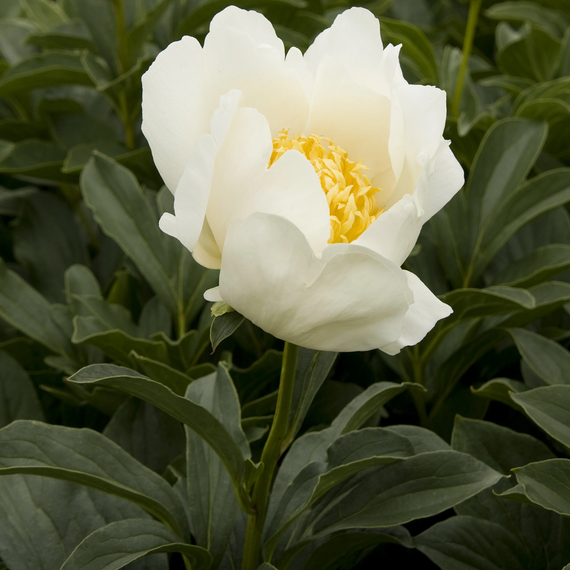
- Stunning Japanese-form blooms featuring pure satin-white guard petals encircling a glowing, buttery yellow center of staminodes — an eye-catching contrast that lights up the late spring garden
- Exceptionally sturdy, upright stems make this one of the most reliably self-supporting herbaceous peonies available, reducing the need for staking even in wet or windy conditions
- A recipient of the prestigious RHS Award of Garden Merit, this long-lived, clump-forming perennial thrives for decades with minimal care and produces outstanding cut flowers
- Lightly fragrant blooms appear in late spring to early summer atop glossy, deep green foliage that remains ornamental well into fall, offering multi-season garden interest
Paeonia lactiflora 'Jan van Leeuwen' is a classic Japanese-form herbaceous peony that has captivated gardeners since its introduction in 1928, earning its enduring place in perennial borders with a combination of elegance, strength, and ease of care. Each large, bowl-shaped bloom presents a crisp ring of creamy white satin guard petals surrounding a luminous, dome-shaped center packed with deep golden-yellow staminodes — a striking two-tone display that stands out brilliantly against the plant's lush, glossy, deeply divided dark green foliage. Rising on notably stout, upright stems to 24–36 inches tall, this peony holds its flowers with exceptional poise, even in adverse weather conditions that would cause other varieties to droop or flop. The blooms carry a light, sweet fragrance and are prized for cutting, lasting beautifully in fresh arrangements and bouquets. Recognized with the Royal Horticultural Society's Award of Garden Merit, 'Jan van Leeuwen' is hardy in USDA Zones 3–8, requiring winter chill to set flower buds, and is notably deer resistant. Beyond its spectacular spring flowering season, the handsome foliage continues to provide structure and a rich green backdrop throughout summer before taking on warm orange tones in autumn before dying back gracefully to the ground — making it a true three-season perennial workhorse for cottage gardens, mixed perennial borders, and cutting gardens alike.
Plant Description
'Jan van Leeuwen' is a Japanese-form herbaceous peony belonging to the species Paeonia lactiflora, a group native to Central and Eastern Asia and Eastern Siberia that has been cultivated for thousands of years. Introduced in 1928 and named after its originator, this cultivar is treasured by peony enthusiasts worldwide and has earned the prestigious Royal Horticultural Society Award of Garden Merit. Its flower form is classified as Japanese style: broad, silky white outer guard petals form a cupped ring around a central boss of petaloids known as staminodes, which are a rich, glowing buttery yellow — creating a bold and luminous bicolor effect. The blooms are lightly fragrant and held aloft on exceptionally strong, upright stems that are among the sturdiest of any herbaceous peony. The foliage is glossy, deeply divided, and a rich dark green, forming an attractive bushy mound that persists long after the flowers have faded. In autumn, the leaves may take on warm orange tones before the plant dies back completely to the ground for winter, re-emerging reliably each spring from its fleshy root crown.
Mature Size
| Characteristic | Measurement |
|---|---|
| Mature Height | 24–36 inches (60–90 cm) |
| Mature Spread | 24–30 inches (60–75 cm) |
| Recommended Spacing | 24–30 inches apart |
| Growth Rate | Slow to moderate; reaches full form in 2–3 years |
| Habit | Bushy, clump-forming, rounded mound |
| Longevity | Extremely long-lived; established plants may persist for 20–100+ years |
Hardiness Zones
'Jan van Leeuwen' is a cold-hardy herbaceous peony well suited to USDA Hardiness Zones 3 through 8. It requires a period of winter chilling in order to initiate flower bud development the following spring, which means it will not reliably flower in warmer climates such as USDA Zones 9–11. In Southern Oregon and Northern California, it performs best in locations that experience genuine winter dormancy with temperatures dropping sufficiently to meet this chilling requirement. It tolerates cold down to approximately -40°F (-40°C) when properly dormant, making it exceptionally cold hardy. The RHS rates this cultivar at H6, indicating hardiness to -20°C (-4°F) under UK conditions, consistent with its performance in severe continental climates.
Sunlight Requirements
'Jan van Leeuwen' performs best in a location that receives full sun, defined as a minimum of 6 hours of direct sunlight per day. In hotter inland climates — including parts of Southern Oregon and Northern California — providing some light afternoon shade can help extend bloom longevity and protect the flowers from scorching. In cooler coastal or higher-elevation environments, full sun all day is ideal and encourages the strongest stems and most prolific flowering. Avoid planting in deep or continuous shade, as this will result in weak, floppy stems, reduced flowering, and increased susceptibility to disease. A south-, west-, or east-facing aspect with shelter from strong winds is ideal for protecting the large blooms.
Soil and pH Preferences
For the best performance, plant 'Jan van Leeuwen' in deep, fertile, humus-rich soil that is moist yet well-drained. Good drainage is critical — peonies will not tolerate waterlogged or excessively wet conditions, which can lead to root rot and disease. This cultivar is adaptable across a range of soil types including loam, clay, chalk, and sandy soils, provided drainage is adequate. Regarding soil pH, it is tolerant of acidic, neutral, and mildly alkaline conditions, though a pH range of 6.0–7.0 is generally optimal. Enriching the planting site with generous amounts of compost or well-aged manure before planting will greatly benefit establishment and long-term vigor. Avoid overly rich or heavily nitrogen-amended soils, as excessive nitrogen can weaken flower stems and promote lush but floppy growth.
Planting Instructions
- Choose a planting site with full sun to part shade and well-drained, fertile soil. Avoid areas prone to standing water.
- Prepare the planting hole to a depth of at least 12–18 inches, incorporating generous amounts of compost or aged organic matter to improve fertility and drainage.
- Set the crown so that the pink or red growth buds (eyes) sit no more than 1–2 inches below the soil surface. Planting too deep is the most common reason peonies fail to bloom.
- Spread the roots out naturally in the hole without bending or cramping them.
- Backfill with amended soil, firm gently, and water thoroughly to settle the soil around the roots.
- Space multiple plants 24–30 inches apart to allow for mature spread and adequate air circulation.
- Mulch lightly after planting to conserve moisture and moderate soil temperature, but keep mulch pulled back from the crown to avoid rot.
- In the first season, expect minimal top growth as the plant directs energy into establishing its root system. Full bloom performance typically develops by the second or third year.
Watering Guide
'Jan van Leeuwen' prefers consistently moist but never waterlogged soil, particularly during its active growing season in spring and through summer. During the first growing season after planting, water regularly to help establish the root system, taking care not to let the soil dry out completely between waterings. Once established, this peony has moderate water needs and can tolerate brief dry spells, but prolonged drought stress during bud development in spring can result in poor flowering. Water at the base of the plant to keep foliage dry and reduce the risk of fungal disease. Reduce watering as the plant goes dormant in fall. Avoid overhead irrigation, especially in humid conditions, to prevent peony wilt and other foliar diseases. In the dry summers common to Southern Oregon and Northern California, supplemental irrigation during bud set and bloom is beneficial.
Fertilizing
Peonies are moderate feeders that benefit from annual or semi-annual fertilization to maintain vigor and prolific blooming. Apply a balanced, low-nitrogen fertilizer or a fertilizer formulated for flowering perennials and bulbs in early spring as the new red shoots emerge from the ground. A second, lighter application can be made after flowering in early summer to support foliage and root development for the following season. Avoid high-nitrogen fertilizers, which promote excessive leafy growth at the expense of flower production and can result in weak, flopping stems. Work granular fertilizer gently into the soil surface around the drip line, avoiding direct contact with the crown. Topdressing with well-composted organic matter in spring or fall is an excellent supplement that improves soil structure and provides slow-release nutrients over time.
Pruning and Maintenance
'Jan van Leeuwen' is a low-maintenance perennial that requires only basic seasonal care to look its best year after year.
- Deadheading: Remove spent flower heads promptly after blooming to keep the plant tidy and direct energy back into the root system rather than seed production.
- Summer: Leave all foliage intact through summer and fall — the leaves continue to photosynthesize and fuel next year's blooms. Do not cut back the foliage while it is still green.
- Fall cutback: After the first frost blackens the foliage, cut all stems down to ground level and remove them from the garden. Disposing of cut foliage (rather than composting it) helps reduce overwintering disease and pest pressure.
- Spring: In early spring, remove any remaining mulch from around the crown before new growth begins to ensure the emerging shoots are not blocked or rotted. Avoid disturbing the crown when working in the vicinity, as the red buds can be easily damaged before they are visible.
- Staking: Although 'Jan van Leeuwen' is noted for its exceptionally sturdy stems, peony ring supports or grow-through hoops installed in early spring can provide added protection for the blooms in exposed sites or during heavy rain and wind events.
- Division: Mature clumps can be divided in early fall every 10–15 years if they become crowded. Each division should include at least 3–5 eyes (growth buds) to ensure good flowering after replanting.
Bloom Time and Seasonal Interest
'Jan van Leeuwen' is considered a late-blooming herbaceous peony, with its peak flowering typically occurring from late spring into early summer — generally late May through June depending on local climate and elevation. The large, lightly fragrant white and yellow blooms last approximately 7–14 days on the plant, with individual bloom longevity extended during cooler weather. After the flowers fade, the glossy, deeply divided dark green foliage continues to provide a handsome, structured mound throughout the summer months, serving as an attractive backdrop for later-blooming perennials. As temperatures cool in autumn, the foliage may develop warm orange and reddish tints before dying back to the ground after the first hard frost. In very early spring, the emergence of the vibrant red-to-pink shoots through the soil is itself a welcome seasonal marker in the garden.
Landscape Uses
'Jan van Leeuwen' is a versatile landscape perennial with a classic and refined appearance that suits many garden styles and applications.
- Perennial and mixed borders: An ideal anchor or mid-border plant, providing bold seasonal color and structural foliage that complements neighboring perennials throughout the growing season.
- Cottage and informal gardens: The loose, single-form blooms and lush foliage are perfectly in keeping with relaxed, romantic cottage garden aesthetics.
- Cutting garden: The strong stems and exquisite blooms make 'Jan van Leeuwen' an outstanding cut flower; blooms are long-lasting in fresh arrangements when harvested just as buds begin to show color.
- Accent planting: Its striking bicolor flowers and bold mounding habit allow it to serve as a focal point specimen in smaller garden beds.
- Mass planting: Planted in groups of three or more, it creates a spectacular sweep of white and yellow blooms in late spring.
- Backdrop for spring bulbs: The emerging foliage helps conceal the dying foliage of tulips, daffodils, and other spring bulbs planted nearby.
- City and courtyard gardens: Tolerant of urban growing conditions and compact enough for smaller urban garden spaces.
- Lining paths, driveways, and fences: A classic and elegant edging plant for defined garden structures.
Companion Plants
The white and yellow blooms and lush green foliage of 'Jan van Leeuwen' pair beautifully with a wide range of garden perennials, shrubs, and bulbs. Consider these companion plant combinations for a cohesive and visually harmonious planting.
- Tall Bearded Iris: A classic pairing — the bloom times overlap in late spring, and the upright, sword-like iris foliage contrasts beautifully with the peony's rounded mound.
- Salvia (ornamental sage): Blue- and purple-flowered salvias provide striking color contrast alongside white peony blooms and extend the flowering interest through summer.
- Geranium (cranesbill): Hardy geraniums with blue, violet, or magenta flowers complement the peony and help fill gaps after the blooms fade.
- Allium: Globe-shaped purple allium blooms coincide with or slightly overlap peony flowering, creating a sophisticated late-spring combination.
- Nepeta (catmint): Soft, billowing lavender-blue catmint serves as an attractive edging plant in front of peonies and echoes the classic cottage garden aesthetic.
- Roses: Old-fashioned or shrub roses in soft pink, blush, or red tones are natural companions that extend the romantic border from late spring well into summer.
- Delphinium: Tall blue or purple delphiniums planted behind peonies create dramatic vertical contrast during the spring to early summer season.
- Daffodils and tulips: Spring bulbs planted among peony crowns will bloom early, with the emerging peony foliage helping to mask the bulbs' declining leaves after flowering.
Pests and Diseases
While 'Jan van Leeuwen' is generally a robust and long-lived perennial, gardeners should be aware of the following potential pest and disease issues and the steps that can be taken to prevent or manage them.
- Botrytis (Peony Wilt / Gray Mold): The most common disease of herbaceous peonies, caused by Botrytis paeoniae. Symptoms include wilting and blackening of shoots and buds, often with a grayish mold coating. Improve air circulation by correct spacing, avoid overhead watering, and remove and dispose of all infected plant material promptly. Cut back all stems to ground level in fall and remove debris.
- Peony Leaf Blotch (Cladosporium): Causes reddish-brown blotches on upper leaf surfaces and purplish or brownish streaks on stems. Maintain good airflow and clean up fallen foliage at the end of the season.
- Verticillium Wilt and Honey Fungus: Soil-borne fungal issues that can affect peonies in poorly drained or previously infected soils. Ensure excellent drainage and avoid planting in areas with known honey fungus history.
- Ants: Ants are commonly seen on peony buds, attracted to the sweet nectar secreted by extrafloral nectaries. They do not harm the plant and no treatment is needed.
- Swift Moth Larvae: Soil-dwelling larvae can feed on peony roots. Good soil cultivation and physical removal help manage populations.
- Leaf and Bud Eelworm (Nematodes): Can cause distorted growth; improve drainage and avoid replanting in heavily infested soil.
- Deer and Rabbits: 'Jan van Leeuwen' is considered deer resistant, and deer and rabbits typically avoid it in favor of more palatable plants.
Wildlife Value
'Jan van Leeuwen' offers genuine value to garden wildlife. The large, open, single-style Japanese flowers provide easy access for a variety of pollinators, including native bees, honeybees, and bumblebees, which visit the blooms to collect pollen and nectar. The open center of the flower, unlike double-form peonies where the stamens are obscured by extra petals, is particularly accessible and rewarding for pollinators. Peony buds also produce nectar from extrafloral nectaries on the outer surface of the buds, which attracts ants and occasionally small birds. The plant is deer resistant and is rarely browsed by rabbits or other mammalian herbivores, making it a reliable choice in gardens where wildlife browsing pressure is a concern. The dense foliage mound provides cover at ground level for beneficial insects and small garden creatures throughout the growing season.
Cut Flower Use
'Jan van Leeuwen' produces exceptional cut flowers thanks to its strong, upright stems and large, elegant blooms. To get the most from cut peonies, follow these guidelines.
- Harvest stems early in the morning when temperatures are cool, ideally when buds are just beginning to open and show full color but before they have fully unfurled — this is sometimes called the "marshmallow bud" stage.
- Use clean, sharp scissors or pruners to make a long, angled cut low on the stem, ensuring at least 2–3 sets of leaves remain on the plant to support continued photosynthesis and root replenishment.
- Place stems immediately into a clean bucket of cool water and move them to a cool, shaded location away from direct sunlight and heat.
- Remove any foliage that would sit below the waterline in the vase to prevent bacterial growth.
- Peonies can be stored as cut buds in cool water in a refrigerator for up to 1–2 weeks, then brought out to open at room temperature — a useful technique for extending the display season or preparing flowers for a special occasion.
- Expect fresh-cut blooms to last 5–7 days in a vase; cooler room temperatures significantly extend vase life.
Toxicity and Safety
Paeonia lactiflora and its cultivars, including 'Jan van Leeuwen,' are considered mildly toxic to dogs and cats if ingested. Consumption of plant material — particularly the foliage — may cause gastrointestinal upset including vomiting, diarrhea, and lethargy in pets. The plant can also occasionally cause skin irritation upon direct contact, particularly in sensitive individuals. It is advisable to wear gloves when handling large quantities of plant material during pruning or dividing. While toxicity to humans from casual garden contact is minimal, keep the plant out of reach of small children who may be tempted to chew on plant parts. If you suspect a pet has ingested a significant amount of plant material, consult a veterinarian promptly.
- Stunning Japanese-form blooms featuring pure satin-white guard petals encircling a glowing, buttery yellow center of staminodes — an eye-catching contrast that lights up the late spring garden
- Exceptionally sturdy, upright stems make this one of the most reliably self-supporting herbaceous peonies available, reducing the need for staking even in wet or windy conditions
- A recipient of the prestigious RHS Award of Garden Merit, this long-lived, clump-forming perennial thrives for decades with minimal care and produces outstanding cut flowers
- Lightly fragrant blooms appear in late spring to early summer atop glossy, deep green foliage that remains ornamental well into fall, offering multi-season garden interest
Paeonia lactiflora 'Jan van Leeuwen' is a classic Japanese-form herbaceous peony that has captivated gardeners since its introduction in 1928, earning its enduring place in perennial borders with a combination of elegance, strength, and ease of care. Each large, bowl-shaped bloom presents a crisp ring of creamy white satin guard petals surrounding a luminous, dome-shaped center packed with deep golden-yellow staminodes — a striking two-tone display that stands out brilliantly against the plant's lush, glossy, deeply divided dark green foliage. Rising on notably stout, upright stems to 24–36 inches tall, this peony holds its flowers with exceptional poise, even in adverse weather conditions that would cause other varieties to droop or flop. The blooms carry a light, sweet fragrance and are prized for cutting, lasting beautifully in fresh arrangements and bouquets. Recognized with the Royal Horticultural Society's Award of Garden Merit, 'Jan van Leeuwen' is hardy in USDA Zones 3–8, requiring winter chill to set flower buds, and is notably deer resistant. Beyond its spectacular spring flowering season, the handsome foliage continues to provide structure and a rich green backdrop throughout summer before taking on warm orange tones in autumn before dying back gracefully to the ground — making it a true three-season perennial workhorse for cottage gardens, mixed perennial borders, and cutting gardens alike.
Plant Description
'Jan van Leeuwen' is a Japanese-form herbaceous peony belonging to the species Paeonia lactiflora, a group native to Central and Eastern Asia and Eastern Siberia that has been cultivated for thousands of years. Introduced in 1928 and named after its originator, this cultivar is treasured by peony enthusiasts worldwide and has earned the prestigious Royal Horticultural Society Award of Garden Merit. Its flower form is classified as Japanese style: broad, silky white outer guard petals form a cupped ring around a central boss of petaloids known as staminodes, which are a rich, glowing buttery yellow — creating a bold and luminous bicolor effect. The blooms are lightly fragrant and held aloft on exceptionally strong, upright stems that are among the sturdiest of any herbaceous peony. The foliage is glossy, deeply divided, and a rich dark green, forming an attractive bushy mound that persists long after the flowers have faded. In autumn, the leaves may take on warm orange tones before the plant dies back completely to the ground for winter, re-emerging reliably each spring from its fleshy root crown.
Mature Size
| Characteristic | Measurement |
|---|---|
| Mature Height | 24–36 inches (60–90 cm) |
| Mature Spread | 24–30 inches (60–75 cm) |
| Recommended Spacing | 24–30 inches apart |
| Growth Rate | Slow to moderate; reaches full form in 2–3 years |
| Habit | Bushy, clump-forming, rounded mound |
| Longevity | Extremely long-lived; established plants may persist for 20–100+ years |
Hardiness Zones
'Jan van Leeuwen' is a cold-hardy herbaceous peony well suited to USDA Hardiness Zones 3 through 8. It requires a period of winter chilling in order to initiate flower bud development the following spring, which means it will not reliably flower in warmer climates such as USDA Zones 9–11. In Southern Oregon and Northern California, it performs best in locations that experience genuine winter dormancy with temperatures dropping sufficiently to meet this chilling requirement. It tolerates cold down to approximately -40°F (-40°C) when properly dormant, making it exceptionally cold hardy. The RHS rates this cultivar at H6, indicating hardiness to -20°C (-4°F) under UK conditions, consistent with its performance in severe continental climates.
Sunlight Requirements
'Jan van Leeuwen' performs best in a location that receives full sun, defined as a minimum of 6 hours of direct sunlight per day. In hotter inland climates — including parts of Southern Oregon and Northern California — providing some light afternoon shade can help extend bloom longevity and protect the flowers from scorching. In cooler coastal or higher-elevation environments, full sun all day is ideal and encourages the strongest stems and most prolific flowering. Avoid planting in deep or continuous shade, as this will result in weak, floppy stems, reduced flowering, and increased susceptibility to disease. A south-, west-, or east-facing aspect with shelter from strong winds is ideal for protecting the large blooms.
Soil and pH Preferences
For the best performance, plant 'Jan van Leeuwen' in deep, fertile, humus-rich soil that is moist yet well-drained. Good drainage is critical — peonies will not tolerate waterlogged or excessively wet conditions, which can lead to root rot and disease. This cultivar is adaptable across a range of soil types including loam, clay, chalk, and sandy soils, provided drainage is adequate. Regarding soil pH, it is tolerant of acidic, neutral, and mildly alkaline conditions, though a pH range of 6.0–7.0 is generally optimal. Enriching the planting site with generous amounts of compost or well-aged manure before planting will greatly benefit establishment and long-term vigor. Avoid overly rich or heavily nitrogen-amended soils, as excessive nitrogen can weaken flower stems and promote lush but floppy growth.
Planting Instructions
- Choose a planting site with full sun to part shade and well-drained, fertile soil. Avoid areas prone to standing water.
- Prepare the planting hole to a depth of at least 12–18 inches, incorporating generous amounts of compost or aged organic matter to improve fertility and drainage.
- Set the crown so that the pink or red growth buds (eyes) sit no more than 1–2 inches below the soil surface. Planting too deep is the most common reason peonies fail to bloom.
- Spread the roots out naturally in the hole without bending or cramping them.
- Backfill with amended soil, firm gently, and water thoroughly to settle the soil around the roots.
- Space multiple plants 24–30 inches apart to allow for mature spread and adequate air circulation.
- Mulch lightly after planting to conserve moisture and moderate soil temperature, but keep mulch pulled back from the crown to avoid rot.
- In the first season, expect minimal top growth as the plant directs energy into establishing its root system. Full bloom performance typically develops by the second or third year.
Watering Guide
'Jan van Leeuwen' prefers consistently moist but never waterlogged soil, particularly during its active growing season in spring and through summer. During the first growing season after planting, water regularly to help establish the root system, taking care not to let the soil dry out completely between waterings. Once established, this peony has moderate water needs and can tolerate brief dry spells, but prolonged drought stress during bud development in spring can result in poor flowering. Water at the base of the plant to keep foliage dry and reduce the risk of fungal disease. Reduce watering as the plant goes dormant in fall. Avoid overhead irrigation, especially in humid conditions, to prevent peony wilt and other foliar diseases. In the dry summers common to Southern Oregon and Northern California, supplemental irrigation during bud set and bloom is beneficial.
Fertilizing
Peonies are moderate feeders that benefit from annual or semi-annual fertilization to maintain vigor and prolific blooming. Apply a balanced, low-nitrogen fertilizer or a fertilizer formulated for flowering perennials and bulbs in early spring as the new red shoots emerge from the ground. A second, lighter application can be made after flowering in early summer to support foliage and root development for the following season. Avoid high-nitrogen fertilizers, which promote excessive leafy growth at the expense of flower production and can result in weak, flopping stems. Work granular fertilizer gently into the soil surface around the drip line, avoiding direct contact with the crown. Topdressing with well-composted organic matter in spring or fall is an excellent supplement that improves soil structure and provides slow-release nutrients over time.
Pruning and Maintenance
'Jan van Leeuwen' is a low-maintenance perennial that requires only basic seasonal care to look its best year after year.
- Deadheading: Remove spent flower heads promptly after blooming to keep the plant tidy and direct energy back into the root system rather than seed production.
- Summer: Leave all foliage intact through summer and fall — the leaves continue to photosynthesize and fuel next year's blooms. Do not cut back the foliage while it is still green.
- Fall cutback: After the first frost blackens the foliage, cut all stems down to ground level and remove them from the garden. Disposing of cut foliage (rather than composting it) helps reduce overwintering disease and pest pressure.
- Spring: In early spring, remove any remaining mulch from around the crown before new growth begins to ensure the emerging shoots are not blocked or rotted. Avoid disturbing the crown when working in the vicinity, as the red buds can be easily damaged before they are visible.
- Staking: Although 'Jan van Leeuwen' is noted for its exceptionally sturdy stems, peony ring supports or grow-through hoops installed in early spring can provide added protection for the blooms in exposed sites or during heavy rain and wind events.
- Division: Mature clumps can be divided in early fall every 10–15 years if they become crowded. Each division should include at least 3–5 eyes (growth buds) to ensure good flowering after replanting.
Bloom Time and Seasonal Interest
'Jan van Leeuwen' is considered a late-blooming herbaceous peony, with its peak flowering typically occurring from late spring into early summer — generally late May through June depending on local climate and elevation. The large, lightly fragrant white and yellow blooms last approximately 7–14 days on the plant, with individual bloom longevity extended during cooler weather. After the flowers fade, the glossy, deeply divided dark green foliage continues to provide a handsome, structured mound throughout the summer months, serving as an attractive backdrop for later-blooming perennials. As temperatures cool in autumn, the foliage may develop warm orange and reddish tints before dying back to the ground after the first hard frost. In very early spring, the emergence of the vibrant red-to-pink shoots through the soil is itself a welcome seasonal marker in the garden.
Landscape Uses
'Jan van Leeuwen' is a versatile landscape perennial with a classic and refined appearance that suits many garden styles and applications.
- Perennial and mixed borders: An ideal anchor or mid-border plant, providing bold seasonal color and structural foliage that complements neighboring perennials throughout the growing season.
- Cottage and informal gardens: The loose, single-form blooms and lush foliage are perfectly in keeping with relaxed, romantic cottage garden aesthetics.
- Cutting garden: The strong stems and exquisite blooms make 'Jan van Leeuwen' an outstanding cut flower; blooms are long-lasting in fresh arrangements when harvested just as buds begin to show color.
- Accent planting: Its striking bicolor flowers and bold mounding habit allow it to serve as a focal point specimen in smaller garden beds.
- Mass planting: Planted in groups of three or more, it creates a spectacular sweep of white and yellow blooms in late spring.
- Backdrop for spring bulbs: The emerging foliage helps conceal the dying foliage of tulips, daffodils, and other spring bulbs planted nearby.
- City and courtyard gardens: Tolerant of urban growing conditions and compact enough for smaller urban garden spaces.
- Lining paths, driveways, and fences: A classic and elegant edging plant for defined garden structures.
Companion Plants
The white and yellow blooms and lush green foliage of 'Jan van Leeuwen' pair beautifully with a wide range of garden perennials, shrubs, and bulbs. Consider these companion plant combinations for a cohesive and visually harmonious planting.
- Tall Bearded Iris: A classic pairing — the bloom times overlap in late spring, and the upright, sword-like iris foliage contrasts beautifully with the peony's rounded mound.
- Salvia (ornamental sage): Blue- and purple-flowered salvias provide striking color contrast alongside white peony blooms and extend the flowering interest through summer.
- Geranium (cranesbill): Hardy geraniums with blue, violet, or magenta flowers complement the peony and help fill gaps after the blooms fade.
- Allium: Globe-shaped purple allium blooms coincide with or slightly overlap peony flowering, creating a sophisticated late-spring combination.
- Nepeta (catmint): Soft, billowing lavender-blue catmint serves as an attractive edging plant in front of peonies and echoes the classic cottage garden aesthetic.
- Roses: Old-fashioned or shrub roses in soft pink, blush, or red tones are natural companions that extend the romantic border from late spring well into summer.
- Delphinium: Tall blue or purple delphiniums planted behind peonies create dramatic vertical contrast during the spring to early summer season.
- Daffodils and tulips: Spring bulbs planted among peony crowns will bloom early, with the emerging peony foliage helping to mask the bulbs' declining leaves after flowering.
Pests and Diseases
While 'Jan van Leeuwen' is generally a robust and long-lived perennial, gardeners should be aware of the following potential pest and disease issues and the steps that can be taken to prevent or manage them.
- Botrytis (Peony Wilt / Gray Mold): The most common disease of herbaceous peonies, caused by Botrytis paeoniae. Symptoms include wilting and blackening of shoots and buds, often with a grayish mold coating. Improve air circulation by correct spacing, avoid overhead watering, and remove and dispose of all infected plant material promptly. Cut back all stems to ground level in fall and remove debris.
- Peony Leaf Blotch (Cladosporium): Causes reddish-brown blotches on upper leaf surfaces and purplish or brownish streaks on stems. Maintain good airflow and clean up fallen foliage at the end of the season.
- Verticillium Wilt and Honey Fungus: Soil-borne fungal issues that can affect peonies in poorly drained or previously infected soils. Ensure excellent drainage and avoid planting in areas with known honey fungus history.
- Ants: Ants are commonly seen on peony buds, attracted to the sweet nectar secreted by extrafloral nectaries. They do not harm the plant and no treatment is needed.
- Swift Moth Larvae: Soil-dwelling larvae can feed on peony roots. Good soil cultivation and physical removal help manage populations.
- Leaf and Bud Eelworm (Nematodes): Can cause distorted growth; improve drainage and avoid replanting in heavily infested soil.
- Deer and Rabbits: 'Jan van Leeuwen' is considered deer resistant, and deer and rabbits typically avoid it in favor of more palatable plants.
Wildlife Value
'Jan van Leeuwen' offers genuine value to garden wildlife. The large, open, single-style Japanese flowers provide easy access for a variety of pollinators, including native bees, honeybees, and bumblebees, which visit the blooms to collect pollen and nectar. The open center of the flower, unlike double-form peonies where the stamens are obscured by extra petals, is particularly accessible and rewarding for pollinators. Peony buds also produce nectar from extrafloral nectaries on the outer surface of the buds, which attracts ants and occasionally small birds. The plant is deer resistant and is rarely browsed by rabbits or other mammalian herbivores, making it a reliable choice in gardens where wildlife browsing pressure is a concern. The dense foliage mound provides cover at ground level for beneficial insects and small garden creatures throughout the growing season.
Cut Flower Use
'Jan van Leeuwen' produces exceptional cut flowers thanks to its strong, upright stems and large, elegant blooms. To get the most from cut peonies, follow these guidelines.
- Harvest stems early in the morning when temperatures are cool, ideally when buds are just beginning to open and show full color but before they have fully unfurled — this is sometimes called the "marshmallow bud" stage.
- Use clean, sharp scissors or pruners to make a long, angled cut low on the stem, ensuring at least 2–3 sets of leaves remain on the plant to support continued photosynthesis and root replenishment.
- Place stems immediately into a clean bucket of cool water and move them to a cool, shaded location away from direct sunlight and heat.
- Remove any foliage that would sit below the waterline in the vase to prevent bacterial growth.
- Peonies can be stored as cut buds in cool water in a refrigerator for up to 1–2 weeks, then brought out to open at room temperature — a useful technique for extending the display season or preparing flowers for a special occasion.
- Expect fresh-cut blooms to last 5–7 days in a vase; cooler room temperatures significantly extend vase life.
Toxicity and Safety
Paeonia lactiflora and its cultivars, including 'Jan van Leeuwen,' are considered mildly toxic to dogs and cats if ingested. Consumption of plant material — particularly the foliage — may cause gastrointestinal upset including vomiting, diarrhea, and lethargy in pets. The plant can also occasionally cause skin irritation upon direct contact, particularly in sensitive individuals. It is advisable to wear gloves when handling large quantities of plant material during pruning or dividing. While toxicity to humans from casual garden contact is minimal, keep the plant out of reach of small children who may be tempted to chew on plant parts. If you suspect a pet has ingested a significant amount of plant material, consult a veterinarian promptly.