
Zoom the image with the mouse
Paul M. Wild Peony - 2 Gallon
SKU:
1931615
UPC:
014949044742
$44.99
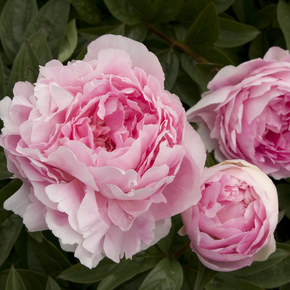
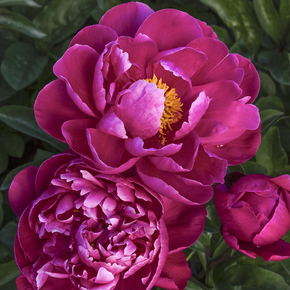
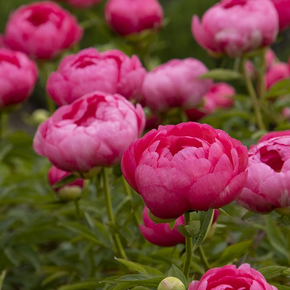
- Spectacular fully double blooms of vivid cardinal red — up to 6-8 inches across — arrive in late spring to early summer on sturdy, upright stems, delivering an unforgettable garden and vase display.
- A proven cut-flower variety with exhibition-quality blooms that resist fading, a light fragrance, and strong stems that hold up beautifully in floral arrangements.
- Exceptionally long-lived and deer resistant, this clump-forming herbaceous perennial returns reliably year after year with rich, deep green divided foliage that remains attractive throughout the growing season.
- Hardy from USDA Zones 2-8, 'Paul M. Wild' thrives in the perennial border, cottage garden, and mixed landscape planting, where its bold color and lush texture make it a standout anchor plant.
Paeonia lactiflora 'Paul M. Wild' is a legendary late-midseason double peony that has captivated gardeners since its introduction in 1964 by Wild & Son. Its large, generously petaled blooms open in a striking cardinal red — a color notably free of the dull purple tones that can diminish other red lactiflora varieties — creating an unusually pure and vivid late-season display. Each bloom can reach 6 to 8 inches in diameter, overflowing with silky petals and carried on strong, upright stems that make it equally prized as a cut flower and a landscape specimen. A light, pleasing fragrance adds to its allure. The handsome dark green, deeply divided foliage forms a dense, rounded mound up to 3 feet tall and wide, providing a lush backdrop in the mixed perennial border long after the flowers fade. Exceptionally cold hardy to USDA Zone 2, deer and rabbit resistant, and virtually maintenance-free once established, 'Paul M. Wild' is a heirloom-quality perennial that rewards patient gardeners with decades of breathtaking late-spring color in the cottage garden, cutting garden, or formal landscape border.
Plant Description
Paeonia lactiflora 'Paul M. Wild' is a clump-forming herbaceous perennial belonging to the Paeoniaceae family. It produces large, fully double flowers in an unusually pure cardinal red — a color that stands apart from other red lactifloras because it is largely free of the dull purple or blue overtones that affect many competing varieties. The blooms are generously furnished with petals, beautifully formed, and of true exhibition quality. The foliage is lush and deeply divided, emerging with reddish tints in spring before maturing to a rich, glossy deep green that remains healthy and attractive throughout the growing season. As an herbaceous perennial, all top growth dies back to the ground each fall and re-emerges vigorously from the root crown each spring. 'Paul M. Wild' is considered a mid-to-late season peony, typically reaching peak bloom in bloom week 6, and is one of the boldest-colored options available for late-season interest in the peony garden.
Mature Size
| Characteristic | Measurement |
|---|---|
| Mature Height | 30-36 inches (approximately 75-90 cm) |
| Mature Spread | 24-36 inches (approximately 60-90 cm) |
| Flower Diameter | 6-8 inches (up to 20 cm) |
| Time to Mature Size | 2-5 years to reach full clump size |
| Growth Rate | Moderate; slow to establish, long-lived once settled |
Hardiness and Climate
'Paul M. Wild' is an exceptionally cold-hardy perennial that thrives across a wide geographic range. It requires a period of winter chilling to set flower buds, making it unsuitable for the warmest climates where winters are mild.
- USDA Hardiness Zones: 2-8
- Cold Tolerance: Survives temperatures as low as -50°F (-45°C) with proper root establishment
- Heat Tolerance: Performs best where summers are warm but not excessively hot; may benefit from afternoon shade in hotter microclimates
- Winter Chill Requirement: Requires consistent winter cold to initiate bud development; will not flower reliably in USDA Zones 9 and above
- Best Performance: Excels in regions with cold winters and moderate summers, including Southern Oregon and Northern California's higher-elevation and inland areas
Sunlight Requirements
'Paul M. Wild' produces its best bloom when given generous sunlight. The right light exposure not only maximizes flowering but also helps reduce the risk of fungal disease by keeping foliage dry.
- Ideal Exposure: Full sun — a minimum of 6-8 hours of direct sunlight per day is strongly preferred for maximum flowering
- Partial Shade: Tolerated, and in regions with intense summer afternoon heat, some light afternoon shade can help prolong individual bloom longevity and reduce heat stress
- Avoid Deep Shade: Planting in heavy shade significantly reduces flower production and weakens stems, making plants more susceptible to disease
- Best Aspect: East-, south-, or west-facing exposures are ideal; a sheltered position protects the large blooms from strong winds
Soil and pH Preferences
Proper soil preparation is one of the most important factors in long-term peony success. 'Paul M. Wild' is a long-lived perennial that will occupy the same spot for decades, so investing in good soil preparation at planting time pays dividends for years to come.
- Soil Type: Deep, fertile, humus-rich loam is ideal; adapts to clay, loam, or sandy soil as long as drainage is excellent
- Drainage: Well-drained soil is essential — peonies are highly sensitive to waterlogged conditions and standing water around the crown or roots will cause rot and decline
- Soil pH: Neutral to slightly acidic, ideally 6.5-7.0; tolerates a slightly broader range from mildly acid to mildly alkaline
- Soil Preparation: Before planting, amend the bed with generous amounts of compost or aged organic matter to a depth of at least 12-18 inches; incorporate coarse grit or perlite into heavy clay soils to improve drainage
- Avoid: Freshly manured or excessively nitrogen-rich soil at planting time, which can promote lush foliage at the expense of flowers
Watering Guide
Once established, 'Paul M. Wild' is surprisingly drought-tolerant and requires far less supplemental water than many garden perennials. Correct watering practices also play a critical role in preventing the fungal diseases that peonies can be susceptible to.
- At Planting: Water deeply and thoroughly immediately after planting to settle the soil and eliminate air pockets around the root system
- First Growing Season: Water deeply and regularly to help establish a strong root system; keep soil evenly moist but never waterlogged
- Established Plants: Once established (typically after 1-2 seasons), reduce watering frequency; average garden rainfall is often sufficient in most climates except during prolonged dry spells
- Drought Tolerance: Moderate once established; performs best with consistent moisture during active growth and bud development in spring
- Watering Method: Drip irrigation or soaker hoses at the base of the plant are strongly preferred; avoid overhead watering, which wets foliage and flowers and dramatically increases the risk of botrytis blight
- Summer: Reduce watering in summer after bloom; the plant is semi-dormant and excessive moisture at this stage encourages root rot
Fertilizing
'Paul M. Wild' has modest fertilizer needs — over-fertilizing, especially with high-nitrogen products, can actually reduce flowering and encourage soft, disease-prone growth. A gentle, organic-focused approach gives the best long-term results.
- At Planting: Incorporate a balanced, slow-release organic fertilizer or a handful of bone meal into the planting hole to support root development; avoid high-nitrogen fertilizers
- Established Plants: Apply a low-nitrogen, phosphorus- and potassium-rich fertilizer (such as a 5-10-10 formulation) in early spring as new shoots emerge
- After Bloom: A light application of balanced fertilizer after flowering encourages healthy foliage growth and root energy storage for the following season
- Organic Option: An annual top-dressing of well-aged compost worked lightly into the soil surface around the drip line is one of the best and simplest fertility programs for long-term peony health
- Avoid: Heavy nitrogen fertilization, which promotes excessive leafy growth and weak stems at the expense of flower production
- Frequency: Peonies need very little fertilization; once or twice per season is sufficient for well-established plants in fertile soil
Planting Instructions
Correct planting depth is arguably the single most critical factor for peony success. Many gardeners are disappointed by a lack of flowering that is directly attributable to planting too deep. Follow these steps for the best establishment.
- Choose the right site: Select a location with full sun, excellent drainage, and good air circulation. Avoid low spots where water puddles after rain.
- Prepare the soil: Dig a planting hole at least 12-18 inches deep and 18-24 inches wide. Amend with compost and, if needed, coarse grit for drainage. Backfill to create a firm base.
- Planting depth: This is critical — plant so that the eyes (red or pink growth buds on the crown) are no more than 1-2 inches below the soil surface in cold climates, or at or just below the soil surface in warmer areas. Planting too deep (more than 2 inches) is the most common reason peonies fail to bloom.
- Spacing: Space plants 2.5 to 3 feet apart to allow for mature spread and to ensure good air circulation, which reduces disease risk.
- Backfill and water: Backfill with amended soil, firm gently, and water deeply. Do not mound soil over the crown.
- Mulch: Apply a light layer of mulch (1-2 inches) around the plant but keep it away from the crown to prevent rot. Remove any mulch from directly over the crown in early spring.
- First year expectations: Newly planted peonies may not bloom in their first year and sometimes not until the second or third season. This is normal — the plant is establishing its root system.
Pruning and Maintenance
Peonies are among the least demanding of all garden perennials when it comes to maintenance. A few key seasonal tasks will keep 'Paul M. Wild' healthy, vigorous, and blooming beautifully year after year.
- Deadheading: Remove spent blooms promptly after they fade to keep the plant tidy and prevent fungal spores from colonizing dying petals; do not simply let them fall onto the foliage
- Staking: The large, heavy double blooms of 'Paul M. Wild' can be weighed down by rainfall; install peony rings or grow-through support hoops early in spring before stems reach 6 inches tall — do not wait until the plant has flopped
- Fall Cleanup: This is the most important maintenance task — in autumn after the first frost, cut all stems and foliage back to ground level and remove all debris from the garden entirely; do not compost this material, as fungal pathogens can overwinter in plant debris
- Division: Peonies strongly resent disturbance and should be divided only when absolutely necessary (such as when a clump becomes very crowded after many years); divide in early fall, ensuring each division has at least 3-5 eyes and adequate root mass
- General Care: Peonies are long-lived plants that improve with age — a well-sited, well-established clump can thrive in the same location for 50 years or more with minimal intervention
Seasonal Interest
'Paul M. Wild' offers a compelling sequence of ornamental interest across three seasons, making it a valuable plant in any perennial planting scheme.
- Early Spring: Deep burgundy-red shoots emerge dramatically from the ground, providing early season color and interest as the plant pushes through the soil
- Late Spring to Early Summer: Peak flowering season; the plant produces its show-stopping cardinal red double blooms, typically in late May through June depending on location and seasonal temperatures; bloom season lasts approximately 2-3 weeks per plant
- Summer: After bloom, the glossy, deep green, deeply divided foliage forms a full, rounded mound that functions as an attractive textural backdrop for other summer-blooming perennials in the border
- Fall: Foliage takes on warm coppery-bronze tones as temperatures cool, providing a final season of interest before dying back naturally after frost
- Winter: Plant goes fully dormant; no above-ground presence, making it easy to mark planting locations to avoid disturbance during spring bulb planting or bed cleanup
Landscape Uses
'Paul M. Wild' is a versatile landscape plant that performs beautifully in a variety of garden settings. Its bold color and substantial presence make it one of the most rewarding perennials in the ornamental garden.
- Mixed Perennial Border: An outstanding anchor plant in the mid-border; pairs beautifully with early summer-blooming perennials and provides a lush green backdrop for later-season plants
- Cottage Garden: A natural fit for the classic cottage style, combining effortlessly with roses, foxglove, delphinium, and other romantic-style perennials
- Cutting Garden: Recognized as a Best Cut variety; the sturdy stems and large exhibition-quality blooms make it a premier choice for cut flower production, both for home use and display
- Specimen Planting: Effective as a standalone specimen in a prominent garden bed or lawn border where it can be appreciated in full bloom
- Herbaceous Hedge: Plant in a row 2.5-3 feet apart to form a beautiful, informal seasonal hedge or border edge that provides privacy and color during its bloom season
- Mass Planting: Spectacular when planted in groups of three or more of the same variety for a unified, high-impact display
- Background Planting for Spring Bulbs: The emerging foliage of 'Paul M. Wild' provides an attractive backdrop for tulips and late daffodils, and its dense mounding habit later conceals the ripening foliage of spring bulbs planted nearby
Companion Plants
Because 'Paul M. Wild' blooms in late spring to early summer and then contributes handsome foliage for the rest of the season, it pairs beautifully with a wide range of companion plants that provide interest before, during, and after its bloom period.
- Bearded Iris: Classic companion that blooms at approximately the same time; the upright, architectural form of iris contrasts beautifully with the rounded mounds of peony foliage and fluffy blooms
- Delphinium: The tall, stately spires of blue and purple delphinium create a classic English garden combination behind 'Paul M. Wild,' with overlapping or sequential bloom times
- Allium: Ornamental onion bulbs planted through the peony bed bloom just before or simultaneously, adding spherical purple flower heads above the peony foliage and hiding their untidy ripening leaves
- Salvia (Perennial): The deep purple flower spikes of perennial salvia create a vivid color contrast alongside the cardinal red peony blooms
- Roses: Shrub and climbing roses make ideal companions, extending the flowering season seamlessly as the peony finishes blooming
- Echinacea (Coneflower): A late-summer bloomer that takes over when peonies have finished, providing continuous color in the border
- Lupine: Blooms just before or with the peony, providing tall, colorful spires and deeply lobed foliage that complements the peony's own attractive leaves
- Tulips and Daffodils: Spring bulbs planted among peonies bloom before the peony and have their ripening foliage concealed by the expanding peony clump
- Catmint (Nepeta): Low-growing, blue-flowered catmint at the border edge creates a soft foreground that complements the bold peony blooms above
- Hydrangea: Provides a lush green backdrop and later-season blooms as peonies wind down for the year
Pests and Diseases
'Paul M. Wild' is generally a robust and resilient plant, but like all peonies, it can be affected by a few specific issues. Good cultural practices are the foundation of pest and disease prevention.
- Botrytis Blight (Gray Mold): The most common peony disease, caused by Botrytis paeoniae and B. cinerea; especially prevalent during cool, wet springs. Symptoms include wilting and rotting of young shoots at ground level, blackened or blasted buds that fail to open, and a visible gray mold on affected tissues. Prevention is key: ensure good air circulation, avoid overhead watering, remove all spent flowers promptly, and cut all foliage to the ground in fall — remove and dispose of (do not compost) all plant debris. In severe cases, copper- or sulfur-based fungicides applied when shoots first emerge and repeated every 14 days through mid-June can provide protection.
- Peony Leaf Blotch: A fungal disease causing reddish-brown spots or blotches on foliage; managed by removing affected leaves and improving air circulation
- Verticillium Wilt: Occasional issue in poorly drained or previously infected soils; no chemical cure — prevention through well-drained soil and crop rotation is best
- Swift Moth Larvae: Soil-dwelling larvae may occasionally damage roots; good soil cultivation and garden hygiene help deter them
- Ants: Ants are commonly observed on peony buds, attracted by the sweet nectar secreted by the developing flowers. They do not harm the plant and are not responsible for helping the flowers open — this is a common myth. No treatment is needed.
- Deer and Rabbits: 'Paul M. Wild' is considered deer and rabbit resistant, making it a reliable choice for gardens in areas with significant wildlife pressure
Cut Flower Use
'Paul M. Wild' has earned formal recognition as a Best Cut variety, and its performance in the vase matches its spectacular presence in the garden.
- Harvest Timing: For the longest vase life, cut stems when buds are showing color but are still firm and not yet fully open — at the "soft marshmallow" stage. Buds harvested at this stage will continue to open beautifully in a vase.
- Stem Length: Cut stems as long as possible, leaving at least two to three sets of leaves on the plant to support continued root energy storage
- Conditioning: Immediately after cutting, place stems in a deep bucket of cool, fresh water and move to a cool, shaded location for several hours or overnight before arranging
- Vase Life: Well-conditioned 'Paul M. Wild' blooms can last 5-7 days or more in a clean vase with fresh water; keep arrangements out of direct sunlight and away from heat sources to extend vase life
- Storage: Freshly cut buds at the marshmallow stage can be wrapped loosely and refrigerated at 34-38°F for up to 4-6 weeks, allowing you to enjoy peony blooms well beyond the normal garden season
- Fragrance: The light, pleasant fragrance of 'Paul M. Wild' blooms makes it a welcome addition to indoor floral arrangements
Wildlife Value
While 'Paul M. Wild' is resistant to browsing by deer and rabbits, it does provide meaningful value to beneficial garden wildlife during its bloom period.
- Pollinators: The large, open blooms attract bees, including honeybees and native bumblebees, which forage for both pollen and nectar during the bloom season
- Butterflies: Butterflies are attracted to the blooms and can be observed nectaring on flowers during the peony's peak bloom period
- Ants: Ants are drawn to extra-floral nectaries on the developing buds; they cause no harm and actually provide a minor benefit by deterring other small insects from the plant
- Deer Resistance: Considered reliably deer resistant, making it well-suited for gardens in rural and suburban areas where deer browsing is a challenge
- Rabbit Resistance: Also resistant to rabbit browsing, adding to its value in gardens with significant wildlife pressure
- Rodent Resistance: Unlike bulbs, established peony roots are not typically targeted by burrowing rodents such as voles
- Spectacular fully double blooms of vivid cardinal red — up to 6-8 inches across — arrive in late spring to early summer on sturdy, upright stems, delivering an unforgettable garden and vase display.
- A proven cut-flower variety with exhibition-quality blooms that resist fading, a light fragrance, and strong stems that hold up beautifully in floral arrangements.
- Exceptionally long-lived and deer resistant, this clump-forming herbaceous perennial returns reliably year after year with rich, deep green divided foliage that remains attractive throughout the growing season.
- Hardy from USDA Zones 2-8, 'Paul M. Wild' thrives in the perennial border, cottage garden, and mixed landscape planting, where its bold color and lush texture make it a standout anchor plant.
Paeonia lactiflora 'Paul M. Wild' is a legendary late-midseason double peony that has captivated gardeners since its introduction in 1964 by Wild & Son. Its large, generously petaled blooms open in a striking cardinal red — a color notably free of the dull purple tones that can diminish other red lactiflora varieties — creating an unusually pure and vivid late-season display. Each bloom can reach 6 to 8 inches in diameter, overflowing with silky petals and carried on strong, upright stems that make it equally prized as a cut flower and a landscape specimen. A light, pleasing fragrance adds to its allure. The handsome dark green, deeply divided foliage forms a dense, rounded mound up to 3 feet tall and wide, providing a lush backdrop in the mixed perennial border long after the flowers fade. Exceptionally cold hardy to USDA Zone 2, deer and rabbit resistant, and virtually maintenance-free once established, 'Paul M. Wild' is a heirloom-quality perennial that rewards patient gardeners with decades of breathtaking late-spring color in the cottage garden, cutting garden, or formal landscape border.
Plant Description
Paeonia lactiflora 'Paul M. Wild' is a clump-forming herbaceous perennial belonging to the Paeoniaceae family. It produces large, fully double flowers in an unusually pure cardinal red — a color that stands apart from other red lactifloras because it is largely free of the dull purple or blue overtones that affect many competing varieties. The blooms are generously furnished with petals, beautifully formed, and of true exhibition quality. The foliage is lush and deeply divided, emerging with reddish tints in spring before maturing to a rich, glossy deep green that remains healthy and attractive throughout the growing season. As an herbaceous perennial, all top growth dies back to the ground each fall and re-emerges vigorously from the root crown each spring. 'Paul M. Wild' is considered a mid-to-late season peony, typically reaching peak bloom in bloom week 6, and is one of the boldest-colored options available for late-season interest in the peony garden.
Mature Size
| Characteristic | Measurement |
|---|---|
| Mature Height | 30-36 inches (approximately 75-90 cm) |
| Mature Spread | 24-36 inches (approximately 60-90 cm) |
| Flower Diameter | 6-8 inches (up to 20 cm) |
| Time to Mature Size | 2-5 years to reach full clump size |
| Growth Rate | Moderate; slow to establish, long-lived once settled |
Hardiness and Climate
'Paul M. Wild' is an exceptionally cold-hardy perennial that thrives across a wide geographic range. It requires a period of winter chilling to set flower buds, making it unsuitable for the warmest climates where winters are mild.
- USDA Hardiness Zones: 2-8
- Cold Tolerance: Survives temperatures as low as -50°F (-45°C) with proper root establishment
- Heat Tolerance: Performs best where summers are warm but not excessively hot; may benefit from afternoon shade in hotter microclimates
- Winter Chill Requirement: Requires consistent winter cold to initiate bud development; will not flower reliably in USDA Zones 9 and above
- Best Performance: Excels in regions with cold winters and moderate summers, including Southern Oregon and Northern California's higher-elevation and inland areas
Sunlight Requirements
'Paul M. Wild' produces its best bloom when given generous sunlight. The right light exposure not only maximizes flowering but also helps reduce the risk of fungal disease by keeping foliage dry.
- Ideal Exposure: Full sun — a minimum of 6-8 hours of direct sunlight per day is strongly preferred for maximum flowering
- Partial Shade: Tolerated, and in regions with intense summer afternoon heat, some light afternoon shade can help prolong individual bloom longevity and reduce heat stress
- Avoid Deep Shade: Planting in heavy shade significantly reduces flower production and weakens stems, making plants more susceptible to disease
- Best Aspect: East-, south-, or west-facing exposures are ideal; a sheltered position protects the large blooms from strong winds
Soil and pH Preferences
Proper soil preparation is one of the most important factors in long-term peony success. 'Paul M. Wild' is a long-lived perennial that will occupy the same spot for decades, so investing in good soil preparation at planting time pays dividends for years to come.
- Soil Type: Deep, fertile, humus-rich loam is ideal; adapts to clay, loam, or sandy soil as long as drainage is excellent
- Drainage: Well-drained soil is essential — peonies are highly sensitive to waterlogged conditions and standing water around the crown or roots will cause rot and decline
- Soil pH: Neutral to slightly acidic, ideally 6.5-7.0; tolerates a slightly broader range from mildly acid to mildly alkaline
- Soil Preparation: Before planting, amend the bed with generous amounts of compost or aged organic matter to a depth of at least 12-18 inches; incorporate coarse grit or perlite into heavy clay soils to improve drainage
- Avoid: Freshly manured or excessively nitrogen-rich soil at planting time, which can promote lush foliage at the expense of flowers
Watering Guide
Once established, 'Paul M. Wild' is surprisingly drought-tolerant and requires far less supplemental water than many garden perennials. Correct watering practices also play a critical role in preventing the fungal diseases that peonies can be susceptible to.
- At Planting: Water deeply and thoroughly immediately after planting to settle the soil and eliminate air pockets around the root system
- First Growing Season: Water deeply and regularly to help establish a strong root system; keep soil evenly moist but never waterlogged
- Established Plants: Once established (typically after 1-2 seasons), reduce watering frequency; average garden rainfall is often sufficient in most climates except during prolonged dry spells
- Drought Tolerance: Moderate once established; performs best with consistent moisture during active growth and bud development in spring
- Watering Method: Drip irrigation or soaker hoses at the base of the plant are strongly preferred; avoid overhead watering, which wets foliage and flowers and dramatically increases the risk of botrytis blight
- Summer: Reduce watering in summer after bloom; the plant is semi-dormant and excessive moisture at this stage encourages root rot
Fertilizing
'Paul M. Wild' has modest fertilizer needs — over-fertilizing, especially with high-nitrogen products, can actually reduce flowering and encourage soft, disease-prone growth. A gentle, organic-focused approach gives the best long-term results.
- At Planting: Incorporate a balanced, slow-release organic fertilizer or a handful of bone meal into the planting hole to support root development; avoid high-nitrogen fertilizers
- Established Plants: Apply a low-nitrogen, phosphorus- and potassium-rich fertilizer (such as a 5-10-10 formulation) in early spring as new shoots emerge
- After Bloom: A light application of balanced fertilizer after flowering encourages healthy foliage growth and root energy storage for the following season
- Organic Option: An annual top-dressing of well-aged compost worked lightly into the soil surface around the drip line is one of the best and simplest fertility programs for long-term peony health
- Avoid: Heavy nitrogen fertilization, which promotes excessive leafy growth and weak stems at the expense of flower production
- Frequency: Peonies need very little fertilization; once or twice per season is sufficient for well-established plants in fertile soil
Planting Instructions
Correct planting depth is arguably the single most critical factor for peony success. Many gardeners are disappointed by a lack of flowering that is directly attributable to planting too deep. Follow these steps for the best establishment.
- Choose the right site: Select a location with full sun, excellent drainage, and good air circulation. Avoid low spots where water puddles after rain.
- Prepare the soil: Dig a planting hole at least 12-18 inches deep and 18-24 inches wide. Amend with compost and, if needed, coarse grit for drainage. Backfill to create a firm base.
- Planting depth: This is critical — plant so that the eyes (red or pink growth buds on the crown) are no more than 1-2 inches below the soil surface in cold climates, or at or just below the soil surface in warmer areas. Planting too deep (more than 2 inches) is the most common reason peonies fail to bloom.
- Spacing: Space plants 2.5 to 3 feet apart to allow for mature spread and to ensure good air circulation, which reduces disease risk.
- Backfill and water: Backfill with amended soil, firm gently, and water deeply. Do not mound soil over the crown.
- Mulch: Apply a light layer of mulch (1-2 inches) around the plant but keep it away from the crown to prevent rot. Remove any mulch from directly over the crown in early spring.
- First year expectations: Newly planted peonies may not bloom in their first year and sometimes not until the second or third season. This is normal — the plant is establishing its root system.
Pruning and Maintenance
Peonies are among the least demanding of all garden perennials when it comes to maintenance. A few key seasonal tasks will keep 'Paul M. Wild' healthy, vigorous, and blooming beautifully year after year.
- Deadheading: Remove spent blooms promptly after they fade to keep the plant tidy and prevent fungal spores from colonizing dying petals; do not simply let them fall onto the foliage
- Staking: The large, heavy double blooms of 'Paul M. Wild' can be weighed down by rainfall; install peony rings or grow-through support hoops early in spring before stems reach 6 inches tall — do not wait until the plant has flopped
- Fall Cleanup: This is the most important maintenance task — in autumn after the first frost, cut all stems and foliage back to ground level and remove all debris from the garden entirely; do not compost this material, as fungal pathogens can overwinter in plant debris
- Division: Peonies strongly resent disturbance and should be divided only when absolutely necessary (such as when a clump becomes very crowded after many years); divide in early fall, ensuring each division has at least 3-5 eyes and adequate root mass
- General Care: Peonies are long-lived plants that improve with age — a well-sited, well-established clump can thrive in the same location for 50 years or more with minimal intervention
Seasonal Interest
'Paul M. Wild' offers a compelling sequence of ornamental interest across three seasons, making it a valuable plant in any perennial planting scheme.
- Early Spring: Deep burgundy-red shoots emerge dramatically from the ground, providing early season color and interest as the plant pushes through the soil
- Late Spring to Early Summer: Peak flowering season; the plant produces its show-stopping cardinal red double blooms, typically in late May through June depending on location and seasonal temperatures; bloom season lasts approximately 2-3 weeks per plant
- Summer: After bloom, the glossy, deep green, deeply divided foliage forms a full, rounded mound that functions as an attractive textural backdrop for other summer-blooming perennials in the border
- Fall: Foliage takes on warm coppery-bronze tones as temperatures cool, providing a final season of interest before dying back naturally after frost
- Winter: Plant goes fully dormant; no above-ground presence, making it easy to mark planting locations to avoid disturbance during spring bulb planting or bed cleanup
Landscape Uses
'Paul M. Wild' is a versatile landscape plant that performs beautifully in a variety of garden settings. Its bold color and substantial presence make it one of the most rewarding perennials in the ornamental garden.
- Mixed Perennial Border: An outstanding anchor plant in the mid-border; pairs beautifully with early summer-blooming perennials and provides a lush green backdrop for later-season plants
- Cottage Garden: A natural fit for the classic cottage style, combining effortlessly with roses, foxglove, delphinium, and other romantic-style perennials
- Cutting Garden: Recognized as a Best Cut variety; the sturdy stems and large exhibition-quality blooms make it a premier choice for cut flower production, both for home use and display
- Specimen Planting: Effective as a standalone specimen in a prominent garden bed or lawn border where it can be appreciated in full bloom
- Herbaceous Hedge: Plant in a row 2.5-3 feet apart to form a beautiful, informal seasonal hedge or border edge that provides privacy and color during its bloom season
- Mass Planting: Spectacular when planted in groups of three or more of the same variety for a unified, high-impact display
- Background Planting for Spring Bulbs: The emerging foliage of 'Paul M. Wild' provides an attractive backdrop for tulips and late daffodils, and its dense mounding habit later conceals the ripening foliage of spring bulbs planted nearby
Companion Plants
Because 'Paul M. Wild' blooms in late spring to early summer and then contributes handsome foliage for the rest of the season, it pairs beautifully with a wide range of companion plants that provide interest before, during, and after its bloom period.
- Bearded Iris: Classic companion that blooms at approximately the same time; the upright, architectural form of iris contrasts beautifully with the rounded mounds of peony foliage and fluffy blooms
- Delphinium: The tall, stately spires of blue and purple delphinium create a classic English garden combination behind 'Paul M. Wild,' with overlapping or sequential bloom times
- Allium: Ornamental onion bulbs planted through the peony bed bloom just before or simultaneously, adding spherical purple flower heads above the peony foliage and hiding their untidy ripening leaves
- Salvia (Perennial): The deep purple flower spikes of perennial salvia create a vivid color contrast alongside the cardinal red peony blooms
- Roses: Shrub and climbing roses make ideal companions, extending the flowering season seamlessly as the peony finishes blooming
- Echinacea (Coneflower): A late-summer bloomer that takes over when peonies have finished, providing continuous color in the border
- Lupine: Blooms just before or with the peony, providing tall, colorful spires and deeply lobed foliage that complements the peony's own attractive leaves
- Tulips and Daffodils: Spring bulbs planted among peonies bloom before the peony and have their ripening foliage concealed by the expanding peony clump
- Catmint (Nepeta): Low-growing, blue-flowered catmint at the border edge creates a soft foreground that complements the bold peony blooms above
- Hydrangea: Provides a lush green backdrop and later-season blooms as peonies wind down for the year
Pests and Diseases
'Paul M. Wild' is generally a robust and resilient plant, but like all peonies, it can be affected by a few specific issues. Good cultural practices are the foundation of pest and disease prevention.
- Botrytis Blight (Gray Mold): The most common peony disease, caused by Botrytis paeoniae and B. cinerea; especially prevalent during cool, wet springs. Symptoms include wilting and rotting of young shoots at ground level, blackened or blasted buds that fail to open, and a visible gray mold on affected tissues. Prevention is key: ensure good air circulation, avoid overhead watering, remove all spent flowers promptly, and cut all foliage to the ground in fall — remove and dispose of (do not compost) all plant debris. In severe cases, copper- or sulfur-based fungicides applied when shoots first emerge and repeated every 14 days through mid-June can provide protection.
- Peony Leaf Blotch: A fungal disease causing reddish-brown spots or blotches on foliage; managed by removing affected leaves and improving air circulation
- Verticillium Wilt: Occasional issue in poorly drained or previously infected soils; no chemical cure — prevention through well-drained soil and crop rotation is best
- Swift Moth Larvae: Soil-dwelling larvae may occasionally damage roots; good soil cultivation and garden hygiene help deter them
- Ants: Ants are commonly observed on peony buds, attracted by the sweet nectar secreted by the developing flowers. They do not harm the plant and are not responsible for helping the flowers open — this is a common myth. No treatment is needed.
- Deer and Rabbits: 'Paul M. Wild' is considered deer and rabbit resistant, making it a reliable choice for gardens in areas with significant wildlife pressure
Cut Flower Use
'Paul M. Wild' has earned formal recognition as a Best Cut variety, and its performance in the vase matches its spectacular presence in the garden.
- Harvest Timing: For the longest vase life, cut stems when buds are showing color but are still firm and not yet fully open — at the "soft marshmallow" stage. Buds harvested at this stage will continue to open beautifully in a vase.
- Stem Length: Cut stems as long as possible, leaving at least two to three sets of leaves on the plant to support continued root energy storage
- Conditioning: Immediately after cutting, place stems in a deep bucket of cool, fresh water and move to a cool, shaded location for several hours or overnight before arranging
- Vase Life: Well-conditioned 'Paul M. Wild' blooms can last 5-7 days or more in a clean vase with fresh water; keep arrangements out of direct sunlight and away from heat sources to extend vase life
- Storage: Freshly cut buds at the marshmallow stage can be wrapped loosely and refrigerated at 34-38°F for up to 4-6 weeks, allowing you to enjoy peony blooms well beyond the normal garden season
- Fragrance: The light, pleasant fragrance of 'Paul M. Wild' blooms makes it a welcome addition to indoor floral arrangements
Wildlife Value
While 'Paul M. Wild' is resistant to browsing by deer and rabbits, it does provide meaningful value to beneficial garden wildlife during its bloom period.
- Pollinators: The large, open blooms attract bees, including honeybees and native bumblebees, which forage for both pollen and nectar during the bloom season
- Butterflies: Butterflies are attracted to the blooms and can be observed nectaring on flowers during the peony's peak bloom period
- Ants: Ants are drawn to extra-floral nectaries on the developing buds; they cause no harm and actually provide a minor benefit by deterring other small insects from the plant
- Deer Resistance: Considered reliably deer resistant, making it well-suited for gardens in rural and suburban areas where deer browsing is a challenge
- Rabbit Resistance: Also resistant to rabbit browsing, adding to its value in gardens with significant wildlife pressure
- Rodent Resistance: Unlike bulbs, established peony roots are not typically targeted by burrowing rodents such as voles