
Zoom the image with the mouse
Blue Beaked Yucca - 2 Gallon
SKU:
2102510
UPC:
014949051603
$49.99
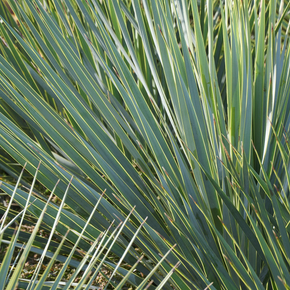
- Stunning architectural evergreen featuring a globe-shaped rosette of hundreds of stiff, blue-gray sword-like leaves atop a single slender trunk — a bold, year-round focal point in any dry garden.
- Exceptionally drought-tolerant and cold hardy to USDA Zone 5, thriving in full sun with minimal water once established — perfect for low-maintenance xeriscaping in hot, arid climates.
- Produces showy 3- to 4-foot-tall spikes of creamy white, bell-shaped blooms in late spring, attracting hummingbirds, butterflies, and the fascinating yucca moth.
- Deer and rabbit resistant with a slow, steady growth habit that gradually transforms into a majestic, palm-like specimen tree over many years — a true long-term garden investment.
Yucca rostrata, commonly known as Blue Beaked Yucca or Big Bend Yucca, is one of the most architecturally spectacular plants available for water-wise and desert-inspired landscapes in Southern Oregon and Northern California. Native to the rugged, high-elevation terrain of the Chihuahuan Desert in northern Mexico and southwestern Texas, this slow-growing evergreen develops a stout, sculptural trunk crowned by a perfectly symmetrical, pom-pom-like rosette of 100 or more narrow, rigid leaves in a striking blue-gray hue. Each lance-shaped leaf reaches up to 24 inches long and is edged with fine, hair-like fibers, giving the crown a shimmering, silver quality in bright sunlight. In late spring, a dramatic flower spike erupts from the center of the rosette, rising several feet above the foliage and bearing dense clusters of fragrant, creamy white, bell-shaped blossoms that are irresistible to hummingbirds and pollinators. As the plant matures over many years, it can reach heights of 6 to 15 feet, occasionally branching to form multiple tufted crowns that further intensify its exotic, tree-like presence. Extremely adaptable across USDA Hardiness Zones 5 through 12, Yucca rostrata tolerates intense heat, extended drought, rocky and sandy soils, and temperatures as low as -10 degrees F, making it as tough as it is beautiful. Whether used as a solitary specimen, grouped in a bold desert planting, or showcased in a large container, Blue Beaked Yucca delivers unmatched year-round visual drama with very little care required.
Plant Description
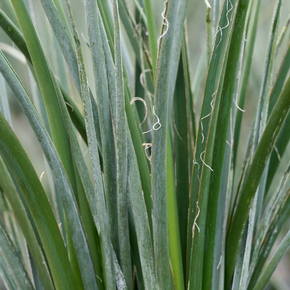
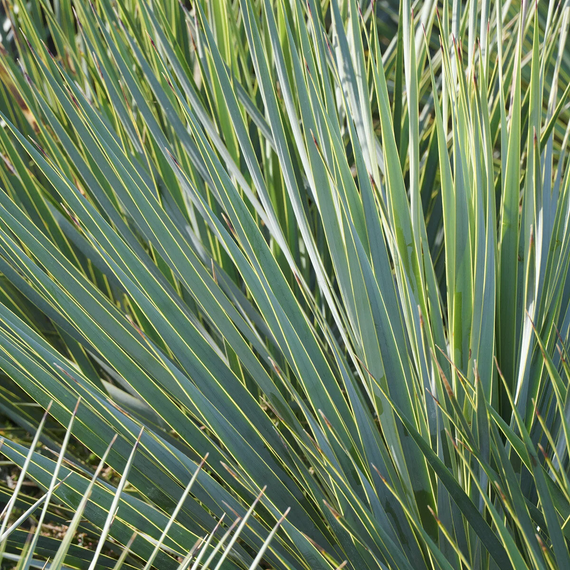
Blue Beaked Yucca (Yucca rostrata) is a trunk-forming, evergreen perennial succulent in the family Asparagaceae. It develops a single, thick, cylindrical trunk covered in a fibrous "skirt" of old, dried leaves that hang flat against the stem as the plant ages, adding textural interest. The crown consists of a dense, spherical rosette of 100 or more narrow, stiffly upright leaves that radiate outward in all directions, creating a perfect globe shape reminiscent of a giant pompom or a palm tree's canopy. Each leaf is smooth, blue-gray to silvery-blue in color, up to 24 inches long and less than one inch wide, terminating in a sharp, spine-like tip. The leaf edges are lined with delicate, thread-like white fibers. In bright sunlight the foliage shimmers and takes on a metallic, silvery quality, earning the plant one of its many common names: Silver Yucca. Unlike some related species, the leaves of Y. rostrata are comparatively flexible and less dangerously rigid, making it a more garden-friendly choice than some of its close relatives. As the plant matures over many years or decades, it may develop branching, producing two or more dramatic rosette-crowned stems that amplify its exotic, sculptural presence.
Mature Size
| Characteristic | Measurement |
|---|---|
| Mature Height | 6 to 15 feet |
| Mature Spread | 4 to 10 feet |
| Individual Leaf Length | Up to 24 inches |
| Flower Spike Height | 3 to 4 feet above foliage |
| Growth Rate | Slow (approx. 1-2 inches per year) |
| Time to Full Maturity | 10+ years |
Because of its slow growth, Blue Beaked Yucca is ideal for permanent placements in the landscape where a long-lived, ever-improving specimen is desired. Allow ample spacing — at least 5 to 10 feet from structures and other plants — to accommodate its eventual spread and to showcase the full beauty of its rounded crown.
Hardiness Zones and Climate
Blue Beaked Yucca is reliably cold hardy in USDA Hardiness Zones 5 through 12, tolerating temperatures as low as -10 degrees F (-23 degrees C) when planted in well-drained soil. It is native to the high-elevation Chihuahuan Desert, where plants naturally experience hot summers, intense sunlight, and cold winters with occasional freezes. This broad climate adaptability makes it well-suited to the diverse conditions found across Southern Oregon and Northern California, from the hot, dry inland valleys to higher-elevation sites. In zones 5 and 6, planting in a sheltered, south-facing location with excellent drainage will improve winter survival. It is also well-adapted to AHS Heat Zones 7 through 11, and performs exceptionally well in regions with hot, dry summers and cool to cold winters. Consistently wet winter soils pose a greater threat to this plant than cold temperatures alone, so drainage is the most critical factor in any cold or mild climate.
Sunlight Requirements
Full sun is essential for Blue Beaked Yucca to thrive and maintain its signature intense blue-gray foliage color. It requires a minimum of 6 hours of direct sunlight per day, and performs best with 8 or more hours of unobstructed direct sun. As a desert native, it has evolved to handle the most intense midday and afternoon sunlight without stress, and actually benefits from high light levels that help keep the growth compact and the foliage color vibrant. Prolonged partial shade can cause the rosette to become loose and sprawling, and the foliage color will fade toward green. For best results, choose the hottest, sunniest location in your landscape. South- or west-facing exposures against a wall or slope are ideal, especially in zones at the cooler end of its hardiness range.
Soil and pH Preferences
Blue Beaked Yucca thrives in loose, sandy, rocky, or gravelly soils with sharp, fast drainage. It is intolerant of heavy clay or compacted soils that retain moisture for extended periods. In its native habitat it grows in limestone outcrops, rocky canyon walls, and sandy desert flats — all environments where water moves through quickly. A soil pH of 5.5 to 7.5 (slightly acidic to mildly alkaline) is acceptable, with slightly alkaline conditions being ideal. If your garden soil is a rich, water-retentive loam or clay, amend generously with coarse sand, decomposed granite, or pea gravel before planting. Alternatively, consider raising the planting area or creating a mounded bed to improve drainage. For container culture, a cactus and succulent potting mix blended with additional perlite or coarse grit is ideal. Nutrient-rich soils are not necessary and can actually promote overly lush, weak growth.
Watering Guide
Once established in the landscape, Blue Beaked Yucca is extremely drought tolerant and requires very little supplemental irrigation. During the first growing season after planting, water deeply once per week to encourage root development, gradually tapering off frequency as the plant becomes established over 6 to 12 months. After establishment, water deeply only when rainfall has not occurred for two or more weeks during the active growing season (spring through summer). In fall and winter, reduce watering to once a month or less, relying primarily on natural rainfall. The single most important watering rule for this plant is to never allow water to pool around the base or roots — overwatering causes root rot, yellowing leaves, and a softened, spongy trunk, which is very difficult to reverse. Use the finger test: water only when the top few inches of soil are completely dry. In humid climates, established plants may need little to no supplemental irrigation at all.
Fertilizing
Blue Beaked Yucca is a naturally lean feeder and does not require regular fertilization. In most landscape situations, established plants will thrive without any added fertilizer, particularly in fast-draining sandy or gravelly soils that mimic their native environment. If you wish to give a young or newly transplanted specimen a gentle boost to encourage establishment, apply a balanced, slow-release granular fertilizer (such as a 10-10-10 or similar) once in early spring at half the label-recommended rate, then water in thoroughly. Avoid high-nitrogen fertilizers, which encourage excessive, soft foliage growth that is out of character for this plant and may be more susceptible to pest and disease issues. Do not fertilize in summer, fall, or winter. Over-fertilizing is more harmful to this plant than under-fertilizing — when in doubt, skip it.
Planting Instructions
- Select a location with full sun (6+ hours of direct sun daily) and excellent soil drainage. Avoid low spots or areas where water collects after rain.
- If planting in heavy or clay soil, amend the planting area generously with coarse sand and decomposed granite, or build a raised mound 8 to 12 inches high to improve drainage.
- Dig a planting hole as wide and as deep as the root ball. Avoid digging deeper than the root ball to prevent settling.
- Wear thick leather gloves and long sleeves when handling the plant, as the leaf tips are sharply pointed.
- Gently remove the plant from its container and place it in the hole so the base of the trunk sits at or slightly above the surrounding soil level.
- Backfill with native soil or a blend of native soil and grit. Do not bury the crown or base of the stem.
- Tamp the soil firmly around the root ball to eliminate air pockets.
- Water deeply immediately after planting. Apply a 2- to 3-inch layer of gravel mulch around (not touching) the base of the plant to retain some moisture and discourage weeds, while keeping the crown area dry.
- Water once per week for the first growing season; reduce frequency as the plant establishes over 6 to 12 months.
Pruning and Maintenance
Blue Beaked Yucca is one of the lowest-maintenance plants you can add to your landscape. It requires no routine shaping or structural pruning. The primary maintenance task is the periodic removal of dead or dried leaves. As leaves naturally senesce, they fold downward and lie flat against the trunk, forming a characteristic fibrous "skirt." You may choose to leave this skirt intact for a naturalistic look and wildlife habitat value, or trim it away for a tidier, more manicured appearance. To remove dead leaves, use a sharp pair of bypass pruners or heavy-duty shears and cut as close to the trunk as possible without nicking healthy tissue. Always wear thick leather gloves, long sleeves, and eye protection when working with this plant — the leaf tips are sharp. After the flower spike finishes blooming, the spent stalk can be cut away at its base once it has fully dried. Never cut into the growing rosette crown, as this is the meristematic center of the plant. Repotting for container specimens should be done only when root-bound, as this slow grower rarely needs it more than every 3 to 5 years.
Flowering and Seasonal Interest
One of the most spectacular seasonal displays produced by Blue Beaked Yucca is its late spring to early summer bloom. From April through June, a tall, branched flower spike erupts from the center of the rosette, rising 3 to 4 feet above the foliage. This spike is densely packed with dozens of pendant, bell-shaped blossoms in a creamy white to ivory color. The flowers are lightly fragrant and highly attractive to hummingbirds, butterflies, bees, and the specialized yucca moth — the plant's primary natural pollinator. After pollination, the flowers give way to oblong seed capsules that gradually dry and split open in fall, dispersing small, flat, papery black seeds. The blue-gray foliage provides outstanding year-round color and texture, with the silvery shimmer intensifying in bright sunlight. Even in winter, when much of the garden has gone dormant, Blue Beaked Yucca remains a bold, evergreen architectural anchor in the landscape.
Landscape Uses
Blue Beaked Yucca is an incredibly versatile landscape specimen whose bold form and color can anchor a wide variety of garden styles. Its most popular applications include:
- Specimen or focal point planting: Its dramatic form commands attention when planted alone in a prominent location such as an entry, courtyard, or center of a garden bed.
- Xeriscape and water-wise gardens: A cornerstone plant for drought-tolerant landscapes, combining beautifully with other low-water natives and ornamentals.
- Rock and gravel gardens: Thrives alongside boulders, flagstone, and decomposed granite mulch in naturalistic desert-style designs.
- Mediterranean and contemporary gardens: The blue foliage and clean geometric form complement modern hardscaping, gravel paths, and minimalist design schemes.
- Mixed borders: Provides a strong vertical accent and textural contrast among lower-growing perennials, ornamental grasses, and flowering shrubs.
- Container gardening: Young plants make bold statements in large, unglazed terra cotta or concrete containers on patios, decks, and entryways.
- Firescaping: Its low moisture content and resistance to dry conditions make it appropriate for firewise landscape zones.
- Slope and erosion control: Deep, fibrous roots help stabilize dry, rocky, or sandy slopes.
Companion Plants
Blue Beaked Yucca pairs beautifully with other drought-tolerant, sun-loving plants that share its preference for sharp drainage and low water. Excellent companion plants for Southern Oregon and Northern California gardens include:
- Agave: Bold, sculptural rosettes in blue-gray or green tones create a cohesive desert aesthetic alongside Yucca rostrata.
- Ornamental grasses: Blue oat grass (Helictotrichon sempervirens) or deer grass (Muhlenbergia rigens) echo the fine-textured, upright foliage and add movement.
- Salvia: Red, purple, or coral salvias provide vibrant, season-long color contrast against the cool blue foliage.
- Penstemon: Native penstemons in red, pink, or violet bloom in complementary seasons and share the same well-drained soil preferences.
- Cistus (Rock Rose): Low-water Mediterranean shrubs that bloom prolifically and thrive in similar dry, rocky conditions.
- Lavender: Silver-leaved lavender varieties echo the blue-gray tones of the yucca while adding fragrance and summer color.
- Aloe: Rosette-forming aloes provide structural repetition and warm orange or red flower tones in winter and spring.
- Desert marigold (Baileya multiradiata): Cheerful golden blooms contrast brilliantly with the silvery-blue yucca foliage.
Pests and Diseases
Blue Beaked Yucca is remarkably pest and disease resistant when grown in its preferred conditions of full sun, sharp drainage, and minimal water. The most common issues to be aware of include:
- Root rot (Phytophthora / Pythium): The most serious threat, caused almost exclusively by overwatering or poorly drained soil. Symptoms include yellowing and wilting leaves, a soft or spongy trunk base, and foul-smelling roots. Prevention through proper drainage is the only reliable solution; severely affected plants rarely recover.
- Fungal leaf spot: Yellow, brown, or black spots on foliage, typically occurring in humid conditions or when water sits on leaves. Usually not life-threatening; treat by removing affected leaves, improving air circulation, and keeping foliage dry.
- Scale insects: Small, waxy, immobile bumps on leaves and stems. Remove manually with an alcohol-soaked cotton swab or treat with horticultural oil.
- Mealybugs: White, cottony clusters in leaf axils and along the stem. Remove manually or treat with insecticidal soap or neem oil.
- Spider mites and aphids: Occasionally found during hot, dry weather. A strong spray of water on the foliage usually dislodges them; repeat as needed.
- Desert beetle grubs: Root-feeding grubs can attack the root system in some regions. Monitor in spring and treat with an approved soil insecticide if infestations are detected.
- Agave bugs: Occasionally reported; monitor foliage and treat with appropriate contact insecticide if found.
Container Growing
Young Blue Beaked Yucca plants are well-suited to large container culture and make stunning patio or entryway specimens. Choose a container that is wide and deep enough to accommodate the root ball with room to grow — unglazed terra cotta, concrete, or ceramic pots in earth tones complement the plant's desert aesthetic beautifully. Drainage holes are absolutely essential. Fill with a commercial cactus and succulent potting mix blended with 25 to 30 percent coarse perlite or decomposed granite for extra drainage. Place in the hottest, sunniest location available. Water only when the top 2 to 3 inches of potting mix are completely dry; reduce watering dramatically in fall and winter. Because containers can be more vulnerable to temperature extremes, move potted plants to a sheltered location or garage during prolonged hard freezes in colder zones. Repotting is rarely necessary more often than every 3 to 5 years due to the plant's slow growth rate; when repotting, step up only one container size at a time and trim off 1 to 2 inches of the outer root mass to encourage fresh root growth. Fertilize lightly once in spring only.
Wildlife Value
Blue Beaked Yucca supports a surprising variety of wildlife for a desert plant. Its tall, nectar-rich flower spikes are magnets for hummingbirds, which visit frequently during the bloom season. Butterflies and native bees also forage on the blossoms. Most importantly, the plant shares a fascinating co-evolutionary relationship with the yucca moth (Tegeticula species), which is the plant's exclusive natural pollinator. Female yucca moths collect and deliberately transfer pollen between flowers while simultaneously depositing their eggs inside the flower ovary — the developing larvae feed on a portion of the seeds, while the plant relies entirely on the moth for pollination. The fibrous "skirt" of dried dead leaves that accumulates around the trunk over time provides important shelter and nesting habitat for small lizards, insects, and birds. Despite attracting beneficial wildlife, Blue Beaked Yucca is strongly resistant to browsing by deer and rabbits, who are deterred by its sharply tipped leaves and tough, fibrous foliage.
Propagation
Blue Beaked Yucca can be propagated by seed or, less commonly, by stem cuttings. Because it rarely produces offsets (pups) the way many other yucca species do, seed is the most practical propagation method for home gardeners.
- From seed: Harvest seed capsules in early fall before they split open naturally. Allow seeds to air dry in a cool, dark place for several days, then cold-stratify in a sealed bag with lightly moistened sand in the refrigerator for 8 weeks. Sow stratified seeds in a shallow tray of moist, well-draining cactus mix blended with sand. Keep at 70 degrees F in bright, indirect light and maintain even moisture. Germination typically takes 2 to 3 weeks. Once seedlings are a few inches tall, transplant to individual 4-inch pots. Note that plants grown from seed are very slow to develop their characteristic trunk.
- From stem cuttings: Take a 3- to 4-inch cutting from the stem, remove the lower leaves, and allow the cut end to callous in a cool, dry location for 4 to 5 days. Plant the calloused cutting in a container of cactus potting mix and place in bright, indirect light until roots form (approximately 3 to 4 weeks), then transition to full sun.
- Stunning architectural evergreen featuring a globe-shaped rosette of hundreds of stiff, blue-gray sword-like leaves atop a single slender trunk — a bold, year-round focal point in any dry garden.
- Exceptionally drought-tolerant and cold hardy to USDA Zone 5, thriving in full sun with minimal water once established — perfect for low-maintenance xeriscaping in hot, arid climates.
- Produces showy 3- to 4-foot-tall spikes of creamy white, bell-shaped blooms in late spring, attracting hummingbirds, butterflies, and the fascinating yucca moth.
- Deer and rabbit resistant with a slow, steady growth habit that gradually transforms into a majestic, palm-like specimen tree over many years — a true long-term garden investment.
Yucca rostrata, commonly known as Blue Beaked Yucca or Big Bend Yucca, is one of the most architecturally spectacular plants available for water-wise and desert-inspired landscapes in Southern Oregon and Northern California. Native to the rugged, high-elevation terrain of the Chihuahuan Desert in northern Mexico and southwestern Texas, this slow-growing evergreen develops a stout, sculptural trunk crowned by a perfectly symmetrical, pom-pom-like rosette of 100 or more narrow, rigid leaves in a striking blue-gray hue. Each lance-shaped leaf reaches up to 24 inches long and is edged with fine, hair-like fibers, giving the crown a shimmering, silver quality in bright sunlight. In late spring, a dramatic flower spike erupts from the center of the rosette, rising several feet above the foliage and bearing dense clusters of fragrant, creamy white, bell-shaped blossoms that are irresistible to hummingbirds and pollinators. As the plant matures over many years, it can reach heights of 6 to 15 feet, occasionally branching to form multiple tufted crowns that further intensify its exotic, tree-like presence. Extremely adaptable across USDA Hardiness Zones 5 through 12, Yucca rostrata tolerates intense heat, extended drought, rocky and sandy soils, and temperatures as low as -10 degrees F, making it as tough as it is beautiful. Whether used as a solitary specimen, grouped in a bold desert planting, or showcased in a large container, Blue Beaked Yucca delivers unmatched year-round visual drama with very little care required.
Plant Description
Blue Beaked Yucca (Yucca rostrata) is a trunk-forming, evergreen perennial succulent in the family Asparagaceae. It develops a single, thick, cylindrical trunk covered in a fibrous "skirt" of old, dried leaves that hang flat against the stem as the plant ages, adding textural interest. The crown consists of a dense, spherical rosette of 100 or more narrow, stiffly upright leaves that radiate outward in all directions, creating a perfect globe shape reminiscent of a giant pompom or a palm tree's canopy. Each leaf is smooth, blue-gray to silvery-blue in color, up to 24 inches long and less than one inch wide, terminating in a sharp, spine-like tip. The leaf edges are lined with delicate, thread-like white fibers. In bright sunlight the foliage shimmers and takes on a metallic, silvery quality, earning the plant one of its many common names: Silver Yucca. Unlike some related species, the leaves of Y. rostrata are comparatively flexible and less dangerously rigid, making it a more garden-friendly choice than some of its close relatives. As the plant matures over many years or decades, it may develop branching, producing two or more dramatic rosette-crowned stems that amplify its exotic, sculptural presence.
Mature Size
| Characteristic | Measurement |
|---|---|
| Mature Height | 6 to 15 feet |
| Mature Spread | 4 to 10 feet |
| Individual Leaf Length | Up to 24 inches |
| Flower Spike Height | 3 to 4 feet above foliage |
| Growth Rate | Slow (approx. 1-2 inches per year) |
| Time to Full Maturity | 10+ years |
Because of its slow growth, Blue Beaked Yucca is ideal for permanent placements in the landscape where a long-lived, ever-improving specimen is desired. Allow ample spacing — at least 5 to 10 feet from structures and other plants — to accommodate its eventual spread and to showcase the full beauty of its rounded crown.
Hardiness Zones and Climate
Blue Beaked Yucca is reliably cold hardy in USDA Hardiness Zones 5 through 12, tolerating temperatures as low as -10 degrees F (-23 degrees C) when planted in well-drained soil. It is native to the high-elevation Chihuahuan Desert, where plants naturally experience hot summers, intense sunlight, and cold winters with occasional freezes. This broad climate adaptability makes it well-suited to the diverse conditions found across Southern Oregon and Northern California, from the hot, dry inland valleys to higher-elevation sites. In zones 5 and 6, planting in a sheltered, south-facing location with excellent drainage will improve winter survival. It is also well-adapted to AHS Heat Zones 7 through 11, and performs exceptionally well in regions with hot, dry summers and cool to cold winters. Consistently wet winter soils pose a greater threat to this plant than cold temperatures alone, so drainage is the most critical factor in any cold or mild climate.
Sunlight Requirements
Full sun is essential for Blue Beaked Yucca to thrive and maintain its signature intense blue-gray foliage color. It requires a minimum of 6 hours of direct sunlight per day, and performs best with 8 or more hours of unobstructed direct sun. As a desert native, it has evolved to handle the most intense midday and afternoon sunlight without stress, and actually benefits from high light levels that help keep the growth compact and the foliage color vibrant. Prolonged partial shade can cause the rosette to become loose and sprawling, and the foliage color will fade toward green. For best results, choose the hottest, sunniest location in your landscape. South- or west-facing exposures against a wall or slope are ideal, especially in zones at the cooler end of its hardiness range.
Soil and pH Preferences
Blue Beaked Yucca thrives in loose, sandy, rocky, or gravelly soils with sharp, fast drainage. It is intolerant of heavy clay or compacted soils that retain moisture for extended periods. In its native habitat it grows in limestone outcrops, rocky canyon walls, and sandy desert flats — all environments where water moves through quickly. A soil pH of 5.5 to 7.5 (slightly acidic to mildly alkaline) is acceptable, with slightly alkaline conditions being ideal. If your garden soil is a rich, water-retentive loam or clay, amend generously with coarse sand, decomposed granite, or pea gravel before planting. Alternatively, consider raising the planting area or creating a mounded bed to improve drainage. For container culture, a cactus and succulent potting mix blended with additional perlite or coarse grit is ideal. Nutrient-rich soils are not necessary and can actually promote overly lush, weak growth.
Watering Guide
Once established in the landscape, Blue Beaked Yucca is extremely drought tolerant and requires very little supplemental irrigation. During the first growing season after planting, water deeply once per week to encourage root development, gradually tapering off frequency as the plant becomes established over 6 to 12 months. After establishment, water deeply only when rainfall has not occurred for two or more weeks during the active growing season (spring through summer). In fall and winter, reduce watering to once a month or less, relying primarily on natural rainfall. The single most important watering rule for this plant is to never allow water to pool around the base or roots — overwatering causes root rot, yellowing leaves, and a softened, spongy trunk, which is very difficult to reverse. Use the finger test: water only when the top few inches of soil are completely dry. In humid climates, established plants may need little to no supplemental irrigation at all.
Fertilizing
Blue Beaked Yucca is a naturally lean feeder and does not require regular fertilization. In most landscape situations, established plants will thrive without any added fertilizer, particularly in fast-draining sandy or gravelly soils that mimic their native environment. If you wish to give a young or newly transplanted specimen a gentle boost to encourage establishment, apply a balanced, slow-release granular fertilizer (such as a 10-10-10 or similar) once in early spring at half the label-recommended rate, then water in thoroughly. Avoid high-nitrogen fertilizers, which encourage excessive, soft foliage growth that is out of character for this plant and may be more susceptible to pest and disease issues. Do not fertilize in summer, fall, or winter. Over-fertilizing is more harmful to this plant than under-fertilizing — when in doubt, skip it.
Planting Instructions
- Select a location with full sun (6+ hours of direct sun daily) and excellent soil drainage. Avoid low spots or areas where water collects after rain.
- If planting in heavy or clay soil, amend the planting area generously with coarse sand and decomposed granite, or build a raised mound 8 to 12 inches high to improve drainage.
- Dig a planting hole as wide and as deep as the root ball. Avoid digging deeper than the root ball to prevent settling.
- Wear thick leather gloves and long sleeves when handling the plant, as the leaf tips are sharply pointed.
- Gently remove the plant from its container and place it in the hole so the base of the trunk sits at or slightly above the surrounding soil level.
- Backfill with native soil or a blend of native soil and grit. Do not bury the crown or base of the stem.
- Tamp the soil firmly around the root ball to eliminate air pockets.
- Water deeply immediately after planting. Apply a 2- to 3-inch layer of gravel mulch around (not touching) the base of the plant to retain some moisture and discourage weeds, while keeping the crown area dry.
- Water once per week for the first growing season; reduce frequency as the plant establishes over 6 to 12 months.
Pruning and Maintenance
Blue Beaked Yucca is one of the lowest-maintenance plants you can add to your landscape. It requires no routine shaping or structural pruning. The primary maintenance task is the periodic removal of dead or dried leaves. As leaves naturally senesce, they fold downward and lie flat against the trunk, forming a characteristic fibrous "skirt." You may choose to leave this skirt intact for a naturalistic look and wildlife habitat value, or trim it away for a tidier, more manicured appearance. To remove dead leaves, use a sharp pair of bypass pruners or heavy-duty shears and cut as close to the trunk as possible without nicking healthy tissue. Always wear thick leather gloves, long sleeves, and eye protection when working with this plant — the leaf tips are sharp. After the flower spike finishes blooming, the spent stalk can be cut away at its base once it has fully dried. Never cut into the growing rosette crown, as this is the meristematic center of the plant. Repotting for container specimens should be done only when root-bound, as this slow grower rarely needs it more than every 3 to 5 years.
Flowering and Seasonal Interest
One of the most spectacular seasonal displays produced by Blue Beaked Yucca is its late spring to early summer bloom. From April through June, a tall, branched flower spike erupts from the center of the rosette, rising 3 to 4 feet above the foliage. This spike is densely packed with dozens of pendant, bell-shaped blossoms in a creamy white to ivory color. The flowers are lightly fragrant and highly attractive to hummingbirds, butterflies, bees, and the specialized yucca moth — the plant's primary natural pollinator. After pollination, the flowers give way to oblong seed capsules that gradually dry and split open in fall, dispersing small, flat, papery black seeds. The blue-gray foliage provides outstanding year-round color and texture, with the silvery shimmer intensifying in bright sunlight. Even in winter, when much of the garden has gone dormant, Blue Beaked Yucca remains a bold, evergreen architectural anchor in the landscape.
Landscape Uses
Blue Beaked Yucca is an incredibly versatile landscape specimen whose bold form and color can anchor a wide variety of garden styles. Its most popular applications include:
- Specimen or focal point planting: Its dramatic form commands attention when planted alone in a prominent location such as an entry, courtyard, or center of a garden bed.
- Xeriscape and water-wise gardens: A cornerstone plant for drought-tolerant landscapes, combining beautifully with other low-water natives and ornamentals.
- Rock and gravel gardens: Thrives alongside boulders, flagstone, and decomposed granite mulch in naturalistic desert-style designs.
- Mediterranean and contemporary gardens: The blue foliage and clean geometric form complement modern hardscaping, gravel paths, and minimalist design schemes.
- Mixed borders: Provides a strong vertical accent and textural contrast among lower-growing perennials, ornamental grasses, and flowering shrubs.
- Container gardening: Young plants make bold statements in large, unglazed terra cotta or concrete containers on patios, decks, and entryways.
- Firescaping: Its low moisture content and resistance to dry conditions make it appropriate for firewise landscape zones.
- Slope and erosion control: Deep, fibrous roots help stabilize dry, rocky, or sandy slopes.
Companion Plants
Blue Beaked Yucca pairs beautifully with other drought-tolerant, sun-loving plants that share its preference for sharp drainage and low water. Excellent companion plants for Southern Oregon and Northern California gardens include:
- Agave: Bold, sculptural rosettes in blue-gray or green tones create a cohesive desert aesthetic alongside Yucca rostrata.
- Ornamental grasses: Blue oat grass (Helictotrichon sempervirens) or deer grass (Muhlenbergia rigens) echo the fine-textured, upright foliage and add movement.
- Salvia: Red, purple, or coral salvias provide vibrant, season-long color contrast against the cool blue foliage.
- Penstemon: Native penstemons in red, pink, or violet bloom in complementary seasons and share the same well-drained soil preferences.
- Cistus (Rock Rose): Low-water Mediterranean shrubs that bloom prolifically and thrive in similar dry, rocky conditions.
- Lavender: Silver-leaved lavender varieties echo the blue-gray tones of the yucca while adding fragrance and summer color.
- Aloe: Rosette-forming aloes provide structural repetition and warm orange or red flower tones in winter and spring.
- Desert marigold (Baileya multiradiata): Cheerful golden blooms contrast brilliantly with the silvery-blue yucca foliage.
Pests and Diseases
Blue Beaked Yucca is remarkably pest and disease resistant when grown in its preferred conditions of full sun, sharp drainage, and minimal water. The most common issues to be aware of include:
- Root rot (Phytophthora / Pythium): The most serious threat, caused almost exclusively by overwatering or poorly drained soil. Symptoms include yellowing and wilting leaves, a soft or spongy trunk base, and foul-smelling roots. Prevention through proper drainage is the only reliable solution; severely affected plants rarely recover.
- Fungal leaf spot: Yellow, brown, or black spots on foliage, typically occurring in humid conditions or when water sits on leaves. Usually not life-threatening; treat by removing affected leaves, improving air circulation, and keeping foliage dry.
- Scale insects: Small, waxy, immobile bumps on leaves and stems. Remove manually with an alcohol-soaked cotton swab or treat with horticultural oil.
- Mealybugs: White, cottony clusters in leaf axils and along the stem. Remove manually or treat with insecticidal soap or neem oil.
- Spider mites and aphids: Occasionally found during hot, dry weather. A strong spray of water on the foliage usually dislodges them; repeat as needed.
- Desert beetle grubs: Root-feeding grubs can attack the root system in some regions. Monitor in spring and treat with an approved soil insecticide if infestations are detected.
- Agave bugs: Occasionally reported; monitor foliage and treat with appropriate contact insecticide if found.
Container Growing
Young Blue Beaked Yucca plants are well-suited to large container culture and make stunning patio or entryway specimens. Choose a container that is wide and deep enough to accommodate the root ball with room to grow — unglazed terra cotta, concrete, or ceramic pots in earth tones complement the plant's desert aesthetic beautifully. Drainage holes are absolutely essential. Fill with a commercial cactus and succulent potting mix blended with 25 to 30 percent coarse perlite or decomposed granite for extra drainage. Place in the hottest, sunniest location available. Water only when the top 2 to 3 inches of potting mix are completely dry; reduce watering dramatically in fall and winter. Because containers can be more vulnerable to temperature extremes, move potted plants to a sheltered location or garage during prolonged hard freezes in colder zones. Repotting is rarely necessary more often than every 3 to 5 years due to the plant's slow growth rate; when repotting, step up only one container size at a time and trim off 1 to 2 inches of the outer root mass to encourage fresh root growth. Fertilize lightly once in spring only.
Wildlife Value
Blue Beaked Yucca supports a surprising variety of wildlife for a desert plant. Its tall, nectar-rich flower spikes are magnets for hummingbirds, which visit frequently during the bloom season. Butterflies and native bees also forage on the blossoms. Most importantly, the plant shares a fascinating co-evolutionary relationship with the yucca moth (Tegeticula species), which is the plant's exclusive natural pollinator. Female yucca moths collect and deliberately transfer pollen between flowers while simultaneously depositing their eggs inside the flower ovary — the developing larvae feed on a portion of the seeds, while the plant relies entirely on the moth for pollination. The fibrous "skirt" of dried dead leaves that accumulates around the trunk over time provides important shelter and nesting habitat for small lizards, insects, and birds. Despite attracting beneficial wildlife, Blue Beaked Yucca is strongly resistant to browsing by deer and rabbits, who are deterred by its sharply tipped leaves and tough, fibrous foliage.
Propagation
Blue Beaked Yucca can be propagated by seed or, less commonly, by stem cuttings. Because it rarely produces offsets (pups) the way many other yucca species do, seed is the most practical propagation method for home gardeners.
- From seed: Harvest seed capsules in early fall before they split open naturally. Allow seeds to air dry in a cool, dark place for several days, then cold-stratify in a sealed bag with lightly moistened sand in the refrigerator for 8 weeks. Sow stratified seeds in a shallow tray of moist, well-draining cactus mix blended with sand. Keep at 70 degrees F in bright, indirect light and maintain even moisture. Germination typically takes 2 to 3 weeks. Once seedlings are a few inches tall, transplant to individual 4-inch pots. Note that plants grown from seed are very slow to develop their characteristic trunk.
- From stem cuttings: Take a 3- to 4-inch cutting from the stem, remove the lower leaves, and allow the cut end to callous in a cool, dry location for 4 to 5 days. Plant the calloused cutting in a container of cactus potting mix and place in bright, indirect light until roots form (approximately 3 to 4 weeks), then transition to full sun.