

Zoom the image with the mouse
Goldflame Spirea - 1 Gallon
SKU:
106570
UPC:
753768015815
$12.99
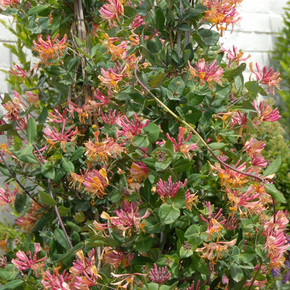
- Spectacular three-season color show — foliage emerges fiery bronze-red in spring, transitions to soft golden yellow-green in summer, then blazes into vivid copper-orange in fall.
- Profuse rose-pink flower clusters bloom in late spring to early summer, with a bonus rebloom when spent flowers are deadheaded, attracting butterflies and other pollinators.
- Compact, mounded habit reaching just 3 to 4 feet tall and wide makes it ideal for foundation plantings, low borders, walkway edging, and container gardens.
- Exceptionally low-maintenance, cold-hardy shrub that tolerates a wide range of soils including clay, urban conditions, and moderate drought once established.
Goldflame Spirea (Spiraea x bumalda 'Goldflame', syn. Spiraea japonica 'Goldflame') is a showstopping deciduous shrub that delivers extraordinary multi-season color in a compact, easy-care package — making it one of the most versatile and reliable flowering shrubs available for Pacific Coast and Pacific Northwest gardens. In spring, tightly serrated lance-shaped leaves burst from the branches in rich shades of bronze and coppery red, creating a display as bold as any flowering perennial. As warm temperatures settle in, the foliage mellows to a cheerful golden yellow-green, providing a bright contrast in the mixed border throughout summer. Flat-topped clusters of tiny rose-pink flowers smother the plant from late spring into early summer, drawing in butterflies, bees, and beneficial pollinators, with a welcome rebloom possible later in summer when faded flowers are trimmed away. Come autumn, the foliage transforms one final time into warm tones of copper, orange, and yellow before the plant drops its leaves for winter dormancy. Thriving in USDA Hardiness Zones 4 through 8 — a perfect fit for Southern Oregon and Northern California climates — Goldflame Spirea adapts readily to average garden soils and performs admirably in full sun where its foliage colors are most vivid and its flowering most prolific. Whether used as a foundation planting, a low hedge along a walkway, a mass planting on a sunny slope, or as a colorful accent in a mixed shrub border, this drought-tolerant, deer-resistant, and pollution-tolerant cultivar earns its place in nearly every landscape style, from cottage gardens to contemporary designs.
Plant Description
Goldflame Spirea is a dense, upright, mounded deciduous shrub in the rose family (Rosaceae) with a slightly spreading, somewhat irregular habit at maturity. Its lance-shaped to oval leaves are finely toothed and reach up to 3 inches long, providing a delicate, fine texture that contrasts beautifully against bolder-leaved companions. The plant produces flat-topped flower clusters called corymbs measuring up to 4 to 6 inches across, each made up of dozens of tiny rose-pink blooms. Blooms are followed by small, inconspicuous seed capsules. The botanical name Spiraea comes from the Greek word speira, meaning wreath, a reference to the showy garland-like flower clusters characteristic of the genus. This cultivar is sold under both Spiraea x bumalda 'Goldflame' and Spiraea japonica 'Goldflame' — both names refer to the same plant.
Foliage Color and Seasonal Interest
One of the most celebrated ornamental qualities of Goldflame Spirea is its dynamic, ever-changing foliage color throughout the growing season:
- Spring: New growth emerges in striking shades of bronze-red, russet-orange, and coppery red, creating a fiery spring display rivaling that of flowering shrubs.
- Summer: Foliage matures and transitions to warm golden yellow and soft yellow-green tones, remaining vibrant and bright throughout the warmest months.
- Fall: As temperatures cool, leaves shift into rich copper, orange, and yellow hues before the plant enters dormancy, extending the garden's color season well into autumn.
- Flowers: Rose-pink flat-topped clusters appear in late spring to early summer (typically June through July), adding a soft floral layer over the colorful foliage. Deadheading encourages intermittent rebloom through summer.
Mature Size
| Attribute | Measurement |
|---|---|
| Mature Height | 3 to 4 feet |
| Mature Spread | 3 to 4 feet (sometimes slightly wider) |
| Growth Rate | Moderate |
| Plant Habit | Dense, upright, mounded to slightly spreading |
| Plant Type | Deciduous shrub |
Hardiness Zones and Climate Tolerance
Goldflame Spirea is reliably hardy in USDA Hardiness Zones 4 through 8, making it an excellent performer across a wide range of climates including the diverse conditions found in Southern Oregon and Northern California. This cultivar is specifically noted for its good heat tolerance, an advantage in warmer inland valleys. During prolonged periods of extreme summer heat, supplemental watering will help the plant maintain healthy foliage color and vigor. It is also tolerant of urban conditions, including air pollution and compacted soils, making it a practical choice for street-side, parking lot, and residential streetscape plantings.
Sunlight Requirements
Goldflame Spirea performs best and displays its most vibrant foliage colors in full sun, which means a minimum of 6 hours of direct sunlight per day. While it will tolerate partial shade (approximately 3 to 6 hours of sun daily), reduced light conditions will noticeably mute the brilliant bronze, gold, and copper tones that make this shrub so distinctive. Flowering is also less prolific in shadier conditions. For the best ornamental effect — especially the fiery red spring growth and glowing fall color — choose a planting site that receives full sun for the majority of the day.
Soil and pH Preferences
Goldflame Spirea is notably adaptable and will grow in a wide range of soil types, but thrives best under the following conditions:
- Drainage: Well-drained soil is essential; standing water and waterlogged conditions can lead to root rot. Avoid planting in low spots where water pools after rain.
- Texture: Performs well in average, loamy, or even clay soils, provided drainage is adequate. Sandy soils benefit from the addition of organic matter to improve moisture retention.
- pH: Prefers a slightly acidic to neutral soil pH ranging from 6.0 to 7.0.
- Fertility: While adaptable to average or even poor soils, the plant performs most vigorously in rich, fertile loam amended with compost or organic matter at planting time.
- Tip: Incorporating 2 to 3 inches of compost into the planting hole improves both drainage in heavy clay and water retention in sandy soils.
Watering Guide
Proper watering is especially important during the establishment phase in the first one to two growing seasons:
- Newly planted shrubs: Water deeply and consistently to keep the root zone evenly moist. Aim to water once or twice per week, depending on temperatures and soil type, until the plant is fully established.
- Established plants: Once established, Goldflame Spirea develops moderate drought tolerance. Water deeply whenever the top 1 to 2 inches of soil feels dry. During prolonged dry spells — common in Southern Oregon and Northern California summers — supplemental irrigation is beneficial.
- Avoid overwatering: Consistently soggy soil promotes root rot. Always ensure good soil drainage before and after planting.
- Mulching: Apply a 2 to 3-inch layer of organic mulch (bark chips, shredded leaves, or wood mulch) around the base of the plant, keeping mulch several inches away from the stem. Mulch conserves soil moisture, moderates soil temperature, and reduces watering frequency.
Fertilizing
Goldflame Spirea is not a heavy feeder, but annual fertilization promotes healthy, vigorous growth and a strong flower display. Follow these guidelines for best results:
- Timing: Apply fertilizer once in early spring, just as new growth begins to emerge.
- Product: Use a balanced granular fertilizer formulated for flowering shrubs (such as a 10-10-10 or similar balanced formula) or a slow-release shrub fertilizer. Follow label directions carefully for application rates.
- Organic option: Top-dressing with 1 to 2 inches of compost each spring provides a gentle, slow-release source of nutrients and improves overall soil health.
- Caution: Avoid over-fertilizing, particularly with high-nitrogen products, as excess nitrogen encourages lush foliage growth at the expense of flower production and can diminish the plant's natural mounded form.
- Fall feeding: Avoid fertilizing in late summer or fall, as this can stimulate tender new growth vulnerable to frost damage.
Pruning and Maintenance
Goldflame Spirea blooms on new wood, meaning flowers are produced on growth that emerges in the current season. This characteristic guides all pruning timing and techniques:
- Best time to prune: Late winter to early spring, just before new growth begins. This timing encourages the most vigorous new growth and the best flower display for the upcoming season.
- Deadheading: Removing spent flower clusters throughout the blooming period with hand pruners or light shearing encourages the plant to rebloom later in summer. This is one of the easiest ways to extend the floral display.
- Annual shaping: Lightly trim branch tips in late winter to maintain a compact, tidy mounded shape and encourage denser, bushier growth.
- Renewal pruning: Every 3 to 4 years, prune approximately one-third of the oldest, most woody stems back to near ground level in late winter. This encourages fresh, vigorous new shoots from the base and prevents the plant from becoming overly woody or open in the center.
- Hard rejuvenation: Severely overgrown or neglected plants can be cut back hard to 6 to 12 inches from the ground in late winter. The plant will respond with strong new growth within the same season.
- Remove dead wood: Inspect the plant each spring and remove any dead, damaged, or crossing branches to maintain good air circulation and overall plant health.
Planting Instructions
- Select a planting location with full sun and well-drained soil. Avoid low-lying spots prone to standing water.
- Dig a planting hole twice as wide as the root ball and equal in depth. Wide holes encourage outward root spread and faster establishment.
- Mix the removed soil with compost or aged organic matter at a ratio of approximately 1 part amendment to 2 parts native soil to improve fertility and soil structure.
- Gently remove the plant from its container. Loosen or lightly score any circling roots to encourage outward growth into the surrounding soil.
- Set the plant in the hole so the top of the root ball sits level with, or very slightly above, the surrounding grade. Planting too deep can cause crown rot.
- Backfill the hole with the amended soil, firming it gently around the roots to eliminate air pockets. Do not mound soil against the stem.
- Water deeply and thoroughly immediately after planting to settle the soil.
- Apply a 2 to 3-inch layer of organic mulch over the root zone, starting a few inches away from the stem and extending out to the edge of the planting hole.
- For massed plantings or low hedges, space plants approximately 3 feet apart on center to allow for mature spread while achieving a full, connected appearance within a few seasons.
Landscape Uses
The compact size, bold foliage color, and adaptable nature of Goldflame Spirea make it one of the most versatile shrubs for the home landscape. Recommended uses include:
- Foundation plantings: Planted beneath windows, Goldflame Spirea's moderate height will never block views, while its seasonal color enlivens the home's exterior throughout the growing season.
- Mixed shrub and perennial borders: The golden foliage provides a vivid contrast when combined with deeper greens, burgundies, and blues in a layered border planting.
- Low hedges and edging: Plant in a row approximately 2 to 3 feet apart along walkways, driveways, or garden bed edges for a colorful, semi-formal low hedge.
- Mass plantings: Groupings of three or more plants on slopes or open areas create a dramatic, season-long sweep of color while providing excellent erosion control.
- Specimen or accent planting: Use as a single focal point specimen in a rock garden, at a pathway corner, or near an entry where its multi-season display can be enjoyed up close.
- Container gardening: Well-suited to large patio containers and planters, where it provides season-long color on decks, patios, and entryways.
- Butterfly gardens: The nectar-rich flowers are a magnet for butterflies and other beneficial insects, making this an excellent candidate for pollinator garden designs.
Companion Plants
Goldflame Spirea pairs beautifully with a wide range of shrubs, perennials, and ornamental grasses. The following companions complement its colorful foliage and mounded form especially well:
- Maiden Grass (Miscanthus sinensis): Tall, arching grass forms a graceful, contrasting backdrop that highlights the spirea's bold foliage colors.
- Purple Coneflower (Echinacea purpurea): Pink-purple flowers harmonize with the spirea's rose-pink blooms while providing a longer flowering season through summer and fall.
- Japanese Barberry (Berberis thunbergii): Deep burgundy or golden barberry cultivars create a dramatic foliage color contrast in the mixed border.
- Weigela (Weigela florida): Flowering shrubs with pink or red blooms complement the spirea's seasonal color display and similar cultural requirements.
- Blue Spruce (Picea pungens): The cool blue-silver foliage of a dwarf or standard spruce provides a stunning complementary backdrop for the spirea's warm bronze and gold tones.
- Lavender (Lavandula spp.): Silvery foliage and purple flower spikes provide an elegant textural and color contrast while also attracting pollinators.
- Salvia (Salvia nemorosa): Blue-violet flower spikes create a complementary cool-warm color pairing with Goldflame's golden foliage and pink flowers.
Wildlife Value
Goldflame Spirea is a valuable addition to wildlife-friendly and pollinator-focused gardens:
- Butterflies: The nectar-rich, flat-topped flower clusters are particularly attractive to butterflies, including swallowtails, skippers, and fritillaries, which use the flowers as a feeding station.
- Bees and beneficial insects: Honeybees, native bees, and a variety of beneficial insects are drawn to the blooms, supporting local pollinator populations.
- Deer resistance: Goldflame Spirea is generally considered deer-tolerant. While deer may occasionally browse the foliage, they typically do not cause significant or sustained damage, making this shrub a reliable choice in areas with moderate deer pressure.
- Birds: The dense, twiggy branching structure provides shelter and nesting cover for small songbirds.
Pests and Diseases
Goldflame Spirea is generally regarded as a low-maintenance, trouble-free shrub with no serious pest or disease problems under good cultural conditions. However, gardeners should be aware of the following potential issues:
- Aphids: Small, soft-bodied insects that cluster on new growth and the undersides of leaves, causing distorted or curled foliage and sticky honeydew deposits. Control with a strong jet of water from a garden hose, insecticidal soap, or horticultural oil spray.
- Spider mites: Tiny mites that thrive in hot, dry conditions, causing fine stippling and bronzing of leaves. Increase humidity around the plant, spray foliage with water regularly, and apply a miticide if populations are heavy.
- Scale insects: Appear as small waxy or crusty bumps on stems and branches, draining plant sap. Treat with horticultural oil during the dormant season or targeted insecticide applications during the crawler stage.
- Powdery mildew: White powdery fungal coating on leaf surfaces, most common in conditions with poor air circulation and high humidity. Prevent by ensuring adequate plant spacing and avoiding overhead irrigation. Treat established infections with an appropriate fungicide.
- Leaf spot: Circular or irregular lesions on foliage caused by fungal pathogens. Remove and dispose of affected leaves promptly. Improve air circulation and avoid wetting the foliage when watering.
- Root rot: Caused by overwatering or poorly drained soil. Prevent by planting in well-draining locations and allowing the soil to partially dry between watering events. There is no cure for advanced root rot; affected plants should be removed and replanted in a better-draining site.
- Fire blight: Occasional susceptibility as a member of the Rosaceae family. Remove and destroy any affected wood promptly, disinfecting pruning tools between cuts.
Container Growing
Goldflame Spirea adapts well to container culture and makes an outstanding patio or deck plant, bringing season-long foliage color and summer blooms to small outdoor spaces. For success in containers:
- Container size: Choose a container at least 14 to 18 inches in diameter and of equal depth to accommodate the root system and support healthy growth. Larger containers retain moisture longer and provide greater stability.
- Drainage: Ensure the container has ample drainage holes. Use a high-quality, well-draining potting mix rather than garden soil, which can compact in containers and impede drainage.
- Watering: Container plants dry out more quickly than in-ground plantings. Check soil moisture regularly and water when the top inch of the potting mix feels dry. During hot summer weather, daily watering may be necessary.
- Fertilizing: Feed container-grown specimens with a slow-release balanced granular fertilizer at the start of the growing season, or apply a liquid balanced fertilizer every 4 to 6 weeks during the growing season.
- Sunlight: Position containers in a location receiving at least 6 hours of direct sun daily for the best foliage color and flower production.
- Winter care: In Zone 7 and colder, move containers to a sheltered, unheated space such as a garage or shed during the coldest months to protect the roots from hard freezes, as container roots are more exposed to temperature extremes than those planted in the ground.
- Design tip: Pair with trailing annuals such as calibrachoa or bacopa at the container's edges for a stunning combination planting that highlights the spirea's colorful foliage.
- Spectacular three-season color show — foliage emerges fiery bronze-red in spring, transitions to soft golden yellow-green in summer, then blazes into vivid copper-orange in fall.
- Profuse rose-pink flower clusters bloom in late spring to early summer, with a bonus rebloom when spent flowers are deadheaded, attracting butterflies and other pollinators.
- Compact, mounded habit reaching just 3 to 4 feet tall and wide makes it ideal for foundation plantings, low borders, walkway edging, and container gardens.
- Exceptionally low-maintenance, cold-hardy shrub that tolerates a wide range of soils including clay, urban conditions, and moderate drought once established.
Goldflame Spirea (Spiraea x bumalda 'Goldflame', syn. Spiraea japonica 'Goldflame') is a showstopping deciduous shrub that delivers extraordinary multi-season color in a compact, easy-care package — making it one of the most versatile and reliable flowering shrubs available for Pacific Coast and Pacific Northwest gardens. In spring, tightly serrated lance-shaped leaves burst from the branches in rich shades of bronze and coppery red, creating a display as bold as any flowering perennial. As warm temperatures settle in, the foliage mellows to a cheerful golden yellow-green, providing a bright contrast in the mixed border throughout summer. Flat-topped clusters of tiny rose-pink flowers smother the plant from late spring into early summer, drawing in butterflies, bees, and beneficial pollinators, with a welcome rebloom possible later in summer when faded flowers are trimmed away. Come autumn, the foliage transforms one final time into warm tones of copper, orange, and yellow before the plant drops its leaves for winter dormancy. Thriving in USDA Hardiness Zones 4 through 8 — a perfect fit for Southern Oregon and Northern California climates — Goldflame Spirea adapts readily to average garden soils and performs admirably in full sun where its foliage colors are most vivid and its flowering most prolific. Whether used as a foundation planting, a low hedge along a walkway, a mass planting on a sunny slope, or as a colorful accent in a mixed shrub border, this drought-tolerant, deer-resistant, and pollution-tolerant cultivar earns its place in nearly every landscape style, from cottage gardens to contemporary designs.
Plant Description
Goldflame Spirea is a dense, upright, mounded deciduous shrub in the rose family (Rosaceae) with a slightly spreading, somewhat irregular habit at maturity. Its lance-shaped to oval leaves are finely toothed and reach up to 3 inches long, providing a delicate, fine texture that contrasts beautifully against bolder-leaved companions. The plant produces flat-topped flower clusters called corymbs measuring up to 4 to 6 inches across, each made up of dozens of tiny rose-pink blooms. Blooms are followed by small, inconspicuous seed capsules. The botanical name Spiraea comes from the Greek word speira, meaning wreath, a reference to the showy garland-like flower clusters characteristic of the genus. This cultivar is sold under both Spiraea x bumalda 'Goldflame' and Spiraea japonica 'Goldflame' — both names refer to the same plant.
Foliage Color and Seasonal Interest
One of the most celebrated ornamental qualities of Goldflame Spirea is its dynamic, ever-changing foliage color throughout the growing season:
- Spring: New growth emerges in striking shades of bronze-red, russet-orange, and coppery red, creating a fiery spring display rivaling that of flowering shrubs.
- Summer: Foliage matures and transitions to warm golden yellow and soft yellow-green tones, remaining vibrant and bright throughout the warmest months.
- Fall: As temperatures cool, leaves shift into rich copper, orange, and yellow hues before the plant enters dormancy, extending the garden's color season well into autumn.
- Flowers: Rose-pink flat-topped clusters appear in late spring to early summer (typically June through July), adding a soft floral layer over the colorful foliage. Deadheading encourages intermittent rebloom through summer.
Mature Size
| Attribute | Measurement |
|---|---|
| Mature Height | 3 to 4 feet |
| Mature Spread | 3 to 4 feet (sometimes slightly wider) |
| Growth Rate | Moderate |
| Plant Habit | Dense, upright, mounded to slightly spreading |
| Plant Type | Deciduous shrub |
Hardiness Zones and Climate Tolerance
Goldflame Spirea is reliably hardy in USDA Hardiness Zones 4 through 8, making it an excellent performer across a wide range of climates including the diverse conditions found in Southern Oregon and Northern California. This cultivar is specifically noted for its good heat tolerance, an advantage in warmer inland valleys. During prolonged periods of extreme summer heat, supplemental watering will help the plant maintain healthy foliage color and vigor. It is also tolerant of urban conditions, including air pollution and compacted soils, making it a practical choice for street-side, parking lot, and residential streetscape plantings.
Sunlight Requirements
Goldflame Spirea performs best and displays its most vibrant foliage colors in full sun, which means a minimum of 6 hours of direct sunlight per day. While it will tolerate partial shade (approximately 3 to 6 hours of sun daily), reduced light conditions will noticeably mute the brilliant bronze, gold, and copper tones that make this shrub so distinctive. Flowering is also less prolific in shadier conditions. For the best ornamental effect — especially the fiery red spring growth and glowing fall color — choose a planting site that receives full sun for the majority of the day.
Soil and pH Preferences
Goldflame Spirea is notably adaptable and will grow in a wide range of soil types, but thrives best under the following conditions:
- Drainage: Well-drained soil is essential; standing water and waterlogged conditions can lead to root rot. Avoid planting in low spots where water pools after rain.
- Texture: Performs well in average, loamy, or even clay soils, provided drainage is adequate. Sandy soils benefit from the addition of organic matter to improve moisture retention.
- pH: Prefers a slightly acidic to neutral soil pH ranging from 6.0 to 7.0.
- Fertility: While adaptable to average or even poor soils, the plant performs most vigorously in rich, fertile loam amended with compost or organic matter at planting time.
- Tip: Incorporating 2 to 3 inches of compost into the planting hole improves both drainage in heavy clay and water retention in sandy soils.
Watering Guide
Proper watering is especially important during the establishment phase in the first one to two growing seasons:
- Newly planted shrubs: Water deeply and consistently to keep the root zone evenly moist. Aim to water once or twice per week, depending on temperatures and soil type, until the plant is fully established.
- Established plants: Once established, Goldflame Spirea develops moderate drought tolerance. Water deeply whenever the top 1 to 2 inches of soil feels dry. During prolonged dry spells — common in Southern Oregon and Northern California summers — supplemental irrigation is beneficial.
- Avoid overwatering: Consistently soggy soil promotes root rot. Always ensure good soil drainage before and after planting.
- Mulching: Apply a 2 to 3-inch layer of organic mulch (bark chips, shredded leaves, or wood mulch) around the base of the plant, keeping mulch several inches away from the stem. Mulch conserves soil moisture, moderates soil temperature, and reduces watering frequency.
Fertilizing
Goldflame Spirea is not a heavy feeder, but annual fertilization promotes healthy, vigorous growth and a strong flower display. Follow these guidelines for best results:
- Timing: Apply fertilizer once in early spring, just as new growth begins to emerge.
- Product: Use a balanced granular fertilizer formulated for flowering shrubs (such as a 10-10-10 or similar balanced formula) or a slow-release shrub fertilizer. Follow label directions carefully for application rates.
- Organic option: Top-dressing with 1 to 2 inches of compost each spring provides a gentle, slow-release source of nutrients and improves overall soil health.
- Caution: Avoid over-fertilizing, particularly with high-nitrogen products, as excess nitrogen encourages lush foliage growth at the expense of flower production and can diminish the plant's natural mounded form.
- Fall feeding: Avoid fertilizing in late summer or fall, as this can stimulate tender new growth vulnerable to frost damage.
Pruning and Maintenance
Goldflame Spirea blooms on new wood, meaning flowers are produced on growth that emerges in the current season. This characteristic guides all pruning timing and techniques:
- Best time to prune: Late winter to early spring, just before new growth begins. This timing encourages the most vigorous new growth and the best flower display for the upcoming season.
- Deadheading: Removing spent flower clusters throughout the blooming period with hand pruners or light shearing encourages the plant to rebloom later in summer. This is one of the easiest ways to extend the floral display.
- Annual shaping: Lightly trim branch tips in late winter to maintain a compact, tidy mounded shape and encourage denser, bushier growth.
- Renewal pruning: Every 3 to 4 years, prune approximately one-third of the oldest, most woody stems back to near ground level in late winter. This encourages fresh, vigorous new shoots from the base and prevents the plant from becoming overly woody or open in the center.
- Hard rejuvenation: Severely overgrown or neglected plants can be cut back hard to 6 to 12 inches from the ground in late winter. The plant will respond with strong new growth within the same season.
- Remove dead wood: Inspect the plant each spring and remove any dead, damaged, or crossing branches to maintain good air circulation and overall plant health.
Planting Instructions
- Select a planting location with full sun and well-drained soil. Avoid low-lying spots prone to standing water.
- Dig a planting hole twice as wide as the root ball and equal in depth. Wide holes encourage outward root spread and faster establishment.
- Mix the removed soil with compost or aged organic matter at a ratio of approximately 1 part amendment to 2 parts native soil to improve fertility and soil structure.
- Gently remove the plant from its container. Loosen or lightly score any circling roots to encourage outward growth into the surrounding soil.
- Set the plant in the hole so the top of the root ball sits level with, or very slightly above, the surrounding grade. Planting too deep can cause crown rot.
- Backfill the hole with the amended soil, firming it gently around the roots to eliminate air pockets. Do not mound soil against the stem.
- Water deeply and thoroughly immediately after planting to settle the soil.
- Apply a 2 to 3-inch layer of organic mulch over the root zone, starting a few inches away from the stem and extending out to the edge of the planting hole.
- For massed plantings or low hedges, space plants approximately 3 feet apart on center to allow for mature spread while achieving a full, connected appearance within a few seasons.
Landscape Uses
The compact size, bold foliage color, and adaptable nature of Goldflame Spirea make it one of the most versatile shrubs for the home landscape. Recommended uses include:
- Foundation plantings: Planted beneath windows, Goldflame Spirea's moderate height will never block views, while its seasonal color enlivens the home's exterior throughout the growing season.
- Mixed shrub and perennial borders: The golden foliage provides a vivid contrast when combined with deeper greens, burgundies, and blues in a layered border planting.
- Low hedges and edging: Plant in a row approximately 2 to 3 feet apart along walkways, driveways, or garden bed edges for a colorful, semi-formal low hedge.
- Mass plantings: Groupings of three or more plants on slopes or open areas create a dramatic, season-long sweep of color while providing excellent erosion control.
- Specimen or accent planting: Use as a single focal point specimen in a rock garden, at a pathway corner, or near an entry where its multi-season display can be enjoyed up close.
- Container gardening: Well-suited to large patio containers and planters, where it provides season-long color on decks, patios, and entryways.
- Butterfly gardens: The nectar-rich flowers are a magnet for butterflies and other beneficial insects, making this an excellent candidate for pollinator garden designs.
Companion Plants
Goldflame Spirea pairs beautifully with a wide range of shrubs, perennials, and ornamental grasses. The following companions complement its colorful foliage and mounded form especially well:
- Maiden Grass (Miscanthus sinensis): Tall, arching grass forms a graceful, contrasting backdrop that highlights the spirea's bold foliage colors.
- Purple Coneflower (Echinacea purpurea): Pink-purple flowers harmonize with the spirea's rose-pink blooms while providing a longer flowering season through summer and fall.
- Japanese Barberry (Berberis thunbergii): Deep burgundy or golden barberry cultivars create a dramatic foliage color contrast in the mixed border.
- Weigela (Weigela florida): Flowering shrubs with pink or red blooms complement the spirea's seasonal color display and similar cultural requirements.
- Blue Spruce (Picea pungens): The cool blue-silver foliage of a dwarf or standard spruce provides a stunning complementary backdrop for the spirea's warm bronze and gold tones.
- Lavender (Lavandula spp.): Silvery foliage and purple flower spikes provide an elegant textural and color contrast while also attracting pollinators.
- Salvia (Salvia nemorosa): Blue-violet flower spikes create a complementary cool-warm color pairing with Goldflame's golden foliage and pink flowers.
Wildlife Value
Goldflame Spirea is a valuable addition to wildlife-friendly and pollinator-focused gardens:
- Butterflies: The nectar-rich, flat-topped flower clusters are particularly attractive to butterflies, including swallowtails, skippers, and fritillaries, which use the flowers as a feeding station.
- Bees and beneficial insects: Honeybees, native bees, and a variety of beneficial insects are drawn to the blooms, supporting local pollinator populations.
- Deer resistance: Goldflame Spirea is generally considered deer-tolerant. While deer may occasionally browse the foliage, they typically do not cause significant or sustained damage, making this shrub a reliable choice in areas with moderate deer pressure.
- Birds: The dense, twiggy branching structure provides shelter and nesting cover for small songbirds.
Pests and Diseases
Goldflame Spirea is generally regarded as a low-maintenance, trouble-free shrub with no serious pest or disease problems under good cultural conditions. However, gardeners should be aware of the following potential issues:
- Aphids: Small, soft-bodied insects that cluster on new growth and the undersides of leaves, causing distorted or curled foliage and sticky honeydew deposits. Control with a strong jet of water from a garden hose, insecticidal soap, or horticultural oil spray.
- Spider mites: Tiny mites that thrive in hot, dry conditions, causing fine stippling and bronzing of leaves. Increase humidity around the plant, spray foliage with water regularly, and apply a miticide if populations are heavy.
- Scale insects: Appear as small waxy or crusty bumps on stems and branches, draining plant sap. Treat with horticultural oil during the dormant season or targeted insecticide applications during the crawler stage.
- Powdery mildew: White powdery fungal coating on leaf surfaces, most common in conditions with poor air circulation and high humidity. Prevent by ensuring adequate plant spacing and avoiding overhead irrigation. Treat established infections with an appropriate fungicide.
- Leaf spot: Circular or irregular lesions on foliage caused by fungal pathogens. Remove and dispose of affected leaves promptly. Improve air circulation and avoid wetting the foliage when watering.
- Root rot: Caused by overwatering or poorly drained soil. Prevent by planting in well-draining locations and allowing the soil to partially dry between watering events. There is no cure for advanced root rot; affected plants should be removed and replanted in a better-draining site.
- Fire blight: Occasional susceptibility as a member of the Rosaceae family. Remove and destroy any affected wood promptly, disinfecting pruning tools between cuts.
Container Growing
Goldflame Spirea adapts well to container culture and makes an outstanding patio or deck plant, bringing season-long foliage color and summer blooms to small outdoor spaces. For success in containers:
- Container size: Choose a container at least 14 to 18 inches in diameter and of equal depth to accommodate the root system and support healthy growth. Larger containers retain moisture longer and provide greater stability.
- Drainage: Ensure the container has ample drainage holes. Use a high-quality, well-draining potting mix rather than garden soil, which can compact in containers and impede drainage.
- Watering: Container plants dry out more quickly than in-ground plantings. Check soil moisture regularly and water when the top inch of the potting mix feels dry. During hot summer weather, daily watering may be necessary.
- Fertilizing: Feed container-grown specimens with a slow-release balanced granular fertilizer at the start of the growing season, or apply a liquid balanced fertilizer every 4 to 6 weeks during the growing season.
- Sunlight: Position containers in a location receiving at least 6 hours of direct sun daily for the best foliage color and flower production.
- Winter care: In Zone 7 and colder, move containers to a sheltered, unheated space such as a garage or shed during the coldest months to protect the roots from hard freezes, as container roots are more exposed to temperature extremes than those planted in the ground.
- Design tip: Pair with trailing annuals such as calibrachoa or bacopa at the container's edges for a stunning combination planting that highlights the spirea's colorful foliage.
Related Products