

Zoom the image with the mouse
Walberton's Plumtastic Spirea - 2 Gallon
SKU:
2099685
UPC:
014949451427
$31.99
- Eye-catching deep plum-purple new foliage flushes continuously throughout the growing season, maturing to rich deep green, then turning reddish-purple in fall for true multi-season interest.
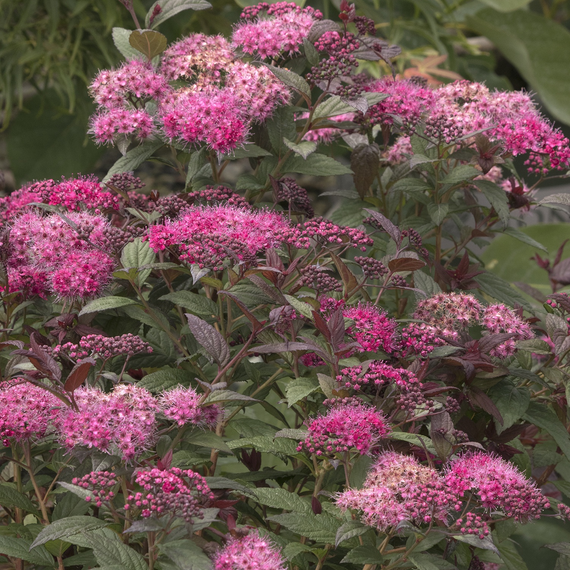
- Vibrant purple-red buds open to bold cerise-pink flower clusters that bloom repeatedly from summer into fall, providing months of vivid color and attracting bees and butterflies.
- Exceptionally tidy, mounded, and compact form — reaching just 16 to 24 inches tall and wide — makes it a perfect fit for borders, pathway edging, patio containers, and small-space gardens.
- Cold-hardy to -40°F (USDA Zone 3) and drought-tolerant once established, this low-maintenance dwarf shrub thrives with minimal pruning and adapts to a wide range of garden conditions.
Walberton's Plumtastic Spirea (Spiraea japonica 'Walplum', PP #29,405) is a standout compact deciduous shrub that delivers bold, multi-season color in a beautifully tidy, mounded form. One of its most striking qualities is the way rich, deep plum-purple new growth flushes from the tips throughout the entire growing season, creating a dramatic living tapestry as it gradually deepens to forest green by midsummer before transitioning to warm reddish-purple hues in fall. From summer well into autumn, rounded clusters of vivid purple-red buds burst open into bright cerise-pink blooms that float above the colorful foliage in a stunning display of contrast. A certified pollinator magnet, this spirea reliably draws bees and butterflies to the garden with each successive flush of flowers. Originally bred in the United Kingdom and part of the prestigious Walberton's collection, this cultivar is exceptionally cold-hardy, surviving temperatures as low as -40°F, while also becoming impressively drought-tolerant once established — making it as tough as it is beautiful. Whether used as a low-growing border specimen, mass-planted along a walkway, tucked into a mixed perennial bed, or grown as a showpiece in a patio container, Walberton's Plumtastic Spirea brings professional-grade color and form to any landscape with very little effort required from the gardener.
Plant Description
Walberton's Plumtastic Spirea is a dense, bushy, deciduous shrub in the rose family (Rosaceae) grown for its exceptional combination of colorful foliage and vivid repeat-blooming flowers. The leaves emerge each spring as a rich, deep plum-red, flushing continuously from new growth tips throughout the entire growing season. By midsummer the foliage matures to a deep, lustrous green, and as temperatures cool in autumn it transitions to warm reddish-purple tones before the plant goes dormant. Beginning in early summer and continuing into fall, rounded, flattened corymbs of small, bright cerise-pink flowers appear above the foliage. The buds open a deep purple-red, adding an additional layer of ornamental interest just before the blooms fully unfurl. The plant forms a naturally tight, mounded shape that requires little to no corrective pruning to maintain its good looks. This cultivar holds the plant patent PP #29,405 and was developed in the United Kingdom as part of the Walberton's horticultural breeding program.
Mature Size
| Characteristic | Measurement |
|---|---|
| Mature Height | 16 to 24 inches (approx. 41 to 61 cm) |
| Mature Spread | 16 to 24 inches (approx. 41 to 61 cm) |
| Growth Habit | Dense, mounded, compact |
| Growth Rate | Moderate |
| Time to Mature Size | 5 to 10 years |
Hardiness and Climate
Walberton's Plumtastic Spirea is an exceptionally cold-hardy plant that thrives across a very wide range of climates. It is rated for USDA Hardiness Zones 3 through 9, tolerating winter lows as extreme as -40°F (-40°C). This makes it one of the hardiest compact spireas available for home gardens. It is also well-suited to gardens in Southern Oregon and Northern California, performing reliably in both the mild coastal climates and the hotter inland valleys of these regions. In warmer Zone 8 and 9 climates, situating the plant where it receives some afternoon shade can help preserve the intensity of its purple foliage color and prolong the blooming season. It has been noted to grow successfully at elevations up to 8,000 feet.
Sunlight Requirements
This spirea performs best and produces its most vivid foliage color and heaviest flower production when grown in full sun, which is defined as a minimum of 6 hours of direct sunlight per day. It can tolerate partial shade (4 to 6 hours of direct sun), but foliage color intensity and flower count may be somewhat reduced under lower light conditions. In hotter inland climates, some light afternoon shade can be beneficial to prevent leaf scorch and help maintain the richness of the plum-purple foliage color. Avoid planting in deep or full shade, as this will lead to poor flowering, faded foliage color, and a looser, less attractive growth habit.
Soil and pH Preferences
Walberton's Plumtastic Spirea is adaptable to a wide range of soil types and pH levels, making it a versatile choice for most garden situations. It grows best in moist, well-drained soil but can tolerate clay soils as long as they are not consistently waterlogged. Sandy or loamy soils that drain freely are also well-suited. The plant tolerates acidic, neutral, and mildly alkaline soil pH levels — generally performing well in a pH range of approximately 5.5 to 7.5. Amending compacted or clay-heavy soils with organic compost before planting will improve drainage and promote healthier establishment. Good soil drainage is particularly important, as standing water or consistently saturated roots can cause decline.
Watering Guide
During the first growing season after planting, water Walberton's Plumtastic Spirea deeply and consistently — approximately once or twice per week depending on weather conditions — to help it develop a strong root system. Once the plant is established (typically after one full growing season), it becomes notably drought-tolerant and requires far less supplemental irrigation. Established plants generally perform well with about 1 inch of water per week from either rainfall or irrigation. During periods of extreme heat or prolonged drought, increase watering frequency to keep the soil lightly moist but not waterlogged. Always allow the top inch of soil to dry slightly between waterings to prevent root rot. Applying a 2 to 3 inch layer of mulch around the base of the plant will help conserve soil moisture, regulate soil temperature, and reduce the frequency of watering needed.
Fertilizing
Walberton's Plumtastic Spirea is not a heavy feeder and thrives with modest fertilization. Apply a balanced, slow-release granular fertilizer formulated for flowering shrubs (such as a 10-10-10 or similar analysis) once in early spring just as new growth begins to emerge. This single annual application is generally sufficient to support healthy foliage color and strong flowering throughout the season. Avoid over-fertilizing, particularly with high-nitrogen formulations, as excessive nitrogen encourages lush but weak vegetative growth at the expense of flowers and compact form. For container-grown plants, a diluted liquid balanced fertilizer applied once every four to six weeks during the active growing season may be more appropriate. Top-dressing with compost in spring is also an excellent, gentle way to provide supplemental nutrition.
Pruning and Maintenance
Walberton's Plumtastic Spirea blooms on new wood (current season's growth), so the best time to perform any significant pruning is in late winter or early spring before new growth begins. At this time, cut all stems back to within approximately 10 to 12 inches of ground level to stimulate vigorous new growth and a full season of blooms. Because of its naturally tidy, compact habit, major annual pruning is not always necessary — light shaping may be all that is needed in many years. Deadheading spent flower clusters after the first flush of bloom encourages the plant to produce additional flushes of flowers through fall. Remove any dead, damaged, or crossing branches as needed throughout the growing season. Applying a 2 to 3 inch layer of organic mulch around the base each spring helps retain moisture and suppress weeds with minimal effort.
Planting Instructions
- Choose a planting location that receives full sun to partial shade with well-drained soil. Spring or fall are the ideal planting seasons to reduce transplant stress.
- Dig a planting hole two to three times as wide as the root ball and approximately equal to its depth.
- If your native soil is heavy clay or very sandy, mix in a generous amount of compost or other organic matter to improve drainage and structure.
- Remove the plant from its container and gently loosen any circling or compressed roots. Place the shrub in the hole so that the top of the root ball sits level with or very slightly above the surrounding soil grade.
- Backfill the hole with the amended native soil, firming it gently around the root ball to eliminate air pockets.
- Water thoroughly at the time of planting to settle the soil and remove air pockets around the roots.
- Apply a 2 to 3 inch layer of organic mulch over the root zone, keeping it a few inches away from the main stems to prevent moisture-related rot.
- Water deeply once or twice per week for the first growing season until the plant is fully established.
- When planting multiple shrubs for a border or mass planting, space plants approximately 18 to 24 inches apart (center to center) to allow room for mature spread.
Seasonal Interest
| Season | Ornamental Feature |
|---|---|
| Spring | Rich, deep plum-red new foliage emerges with striking intensity; color flushes from all new growth tips |
| Early Summer | First flush of vibrant cerise-pink flower clusters appears above the colorful foliage; continued flush of purple new growth |
| Midsummer to Fall | Repeat blooming continues with successive flower flushes; foliage matures to deep green while new growth remains purple |
| Autumn | Foliage transitions to warm reddish-purple tones, adding a final season of color before dormancy |
| Winter | Tidy, compact branching structure provides low-profile garden form during dormancy |
Landscape Uses
Thanks to its compact size, vivid foliage color, and long blooming season, Walberton's Plumtastic Spirea is one of the most versatile small shrubs available for the landscape. Suggested uses include:
- Low-growing front-of-border specimen or accent plant in mixed perennial or shrub beds
- Edging along pathways, driveways, or garden walkways where its tidy mounded form creates a clean, defined edge
- Mass planting for a bold carpet of color in larger garden areas or on slopes
- Foundation planting under windows or along building foundations where a low profile is desired
- Container and patio planting, including decorative pots, urns, and raised planters
- City and courtyard gardens where space is limited
- Pollinator and wildlife gardens to attract bees and butterflies
- Cottage, informal, and coastal garden styles
- Low informal hedging or dividing element between garden areas
Companion Plants
Walberton's Plumtastic Spirea pairs beautifully with plants that share similar sun and drainage requirements and that complement or contrast its deep purple foliage and cerise-pink blooms. Excellent companion choices include:
- Russian Sage (Perovskia atriplicifolia) - airy silver-blue spikes create a stunning cool-toned contrast to the warm purple foliage
- Salvia - upright purple or blue flower spikes complement the cerise blooms and attract pollinators
- Coneflower (Echinacea) - bold, daisy-like blooms extend seasonal color and share similar sun and water needs
- Black-eyed Susan (Rudbeckia) - golden-yellow blooms create a vibrant warm-toned contrast against the purple foliage
- Catmint (Nepeta) - low-spreading habit and soft lavender-blue flowers pair naturally with the mounding spirea form
- Coreopsis - cheerful yellow blooms and fine-textured foliage complement the bold coloring of Plumtastic
- Lavender - shares full sun and well-drained soil preferences; fragrant silver-grey foliage harmonizes beautifully
- Ninebark (Physocarpus) - offers larger shrub structure and complementary foliage tones for mixed border backgrounds
- Weigela - similar bloom timing and flowering shrub character; works well in mixed shrub groupings
- Barberry (Berberis) - striking foliage color and texture contrast; shares heat and drought tolerance
Wildlife Value
Walberton's Plumtastic Spirea is a recognized pollinator-friendly plant. The abundant clusters of nectar-rich cerise-pink flowers produced from summer through fall provide a reliable and extended food source for a variety of beneficial insects. It is particularly attractive to bees, including honeybees and native bumblebees, as well as numerous butterfly species that visit the flowers for nectar. It has been identified by horticultural authorities as a plant for pollinators. Because it blooms repeatedly over a long season, it provides consistent support for pollinator populations throughout the warm months of the year. The dense, mounded shrub habit may also offer light shelter for small beneficial insects at ground level.
Container Growing
The compact, mounded habit and modest mature size of Walberton's Plumtastic Spirea make it an excellent candidate for container and patio growing. When planting in a container, select a pot that is at least 12 to 16 inches in diameter with adequate drainage holes to prevent waterlogging. Use a high-quality, well-draining potting mix. Container-grown plants will need more frequent watering than those planted in the ground, as pots dry out more quickly — check soil moisture every one to two days during hot weather. Fertilize with a diluted balanced liquid fertilizer every four to six weeks during the active growing season to compensate for nutrients that leach out with regular watering. In colder climates, containers may need to be moved to a sheltered, unheated location during winter to prevent the root ball from freezing solid. In the mild climates of Southern Oregon and Northern California, containerized plants typically overwinter successfully on a protected porch or patio. Repot into a slightly larger container every two to three years as needed.
Pests and Diseases
Walberton's Plumtastic Spirea is considered generally pest-resistant and disease-resistant, making it a reliable, low-maintenance landscape choice. Under normal growing conditions and with adequate air circulation, problems are rare. Occasionally, the following minor issues may occur:
- Aphids: Small, soft-bodied insects may cluster on new growth in spring. A strong spray of water or an application of insecticidal soap typically provides effective control.
- Spider Mites: May appear during periods of hot, dry weather. Adequate irrigation and increased humidity around the plant help deter them. Insecticidal soap or neem oil can be used for treatment if needed.
- Leaf Spot: Fungal leaf spot can occasionally appear in conditions of poor air circulation or overly wet foliage. Avoid overhead watering and ensure adequate spacing between plants to minimize risk.
- Honey Fungus (Armillaria): This soil-borne fungal disease is a very rare risk. Planting in well-drained soil and avoiding excessive moisture around the root zone is the best preventive measure.
Overall, maintaining proper planting conditions — well-drained soil, good air circulation, and appropriate watering practices — will keep this shrub healthy and trouble-free in the vast majority of garden settings.
- Eye-catching deep plum-purple new foliage flushes continuously throughout the growing season, maturing to rich deep green, then turning reddish-purple in fall for true multi-season interest.
- Vibrant purple-red buds open to bold cerise-pink flower clusters that bloom repeatedly from summer into fall, providing months of vivid color and attracting bees and butterflies.
- Exceptionally tidy, mounded, and compact form — reaching just 16 to 24 inches tall and wide — makes it a perfect fit for borders, pathway edging, patio containers, and small-space gardens.
- Cold-hardy to -40°F (USDA Zone 3) and drought-tolerant once established, this low-maintenance dwarf shrub thrives with minimal pruning and adapts to a wide range of garden conditions.
Walberton's Plumtastic Spirea (Spiraea japonica 'Walplum', PP #29,405) is a standout compact deciduous shrub that delivers bold, multi-season color in a beautifully tidy, mounded form. One of its most striking qualities is the way rich, deep plum-purple new growth flushes from the tips throughout the entire growing season, creating a dramatic living tapestry as it gradually deepens to forest green by midsummer before transitioning to warm reddish-purple hues in fall. From summer well into autumn, rounded clusters of vivid purple-red buds burst open into bright cerise-pink blooms that float above the colorful foliage in a stunning display of contrast. A certified pollinator magnet, this spirea reliably draws bees and butterflies to the garden with each successive flush of flowers. Originally bred in the United Kingdom and part of the prestigious Walberton's collection, this cultivar is exceptionally cold-hardy, surviving temperatures as low as -40°F, while also becoming impressively drought-tolerant once established — making it as tough as it is beautiful. Whether used as a low-growing border specimen, mass-planted along a walkway, tucked into a mixed perennial bed, or grown as a showpiece in a patio container, Walberton's Plumtastic Spirea brings professional-grade color and form to any landscape with very little effort required from the gardener.
Plant Description
Walberton's Plumtastic Spirea is a dense, bushy, deciduous shrub in the rose family (Rosaceae) grown for its exceptional combination of colorful foliage and vivid repeat-blooming flowers. The leaves emerge each spring as a rich, deep plum-red, flushing continuously from new growth tips throughout the entire growing season. By midsummer the foliage matures to a deep, lustrous green, and as temperatures cool in autumn it transitions to warm reddish-purple tones before the plant goes dormant. Beginning in early summer and continuing into fall, rounded, flattened corymbs of small, bright cerise-pink flowers appear above the foliage. The buds open a deep purple-red, adding an additional layer of ornamental interest just before the blooms fully unfurl. The plant forms a naturally tight, mounded shape that requires little to no corrective pruning to maintain its good looks. This cultivar holds the plant patent PP #29,405 and was developed in the United Kingdom as part of the Walberton's horticultural breeding program.
Mature Size
| Characteristic | Measurement |
|---|---|
| Mature Height | 16 to 24 inches (approx. 41 to 61 cm) |
| Mature Spread | 16 to 24 inches (approx. 41 to 61 cm) |
| Growth Habit | Dense, mounded, compact |
| Growth Rate | Moderate |
| Time to Mature Size | 5 to 10 years |
Hardiness and Climate
Walberton's Plumtastic Spirea is an exceptionally cold-hardy plant that thrives across a very wide range of climates. It is rated for USDA Hardiness Zones 3 through 9, tolerating winter lows as extreme as -40°F (-40°C). This makes it one of the hardiest compact spireas available for home gardens. It is also well-suited to gardens in Southern Oregon and Northern California, performing reliably in both the mild coastal climates and the hotter inland valleys of these regions. In warmer Zone 8 and 9 climates, situating the plant where it receives some afternoon shade can help preserve the intensity of its purple foliage color and prolong the blooming season. It has been noted to grow successfully at elevations up to 8,000 feet.
Sunlight Requirements
This spirea performs best and produces its most vivid foliage color and heaviest flower production when grown in full sun, which is defined as a minimum of 6 hours of direct sunlight per day. It can tolerate partial shade (4 to 6 hours of direct sun), but foliage color intensity and flower count may be somewhat reduced under lower light conditions. In hotter inland climates, some light afternoon shade can be beneficial to prevent leaf scorch and help maintain the richness of the plum-purple foliage color. Avoid planting in deep or full shade, as this will lead to poor flowering, faded foliage color, and a looser, less attractive growth habit.
Soil and pH Preferences
Walberton's Plumtastic Spirea is adaptable to a wide range of soil types and pH levels, making it a versatile choice for most garden situations. It grows best in moist, well-drained soil but can tolerate clay soils as long as they are not consistently waterlogged. Sandy or loamy soils that drain freely are also well-suited. The plant tolerates acidic, neutral, and mildly alkaline soil pH levels — generally performing well in a pH range of approximately 5.5 to 7.5. Amending compacted or clay-heavy soils with organic compost before planting will improve drainage and promote healthier establishment. Good soil drainage is particularly important, as standing water or consistently saturated roots can cause decline.
Watering Guide
During the first growing season after planting, water Walberton's Plumtastic Spirea deeply and consistently — approximately once or twice per week depending on weather conditions — to help it develop a strong root system. Once the plant is established (typically after one full growing season), it becomes notably drought-tolerant and requires far less supplemental irrigation. Established plants generally perform well with about 1 inch of water per week from either rainfall or irrigation. During periods of extreme heat or prolonged drought, increase watering frequency to keep the soil lightly moist but not waterlogged. Always allow the top inch of soil to dry slightly between waterings to prevent root rot. Applying a 2 to 3 inch layer of mulch around the base of the plant will help conserve soil moisture, regulate soil temperature, and reduce the frequency of watering needed.
Fertilizing
Walberton's Plumtastic Spirea is not a heavy feeder and thrives with modest fertilization. Apply a balanced, slow-release granular fertilizer formulated for flowering shrubs (such as a 10-10-10 or similar analysis) once in early spring just as new growth begins to emerge. This single annual application is generally sufficient to support healthy foliage color and strong flowering throughout the season. Avoid over-fertilizing, particularly with high-nitrogen formulations, as excessive nitrogen encourages lush but weak vegetative growth at the expense of flowers and compact form. For container-grown plants, a diluted liquid balanced fertilizer applied once every four to six weeks during the active growing season may be more appropriate. Top-dressing with compost in spring is also an excellent, gentle way to provide supplemental nutrition.
Pruning and Maintenance
Walberton's Plumtastic Spirea blooms on new wood (current season's growth), so the best time to perform any significant pruning is in late winter or early spring before new growth begins. At this time, cut all stems back to within approximately 10 to 12 inches of ground level to stimulate vigorous new growth and a full season of blooms. Because of its naturally tidy, compact habit, major annual pruning is not always necessary — light shaping may be all that is needed in many years. Deadheading spent flower clusters after the first flush of bloom encourages the plant to produce additional flushes of flowers through fall. Remove any dead, damaged, or crossing branches as needed throughout the growing season. Applying a 2 to 3 inch layer of organic mulch around the base each spring helps retain moisture and suppress weeds with minimal effort.
Planting Instructions
- Choose a planting location that receives full sun to partial shade with well-drained soil. Spring or fall are the ideal planting seasons to reduce transplant stress.
- Dig a planting hole two to three times as wide as the root ball and approximately equal to its depth.
- If your native soil is heavy clay or very sandy, mix in a generous amount of compost or other organic matter to improve drainage and structure.
- Remove the plant from its container and gently loosen any circling or compressed roots. Place the shrub in the hole so that the top of the root ball sits level with or very slightly above the surrounding soil grade.
- Backfill the hole with the amended native soil, firming it gently around the root ball to eliminate air pockets.
- Water thoroughly at the time of planting to settle the soil and remove air pockets around the roots.
- Apply a 2 to 3 inch layer of organic mulch over the root zone, keeping it a few inches away from the main stems to prevent moisture-related rot.
- Water deeply once or twice per week for the first growing season until the plant is fully established.
- When planting multiple shrubs for a border or mass planting, space plants approximately 18 to 24 inches apart (center to center) to allow room for mature spread.
Seasonal Interest
| Season | Ornamental Feature |
|---|---|
| Spring | Rich, deep plum-red new foliage emerges with striking intensity; color flushes from all new growth tips |
| Early Summer | First flush of vibrant cerise-pink flower clusters appears above the colorful foliage; continued flush of purple new growth |
| Midsummer to Fall | Repeat blooming continues with successive flower flushes; foliage matures to deep green while new growth remains purple |
| Autumn | Foliage transitions to warm reddish-purple tones, adding a final season of color before dormancy |
| Winter | Tidy, compact branching structure provides low-profile garden form during dormancy |
Landscape Uses
Thanks to its compact size, vivid foliage color, and long blooming season, Walberton's Plumtastic Spirea is one of the most versatile small shrubs available for the landscape. Suggested uses include:
- Low-growing front-of-border specimen or accent plant in mixed perennial or shrub beds
- Edging along pathways, driveways, or garden walkways where its tidy mounded form creates a clean, defined edge
- Mass planting for a bold carpet of color in larger garden areas or on slopes
- Foundation planting under windows or along building foundations where a low profile is desired
- Container and patio planting, including decorative pots, urns, and raised planters
- City and courtyard gardens where space is limited
- Pollinator and wildlife gardens to attract bees and butterflies
- Cottage, informal, and coastal garden styles
- Low informal hedging or dividing element between garden areas
Companion Plants
Walberton's Plumtastic Spirea pairs beautifully with plants that share similar sun and drainage requirements and that complement or contrast its deep purple foliage and cerise-pink blooms. Excellent companion choices include:
- Russian Sage (Perovskia atriplicifolia) - airy silver-blue spikes create a stunning cool-toned contrast to the warm purple foliage
- Salvia - upright purple or blue flower spikes complement the cerise blooms and attract pollinators
- Coneflower (Echinacea) - bold, daisy-like blooms extend seasonal color and share similar sun and water needs
- Black-eyed Susan (Rudbeckia) - golden-yellow blooms create a vibrant warm-toned contrast against the purple foliage
- Catmint (Nepeta) - low-spreading habit and soft lavender-blue flowers pair naturally with the mounding spirea form
- Coreopsis - cheerful yellow blooms and fine-textured foliage complement the bold coloring of Plumtastic
- Lavender - shares full sun and well-drained soil preferences; fragrant silver-grey foliage harmonizes beautifully
- Ninebark (Physocarpus) - offers larger shrub structure and complementary foliage tones for mixed border backgrounds
- Weigela - similar bloom timing and flowering shrub character; works well in mixed shrub groupings
- Barberry (Berberis) - striking foliage color and texture contrast; shares heat and drought tolerance
Wildlife Value
Walberton's Plumtastic Spirea is a recognized pollinator-friendly plant. The abundant clusters of nectar-rich cerise-pink flowers produced from summer through fall provide a reliable and extended food source for a variety of beneficial insects. It is particularly attractive to bees, including honeybees and native bumblebees, as well as numerous butterfly species that visit the flowers for nectar. It has been identified by horticultural authorities as a plant for pollinators. Because it blooms repeatedly over a long season, it provides consistent support for pollinator populations throughout the warm months of the year. The dense, mounded shrub habit may also offer light shelter for small beneficial insects at ground level.
Container Growing
The compact, mounded habit and modest mature size of Walberton's Plumtastic Spirea make it an excellent candidate for container and patio growing. When planting in a container, select a pot that is at least 12 to 16 inches in diameter with adequate drainage holes to prevent waterlogging. Use a high-quality, well-draining potting mix. Container-grown plants will need more frequent watering than those planted in the ground, as pots dry out more quickly — check soil moisture every one to two days during hot weather. Fertilize with a diluted balanced liquid fertilizer every four to six weeks during the active growing season to compensate for nutrients that leach out with regular watering. In colder climates, containers may need to be moved to a sheltered, unheated location during winter to prevent the root ball from freezing solid. In the mild climates of Southern Oregon and Northern California, containerized plants typically overwinter successfully on a protected porch or patio. Repot into a slightly larger container every two to three years as needed.
Pests and Diseases
Walberton's Plumtastic Spirea is considered generally pest-resistant and disease-resistant, making it a reliable, low-maintenance landscape choice. Under normal growing conditions and with adequate air circulation, problems are rare. Occasionally, the following minor issues may occur:
- Aphids: Small, soft-bodied insects may cluster on new growth in spring. A strong spray of water or an application of insecticidal soap typically provides effective control.
- Spider Mites: May appear during periods of hot, dry weather. Adequate irrigation and increased humidity around the plant help deter them. Insecticidal soap or neem oil can be used for treatment if needed.
- Leaf Spot: Fungal leaf spot can occasionally appear in conditions of poor air circulation or overly wet foliage. Avoid overhead watering and ensure adequate spacing between plants to minimize risk.
- Honey Fungus (Armillaria): This soil-borne fungal disease is a very rare risk. Planting in well-drained soil and avoiding excessive moisture around the root zone is the best preventive measure.
Overall, maintaining proper planting conditions — well-drained soil, good air circulation, and appropriate watering practices — will keep this shrub healthy and trouble-free in the vast majority of garden settings.
Related Products