

Zoom the image with the mouse
Frostproof Gardenia - 5 Gallon
SKU:
1879010
UPC:
541537559550
$49.99
- Exceptionally cold-hardy gardenia cultivar with frost-resistant flower buds that shrug off late spring freezes without skipping a beat
- Intensely fragrant, large white double blooms up to 3 inches across perfume the garden from early summer through late summer
- Lustrous, thick dark green evergreen foliage provides year-round landscape structure with a more upright, sun-tolerant habit than standard gardenias
- Naturally deer resistant and versatile — thrives in borders, hedges, foundation plantings, and containers
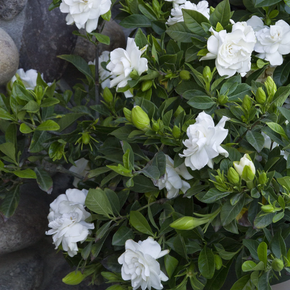
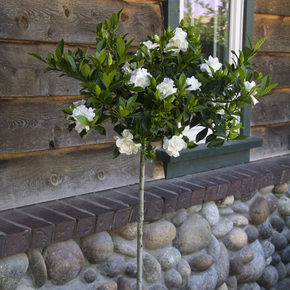
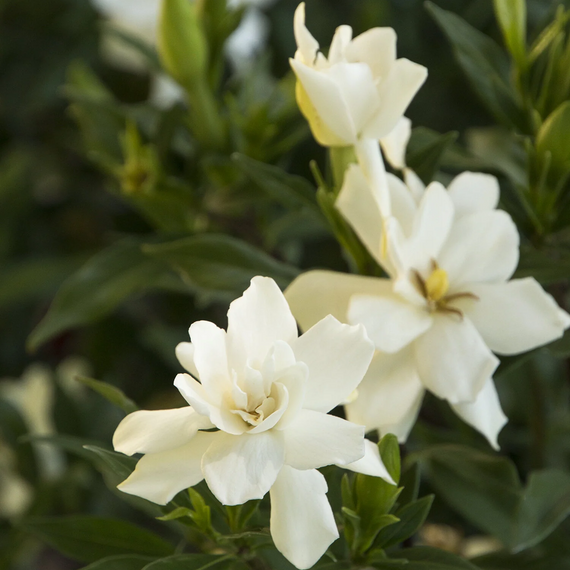
Gardenia Frost Proof (Gardenia jasminoides 'Frostproof') is the benchmark for cold-hardy gardenias, extending the legendary fragrance and Southern elegance of cape jasmine to landscapes that would challenge lesser varieties. This medium-sized evergreen shrub is distinguished by its upright, bushy form and thick, lance-shaped, lustrous dark green foliage that remains attractive throughout the year. Beginning in early summer and continuing sporadically through late summer, it produces large, fully double white flowers measuring 2 to 3 inches across, each one delivering the classic, heady gardenia perfume that makes this genus so beloved by gardeners. Unlike many other gardenia cultivars, 'Frostproof' is notably more tolerant of direct sun exposure, and its flower buds are specifically adapted to withstand late spring frost events without damage — a trait that sets it apart from the rest of the species. Growing 4 to 5 feet tall and 3 to 4 feet wide at maturity, this compact, slow-growing shrub fits beautifully into foundation plantings, fragrant garden borders, informal hedges, and large patio containers. Its natural deer resistance, combined with its exceptional cold tolerance in USDA Zones 7 through 10, makes Gardenia Frost Proof a reliable and rewarding choice for gardeners in Southern Oregon and Northern California who want a show-stopping, fragrant evergreen with season-long ornamental appeal.
Plant Description
Gardenia Frost Proof is a medium-sized broadleaf evergreen shrub native to southern China and Japan, belonging to the Rubiaceae family. Its cultivar name, 'Frostproof,' reflects its defining characteristic: superior cold hardiness compared to standard gardenia varieties, including frost-resistant flower buds that withstand late spring freezes that would damage other cultivars. The foliage is thick, lustrous, and lance-shaped, displaying a rich dark green color that makes the plant visually striking even when it is not in bloom. The flowers are large, fully double, and creamy white with narrow overlapping petals, each bloom measuring 2 to 3 inches across and emitting an intensely sweet, classic gardenia fragrance. Compared to other gardenias, 'Frostproof' has a notably more upright and bushy growth habit and tolerates more direct sun exposure, making it a more versatile landscape plant. It is also naturally deer resistant due to bitter compounds present in its foliage.
Mature Size
| Attribute | Measurement |
|---|---|
| Mature Height | 4 to 5 feet |
| Mature Width | 3 to 4 feet |
| Growth Rate | Slow to moderate |
| Growth Habit | Upright, bushy, and rounded |
| Recommended Spacing | 48 inches on center (4 feet apart) for borders; 4 to 5 feet apart for hedges |
Hardiness Zones
Gardenia Frost Proof is reliably hardy in USDA Zones 7 through 10 and is one of the most cold-tolerant gardenias available. Standard gardenia cultivars typically struggle below 20°F and are limited to Zones 8 through 11, but 'Frostproof' can withstand temperatures as low as 0 to 10°F, making it a breakthrough choice for Zone 7 gardeners. In Zone 7, some leaf drop may occur during severe cold snaps, but plants recover vigorously in spring. In protected Zone 6 microclimates — such as south-facing walls or sheltered courtyard locations with a deep layer of organic mulch over the root zone — survival is possible with proper siting. In Zones 8 through 10, the plant behaves as a true evergreen year-round. A key characteristic unique to this cultivar is that its flower buds are specifically resistant to late spring frosts, so early cold events will not sacrifice the coming season's bloom display.
Sunlight Requirements
Gardenia Frost Proof performs best in full sun to partial shade and is notably more sun-tolerant than most other gardenia cultivars. In cooler coastal or inland climates such as those found in Southern Oregon and Northern California, it can thrive in full sun all day, particularly when the root zone is kept cool with a layer of organic mulch. In hotter inland locations or during periods of intense summer heat, a site that receives full morning sun and filtered or dappled afternoon shade is ideal. Too much intense afternoon sun in hot climates can cause leaf scorch and may lead to bud drop, while too little light reduces flowering significantly. Aim for a minimum of 4 to 6 hours of direct sunlight per day for the best bloom production. Partial shade is acceptable and the plant can serve as an attractive understory shrub beneath taller, open-canopied trees.
Soil and pH Preferences
Like all gardenias, 'Frostproof' has specific soil requirements that are essential to its health and flowering performance. It demands consistently moist, well-drained soil that is rich in organic matter. The ideal soil pH range is 5.0 to 6.5 — clearly acidic. In alkaline or neutral soils, the plant is unable to absorb iron and other micronutrients properly, leading to yellowed foliage. Before planting, test your soil pH and amend as needed with elemental sulfur or acidifying soil amendments. Incorporating generous amounts of peat moss, compost, or aged bark into the planting area will improve both drainage and organic content. This shrub will grow in loamy, sandy, or clay-type soils, provided clay soils are amended with coarse sand, perlite, or lava rock to improve drainage. Avoid high-salt soils, as 'Frostproof' has very low salt tolerance. Planting in raised beds is an excellent option in areas with heavy clay or consistently wet soils.
Watering Guide
Consistent soil moisture is critical to the health and bloom performance of Gardenia Frost Proof. During the first growing season after planting, water regularly to establish a deep, extensive root system — the soil should remain evenly moist but never waterlogged. Once established, mature plants need deep watering once or twice per week during active growth and the blooming period, with frequency reduced in fall and winter. Gardenias are sensitive to both overwatering and underwatering: soggy soil promotes root rot and yellowing leaves, while drought stress is one of the most common causes of bud drop. Apply 2 to 3 inches of organic mulch — such as shredded bark or pine straw — around the base of the plant (keeping it a few inches away from the trunk) to conserve soil moisture, moderate soil temperature, and gradually acidify the soil as it breaks down. Container-grown plants dry out more quickly and may need watering every day or two during hot weather. Always water at the base of the plant rather than overhead to minimize the risk of leaf spot diseases.
Fertilizing
Regular feeding is important for Gardenia Frost Proof to support lush foliage, abundant flowering, and overall plant health. Use a fertilizer specifically formulated for acid-loving plants such as azaleas, camellias, or gardenias, as these products are designed to maintain the acidic soil conditions this plant requires. Apply an extended-release granular fertilizer once in early spring, just before new growth emerges, and again about six weeks later in late spring to early summer. A fertilizer with a roughly 2-1-1 nitrogen-phosphorus-potassium (NPK) ratio works well. Liquid acid fertilizers can be applied every 4 to 6 weeks throughout the active growing season (April through August). Do not fertilize in fall or winter, as feeding during dormancy can push tender new growth that is vulnerable to cold damage. If leaves develop interveinal chlorosis — yellow tissue between green veins — the plant is likely experiencing iron deficiency due to soil that is too alkaline. Treat with chelated iron applied according to product directions and address the underlying soil pH issue with acidifying amendments.
Pruning and Maintenance
Gardenia Frost Proof blooms on old wood, meaning the flower buds for the coming season form on growth produced the previous year. Pruning must be timed carefully to avoid removing next year's buds. The best window to prune is immediately after the main bloom flush concludes in summer and before mid-to-late summer — this allows the plant time to produce new growth that will carry buds for the following year. To encourage continuous blooming during the active season, deadhead spent flowers by cutting just below the leaf node. Light shaping and the removal of any crossing, dead, or damaged branches can be done at this same time. Avoid heavy or hard pruning, which can significantly reduce flowering the following season and stunt the plant's overall vigor. In spring, remove any winter-damaged growth after new growth confirms which stems have survived. A light trim to maintain the plant's natural rounded form is all that is typically needed each year. When grown as a hedge, light shearing immediately after peak bloom will maintain a tidy, uniform silhouette.
Planting Instructions
- Choose a site with morning sun and afternoon shade in hot climates, or full sun in cooler locations. Ensure the area has well-drained soil.
- Test the soil pH and amend to achieve a range of 5.0 to 6.5 using sulfur or an acidifying soil conditioner if needed.
- Dig a planting hole that is two to three times wider than the root ball and no deeper than the root ball height — the top of the root ball should sit at or very slightly above the surrounding soil grade.
- Enrich the native soil with a generous mixture of compost, peat moss, or aged bark to improve drainage and organic content. Backfill with this amended mixture.
- Remove the plant from its container gently, taking care not to disturb the delicate roots more than necessary. Gardenias dislike root disturbance.
- Set the plant in the hole, ensure it is level and upright, and backfill carefully. Gently firm the soil around the root ball to eliminate air pockets.
- Water deeply and thoroughly immediately after planting.
- Apply a 2 to 3 inch layer of organic mulch (pine straw, shredded bark, or wood chips) over the root zone, keeping the mulch several inches away from the main stem to prevent rot.
- Water every other day for the first week, then taper to a regular deep-watering schedule as the plant establishes.
Seasonal Interest
Gardenia Frost Proof provides ornamental value across multiple seasons. In late spring, the first wave of buds forms against the backdrop of glossy, deep green foliage, building anticipation for the main bloom display. The primary flowering period runs from early summer through mid-summer, with the richest concentration of fragrant white double blooms. Sporadic reblooming continues through late summer, extending the fragrant display well into the warmer months. The creamy white flowers make a striking visual contrast against the plant's dark evergreen leaves. As an evergreen shrub in Zones 8 through 10 — and typically semi-evergreen in Zone 7 — it provides persistent structure, textural richness, and a clean green presence in the garden through fall and winter even when dormant. The glossy foliage alone is attractive enough to earn this shrub a prominent spot in any mixed border.
Landscape Uses
Gardenia Frost Proof is a versatile landscape shrub with a wide range of practical and ornamental applications. Its most popular uses include:
- Foundation plantings: Its compact, upright form and year-round evergreen foliage make it ideal near entryways, porches, and building foundations where the fragrance can be enjoyed up close.
- Informal hedges and screens: Planted 4 to 5 feet apart, multiple plants form a fragrant, dense, and visually cohesive hedge requiring only minimal shearing.
- Mixed shrub borders: Combines beautifully with other acid-loving shrubs in a layered border planting with strong four-season appeal.
- Specimen planting: The handsome foliage and spectacular bloom display make it an excellent standalone focal point in a lawn or garden bed.
- Container planting: Grows well in large pots and planters on patios, decks, and balconies where the fragrance creates an immersive outdoor living experience.
- Cut flower garden: The large, fragrant white blooms are outstanding as cut flowers for indoor arrangements and bouquets.
- Deer-resistant garden borders: A reliable choice for landscapes with regular deer pressure.
Companion Plants
The best companion plants for Gardenia Frost Proof share its preference for acidic, moist, well-drained soil and partial to full sun conditions. Select plants with relatively shallow or non-aggressive root systems to avoid competing with the gardenia's sensitive roots. Strongly scented companions should generally be avoided so they do not compete with or mask the gardenia's signature fragrance. Excellent companions include:
- Azaleas and Rhododendrons: Share the same acidic soil requirements and complement the white gardenia blooms with a wide range of flower colors.
- Camellias: Fellow acid-lovers with glossy evergreen foliage; their late winter to spring bloom period provides color before the gardenia season begins.
- Hostas: Shade-tolerant perennials with bold foliage that contrast beautifully with the gardenia's finer leaf texture in partly shaded settings.
- Ferns: Provide soft, feathery texture and a lush, layered understory look alongside gardenias in partially shaded borders.
- Summersweet (Clethra alnifolia): A native shrub that shares moist, acidic soil preferences and extends fragrant summer interest.
- Boxwood: Offers a formal structural contrast and is a compatible neighbor that does not compete aggressively at the root zone.
- Virginia Sweetspire (Itea virginica): A deer-resistant native shrub with acidic soil tolerance and attractive fall color that complements the gardenia's evergreen foliage.
- Impatiens and Wax Begonias: Low-growing annuals that fill in the foreground with seasonal color without competing with gardenia roots.
Pests and Diseases
Gardenia Frost Proof is considered more durable than many gardenia varieties and shows good resistance to powdery mildew, heat stress, and deer browse. However, like all gardenias, it can be affected by certain pests and diseases. Being proactive with proper cultural practices — good air circulation, correct watering, and appropriate soil pH — is the best prevention strategy.
- Iron chlorosis: The most common problem; causes interveinal yellowing of leaves when soil pH is too high and iron is unavailable. Treat with chelated iron and acidify the soil.
- Bud drop: Caused by inconsistent watering, temperature fluctuations, low humidity, or overwatering. Maintain even soil moisture to prevent this frustrating issue.
- Whiteflies: Small, sap-sucking insects that congregate on leaf undersides. Treat with insecticidal soap or neem oil.
- Aphids: Soft-bodied insects that cluster on new growth. Dislodge with a strong stream of water or treat with insecticidal soap.
- Spider mites: More prevalent during hot, dry conditions. Increase humidity and treat with neem oil or miticide if needed.
- Mealybugs and scale: Can be treated with horticultural oil or insecticidal soap applied when pests are in the crawler stage.
- Leaf spot and anthracnose: Fungal diseases encouraged by overhead watering and poor air circulation. Water at the base and space plants adequately.
- Sooty mold: A black fungal coating that grows on honeydew secreted by sucking insects. Control the underlying pest infestation to eliminate sooty mold.
- Powdery mildew and dieback: Less common on 'Frostproof' than on other cultivars but can occur under stressful growing conditions.
Container Growing
Gardenia Frost Proof is well suited to container culture and is an excellent choice for patios, decks, and covered entryways where its intoxicating fragrance can be savored at close range. For successful container growing, keep the following guidelines in mind:
- Choose a container at least 16 to 18 inches in diameter with multiple drainage holes. Terracotta and unglazed ceramic pots allow for good breathability, though plastic containers retain moisture longer.
- Use a high-quality acidic potting mix formulated for azaleas, camellias, or gardenias. Never use regular garden soil in containers, as it compacts and drains poorly.
- Container plants dry out faster than in-ground plants and may need watering every one to two days during warm weather. Check soil moisture regularly by inserting a finger an inch or two into the mix.
- Feed container-grown plants more frequently than in-ground specimens — every 3 to 4 weeks with a liquid acid fertilizer during the growing season — as nutrients leach out with regular watering.
- Repot every two to three years or when roots begin to circle the container, moving up only one pot size at a time.
- In Zone 7 and colder, containers can be moved to a sheltered, frost-free location such as an unheated garage or against a south-facing wall during the coldest months of winter.
- Avoid placing containers in locations with harsh afternoon sun in summer, as container roots heat up faster and the plant will experience more stress than an in-ground specimen in the same location.
Wildlife Value
While Gardenia Frost Proof is prized primarily for its ornamental and aromatic qualities, it does offer some wildlife value in the garden. The large, fragrant white flowers attract butterflies and other nectar-seeking pollinators, particularly during the long summer blooming period. Bees and certain moth species are also drawn to the blooms, especially in the evening hours when the fragrance intensifies. The dense, evergreen foliage provides cover and potential nesting habitat for small songbirds. Notably, deer consistently avoid this plant due to bitter compounds in its foliage, making it an ideal choice for gardens in areas with heavy deer populations. Gardenia Frost Proof is classified as toxic to dogs, cats, and horses if ingested, so placement should be considered in landscapes frequented by pets.
Toxicity and Safety
Gardenia jasminoides 'Frostproof' is considered toxic to dogs, cats, and horses if plant material is ingested. The primary compounds of concern are geniposide and gardenoside, which can cause mild to moderate gastrointestinal upset including vomiting, diarrhea, and excessive drooling in pets. Hives or skin irritation may also occur in some animals following contact with the plant. While serious or life-threatening toxicity is uncommon in most cases, it is best to site this plant away from areas frequently accessed by pets, or to take appropriate precautions. The plant is not considered toxic to humans, and the flowers have a long history of use in perfumery, tea, and as cut flowers for special occasions. If you suspect a pet has ingested any part of this plant, contact your veterinarian promptly.
- Exceptionally cold-hardy gardenia cultivar with frost-resistant flower buds that shrug off late spring freezes without skipping a beat
- Intensely fragrant, large white double blooms up to 3 inches across perfume the garden from early summer through late summer
- Lustrous, thick dark green evergreen foliage provides year-round landscape structure with a more upright, sun-tolerant habit than standard gardenias
- Naturally deer resistant and versatile — thrives in borders, hedges, foundation plantings, and containers
Gardenia Frost Proof (Gardenia jasminoides 'Frostproof') is the benchmark for cold-hardy gardenias, extending the legendary fragrance and Southern elegance of cape jasmine to landscapes that would challenge lesser varieties. This medium-sized evergreen shrub is distinguished by its upright, bushy form and thick, lance-shaped, lustrous dark green foliage that remains attractive throughout the year. Beginning in early summer and continuing sporadically through late summer, it produces large, fully double white flowers measuring 2 to 3 inches across, each one delivering the classic, heady gardenia perfume that makes this genus so beloved by gardeners. Unlike many other gardenia cultivars, 'Frostproof' is notably more tolerant of direct sun exposure, and its flower buds are specifically adapted to withstand late spring frost events without damage — a trait that sets it apart from the rest of the species. Growing 4 to 5 feet tall and 3 to 4 feet wide at maturity, this compact, slow-growing shrub fits beautifully into foundation plantings, fragrant garden borders, informal hedges, and large patio containers. Its natural deer resistance, combined with its exceptional cold tolerance in USDA Zones 7 through 10, makes Gardenia Frost Proof a reliable and rewarding choice for gardeners in Southern Oregon and Northern California who want a show-stopping, fragrant evergreen with season-long ornamental appeal.
Plant Description
Gardenia Frost Proof is a medium-sized broadleaf evergreen shrub native to southern China and Japan, belonging to the Rubiaceae family. Its cultivar name, 'Frostproof,' reflects its defining characteristic: superior cold hardiness compared to standard gardenia varieties, including frost-resistant flower buds that withstand late spring freezes that would damage other cultivars. The foliage is thick, lustrous, and lance-shaped, displaying a rich dark green color that makes the plant visually striking even when it is not in bloom. The flowers are large, fully double, and creamy white with narrow overlapping petals, each bloom measuring 2 to 3 inches across and emitting an intensely sweet, classic gardenia fragrance. Compared to other gardenias, 'Frostproof' has a notably more upright and bushy growth habit and tolerates more direct sun exposure, making it a more versatile landscape plant. It is also naturally deer resistant due to bitter compounds present in its foliage.
Mature Size
| Attribute | Measurement |
|---|---|
| Mature Height | 4 to 5 feet |
| Mature Width | 3 to 4 feet |
| Growth Rate | Slow to moderate |
| Growth Habit | Upright, bushy, and rounded |
| Recommended Spacing | 48 inches on center (4 feet apart) for borders; 4 to 5 feet apart for hedges |
Hardiness Zones
Gardenia Frost Proof is reliably hardy in USDA Zones 7 through 10 and is one of the most cold-tolerant gardenias available. Standard gardenia cultivars typically struggle below 20°F and are limited to Zones 8 through 11, but 'Frostproof' can withstand temperatures as low as 0 to 10°F, making it a breakthrough choice for Zone 7 gardeners. In Zone 7, some leaf drop may occur during severe cold snaps, but plants recover vigorously in spring. In protected Zone 6 microclimates — such as south-facing walls or sheltered courtyard locations with a deep layer of organic mulch over the root zone — survival is possible with proper siting. In Zones 8 through 10, the plant behaves as a true evergreen year-round. A key characteristic unique to this cultivar is that its flower buds are specifically resistant to late spring frosts, so early cold events will not sacrifice the coming season's bloom display.
Sunlight Requirements
Gardenia Frost Proof performs best in full sun to partial shade and is notably more sun-tolerant than most other gardenia cultivars. In cooler coastal or inland climates such as those found in Southern Oregon and Northern California, it can thrive in full sun all day, particularly when the root zone is kept cool with a layer of organic mulch. In hotter inland locations or during periods of intense summer heat, a site that receives full morning sun and filtered or dappled afternoon shade is ideal. Too much intense afternoon sun in hot climates can cause leaf scorch and may lead to bud drop, while too little light reduces flowering significantly. Aim for a minimum of 4 to 6 hours of direct sunlight per day for the best bloom production. Partial shade is acceptable and the plant can serve as an attractive understory shrub beneath taller, open-canopied trees.
Soil and pH Preferences
Like all gardenias, 'Frostproof' has specific soil requirements that are essential to its health and flowering performance. It demands consistently moist, well-drained soil that is rich in organic matter. The ideal soil pH range is 5.0 to 6.5 — clearly acidic. In alkaline or neutral soils, the plant is unable to absorb iron and other micronutrients properly, leading to yellowed foliage. Before planting, test your soil pH and amend as needed with elemental sulfur or acidifying soil amendments. Incorporating generous amounts of peat moss, compost, or aged bark into the planting area will improve both drainage and organic content. This shrub will grow in loamy, sandy, or clay-type soils, provided clay soils are amended with coarse sand, perlite, or lava rock to improve drainage. Avoid high-salt soils, as 'Frostproof' has very low salt tolerance. Planting in raised beds is an excellent option in areas with heavy clay or consistently wet soils.
Watering Guide
Consistent soil moisture is critical to the health and bloom performance of Gardenia Frost Proof. During the first growing season after planting, water regularly to establish a deep, extensive root system — the soil should remain evenly moist but never waterlogged. Once established, mature plants need deep watering once or twice per week during active growth and the blooming period, with frequency reduced in fall and winter. Gardenias are sensitive to both overwatering and underwatering: soggy soil promotes root rot and yellowing leaves, while drought stress is one of the most common causes of bud drop. Apply 2 to 3 inches of organic mulch — such as shredded bark or pine straw — around the base of the plant (keeping it a few inches away from the trunk) to conserve soil moisture, moderate soil temperature, and gradually acidify the soil as it breaks down. Container-grown plants dry out more quickly and may need watering every day or two during hot weather. Always water at the base of the plant rather than overhead to minimize the risk of leaf spot diseases.
Fertilizing
Regular feeding is important for Gardenia Frost Proof to support lush foliage, abundant flowering, and overall plant health. Use a fertilizer specifically formulated for acid-loving plants such as azaleas, camellias, or gardenias, as these products are designed to maintain the acidic soil conditions this plant requires. Apply an extended-release granular fertilizer once in early spring, just before new growth emerges, and again about six weeks later in late spring to early summer. A fertilizer with a roughly 2-1-1 nitrogen-phosphorus-potassium (NPK) ratio works well. Liquid acid fertilizers can be applied every 4 to 6 weeks throughout the active growing season (April through August). Do not fertilize in fall or winter, as feeding during dormancy can push tender new growth that is vulnerable to cold damage. If leaves develop interveinal chlorosis — yellow tissue between green veins — the plant is likely experiencing iron deficiency due to soil that is too alkaline. Treat with chelated iron applied according to product directions and address the underlying soil pH issue with acidifying amendments.
Pruning and Maintenance
Gardenia Frost Proof blooms on old wood, meaning the flower buds for the coming season form on growth produced the previous year. Pruning must be timed carefully to avoid removing next year's buds. The best window to prune is immediately after the main bloom flush concludes in summer and before mid-to-late summer — this allows the plant time to produce new growth that will carry buds for the following year. To encourage continuous blooming during the active season, deadhead spent flowers by cutting just below the leaf node. Light shaping and the removal of any crossing, dead, or damaged branches can be done at this same time. Avoid heavy or hard pruning, which can significantly reduce flowering the following season and stunt the plant's overall vigor. In spring, remove any winter-damaged growth after new growth confirms which stems have survived. A light trim to maintain the plant's natural rounded form is all that is typically needed each year. When grown as a hedge, light shearing immediately after peak bloom will maintain a tidy, uniform silhouette.
Planting Instructions
- Choose a site with morning sun and afternoon shade in hot climates, or full sun in cooler locations. Ensure the area has well-drained soil.
- Test the soil pH and amend to achieve a range of 5.0 to 6.5 using sulfur or an acidifying soil conditioner if needed.
- Dig a planting hole that is two to three times wider than the root ball and no deeper than the root ball height — the top of the root ball should sit at or very slightly above the surrounding soil grade.
- Enrich the native soil with a generous mixture of compost, peat moss, or aged bark to improve drainage and organic content. Backfill with this amended mixture.
- Remove the plant from its container gently, taking care not to disturb the delicate roots more than necessary. Gardenias dislike root disturbance.
- Set the plant in the hole, ensure it is level and upright, and backfill carefully. Gently firm the soil around the root ball to eliminate air pockets.
- Water deeply and thoroughly immediately after planting.
- Apply a 2 to 3 inch layer of organic mulch (pine straw, shredded bark, or wood chips) over the root zone, keeping the mulch several inches away from the main stem to prevent rot.
- Water every other day for the first week, then taper to a regular deep-watering schedule as the plant establishes.
Seasonal Interest
Gardenia Frost Proof provides ornamental value across multiple seasons. In late spring, the first wave of buds forms against the backdrop of glossy, deep green foliage, building anticipation for the main bloom display. The primary flowering period runs from early summer through mid-summer, with the richest concentration of fragrant white double blooms. Sporadic reblooming continues through late summer, extending the fragrant display well into the warmer months. The creamy white flowers make a striking visual contrast against the plant's dark evergreen leaves. As an evergreen shrub in Zones 8 through 10 — and typically semi-evergreen in Zone 7 — it provides persistent structure, textural richness, and a clean green presence in the garden through fall and winter even when dormant. The glossy foliage alone is attractive enough to earn this shrub a prominent spot in any mixed border.
Landscape Uses
Gardenia Frost Proof is a versatile landscape shrub with a wide range of practical and ornamental applications. Its most popular uses include:
- Foundation plantings: Its compact, upright form and year-round evergreen foliage make it ideal near entryways, porches, and building foundations where the fragrance can be enjoyed up close.
- Informal hedges and screens: Planted 4 to 5 feet apart, multiple plants form a fragrant, dense, and visually cohesive hedge requiring only minimal shearing.
- Mixed shrub borders: Combines beautifully with other acid-loving shrubs in a layered border planting with strong four-season appeal.
- Specimen planting: The handsome foliage and spectacular bloom display make it an excellent standalone focal point in a lawn or garden bed.
- Container planting: Grows well in large pots and planters on patios, decks, and balconies where the fragrance creates an immersive outdoor living experience.
- Cut flower garden: The large, fragrant white blooms are outstanding as cut flowers for indoor arrangements and bouquets.
- Deer-resistant garden borders: A reliable choice for landscapes with regular deer pressure.
Companion Plants
The best companion plants for Gardenia Frost Proof share its preference for acidic, moist, well-drained soil and partial to full sun conditions. Select plants with relatively shallow or non-aggressive root systems to avoid competing with the gardenia's sensitive roots. Strongly scented companions should generally be avoided so they do not compete with or mask the gardenia's signature fragrance. Excellent companions include:
- Azaleas and Rhododendrons: Share the same acidic soil requirements and complement the white gardenia blooms with a wide range of flower colors.
- Camellias: Fellow acid-lovers with glossy evergreen foliage; their late winter to spring bloom period provides color before the gardenia season begins.
- Hostas: Shade-tolerant perennials with bold foliage that contrast beautifully with the gardenia's finer leaf texture in partly shaded settings.
- Ferns: Provide soft, feathery texture and a lush, layered understory look alongside gardenias in partially shaded borders.
- Summersweet (Clethra alnifolia): A native shrub that shares moist, acidic soil preferences and extends fragrant summer interest.
- Boxwood: Offers a formal structural contrast and is a compatible neighbor that does not compete aggressively at the root zone.
- Virginia Sweetspire (Itea virginica): A deer-resistant native shrub with acidic soil tolerance and attractive fall color that complements the gardenia's evergreen foliage.
- Impatiens and Wax Begonias: Low-growing annuals that fill in the foreground with seasonal color without competing with gardenia roots.
Pests and Diseases
Gardenia Frost Proof is considered more durable than many gardenia varieties and shows good resistance to powdery mildew, heat stress, and deer browse. However, like all gardenias, it can be affected by certain pests and diseases. Being proactive with proper cultural practices — good air circulation, correct watering, and appropriate soil pH — is the best prevention strategy.
- Iron chlorosis: The most common problem; causes interveinal yellowing of leaves when soil pH is too high and iron is unavailable. Treat with chelated iron and acidify the soil.
- Bud drop: Caused by inconsistent watering, temperature fluctuations, low humidity, or overwatering. Maintain even soil moisture to prevent this frustrating issue.
- Whiteflies: Small, sap-sucking insects that congregate on leaf undersides. Treat with insecticidal soap or neem oil.
- Aphids: Soft-bodied insects that cluster on new growth. Dislodge with a strong stream of water or treat with insecticidal soap.
- Spider mites: More prevalent during hot, dry conditions. Increase humidity and treat with neem oil or miticide if needed.
- Mealybugs and scale: Can be treated with horticultural oil or insecticidal soap applied when pests are in the crawler stage.
- Leaf spot and anthracnose: Fungal diseases encouraged by overhead watering and poor air circulation. Water at the base and space plants adequately.
- Sooty mold: A black fungal coating that grows on honeydew secreted by sucking insects. Control the underlying pest infestation to eliminate sooty mold.
- Powdery mildew and dieback: Less common on 'Frostproof' than on other cultivars but can occur under stressful growing conditions.
Container Growing
Gardenia Frost Proof is well suited to container culture and is an excellent choice for patios, decks, and covered entryways where its intoxicating fragrance can be savored at close range. For successful container growing, keep the following guidelines in mind:
- Choose a container at least 16 to 18 inches in diameter with multiple drainage holes. Terracotta and unglazed ceramic pots allow for good breathability, though plastic containers retain moisture longer.
- Use a high-quality acidic potting mix formulated for azaleas, camellias, or gardenias. Never use regular garden soil in containers, as it compacts and drains poorly.
- Container plants dry out faster than in-ground plants and may need watering every one to two days during warm weather. Check soil moisture regularly by inserting a finger an inch or two into the mix.
- Feed container-grown plants more frequently than in-ground specimens — every 3 to 4 weeks with a liquid acid fertilizer during the growing season — as nutrients leach out with regular watering.
- Repot every two to three years or when roots begin to circle the container, moving up only one pot size at a time.
- In Zone 7 and colder, containers can be moved to a sheltered, frost-free location such as an unheated garage or against a south-facing wall during the coldest months of winter.
- Avoid placing containers in locations with harsh afternoon sun in summer, as container roots heat up faster and the plant will experience more stress than an in-ground specimen in the same location.
Wildlife Value
While Gardenia Frost Proof is prized primarily for its ornamental and aromatic qualities, it does offer some wildlife value in the garden. The large, fragrant white flowers attract butterflies and other nectar-seeking pollinators, particularly during the long summer blooming period. Bees and certain moth species are also drawn to the blooms, especially in the evening hours when the fragrance intensifies. The dense, evergreen foliage provides cover and potential nesting habitat for small songbirds. Notably, deer consistently avoid this plant due to bitter compounds in its foliage, making it an ideal choice for gardens in areas with heavy deer populations. Gardenia Frost Proof is classified as toxic to dogs, cats, and horses if ingested, so placement should be considered in landscapes frequented by pets.
Toxicity and Safety
Gardenia jasminoides 'Frostproof' is considered toxic to dogs, cats, and horses if plant material is ingested. The primary compounds of concern are geniposide and gardenoside, which can cause mild to moderate gastrointestinal upset including vomiting, diarrhea, and excessive drooling in pets. Hives or skin irritation may also occur in some animals following contact with the plant. While serious or life-threatening toxicity is uncommon in most cases, it is best to site this plant away from areas frequently accessed by pets, or to take appropriate precautions. The plant is not considered toxic to humans, and the flowers have a long history of use in perfumery, tea, and as cut flowers for special occasions. If you suspect a pet has ingested any part of this plant, contact your veterinarian promptly.