
Zoom the image with the mouse
Gardenia First Love Tree - 5 Gallon
SKU:
1931520-P
UPC:
014949375457
$74.99 - $119.99
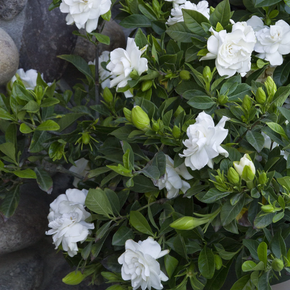
- Enormous double white blooms up to 5 inches wide are among the largest of any gardenia variety, and First Love is the first to open each season — filling late spring and early summer gardens with an unforgettable, intensely sweet fragrance.
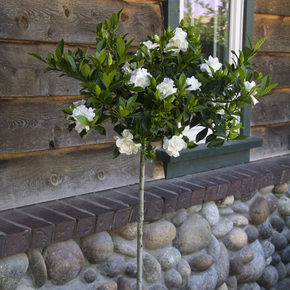
- Trained into an elegant single-trunk patio tree form, this grafted evergreen makes a stunning focal point in courtyard planters, entryway beds, or mixed borders where year-round glossy dark green foliage provides lasting visual appeal.
- Superior grafted rootstock delivers exceptional resilience — offering built-in resistance to soil nematodes, better tolerance of variable soil conditions, and improved uptake of nutrients compared to non-grafted gardenias.
- Deer resistant and a magnet for pollinators and butterflies, First Love Gardenia Tree is equally at home in the ground or in a large container, giving gardeners in USDA Zones 8-11 a versatile, low-maintenance showstopper all season long.
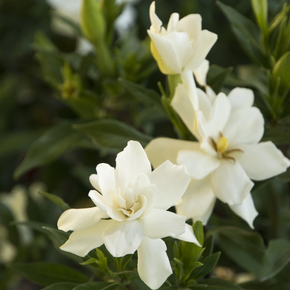
The First Love Gardenia Tree (Gardenia jasminoides 'Aimee') is the crown jewel of fragrant flowering trees, captivating gardeners with its breathtaking, rose-like double white blooms that measure up to 5 inches across — the largest flowers of any gardenia and the very first to open each spring. Trained to a graceful single-trunk tree form and produced as a superior grafted selection, this evergreen gem combines striking ornamental beauty with exceptional garden performance. Pure white petals spiral outward from a tightly wound center, creating a lush, full flower that practically glows against the plant's rich, lustrous dark green foliage. Blooming prolifically from late spring into early summer, First Love rewards every nearby sense: the powerful, classic gardenia fragrance — strongest in the early morning and evening — drifts across patios, walkways, and courtyards with effortless elegance. The grafted rootstock is specifically selected for nematode resistance, superior nutrient uptake, and adaptability to a wider range of soil conditions, making it far more robust and long-lived than standard own-rooted plants. Growing 5 to 8 feet tall and 3 to 6 feet wide, this upright, deer-resistant specimen thrives in USDA Hardiness Zones 8 through 11 and is perfectly suited for landscape beds, container culture on patios and balconies, courtyard accent plantings, hedges, espalier applications, and even topiary. Whether planted as a breathtaking focal point or sited along a well-traveled walkway where its legendary scent can be fully appreciated, the First Love Gardenia Tree is an heirloom-quality selection that delivers maximum impact with refined, old-world charm.
Plant Description
First Love Gardenia Tree is a grafted, tree-form selection of Gardenia jasminoides 'Aimee', an heirloom cultivar prized for producing the largest double flowers of any gardenia variety. The blooms measure up to 5 inches in diameter, featuring spiraling, overlapping pure white petals that age to a soft creamy ivory before dropping cleanly from the plant. Flowers carry a rich, classic gardenia perfume that is strongest in the early morning and at dusk, making it a sensory centerpiece for any nearby outdoor living space. The foliage is evergreen, with thick, waxy, deep green leaves that maintain an attractive glossy sheen throughout the year. The plant is trained to a single-trunk tree standard, lending a formal, sculptural silhouette that is equally at home in contemporary or traditional garden styles. This is a grafted specimen, meaning the desirable 'Aimee' cultivar is joined to a specially selected rootstock that resists soil nematodes, performs better in variable soil types, and more efficiently absorbs nutrients — qualities that significantly improve long-term plant health and longevity compared to own-rooted gardenias.
Mature Size
| Characteristic | Detail |
|---|---|
| Mature Height | 5 to 8 feet |
| Mature Spread | 3 to 6 feet |
| Growth Rate | Medium |
| Growth Habit | Upright, tree standard form |
| Recommended Spacing | 3 to 6 feet on center for mass plantings |
Hardiness and Climate
First Love Gardenia Tree is reliably winter hardy in USDA Hardiness Zones 8 through 11. It performs best in warm, humid climates where winter temperatures do not regularly dip below 15 to 20 degrees Fahrenheit. In Zone 8, plants may benefit from a sheltered microclimate — such as a south-facing wall or protected courtyard — and light frost cloth during brief cold snaps. In cooler climates at the edge of its hardiness range, growing the plant in a large container and moving it to a frost-free garage or enclosed patio for winter is the most reliable approach. Gardenias set flower buds most abundantly when daytime temperatures are between 60 and 75 degrees Fahrenheit and nighttime temperatures drop to around 60 to 62 degrees Fahrenheit — conditions that are typical of Southern Oregon and Northern California summers. Prolonged heat above 90 degrees Fahrenheit can cause stress and bud drop, particularly when combined with low humidity or inconsistent moisture.
Sunlight Requirements
First Love Gardenia Tree performs best in full sun to partial shade, ideally receiving 4 to 6 hours of direct sunlight per day. In the warmer inland valleys of Southern Oregon and Northern California, a site with morning sun and afternoon shade is ideal — this exposure encourages prolific flowering while protecting the foliage and buds from the intense heat of midday and late-afternoon sun, which can cause leaf scorch and stress-related bud drop. Along the coast or in areas with naturally diffused light, full sun exposure is not only tolerated but encouraged for the best bloom production. Avoid deep shade, which leads to sparse flowering, weak growth, and increased susceptibility to fungal issues. When growing in a container, position the plant where it will receive bright, direct morning light for at least 4 hours each day.
Soil and pH Preferences
Gardenias are acid-loving plants, and First Love is no exception. For optimal health and flowering, plant in organically rich, well-draining soil with a pH between 5.0 and 6.5. Heavy clay soils should be amended with compost or other organic matter to improve drainage and aeration before planting. Sandy soils benefit from the addition of compost to improve moisture retention and nutrient availability. Avoid sites with poor drainage or where water pools after rain, as waterlogged roots quickly lead to root rot. The superior grafted rootstock of First Love offers better adaptability to variable or imperfect soil conditions compared to own-rooted gardenias, but maintaining proper pH remains critical. If your native soil or tap water is alkaline, consider growing in a container filled with a quality acidic potting mix designed for rhododendrons, azaleas, or camellias, which makes pH management much more straightforward. Periodically test your soil pH and amend as needed with sulfur or acidifying fertilizers to keep it within the ideal range. Avoid planting near concrete foundations or brick walls, as lime leaching from these structures can gradually raise soil pH.
Watering Guide
Consistent, even moisture is one of the most important factors in successfully growing First Love Gardenia Tree. Water deeply and regularly during the first growing season to help the root system establish thoroughly. Once established, water approximately once a week in mild weather, increasing frequency during summer heat or extended dry periods. Allow the top inch of soil to dry slightly between waterings, but never allow the root zone to completely dry out, as swings between bone-dry and waterlogged conditions are a primary cause of bud drop and leaf yellowing. Always water at the base of the plant rather than overhead to minimize moisture on foliage and flowers, which can encourage fungal disease. In containers, check soil moisture more frequently — pots dry out significantly faster than garden beds, especially during warm weather. If your tap water is hard or alkaline, it can gradually raise the pH of container soil over time; using collected rainwater when available or periodically flushing the container thoroughly with water can help counteract this. A 2 to 3 inch layer of organic mulch around the root zone helps retain moisture, moderate soil temperature, and reduce watering frequency for in-ground plants.
Fertilizing
Feed First Love Gardenia Tree with a fertilizer specifically formulated for acid-loving plants, such as a camellia-azalea food or a product labeled for gardenias and rhododendrons. Apply in early spring as new growth begins, and repeat every 4 to 6 weeks through mid-summer. Discontinue fertilizing in late summer and fall to avoid stimulating new growth that is vulnerable to cold damage and to allow the plant to harden off properly for winter. Slow-release granular formulations are convenient and provide steady, consistent nutrition; liquid fertilizers act more quickly and can be useful for correcting deficiencies. If new leaves show interveinal chlorosis — where the tissue between the leaf veins turns pale yellow or yellow-green while the veins remain green — this is a classic symptom of iron deficiency caused by soil pH that is too high, which locks iron out of plant-available form. In this case, apply chelated iron as a soil drench or foliar spray and address the underlying pH issue. Avoid over-fertilizing, as excessive nitrogen can cause lush leafy growth at the expense of flowers and may also contribute to bud drop.
Pruning and Maintenance
Prune First Love Gardenia Tree immediately after the main bloom cycle concludes in early to mid summer — this is the critical timing rule for gardenias. Pruning too late in the season, particularly in late summer or fall, risks removing the flower buds that have already been set for the following year's bloom. Use clean, sharp pruning shears and disinfect blades between cuts with a 10% bleach solution or 70% isopropyl alcohol to prevent spreading disease. To maintain the tree standard form, remove any lateral or horizontal branches that detract from the upright silhouette, trim away any low suckers or shoots arising from below the graft union promptly, and thin the canopy lightly to improve air circulation and light penetration throughout the plant. Deadhead spent flowers by snipping the stem just below the faded bloom to keep the plant tidy and redirect energy. Heavy pruning is generally not necessary or recommended, as it can significantly reduce flowering. After pruning, water the plant well and apply a light application of acid-forming fertilizer to support the flush of new growth.
Planting Instructions
- Choose a planting site with morning sun and afternoon shade protection, good drainage, and shelter from strong prevailing winds.
- Test soil pH before planting. If pH is above 6.5, incorporate sulfur or an acidifying amendment and retest before proceeding.
- Dig a planting hole twice as wide as the root ball and exactly as deep — never deeper. Planting too deeply is a leading cause of root rot in gardenias.
- Amend the removed soil with compost or other organic matter to improve drainage and nutrient content if needed.
- Gently remove the plant from its container and carefully loosen any circling roots without disturbing the root ball excessively — gardenia roots are sensitive to disturbance.
- Set the plant so the top of the root ball sits level with or slightly above the surrounding soil grade.
- Backfill with the amended soil, firming gently to eliminate air pockets. Do not bury the graft union.
- Water thoroughly and deeply immediately after planting.
- Apply a 2 to 3 inch layer of organic mulch — such as pine bark, pine needles, or shredded leaves — around the root zone, keeping mulch pulled several inches back from the trunk to prevent rot.
- Water deeply and consistently for the entire first growing season to encourage deep root establishment. Spring and fall are the ideal planting seasons to minimize transplant stress.
Container Growing
First Love Gardenia Tree is exceptionally well suited to container culture, and growing it in a pot offers several key advantages: precise control over soil pH and drainage, the flexibility to move the plant to an optimal location for seasonal display, and the ability to bring it indoors or under protection if temperatures threaten to drop below its hardiness threshold. Use a large, sturdy container with ample drainage holes and fill it with a high-quality acidic potting mix formulated for camellias, azaleas, or rhododendrons. Avoid standard potting soils that may have a neutral or slightly alkaline pH. Container-grown gardenias dry out more quickly than in-ground plants, so check soil moisture frequently — especially during warm weather — and water thoroughly when the top inch of soil feels dry. Place containers where the plant will receive at least 4 to 6 hours of direct morning sun. To promote high humidity around the plant on dry or hot days, set the container on a pebble-filled saucer with water kept just below the pot's base. Repot every 2 to 3 years or when the plant becomes visibly root-bound, stepping up to a pot only 2 inches larger in diameter. Feed with an acid-forming liquid fertilizer every 4 to 6 weeks during the growing season, and monitor pH periodically since regular watering with hard tap water can gradually raise the pH of container media.
Seasonal Interest
First Love Gardenia Tree delivers multi-season ornamental value, anchored by a spectacular late spring through early summer bloom show. As the first gardenia cultivar to open each season, it signals the arrival of warm weather with an abundance of oversized, pure white double flowers that appear against a backdrop of clean, glossy dark green foliage. As blooms age, petals turn a warm creamy ivory before falling, creating a natural petal-drop effect that adds to the plant's romantic character. Outside of the peak bloom season, the dense, evergreen canopy continues to provide rich texture and visual structure throughout fall and winter, offering year-round interest in the landscape. Because the blooms are produced prolifically and are long-lasting, the plant also serves as an outstanding cutting garden specimen — cut stems of gardenia flowers make exquisite, intensely fragrant arrangements and boutonnieres. In the summer landscape, the glossy foliage reflects light beautifully, and the tree's single-trunk form adds a sculptural elegance to patios, courtyards, and garden entries all year long.
Landscape Uses
The tree-form standard of First Love Gardenia opens up a wide range of versatile landscape applications that a traditional shrub form cannot match. Its upright, columnar silhouette makes it an ideal specimen or focal point in formal and informal garden settings alike. Plant it in pairs flanking an entryway, driveway gate, or garden path for a classic, symmetrical statement. Use it as an anchor in mixed shrub borders, where its evergreen canopy and fragrant seasonal blooms provide structure and seasonal drama. It performs beautifully in courtyard gardens, rooftop terraces, and patio container arrangements where its fragrance can be most fully appreciated at close range. The tree form also lends itself well to espalier against a warm, sheltered wall, topiary shaping, and incorporation into formal hedgerow designs. When planted near outdoor seating areas, dining patios, or bedroom windows, the evening fragrance becomes an immersive sensory feature. Additional landscape uses include urban garden settings, woodland garden edges, massing in larger beds, and screening applications where seasonal fragrance and year-round evergreen foliage are both desired.
Companion Plants
First Love Gardenia Tree pairs beautifully with other acid-loving, warm-climate plants that share similar soil and cultural requirements. Consider planting it alongside camellias for a spectacular cool-season to warm-season flowering sequence — camellias bridge the winter-to-spring gap while First Love takes center stage in late spring and summer. Azaleas and rhododendrons make ideal companions, offering a riot of spring color that complements the gardenia's white blooms and harmonizes well with its glossy evergreen foliage. Loropetalum provides striking reddish-purple foliage contrast throughout the year and thrives in the same acidic soil conditions. Japanese maples add fine-textured, colorful foliage that creates a beautiful counterpoint to the gardenia's bold, waxy leaves. For underplanting beneath the tree canopy, consider mondo grass, liriope, or compact ferns, which tolerate partial shade, require acidic soil, and create a lush, layered groundcover effect. In containers, pair the gardenia standard with trailing white or soft lavender calibrachoa, bacopa, or scaevola at the pot's edge to soften the base and extend the visual interest of the planting.
Pests and Diseases
First Love Gardenia Tree, like all Gardenia jasminoides cultivars, is susceptible to a handful of common pests and diseases. Awareness and early action are the keys to keeping plants healthy and blooming.
- Whiteflies: Citrus whitefly is among the most commonly reported gardenia pests. Look for tiny, moth-like white insects on leaf undersides and the telltale coating of sticky honeydew and black sooty mold on foliage. Treat with insecticidal soap, neem oil, or a labeled systemic insecticide, directing spray to leaf undersides.
- Aphids: Melon aphids cluster on new growth in spring, causing curled, stunted shoots and honeydew deposits. Knock off light infestations with a strong stream of water; treat heavier infestations with insecticidal soap or neem oil.
- Spider Mites: In hot, dry conditions, twospotted spider mites may cause fine stippling or bronzing on upper leaf surfaces. Increase humidity, rinse foliage regularly, and apply miticide or neem oil if populations build.
- Scale Insects: Japanese wax scale and other scale species may appear as waxy or crusty bumps on stems and branches, often with associated sooty mold. Treat with horticultural oil applied during the dormant or crawler stage.
- Root Rot: Caused by Phytophthora, Pythium, or Rhizoctonia fungi in poorly drained or overwatered soils. Prevention through proper planting depth, good drainage, and avoiding overwatering is the best control. The grafted rootstock of First Love offers improved tolerance, but good drainage remains essential.
- Powdery Mildew: A whitish-gray powdery coating may appear on young leaves and shoots, particularly in late summer. Improve air circulation through light pruning and treat with neem oil, sulfur, or other labeled fungicides.
- Sooty Mold: A black, velvety coating on leaves is a secondary problem caused by honeydew produced by sap-sucking insects. Control the underlying insect infestation to eliminate the mold.
- Bud Drop: Unopened buds falling from the plant is a stress response triggered by inconsistent watering, extreme temperature swings, low humidity, overfertilizing, or pest pressure. Maintaining consistent care routines is the best prevention.
- Iron Chlorosis: Yellowing between leaf veins on new growth indicates iron deficiency, almost always caused by soil pH that is too high. Correct soil pH and apply chelated iron as needed.
Wildlife Value
First Love Gardenia Tree offers meaningful wildlife value in warm-climate gardens. The large, richly fragrant flowers are attractive to pollinators, particularly bees and butterflies, which are drawn to the blooms during the late spring and early summer flowering season. The dense, evergreen canopy also provides year-round shelter and nesting habitat for small songbirds. Hummingbirds occasionally visit gardenia flowers in search of nectar. The plant is listed as deer resistant, making it a reliable choice in landscapes where deer browsing is a concern. When sited near other flowering companions with staggered bloom times, First Love Gardenia Tree becomes part of a broader, season-long habitat garden that supports a diverse range of beneficial insects and pollinators throughout the growing season.
About the Grafted Advantage
The First Love Gardenia Tree is produced as a grafted plant, a horticultural technique that joins the desirable 'Aimee' flowering variety (known as the scion) onto a specially selected, compatible rootstock. This grafting process confers several significant advantages over own-rooted gardenias that make a meaningful difference in the home garden. The rootstock used for this selection is specifically chosen for its resistance to root-knot nematodes — microscopic soil-dwelling roundworms that can devastate own-rooted gardenias in warm-climate soils, causing stunting, dieback, and eventual plant death. In addition, the rootstock demonstrates improved tolerance to variable and less-than-ideal soil conditions, including soils with inconsistent drainage or moderate nutrient limitations. Perhaps most practically, the grafted rootstock more efficiently takes up nutrients from the soil, supporting stronger, more vigorous overall plant growth and more prolific flowering year after year. Gardeners in Southern Oregon and Northern California — where soil nematode pressure and variable soil pH are common challenges — will particularly appreciate the added reliability and longevity that the grafted form delivers. When planting, always ensure the graft union (the visible swelling or join point near the base of the trunk) remains above the soil surface, as burying the graft union can negate its benefits and invite disease.
- Enormous double white blooms up to 5 inches wide are among the largest of any gardenia variety, and First Love is the first to open each season — filling late spring and early summer gardens with an unforgettable, intensely sweet fragrance.
- Trained into an elegant single-trunk patio tree form, this grafted evergreen makes a stunning focal point in courtyard planters, entryway beds, or mixed borders where year-round glossy dark green foliage provides lasting visual appeal.
- Superior grafted rootstock delivers exceptional resilience — offering built-in resistance to soil nematodes, better tolerance of variable soil conditions, and improved uptake of nutrients compared to non-grafted gardenias.
- Deer resistant and a magnet for pollinators and butterflies, First Love Gardenia Tree is equally at home in the ground or in a large container, giving gardeners in USDA Zones 8-11 a versatile, low-maintenance showstopper all season long.
The First Love Gardenia Tree (Gardenia jasminoides 'Aimee') is the crown jewel of fragrant flowering trees, captivating gardeners with its breathtaking, rose-like double white blooms that measure up to 5 inches across — the largest flowers of any gardenia and the very first to open each spring. Trained to a graceful single-trunk tree form and produced as a superior grafted selection, this evergreen gem combines striking ornamental beauty with exceptional garden performance. Pure white petals spiral outward from a tightly wound center, creating a lush, full flower that practically glows against the plant's rich, lustrous dark green foliage. Blooming prolifically from late spring into early summer, First Love rewards every nearby sense: the powerful, classic gardenia fragrance — strongest in the early morning and evening — drifts across patios, walkways, and courtyards with effortless elegance. The grafted rootstock is specifically selected for nematode resistance, superior nutrient uptake, and adaptability to a wider range of soil conditions, making it far more robust and long-lived than standard own-rooted plants. Growing 5 to 8 feet tall and 3 to 6 feet wide, this upright, deer-resistant specimen thrives in USDA Hardiness Zones 8 through 11 and is perfectly suited for landscape beds, container culture on patios and balconies, courtyard accent plantings, hedges, espalier applications, and even topiary. Whether planted as a breathtaking focal point or sited along a well-traveled walkway where its legendary scent can be fully appreciated, the First Love Gardenia Tree is an heirloom-quality selection that delivers maximum impact with refined, old-world charm.
Plant Description
First Love Gardenia Tree is a grafted, tree-form selection of Gardenia jasminoides 'Aimee', an heirloom cultivar prized for producing the largest double flowers of any gardenia variety. The blooms measure up to 5 inches in diameter, featuring spiraling, overlapping pure white petals that age to a soft creamy ivory before dropping cleanly from the plant. Flowers carry a rich, classic gardenia perfume that is strongest in the early morning and at dusk, making it a sensory centerpiece for any nearby outdoor living space. The foliage is evergreen, with thick, waxy, deep green leaves that maintain an attractive glossy sheen throughout the year. The plant is trained to a single-trunk tree standard, lending a formal, sculptural silhouette that is equally at home in contemporary or traditional garden styles. This is a grafted specimen, meaning the desirable 'Aimee' cultivar is joined to a specially selected rootstock that resists soil nematodes, performs better in variable soil types, and more efficiently absorbs nutrients — qualities that significantly improve long-term plant health and longevity compared to own-rooted gardenias.
Mature Size
| Characteristic | Detail |
|---|---|
| Mature Height | 5 to 8 feet |
| Mature Spread | 3 to 6 feet |
| Growth Rate | Medium |
| Growth Habit | Upright, tree standard form |
| Recommended Spacing | 3 to 6 feet on center for mass plantings |
Hardiness and Climate
First Love Gardenia Tree is reliably winter hardy in USDA Hardiness Zones 8 through 11. It performs best in warm, humid climates where winter temperatures do not regularly dip below 15 to 20 degrees Fahrenheit. In Zone 8, plants may benefit from a sheltered microclimate — such as a south-facing wall or protected courtyard — and light frost cloth during brief cold snaps. In cooler climates at the edge of its hardiness range, growing the plant in a large container and moving it to a frost-free garage or enclosed patio for winter is the most reliable approach. Gardenias set flower buds most abundantly when daytime temperatures are between 60 and 75 degrees Fahrenheit and nighttime temperatures drop to around 60 to 62 degrees Fahrenheit — conditions that are typical of Southern Oregon and Northern California summers. Prolonged heat above 90 degrees Fahrenheit can cause stress and bud drop, particularly when combined with low humidity or inconsistent moisture.
Sunlight Requirements
First Love Gardenia Tree performs best in full sun to partial shade, ideally receiving 4 to 6 hours of direct sunlight per day. In the warmer inland valleys of Southern Oregon and Northern California, a site with morning sun and afternoon shade is ideal — this exposure encourages prolific flowering while protecting the foliage and buds from the intense heat of midday and late-afternoon sun, which can cause leaf scorch and stress-related bud drop. Along the coast or in areas with naturally diffused light, full sun exposure is not only tolerated but encouraged for the best bloom production. Avoid deep shade, which leads to sparse flowering, weak growth, and increased susceptibility to fungal issues. When growing in a container, position the plant where it will receive bright, direct morning light for at least 4 hours each day.
Soil and pH Preferences
Gardenias are acid-loving plants, and First Love is no exception. For optimal health and flowering, plant in organically rich, well-draining soil with a pH between 5.0 and 6.5. Heavy clay soils should be amended with compost or other organic matter to improve drainage and aeration before planting. Sandy soils benefit from the addition of compost to improve moisture retention and nutrient availability. Avoid sites with poor drainage or where water pools after rain, as waterlogged roots quickly lead to root rot. The superior grafted rootstock of First Love offers better adaptability to variable or imperfect soil conditions compared to own-rooted gardenias, but maintaining proper pH remains critical. If your native soil or tap water is alkaline, consider growing in a container filled with a quality acidic potting mix designed for rhododendrons, azaleas, or camellias, which makes pH management much more straightforward. Periodically test your soil pH and amend as needed with sulfur or acidifying fertilizers to keep it within the ideal range. Avoid planting near concrete foundations or brick walls, as lime leaching from these structures can gradually raise soil pH.
Watering Guide
Consistent, even moisture is one of the most important factors in successfully growing First Love Gardenia Tree. Water deeply and regularly during the first growing season to help the root system establish thoroughly. Once established, water approximately once a week in mild weather, increasing frequency during summer heat or extended dry periods. Allow the top inch of soil to dry slightly between waterings, but never allow the root zone to completely dry out, as swings between bone-dry and waterlogged conditions are a primary cause of bud drop and leaf yellowing. Always water at the base of the plant rather than overhead to minimize moisture on foliage and flowers, which can encourage fungal disease. In containers, check soil moisture more frequently — pots dry out significantly faster than garden beds, especially during warm weather. If your tap water is hard or alkaline, it can gradually raise the pH of container soil over time; using collected rainwater when available or periodically flushing the container thoroughly with water can help counteract this. A 2 to 3 inch layer of organic mulch around the root zone helps retain moisture, moderate soil temperature, and reduce watering frequency for in-ground plants.
Fertilizing
Feed First Love Gardenia Tree with a fertilizer specifically formulated for acid-loving plants, such as a camellia-azalea food or a product labeled for gardenias and rhododendrons. Apply in early spring as new growth begins, and repeat every 4 to 6 weeks through mid-summer. Discontinue fertilizing in late summer and fall to avoid stimulating new growth that is vulnerable to cold damage and to allow the plant to harden off properly for winter. Slow-release granular formulations are convenient and provide steady, consistent nutrition; liquid fertilizers act more quickly and can be useful for correcting deficiencies. If new leaves show interveinal chlorosis — where the tissue between the leaf veins turns pale yellow or yellow-green while the veins remain green — this is a classic symptom of iron deficiency caused by soil pH that is too high, which locks iron out of plant-available form. In this case, apply chelated iron as a soil drench or foliar spray and address the underlying pH issue. Avoid over-fertilizing, as excessive nitrogen can cause lush leafy growth at the expense of flowers and may also contribute to bud drop.
Pruning and Maintenance
Prune First Love Gardenia Tree immediately after the main bloom cycle concludes in early to mid summer — this is the critical timing rule for gardenias. Pruning too late in the season, particularly in late summer or fall, risks removing the flower buds that have already been set for the following year's bloom. Use clean, sharp pruning shears and disinfect blades between cuts with a 10% bleach solution or 70% isopropyl alcohol to prevent spreading disease. To maintain the tree standard form, remove any lateral or horizontal branches that detract from the upright silhouette, trim away any low suckers or shoots arising from below the graft union promptly, and thin the canopy lightly to improve air circulation and light penetration throughout the plant. Deadhead spent flowers by snipping the stem just below the faded bloom to keep the plant tidy and redirect energy. Heavy pruning is generally not necessary or recommended, as it can significantly reduce flowering. After pruning, water the plant well and apply a light application of acid-forming fertilizer to support the flush of new growth.
Planting Instructions
- Choose a planting site with morning sun and afternoon shade protection, good drainage, and shelter from strong prevailing winds.
- Test soil pH before planting. If pH is above 6.5, incorporate sulfur or an acidifying amendment and retest before proceeding.
- Dig a planting hole twice as wide as the root ball and exactly as deep — never deeper. Planting too deeply is a leading cause of root rot in gardenias.
- Amend the removed soil with compost or other organic matter to improve drainage and nutrient content if needed.
- Gently remove the plant from its container and carefully loosen any circling roots without disturbing the root ball excessively — gardenia roots are sensitive to disturbance.
- Set the plant so the top of the root ball sits level with or slightly above the surrounding soil grade.
- Backfill with the amended soil, firming gently to eliminate air pockets. Do not bury the graft union.
- Water thoroughly and deeply immediately after planting.
- Apply a 2 to 3 inch layer of organic mulch — such as pine bark, pine needles, or shredded leaves — around the root zone, keeping mulch pulled several inches back from the trunk to prevent rot.
- Water deeply and consistently for the entire first growing season to encourage deep root establishment. Spring and fall are the ideal planting seasons to minimize transplant stress.
Container Growing
First Love Gardenia Tree is exceptionally well suited to container culture, and growing it in a pot offers several key advantages: precise control over soil pH and drainage, the flexibility to move the plant to an optimal location for seasonal display, and the ability to bring it indoors or under protection if temperatures threaten to drop below its hardiness threshold. Use a large, sturdy container with ample drainage holes and fill it with a high-quality acidic potting mix formulated for camellias, azaleas, or rhododendrons. Avoid standard potting soils that may have a neutral or slightly alkaline pH. Container-grown gardenias dry out more quickly than in-ground plants, so check soil moisture frequently — especially during warm weather — and water thoroughly when the top inch of soil feels dry. Place containers where the plant will receive at least 4 to 6 hours of direct morning sun. To promote high humidity around the plant on dry or hot days, set the container on a pebble-filled saucer with water kept just below the pot's base. Repot every 2 to 3 years or when the plant becomes visibly root-bound, stepping up to a pot only 2 inches larger in diameter. Feed with an acid-forming liquid fertilizer every 4 to 6 weeks during the growing season, and monitor pH periodically since regular watering with hard tap water can gradually raise the pH of container media.
Seasonal Interest
First Love Gardenia Tree delivers multi-season ornamental value, anchored by a spectacular late spring through early summer bloom show. As the first gardenia cultivar to open each season, it signals the arrival of warm weather with an abundance of oversized, pure white double flowers that appear against a backdrop of clean, glossy dark green foliage. As blooms age, petals turn a warm creamy ivory before falling, creating a natural petal-drop effect that adds to the plant's romantic character. Outside of the peak bloom season, the dense, evergreen canopy continues to provide rich texture and visual structure throughout fall and winter, offering year-round interest in the landscape. Because the blooms are produced prolifically and are long-lasting, the plant also serves as an outstanding cutting garden specimen — cut stems of gardenia flowers make exquisite, intensely fragrant arrangements and boutonnieres. In the summer landscape, the glossy foliage reflects light beautifully, and the tree's single-trunk form adds a sculptural elegance to patios, courtyards, and garden entries all year long.
Landscape Uses
The tree-form standard of First Love Gardenia opens up a wide range of versatile landscape applications that a traditional shrub form cannot match. Its upright, columnar silhouette makes it an ideal specimen or focal point in formal and informal garden settings alike. Plant it in pairs flanking an entryway, driveway gate, or garden path for a classic, symmetrical statement. Use it as an anchor in mixed shrub borders, where its evergreen canopy and fragrant seasonal blooms provide structure and seasonal drama. It performs beautifully in courtyard gardens, rooftop terraces, and patio container arrangements where its fragrance can be most fully appreciated at close range. The tree form also lends itself well to espalier against a warm, sheltered wall, topiary shaping, and incorporation into formal hedgerow designs. When planted near outdoor seating areas, dining patios, or bedroom windows, the evening fragrance becomes an immersive sensory feature. Additional landscape uses include urban garden settings, woodland garden edges, massing in larger beds, and screening applications where seasonal fragrance and year-round evergreen foliage are both desired.
Companion Plants
First Love Gardenia Tree pairs beautifully with other acid-loving, warm-climate plants that share similar soil and cultural requirements. Consider planting it alongside camellias for a spectacular cool-season to warm-season flowering sequence — camellias bridge the winter-to-spring gap while First Love takes center stage in late spring and summer. Azaleas and rhododendrons make ideal companions, offering a riot of spring color that complements the gardenia's white blooms and harmonizes well with its glossy evergreen foliage. Loropetalum provides striking reddish-purple foliage contrast throughout the year and thrives in the same acidic soil conditions. Japanese maples add fine-textured, colorful foliage that creates a beautiful counterpoint to the gardenia's bold, waxy leaves. For underplanting beneath the tree canopy, consider mondo grass, liriope, or compact ferns, which tolerate partial shade, require acidic soil, and create a lush, layered groundcover effect. In containers, pair the gardenia standard with trailing white or soft lavender calibrachoa, bacopa, or scaevola at the pot's edge to soften the base and extend the visual interest of the planting.
Pests and Diseases
First Love Gardenia Tree, like all Gardenia jasminoides cultivars, is susceptible to a handful of common pests and diseases. Awareness and early action are the keys to keeping plants healthy and blooming.
- Whiteflies: Citrus whitefly is among the most commonly reported gardenia pests. Look for tiny, moth-like white insects on leaf undersides and the telltale coating of sticky honeydew and black sooty mold on foliage. Treat with insecticidal soap, neem oil, or a labeled systemic insecticide, directing spray to leaf undersides.
- Aphids: Melon aphids cluster on new growth in spring, causing curled, stunted shoots and honeydew deposits. Knock off light infestations with a strong stream of water; treat heavier infestations with insecticidal soap or neem oil.
- Spider Mites: In hot, dry conditions, twospotted spider mites may cause fine stippling or bronzing on upper leaf surfaces. Increase humidity, rinse foliage regularly, and apply miticide or neem oil if populations build.
- Scale Insects: Japanese wax scale and other scale species may appear as waxy or crusty bumps on stems and branches, often with associated sooty mold. Treat with horticultural oil applied during the dormant or crawler stage.
- Root Rot: Caused by Phytophthora, Pythium, or Rhizoctonia fungi in poorly drained or overwatered soils. Prevention through proper planting depth, good drainage, and avoiding overwatering is the best control. The grafted rootstock of First Love offers improved tolerance, but good drainage remains essential.
- Powdery Mildew: A whitish-gray powdery coating may appear on young leaves and shoots, particularly in late summer. Improve air circulation through light pruning and treat with neem oil, sulfur, or other labeled fungicides.
- Sooty Mold: A black, velvety coating on leaves is a secondary problem caused by honeydew produced by sap-sucking insects. Control the underlying insect infestation to eliminate the mold.
- Bud Drop: Unopened buds falling from the plant is a stress response triggered by inconsistent watering, extreme temperature swings, low humidity, overfertilizing, or pest pressure. Maintaining consistent care routines is the best prevention.
- Iron Chlorosis: Yellowing between leaf veins on new growth indicates iron deficiency, almost always caused by soil pH that is too high. Correct soil pH and apply chelated iron as needed.
Wildlife Value
First Love Gardenia Tree offers meaningful wildlife value in warm-climate gardens. The large, richly fragrant flowers are attractive to pollinators, particularly bees and butterflies, which are drawn to the blooms during the late spring and early summer flowering season. The dense, evergreen canopy also provides year-round shelter and nesting habitat for small songbirds. Hummingbirds occasionally visit gardenia flowers in search of nectar. The plant is listed as deer resistant, making it a reliable choice in landscapes where deer browsing is a concern. When sited near other flowering companions with staggered bloom times, First Love Gardenia Tree becomes part of a broader, season-long habitat garden that supports a diverse range of beneficial insects and pollinators throughout the growing season.
About the Grafted Advantage
The First Love Gardenia Tree is produced as a grafted plant, a horticultural technique that joins the desirable 'Aimee' flowering variety (known as the scion) onto a specially selected, compatible rootstock. This grafting process confers several significant advantages over own-rooted gardenias that make a meaningful difference in the home garden. The rootstock used for this selection is specifically chosen for its resistance to root-knot nematodes — microscopic soil-dwelling roundworms that can devastate own-rooted gardenias in warm-climate soils, causing stunting, dieback, and eventual plant death. In addition, the rootstock demonstrates improved tolerance to variable and less-than-ideal soil conditions, including soils with inconsistent drainage or moderate nutrient limitations. Perhaps most practically, the grafted rootstock more efficiently takes up nutrients from the soil, supporting stronger, more vigorous overall plant growth and more prolific flowering year after year. Gardeners in Southern Oregon and Northern California — where soil nematode pressure and variable soil pH are common challenges — will particularly appreciate the added reliability and longevity that the grafted form delivers. When planting, always ensure the graft union (the visible swelling or join point near the base of the trunk) remains above the soil surface, as burying the graft union can negate its benefits and invite disease.