

Zoom the image with the mouse
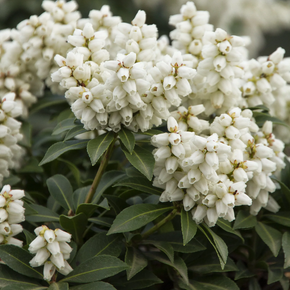
Enchanted Forest Collection Impish Elf Pieris - 1 Gallon
SKU:
2094835
UPC:
014949357514
$21.99
- Jewel-toned dark purple-pink flower buds crown the branches all winter long, then open to cascading chains of soft pink bells from late winter into early spring — one of the most vivid bloom displays in its season.
- Brick-red new foliage flushes brilliantly each spring as the flowers fade, then matures to glossy, deep evergreen — delivering three-season color from a single compact shrub.
- A naturally tidy, slow-growing habit reaches just 3 to 5 feet tall and wide, making it ideal for foundation beds, small-space borders, woodland gardens, and patio containers.
- Hardy in USDA Zones 6 to 8, deer resistant, and well-suited to the same acidic, woodland-style conditions loved by rhododendrons and azaleas — a low-fuss, high-reward evergreen.
Enchanted Forest Impish Elf Pieris (Pieris japonica 'Shy', PP26,290) is a standout compact broadleaf evergreen shrub that brings jewel-toned drama to the shade garden from fall through spring. Deep purple-pink flower buds form in late summer and become a rich ornamental feature all through winter, finally bursting open into graceful, pendulous chains of soft pink, urn-shaped bells that light up the late-winter and early-spring landscape when little else is in bloom. As the blooms fade, a spectacular flush of brick-red new foliage emerges, gradually transitioning to glossy, leathery dark green that remains attractive throughout the growing season and well into winter — giving this shrub true four-season appeal. Part of the Enchanted Forest Collection, Impish Elf is among the most highly regarded Pieris japonica cultivars for showy flower clusters and is noted for its long bloom season. Its slow, controlled growth habit stays naturally within a 3-to-5-foot rounded mound without requiring heavy pruning, making it an excellent choice for foundation plantings, shaded woodland borders, mass plantings, Asian-inspired garden designs, and decorative containers. Thriving in USDA Hardiness Zones 6 through 8, this deer-resistant shrub performs best in moist, well-drained, organically rich, acidic soil — exactly the conditions that suit rhododendrons, azaleas, and mountain laurel — and it pairs beautifully with all three in mixed evergreen beds. Whether used as a refined specimen, a low-maintenance anchor plant, or a seasonal focal point on a shaded patio, Enchanted Forest Impish Elf Pieris delivers extraordinary color, structure, and elegance with minimal effort.
Plant Description
Enchanted Forest Impish Elf Pieris is a patented (PP26,290) cultivar of Pieris japonica, commonly known as Japanese Andromeda or Lily-of-the-Valley Shrub, and belongs to the heath family (Ericaceae). It is a dense, multi-stemmed, broadleaf evergreen shrub with an upright, rounded, and spreading habit. The plant is celebrated for three overlapping seasons of ornamental interest: showy dark purple-pink flower buds that develop in midsummer and persist decoratively through the fall and winter months; cascading clusters of soft pink, urn-shaped flowers that bloom from late winter into early spring; and a dramatic flush of brick-red new foliage that follows each spring bloom cycle before maturing to glossy, deep green. The leathery, oblanceolate leaves are arranged in rosette-like clusters at the branch tips, giving the plant a refined, architectural texture. The flower clusters, borne in graceful, pendulous racemes at the tips of the previous season's growth, are among the most striking of any Pieris japonica cultivar. This is a slow-growing shrub with a moderate texture that blends naturally into woodland and mixed evergreen landscapes.
Mature Size and Growth Rate
| Attribute | Details |
|---|---|
| Mature Height | 3 to 5 feet |
| Mature Spread | 3 to 5 feet |
| Growth Rate | Slow |
| Growth Habit | Dense, upright, rounded, and spreading |
| Plant Type | Broadleaf evergreen shrub |
| Patent | PP26,290 |
Impish Elf is a compact cultivar that stays well within its 3-to-5-foot footprint, making it one of the tidier members of its species. Its slow growth rate means it will rarely outgrow its space and seldom requires heavy corrective pruning. Allow several years for the plant to fully establish and reach its ornamental peak. Spacing of 3 to 5 feet on center is recommended for individual specimens, or 30 to 36 inches on center for low hedges and mass groupings.
Hardiness Zones and Climate
Enchanted Forest Impish Elf Pieris is rated for USDA Plant Hardiness Zones 6 through 8, tolerating winter temperatures down to approximately -10 degrees F with proper siting and protection. It performs best in the mild, temperate climates of the Pacific Northwest and similar regions with cool summers and reliable winter moisture. In warmer Zone 8 areas, afternoon shade becomes especially important to prevent heat stress and leaf scorch. Protect plants from drying winter winds, which can desiccate evergreen foliage even when temperatures remain above the hardiness threshold. A sheltered position near a north- or east-facing wall or within a woodland planting provides natural buffering from harsh conditions.
Sunlight Requirements
Impish Elf Pieris grows best in partial shade to filtered sun, ideally receiving 3 to 5 hours of gentle morning sunlight with shade during the hotter afternoon hours. Dappled light beneath tall deciduous trees is an excellent natural setting. While the plant can tolerate more sun in cooler climates (Zones 6 to 7), direct afternoon sun in warmer zones can cause leaf scorch, bleaching, and stress. Avoid deep, heavy shade, which reduces flowering and causes the plant to grow sparsely. Bright indirect light or a position near a north- or east-facing exposure provides the ideal balance of light and shade for the richest bloom and the most vibrant foliage color development.
Soil and pH Preferences
Like all members of the heath family (Ericaceae), Impish Elf Pieris demands acidic, moist, well-drained soil rich in organic matter. The ideal soil pH range is 4.5 to 6.0. Alkaline soils cause chlorosis — a yellowing of the leaves due to iron deficiency — and will significantly reduce the plant's vigor and flowering. Before planting, test your soil pH and amend as needed with elemental sulfur, pine bark fines, or aged leaf mold to lower pH and improve organic content. Avoid adding lime or using alkaline water sources. Heavy clay soils should be amended for improved drainage, as waterlogged roots quickly lead to phytophthora root rot. Sandy soils benefit from the addition of organic compost to improve moisture retention. This shrub thrives in the same soil conditions as rhododendrons, azaleas, camellias, and mountain laurel.
Watering Guide
Consistent soil moisture is essential, especially during the first growing season when the root system is establishing. Water deeply and thoroughly when the top 1 to 2 inches of soil feel dry to the touch, typically once or twice per week during warm, dry periods. Avoid allowing the soil to dry out completely, particularly during flowering and the spring flush of new growth, as both are moisture-sensitive stages. Mature, established plants are somewhat more drought-tolerant but will still appreciate supplemental irrigation during extended dry spells, which are common in Southern Oregon and Northern California summers. Avoid overwatering or planting in areas where water pools after rain, as saturated soil promotes root rot. If your tap water is particularly alkaline, consider using rainwater or acidified water to avoid gradual soil pH elevation over time.
Mulching
Apply a 2-to-3-inch layer of organic mulch over the root zone, keeping it a few inches away from the main stems to allow airflow and prevent crown rot. Pine bark chips, shredded pine needles, or aged leaf mold are ideal mulch choices because they decompose slowly, conserve soil moisture, moderate soil temperature, suppress weeds, and contribute to maintaining the acidic soil pH that Pieris requires. Refresh the mulch layer annually in spring. A well-maintained mulch layer is one of the most effective and low-effort ways to keep this shrub healthy through warm summers and cold winters alike.
Fertilizing
Feed Impish Elf Pieris once in early spring — just as new growth begins — with a granular fertilizer formulated for acid-loving plants such as azalea and rhododendron fertilizer or a product like Holly-tone. A light follow-up application after the bloom cycle can help support the spring flush of new growth. Avoid over-fertilizing, as excessive nitrogen can burn the roots, reduce flower bud formation, and produce overly lush growth at the expense of the plant's natural compact form. Container-grown plants benefit from a monthly application of a water-soluble acidic fertilizer throughout the growing season (spring through late summer). Always water the plant thoroughly before applying granular fertilizers to avoid root burn.
Pruning and Maintenance
Impish Elf Pieris requires minimal pruning thanks to its naturally tidy, slow-growing habit. The most important maintenance task is deadheading — removing spent flower clusters immediately after bloom. This tidies the plant's appearance and redirects the plant's energy from seed production into strong vegetative growth. Any light shaping or selective pruning should also be done immediately after flowering is complete, before the plant sets its buds for the following year. Because next season's flower buds form on the current season's growth beginning in midsummer, pruning after that point will sacrifice next spring's blooms. Remove any dead, damaged, or crossing branches at any time of year. If rejuvenation is ever needed due to storm damage or overcrowding, cut affected stems back to a healthy lateral shoot; the plant will regenerate, though slowly. Avoid hard shearing, which is damaging to the plant's natural structure.
Planting Instructions
- Choose a location with morning sun and afternoon shade, protected from drying winter winds, and with naturally acidic or easily amended soil.
- Test the soil pH and adjust to between 4.5 and 6.0 using elemental sulfur or acidic organic amendments if needed.
- Dig a planting hole two to three times as wide as the root ball and equal in depth — never deeper. Pieris should be planted at the same level it was growing in its container; burying the crown promotes rot.
- Amend the backfill soil with pine bark fines or aged leaf mold to improve drainage and organic content. Do not add lime.
- Set the plant in the hole, backfill, and firm the soil gently to eliminate air pockets.
- Water deeply immediately after planting to settle the soil around the roots.
- Apply a 2-to-3-inch layer of acidic organic mulch over the root zone, keeping it away from the crown.
- Continue watering deeply and regularly through the first growing season. Do not allow the plant to dry out during establishment.
Seasonal Interest
| Season | Ornamental Feature |
|---|---|
| Summer (Late) | Dark purple-pink flower buds begin forming at branch tips, adding subtle ornamental interest |
| Fall | Swelling bud clusters become increasingly prominent against the glossy dark green foliage, providing winter preview color |
| Winter | Richly colored purple-pink bud clusters offer outstanding cold-season ornamental value; evergreen foliage remains lush |
| Late Winter to Early Spring | Cascading chains of soft pink, urn-shaped flowers open and last for an extended bloom season |
| Spring (After Bloom) | Bright brick-red new foliage flushes dramatically as flowers fade, creating a second peak of color |
| Summer | New foliage matures to deep, glossy green; plant provides clean evergreen structure and texture |
Landscape Uses
Enchanted Forest Impish Elf Pieris is an exceptionally versatile landscape shrub suited to a wide variety of garden applications:
- Foundation Planting: Its compact, tidy habit and year-round evergreen structure make it a natural choice for anchoring home foundations, especially on north- or east-facing exposures.
- Woodland and Shade Gardens: Thrives under the dappled canopy of tall trees alongside rhododendrons, azaleas, hostas, and ferns.
- Mixed Evergreen Borders: Adds winter bud color, spring bloom, and red new growth to multi-season shrub borders.
- Mass Planting: Repeated groupings create a dramatic sweep of synchronized winter-to-spring color.
- Specimen Plant: Striking enough to stand alone as a focal point in a courtyard, entry planting, or garden bed.
- Asian-Inspired Gardens: Pieris japonica has centuries of history in Japanese garden design, making it an authentic choice for contemplative or Asian-themed landscapes.
- Container and Patio Planting: Grows well in large decorative containers on shaded patios, porches, and entryways.
- Low-Maintenance Hedging: When planted on close centers, forms a soft, informal low hedge with excellent seasonal interest.
Companion Plants
Impish Elf Pieris thrives alongside other acid-loving plants and shade-adapted species, making it easy to build cohesive, low-maintenance garden combinations:
- Rhododendrons and Azaleas: Share identical soil, pH, light, and moisture requirements; their bloom times overlap beautifully for a dramatic spring display.
- Mountain Laurel (Kalmia latifolia): A fellow Ericaceae family member that complements Pieris with similar foliage texture and late-spring blooms.
- Camellias: Bloom from fall through spring, extending seasonal interest before and after Pieris peaks.
- Hellebores: Thrive in the same partial-shade, moist conditions and provide late-winter to early-spring color at the ground layer beneath taller Pieris.
- Hostas: Lush, bold foliage that fills in the ground layer beautifully once the spring flush of Pieris growth matures.
- Ferns (e.g., Western Sword Fern, Japanese Painted Fern): Share a love of cool, shaded, moist conditions and provide a soft textural contrast.
- Japanese Maples (Acer palmatum): Provide the ideal dappled overhead canopy and echo the red foliage tones of Pieris new growth in spring and fall.
- Leucothoe: A related, arching evergreen shrub that blends seamlessly with Pieris in woodland borders and offers attractive bronze winter foliage.
Pests and Diseases
Impish Elf Pieris is generally a healthy, low-maintenance shrub when properly sited, but there are a few issues to watch for:
- Andromeda Lace Bug (Stephanitis takeyai): The most significant pest of Japanese Pieris. These tiny insects feed on the undersides of leaves, causing a characteristic pale, stippled or bronzed mottling on the upper leaf surface. Plants in full sun are more susceptible. Encourage natural predators such as birds and beneficial insects; apply horticultural oil or neem-based sprays to the undersides of leaves for heavier infestations. Choosing a shadier planting site significantly reduces lace bug pressure.
- Scale Insects: May appear on stems and branches. Treat with horticultural oil applied in early spring during the crawler stage.
- Root Weevils: Notched leaf margins can indicate adult root weevil feeding; larvae damage roots. Most problematic in container-grown plants.
- Phytophthora Root and Crown Rot: Caused by consistently waterlogged soil. Symptoms include wilting, yellowing, and dieback despite adequate watering. Prevention through well-drained soil and proper planting depth is the best approach; there is no effective cure once established.
- Leaf Spot: Fungal leaf spot (Phyllosticta spp.) may appear in overly humid conditions with poor air circulation. Remove affected leaves and improve airflow around the plant.
- Dieback: Often a symptom of waterlogged soil or root rot. Prune affected branches back to healthy wood and address drainage issues.
Container Growing
Enchanted Forest Impish Elf Pieris is an excellent candidate for container culture, particularly in areas where garden soil is too alkaline or poorly drained to support acid-loving plants. Use a high-quality potting mix formulated for acid-loving plants (ericaceous mix), or blend standard potting soil with pine bark fines and a small amount of peat or coir to achieve the correct pH. Choose a container at least 14 to 18 inches in diameter with generous drainage holes; never allow the pot to sit in standing water. Place container-grown plants in a sheltered spot with bright indirect light or gentle morning sun and afternoon shade. Container plants dry out more quickly than in-ground specimens and will need more frequent watering, especially in warm weather — check moisture every few days during summer. Feed monthly through the growing season with a water-soluble acidic fertilizer. Repot every two to three years as the plant grows, moving up one container size at a time. In colder climates at the edge of Zone 6, move containers to a sheltered, unheated space during the hardest winter freezes to protect the roots.
Wildlife Value and Deer Resistance
Impish Elf Pieris offers meaningful value to early-season wildlife while remaining highly resistant to browsing by deer and rabbits. The pendant flower clusters, which open as early as late February, provide one of the first nectar sources available to emerging bumblebees and other early pollinators in late winter and early spring — a critical contribution during a period when most plants are still dormant. The dense evergreen canopy also provides year-round shelter and nesting cover for small birds and beneficial insects. Deer resistance is excellent: the entire plant contains grayanotoxins (andromedotoxins), naturally occurring compounds that make the foliage, flowers, and nectar unappealing and toxic to deer, livestock, and rabbits. Rutgers University has rated both Pieris japonica and its native relatives as "Rarely Damaged" by deer. This makes Impish Elf an excellent choice for gardens in deer-pressured areas across Southern Oregon and Northern California.
Toxicity Warning
All parts of Pieris japonica — including the leaves, flowers, stems, and nectar — are toxic to humans, dogs, cats, horses, and livestock. The plant contains grayanotoxins (also called andromedotoxins), which are the same class of neurotoxic compounds found in rhododendrons and azaleas. Ingestion can cause symptoms including excessive salivation, watering of the eyes and nose, nausea, vomiting, diarrhea, abdominal pain, weakness, lowered blood pressure, irregular heartbeat, and in severe cases, convulsions or cardiac failure. Even honey produced by bees foraging on Pieris flowers can be toxic. Plant Impish Elf in areas where children, pets, and livestock do not have unsupervised access. If ingestion is suspected, contact a veterinarian or poison control center immediately. Despite its toxicity to mammals, the plant is safe to handle and does not cause contact dermatitis.
- Jewel-toned dark purple-pink flower buds crown the branches all winter long, then open to cascading chains of soft pink bells from late winter into early spring — one of the most vivid bloom displays in its season.
- Brick-red new foliage flushes brilliantly each spring as the flowers fade, then matures to glossy, deep evergreen — delivering three-season color from a single compact shrub.
- A naturally tidy, slow-growing habit reaches just 3 to 5 feet tall and wide, making it ideal for foundation beds, small-space borders, woodland gardens, and patio containers.
- Hardy in USDA Zones 6 to 8, deer resistant, and well-suited to the same acidic, woodland-style conditions loved by rhododendrons and azaleas — a low-fuss, high-reward evergreen.
Enchanted Forest Impish Elf Pieris (Pieris japonica 'Shy', PP26,290) is a standout compact broadleaf evergreen shrub that brings jewel-toned drama to the shade garden from fall through spring. Deep purple-pink flower buds form in late summer and become a rich ornamental feature all through winter, finally bursting open into graceful, pendulous chains of soft pink, urn-shaped bells that light up the late-winter and early-spring landscape when little else is in bloom. As the blooms fade, a spectacular flush of brick-red new foliage emerges, gradually transitioning to glossy, leathery dark green that remains attractive throughout the growing season and well into winter — giving this shrub true four-season appeal. Part of the Enchanted Forest Collection, Impish Elf is among the most highly regarded Pieris japonica cultivars for showy flower clusters and is noted for its long bloom season. Its slow, controlled growth habit stays naturally within a 3-to-5-foot rounded mound without requiring heavy pruning, making it an excellent choice for foundation plantings, shaded woodland borders, mass plantings, Asian-inspired garden designs, and decorative containers. Thriving in USDA Hardiness Zones 6 through 8, this deer-resistant shrub performs best in moist, well-drained, organically rich, acidic soil — exactly the conditions that suit rhododendrons, azaleas, and mountain laurel — and it pairs beautifully with all three in mixed evergreen beds. Whether used as a refined specimen, a low-maintenance anchor plant, or a seasonal focal point on a shaded patio, Enchanted Forest Impish Elf Pieris delivers extraordinary color, structure, and elegance with minimal effort.
Plant Description
Enchanted Forest Impish Elf Pieris is a patented (PP26,290) cultivar of Pieris japonica, commonly known as Japanese Andromeda or Lily-of-the-Valley Shrub, and belongs to the heath family (Ericaceae). It is a dense, multi-stemmed, broadleaf evergreen shrub with an upright, rounded, and spreading habit. The plant is celebrated for three overlapping seasons of ornamental interest: showy dark purple-pink flower buds that develop in midsummer and persist decoratively through the fall and winter months; cascading clusters of soft pink, urn-shaped flowers that bloom from late winter into early spring; and a dramatic flush of brick-red new foliage that follows each spring bloom cycle before maturing to glossy, deep green. The leathery, oblanceolate leaves are arranged in rosette-like clusters at the branch tips, giving the plant a refined, architectural texture. The flower clusters, borne in graceful, pendulous racemes at the tips of the previous season's growth, are among the most striking of any Pieris japonica cultivar. This is a slow-growing shrub with a moderate texture that blends naturally into woodland and mixed evergreen landscapes.
Mature Size and Growth Rate
| Attribute | Details |
|---|---|
| Mature Height | 3 to 5 feet |
| Mature Spread | 3 to 5 feet |
| Growth Rate | Slow |
| Growth Habit | Dense, upright, rounded, and spreading |
| Plant Type | Broadleaf evergreen shrub |
| Patent | PP26,290 |
Impish Elf is a compact cultivar that stays well within its 3-to-5-foot footprint, making it one of the tidier members of its species. Its slow growth rate means it will rarely outgrow its space and seldom requires heavy corrective pruning. Allow several years for the plant to fully establish and reach its ornamental peak. Spacing of 3 to 5 feet on center is recommended for individual specimens, or 30 to 36 inches on center for low hedges and mass groupings.
Hardiness Zones and Climate
Enchanted Forest Impish Elf Pieris is rated for USDA Plant Hardiness Zones 6 through 8, tolerating winter temperatures down to approximately -10 degrees F with proper siting and protection. It performs best in the mild, temperate climates of the Pacific Northwest and similar regions with cool summers and reliable winter moisture. In warmer Zone 8 areas, afternoon shade becomes especially important to prevent heat stress and leaf scorch. Protect plants from drying winter winds, which can desiccate evergreen foliage even when temperatures remain above the hardiness threshold. A sheltered position near a north- or east-facing wall or within a woodland planting provides natural buffering from harsh conditions.
Sunlight Requirements
Impish Elf Pieris grows best in partial shade to filtered sun, ideally receiving 3 to 5 hours of gentle morning sunlight with shade during the hotter afternoon hours. Dappled light beneath tall deciduous trees is an excellent natural setting. While the plant can tolerate more sun in cooler climates (Zones 6 to 7), direct afternoon sun in warmer zones can cause leaf scorch, bleaching, and stress. Avoid deep, heavy shade, which reduces flowering and causes the plant to grow sparsely. Bright indirect light or a position near a north- or east-facing exposure provides the ideal balance of light and shade for the richest bloom and the most vibrant foliage color development.
Soil and pH Preferences
Like all members of the heath family (Ericaceae), Impish Elf Pieris demands acidic, moist, well-drained soil rich in organic matter. The ideal soil pH range is 4.5 to 6.0. Alkaline soils cause chlorosis — a yellowing of the leaves due to iron deficiency — and will significantly reduce the plant's vigor and flowering. Before planting, test your soil pH and amend as needed with elemental sulfur, pine bark fines, or aged leaf mold to lower pH and improve organic content. Avoid adding lime or using alkaline water sources. Heavy clay soils should be amended for improved drainage, as waterlogged roots quickly lead to phytophthora root rot. Sandy soils benefit from the addition of organic compost to improve moisture retention. This shrub thrives in the same soil conditions as rhododendrons, azaleas, camellias, and mountain laurel.
Watering Guide
Consistent soil moisture is essential, especially during the first growing season when the root system is establishing. Water deeply and thoroughly when the top 1 to 2 inches of soil feel dry to the touch, typically once or twice per week during warm, dry periods. Avoid allowing the soil to dry out completely, particularly during flowering and the spring flush of new growth, as both are moisture-sensitive stages. Mature, established plants are somewhat more drought-tolerant but will still appreciate supplemental irrigation during extended dry spells, which are common in Southern Oregon and Northern California summers. Avoid overwatering or planting in areas where water pools after rain, as saturated soil promotes root rot. If your tap water is particularly alkaline, consider using rainwater or acidified water to avoid gradual soil pH elevation over time.
Mulching
Apply a 2-to-3-inch layer of organic mulch over the root zone, keeping it a few inches away from the main stems to allow airflow and prevent crown rot. Pine bark chips, shredded pine needles, or aged leaf mold are ideal mulch choices because they decompose slowly, conserve soil moisture, moderate soil temperature, suppress weeds, and contribute to maintaining the acidic soil pH that Pieris requires. Refresh the mulch layer annually in spring. A well-maintained mulch layer is one of the most effective and low-effort ways to keep this shrub healthy through warm summers and cold winters alike.
Fertilizing
Feed Impish Elf Pieris once in early spring — just as new growth begins — with a granular fertilizer formulated for acid-loving plants such as azalea and rhododendron fertilizer or a product like Holly-tone. A light follow-up application after the bloom cycle can help support the spring flush of new growth. Avoid over-fertilizing, as excessive nitrogen can burn the roots, reduce flower bud formation, and produce overly lush growth at the expense of the plant's natural compact form. Container-grown plants benefit from a monthly application of a water-soluble acidic fertilizer throughout the growing season (spring through late summer). Always water the plant thoroughly before applying granular fertilizers to avoid root burn.
Pruning and Maintenance
Impish Elf Pieris requires minimal pruning thanks to its naturally tidy, slow-growing habit. The most important maintenance task is deadheading — removing spent flower clusters immediately after bloom. This tidies the plant's appearance and redirects the plant's energy from seed production into strong vegetative growth. Any light shaping or selective pruning should also be done immediately after flowering is complete, before the plant sets its buds for the following year. Because next season's flower buds form on the current season's growth beginning in midsummer, pruning after that point will sacrifice next spring's blooms. Remove any dead, damaged, or crossing branches at any time of year. If rejuvenation is ever needed due to storm damage or overcrowding, cut affected stems back to a healthy lateral shoot; the plant will regenerate, though slowly. Avoid hard shearing, which is damaging to the plant's natural structure.
Planting Instructions
- Choose a location with morning sun and afternoon shade, protected from drying winter winds, and with naturally acidic or easily amended soil.
- Test the soil pH and adjust to between 4.5 and 6.0 using elemental sulfur or acidic organic amendments if needed.
- Dig a planting hole two to three times as wide as the root ball and equal in depth — never deeper. Pieris should be planted at the same level it was growing in its container; burying the crown promotes rot.
- Amend the backfill soil with pine bark fines or aged leaf mold to improve drainage and organic content. Do not add lime.
- Set the plant in the hole, backfill, and firm the soil gently to eliminate air pockets.
- Water deeply immediately after planting to settle the soil around the roots.
- Apply a 2-to-3-inch layer of acidic organic mulch over the root zone, keeping it away from the crown.
- Continue watering deeply and regularly through the first growing season. Do not allow the plant to dry out during establishment.
Seasonal Interest
| Season | Ornamental Feature |
|---|---|
| Summer (Late) | Dark purple-pink flower buds begin forming at branch tips, adding subtle ornamental interest |
| Fall | Swelling bud clusters become increasingly prominent against the glossy dark green foliage, providing winter preview color |
| Winter | Richly colored purple-pink bud clusters offer outstanding cold-season ornamental value; evergreen foliage remains lush |
| Late Winter to Early Spring | Cascading chains of soft pink, urn-shaped flowers open and last for an extended bloom season |
| Spring (After Bloom) | Bright brick-red new foliage flushes dramatically as flowers fade, creating a second peak of color |
| Summer | New foliage matures to deep, glossy green; plant provides clean evergreen structure and texture |
Landscape Uses
Enchanted Forest Impish Elf Pieris is an exceptionally versatile landscape shrub suited to a wide variety of garden applications:
- Foundation Planting: Its compact, tidy habit and year-round evergreen structure make it a natural choice for anchoring home foundations, especially on north- or east-facing exposures.
- Woodland and Shade Gardens: Thrives under the dappled canopy of tall trees alongside rhododendrons, azaleas, hostas, and ferns.
- Mixed Evergreen Borders: Adds winter bud color, spring bloom, and red new growth to multi-season shrub borders.
- Mass Planting: Repeated groupings create a dramatic sweep of synchronized winter-to-spring color.
- Specimen Plant: Striking enough to stand alone as a focal point in a courtyard, entry planting, or garden bed.
- Asian-Inspired Gardens: Pieris japonica has centuries of history in Japanese garden design, making it an authentic choice for contemplative or Asian-themed landscapes.
- Container and Patio Planting: Grows well in large decorative containers on shaded patios, porches, and entryways.
- Low-Maintenance Hedging: When planted on close centers, forms a soft, informal low hedge with excellent seasonal interest.
Companion Plants
Impish Elf Pieris thrives alongside other acid-loving plants and shade-adapted species, making it easy to build cohesive, low-maintenance garden combinations:
- Rhododendrons and Azaleas: Share identical soil, pH, light, and moisture requirements; their bloom times overlap beautifully for a dramatic spring display.
- Mountain Laurel (Kalmia latifolia): A fellow Ericaceae family member that complements Pieris with similar foliage texture and late-spring blooms.
- Camellias: Bloom from fall through spring, extending seasonal interest before and after Pieris peaks.
- Hellebores: Thrive in the same partial-shade, moist conditions and provide late-winter to early-spring color at the ground layer beneath taller Pieris.
- Hostas: Lush, bold foliage that fills in the ground layer beautifully once the spring flush of Pieris growth matures.
- Ferns (e.g., Western Sword Fern, Japanese Painted Fern): Share a love of cool, shaded, moist conditions and provide a soft textural contrast.
- Japanese Maples (Acer palmatum): Provide the ideal dappled overhead canopy and echo the red foliage tones of Pieris new growth in spring and fall.
- Leucothoe: A related, arching evergreen shrub that blends seamlessly with Pieris in woodland borders and offers attractive bronze winter foliage.
Pests and Diseases
Impish Elf Pieris is generally a healthy, low-maintenance shrub when properly sited, but there are a few issues to watch for:
- Andromeda Lace Bug (Stephanitis takeyai): The most significant pest of Japanese Pieris. These tiny insects feed on the undersides of leaves, causing a characteristic pale, stippled or bronzed mottling on the upper leaf surface. Plants in full sun are more susceptible. Encourage natural predators such as birds and beneficial insects; apply horticultural oil or neem-based sprays to the undersides of leaves for heavier infestations. Choosing a shadier planting site significantly reduces lace bug pressure.
- Scale Insects: May appear on stems and branches. Treat with horticultural oil applied in early spring during the crawler stage.
- Root Weevils: Notched leaf margins can indicate adult root weevil feeding; larvae damage roots. Most problematic in container-grown plants.
- Phytophthora Root and Crown Rot: Caused by consistently waterlogged soil. Symptoms include wilting, yellowing, and dieback despite adequate watering. Prevention through well-drained soil and proper planting depth is the best approach; there is no effective cure once established.
- Leaf Spot: Fungal leaf spot (Phyllosticta spp.) may appear in overly humid conditions with poor air circulation. Remove affected leaves and improve airflow around the plant.
- Dieback: Often a symptom of waterlogged soil or root rot. Prune affected branches back to healthy wood and address drainage issues.
Container Growing
Enchanted Forest Impish Elf Pieris is an excellent candidate for container culture, particularly in areas where garden soil is too alkaline or poorly drained to support acid-loving plants. Use a high-quality potting mix formulated for acid-loving plants (ericaceous mix), or blend standard potting soil with pine bark fines and a small amount of peat or coir to achieve the correct pH. Choose a container at least 14 to 18 inches in diameter with generous drainage holes; never allow the pot to sit in standing water. Place container-grown plants in a sheltered spot with bright indirect light or gentle morning sun and afternoon shade. Container plants dry out more quickly than in-ground specimens and will need more frequent watering, especially in warm weather — check moisture every few days during summer. Feed monthly through the growing season with a water-soluble acidic fertilizer. Repot every two to three years as the plant grows, moving up one container size at a time. In colder climates at the edge of Zone 6, move containers to a sheltered, unheated space during the hardest winter freezes to protect the roots.
Wildlife Value and Deer Resistance
Impish Elf Pieris offers meaningful value to early-season wildlife while remaining highly resistant to browsing by deer and rabbits. The pendant flower clusters, which open as early as late February, provide one of the first nectar sources available to emerging bumblebees and other early pollinators in late winter and early spring — a critical contribution during a period when most plants are still dormant. The dense evergreen canopy also provides year-round shelter and nesting cover for small birds and beneficial insects. Deer resistance is excellent: the entire plant contains grayanotoxins (andromedotoxins), naturally occurring compounds that make the foliage, flowers, and nectar unappealing and toxic to deer, livestock, and rabbits. Rutgers University has rated both Pieris japonica and its native relatives as "Rarely Damaged" by deer. This makes Impish Elf an excellent choice for gardens in deer-pressured areas across Southern Oregon and Northern California.
Toxicity Warning
All parts of Pieris japonica — including the leaves, flowers, stems, and nectar — are toxic to humans, dogs, cats, horses, and livestock. The plant contains grayanotoxins (also called andromedotoxins), which are the same class of neurotoxic compounds found in rhododendrons and azaleas. Ingestion can cause symptoms including excessive salivation, watering of the eyes and nose, nausea, vomiting, diarrhea, abdominal pain, weakness, lowered blood pressure, irregular heartbeat, and in severe cases, convulsions or cardiac failure. Even honey produced by bees foraging on Pieris flowers can be toxic. Plant Impish Elf in areas where children, pets, and livestock do not have unsupervised access. If ingestion is suspected, contact a veterinarian or poison control center immediately. Despite its toxicity to mammals, the plant is safe to handle and does not cause contact dermatitis.