Zoom the image with the mouse
Tiki Pieris - 1 Gallon
SKU:
1827550
UPC:
014949357576
$19.99
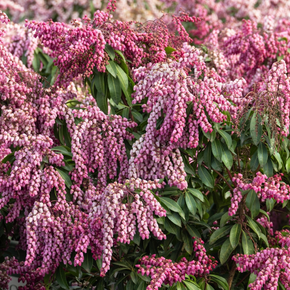
- Compact, rounded evergreen shrub smothered in cascading chains of pure white, bell-shaped blooms every late winter to early spring
- Upright bud spikes develop in fall and often blush red, providing striking ornamental interest through the winter months before opening in spring
- Dense, tidy habit reaching just 3 to 4 feet tall and wide makes it ideal for foundation plantings, small-space gardens, hedges, and container displays
- Naturally deer-resistant with year-round glossy dark green foliage that provides reliable evergreen structure in shade and woodland garden settings
Tiki Pieris (Pieris japonica 'Tiki') is a refined, compact broadleaf evergreen shrub that delivers extraordinary four-season appeal in shade and acid-loving garden settings across USDA Hardiness Zones 6 through 8. A standout selection of Japanese Andromeda, this slow-growing cultivar forms a dense, symmetrical mound of lustrous dark green foliage that remains attractive throughout the year. In fall, upright spikes of ornamental flower buds emerge at the branch tips and frequently take on a warm reddish hue, providing beautiful winter interest before abundant clusters of pure white, urn-shaped blooms burst open in late winter to early spring, draping the entire shrub in delicate, lily-of-the-valley-style flowers. Thriving in moist, organically rich, well-drained, and slightly acidic soil, Tiki Pieris performs best in partial shade to dappled sunlight with protection from harsh afternoon sun and drying winds. Its naturally tidy, rounded form reduces the need for heavy pruning, making it a low-maintenance choice for foundation plantings, mass plantings, informal clipped hedges, shaded woodland borders, and patio containers. A well-suited companion to rhododendrons, azaleas, camellias, and ferns, Tiki Pieris is a versatile, long-lived garden shrub that brings elegance, structure, and seasonal color to the Pacific Northwest, Southern Oregon, and Northern California garden landscape.
Plant Description
Tiki Pieris is a selected cultivar of Pieris japonica, commonly known as Japanese Andromeda or Lily-of-the-Valley Shrub, and belongs to the heath family (Ericaceae). It forms a dense, multi-stemmed, rounded evergreen mound with a naturally tidy and symmetrical habit. The glossy, lance-shaped leaves are leathery in texture and maintain a rich, deep green color throughout all four seasons. In fall, showy upright spikes of flower buds form at the branch tips, often developing a distinctive reddish tint that stands out beautifully against the dark foliage through the winter. Come late winter to early spring, these buds burst into cascading chains of small, white, bell-shaped flowers that smother the shrub in bloom. This is a slow-growing, long-lived shrub that, under ideal conditions, can thrive in the landscape for 40 years or more.
Mature Size
| Characteristic | Detail |
|---|---|
| Mature Height | 3 to 4 feet |
| Mature Spread | 3 to 4 feet |
| Growth Rate | Slow; approximately 6 to 12 inches per year |
| Growth Habit | Dense, compact, and rounded; fills out to the ground |
| Longevity | 40+ years under ideal conditions |
Hardiness Zones
Tiki Pieris is reliably hardy in USDA Hardiness Zones 6 through 8, making it well suited for landscapes across Southern Oregon and Northern California. It thrives in climates with cool to mild summers and consistent moisture. In colder microclimates or exposed sites within this range, applying a thick layer of mulch over the root zone in late fall will help protect the shallow roots from temperature extremes. Avoid planting in frost pockets or locations with persistent drying winter winds, as these can lead to foliage scorch and bud damage.
Sunlight Requirements
Tiki Pieris grows best in partial shade to dappled sunlight. An ideal exposure provides morning sun with protection from harsh afternoon rays, which can bleach and scorch the foliage. Planting beneath a high, open canopy of deciduous trees replicates the plant's native woodland habitat and produces the finest results. In cooler coastal climates, it can tolerate more direct sun, but in hot inland settings, afternoon shade is essential for maintaining vibrant, healthy foliage and a strong bloom display. Full, dense shade will reduce flowering but the plant will remain healthy and maintain its evergreen structure.
Soil and pH Preferences
Like all members of the heath family, Tiki Pieris demands well-drained, organically rich, and consistently moist soil with a moderately to strongly acidic pH. The ideal soil pH range is 5.0 to 6.5. In alkaline or high-pH soils, the plant is highly prone to chlorosis, a condition where the foliage turns yellow due to an inability to uptake iron and other nutrients. Amending the planting area with leaf mold, composted bark, or ericaceous (acid-formulated) compost before planting greatly improves outcomes in native soils that may not naturally fall in the correct pH range. Heavy clay soils that drain poorly are not suitable, as standing water around the roots can quickly lead to root rot and plant death.
Watering Guide
Consistent, even moisture is essential for Tiki Pieris, especially during its first two years in the ground while it establishes a strong root system. The soil should be kept evenly moist but never waterlogged. During periods of drought or extended summer heat — common in Southern Oregon and Northern California — supplemental irrigation is important to prevent leaf scorch, bud drop, and general stress. A 2 to 3 inch layer of organic mulch over the root zone is highly effective at retaining soil moisture, moderating root temperature, and reducing the frequency of irrigation needed. Avoid overhead watering when possible, as wet foliage can invite fungal issues; drip irrigation or soaker hoses at the base of the plant are preferred.
Fertilizing
Tiki Pieris has modest fertilizer needs when planted in good-quality, organically amended soil. Feed once annually in early spring with a slow-release fertilizer formulated specifically for acid-loving plants, such as an azalea and rhododendron fertilizer. Apply according to product label directions, scattering evenly around the drip line of the shrub and watering in well. Avoid high-nitrogen lawn fertilizers, which can push soft, weak growth at the expense of flower production and leave the plant more vulnerable to heat and pest stress. If foliage appears pale green or yellowed despite correct pH, a supplemental application of chelated iron or an acidic soil amendment may help correct nutrient deficiencies.
Pruning and Maintenance
One of the great advantages of Tiki Pieris is its naturally compact, tidy form, which requires very little pruning to maintain an attractive shape. When pruning is desired, the most important rule is to prune immediately after flowering in spring — pruning at any other time risks removing the developing flower buds that were set the previous fall, which would eliminate the following season's bloom display. Light shaping cuts to remove any crossing, damaged, or wayward branches are all that is typically needed. Avoid hard renovation pruning into old, bare wood, as Pieris recovers slowly and unpredictably from severe cuts. Remove spent flower clusters after bloom if desired for a tidier appearance. Keep the area around the base of the plant free of debris and ensure mulch is not piled against the main stem to discourage disease and pests.
Planting Instructions
- Choose a site in partial shade with morning sun and afternoon protection. Ensure the location has good air circulation and is sheltered from harsh, drying winds.
- Test soil pH before planting. If the pH is above 6.5, amend the planting area with sulfur or an ericaceous compost blend several weeks in advance to lower the pH into the 5.0 to 6.5 range.
- Dig a planting hole twice as wide as the root ball but no deeper. The top of the root ball should sit level with or very slightly above the surrounding soil surface to ensure proper drainage.
- Backfill with a mix of the native soil and ericaceous compost or leaf mold, firming gently around the roots to eliminate air pockets.
- Water thoroughly after planting to settle the soil around the roots.
- Apply a 2 to 3 inch layer of shredded bark, pine needles, or leaf mold as mulch extending to the drip line, keeping mulch a few inches away from the main stem.
- Water regularly during the first growing season to support strong root establishment. Spring and early fall are the best times of year to plant.
Seasonal Interest
| Season | Ornamental Interest |
|---|---|
| Spring | Abundant pure white, bell-shaped flowers cascade from the branch tips in late winter through early spring, covering the shrub in bloom |
| Summer | Rich, glossy, dark green evergreen foliage provides a clean, lush backdrop in the garden |
| Fall | Upright flower bud spikes form and develop, often taking on a warm reddish hue that contrasts beautifully with the dark green leaves |
| Winter | Ornamental red-tinged bud spikes remain on display through the winter months, offering visual interest even in the coldest season |
Landscape Uses
- Foundation Planting: The compact, rounded habit and year-round evergreen foliage make Tiki Pieris an excellent choice for planting near building foundations, under windows, or along shaded house walls.
- Mass Planting: Planted in groups, Tiki Pieris creates a lush, uniform evergreen groundcover effect with a stunning spring bloom display.
- Informal Hedge or Screen: Its dense branching and predictable size make it suitable for low, clipped informal hedges and garden borders.
- Woodland or Shade Garden: A natural fit alongside rhododendrons, azaleas, ferns, and hostas in cool, dappled woodland-style garden settings.
- Accent or Specimen Shrub: Its ornamental buds and tidy form give it strong standalone appeal as a focal point in a mixed shrub or perennial border.
- Container Planting: Well suited as the centerpiece or "thriller" in large patio containers or decorative planters, particularly on shaded decks and entryways.
Companion Plants
Tiki Pieris thrives alongside other acid-loving, shade-tolerant plants and makes an excellent anchor shrub in woodland and mixed border compositions. Ideal shrub companions include rhododendrons, azaleas, camellias, mountain laurel (Kalmia), enkianthus, and hollies. For perennial companions, consider hostas, astilbe, ferns, heuchera (coral bells), hellebores, and Japanese forest grass. Early spring bulbs such as snowdrops, crocus, and English bluebells naturalize beautifully beneath and around Tiki Pieris, extending the season of interest. For container combinations, pair it with alyssum, lobelia, calibrachoa, or small spring bulbs around the edges. Avoid planting alongside alkaline-preferring shrubs such as lilacs, forsythia, weigela, or deutzia, as these plants require soil conditions incompatible with Pieris.
Pests and Diseases
Tiki Pieris is generally a robust and trouble-free shrub when planted in appropriate conditions, but there are a few potential issues to be aware of:
- Lace Bugs: The most common insect pest of Pieris. These small insects feed on the undersides of leaves, causing a stippled, silvery, or bleached appearance on the upper leaf surface. Lace bugs are most problematic on plants growing in too much direct sun or heat stress. Insecticidal soap or neem oil sprays applied to the undersides of leaves can be effective; moving the plant to a shadier location greatly reduces susceptibility.
- Phytophthora Root Rot: A serious fungal disease that causes wilting, yellowing, stunted growth, and eventual plant death. It is caused by consistently waterlogged or poorly draining soil. Prevention through proper site selection and well-draining soil is the best management strategy. Purchase healthy, disease-free plants and avoid overhead watering.
- Leaf Spot: Fungal leaf spot diseases can occur, especially in conditions with poor air circulation or excessive overhead moisture. Remove affected foliage and improve air circulation around the plant.
- Chlorosis: While not a pest or disease, yellowing foliage caused by iron or manganese deficiency in alkaline soils is a common problem. Correcting soil pH and applying chelated iron typically resolves the issue.
- Scale Insects: Occasional infestations of scale can occur; treat with horticultural oil applied in early spring before new growth emerges.
Container Growing
Tiki Pieris is an excellent candidate for container culture due to its compact size, slow growth rate, and striking ornamental features. When grown in a pot, use a well-draining potting mix formulated for acid-loving plants, or blend a quality potting mix with additional perlite and ericaceous compost. Select a container with ample drainage holes at least 18 to 20 inches in diameter to give the root system room to develop. Position containers in a location that receives morning sun and afternoon shade. Container-grown plants will require more frequent watering than in-ground plants, as pots dry out faster — check moisture regularly and water thoroughly when the top inch of soil feels dry. Feed with a slow-release acid fertilizer each spring. In colder winter microclimates, move containers to a sheltered location or wrap them to protect the root zone from hard freezes, as potted roots are more exposed to temperature extremes than in-ground plants.
Wildlife Value and Deer Resistance
Tiki Pieris offers meaningful early-season value for pollinators. Its white bell-shaped flowers bloom in late winter to early spring, a critical time when very few other nectar sources are available, making them a welcome resource for early-emerging bees and other beneficial insects. The dense evergreen branching also provides sheltered cover and potential nesting habitat for small birds throughout the year. Tiki Pieris is considered deer resistant — the tough, leathery texture and natural compounds in the foliage make it unappealing to deer and rabbits, and it is generally left alone even in areas with significant browsing pressure. While no plant is completely deer-proof under severe food scarcity, Tiki Pieris ranks among the more reliable deer-resistant evergreen shrubs available for home landscapes.
Toxicity Warning
All parts of Pieris japonica 'Tiki', including the leaves, flowers, and nectar, contain grayanotoxins and are considered highly toxic if ingested by humans, dogs, cats, horses, and other livestock. Ingestion can cause serious symptoms including vomiting, low blood pressure, irregular heartbeat, and in severe cases more serious health complications. This plant should not be grown in areas where children, pets, or grazing animals have unsupervised access. It is strictly an ornamental shrub and should never be treated as an edible or medicinal plant. In normal garden use, the foliage is bitter and unpalatable, so accidental ingestion is unlikely, but care should always be exercised when planting in family or pet-friendly environments.
- Compact, rounded evergreen shrub smothered in cascading chains of pure white, bell-shaped blooms every late winter to early spring
- Upright bud spikes develop in fall and often blush red, providing striking ornamental interest through the winter months before opening in spring
- Dense, tidy habit reaching just 3 to 4 feet tall and wide makes it ideal for foundation plantings, small-space gardens, hedges, and container displays
- Naturally deer-resistant with year-round glossy dark green foliage that provides reliable evergreen structure in shade and woodland garden settings
Tiki Pieris (Pieris japonica 'Tiki') is a refined, compact broadleaf evergreen shrub that delivers extraordinary four-season appeal in shade and acid-loving garden settings across USDA Hardiness Zones 6 through 8. A standout selection of Japanese Andromeda, this slow-growing cultivar forms a dense, symmetrical mound of lustrous dark green foliage that remains attractive throughout the year. In fall, upright spikes of ornamental flower buds emerge at the branch tips and frequently take on a warm reddish hue, providing beautiful winter interest before abundant clusters of pure white, urn-shaped blooms burst open in late winter to early spring, draping the entire shrub in delicate, lily-of-the-valley-style flowers. Thriving in moist, organically rich, well-drained, and slightly acidic soil, Tiki Pieris performs best in partial shade to dappled sunlight with protection from harsh afternoon sun and drying winds. Its naturally tidy, rounded form reduces the need for heavy pruning, making it a low-maintenance choice for foundation plantings, mass plantings, informal clipped hedges, shaded woodland borders, and patio containers. A well-suited companion to rhododendrons, azaleas, camellias, and ferns, Tiki Pieris is a versatile, long-lived garden shrub that brings elegance, structure, and seasonal color to the Pacific Northwest, Southern Oregon, and Northern California garden landscape.
Plant Description
Tiki Pieris is a selected cultivar of Pieris japonica, commonly known as Japanese Andromeda or Lily-of-the-Valley Shrub, and belongs to the heath family (Ericaceae). It forms a dense, multi-stemmed, rounded evergreen mound with a naturally tidy and symmetrical habit. The glossy, lance-shaped leaves are leathery in texture and maintain a rich, deep green color throughout all four seasons. In fall, showy upright spikes of flower buds form at the branch tips, often developing a distinctive reddish tint that stands out beautifully against the dark foliage through the winter. Come late winter to early spring, these buds burst into cascading chains of small, white, bell-shaped flowers that smother the shrub in bloom. This is a slow-growing, long-lived shrub that, under ideal conditions, can thrive in the landscape for 40 years or more.
Mature Size
| Characteristic | Detail |
|---|---|
| Mature Height | 3 to 4 feet |
| Mature Spread | 3 to 4 feet |
| Growth Rate | Slow; approximately 6 to 12 inches per year |
| Growth Habit | Dense, compact, and rounded; fills out to the ground |
| Longevity | 40+ years under ideal conditions |
Hardiness Zones
Tiki Pieris is reliably hardy in USDA Hardiness Zones 6 through 8, making it well suited for landscapes across Southern Oregon and Northern California. It thrives in climates with cool to mild summers and consistent moisture. In colder microclimates or exposed sites within this range, applying a thick layer of mulch over the root zone in late fall will help protect the shallow roots from temperature extremes. Avoid planting in frost pockets or locations with persistent drying winter winds, as these can lead to foliage scorch and bud damage.
Sunlight Requirements
Tiki Pieris grows best in partial shade to dappled sunlight. An ideal exposure provides morning sun with protection from harsh afternoon rays, which can bleach and scorch the foliage. Planting beneath a high, open canopy of deciduous trees replicates the plant's native woodland habitat and produces the finest results. In cooler coastal climates, it can tolerate more direct sun, but in hot inland settings, afternoon shade is essential for maintaining vibrant, healthy foliage and a strong bloom display. Full, dense shade will reduce flowering but the plant will remain healthy and maintain its evergreen structure.
Soil and pH Preferences
Like all members of the heath family, Tiki Pieris demands well-drained, organically rich, and consistently moist soil with a moderately to strongly acidic pH. The ideal soil pH range is 5.0 to 6.5. In alkaline or high-pH soils, the plant is highly prone to chlorosis, a condition where the foliage turns yellow due to an inability to uptake iron and other nutrients. Amending the planting area with leaf mold, composted bark, or ericaceous (acid-formulated) compost before planting greatly improves outcomes in native soils that may not naturally fall in the correct pH range. Heavy clay soils that drain poorly are not suitable, as standing water around the roots can quickly lead to root rot and plant death.
Watering Guide
Consistent, even moisture is essential for Tiki Pieris, especially during its first two years in the ground while it establishes a strong root system. The soil should be kept evenly moist but never waterlogged. During periods of drought or extended summer heat — common in Southern Oregon and Northern California — supplemental irrigation is important to prevent leaf scorch, bud drop, and general stress. A 2 to 3 inch layer of organic mulch over the root zone is highly effective at retaining soil moisture, moderating root temperature, and reducing the frequency of irrigation needed. Avoid overhead watering when possible, as wet foliage can invite fungal issues; drip irrigation or soaker hoses at the base of the plant are preferred.
Fertilizing
Tiki Pieris has modest fertilizer needs when planted in good-quality, organically amended soil. Feed once annually in early spring with a slow-release fertilizer formulated specifically for acid-loving plants, such as an azalea and rhododendron fertilizer. Apply according to product label directions, scattering evenly around the drip line of the shrub and watering in well. Avoid high-nitrogen lawn fertilizers, which can push soft, weak growth at the expense of flower production and leave the plant more vulnerable to heat and pest stress. If foliage appears pale green or yellowed despite correct pH, a supplemental application of chelated iron or an acidic soil amendment may help correct nutrient deficiencies.
Pruning and Maintenance
One of the great advantages of Tiki Pieris is its naturally compact, tidy form, which requires very little pruning to maintain an attractive shape. When pruning is desired, the most important rule is to prune immediately after flowering in spring — pruning at any other time risks removing the developing flower buds that were set the previous fall, which would eliminate the following season's bloom display. Light shaping cuts to remove any crossing, damaged, or wayward branches are all that is typically needed. Avoid hard renovation pruning into old, bare wood, as Pieris recovers slowly and unpredictably from severe cuts. Remove spent flower clusters after bloom if desired for a tidier appearance. Keep the area around the base of the plant free of debris and ensure mulch is not piled against the main stem to discourage disease and pests.
Planting Instructions
- Choose a site in partial shade with morning sun and afternoon protection. Ensure the location has good air circulation and is sheltered from harsh, drying winds.
- Test soil pH before planting. If the pH is above 6.5, amend the planting area with sulfur or an ericaceous compost blend several weeks in advance to lower the pH into the 5.0 to 6.5 range.
- Dig a planting hole twice as wide as the root ball but no deeper. The top of the root ball should sit level with or very slightly above the surrounding soil surface to ensure proper drainage.
- Backfill with a mix of the native soil and ericaceous compost or leaf mold, firming gently around the roots to eliminate air pockets.
- Water thoroughly after planting to settle the soil around the roots.
- Apply a 2 to 3 inch layer of shredded bark, pine needles, or leaf mold as mulch extending to the drip line, keeping mulch a few inches away from the main stem.
- Water regularly during the first growing season to support strong root establishment. Spring and early fall are the best times of year to plant.
Seasonal Interest
| Season | Ornamental Interest |
|---|---|
| Spring | Abundant pure white, bell-shaped flowers cascade from the branch tips in late winter through early spring, covering the shrub in bloom |
| Summer | Rich, glossy, dark green evergreen foliage provides a clean, lush backdrop in the garden |
| Fall | Upright flower bud spikes form and develop, often taking on a warm reddish hue that contrasts beautifully with the dark green leaves |
| Winter | Ornamental red-tinged bud spikes remain on display through the winter months, offering visual interest even in the coldest season |
Landscape Uses
- Foundation Planting: The compact, rounded habit and year-round evergreen foliage make Tiki Pieris an excellent choice for planting near building foundations, under windows, or along shaded house walls.
- Mass Planting: Planted in groups, Tiki Pieris creates a lush, uniform evergreen groundcover effect with a stunning spring bloom display.
- Informal Hedge or Screen: Its dense branching and predictable size make it suitable for low, clipped informal hedges and garden borders.
- Woodland or Shade Garden: A natural fit alongside rhododendrons, azaleas, ferns, and hostas in cool, dappled woodland-style garden settings.
- Accent or Specimen Shrub: Its ornamental buds and tidy form give it strong standalone appeal as a focal point in a mixed shrub or perennial border.
- Container Planting: Well suited as the centerpiece or "thriller" in large patio containers or decorative planters, particularly on shaded decks and entryways.
Companion Plants
Tiki Pieris thrives alongside other acid-loving, shade-tolerant plants and makes an excellent anchor shrub in woodland and mixed border compositions. Ideal shrub companions include rhododendrons, azaleas, camellias, mountain laurel (Kalmia), enkianthus, and hollies. For perennial companions, consider hostas, astilbe, ferns, heuchera (coral bells), hellebores, and Japanese forest grass. Early spring bulbs such as snowdrops, crocus, and English bluebells naturalize beautifully beneath and around Tiki Pieris, extending the season of interest. For container combinations, pair it with alyssum, lobelia, calibrachoa, or small spring bulbs around the edges. Avoid planting alongside alkaline-preferring shrubs such as lilacs, forsythia, weigela, or deutzia, as these plants require soil conditions incompatible with Pieris.
Pests and Diseases
Tiki Pieris is generally a robust and trouble-free shrub when planted in appropriate conditions, but there are a few potential issues to be aware of:
- Lace Bugs: The most common insect pest of Pieris. These small insects feed on the undersides of leaves, causing a stippled, silvery, or bleached appearance on the upper leaf surface. Lace bugs are most problematic on plants growing in too much direct sun or heat stress. Insecticidal soap or neem oil sprays applied to the undersides of leaves can be effective; moving the plant to a shadier location greatly reduces susceptibility.
- Phytophthora Root Rot: A serious fungal disease that causes wilting, yellowing, stunted growth, and eventual plant death. It is caused by consistently waterlogged or poorly draining soil. Prevention through proper site selection and well-draining soil is the best management strategy. Purchase healthy, disease-free plants and avoid overhead watering.
- Leaf Spot: Fungal leaf spot diseases can occur, especially in conditions with poor air circulation or excessive overhead moisture. Remove affected foliage and improve air circulation around the plant.
- Chlorosis: While not a pest or disease, yellowing foliage caused by iron or manganese deficiency in alkaline soils is a common problem. Correcting soil pH and applying chelated iron typically resolves the issue.
- Scale Insects: Occasional infestations of scale can occur; treat with horticultural oil applied in early spring before new growth emerges.
Container Growing
Tiki Pieris is an excellent candidate for container culture due to its compact size, slow growth rate, and striking ornamental features. When grown in a pot, use a well-draining potting mix formulated for acid-loving plants, or blend a quality potting mix with additional perlite and ericaceous compost. Select a container with ample drainage holes at least 18 to 20 inches in diameter to give the root system room to develop. Position containers in a location that receives morning sun and afternoon shade. Container-grown plants will require more frequent watering than in-ground plants, as pots dry out faster — check moisture regularly and water thoroughly when the top inch of soil feels dry. Feed with a slow-release acid fertilizer each spring. In colder winter microclimates, move containers to a sheltered location or wrap them to protect the root zone from hard freezes, as potted roots are more exposed to temperature extremes than in-ground plants.
Wildlife Value and Deer Resistance
Tiki Pieris offers meaningful early-season value for pollinators. Its white bell-shaped flowers bloom in late winter to early spring, a critical time when very few other nectar sources are available, making them a welcome resource for early-emerging bees and other beneficial insects. The dense evergreen branching also provides sheltered cover and potential nesting habitat for small birds throughout the year. Tiki Pieris is considered deer resistant — the tough, leathery texture and natural compounds in the foliage make it unappealing to deer and rabbits, and it is generally left alone even in areas with significant browsing pressure. While no plant is completely deer-proof under severe food scarcity, Tiki Pieris ranks among the more reliable deer-resistant evergreen shrubs available for home landscapes.
Toxicity Warning
All parts of Pieris japonica 'Tiki', including the leaves, flowers, and nectar, contain grayanotoxins and are considered highly toxic if ingested by humans, dogs, cats, horses, and other livestock. Ingestion can cause serious symptoms including vomiting, low blood pressure, irregular heartbeat, and in severe cases more serious health complications. This plant should not be grown in areas where children, pets, or grazing animals have unsupervised access. It is strictly an ornamental shrub and should never be treated as an edible or medicinal plant. In normal garden use, the foliage is bitter and unpalatable, so accidental ingestion is unlikely, but care should always be exercised when planting in family or pet-friendly environments.