
Zoom the image with the mouse
Enchanted Forest Collection Gay Goblin Pieris - 1 Gallon
SKU:
2094840
UPC:
014949357446
$22.99
- Brilliant fiery-red new foliage emerges in spring and matures to a lustrous, deep evergreen — delivering two seasons of striking color from a single plant.
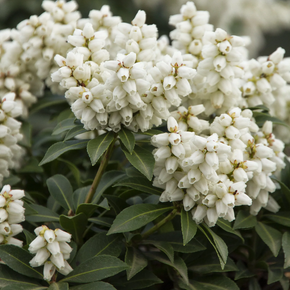
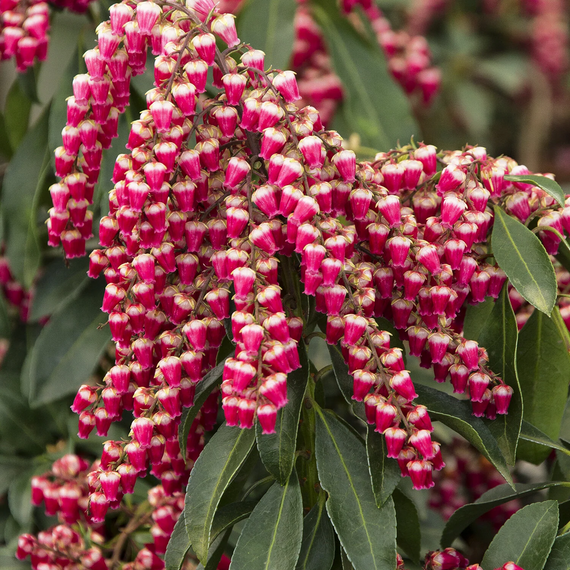
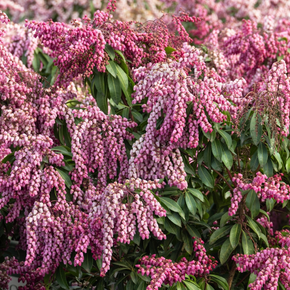
- Rich, rose-pink pendant flower clusters dangle like delicate lanterns from late winter into spring, providing one of the earliest color shows in the garden.
- Dense, upright, and naturally tidy habit stays 5-7 feet tall and 3-5 feet wide — perfectly scaled for foundation beds, woodland borders, and large containers.
- Deer resistant and long-lived in the right spot — thrives in the moist, acidic, well-drained soils of Pacific Coast and mid-Atlantic woodland gardens for 40+ years.
Enchanted Forest Gay Goblin Pieris (Pieris japonica 'Cabernet' PP 29,130) is a showstopping broadleaf evergreen shrub that earns its keep in every season. Part of the Enchanted Forest Collection, Gay Goblin opens each spring with a spectacular flush of coppery-bronze new foliage that sets the whole plant aglow before slowly deepening to a rich, glossy dark green that looks sharp through fall and winter. Overlapping that foliage display from late winter into spring are long, gracefully drooping clusters of rich rose-pink, urn-shaped blooms — each tiny bell flushed with white overtones — that sway below the branches like strings of jewels. The dense, upright habit fills space with structure without overwhelming smaller garden spaces, making Gay Goblin equally at home as a refined specimen, a bold foundation anchor, a mixed hedge, or a dramatic patio container plant. Thriving in USDA Hardiness Zones 6-8, it performs beautifully in the moist, organically rich, acidic soils found throughout Southern Oregon and Northern California, where partial shade and moderate summer temperatures allow it to truly shine. If you have been looking for an elegant, low-maintenance evergreen that delivers fiery spring color, romantic late-winter blooms, and year-round polished foliage, Enchanted Forest Gay Goblin Pieris is an outstanding choice for your landscape.
Plant Description
Enchanted Forest Gay Goblin Pieris is a dense, multi-stemmed broadleaf evergreen shrub belonging to the heath family (Ericaceae). It is a patented cultivar (PP 29,130) selected for its exceptionally intense flower color and vivid new-growth display. In late winter to early spring, long drooping panicles (8-15 cm) of rich rose-pink, pendant urn-shaped flowers — each bloom delicately flushed with white — hang below the branches in cascading chains reminiscent of lily-of-the-valley, one of its common names. Simultaneously, the emerging new foliage flushes a striking coppery-bronze to bronzy-red, creating a two-toned spectacle of bloom and new growth. As the season progresses the new leaves harden off to a lustrous, deep dark green that remains glossy and attractive through fall and winter, giving this plant genuine four-season appeal. The narrow, obovate to oblanceolate leaves are finely toothed along the margins and have a refined, slightly formal texture. The overall growth habit is upright and spreading with stiff, well-branched stems that create a naturally tidy silhouette requiring little corrective pruning.
Mature Size and Growth Rate
| Characteristic | Detail |
|---|---|
| Mature Height | 5-7 feet |
| Mature Spread | 3-5 feet |
| Growth Rate | Slow; typically 3-6 inches per year once established |
| Habit | Upright and spreading, dense multi-stemmed |
| Canopy Clearance | Approximately 1 foot from the ground; suitable for planting beneath power lines |
| Longevity | 40+ years under ideal conditions |
Hardiness Zones and Climate
Gay Goblin Pieris is reliably hardy in USDA Hardiness Zones 6-8 (minimum temperatures from -10 degrees F to 20 degrees F). It performs especially well in the mild, moist climates of the Pacific Coast, Pacific Northwest, and similar regions where summers are not excessively hot and dry. In Southern Oregon and Northern California, the moderate temperatures, natural rainfall, and acidic forest soils make this an ideal landscape shrub.
- Protect plants in Zone 6 from desiccating winter winds by siting them near a windbreak or against a north- or east-facing wall.
- In hotter microclimates (Zone 8 and warmer), afternoon shade is essential to prevent leaf scorch and stress.
- Avoid frost pockets where cold air settles, as late spring frosts can damage the tender new growth and emerging flower buds.
- A 2-3 inch layer of mulch over the root zone helps moderate soil temperature fluctuations in colder winters.
Sunlight Requirements
Gay Goblin Pieris grows best in partial shade to full sun, with the ideal exposure being dappled light or morning sun with afternoon shade. The best results in most home gardens are achieved with 3-5 hours of direct sunlight per day, particularly gentle morning light.
- Partial shade (ideal): Dappled woodland light, or morning sun and afternoon shade. Produces the best balance of flower display and healthy foliage without leaf scorch.
- Full sun: Tolerated in cool coastal climates where temperatures rarely exceed the mid-80s F. Requires consistently moist soil and may show some leaf bleaching in intense summer heat.
- Deep shade: Avoid dense, all-day shade — blooming will be reduced and the plant may become sparse and leggy.
- Harsh reflected heat from south- or west-facing walls is not suitable and will stress the plant, making it more susceptible to lace bug infestations.
Soil and pH Preferences
As a member of the Ericaceae (heath) family, Gay Goblin Pieris requires acidic soil to absorb nutrients properly. Alkaline soils will cause iron chlorosis — a yellowing of the foliage — and overall decline.
- Ideal soil pH: 4.5-6.0; slightly acidic is preferred. Avoid soils above pH 6.5.
- Soil type: Rich, moist, well-drained soil with generous organic matter such as leaf mold, aged bark compost, or pine fines. It will not tolerate standing water or waterlogged roots.
- Drainage: Good drainage is non-negotiable. Roots sitting in saturated soil will quickly develop root rot.
- Organic enrichment: Amend planting holes with peat moss, aged pine bark, or decomposed leaf litter to replicate natural woodland soil conditions.
- Urban soils: Some tolerance for urban conditions, but avoid compacted or highly alkaline clay soils without significant amendment.
- Chlorosis tip: If foliage yellows between veins, test soil pH and acidify with sulfur or use chelated iron per label directions to quickly correct nutrient deficiency.
Watering Guide
Consistent moisture is key to keeping Gay Goblin Pieris healthy, particularly during the first two years of establishment and through hot, dry summers. Drought stress weakens the plant and increases vulnerability to pests such as lace bugs.
- Newly planted (Year 1-2): Water deeply 2-3 times per week during dry periods to promote deep root establishment. Never allow the root ball to completely dry out.
- Established plants: Water when the top 1-2 inches of soil feel dry. Aim for consistently even soil moisture rather than alternating wet and dry extremes.
- Summer heat: Increase watering frequency during prolonged dry spells or heat waves. Wilting or rolling leaves are signs of water stress.
- Winter: Reduce watering frequency as temperatures cool, but do not allow soil to completely dry out during dry winters, especially in containers.
- Mulching: A 2-3 inch layer of shredded bark, pine needles, or leaf mulch around the root zone dramatically reduces moisture loss and helps maintain even soil temperature. Keep mulch a few inches away from the crown to prevent rot.
- Avoid: Overhead watering that wets the foliage in warm, humid conditions, which can encourage fungal leaf spots.
Fertilizing
Gay Goblin Pieris is a moderate feeder that responds well to fertilization with acid-formulated fertilizers. Avoid over-fertilizing, which can stimulate soft, pest-prone growth.
- Fertilizer type: Use a granular or slow-release fertilizer formulated for acid-loving plants (labeled for azaleas, rhododendrons, or camellias).
- First application: Apply in early spring as new growth begins to emerge, following package directions for the size of your plant.
- Second application (optional): A light follow-up feeding after blooms fade in late spring or early summer can support vigorous new growth.
- Avoid late-season feeding: Do not fertilize after midsummer (July in most areas). Late feeding pushes tender new growth that is easily damaged by early frosts.
- Yellowing foliage: If interveinal yellowing (chlorosis) appears, the soil pH may be too high rather than a simple nutrient deficiency. Test soil pH and address accordingly before applying additional fertilizer.
- Organic option: Top-dressing with a 1-2 inch layer of acidic compost or composted pine bark each spring feeds the plant slowly while improving soil structure.
Pruning and Maintenance
Gay Goblin Pieris is naturally tidy and requires minimal pruning when given adequate space. Pruning at the wrong time of year removes the following season's flower buds, which are set in late summer and fall.
- Best time to prune: Immediately after flowering in spring — typically late April through May depending on your location. This allows the plant the entire growing season to set new buds for next year.
- Deadheading: Removing spent flower clusters promptly after bloom improves appearance and redirects plant energy into new growth rather than seed production.
- Shaping: Light shaping cuts can be made right after bloom to maintain a tidy silhouette or reduce size slightly. Avoid cutting into old, thick wood, as Pieris does not regenerate vigorously from hard cuts.
- Never prune: Do not prune in late summer, fall, or winter — you will remove the coming season's flower buds.
- Suckers and reverted growth: If the plant is grafted, remove any shoots arising from below the graft union promptly to maintain the Gay Goblin variety.
- General upkeep: Remove any dead, diseased, or crossing branches as needed year-round. Rake and remove fallen leaves from around the base to discourage fungal issues.
Planting Instructions
- Choose the right site: Select a location with partial shade, protection from drying afternoon sun and winter winds, and well-drained acidic soil.
- Dig the hole: Dig a hole 2-3 times as wide as the root ball and no deeper than the root ball is tall. Planting too deeply is a common cause of failure.
- Amend the soil: Mix the backfill soil with 25-30% composted pine bark, peat moss, or well-aged leaf mold to acidify and improve drainage and organic content.
- Position the plant: Set the plant so the top of the root ball is level with or very slightly above the surrounding soil grade to ensure the crown stays dry.
- Backfill and firm: Fill in with amended soil, gently firming it in layers to eliminate air pockets. Do not pack the soil tightly around the roots.
- Water thoroughly: Water deeply immediately after planting to settle the soil and eliminate air pockets around the roots.
- Mulch: Apply a 2-3 inch layer of shredded bark, pine needles, or wood chip mulch in a wide ring around the plant, keeping mulch 3-4 inches away from the main stems.
- Spacing: For a single specimen, allow 3-4 feet of clearance in all directions. For a mass planting or low hedge, space plants 30-36 inches on center. Keep at least 18-24 inches from walls, walkways, and structures.
Seasonal Interest
| Season | Ornamental Feature |
|---|---|
| Late Winter (Feb-Mar) | Rich rose-pink pendant flower buds begin to open; one of the earliest flowering shrubs in the garden |
| Early Spring (Mar-Apr) | Peak flowering display of drooping pink bell clusters combined with fiery coppery-bronze new foliage flush |
| Late Spring (May) | New foliage transitions from bronze to rich, glossy dark green; spent flowers can be deadheaded |
| Summer (Jun-Aug) | Bold, lustrous dark green evergreen foliage provides structure and a clean backdrop for surrounding perennials |
| Fall (Sep-Nov) | Flower buds for next season begin forming; foliage remains deep green and polished |
| Winter (Dec-Feb) | Glossy evergreen leaves provide year-round structure and winter color; prominent flower buds visible on branch tips |
Landscape Uses
Gay Goblin Pieris is a versatile landscape shrub well suited to a variety of design applications in Pacific Northwest and California coastal gardens.
- Foundation planting: Its refined upright form and year-round foliage make it a classic choice for anchoring house corners or softening building foundations.
- Woodland and shade garden: Perfect beneath high-canopy deciduous trees where dappled light and leaf-enriched soil create ideal conditions.
- Specimen or accent: Used alone as a focal point in a mixed border or island bed, especially effective when backlit in morning sun to show off the glowing new growth.
- Mass planting: Planted in groupings of three or five for a bold, low-maintenance evergreen mass with spectacular spring color.
- Informal hedge or screen: The dense upright habit creates a natural screen when planted at proper spacing along property lines or as a backdrop to lower perennials.
- Container gardening: An excellent specimen for large patio containers or entryway pots, bringing late-winter color to patios and decks before most other plants have emerged.
- Slope stabilization: The fibrous root system helps stabilize gently sloped, acidic, well-drained banks in shaded settings.
Companion Plants
Gay Goblin Pieris pairs beautifully with other acid-loving and shade-tolerant plants that share its preference for moist, organically rich, well-drained acidic soils. Consider the following companions for a cohesive woodland or shade garden planting:
- Rhododendrons and Azaleas: Share identical soil and light requirements; mix bold rhododendron blooms with the delicate pink bells of Gay Goblin for a layered spring display.
- Japanese Maples (Acer palmatum): The lacy, colorful canopy of a Japanese maple provides ideal dappled shade overhead while the contrasting textures and fall color complement the Pieris year-round.
- Mountain Laurel (Kalmia latifolia): A native acid-lover with similar cultural needs; the cupped flower clusters of mountain laurel harmonize with Pieris's pendant bells.
- Camellias: Evergreen structure and winter to early spring blooms bridge the gap before Gay Goblin reaches peak flower, creating a continuous season of interest.
- Ferns (Dryopteris, Polystichum): Fine-textured fronds create a graceful contrast to the bolder Pieris foliage and thrive in the same moist, shaded conditions.
- Hellebores (Helleborus spp.): Low-growing winter and early spring bloomers that carpet the ground beneath Pieris, combining perfectly in timing and soil preference.
- Hostas: Bold, ribbed hosta leaves provide strong textural contrast at the base of Gay Goblin in shadier garden spots.
- Enkianthus campanulatus: A fellow ericaceous shrub with similar pendant flowers and spectacular fall color that pairs naturally with Pieris in a layered shrub border.
Pests and Diseases
Gay Goblin Pieris is generally healthy in a well-sited garden, but is susceptible to a few common issues, particularly when grown in too much sun or under drought stress.
- Andromeda Lace Bug (Stephanitis takeyai): The most serious pest of Pieris. These small insects feed on the undersides of leaves, causing stippled, silvery-gray discoloration on the upper leaf surface. Lace bug pressure is significantly higher on plants grown in full sun and drought conditions. Control with insecticidal soap, neem oil, or a systemic insecticide; address cultural conditions first by moving plants to shadier spots and improving irrigation.
- Scale insects: Soft and armored scales can attach to stems and leaves. Treat with horticultural oil in late winter or early spring before scales harden.
- Spider mites: Occasional in hot, dry conditions. Increase humidity and water, and treat with insecticidal soap or neem oil if populations are high.
- Phytophthora root rot: Caused by overly wet, poorly drained soils. Prevent by ensuring excellent drainage and never overwatering. There is no cure once severe; improve drainage for remaining plants.
- Leaf spot (fungal): Occasionally affects foliage in wet conditions. Improve air circulation and avoid overhead watering. Remove and dispose of affected leaves.
- Dieback: Can result from root rot, winter damage, or vascular disease. Prune affected branches back to healthy wood and disinfect pruning tools between cuts.
- Chlorosis (not a pest but a common problem): Yellowing between leaf veins is almost always caused by soil pH that is too high rather than a nutrient deficiency. Test and acidify soil rather than simply applying extra fertilizer.
Container Growing
Gay Goblin Pieris is well suited to life in a large container and makes a striking specimen for patios, entryways, and decks. With the right setup, a container-grown Gay Goblin can thrive for many years.
- Container size: Start in a container at least 14-18 inches in diameter with large drainage holes. Upsize to a 16-24 inch container as the plant matures.
- Potting mix: Use a peat- and bark-based potting mix formulated for acid-loving plants (labeled for azaleas, camellias, or rhododendrons). Never use standard potting mix or garden soil, which will compact and raise pH over time.
- Placement: Position containers in a bright, sheltered location with morning sun and afternoon shade — near an east- or north-facing exposure is ideal.
- Watering: Containers dry out faster than in-ground plantings. Check soil moisture every 2-3 days in summer and water when the top inch of mix feels dry. Never allow the mix to completely dry out.
- Fertilizing: Feed container plants with a liquid or slow-release acid fertilizer in early spring and again after bloom. Container-grown plants deplete nutrients faster than in-ground plants.
- Winter protection: In Zone 6 or colder, move containers to a sheltered, unheated garage or against a protected wall in winter to prevent the root ball from freezing solid, which can be fatal.
- Repotting: Every 2-3 years, refresh the potting mix and check the root system. If root-bound, move up one pot size or prune roots and return to the same container with fresh mix.
Wildlife Value and Toxicity
Gay Goblin Pieris offers both value and important cautions for gardeners with children, pets, and wildlife.
- Pollinators: The pendant flower clusters are visited by early-season bees, particularly bumblebees, which are among the first pollinators active in late winter and early spring. The nectar provides a valuable early-season energy source when few other plants are in bloom.
- Deer resistance: Deer generally avoid Pieris japonica in favor of more palatable plants, making Gay Goblin a good choice for landscapes in deer-prone areas. However, browsing pressure from very hungry deer in winter cannot be entirely ruled out.
- Toxicity — Important Warning: All parts of Pieris japonica — including leaves, flowers, nectar, and pollen — are toxic to humans and animals if ingested. Ingestion can cause symptoms including burning sensation in the mouth, vomiting, low blood pressure, and in severe cases, more serious effects. The toxin, grayanotoxin (also called andromedotoxin), is present throughout the plant. Plant where children and pets cannot easily access and nibble on the foliage or flowers, and do not use clippings in livestock areas. Honey produced by bees that forage heavily on Pieris may also carry trace toxins.
- Brilliant fiery-red new foliage emerges in spring and matures to a lustrous, deep evergreen — delivering two seasons of striking color from a single plant.
- Rich, rose-pink pendant flower clusters dangle like delicate lanterns from late winter into spring, providing one of the earliest color shows in the garden.
- Dense, upright, and naturally tidy habit stays 5-7 feet tall and 3-5 feet wide — perfectly scaled for foundation beds, woodland borders, and large containers.
- Deer resistant and long-lived in the right spot — thrives in the moist, acidic, well-drained soils of Pacific Coast and mid-Atlantic woodland gardens for 40+ years.
Enchanted Forest Gay Goblin Pieris (Pieris japonica 'Cabernet' PP 29,130) is a showstopping broadleaf evergreen shrub that earns its keep in every season. Part of the Enchanted Forest Collection, Gay Goblin opens each spring with a spectacular flush of coppery-bronze new foliage that sets the whole plant aglow before slowly deepening to a rich, glossy dark green that looks sharp through fall and winter. Overlapping that foliage display from late winter into spring are long, gracefully drooping clusters of rich rose-pink, urn-shaped blooms — each tiny bell flushed with white overtones — that sway below the branches like strings of jewels. The dense, upright habit fills space with structure without overwhelming smaller garden spaces, making Gay Goblin equally at home as a refined specimen, a bold foundation anchor, a mixed hedge, or a dramatic patio container plant. Thriving in USDA Hardiness Zones 6-8, it performs beautifully in the moist, organically rich, acidic soils found throughout Southern Oregon and Northern California, where partial shade and moderate summer temperatures allow it to truly shine. If you have been looking for an elegant, low-maintenance evergreen that delivers fiery spring color, romantic late-winter blooms, and year-round polished foliage, Enchanted Forest Gay Goblin Pieris is an outstanding choice for your landscape.
Plant Description
Enchanted Forest Gay Goblin Pieris is a dense, multi-stemmed broadleaf evergreen shrub belonging to the heath family (Ericaceae). It is a patented cultivar (PP 29,130) selected for its exceptionally intense flower color and vivid new-growth display. In late winter to early spring, long drooping panicles (8-15 cm) of rich rose-pink, pendant urn-shaped flowers — each bloom delicately flushed with white — hang below the branches in cascading chains reminiscent of lily-of-the-valley, one of its common names. Simultaneously, the emerging new foliage flushes a striking coppery-bronze to bronzy-red, creating a two-toned spectacle of bloom and new growth. As the season progresses the new leaves harden off to a lustrous, deep dark green that remains glossy and attractive through fall and winter, giving this plant genuine four-season appeal. The narrow, obovate to oblanceolate leaves are finely toothed along the margins and have a refined, slightly formal texture. The overall growth habit is upright and spreading with stiff, well-branched stems that create a naturally tidy silhouette requiring little corrective pruning.
Mature Size and Growth Rate
| Characteristic | Detail |
|---|---|
| Mature Height | 5-7 feet |
| Mature Spread | 3-5 feet |
| Growth Rate | Slow; typically 3-6 inches per year once established |
| Habit | Upright and spreading, dense multi-stemmed |
| Canopy Clearance | Approximately 1 foot from the ground; suitable for planting beneath power lines |
| Longevity | 40+ years under ideal conditions |
Hardiness Zones and Climate
Gay Goblin Pieris is reliably hardy in USDA Hardiness Zones 6-8 (minimum temperatures from -10 degrees F to 20 degrees F). It performs especially well in the mild, moist climates of the Pacific Coast, Pacific Northwest, and similar regions where summers are not excessively hot and dry. In Southern Oregon and Northern California, the moderate temperatures, natural rainfall, and acidic forest soils make this an ideal landscape shrub.
- Protect plants in Zone 6 from desiccating winter winds by siting them near a windbreak or against a north- or east-facing wall.
- In hotter microclimates (Zone 8 and warmer), afternoon shade is essential to prevent leaf scorch and stress.
- Avoid frost pockets where cold air settles, as late spring frosts can damage the tender new growth and emerging flower buds.
- A 2-3 inch layer of mulch over the root zone helps moderate soil temperature fluctuations in colder winters.
Sunlight Requirements
Gay Goblin Pieris grows best in partial shade to full sun, with the ideal exposure being dappled light or morning sun with afternoon shade. The best results in most home gardens are achieved with 3-5 hours of direct sunlight per day, particularly gentle morning light.
- Partial shade (ideal): Dappled woodland light, or morning sun and afternoon shade. Produces the best balance of flower display and healthy foliage without leaf scorch.
- Full sun: Tolerated in cool coastal climates where temperatures rarely exceed the mid-80s F. Requires consistently moist soil and may show some leaf bleaching in intense summer heat.
- Deep shade: Avoid dense, all-day shade — blooming will be reduced and the plant may become sparse and leggy.
- Harsh reflected heat from south- or west-facing walls is not suitable and will stress the plant, making it more susceptible to lace bug infestations.
Soil and pH Preferences
As a member of the Ericaceae (heath) family, Gay Goblin Pieris requires acidic soil to absorb nutrients properly. Alkaline soils will cause iron chlorosis — a yellowing of the foliage — and overall decline.
- Ideal soil pH: 4.5-6.0; slightly acidic is preferred. Avoid soils above pH 6.5.
- Soil type: Rich, moist, well-drained soil with generous organic matter such as leaf mold, aged bark compost, or pine fines. It will not tolerate standing water or waterlogged roots.
- Drainage: Good drainage is non-negotiable. Roots sitting in saturated soil will quickly develop root rot.
- Organic enrichment: Amend planting holes with peat moss, aged pine bark, or decomposed leaf litter to replicate natural woodland soil conditions.
- Urban soils: Some tolerance for urban conditions, but avoid compacted or highly alkaline clay soils without significant amendment.
- Chlorosis tip: If foliage yellows between veins, test soil pH and acidify with sulfur or use chelated iron per label directions to quickly correct nutrient deficiency.
Watering Guide
Consistent moisture is key to keeping Gay Goblin Pieris healthy, particularly during the first two years of establishment and through hot, dry summers. Drought stress weakens the plant and increases vulnerability to pests such as lace bugs.
- Newly planted (Year 1-2): Water deeply 2-3 times per week during dry periods to promote deep root establishment. Never allow the root ball to completely dry out.
- Established plants: Water when the top 1-2 inches of soil feel dry. Aim for consistently even soil moisture rather than alternating wet and dry extremes.
- Summer heat: Increase watering frequency during prolonged dry spells or heat waves. Wilting or rolling leaves are signs of water stress.
- Winter: Reduce watering frequency as temperatures cool, but do not allow soil to completely dry out during dry winters, especially in containers.
- Mulching: A 2-3 inch layer of shredded bark, pine needles, or leaf mulch around the root zone dramatically reduces moisture loss and helps maintain even soil temperature. Keep mulch a few inches away from the crown to prevent rot.
- Avoid: Overhead watering that wets the foliage in warm, humid conditions, which can encourage fungal leaf spots.
Fertilizing
Gay Goblin Pieris is a moderate feeder that responds well to fertilization with acid-formulated fertilizers. Avoid over-fertilizing, which can stimulate soft, pest-prone growth.
- Fertilizer type: Use a granular or slow-release fertilizer formulated for acid-loving plants (labeled for azaleas, rhododendrons, or camellias).
- First application: Apply in early spring as new growth begins to emerge, following package directions for the size of your plant.
- Second application (optional): A light follow-up feeding after blooms fade in late spring or early summer can support vigorous new growth.
- Avoid late-season feeding: Do not fertilize after midsummer (July in most areas). Late feeding pushes tender new growth that is easily damaged by early frosts.
- Yellowing foliage: If interveinal yellowing (chlorosis) appears, the soil pH may be too high rather than a simple nutrient deficiency. Test soil pH and address accordingly before applying additional fertilizer.
- Organic option: Top-dressing with a 1-2 inch layer of acidic compost or composted pine bark each spring feeds the plant slowly while improving soil structure.
Pruning and Maintenance
Gay Goblin Pieris is naturally tidy and requires minimal pruning when given adequate space. Pruning at the wrong time of year removes the following season's flower buds, which are set in late summer and fall.
- Best time to prune: Immediately after flowering in spring — typically late April through May depending on your location. This allows the plant the entire growing season to set new buds for next year.
- Deadheading: Removing spent flower clusters promptly after bloom improves appearance and redirects plant energy into new growth rather than seed production.
- Shaping: Light shaping cuts can be made right after bloom to maintain a tidy silhouette or reduce size slightly. Avoid cutting into old, thick wood, as Pieris does not regenerate vigorously from hard cuts.
- Never prune: Do not prune in late summer, fall, or winter — you will remove the coming season's flower buds.
- Suckers and reverted growth: If the plant is grafted, remove any shoots arising from below the graft union promptly to maintain the Gay Goblin variety.
- General upkeep: Remove any dead, diseased, or crossing branches as needed year-round. Rake and remove fallen leaves from around the base to discourage fungal issues.
Planting Instructions
- Choose the right site: Select a location with partial shade, protection from drying afternoon sun and winter winds, and well-drained acidic soil.
- Dig the hole: Dig a hole 2-3 times as wide as the root ball and no deeper than the root ball is tall. Planting too deeply is a common cause of failure.
- Amend the soil: Mix the backfill soil with 25-30% composted pine bark, peat moss, or well-aged leaf mold to acidify and improve drainage and organic content.
- Position the plant: Set the plant so the top of the root ball is level with or very slightly above the surrounding soil grade to ensure the crown stays dry.
- Backfill and firm: Fill in with amended soil, gently firming it in layers to eliminate air pockets. Do not pack the soil tightly around the roots.
- Water thoroughly: Water deeply immediately after planting to settle the soil and eliminate air pockets around the roots.
- Mulch: Apply a 2-3 inch layer of shredded bark, pine needles, or wood chip mulch in a wide ring around the plant, keeping mulch 3-4 inches away from the main stems.
- Spacing: For a single specimen, allow 3-4 feet of clearance in all directions. For a mass planting or low hedge, space plants 30-36 inches on center. Keep at least 18-24 inches from walls, walkways, and structures.
Seasonal Interest
| Season | Ornamental Feature |
|---|---|
| Late Winter (Feb-Mar) | Rich rose-pink pendant flower buds begin to open; one of the earliest flowering shrubs in the garden |
| Early Spring (Mar-Apr) | Peak flowering display of drooping pink bell clusters combined with fiery coppery-bronze new foliage flush |
| Late Spring (May) | New foliage transitions from bronze to rich, glossy dark green; spent flowers can be deadheaded |
| Summer (Jun-Aug) | Bold, lustrous dark green evergreen foliage provides structure and a clean backdrop for surrounding perennials |
| Fall (Sep-Nov) | Flower buds for next season begin forming; foliage remains deep green and polished |
| Winter (Dec-Feb) | Glossy evergreen leaves provide year-round structure and winter color; prominent flower buds visible on branch tips |
Landscape Uses
Gay Goblin Pieris is a versatile landscape shrub well suited to a variety of design applications in Pacific Northwest and California coastal gardens.
- Foundation planting: Its refined upright form and year-round foliage make it a classic choice for anchoring house corners or softening building foundations.
- Woodland and shade garden: Perfect beneath high-canopy deciduous trees where dappled light and leaf-enriched soil create ideal conditions.
- Specimen or accent: Used alone as a focal point in a mixed border or island bed, especially effective when backlit in morning sun to show off the glowing new growth.
- Mass planting: Planted in groupings of three or five for a bold, low-maintenance evergreen mass with spectacular spring color.
- Informal hedge or screen: The dense upright habit creates a natural screen when planted at proper spacing along property lines or as a backdrop to lower perennials.
- Container gardening: An excellent specimen for large patio containers or entryway pots, bringing late-winter color to patios and decks before most other plants have emerged.
- Slope stabilization: The fibrous root system helps stabilize gently sloped, acidic, well-drained banks in shaded settings.
Companion Plants
Gay Goblin Pieris pairs beautifully with other acid-loving and shade-tolerant plants that share its preference for moist, organically rich, well-drained acidic soils. Consider the following companions for a cohesive woodland or shade garden planting:
- Rhododendrons and Azaleas: Share identical soil and light requirements; mix bold rhododendron blooms with the delicate pink bells of Gay Goblin for a layered spring display.
- Japanese Maples (Acer palmatum): The lacy, colorful canopy of a Japanese maple provides ideal dappled shade overhead while the contrasting textures and fall color complement the Pieris year-round.
- Mountain Laurel (Kalmia latifolia): A native acid-lover with similar cultural needs; the cupped flower clusters of mountain laurel harmonize with Pieris's pendant bells.
- Camellias: Evergreen structure and winter to early spring blooms bridge the gap before Gay Goblin reaches peak flower, creating a continuous season of interest.
- Ferns (Dryopteris, Polystichum): Fine-textured fronds create a graceful contrast to the bolder Pieris foliage and thrive in the same moist, shaded conditions.
- Hellebores (Helleborus spp.): Low-growing winter and early spring bloomers that carpet the ground beneath Pieris, combining perfectly in timing and soil preference.
- Hostas: Bold, ribbed hosta leaves provide strong textural contrast at the base of Gay Goblin in shadier garden spots.
- Enkianthus campanulatus: A fellow ericaceous shrub with similar pendant flowers and spectacular fall color that pairs naturally with Pieris in a layered shrub border.
Pests and Diseases
Gay Goblin Pieris is generally healthy in a well-sited garden, but is susceptible to a few common issues, particularly when grown in too much sun or under drought stress.
- Andromeda Lace Bug (Stephanitis takeyai): The most serious pest of Pieris. These small insects feed on the undersides of leaves, causing stippled, silvery-gray discoloration on the upper leaf surface. Lace bug pressure is significantly higher on plants grown in full sun and drought conditions. Control with insecticidal soap, neem oil, or a systemic insecticide; address cultural conditions first by moving plants to shadier spots and improving irrigation.
- Scale insects: Soft and armored scales can attach to stems and leaves. Treat with horticultural oil in late winter or early spring before scales harden.
- Spider mites: Occasional in hot, dry conditions. Increase humidity and water, and treat with insecticidal soap or neem oil if populations are high.
- Phytophthora root rot: Caused by overly wet, poorly drained soils. Prevent by ensuring excellent drainage and never overwatering. There is no cure once severe; improve drainage for remaining plants.
- Leaf spot (fungal): Occasionally affects foliage in wet conditions. Improve air circulation and avoid overhead watering. Remove and dispose of affected leaves.
- Dieback: Can result from root rot, winter damage, or vascular disease. Prune affected branches back to healthy wood and disinfect pruning tools between cuts.
- Chlorosis (not a pest but a common problem): Yellowing between leaf veins is almost always caused by soil pH that is too high rather than a nutrient deficiency. Test and acidify soil rather than simply applying extra fertilizer.
Container Growing
Gay Goblin Pieris is well suited to life in a large container and makes a striking specimen for patios, entryways, and decks. With the right setup, a container-grown Gay Goblin can thrive for many years.
- Container size: Start in a container at least 14-18 inches in diameter with large drainage holes. Upsize to a 16-24 inch container as the plant matures.
- Potting mix: Use a peat- and bark-based potting mix formulated for acid-loving plants (labeled for azaleas, camellias, or rhododendrons). Never use standard potting mix or garden soil, which will compact and raise pH over time.
- Placement: Position containers in a bright, sheltered location with morning sun and afternoon shade — near an east- or north-facing exposure is ideal.
- Watering: Containers dry out faster than in-ground plantings. Check soil moisture every 2-3 days in summer and water when the top inch of mix feels dry. Never allow the mix to completely dry out.
- Fertilizing: Feed container plants with a liquid or slow-release acid fertilizer in early spring and again after bloom. Container-grown plants deplete nutrients faster than in-ground plants.
- Winter protection: In Zone 6 or colder, move containers to a sheltered, unheated garage or against a protected wall in winter to prevent the root ball from freezing solid, which can be fatal.
- Repotting: Every 2-3 years, refresh the potting mix and check the root system. If root-bound, move up one pot size or prune roots and return to the same container with fresh mix.
Wildlife Value and Toxicity
Gay Goblin Pieris offers both value and important cautions for gardeners with children, pets, and wildlife.
- Pollinators: The pendant flower clusters are visited by early-season bees, particularly bumblebees, which are among the first pollinators active in late winter and early spring. The nectar provides a valuable early-season energy source when few other plants are in bloom.
- Deer resistance: Deer generally avoid Pieris japonica in favor of more palatable plants, making Gay Goblin a good choice for landscapes in deer-prone areas. However, browsing pressure from very hungry deer in winter cannot be entirely ruled out.
- Toxicity — Important Warning: All parts of Pieris japonica — including leaves, flowers, nectar, and pollen — are toxic to humans and animals if ingested. Ingestion can cause symptoms including burning sensation in the mouth, vomiting, low blood pressure, and in severe cases, more serious effects. The toxin, grayanotoxin (also called andromedotoxin), is present throughout the plant. Plant where children and pets cannot easily access and nibble on the foliage or flowers, and do not use clippings in livestock areas. Honey produced by bees that forage heavily on Pieris may also carry trace toxins.