Zoom the image with the mouse
Comtesse de Bouchaud Clematis
SKU:
2054365-P
UPC:
014949272213
$21.99 - $59.99
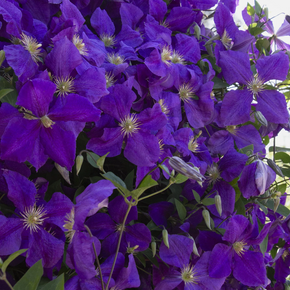
- Spectacular 4-6" rose-pink blooms with creamy-yellow stamens smother vigorous vines all summer long, earning this heirloom cultivar the prestigious Royal Horticultural Society Award of Garden Merit.
- An incredibly free-flowering, easy-to-grow deciduous climber that reaches 8-12 feet tall, making it ideal for trellises, arbors, fences, pergolas, and even large containers.
- Blooms entirely on the current season's new growth (Pruning Group 3), so a simple late-winter hard prune keeps plants vigorous, full-flowered from base to tip, and easy to manage year after year.
- Hardy in USDA Zones 4-9 and tolerant of deer and rabbits, this long-lived perennial vine also attracts bees, butterflies, and hummingbirds, adding lively wildlife interest to the summer garden.
Clematis 'Comtesse de Bouchaud' is one of the most beloved and reliable large-flowered clematis cultivars in the trade, cherished for nearly a century for good reason. This vigorous deciduous vine produces an absolute profusion of large, 4-6 inch wide blooms in a soft, velvety rose-pink accented with a hint of lavender, each flower featuring six to eight gently wavy, slightly recurved petals that surround a striking cluster of creamy-yellow stamens at the center. Flowering continuously from early through late summer entirely on the current season's growth, 'Comtesse de Bouchaud' delivers one of the longest bloom seasons of any large-flowered clematis. Dark green, ovate foliage clothes the twining stems throughout the growing season, providing a lush backdrop to the showy flowers. Reaching 8-12 feet in height with a 3-6 foot spread, this adaptable climber thrives in full sun to part shade in USDA Hardiness Zones 4-9, performing beautifully in the diverse climates of Southern Oregon and Northern California. As a Pruning Group 3 clematis, it is cut back hard each late winter or early spring, which promotes dense new growth from the base and ensures spectacular, full-vine flowering season after season. Plant it to climb a trellis, fence, arbor, or pergola, allow it to weave through a climbing rose for a classic cottage garden pairing, or grow it in a generously sized container on a sunny patio. Its combination of spectacular summer color, tough constitution, deer resistance, pollinator appeal, and forgiving low-maintenance pruning requirements makes 'Comtesse de Bouchaud' an outstanding choice for gardeners of all skill levels seeking a long-season flowering vine of enduring beauty.
Plant Description
Clematis 'Comtesse de Bouchaud' is a classic large-flowered hybrid deciduous vine that has remained a staple of the clematis trade for nearly a century. Each bloom measures 4-6 inches across, displaying 6-8 soft rose-pink petals with a subtle mauvish-lavender blush. The petals are gently wavy along their margins and have a distinctive tendency to curl their tips slightly under, giving each flower a beautifully rounded, full appearance. At the center of each blossom, a contrasting cluster of creamy-yellow stamens adds a bright, eye-catching accent. The foliage is dark green, with ovate leaves growing in opposite pairs along the stems, creating a dense, lush vine. Slender, twining leaf stalks allow the plant to grip and climb any available support. Flowers are produced prolifically and continuously throughout the summer season, covering the entire length of vigorous, woody stems. This cultivar is widely regarded as one of the finest and most floriferous pink clematis available, and its timeless beauty has earned it the Royal Horticultural Society's prestigious Award of Garden Merit.
Mature Size
| Attribute | Measurement |
|---|---|
| Mature Height | 8-12 feet |
| Mature Spread | 3-6 feet |
| Flower Diameter | 4-6 inches across |
| Time to Maturity | 2-5 years to reach full size |
| Growth Rate | Vigorous; climbs rapidly each season from pruned base |
| Plant Spacing | 36-48 inches apart when planting multiples |
Hardiness and Climate
'Comtesse de Bouchaud' is a tough and adaptable perennial vine suited to a wide range of climates across the United States. It is rated for USDA Hardiness Zones 4-9 and AHS Heat Zones 1-9, making it an excellent choice for both cold-winter and hot-summer regions. It is also rated H6 by the Royal Horticultural Society, indicating hardiness down to approximately -4 degrees F. In warmer climates such as Southern Oregon and Northern California, this clematis thrives with minimal winter protection. In the hottest interior climates within its range, some afternoon shade will help protect the flowers and foliage during peak summer heat. The plant is fully deciduous, dying back to woody stems or to the ground each winter and returning reliably each spring from the root system. Its broad climatic tolerance, combined with its vigorous nature and easy-care pruning group, makes it one of the most adaptable large-flowered clematis cultivars available.
Sunlight Requirements
'Comtesse de Bouchaud' performs best in full sun to partial shade, requiring a minimum of 6 hours of direct sunlight per day for optimal flowering. It is well-suited to an eastern exposure that receives bright morning sun with protection from the intense afternoon heat. Following the classic clematis principle of "head in the sun, feet in the shade" will yield the best results — positioning the plant where its flowering top growth receives ample sunlight while the root zone remains cool and shaded. In the warmer inland valleys of Southern Oregon and Northern California, a site that provides morning sun and light afternoon shade is particularly beneficial, helping to preserve the soft pink flower color and prolong the bloom period. In cooler coastal or higher-elevation climates, a full-sun location is ideal for encouraging maximum bloom. Avoid deeply shaded sites, as insufficient light will significantly reduce flowering.
Soil and pH Preferences
'Comtesse de Bouchaud' performs best in fertile, moist but well-drained soil. Overly wet or waterlogged conditions around the root zone should be avoided, as they can promote root rot and clematis wilt. This cultivar adapts to a range of soil textures including chalk, clay, loam, and sandy soils, provided drainage is adequate. Amending heavy clay soils with compost or grit before planting will improve both drainage and fertility. For soil pH, 'Comtesse de Bouchaud' thrives in neutral to slightly alkaline conditions, ideally in the range of 6.5-7.5. Acidic soils benefit from the addition of garden lime to raise pH into the preferred range. Incorporating generous amounts of well-rotted compost or aged manure at planting time will improve soil structure, support moisture retention, and provide a foundation of nutrition for the developing root system.
Watering Guide
Consistent moisture is essential for healthy growth and prolific flowering in 'Comtesse de Bouchaud'. The root zone should be kept evenly moist throughout the growing season, particularly during dry summer spells. Deep, infrequent watering is preferable to light, frequent irrigation, as it encourages deep root development and greater drought resilience over time. During the active flowering season, water thoroughly once per week in the absence of significant rainfall, adjusting frequency based on temperature and soil type. Sandy soils will dry out more quickly and may require more frequent attention. After the main flowering period subsides in late summer or early fall, watering can be reduced to approximately three to four times per month. Avoid overhead watering where possible, as wet foliage can encourage powdery mildew; instead, direct water to the base of the plant. Applying a 2-3 inch layer of organic mulch around the root zone will help conserve soil moisture, moderate soil temperature, and reduce watering frequency.
Fertilizing
Regular fertilizing supports the vigorous growth and abundant summer flowering that makes 'Comtesse de Bouchaud' so spectacular. Begin feeding in early spring as new growth emerges from the base of the plant. Apply a balanced, slow-release granular fertilizer or a generous top-dressing of well-rotted compost or aged manure at this time to provide a steady supply of nutrients throughout the season. As buds begin to develop, switching to or supplementing with a high-potassium fertilizer (such as a tomato feed or rose fertilizer) will help promote more prolific and longer-lasting blooms. A second application of organic fertilizer or compost in midsummer can help sustain vigor through the latter half of the bloom season. Avoid excessive nitrogen fertilizers, which tend to promote lush foliage at the expense of flowers. Do not fertilize in late summer or fall, as this can encourage tender new growth that may be damaged by early frosts.
Pruning and Maintenance
'Comtesse de Bouchaud' belongs to Pruning Group 3 (also commonly called Hard Pruning Group), meaning it flowers exclusively on new growth produced in the current season. This makes pruning simple and forgiving. Follow these steps for best results:
- In late winter or early spring — ideally in February or March as the first leaf buds begin to swell low on the stems — cut all stems back hard to a pair of strong, healthy buds approximately 12 inches above ground level.
- Remove all dead, damaged, or mildew-affected stem material and old foliage at this time as well.
- In the first spring after planting, prune new plants back to 10-12 inches from the ground. Though it feels drastic, this critical step encourages the plant to branch from a low point on the stem, resulting in a fuller, more floriferous vine in subsequent years.
- Once the plant is established, annual hard pruning will keep the base of the vine well-clothed with flowers rather than bare and leggy.
- No summer pruning is typically necessary, though any wayward or excessively long shoots can be redirected or lightly trimmed to keep the plant tidy.
Note: 'Comtesse de Bouchaud' can also be pruned according to Group 2 guidelines for gardeners who wish to experiment, though Group 3 pruning is most commonly recommended and produces the cleanest, most manageable results.
Planting Instructions
- Choose a planting site that receives at least 6 hours of sun per day with the root zone positioned in a shaded or partially shaded area. Plant in spring, summer, or early fall for best establishment.
- Prepare the planting hole to approximately twice the width of the root ball and 18-24 inches deep. Amend the removed soil generously with compost or well-rotted manure.
- Set the plant deeper than it was growing in its nursery container — position the root ball so that the crown sits approximately 2-3 inches below the finished soil surface. This deep planting protects the crown from physical damage and encourages new shoots to emerge from below ground, aiding recovery from clematis wilt if it should occur.
- Backfill with the amended soil, firming gently around the roots to eliminate air pockets.
- Water thoroughly after planting to settle the soil.
- Install a trellis, stake, or other support structure nearby and gently guide the stems toward it. Tying loosely with soft garden twine will help train the plant until it begins to climb on its own.
- Apply a 2-3 inch layer of organic mulch over the root zone, keeping mulch a few inches away from the base of the stems to prevent rot. Alternatively, plant low-growing perennials, annuals, or a small groundcover plant over the root zone to keep it naturally cool and shaded.
- Space multiple plants 36-48 inches apart to allow for adequate air circulation and room to spread.
Seasonal Interest
| Season | What to Expect |
|---|---|
| Spring | Fresh green foliage emerges from the pruned stems or from the base; rapid vertical growth begins as temperatures warm. |
| Early Summer (June) | First flush of large rose-pink blooms begins, covering the vine in spectacular color. |
| Midsummer (July-August) | Peak bloom period; the vine is blanketed in abundant 4-6 inch flowers that attract bees, butterflies, and hummingbirds. |
| Late Summer-Early Fall (September) | Flowering continues into early autumn; may produce a secondary flush of blooms as temperatures cool. |
| Fall | Foliage begins to yellow and drop as the plant goes dormant; fluffy seed heads may develop and add ornamental interest. |
| Winter | Fully dormant; woody stems remain; hard pruning can be done in late winter before new growth begins. |
Landscape Uses
- Train up a wooden or metal trellis as a focal point in a mixed border or cottage-style garden bed.
- Grow along fences, stone walls, or split-rail fences to soften hard edges with a curtain of summer color.
- Weave through the canes of a climbing rose for a classic, romantic pairing of complementary colors and textures.
- Allow to scramble up an arbor or pergola to create a shaded, flower-filled outdoor living space.
- Train up a lamppost, utility pole, or mailbox post to add beauty to functional structures.
- Use as a fast-growing screen on a lattice panel to conceal unsightly views or create a seasonal privacy barrier.
- Grow over an old tree stump, brush pile, or rock wall as a naturalistic groundcover.
- Plant in a large container with a trellis or obelisk support for a stunning patio or courtyard feature.
- Combine with other climbers such as climbing roses or wisterias on large structures for layered, multi-season interest.
- Suits city and courtyard gardens, informal and cottage gardens, and traditional garden styles equally well.
Container Growing
'Comtesse de Bouchaud' is well-suited to container culture, making it an excellent choice for patios, courtyard gardens, balconies, and entryways where in-ground planting is not possible. Choose a container that is at least 18 inches deep and 18 inches wide — larger is always better, as clematis have deep, extensive root systems that benefit from the extra room. Use a rich, peat-free, loam-based potting mix and ensure the container has adequate drainage holes. Position the container where the plant will receive at least 6 hours of sunlight daily, but where the pot itself will remain shaded to prevent the roots from overheating. Container-grown plants dry out more quickly than in-ground plants and will require more frequent watering — check soil moisture regularly and water thoroughly when the top inch of soil feels dry. Fertilize container plants more frequently than in-ground plants, using a balanced liquid fertilizer every 2 weeks during the growing season and switching to a high-potassium formula when buds form. Repot every 2-3 years into fresh potting mix, or at minimum top-dress with fresh compost each spring. Continue to apply the standard Pruning Group 3 hard prune each late winter or early spring.
Companion Plants
'Comtesse de Bouchaud' pairs beautifully with a wide range of garden plants. Its soft rose-pink blooms complement warm and cool colors alike, and its mid-to-late summer bloom time fills the seasonal gap between spring perennials and fall bloomers. Consider these companion plants:
- Climbing Roses — A classic combination; deep red, white, or lavender climbing roses provide contrasting color and complementary structure. The clematis can be woven directly through rose canes.
- English Roses — Full-petaled, fragrant varieties in cream, blush, or deep pink tones pair particularly well in a cottage garden setting.
- Peonies — Though peonies finish flowering just as 'Comtesse de Bouchaud' begins, their lush foliage serves as a living ground-level mulch to cool the clematis roots.
- Salvia and Nepeta — Low-growing blue and purple salvias or catmint planted at the base of the vine cool the root zone, create color contrast with the pink blooms, and attract pollinators.
- Lavender — Fragrant silver-gray foliage and purple flower spikes provide a beautiful color contrast and help shade the clematis root zone.
- Butterfly Bush (Buddleia) — Pairs well in a wildlife-friendly border, with the clematis blooming in concert with butterfly bush flowers to create a pollinator magnet through summer.
- Coral Bells (Heuchera) — Colorful foliage at the base of the clematis provides year-round visual interest and helps keep roots cool.
- Monarda (Bee Balm) — Simultaneous summer bloom times and shared attraction for pollinators make this an excellent companion in informal and naturalistic borders.
Pests and Diseases
While 'Comtesse de Bouchaud' is generally a healthy and resilient plant, gardeners should be aware of the following potential issues:
- Clematis Wilt — The most serious disease concern for clematis. Affected stems suddenly collapse and turn black, typically during the active growing season. The deep planting technique (crown 2-3 inches below soil level) is the best preventive measure, as new shoots can regenerate from below ground even if surface stems are affected. Remove and dispose of wilted stems promptly; do not compost them.
- Powdery Mildew — A fungal disease that produces a white powdery coating on leaves, more common in dry conditions with poor air circulation. Ensure adequate spacing, avoid overhead watering, and improve airflow around the plant. Organic neem oil sprays can help manage mild outbreaks.
- Aphids — Small colonies of aphids may appear on new growth. Knock off with a strong jet of water or treat with insecticidal soap. Beneficial insects such as ladybugs and lacewings will help naturally control populations.
- Spider Mites — More common in hot, dry conditions. Keep plants well-watered and treat with insecticidal soap or neem oil if infestations occur.
- Slugs and Snails — Young, emerging shoots in spring are particularly vulnerable. Use organic slug controls or physical barriers around the base of the plant during the early growing season.
- Earwigs — May occasionally damage petals. Trap with rolled damp newspaper placed near the base of the plant and dispose of overnight.
- Vine Weevils and Scale — Less common but possible. Inspect plants regularly and treat with appropriate organic controls if detected.
Note: All parts of this plant are considered toxic if ingested and may cause skin irritation in sensitive individuals. Handle with gloves if you have sensitive skin, and keep away from pets and children.
Wildlife Value
'Comtesse de Bouchaud' is a valuable addition to any wildlife-friendly garden. The large, open flowers with their accessible nectar and pollen are particularly attractive to a wide range of beneficial insects and birds throughout the summer blooming season:
- Bees — Both honeybees and native bumblebees are frequent visitors, drawn to the abundant pollen and nectar of the open-faced blooms. Planting this clematis contributes meaningfully to supporting pollinator populations.
- Butterflies — The showy flowers attract a variety of butterfly species throughout summer, making it an excellent choice for butterfly gardens and pollinator-friendly landscapes.
- Hummingbirds — The bright pink blooms are attractive to hummingbirds, particularly in the western regions where this vine grows well.
- General Pollinators — Various beneficial insects, including hover flies and solitary bees, visit the flowers regularly throughout the long bloom period.
Additionally, 'Comtesse de Bouchaud' is resistant to browsing by deer and rabbits, making it a reliable choice in gardens where these animals are a common problem. The ornamental seed heads that may develop after flowering can provide minor food interest for seed-eating birds in autumn.
Propagation
'Comtesse de Bouchaud' can be propagated at home using two primary methods:
- Stem Cuttings — Take semi-hardwood cuttings in early spring or late summer. Select healthy stems with at least one pair of leaves and a section of stem with a node. Trim the cutting to approximately 3-4 inches, remove the lower leaves, and insert into a moist, well-draining propagation mix. Cover with a plastic bag or humidity dome to retain moisture and place in bright, indirect light. Rooting typically takes several weeks. Once rooted, pot up individually and grow on before transplanting to the garden.
- Layering — A simple and reliable method. In spring or early summer, select a long, flexible stem and bend it down to the ground near the parent plant. Wound the underside of the stem at a node by making a small cut or nick, dust with rooting hormone, then bury that section 3-4 inches deep, holding it in place with a wire staple or a small rock. Keep the buried section moist. Roots will develop over the course of the growing season. By the following spring, the new plant can be severed from the parent and transplanted to its permanent position.
Note: 'Comtesse de Bouchaud' is a named cultivar, and propagating it for resale or distribution may be subject to plant variety protection regulations.
- Spectacular 4-6" rose-pink blooms with creamy-yellow stamens smother vigorous vines all summer long, earning this heirloom cultivar the prestigious Royal Horticultural Society Award of Garden Merit.
- An incredibly free-flowering, easy-to-grow deciduous climber that reaches 8-12 feet tall, making it ideal for trellises, arbors, fences, pergolas, and even large containers.
- Blooms entirely on the current season's new growth (Pruning Group 3), so a simple late-winter hard prune keeps plants vigorous, full-flowered from base to tip, and easy to manage year after year.
- Hardy in USDA Zones 4-9 and tolerant of deer and rabbits, this long-lived perennial vine also attracts bees, butterflies, and hummingbirds, adding lively wildlife interest to the summer garden.
Clematis 'Comtesse de Bouchaud' is one of the most beloved and reliable large-flowered clematis cultivars in the trade, cherished for nearly a century for good reason. This vigorous deciduous vine produces an absolute profusion of large, 4-6 inch wide blooms in a soft, velvety rose-pink accented with a hint of lavender, each flower featuring six to eight gently wavy, slightly recurved petals that surround a striking cluster of creamy-yellow stamens at the center. Flowering continuously from early through late summer entirely on the current season's growth, 'Comtesse de Bouchaud' delivers one of the longest bloom seasons of any large-flowered clematis. Dark green, ovate foliage clothes the twining stems throughout the growing season, providing a lush backdrop to the showy flowers. Reaching 8-12 feet in height with a 3-6 foot spread, this adaptable climber thrives in full sun to part shade in USDA Hardiness Zones 4-9, performing beautifully in the diverse climates of Southern Oregon and Northern California. As a Pruning Group 3 clematis, it is cut back hard each late winter or early spring, which promotes dense new growth from the base and ensures spectacular, full-vine flowering season after season. Plant it to climb a trellis, fence, arbor, or pergola, allow it to weave through a climbing rose for a classic cottage garden pairing, or grow it in a generously sized container on a sunny patio. Its combination of spectacular summer color, tough constitution, deer resistance, pollinator appeal, and forgiving low-maintenance pruning requirements makes 'Comtesse de Bouchaud' an outstanding choice for gardeners of all skill levels seeking a long-season flowering vine of enduring beauty.
Plant Description
Clematis 'Comtesse de Bouchaud' is a classic large-flowered hybrid deciduous vine that has remained a staple of the clematis trade for nearly a century. Each bloom measures 4-6 inches across, displaying 6-8 soft rose-pink petals with a subtle mauvish-lavender blush. The petals are gently wavy along their margins and have a distinctive tendency to curl their tips slightly under, giving each flower a beautifully rounded, full appearance. At the center of each blossom, a contrasting cluster of creamy-yellow stamens adds a bright, eye-catching accent. The foliage is dark green, with ovate leaves growing in opposite pairs along the stems, creating a dense, lush vine. Slender, twining leaf stalks allow the plant to grip and climb any available support. Flowers are produced prolifically and continuously throughout the summer season, covering the entire length of vigorous, woody stems. This cultivar is widely regarded as one of the finest and most floriferous pink clematis available, and its timeless beauty has earned it the Royal Horticultural Society's prestigious Award of Garden Merit.
Mature Size
| Attribute | Measurement |
|---|---|
| Mature Height | 8-12 feet |
| Mature Spread | 3-6 feet |
| Flower Diameter | 4-6 inches across |
| Time to Maturity | 2-5 years to reach full size |
| Growth Rate | Vigorous; climbs rapidly each season from pruned base |
| Plant Spacing | 36-48 inches apart when planting multiples |
Hardiness and Climate
'Comtesse de Bouchaud' is a tough and adaptable perennial vine suited to a wide range of climates across the United States. It is rated for USDA Hardiness Zones 4-9 and AHS Heat Zones 1-9, making it an excellent choice for both cold-winter and hot-summer regions. It is also rated H6 by the Royal Horticultural Society, indicating hardiness down to approximately -4 degrees F. In warmer climates such as Southern Oregon and Northern California, this clematis thrives with minimal winter protection. In the hottest interior climates within its range, some afternoon shade will help protect the flowers and foliage during peak summer heat. The plant is fully deciduous, dying back to woody stems or to the ground each winter and returning reliably each spring from the root system. Its broad climatic tolerance, combined with its vigorous nature and easy-care pruning group, makes it one of the most adaptable large-flowered clematis cultivars available.
Sunlight Requirements
'Comtesse de Bouchaud' performs best in full sun to partial shade, requiring a minimum of 6 hours of direct sunlight per day for optimal flowering. It is well-suited to an eastern exposure that receives bright morning sun with protection from the intense afternoon heat. Following the classic clematis principle of "head in the sun, feet in the shade" will yield the best results — positioning the plant where its flowering top growth receives ample sunlight while the root zone remains cool and shaded. In the warmer inland valleys of Southern Oregon and Northern California, a site that provides morning sun and light afternoon shade is particularly beneficial, helping to preserve the soft pink flower color and prolong the bloom period. In cooler coastal or higher-elevation climates, a full-sun location is ideal for encouraging maximum bloom. Avoid deeply shaded sites, as insufficient light will significantly reduce flowering.
Soil and pH Preferences
'Comtesse de Bouchaud' performs best in fertile, moist but well-drained soil. Overly wet or waterlogged conditions around the root zone should be avoided, as they can promote root rot and clematis wilt. This cultivar adapts to a range of soil textures including chalk, clay, loam, and sandy soils, provided drainage is adequate. Amending heavy clay soils with compost or grit before planting will improve both drainage and fertility. For soil pH, 'Comtesse de Bouchaud' thrives in neutral to slightly alkaline conditions, ideally in the range of 6.5-7.5. Acidic soils benefit from the addition of garden lime to raise pH into the preferred range. Incorporating generous amounts of well-rotted compost or aged manure at planting time will improve soil structure, support moisture retention, and provide a foundation of nutrition for the developing root system.
Watering Guide
Consistent moisture is essential for healthy growth and prolific flowering in 'Comtesse de Bouchaud'. The root zone should be kept evenly moist throughout the growing season, particularly during dry summer spells. Deep, infrequent watering is preferable to light, frequent irrigation, as it encourages deep root development and greater drought resilience over time. During the active flowering season, water thoroughly once per week in the absence of significant rainfall, adjusting frequency based on temperature and soil type. Sandy soils will dry out more quickly and may require more frequent attention. After the main flowering period subsides in late summer or early fall, watering can be reduced to approximately three to four times per month. Avoid overhead watering where possible, as wet foliage can encourage powdery mildew; instead, direct water to the base of the plant. Applying a 2-3 inch layer of organic mulch around the root zone will help conserve soil moisture, moderate soil temperature, and reduce watering frequency.
Fertilizing
Regular fertilizing supports the vigorous growth and abundant summer flowering that makes 'Comtesse de Bouchaud' so spectacular. Begin feeding in early spring as new growth emerges from the base of the plant. Apply a balanced, slow-release granular fertilizer or a generous top-dressing of well-rotted compost or aged manure at this time to provide a steady supply of nutrients throughout the season. As buds begin to develop, switching to or supplementing with a high-potassium fertilizer (such as a tomato feed or rose fertilizer) will help promote more prolific and longer-lasting blooms. A second application of organic fertilizer or compost in midsummer can help sustain vigor through the latter half of the bloom season. Avoid excessive nitrogen fertilizers, which tend to promote lush foliage at the expense of flowers. Do not fertilize in late summer or fall, as this can encourage tender new growth that may be damaged by early frosts.
Pruning and Maintenance
'Comtesse de Bouchaud' belongs to Pruning Group 3 (also commonly called Hard Pruning Group), meaning it flowers exclusively on new growth produced in the current season. This makes pruning simple and forgiving. Follow these steps for best results:
- In late winter or early spring — ideally in February or March as the first leaf buds begin to swell low on the stems — cut all stems back hard to a pair of strong, healthy buds approximately 12 inches above ground level.
- Remove all dead, damaged, or mildew-affected stem material and old foliage at this time as well.
- In the first spring after planting, prune new plants back to 10-12 inches from the ground. Though it feels drastic, this critical step encourages the plant to branch from a low point on the stem, resulting in a fuller, more floriferous vine in subsequent years.
- Once the plant is established, annual hard pruning will keep the base of the vine well-clothed with flowers rather than bare and leggy.
- No summer pruning is typically necessary, though any wayward or excessively long shoots can be redirected or lightly trimmed to keep the plant tidy.
Note: 'Comtesse de Bouchaud' can also be pruned according to Group 2 guidelines for gardeners who wish to experiment, though Group 3 pruning is most commonly recommended and produces the cleanest, most manageable results.
Planting Instructions
- Choose a planting site that receives at least 6 hours of sun per day with the root zone positioned in a shaded or partially shaded area. Plant in spring, summer, or early fall for best establishment.
- Prepare the planting hole to approximately twice the width of the root ball and 18-24 inches deep. Amend the removed soil generously with compost or well-rotted manure.
- Set the plant deeper than it was growing in its nursery container — position the root ball so that the crown sits approximately 2-3 inches below the finished soil surface. This deep planting protects the crown from physical damage and encourages new shoots to emerge from below ground, aiding recovery from clematis wilt if it should occur.
- Backfill with the amended soil, firming gently around the roots to eliminate air pockets.
- Water thoroughly after planting to settle the soil.
- Install a trellis, stake, or other support structure nearby and gently guide the stems toward it. Tying loosely with soft garden twine will help train the plant until it begins to climb on its own.
- Apply a 2-3 inch layer of organic mulch over the root zone, keeping mulch a few inches away from the base of the stems to prevent rot. Alternatively, plant low-growing perennials, annuals, or a small groundcover plant over the root zone to keep it naturally cool and shaded.
- Space multiple plants 36-48 inches apart to allow for adequate air circulation and room to spread.
Seasonal Interest
| Season | What to Expect |
|---|---|
| Spring | Fresh green foliage emerges from the pruned stems or from the base; rapid vertical growth begins as temperatures warm. |
| Early Summer (June) | First flush of large rose-pink blooms begins, covering the vine in spectacular color. |
| Midsummer (July-August) | Peak bloom period; the vine is blanketed in abundant 4-6 inch flowers that attract bees, butterflies, and hummingbirds. |
| Late Summer-Early Fall (September) | Flowering continues into early autumn; may produce a secondary flush of blooms as temperatures cool. |
| Fall | Foliage begins to yellow and drop as the plant goes dormant; fluffy seed heads may develop and add ornamental interest. |
| Winter | Fully dormant; woody stems remain; hard pruning can be done in late winter before new growth begins. |
Landscape Uses
- Train up a wooden or metal trellis as a focal point in a mixed border or cottage-style garden bed.
- Grow along fences, stone walls, or split-rail fences to soften hard edges with a curtain of summer color.
- Weave through the canes of a climbing rose for a classic, romantic pairing of complementary colors and textures.
- Allow to scramble up an arbor or pergola to create a shaded, flower-filled outdoor living space.
- Train up a lamppost, utility pole, or mailbox post to add beauty to functional structures.
- Use as a fast-growing screen on a lattice panel to conceal unsightly views or create a seasonal privacy barrier.
- Grow over an old tree stump, brush pile, or rock wall as a naturalistic groundcover.
- Plant in a large container with a trellis or obelisk support for a stunning patio or courtyard feature.
- Combine with other climbers such as climbing roses or wisterias on large structures for layered, multi-season interest.
- Suits city and courtyard gardens, informal and cottage gardens, and traditional garden styles equally well.
Container Growing
'Comtesse de Bouchaud' is well-suited to container culture, making it an excellent choice for patios, courtyard gardens, balconies, and entryways where in-ground planting is not possible. Choose a container that is at least 18 inches deep and 18 inches wide — larger is always better, as clematis have deep, extensive root systems that benefit from the extra room. Use a rich, peat-free, loam-based potting mix and ensure the container has adequate drainage holes. Position the container where the plant will receive at least 6 hours of sunlight daily, but where the pot itself will remain shaded to prevent the roots from overheating. Container-grown plants dry out more quickly than in-ground plants and will require more frequent watering — check soil moisture regularly and water thoroughly when the top inch of soil feels dry. Fertilize container plants more frequently than in-ground plants, using a balanced liquid fertilizer every 2 weeks during the growing season and switching to a high-potassium formula when buds form. Repot every 2-3 years into fresh potting mix, or at minimum top-dress with fresh compost each spring. Continue to apply the standard Pruning Group 3 hard prune each late winter or early spring.
Companion Plants
'Comtesse de Bouchaud' pairs beautifully with a wide range of garden plants. Its soft rose-pink blooms complement warm and cool colors alike, and its mid-to-late summer bloom time fills the seasonal gap between spring perennials and fall bloomers. Consider these companion plants:
- Climbing Roses — A classic combination; deep red, white, or lavender climbing roses provide contrasting color and complementary structure. The clematis can be woven directly through rose canes.
- English Roses — Full-petaled, fragrant varieties in cream, blush, or deep pink tones pair particularly well in a cottage garden setting.
- Peonies — Though peonies finish flowering just as 'Comtesse de Bouchaud' begins, their lush foliage serves as a living ground-level mulch to cool the clematis roots.
- Salvia and Nepeta — Low-growing blue and purple salvias or catmint planted at the base of the vine cool the root zone, create color contrast with the pink blooms, and attract pollinators.
- Lavender — Fragrant silver-gray foliage and purple flower spikes provide a beautiful color contrast and help shade the clematis root zone.
- Butterfly Bush (Buddleia) — Pairs well in a wildlife-friendly border, with the clematis blooming in concert with butterfly bush flowers to create a pollinator magnet through summer.
- Coral Bells (Heuchera) — Colorful foliage at the base of the clematis provides year-round visual interest and helps keep roots cool.
- Monarda (Bee Balm) — Simultaneous summer bloom times and shared attraction for pollinators make this an excellent companion in informal and naturalistic borders.
Pests and Diseases
While 'Comtesse de Bouchaud' is generally a healthy and resilient plant, gardeners should be aware of the following potential issues:
- Clematis Wilt — The most serious disease concern for clematis. Affected stems suddenly collapse and turn black, typically during the active growing season. The deep planting technique (crown 2-3 inches below soil level) is the best preventive measure, as new shoots can regenerate from below ground even if surface stems are affected. Remove and dispose of wilted stems promptly; do not compost them.
- Powdery Mildew — A fungal disease that produces a white powdery coating on leaves, more common in dry conditions with poor air circulation. Ensure adequate spacing, avoid overhead watering, and improve airflow around the plant. Organic neem oil sprays can help manage mild outbreaks.
- Aphids — Small colonies of aphids may appear on new growth. Knock off with a strong jet of water or treat with insecticidal soap. Beneficial insects such as ladybugs and lacewings will help naturally control populations.
- Spider Mites — More common in hot, dry conditions. Keep plants well-watered and treat with insecticidal soap or neem oil if infestations occur.
- Slugs and Snails — Young, emerging shoots in spring are particularly vulnerable. Use organic slug controls or physical barriers around the base of the plant during the early growing season.
- Earwigs — May occasionally damage petals. Trap with rolled damp newspaper placed near the base of the plant and dispose of overnight.
- Vine Weevils and Scale — Less common but possible. Inspect plants regularly and treat with appropriate organic controls if detected.
Note: All parts of this plant are considered toxic if ingested and may cause skin irritation in sensitive individuals. Handle with gloves if you have sensitive skin, and keep away from pets and children.
Wildlife Value
'Comtesse de Bouchaud' is a valuable addition to any wildlife-friendly garden. The large, open flowers with their accessible nectar and pollen are particularly attractive to a wide range of beneficial insects and birds throughout the summer blooming season:
- Bees — Both honeybees and native bumblebees are frequent visitors, drawn to the abundant pollen and nectar of the open-faced blooms. Planting this clematis contributes meaningfully to supporting pollinator populations.
- Butterflies — The showy flowers attract a variety of butterfly species throughout summer, making it an excellent choice for butterfly gardens and pollinator-friendly landscapes.
- Hummingbirds — The bright pink blooms are attractive to hummingbirds, particularly in the western regions where this vine grows well.
- General Pollinators — Various beneficial insects, including hover flies and solitary bees, visit the flowers regularly throughout the long bloom period.
Additionally, 'Comtesse de Bouchaud' is resistant to browsing by deer and rabbits, making it a reliable choice in gardens where these animals are a common problem. The ornamental seed heads that may develop after flowering can provide minor food interest for seed-eating birds in autumn.
Propagation
'Comtesse de Bouchaud' can be propagated at home using two primary methods:
- Stem Cuttings — Take semi-hardwood cuttings in early spring or late summer. Select healthy stems with at least one pair of leaves and a section of stem with a node. Trim the cutting to approximately 3-4 inches, remove the lower leaves, and insert into a moist, well-draining propagation mix. Cover with a plastic bag or humidity dome to retain moisture and place in bright, indirect light. Rooting typically takes several weeks. Once rooted, pot up individually and grow on before transplanting to the garden.
- Layering — A simple and reliable method. In spring or early summer, select a long, flexible stem and bend it down to the ground near the parent plant. Wound the underside of the stem at a node by making a small cut or nick, dust with rooting hormone, then bury that section 3-4 inches deep, holding it in place with a wire staple or a small rock. Keep the buried section moist. Roots will develop over the course of the growing season. By the following spring, the new plant can be severed from the parent and transplanted to its permanent position.
Note: 'Comtesse de Bouchaud' is a named cultivar, and propagating it for resale or distribution may be subject to plant variety protection regulations.
Related Products