

Zoom the image with the mouse
Buckeye Belle Herbaceous Peony - 2 Gallon
SKU:
1876850
UPC:
014949269336
$44.99
- Award-winning dark crimson, semi-double blooms with a remarkable glossy sheen unusual for such a deeply colored peony — one of the earliest herbaceous hybrids to flower each season
- A double-decorated cultivar honored with both the American Peony Society Gold Medal (2010) and the Award of Landscape Merit (2009), recognizing exceptional garden performance
- Vigorous, clump-forming habit reaches approximately 24-30 inches tall and wide, forming a sturdy, well-branched mound of deep green foliage that remains attractive all season long
- Exceptionally long-lived and low-maintenance — once established, this hardy perennial thrives for decades with minimal care and is a superb choice for cut flower arrangements
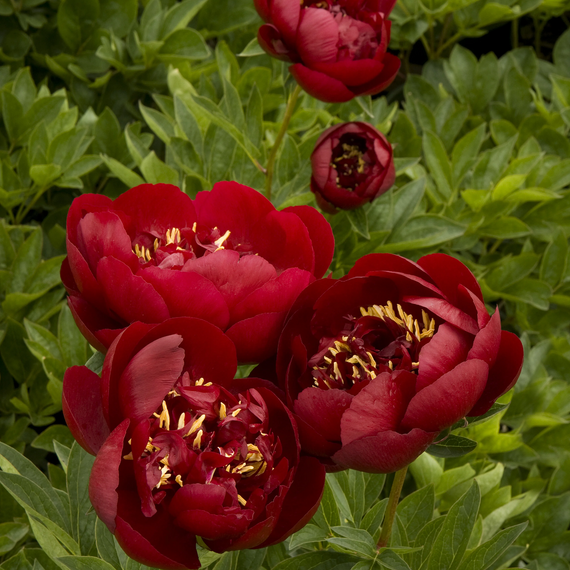
Paeonia 'Buckeye Belle' is a standout herbaceous hybrid peony introduced in 1956 by American hybridizer Mains of Ohio, the result of a cross between Paeonia officinalis and Paeonia lactiflora. Its large, semi-double flowers are among the most striking in the peony world: deep, velvety crimson-red guard petals surround a center of narrower, informally arranged inner petals interspersed with prominent stamens bearing golden-yellow anthers on vivid red filaments, all capped with a dramatic cluster of carpels. What sets 'Buckeye Belle' apart is the extraordinary luminous sheen of its blooms — a gleaming, polished quality rarely seen in flowers of such an intense, saturated red. Blooming very early in the peony season, it brings rich drama to the spring garden before many of its peers have even opened. Hardy in USDA Zones 3 through 8, this long-lived perennial thrives in full sun with well-drained, fertile soil, forming a neat, upright mound of dark green foliage that provides handsome textural interest throughout the growing season after flowers fade. Its award-winning performance in the landscape, combined with its excellence as a long-stemmed cut flower, makes Paeonia 'Buckeye Belle' an irreplaceable choice for gardeners seeking bold color, horticultural prestige, and decades of reliable beauty.
Plant Description
Paeonia 'Buckeye Belle' is a herbaceous hybrid peony — a cross of Paeonia officinalis x Paeonia lactiflora — introduced in 1956 by hybridizer Mains of Ohio, USA. Its classification as a semi-double means it features large, rounded outer guard petals in a deep, rich crimson-red surrounding a loosely arranged center of narrower inner petals that intermingle freely with a showy boss of stamens. The anthers are bright yellow and the filaments are a contrasting deep red, creating a multi-layered, jewel-like flower of considerable complexity and depth. What makes 'Buckeye Belle' especially remarkable is the glossy, lacquered sheen of its blooms — an almost reflective quality in the darkest of red tones that is genuinely uncommon among peonies of this color class. The deep green foliage is bold and attractive, holding its form well throughout the growing season to provide ongoing garden interest even after the bloom period has concluded.
Bloom Details and Fragrance
| Characteristic | Detail |
|---|---|
| Flower Form | Semi-double |
| Flower Color | Deep crimson-red to dark red with lustrous sheen |
| Flower Size | Medium to large |
| Inner Petal Arrangement | Narrow, informally arranged, interspersed with stamens |
| Stamen Color | Yellow anthers with red filaments |
| Bloom Season | Very early (among the first peonies to bloom in spring) |
| Fragrance | Light to mild, typical of herbaceous hybrid peonies |
| Cut Flower Quality | Excellent — long-stemmed and long-lasting in a vase |
Mature Size and Growth Habit
'Buckeye Belle' forms a compact, upright, clump-forming mound that is well-suited to the middle or back of a perennial border. Established plants typically reach 24 to 30 inches (approximately 60 to 90 cm) in both height and spread. The growth habit is sturdy and self-supporting in most conditions, though particularly large flower heads in wet weather may benefit from light staking. The clump expands gradually over the years through underground rootstock division, and like all herbaceous peonies, it dies back completely to the ground in late fall and re-emerges reliably each spring.
Hardiness and Climate
Paeonia 'Buckeye Belle' is a cold-hardy perennial rated for USDA Hardiness Zones 3 through 8, making it adaptable to a broad range of climates across the United States. It requires a period of winter chilling (cold dormancy) to set buds and bloom well — typically at least 500 to 1,000 chilling hours below 40 degrees F. Gardeners in warmer portions of Zone 8 and above may find blooming inconsistent due to insufficient winter chill. In Southern Oregon and Northern California, it performs well in higher elevations and areas with cooler winters. It is very cold-tolerant once established and can withstand temperatures well below 0 degrees F. It does not tolerate wet, waterlogged conditions, particularly in winter when crowns can rot in poorly drained soils.
Sunlight Requirements
'Buckeye Belle' performs best in a location that receives full sun, defined as a minimum of 6 hours of direct sunlight per day. Full sun promotes robust stem growth, the richest flower color, maximum bud set, and good air circulation that helps reduce the risk of fungal diseases. In hotter inland climates, some afternoon shade can help protect open blooms from scorching and extend their vase life on the plant. Avoid planting in heavy shade, as this significantly reduces flowering and increases susceptibility to botrytis and other fungal problems.
Soil and pH Preferences
- Soil Type: Prefers rich, fertile, well-drained loam. Tolerates clay soils that have been amended with organic matter to improve drainage. Sandy soils benefit from generous additions of compost to improve water and nutrient retention.
- Drainage: Good drainage is essential. Peonies are highly susceptible to crown rot in waterlogged or consistently wet conditions, especially in winter.
- pH Range: Ideally slightly acidic to neutral — pH 6.0 to 7.0. Slightly alkaline soils are generally tolerated.
- Organic Matter: Enrich planting areas generously with compost or aged manure at planting time and top-dress with compost each fall.
- Avoid: Planting near the root zones of large trees or in areas with heavy root competition.
Watering Guide
Peonies are moderately drought-tolerant once well established but perform best and bloom most profusely with consistent, even moisture during the growing season. Water deeply and infrequently — approximately 1 inch of water per week during the spring growing period and bloom time is generally ideal. Reduce irrigation after blooming as the plant moves into its summer maintenance phase. Always water at the base of the plant rather than overhead to keep foliage and crowns dry, which reduces the risk of botrytis blight and other fungal diseases. In Southern Oregon and Northern California, summer irrigation is typically needed during the dry season; however, avoid overwatering, as soggy soil is more harmful than dryness.
Fertilizing
Paeonia 'Buckeye Belle' is not a heavy feeder but benefits from appropriate fertilization to support robust growth and prolific blooming. Follow these guidelines for best results:
- Early Spring: Apply a balanced slow-release granular fertilizer (such as 10-10-10) as new shoots emerge from the ground. Scratch lightly into the soil surface around — but not directly on — the crown.
- Pre-Bloom: A light application of a low-nitrogen, phosphorus-rich fertilizer (such as a bulb or bloom booster formula) several weeks before bloom can enhance flower size and count.
- Post-Bloom: Apply a small amount of balanced fertilizer after flowering to support foliage development and energy storage for the following year.
- Avoid: High-nitrogen fertilizers that encourage lush foliage at the expense of flower production. Excess nitrogen also increases disease susceptibility.
- Compost: Annual top-dressing with 1-2 inches of well-aged compost in fall is an excellent and gentle way to feed the soil and improve its structure over time.
Planting Instructions
Proper planting is the most important factor in the long-term success of a peony. Follow these steps carefully:
- Timing: Plant in fall (September through November) for best establishment, though container-grown plants can be transplanted in spring as well.
- Site Preparation: Choose a location with full sun and excellent drainage. Dig a hole approximately 18 inches wide and 18 inches deep. Amend the backfill soil with a generous amount of compost and a handful of bone meal or superphosphate to promote root development.
- Planting Depth — Critical: The most common reason peonies fail to bloom is planting too deeply. The "eyes" (pink growth buds) on the crown should be set no more than 1 to 1.5 inches below the soil surface. In warmer climates (Zone 7-8), plant the eyes just barely at the soil surface (1/2 inch deep). Too-deep planting results in lush foliage with few or no flowers.
- Spacing: Space plants at least 3 feet apart to allow for mature spread and good air circulation.
- Watering In: Water thoroughly after planting to settle the soil and eliminate air pockets around the roots.
- Mulching: Apply a light layer of mulch (2 inches) around — but not on top of — the crown to retain moisture and moderate soil temperature.
- First Year Expectations: Do not be alarmed if the plant produces limited blooms in its first 1-2 years. Peonies establish slowly and typically reach full blooming potential by their third year in the ground.
Pruning and Seasonal Maintenance
- During Bloom: Deadhead spent flowers promptly to maintain a tidy appearance and prevent seed development, which can exhaust the plant's energy reserves.
- After Bloom: Leave all foliage intact through the summer and fall. The leaves continue photosynthesizing and storing energy in the roots for next year's flowering performance.
- Fall Cutback: After the first hard frost has killed the foliage back, cut all stems to within 2-3 inches of the ground. Remove and dispose of all cut material — do not compost it, as it may harbor fungal spores (especially botrytis) that can overwinter and reinfect the plant the following spring.
- Staking: In exposed, windy locations or during wet seasons when flower heads become heavy, install grow-through peony rings or loop stakes in early spring before stems reach 6 inches tall.
- Division: Established clumps can be divided in early fall (September) every 10 to 15 years if they become crowded or bloom less freely. Lift the entire crown, rinse clean, and divide into sections each containing 3 to 5 eyes (growth buds). Replant promptly at the correct depth.
Pests and Diseases
Paeonia 'Buckeye Belle' is generally a vigorous and resilient plant, but like all peonies it is susceptible to a few common issues:
| Issue | Symptoms | Management |
|---|---|---|
| Botrytis Blight (Gray Mold) | Stems blacken and collapse at the base; flower buds turn brown and fail to open; gray fuzzy mold visible | Ensure good air circulation; avoid overhead watering; remove and destroy all infected plant material and fall debris; apply a fungicide if needed in early spring |
| Powdery Mildew | White powdery coating on upper leaf surfaces in late summer | Improve air circulation; avoid wetting foliage; apply fungicide if severe; typically cosmetic at this late-season timing |
| Phytophthora Crown Rot | Stems collapse at soil level; crown appears water-soaked and dark | Improve soil drainage; avoid overwatering; replant in a well-drained location; no chemical cure |
| Thrips | Petals may appear streaked or distorted; tiny insects visible in blooms | Insecticidal soap or neem oil applications; generally minor on this variety |
| Ants | Ants are commonly seen on peony buds; they are attracted to sweet nectar secreted by the buds | No action needed — ants do not harm peonies and do not need to be present for buds to open |
Landscape Uses
The bold color, award-winning form, and sturdy habit of 'Buckeye Belle' make it a versatile and striking landscape plant with many excellent applications:
- Perennial Borders: Use as a dramatic focal point in the middle to back of a mixed perennial border. Its deep crimson blooms create stunning contrast against silver-leaved plants like Stachys byzantina or light-colored companions.
- Cottage Garden Style: Perfectly at home in an informal cottage garden planting alongside roses, irises, alliums, and hardy geraniums.
- Dedicated Peony Garden: Plant in groups of three or more for a spectacular mass display; mix with mid-season and late-season peony varieties to extend the overall bloom period.
- Foundation Plantings: Its tidy, self-supporting mound and attractive summer foliage make it an effective foundation or border plant alongside paths and walkways.
- Cut Flower Garden: One of the finest peonies for cutting — long stems, large flowers, and lasting vase life make it an excellent choice for both casual arrangements and more formal floral design.
- Low-Maintenance Landscapes: Once established, it requires minimal intervention and can be a cornerstone plant of a lower-maintenance perennial garden.
Companion Plants
The rich, dark crimson blooms and bold foliage of 'Buckeye Belle' pair beautifully with a wide range of garden companions. Consider the following combinations:
- Allium 'Purple Sensation' or 'Gladiator': The spherical purple allium heads bloom at the same time and create an elegant, jewel-toned pairing.
- Bearded Iris (Iris germanica): Tall bearded irises bloom simultaneously and offer complementary flower form and color range — particularly effective in blue-purple and white tones against the deep red peony.
- Salvia nemorosa 'Caradonna': The upright dark purple spikes of this perennial salvia create a superb contrast in form and color.
- Stachys byzantina (Lamb's Ears): The silver-white woolly foliage at the border edge beautifully highlights the dark flowers rising above it.
- Geranium 'Rozanne' or G. x magnificum: Blue-purple cranesbill geraniums spill attractively around the base of peonies and extend the color display after blooms fade.
- Rosa (shrub roses): Classic companions — particularly old garden roses or pink and cream shrub roses that bloom around the same period.
- Baptisia australis (False Indigo): The blue-green foliage and indigo flower spikes make an excellent structural companion.
Awards and Recognition
Paeonia 'Buckeye Belle' has earned the highest honors available to an American-bred peony, establishing it as one of the most acclaimed cultivars of the 20th century:
- American Peony Society Gold Medal — 2010: The Gold Medal is the most prestigious award given by the American Peony Society, recognizing outstanding overall performance including flower quality, plant habit, vigor, and garden merit.
- American Peony Society Award of Landscape Merit — 2009: This award specifically recognizes superior qualities as a landscape plant, including reliable performance, attractive habit, and broad adaptability across a range of garden conditions.
These dual honors make 'Buckeye Belle' one of the most distinguished herbaceous peonies in cultivation and a strong recommendation for any serious peony collection or landscape planting.
Toxicity and Pet Safety
Peonies, including Paeonia 'Buckeye Belle', contain compounds — including paeonol and various glycosides — that are considered toxic to dogs, cats, and horses if ingested. Consumption of any part of the plant, particularly the roots and seeds, can cause symptoms including vomiting, diarrhea, depression, and drooling in pets. The plant is not considered toxic to humans and poses no significant contact hazard; however, as with all garden plants, it is advisable to wash hands after handling. Pet owners and horse property owners should plant peonies in areas that are inaccessible to animals or take appropriate precautions to prevent consumption.
- Award-winning dark crimson, semi-double blooms with a remarkable glossy sheen unusual for such a deeply colored peony — one of the earliest herbaceous hybrids to flower each season
- A double-decorated cultivar honored with both the American Peony Society Gold Medal (2010) and the Award of Landscape Merit (2009), recognizing exceptional garden performance
- Vigorous, clump-forming habit reaches approximately 24-30 inches tall and wide, forming a sturdy, well-branched mound of deep green foliage that remains attractive all season long
- Exceptionally long-lived and low-maintenance — once established, this hardy perennial thrives for decades with minimal care and is a superb choice for cut flower arrangements
Paeonia 'Buckeye Belle' is a standout herbaceous hybrid peony introduced in 1956 by American hybridizer Mains of Ohio, the result of a cross between Paeonia officinalis and Paeonia lactiflora. Its large, semi-double flowers are among the most striking in the peony world: deep, velvety crimson-red guard petals surround a center of narrower, informally arranged inner petals interspersed with prominent stamens bearing golden-yellow anthers on vivid red filaments, all capped with a dramatic cluster of carpels. What sets 'Buckeye Belle' apart is the extraordinary luminous sheen of its blooms — a gleaming, polished quality rarely seen in flowers of such an intense, saturated red. Blooming very early in the peony season, it brings rich drama to the spring garden before many of its peers have even opened. Hardy in USDA Zones 3 through 8, this long-lived perennial thrives in full sun with well-drained, fertile soil, forming a neat, upright mound of dark green foliage that provides handsome textural interest throughout the growing season after flowers fade. Its award-winning performance in the landscape, combined with its excellence as a long-stemmed cut flower, makes Paeonia 'Buckeye Belle' an irreplaceable choice for gardeners seeking bold color, horticultural prestige, and decades of reliable beauty.
Plant Description
Paeonia 'Buckeye Belle' is a herbaceous hybrid peony — a cross of Paeonia officinalis x Paeonia lactiflora — introduced in 1956 by hybridizer Mains of Ohio, USA. Its classification as a semi-double means it features large, rounded outer guard petals in a deep, rich crimson-red surrounding a loosely arranged center of narrower inner petals that intermingle freely with a showy boss of stamens. The anthers are bright yellow and the filaments are a contrasting deep red, creating a multi-layered, jewel-like flower of considerable complexity and depth. What makes 'Buckeye Belle' especially remarkable is the glossy, lacquered sheen of its blooms — an almost reflective quality in the darkest of red tones that is genuinely uncommon among peonies of this color class. The deep green foliage is bold and attractive, holding its form well throughout the growing season to provide ongoing garden interest even after the bloom period has concluded.
Bloom Details and Fragrance
| Characteristic | Detail |
|---|---|
| Flower Form | Semi-double |
| Flower Color | Deep crimson-red to dark red with lustrous sheen |
| Flower Size | Medium to large |
| Inner Petal Arrangement | Narrow, informally arranged, interspersed with stamens |
| Stamen Color | Yellow anthers with red filaments |
| Bloom Season | Very early (among the first peonies to bloom in spring) |
| Fragrance | Light to mild, typical of herbaceous hybrid peonies |
| Cut Flower Quality | Excellent — long-stemmed and long-lasting in a vase |
Mature Size and Growth Habit
'Buckeye Belle' forms a compact, upright, clump-forming mound that is well-suited to the middle or back of a perennial border. Established plants typically reach 24 to 30 inches (approximately 60 to 90 cm) in both height and spread. The growth habit is sturdy and self-supporting in most conditions, though particularly large flower heads in wet weather may benefit from light staking. The clump expands gradually over the years through underground rootstock division, and like all herbaceous peonies, it dies back completely to the ground in late fall and re-emerges reliably each spring.
Hardiness and Climate
Paeonia 'Buckeye Belle' is a cold-hardy perennial rated for USDA Hardiness Zones 3 through 8, making it adaptable to a broad range of climates across the United States. It requires a period of winter chilling (cold dormancy) to set buds and bloom well — typically at least 500 to 1,000 chilling hours below 40 degrees F. Gardeners in warmer portions of Zone 8 and above may find blooming inconsistent due to insufficient winter chill. In Southern Oregon and Northern California, it performs well in higher elevations and areas with cooler winters. It is very cold-tolerant once established and can withstand temperatures well below 0 degrees F. It does not tolerate wet, waterlogged conditions, particularly in winter when crowns can rot in poorly drained soils.
Sunlight Requirements
'Buckeye Belle' performs best in a location that receives full sun, defined as a minimum of 6 hours of direct sunlight per day. Full sun promotes robust stem growth, the richest flower color, maximum bud set, and good air circulation that helps reduce the risk of fungal diseases. In hotter inland climates, some afternoon shade can help protect open blooms from scorching and extend their vase life on the plant. Avoid planting in heavy shade, as this significantly reduces flowering and increases susceptibility to botrytis and other fungal problems.
Soil and pH Preferences
- Soil Type: Prefers rich, fertile, well-drained loam. Tolerates clay soils that have been amended with organic matter to improve drainage. Sandy soils benefit from generous additions of compost to improve water and nutrient retention.
- Drainage: Good drainage is essential. Peonies are highly susceptible to crown rot in waterlogged or consistently wet conditions, especially in winter.
- pH Range: Ideally slightly acidic to neutral — pH 6.0 to 7.0. Slightly alkaline soils are generally tolerated.
- Organic Matter: Enrich planting areas generously with compost or aged manure at planting time and top-dress with compost each fall.
- Avoid: Planting near the root zones of large trees or in areas with heavy root competition.
Watering Guide
Peonies are moderately drought-tolerant once well established but perform best and bloom most profusely with consistent, even moisture during the growing season. Water deeply and infrequently — approximately 1 inch of water per week during the spring growing period and bloom time is generally ideal. Reduce irrigation after blooming as the plant moves into its summer maintenance phase. Always water at the base of the plant rather than overhead to keep foliage and crowns dry, which reduces the risk of botrytis blight and other fungal diseases. In Southern Oregon and Northern California, summer irrigation is typically needed during the dry season; however, avoid overwatering, as soggy soil is more harmful than dryness.
Fertilizing
Paeonia 'Buckeye Belle' is not a heavy feeder but benefits from appropriate fertilization to support robust growth and prolific blooming. Follow these guidelines for best results:
- Early Spring: Apply a balanced slow-release granular fertilizer (such as 10-10-10) as new shoots emerge from the ground. Scratch lightly into the soil surface around — but not directly on — the crown.
- Pre-Bloom: A light application of a low-nitrogen, phosphorus-rich fertilizer (such as a bulb or bloom booster formula) several weeks before bloom can enhance flower size and count.
- Post-Bloom: Apply a small amount of balanced fertilizer after flowering to support foliage development and energy storage for the following year.
- Avoid: High-nitrogen fertilizers that encourage lush foliage at the expense of flower production. Excess nitrogen also increases disease susceptibility.
- Compost: Annual top-dressing with 1-2 inches of well-aged compost in fall is an excellent and gentle way to feed the soil and improve its structure over time.
Planting Instructions
Proper planting is the most important factor in the long-term success of a peony. Follow these steps carefully:
- Timing: Plant in fall (September through November) for best establishment, though container-grown plants can be transplanted in spring as well.
- Site Preparation: Choose a location with full sun and excellent drainage. Dig a hole approximately 18 inches wide and 18 inches deep. Amend the backfill soil with a generous amount of compost and a handful of bone meal or superphosphate to promote root development.
- Planting Depth — Critical: The most common reason peonies fail to bloom is planting too deeply. The "eyes" (pink growth buds) on the crown should be set no more than 1 to 1.5 inches below the soil surface. In warmer climates (Zone 7-8), plant the eyes just barely at the soil surface (1/2 inch deep). Too-deep planting results in lush foliage with few or no flowers.
- Spacing: Space plants at least 3 feet apart to allow for mature spread and good air circulation.
- Watering In: Water thoroughly after planting to settle the soil and eliminate air pockets around the roots.
- Mulching: Apply a light layer of mulch (2 inches) around — but not on top of — the crown to retain moisture and moderate soil temperature.
- First Year Expectations: Do not be alarmed if the plant produces limited blooms in its first 1-2 years. Peonies establish slowly and typically reach full blooming potential by their third year in the ground.
Pruning and Seasonal Maintenance
- During Bloom: Deadhead spent flowers promptly to maintain a tidy appearance and prevent seed development, which can exhaust the plant's energy reserves.
- After Bloom: Leave all foliage intact through the summer and fall. The leaves continue photosynthesizing and storing energy in the roots for next year's flowering performance.
- Fall Cutback: After the first hard frost has killed the foliage back, cut all stems to within 2-3 inches of the ground. Remove and dispose of all cut material — do not compost it, as it may harbor fungal spores (especially botrytis) that can overwinter and reinfect the plant the following spring.
- Staking: In exposed, windy locations or during wet seasons when flower heads become heavy, install grow-through peony rings or loop stakes in early spring before stems reach 6 inches tall.
- Division: Established clumps can be divided in early fall (September) every 10 to 15 years if they become crowded or bloom less freely. Lift the entire crown, rinse clean, and divide into sections each containing 3 to 5 eyes (growth buds). Replant promptly at the correct depth.
Pests and Diseases
Paeonia 'Buckeye Belle' is generally a vigorous and resilient plant, but like all peonies it is susceptible to a few common issues:
| Issue | Symptoms | Management |
|---|---|---|
| Botrytis Blight (Gray Mold) | Stems blacken and collapse at the base; flower buds turn brown and fail to open; gray fuzzy mold visible | Ensure good air circulation; avoid overhead watering; remove and destroy all infected plant material and fall debris; apply a fungicide if needed in early spring |
| Powdery Mildew | White powdery coating on upper leaf surfaces in late summer | Improve air circulation; avoid wetting foliage; apply fungicide if severe; typically cosmetic at this late-season timing |
| Phytophthora Crown Rot | Stems collapse at soil level; crown appears water-soaked and dark | Improve soil drainage; avoid overwatering; replant in a well-drained location; no chemical cure |
| Thrips | Petals may appear streaked or distorted; tiny insects visible in blooms | Insecticidal soap or neem oil applications; generally minor on this variety |
| Ants | Ants are commonly seen on peony buds; they are attracted to sweet nectar secreted by the buds | No action needed — ants do not harm peonies and do not need to be present for buds to open |
Landscape Uses
The bold color, award-winning form, and sturdy habit of 'Buckeye Belle' make it a versatile and striking landscape plant with many excellent applications:
- Perennial Borders: Use as a dramatic focal point in the middle to back of a mixed perennial border. Its deep crimson blooms create stunning contrast against silver-leaved plants like Stachys byzantina or light-colored companions.
- Cottage Garden Style: Perfectly at home in an informal cottage garden planting alongside roses, irises, alliums, and hardy geraniums.
- Dedicated Peony Garden: Plant in groups of three or more for a spectacular mass display; mix with mid-season and late-season peony varieties to extend the overall bloom period.
- Foundation Plantings: Its tidy, self-supporting mound and attractive summer foliage make it an effective foundation or border plant alongside paths and walkways.
- Cut Flower Garden: One of the finest peonies for cutting — long stems, large flowers, and lasting vase life make it an excellent choice for both casual arrangements and more formal floral design.
- Low-Maintenance Landscapes: Once established, it requires minimal intervention and can be a cornerstone plant of a lower-maintenance perennial garden.
Companion Plants
The rich, dark crimson blooms and bold foliage of 'Buckeye Belle' pair beautifully with a wide range of garden companions. Consider the following combinations:
- Allium 'Purple Sensation' or 'Gladiator': The spherical purple allium heads bloom at the same time and create an elegant, jewel-toned pairing.
- Bearded Iris (Iris germanica): Tall bearded irises bloom simultaneously and offer complementary flower form and color range — particularly effective in blue-purple and white tones against the deep red peony.
- Salvia nemorosa 'Caradonna': The upright dark purple spikes of this perennial salvia create a superb contrast in form and color.
- Stachys byzantina (Lamb's Ears): The silver-white woolly foliage at the border edge beautifully highlights the dark flowers rising above it.
- Geranium 'Rozanne' or G. x magnificum: Blue-purple cranesbill geraniums spill attractively around the base of peonies and extend the color display after blooms fade.
- Rosa (shrub roses): Classic companions — particularly old garden roses or pink and cream shrub roses that bloom around the same period.
- Baptisia australis (False Indigo): The blue-green foliage and indigo flower spikes make an excellent structural companion.
Awards and Recognition
Paeonia 'Buckeye Belle' has earned the highest honors available to an American-bred peony, establishing it as one of the most acclaimed cultivars of the 20th century:
- American Peony Society Gold Medal — 2010: The Gold Medal is the most prestigious award given by the American Peony Society, recognizing outstanding overall performance including flower quality, plant habit, vigor, and garden merit.
- American Peony Society Award of Landscape Merit — 2009: This award specifically recognizes superior qualities as a landscape plant, including reliable performance, attractive habit, and broad adaptability across a range of garden conditions.
These dual honors make 'Buckeye Belle' one of the most distinguished herbaceous peonies in cultivation and a strong recommendation for any serious peony collection or landscape planting.
Toxicity and Pet Safety
Peonies, including Paeonia 'Buckeye Belle', contain compounds — including paeonol and various glycosides — that are considered toxic to dogs, cats, and horses if ingested. Consumption of any part of the plant, particularly the roots and seeds, can cause symptoms including vomiting, diarrhea, depression, and drooling in pets. The plant is not considered toxic to humans and poses no significant contact hazard; however, as with all garden plants, it is advisable to wash hands after handling. Pet owners and horse property owners should plant peonies in areas that are inaccessible to animals or take appropriate precautions to prevent consumption.