

Zoom the image with the mouse
Delicious Nougat Coneflower - 1 Gallon
SKU:
2098965
UPC:
014949484944
$12.99
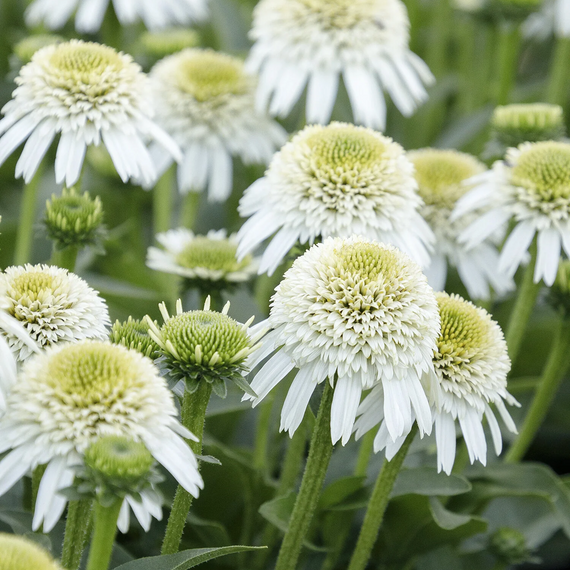
- Stunning double blooms of creamy white with a distinctive pompon-like yellow-green center cone provide long-lasting garden color from mid to late summer through fall
- Compact, sturdy, mounding habit — reaching just 12 to 18 inches tall and wide — makes it an ideal fit for borders, containers, and mixed beds without overcrowding
- Naturally deer resistant and drought tolerant once established, delivering season-long beauty with minimal care across USDA Zones 4a to 9b
- A magnet for bees, butterflies, and beneficial insects in summer, while the persistent seed heads feed goldfinches and songbirds well into winter
Echinacea Delicious Nougat (Echinacea x 'Noecthree') is a captivating interspecific hybrid coneflower that reimagines the classic prairie perennial with a refined, double-flowered twist. Beginning as shuttlecock-shaped buds with notched petal tips, the creamy white blooms evolve through a spectacular transformation — green cones expand into white-crested centers dotted with green, ultimately unfurling into fully double, foamy white crowns atop a rounded chartreuse pompon cone, reminiscent of divinity candy. These lightly fragrant, long-lasting flowers rise on sturdy, well-branched stems above a bushy mound of rough-textured, dark green, narrowly ovate to lance-shaped foliage, creating an elegant yet resilient display from midsummer into autumn. A late-season bloomer bred by Marco van Noort of the Netherlands, Delicious Nougat thrives in full sun and adapts readily to a wide range of soil types — including clay, loam, and sandy soils — tolerating both dry conditions and urban pollution once established. Its compact, low-maintenance character makes it an outstanding choice for perennial borders, pollinator gardens, cottage-style landscapes, prairie plantings, and patio containers alike, while its exceptional vase life also makes it a standout cut flower for fresh summer bouquets.
Plant Description
Delicious Nougat is a compact, clump-forming herbaceous perennial coneflower that sets itself apart with extraordinary double blooms. The flowers open in a unique progression: outer creamy white ray florets droop gracefully around a raised central cone that begins green, develops white cresting dotted with green, and ultimately puffs into a fully double, pompon-like foamy white crown with yellow-green highlights. The effect is both elegant and whimsical — like divinity candy in the garden. Stems are sturdy and well-branched, supporting the large flower heads upright without staking. Foliage is dark green, slightly rough-hairy in texture, and narrowly ovate to lance-shaped with rarely toothed margins, forming a tidy basal mound. Individual flowers are lightly fragrant and remain attractive for approximately three weeks before giving way to persistent, architecturally interesting seed heads.
Mature Size
| Attribute | Measurement |
|---|---|
| Plant Height (foliage) | 12 inches |
| Flower Height | 16 to 18 inches |
| Spread | 12 to 18 inches |
| Recommended Spacing | 16 to 18 inches apart |
| Growth Rate | Moderate |
| Growth Habit | Compact, upright-mounding, clump-forming |
| Estimated Lifespan | Approximately 10 years under ideal conditions |
Hardiness Zones
Delicious Nougat Coneflower is reliably hardy in USDA Zones 4a through 9b, making it an excellent choice for gardens across a very wide range of climates, including the Pacific Northwest, Pacific Southwest, intermountain West, and most of the continental United States. No winter protection is needed in most climates within this range. As a true herbaceous perennial, the plant dies back to the crown each winter and re-emerges from the base each spring — often slowly, so take care not to disturb the crown in late winter before new growth is visible. In the hottest end of its range (Zones 8 to 9), afternoon shade and consistent moisture during peak summer heat will help maintain the best performance.
Sunlight Requirements
Delicious Nougat performs best in full sun, requiring a minimum of 6 hours of direct sunlight per day. It can tolerate a partially shaded location (mostly sunny), but flowering will be reduced and stems may become somewhat lax without adequate light. For the most compact habit, prolific blooming, and strongest stems, choose a site with all-day or nearly all-day sun exposure. It is suitable for south-, east-, or west-facing aspects and tolerates both exposed and sheltered positions.
Soil and pH Preferences
One of the strengths of Delicious Nougat is its adaptability to a wide variety of soil conditions. It performs well in clay, loamy, or sandy soils, and is not particular about soil pH — tolerating acid, neutral, slightly alkaline, and even alkaline conditions. For best results, plant in deep, well-drained, humus-rich soil with moderate fertility. Avoid waterlogged or compacted sites, as overly wet soils — especially in winter — can lead to crown rot. Amending heavy clay soils with organic matter at planting time will improve drainage and root establishment. This plant is also highly tolerant of urban soil conditions and pollution, making it a reliable performer in city and suburban gardens.
Watering Guide
During the establishment period — typically the first growing season after planting — keep the soil evenly moist to encourage deep root development. Water regularly when rainfall is insufficient, aiming to keep the root zone consistently moist but never waterlogged. Once established, Delicious Nougat is considered drought tolerant and requires only moderate supplemental watering. During extended summer dry spells, deep watering every 7 to 10 days is generally sufficient. In container plantings, monitor moisture more frequently, as pots dry out faster than in-ground beds. Avoid overhead watering where possible to minimize the risk of foliar disease; water at the base of the plant instead.
Fertilizing
Delicious Nougat Coneflower is a low-fertility plant that thrives without heavy feeding. In average to good garden soil, a single application of compost worked into the planting area in spring is usually all that is needed to support healthy growth and flowering. If you choose to supplement with a granular fertilizer, use a balanced, low-nitrogen formula early in the growing season — excessive nitrogen promotes lush foliage at the expense of flower production. Avoid over-fertilizing, which can result in weak, floppy stems and reduced blooming. In containers, a light application of slow-release granular fertilizer at planting time, supplemented with a diluted balanced liquid fertilizer once or twice during the growing season, will keep plants vigorous and blooming freely.
Pruning and Maintenance
Delicious Nougat is a low-maintenance perennial that rewards minimal but well-timed attention. Follow these guidelines for best results:
- Deadheading: Remove spent blooms promptly during the growing season to encourage continued flower production and extend the blooming period from midsummer into fall.
- Leave seed heads for winter: After the main blooming season concludes, consider leaving seed heads intact through winter. They provide ornamental structure and are highly attractive to goldfinches and other seed-eating birds.
- Spring cleanup: Cut back old stems in late winter to early spring before new growth emerges from the base. Leave the basal rosette of foliage intact through winter to help protect the crown.
- Division: Established clumps can be divided every 3 to 4 years in early spring or early fall to reinvigorate the plant and control spread. Note that as a patented cultivar, propagation for resale is prohibited.
- Note on spring emergence: This variety may be slow to emerge in spring — mark its location to avoid accidentally disturbing the crown during early-season garden work.
Planting Instructions
- Choose a site in full sun with well-drained soil. Avoid low spots where water pools after rain.
- Prepare the planting area by loosening the soil to a depth of 12 to 15 inches and incorporating a 2- to 3-inch layer of compost to improve drainage and fertility.
- Dig a hole twice as wide as the root ball and approximately the same depth. Set the plant so the crown sits at or just slightly above the surrounding soil level to prevent crown rot.
- Backfill with the amended soil, firming gently around the roots to eliminate air pockets.
- Water thoroughly at planting to settle the soil and initiate root contact.
- Apply a 2- to 3-inch layer of organic mulch around — but not directly against — the crown to conserve moisture, moderate soil temperature, and suppress weeds.
- Space plants 16 to 18 inches apart to allow good air circulation and accommodate their mature spread.
- Water regularly during the first season while roots establish. Once established, reduce supplemental watering as the plant's drought tolerance increases.
Seasonal Interest
Delicious Nougat delivers multi-season garden value that extends well beyond its peak bloom window:
- Spring: Fresh, dark green foliage emerges from the crown (often slowly — be patient). The compact mound leafs out and grows steadily as temperatures warm.
- Early to Midsummer: Flower buds form and the first blooms open, with creamy white ray florets surrounding developing yellow-green cones. Blooming builds in intensity through midsummer.
- Mid to Late Summer (Peak): The main flowering display is at its best, with masses of fully double, foamy white blooms atop the mounded plant. Lightly fragrant flowers attract bees, butterflies, and other pollinators in abundance.
- Fall: Blooming continues into autumn. As flowers fade, the rounded seed heads develop and become increasingly attractive to birds, especially goldfinches and chickadees.
- Winter: Persistent seed heads add structural interest and texture to the dormant winter garden, particularly striking against snow or frost, and continue to provide food for overwintering birds.
Landscape Uses
The compact size and long season of interest of Delicious Nougat make it one of the most versatile perennials for modern landscapes. Recommended uses include:
- Perennial borders and flower beds: Excellent as a mid-border specimen or edging plant in mixed perennial or cottage-style gardens.
- Mass planting: When planted in groupings of three or more, the creamy white flowers create a stunning, unified display that draws the eye across a bed or hillside.
- Pollinator gardens: A must-have in gardens designed to attract and support bees, butterflies, and beneficial insects throughout summer and fall.
- Container and patio planting: Its compact, mounding habit makes it an excellent "filler" plant in large patio containers and mixed pot combinations.
- Cut flower gardens: Blooms have exceptional vase life and add a soft, elegant touch to fresh summer bouquets.
- Prairie and wildflower plantings: Naturalizes beautifully in informal meadow-style plantings alongside native grasses and other prairie perennials.
- Low-water and xeriscape gardens: Drought tolerance once established makes it a sound choice for water-wise landscape designs.
- Wildlife gardens: The combination of nectar-rich summer blooms and persistent winter seed heads provides habitat value across all four seasons.
Companion Plants
Delicious Nougat pairs beautifully with plants that share its preference for full sun and well-drained soil. The following companions create complementary combinations in borders and pollinator gardens:
- Rudbeckia (Black-Eyed Susan): Golden yellow daisy flowers contrast brilliantly with the creamy white of Delicious Nougat, and both bloom in the same midsummer to fall window.
- Salvia nemorosa (Meadow Sage): Deep violet-blue spires complement and contrast the soft white blooms, attracting bees and butterflies throughout early to midsummer before Echinacea peaks.
- Agastache (Anise Hyssop): Vertical lavender-blue flower spikes provide height and texture contrast, and the aromatic foliage helps deter deer and rabbits.
- Liatris (Blazing Star): Purple bottlebrush spikes rising above the coneflower mound add drama and extend the pollinator season.
- Russian Sage (Perovskia): Airy silver-gray foliage and misty blue blooms provide a soft, romantic backdrop that highlights the creamy white of Delicious Nougat.
- Ornamental Grasses (e.g., Little Bluestem, Switchgrass): Fine-textured grasses add movement and four-season structure while echoing the plant's native prairie heritage.
- Goldenrod (Solidago): Extends the blooming season into fall with golden plumes just as Echinacea begins to wind down, maintaining pollinator activity.
- Coreopsis (Tickseed): Cheerful golden daisy flowers bloom alongside Echinacea, filling gaps and keeping color continuous throughout the season.
Wildlife Value
Delicious Nougat Coneflower is a standout choice for gardeners who want to support local wildlife throughout the entire year, not just during bloom season:
- Bees: Bumblebees, native bees, and honeybees are strongly attracted to the nectar- and pollen-rich blooms throughout the summer and fall flowering period.
- Butterflies: A reliable nectar source for many butterfly species, including swallowtails, fritillaries, and monarchs during their seasonal migrations.
- Other beneficial insects: Hoverflies and other beneficial insects visit the flowers, helping with pest management throughout the garden.
- Songbirds: Once blooms fade, the persistent, spiny seed heads become an important food source for seed-eating birds — especially American goldfinches, chickadees, and sparrows — providing critical nutrition through fall and winter.
- Deer and rabbit resistance: The rough-textured, slightly prickly foliage and stems are unpalatable to deer and rabbits, making it a dependable performer even in areas with significant wildlife pressure.
Container Growing
Delicious Nougat is an excellent candidate for container and patio growing, and its compact mounding habit makes it one of the best coneflowers for pot culture. Use a large container (at least 12 to 14 inches in diameter and depth) filled with a high-quality, well-draining potting mix. Ensure the container has adequate drainage holes to prevent root rot. Position in a full-sun location on a patio, deck, or balcony. Container-grown plants will require more frequent watering than in-ground plants — check soil moisture every 1 to 2 days during hot weather and water when the top inch of soil feels dry. Apply a slow-release granular fertilizer at planting and supplement with a diluted balanced liquid fertilizer once or twice per season. In Zone 4 to 5 gardens, containers may need to be moved to a sheltered, frost-free location (such as an unheated garage) over winter to protect the roots from extreme freezing, since potted roots are more exposed than in-ground plantings.
Pests and Diseases
Delicious Nougat Coneflower is generally pest-free and disease-free under good growing conditions, making it one of the easiest perennials to maintain. However, gardeners should be aware of the following occasional concerns:
- Powdery mildew: Can occur in conditions of poor air circulation, high humidity, or overcrowding. Prevent by spacing plants adequately (16 to 18 inches apart), avoiding overhead watering, and situating in open, breezy locations.
- Aster yellows: A phytoplasma disease transmitted by leafhoppers that can cause distorted, stunted, or discolored growth. There is no cure; infected plants should be removed and disposed of (not composted) promptly to prevent spread. Control leafhopper populations to reduce risk.
- Aphids: Occasionally cluster on new growth but are rarely a serious problem; strong jets of water or beneficial insect activity typically keep populations in check.
- Vine weevil: In container settings, vine weevil grubs can damage roots. Use appropriate biological or chemical controls if damage is suspected.
- Root rot: Caused by consistently wet or poorly drained soils. Ensure excellent drainage at planting and avoid overwatering to prevent this issue entirely.
- Stunning double blooms of creamy white with a distinctive pompon-like yellow-green center cone provide long-lasting garden color from mid to late summer through fall
- Compact, sturdy, mounding habit — reaching just 12 to 18 inches tall and wide — makes it an ideal fit for borders, containers, and mixed beds without overcrowding
- Naturally deer resistant and drought tolerant once established, delivering season-long beauty with minimal care across USDA Zones 4a to 9b
- A magnet for bees, butterflies, and beneficial insects in summer, while the persistent seed heads feed goldfinches and songbirds well into winter
Echinacea Delicious Nougat (Echinacea x 'Noecthree') is a captivating interspecific hybrid coneflower that reimagines the classic prairie perennial with a refined, double-flowered twist. Beginning as shuttlecock-shaped buds with notched petal tips, the creamy white blooms evolve through a spectacular transformation — green cones expand into white-crested centers dotted with green, ultimately unfurling into fully double, foamy white crowns atop a rounded chartreuse pompon cone, reminiscent of divinity candy. These lightly fragrant, long-lasting flowers rise on sturdy, well-branched stems above a bushy mound of rough-textured, dark green, narrowly ovate to lance-shaped foliage, creating an elegant yet resilient display from midsummer into autumn. A late-season bloomer bred by Marco van Noort of the Netherlands, Delicious Nougat thrives in full sun and adapts readily to a wide range of soil types — including clay, loam, and sandy soils — tolerating both dry conditions and urban pollution once established. Its compact, low-maintenance character makes it an outstanding choice for perennial borders, pollinator gardens, cottage-style landscapes, prairie plantings, and patio containers alike, while its exceptional vase life also makes it a standout cut flower for fresh summer bouquets.
Plant Description
Delicious Nougat is a compact, clump-forming herbaceous perennial coneflower that sets itself apart with extraordinary double blooms. The flowers open in a unique progression: outer creamy white ray florets droop gracefully around a raised central cone that begins green, develops white cresting dotted with green, and ultimately puffs into a fully double, pompon-like foamy white crown with yellow-green highlights. The effect is both elegant and whimsical — like divinity candy in the garden. Stems are sturdy and well-branched, supporting the large flower heads upright without staking. Foliage is dark green, slightly rough-hairy in texture, and narrowly ovate to lance-shaped with rarely toothed margins, forming a tidy basal mound. Individual flowers are lightly fragrant and remain attractive for approximately three weeks before giving way to persistent, architecturally interesting seed heads.
Mature Size
| Attribute | Measurement |
|---|---|
| Plant Height (foliage) | 12 inches |
| Flower Height | 16 to 18 inches |
| Spread | 12 to 18 inches |
| Recommended Spacing | 16 to 18 inches apart |
| Growth Rate | Moderate |
| Growth Habit | Compact, upright-mounding, clump-forming |
| Estimated Lifespan | Approximately 10 years under ideal conditions |
Hardiness Zones
Delicious Nougat Coneflower is reliably hardy in USDA Zones 4a through 9b, making it an excellent choice for gardens across a very wide range of climates, including the Pacific Northwest, Pacific Southwest, intermountain West, and most of the continental United States. No winter protection is needed in most climates within this range. As a true herbaceous perennial, the plant dies back to the crown each winter and re-emerges from the base each spring — often slowly, so take care not to disturb the crown in late winter before new growth is visible. In the hottest end of its range (Zones 8 to 9), afternoon shade and consistent moisture during peak summer heat will help maintain the best performance.
Sunlight Requirements
Delicious Nougat performs best in full sun, requiring a minimum of 6 hours of direct sunlight per day. It can tolerate a partially shaded location (mostly sunny), but flowering will be reduced and stems may become somewhat lax without adequate light. For the most compact habit, prolific blooming, and strongest stems, choose a site with all-day or nearly all-day sun exposure. It is suitable for south-, east-, or west-facing aspects and tolerates both exposed and sheltered positions.
Soil and pH Preferences
One of the strengths of Delicious Nougat is its adaptability to a wide variety of soil conditions. It performs well in clay, loamy, or sandy soils, and is not particular about soil pH — tolerating acid, neutral, slightly alkaline, and even alkaline conditions. For best results, plant in deep, well-drained, humus-rich soil with moderate fertility. Avoid waterlogged or compacted sites, as overly wet soils — especially in winter — can lead to crown rot. Amending heavy clay soils with organic matter at planting time will improve drainage and root establishment. This plant is also highly tolerant of urban soil conditions and pollution, making it a reliable performer in city and suburban gardens.
Watering Guide
During the establishment period — typically the first growing season after planting — keep the soil evenly moist to encourage deep root development. Water regularly when rainfall is insufficient, aiming to keep the root zone consistently moist but never waterlogged. Once established, Delicious Nougat is considered drought tolerant and requires only moderate supplemental watering. During extended summer dry spells, deep watering every 7 to 10 days is generally sufficient. In container plantings, monitor moisture more frequently, as pots dry out faster than in-ground beds. Avoid overhead watering where possible to minimize the risk of foliar disease; water at the base of the plant instead.
Fertilizing
Delicious Nougat Coneflower is a low-fertility plant that thrives without heavy feeding. In average to good garden soil, a single application of compost worked into the planting area in spring is usually all that is needed to support healthy growth and flowering. If you choose to supplement with a granular fertilizer, use a balanced, low-nitrogen formula early in the growing season — excessive nitrogen promotes lush foliage at the expense of flower production. Avoid over-fertilizing, which can result in weak, floppy stems and reduced blooming. In containers, a light application of slow-release granular fertilizer at planting time, supplemented with a diluted balanced liquid fertilizer once or twice during the growing season, will keep plants vigorous and blooming freely.
Pruning and Maintenance
Delicious Nougat is a low-maintenance perennial that rewards minimal but well-timed attention. Follow these guidelines for best results:
- Deadheading: Remove spent blooms promptly during the growing season to encourage continued flower production and extend the blooming period from midsummer into fall.
- Leave seed heads for winter: After the main blooming season concludes, consider leaving seed heads intact through winter. They provide ornamental structure and are highly attractive to goldfinches and other seed-eating birds.
- Spring cleanup: Cut back old stems in late winter to early spring before new growth emerges from the base. Leave the basal rosette of foliage intact through winter to help protect the crown.
- Division: Established clumps can be divided every 3 to 4 years in early spring or early fall to reinvigorate the plant and control spread. Note that as a patented cultivar, propagation for resale is prohibited.
- Note on spring emergence: This variety may be slow to emerge in spring — mark its location to avoid accidentally disturbing the crown during early-season garden work.
Planting Instructions
- Choose a site in full sun with well-drained soil. Avoid low spots where water pools after rain.
- Prepare the planting area by loosening the soil to a depth of 12 to 15 inches and incorporating a 2- to 3-inch layer of compost to improve drainage and fertility.
- Dig a hole twice as wide as the root ball and approximately the same depth. Set the plant so the crown sits at or just slightly above the surrounding soil level to prevent crown rot.
- Backfill with the amended soil, firming gently around the roots to eliminate air pockets.
- Water thoroughly at planting to settle the soil and initiate root contact.
- Apply a 2- to 3-inch layer of organic mulch around — but not directly against — the crown to conserve moisture, moderate soil temperature, and suppress weeds.
- Space plants 16 to 18 inches apart to allow good air circulation and accommodate their mature spread.
- Water regularly during the first season while roots establish. Once established, reduce supplemental watering as the plant's drought tolerance increases.
Seasonal Interest
Delicious Nougat delivers multi-season garden value that extends well beyond its peak bloom window:
- Spring: Fresh, dark green foliage emerges from the crown (often slowly — be patient). The compact mound leafs out and grows steadily as temperatures warm.
- Early to Midsummer: Flower buds form and the first blooms open, with creamy white ray florets surrounding developing yellow-green cones. Blooming builds in intensity through midsummer.
- Mid to Late Summer (Peak): The main flowering display is at its best, with masses of fully double, foamy white blooms atop the mounded plant. Lightly fragrant flowers attract bees, butterflies, and other pollinators in abundance.
- Fall: Blooming continues into autumn. As flowers fade, the rounded seed heads develop and become increasingly attractive to birds, especially goldfinches and chickadees.
- Winter: Persistent seed heads add structural interest and texture to the dormant winter garden, particularly striking against snow or frost, and continue to provide food for overwintering birds.
Landscape Uses
The compact size and long season of interest of Delicious Nougat make it one of the most versatile perennials for modern landscapes. Recommended uses include:
- Perennial borders and flower beds: Excellent as a mid-border specimen or edging plant in mixed perennial or cottage-style gardens.
- Mass planting: When planted in groupings of three or more, the creamy white flowers create a stunning, unified display that draws the eye across a bed or hillside.
- Pollinator gardens: A must-have in gardens designed to attract and support bees, butterflies, and beneficial insects throughout summer and fall.
- Container and patio planting: Its compact, mounding habit makes it an excellent "filler" plant in large patio containers and mixed pot combinations.
- Cut flower gardens: Blooms have exceptional vase life and add a soft, elegant touch to fresh summer bouquets.
- Prairie and wildflower plantings: Naturalizes beautifully in informal meadow-style plantings alongside native grasses and other prairie perennials.
- Low-water and xeriscape gardens: Drought tolerance once established makes it a sound choice for water-wise landscape designs.
- Wildlife gardens: The combination of nectar-rich summer blooms and persistent winter seed heads provides habitat value across all four seasons.
Companion Plants
Delicious Nougat pairs beautifully with plants that share its preference for full sun and well-drained soil. The following companions create complementary combinations in borders and pollinator gardens:
- Rudbeckia (Black-Eyed Susan): Golden yellow daisy flowers contrast brilliantly with the creamy white of Delicious Nougat, and both bloom in the same midsummer to fall window.
- Salvia nemorosa (Meadow Sage): Deep violet-blue spires complement and contrast the soft white blooms, attracting bees and butterflies throughout early to midsummer before Echinacea peaks.
- Agastache (Anise Hyssop): Vertical lavender-blue flower spikes provide height and texture contrast, and the aromatic foliage helps deter deer and rabbits.
- Liatris (Blazing Star): Purple bottlebrush spikes rising above the coneflower mound add drama and extend the pollinator season.
- Russian Sage (Perovskia): Airy silver-gray foliage and misty blue blooms provide a soft, romantic backdrop that highlights the creamy white of Delicious Nougat.
- Ornamental Grasses (e.g., Little Bluestem, Switchgrass): Fine-textured grasses add movement and four-season structure while echoing the plant's native prairie heritage.
- Goldenrod (Solidago): Extends the blooming season into fall with golden plumes just as Echinacea begins to wind down, maintaining pollinator activity.
- Coreopsis (Tickseed): Cheerful golden daisy flowers bloom alongside Echinacea, filling gaps and keeping color continuous throughout the season.
Wildlife Value
Delicious Nougat Coneflower is a standout choice for gardeners who want to support local wildlife throughout the entire year, not just during bloom season:
- Bees: Bumblebees, native bees, and honeybees are strongly attracted to the nectar- and pollen-rich blooms throughout the summer and fall flowering period.
- Butterflies: A reliable nectar source for many butterfly species, including swallowtails, fritillaries, and monarchs during their seasonal migrations.
- Other beneficial insects: Hoverflies and other beneficial insects visit the flowers, helping with pest management throughout the garden.
- Songbirds: Once blooms fade, the persistent, spiny seed heads become an important food source for seed-eating birds — especially American goldfinches, chickadees, and sparrows — providing critical nutrition through fall and winter.
- Deer and rabbit resistance: The rough-textured, slightly prickly foliage and stems are unpalatable to deer and rabbits, making it a dependable performer even in areas with significant wildlife pressure.
Container Growing
Delicious Nougat is an excellent candidate for container and patio growing, and its compact mounding habit makes it one of the best coneflowers for pot culture. Use a large container (at least 12 to 14 inches in diameter and depth) filled with a high-quality, well-draining potting mix. Ensure the container has adequate drainage holes to prevent root rot. Position in a full-sun location on a patio, deck, or balcony. Container-grown plants will require more frequent watering than in-ground plants — check soil moisture every 1 to 2 days during hot weather and water when the top inch of soil feels dry. Apply a slow-release granular fertilizer at planting and supplement with a diluted balanced liquid fertilizer once or twice per season. In Zone 4 to 5 gardens, containers may need to be moved to a sheltered, frost-free location (such as an unheated garage) over winter to protect the roots from extreme freezing, since potted roots are more exposed than in-ground plantings.
Pests and Diseases
Delicious Nougat Coneflower is generally pest-free and disease-free under good growing conditions, making it one of the easiest perennials to maintain. However, gardeners should be aware of the following occasional concerns:
- Powdery mildew: Can occur in conditions of poor air circulation, high humidity, or overcrowding. Prevent by spacing plants adequately (16 to 18 inches apart), avoiding overhead watering, and situating in open, breezy locations.
- Aster yellows: A phytoplasma disease transmitted by leafhoppers that can cause distorted, stunted, or discolored growth. There is no cure; infected plants should be removed and disposed of (not composted) promptly to prevent spread. Control leafhopper populations to reduce risk.
- Aphids: Occasionally cluster on new growth but are rarely a serious problem; strong jets of water or beneficial insect activity typically keep populations in check.
- Vine weevil: In container settings, vine weevil grubs can damage roots. Use appropriate biological or chemical controls if damage is suspected.
- Root rot: Caused by consistently wet or poorly drained soils. Ensure excellent drainage at planting and avoid overwatering to prevent this issue entirely.