

Zoom the image with the mouse
Keiko (Adored) Itoh Peony - 5 Gallon
SKU:
2138315
UPC:
014949250365
$108.99
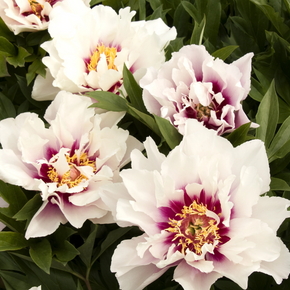
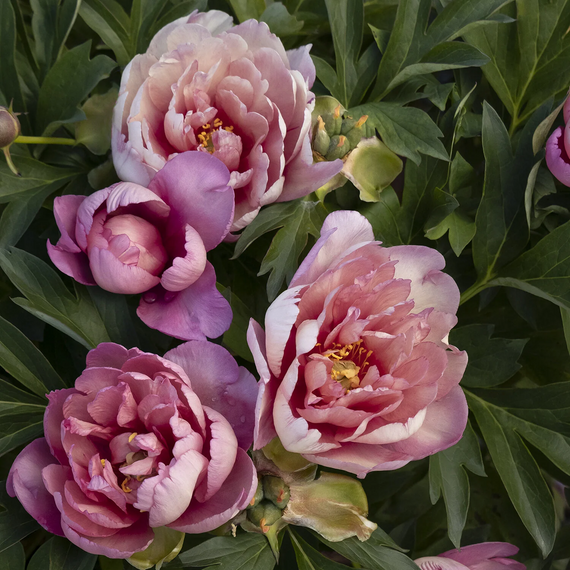
- Breathtaking semi-double to double blooms up to 6 inches across open in deep lavender-pink and gradually fade to a luminous soft pink, revealing a showy cluster of golden-yellow stamens at the center
- An exceptional intersectional (Itoh) hybrid combining the sturdy, bushy habit of herbaceous peonies with the dramatic flower forms and deeply lobed, lush dark green foliage of tree peonies
- Strong, self-supporting stems require no staking, and each plant produces multiple buds that open in succession for weeks of mid-spring bloom — flowers are outstanding for fresh-cut arrangements
- Remarkably cold hardy to Zone 3, deer resistant, and long-lived — an heirloom-quality perennial that rewards gardeners for decades with minimal maintenance
Keiko Itoh Peony (Paeonia 'Adored') is a showstopping intersectional hybrid that delivers everything a gardener could want from a peony — breathtaking blooms, exceptional vigor, and season-long ornamental appeal — all in a compact, well-behaved mound reaching just 30 inches tall and wide. Hybridized by renowned Itoh breeder Don Smith, Keiko is a masterful cross between the common herbaceous peony and the tree peony, inheriting the best traits of both parents. In mid-spring, sturdy stems rise from a lush mound of deeply lobed, dark green foliage, each topped with large, lightly fragrant semi-double to double flowers that can reach 6 inches across. The blooms open in a striking dark lavender-pink and mature gracefully to a soft, warm pink, all the while showcasing a luminous cluster of golden-yellow stamens at the heart of each flower. Because each stem carries a primary bud flanked by multiple side buds, the flowering display unfolds in succession over several weeks. Unlike many herbaceous peonies, Keiko's foliage remains attractive and deeply green throughout the entire growing season, providing months of textural interest in the landscape long after the flowers have faded. Hardy from USDA Zones 3 through 8, this exceptional perennial is well suited to the climates of Southern Oregon and Northern California, thriving in full sun to partial shade with moderate, consistent moisture and well-drained, organically enriched soil. Deer resistant and attractive to bees and butterflies, Keiko is an outstanding choice for perennial borders, cottage gardens, and cutting gardens where long-lived beauty and low-maintenance performance are prized.
Plant Description
Keiko Itoh Peony is an intersectional hybrid perennial — also known as an Itoh peony — created by crossing the common herbaceous peony (Paeonia lactiflora) with tree peonies (Paeonia suffruticosa and related species). The cultivar name 'Adored' captures the reverence gardeners have long held for this variety. Keiko forms a compact, rounded mound of lush, deeply compound, dark green foliage from which strong, self-supporting stems emerge each spring. The leaves are more finely and narrowly lobed than typical herbaceous peonies, adding an elegant, refined texture to the garden. In mid-spring, large semi-double to double blooms up to 6 inches across appear, opening in rich dark lavender-pink and maturing gracefully to a softer, warm pink as the season progresses. The center of each bloom is adorned with a prominent cluster of golden-yellow stamens that becomes increasingly visible as the outer petals fade and open. A light, pleasant fragrance accompanies the blooms. The foliage remains attractive and deeply green throughout the entire growing season — a distinguishing advantage of Itoh hybrids over standard herbaceous peonies — and the plant dies back to the crown each winter before resprouting reliably from the base each spring.
Mature Size
| Characteristic | Measurement |
|---|---|
| Mature Height | Approximately 30 inches (2.5 feet) |
| Mature Width / Spread | Approximately 30 inches (2.5 feet) |
| Growth Rate | Slow; takes 2-3 years to reach mature size |
| Plant Form | Compact, rounded mound |
| Recommended Spacing | 26-30 inches apart for mass plantings; 3-4 feet from other perennials for good air circulation |
| Longevity | Can live 20+ years under ideal conditions; known to persist for a century with minimal care |
Hardiness Zones and Climate
Keiko Itoh Peony is cold hardy in USDA Hardiness Zones 3a through 8a, making it an excellent choice for the wide range of climates found across Southern Oregon and Northern California. It thrives in temperate climates with warm sunny days and cool nights, similar to its parent species' native growing conditions. It requires a period of winter chill to bloom successfully the following season. In hotter inland areas or climates with intense summer sun, providing afternoon shade helps protect the blooms and keeps the foliage looking its best through summer. It is not well suited to humid subtropical climates or areas that do not receive adequate winter cold. As an herbaceous perennial, the top growth dies back to the crown after the first heavy frost in autumn and reliably resproots from beneath the soil surface in spring — the buried crown is well protected from even hard freezes.
Sunlight Requirements
Keiko Itoh Peony performs best in full sun, receiving a minimum of 6 to 8 hours of direct sunlight per day. Full sun exposure encourages the largest, most abundant blooms and produces the strongest, most upright stems. It will tolerate partial shade (4-6 hours of sun daily), but flowering will be reduced and stems may become somewhat weaker in shadier conditions. In climates with very intense afternoon heat — particularly in hotter inland valleys of Southern Oregon or Northern California — some dappled afternoon shade is beneficial, as it helps prolong the life of individual blooms and prevents foliage scorch. Morning sun with afternoon shade is a good compromise in these warmer growing areas. Avoid deep shade, which will significantly diminish flowering and overall plant vigor.
Soil and pH Preferences
For the best growth and flowering, Keiko Itoh Peony prefers a rich, fertile, well-drained soil amended with plenty of organic matter. While it tolerates a range of soil types, it performs noticeably better in soils enriched with compost, aged manure, or leaf mold, which improve drainage, aeration, and nutrient availability simultaneously. It grows best in slightly acidic to neutral soil with a pH between approximately 6.0 and 7.0 — though it shows reasonable adaptability to soils both slightly below and above this range. Good drainage is essential; this peony will not tolerate waterlogged or compacted soils, which invite crown rot and root diseases. In heavy clay soils, incorporate 2 to 4 inches of compost and consider raising the planting bed to ensure adequate drainage. In sandy or lean soils, amend generously with organic matter to improve both moisture retention and fertility. A healthy soil profile up to 2 feet deep is ideal, as Keiko develops an extensive root system over time.
Watering Guide
Consistent, moderate moisture is key to healthy growth and abundant flowering. Follow these guidelines throughout the growing season:
- First growing season: Water deeply and regularly after planting to help establish a strong, extensive root system. Check soil moisture frequently and do not allow the plant to dry out completely.
- Established plants: Aim to provide approximately 1 inch of water per week through rainfall or supplemental irrigation during the growing season. Water once or twice weekly during dry spells.
- Watering technique: Always water at the base of the plant around the perimeter of the canopy, not overhead. Deep, infrequent watering is preferred over shallow, frequent watering — soak the soil thoroughly to reach the deep root system.
- Drought: While short dry periods are tolerated, prolonged drought causes stress, reduces flowering, and may trigger premature leaf drop. Provide supplemental irrigation during extended dry spells, especially in summer.
- Overwatering: Do not allow water to stand around the crown or roots. Saturated soils promote crown rot and fungal disease. Ensure excellent drainage at all times.
- Fall and winter: Reduce watering frequency as the plant enters dormancy after the first hard frost.
Fertilizing
Itoh peonies are moderate feeders that benefit from targeted fertilization to support their spectacular bloom display. Avoid high-nitrogen fertilizers, which promote excessive leafy growth at the expense of flowers and can weaken the plant's disease resistance.
- Spring (as new growth emerges): Apply a low-nitrogen, phosphorus-rich granular fertilizer such as a 5-10-10 or 5-20-20 formula to encourage strong root development and abundant bud set. Slow-release organic granular formulas are ideal.
- When buds form: If not using a slow-release product, apply a second light feeding with a phosphorus-rich supplement such as bone meal, kelp, fish emulsion, or alfalfa meal to support bud development.
- Late summer: A third light application of an organic supplement in late summer helps replenish the energy stores in the tubers for the following season's bloom.
- Annual compost top-dressing: Apply a generous side dressing of well-composted organic matter each year to enrich the soil and improve its structure over time.
- Avoid: Do not apply fertilizer in late fall or winter when the plant is dormant, and avoid overfertilizing with nitrogen at any time of year.
Planting Instructions
Follow these steps for successful establishment of your Keiko Itoh Peony:
- Timing: Plant in early spring or fall for best results. Fall planting gives the roots a head start before summer heat; spring planting from a nursery-grown container is also highly successful.
- Site selection: Choose a location in full sun to partial shade with good air circulation. Avoid frost pockets and areas prone to standing water.
- Soil preparation: Dig a hole twice as wide as the root ball and incorporate 2 to 4 inches of compost or well-aged organic matter into the native soil.
- Planting depth: This is critical. Plant with the crown (where the stems meet the roots) at or just slightly below the soil surface — no more than 1 to 2 inches deep. Planting too deeply is the most common reason peonies fail to bloom. For nursery container plants, match the soil level in the pot.
- Backfill and firm: Backfill with amended soil, firming gently to eliminate air pockets. Do not compact the soil heavily over the root zone.
- Water in: Water thoroughly after planting to settle the soil and establish good root-to-soil contact.
- Mulch: Apply a 2- to 3-inch layer of organic mulch (shredded bark, compost) around — but not directly over — the crown. Mulch helps retain moisture, regulate soil temperature, and suppress weeds.
- Spacing: Space individual plants 26 to 30 inches apart for mass plantings; allow 3 to 4 feet between Keiko and other large perennials or shrubs to ensure good air circulation.
- First season expectations: Itoh peonies establish slowly. Expect limited blooming in the first year and increasing performance each subsequent season as the root system develops.
Pruning and Maintenance
Keiko Itoh Peony is a relatively low-maintenance perennial with a simple seasonal care routine:
- Deadheading: Remove spent blooms promptly throughout the flowering season to keep the plant tidy and redirect energy from seed production back into the root system. The cut stems also make beautiful fresh flower arrangements.
- Summer foliage care: Unlike standard herbaceous peonies, Keiko's foliage remains attractive and deeply green all season long. No summer pruning is needed. Simply monitor for any damaged or diseased foliage and remove affected leaves promptly.
- Fall cutback: After the first hard frost kills the foliage, cut all stems back to within 1 to 3 inches of the ground. This is an important step to remove overwintering sites for fungal spores, particularly botrytis. Do not leave brown stems and leaves in place over winter.
- Winter mulching: After cutting back in fall, apply or replenish a mulch layer of 2 to 3 inches around the crown (not on top of it) to insulate the root zone through winter. In Zones 3 and 4, use a heavier mulch layer for added protection.
- Spring cleanup: As new growth emerges in spring, remove winter mulch from directly over the crown. Take care not to disturb or damage the new red shoots as they push through the soil — they can be fragile and easy to snap.
- Staking: Not required. The woody-based stems of Itoh peonies are notably stronger and more self-supporting than standard herbaceous peonies.
- Division: Rarely necessary, but can be done in fall (September-October) if the planting becomes crowded or flowering begins to decline after many years. Division will typically delay blooming for 1 to 2 seasons.
Seasonal Interest
| Season | Ornamental Features |
|---|---|
| Early Spring | Rich red-bronze new shoots emerge from the crown, pushing through the soil in an eye-catching display as dormancy breaks |
| Mid-Spring | Peak bloom season — large, lightly fragrant semi-double to double flowers up to 6 inches across open in deep lavender-pink and fade to soft pink with prominent golden-yellow stamens; multiple buds per stem extend the display over several weeks |
| Late Spring to Summer | Lush mound of deeply lobed, dark green compound foliage provides outstanding textural contrast in the perennial border; remains attractive and disease-resistant throughout the warm season |
| Fall | Foliage persists until the first hard frost, maintaining its deep green color well into autumn; cutting back after frost is the seasonal signal to wrap up garden maintenance |
| Winter | Plant is fully dormant; the crown rests safely below ground, protected from cold by the soil and mulch layer |
Landscape Uses
Keiko Itoh Peony is a versatile landscape plant suited to a wide range of garden styles and design applications:
- Perennial borders: A natural anchor plant in mixed perennial borders, Keiko's compact mounding form and season-long foliage make it a reliable, eye-catching performer from spring through fall
- Cottage and informal gardens: Its lush, romantic blooms and relaxed mounding habit fit perfectly into cottage-style plantings alongside roses, salvias, and ornamental grasses
- Cutting garden: Blooms are excellent for fresh-cut arrangements; cut stems when buds are just beginning to open for the longest vase life
- Mass plantings: When planted in groupings of three or more, Keiko creates a spectacular mid-spring focal point in the landscape
- Specimen planting: Striking enough to stand alone as a garden focal point, particularly in a prominent bed or near a patio or walkway where its fragrance can be enjoyed up close
- Foundation planting: Its well-defined, compact mound and deer resistance make it a smart choice near home foundations and entryways
- Pollinator garden: The open center of mature blooms and the abundant golden stamens attract bees and butterflies during the prime spring pollinator season
Companion Plants
Keiko Itoh Peony pairs beautifully with a wide range of perennials, bulbs, and shrubs that complement its mid-spring bloom time, texture, and color palette of lavender-pink and gold. Consider these companions for a cohesive, layered planting:
- Salvia (Salvia nemorosa or perennial salvias): Deep purple-blue flower spikes provide stunning color contrast and repeat bloom later in the season after peonies finish
- Hardy Geranium (Cranesbill): Low-growing, long-blooming, and easy to grow; fills in around the base of peonies beautifully and complements the pink-lavender tones
- Alliums (ornamental onions): Globe-shaped purple or white flowers on tall stems bloom concurrently with peonies and provide wonderful vertical contrast
- Catmint (Nepeta): Soft lavender-blue flower wands and silver-green foliage make an ideal border edging companion; blooms at the same time and shares the same sun requirements
- Baptisia (False Indigo): Deep blue-purple flower spikes and attractive blue-green foliage complement peonies perfectly in the spring border
- Iris (bearded or Siberian): Classic peony companion; the two bloom together in mid-spring and share similar cultural requirements
- Spring bulbs (tulips, alliums, camassia): Underplant with late-season tulips or allium bulbs to create layered interest from early through mid-spring
- Ornamental grasses: Fine-textured grasses such as blue oat grass or feather reed grass provide contrasting texture and structure, especially as peonies enter summer
- Roses: Traditional companions in cottage and formal gardens; choose shrub or landscape roses in soft pink, white, or cream tones to harmonize with Keiko's bloom colors
Pests and Diseases
Keiko Itoh Peony has notably better disease resistance than many standard herbaceous peonies, and serious pest problems are rare. The following issues are the most commonly observed:
- Botrytis blight (Botrytis cinerea): The most common fungal disease of peonies, most prevalent in cool, damp spring conditions with poor air circulation. Symptoms include brown, water-soaked spots on stems, buds, and leaves, sometimes accompanied by a grayish fuzzy mold. Prevent by ensuring good spacing and air circulation, watering at the base (never overhead), and cutting back all foliage to the ground in fall. Remove and destroy (do not compost) any affected plant material immediately. Avoid overfertilizing with nitrogen.
- Powdery mildew: A fungal disease appearing as a gray-white powdery coating on leaves, stems, and buds, most common in hot, dry conditions with low air circulation. Treat early infections with horticultural neem oil or a labeled fungicide. Improve air circulation by proper spacing.
- Ants on buds: Ants are frequently observed on peony buds and are completely harmless. They are attracted to the sweet nectar secreted by the developing buds and may actually deter other pest insects. No treatment is needed.
- Crown rot and root rot: Caused by overly wet, poorly drained soils. Prevent by ensuring excellent drainage and never planting in low areas where water pools. Avoid deep mulching directly over the crown.
- Deer: Generally deer resistant — deer tend to avoid peonies in favor of more palatable plants. However, deer pressure varies by location and season, and very hungry deer may browse young plants.
Wildlife Value
Keiko Itoh Peony provides meaningful ecological value in the garden, particularly during the mid-spring season when early pollinators are most active:
- Bees: The large, semi-open blooms with their prominent clusters of golden-yellow stamens are attractive to bumblebees and other native bees seeking pollen and nectar in spring
- Butterflies: Various butterfly species visit the blooms for nectar during the peak spring bloom period
- Ants: Commonly seen on the buds as they develop; ants feed on the sweet nectar secreted by the buds and are harmless — and even beneficial — visitors
- Deer resistant: Peonies contain compounds that make them unpalatable to deer, and Keiko is generally left alone even in landscapes with moderate deer pressure — an important advantage in the rural and semi-rural settings common to Southern Oregon and Northern California
- Cutting garden value: Blooms are excellent for fresh arrangements, bringing the garden's natural beauty indoors and reducing the need for commercially cut flowers
Container Growing
While Keiko Itoh Peony is primarily grown as an in-ground landscape plant, it can be successfully cultivated in a large container under the right conditions. Keep the following in mind:
- Container size: Choose a very large, deep container — at least 18 to 24 inches in diameter and equally deep — to accommodate the plant's extensive root system and allow for mature growth
- Drainage: Drainage holes are absolutely essential. Use a high-quality, well-draining potting mix amended with compost. Never allow the container to sit in standing water
- Planting depth: As with in-ground planting, position the crown no more than 1 to 2 inches below the soil surface
- Watering: Containers dry out more quickly than garden soil, so monitor moisture carefully and water more frequently during warm weather — but never allow waterlogging
- Fertilizing: Container-grown peonies benefit from regular feeding with a low-nitrogen, phosphorus-rich fertilizer through the growing season, as nutrients leach from containers more quickly
- Winter protection: In climates at the colder end of the hardiness range, move containers to a sheltered, unheated space (such as a garage or covered porch) during winter to protect the roots from hard freezes, as container roots are more exposed to cold than in-ground roots
- Long-term performance: For best results and maximum longevity, in-ground planting is strongly preferred. Container-grown plants may require repotting every few years as they mature
- Breathtaking semi-double to double blooms up to 6 inches across open in deep lavender-pink and gradually fade to a luminous soft pink, revealing a showy cluster of golden-yellow stamens at the center
- An exceptional intersectional (Itoh) hybrid combining the sturdy, bushy habit of herbaceous peonies with the dramatic flower forms and deeply lobed, lush dark green foliage of tree peonies
- Strong, self-supporting stems require no staking, and each plant produces multiple buds that open in succession for weeks of mid-spring bloom — flowers are outstanding for fresh-cut arrangements
- Remarkably cold hardy to Zone 3, deer resistant, and long-lived — an heirloom-quality perennial that rewards gardeners for decades with minimal maintenance
Keiko Itoh Peony (Paeonia 'Adored') is a showstopping intersectional hybrid that delivers everything a gardener could want from a peony — breathtaking blooms, exceptional vigor, and season-long ornamental appeal — all in a compact, well-behaved mound reaching just 30 inches tall and wide. Hybridized by renowned Itoh breeder Don Smith, Keiko is a masterful cross between the common herbaceous peony and the tree peony, inheriting the best traits of both parents. In mid-spring, sturdy stems rise from a lush mound of deeply lobed, dark green foliage, each topped with large, lightly fragrant semi-double to double flowers that can reach 6 inches across. The blooms open in a striking dark lavender-pink and mature gracefully to a soft, warm pink, all the while showcasing a luminous cluster of golden-yellow stamens at the heart of each flower. Because each stem carries a primary bud flanked by multiple side buds, the flowering display unfolds in succession over several weeks. Unlike many herbaceous peonies, Keiko's foliage remains attractive and deeply green throughout the entire growing season, providing months of textural interest in the landscape long after the flowers have faded. Hardy from USDA Zones 3 through 8, this exceptional perennial is well suited to the climates of Southern Oregon and Northern California, thriving in full sun to partial shade with moderate, consistent moisture and well-drained, organically enriched soil. Deer resistant and attractive to bees and butterflies, Keiko is an outstanding choice for perennial borders, cottage gardens, and cutting gardens where long-lived beauty and low-maintenance performance are prized.
Plant Description
Keiko Itoh Peony is an intersectional hybrid perennial — also known as an Itoh peony — created by crossing the common herbaceous peony (Paeonia lactiflora) with tree peonies (Paeonia suffruticosa and related species). The cultivar name 'Adored' captures the reverence gardeners have long held for this variety. Keiko forms a compact, rounded mound of lush, deeply compound, dark green foliage from which strong, self-supporting stems emerge each spring. The leaves are more finely and narrowly lobed than typical herbaceous peonies, adding an elegant, refined texture to the garden. In mid-spring, large semi-double to double blooms up to 6 inches across appear, opening in rich dark lavender-pink and maturing gracefully to a softer, warm pink as the season progresses. The center of each bloom is adorned with a prominent cluster of golden-yellow stamens that becomes increasingly visible as the outer petals fade and open. A light, pleasant fragrance accompanies the blooms. The foliage remains attractive and deeply green throughout the entire growing season — a distinguishing advantage of Itoh hybrids over standard herbaceous peonies — and the plant dies back to the crown each winter before resprouting reliably from the base each spring.
Mature Size
| Characteristic | Measurement |
|---|---|
| Mature Height | Approximately 30 inches (2.5 feet) |
| Mature Width / Spread | Approximately 30 inches (2.5 feet) |
| Growth Rate | Slow; takes 2-3 years to reach mature size |
| Plant Form | Compact, rounded mound |
| Recommended Spacing | 26-30 inches apart for mass plantings; 3-4 feet from other perennials for good air circulation |
| Longevity | Can live 20+ years under ideal conditions; known to persist for a century with minimal care |
Hardiness Zones and Climate
Keiko Itoh Peony is cold hardy in USDA Hardiness Zones 3a through 8a, making it an excellent choice for the wide range of climates found across Southern Oregon and Northern California. It thrives in temperate climates with warm sunny days and cool nights, similar to its parent species' native growing conditions. It requires a period of winter chill to bloom successfully the following season. In hotter inland areas or climates with intense summer sun, providing afternoon shade helps protect the blooms and keeps the foliage looking its best through summer. It is not well suited to humid subtropical climates or areas that do not receive adequate winter cold. As an herbaceous perennial, the top growth dies back to the crown after the first heavy frost in autumn and reliably resproots from beneath the soil surface in spring — the buried crown is well protected from even hard freezes.
Sunlight Requirements
Keiko Itoh Peony performs best in full sun, receiving a minimum of 6 to 8 hours of direct sunlight per day. Full sun exposure encourages the largest, most abundant blooms and produces the strongest, most upright stems. It will tolerate partial shade (4-6 hours of sun daily), but flowering will be reduced and stems may become somewhat weaker in shadier conditions. In climates with very intense afternoon heat — particularly in hotter inland valleys of Southern Oregon or Northern California — some dappled afternoon shade is beneficial, as it helps prolong the life of individual blooms and prevents foliage scorch. Morning sun with afternoon shade is a good compromise in these warmer growing areas. Avoid deep shade, which will significantly diminish flowering and overall plant vigor.
Soil and pH Preferences
For the best growth and flowering, Keiko Itoh Peony prefers a rich, fertile, well-drained soil amended with plenty of organic matter. While it tolerates a range of soil types, it performs noticeably better in soils enriched with compost, aged manure, or leaf mold, which improve drainage, aeration, and nutrient availability simultaneously. It grows best in slightly acidic to neutral soil with a pH between approximately 6.0 and 7.0 — though it shows reasonable adaptability to soils both slightly below and above this range. Good drainage is essential; this peony will not tolerate waterlogged or compacted soils, which invite crown rot and root diseases. In heavy clay soils, incorporate 2 to 4 inches of compost and consider raising the planting bed to ensure adequate drainage. In sandy or lean soils, amend generously with organic matter to improve both moisture retention and fertility. A healthy soil profile up to 2 feet deep is ideal, as Keiko develops an extensive root system over time.
Watering Guide
Consistent, moderate moisture is key to healthy growth and abundant flowering. Follow these guidelines throughout the growing season:
- First growing season: Water deeply and regularly after planting to help establish a strong, extensive root system. Check soil moisture frequently and do not allow the plant to dry out completely.
- Established plants: Aim to provide approximately 1 inch of water per week through rainfall or supplemental irrigation during the growing season. Water once or twice weekly during dry spells.
- Watering technique: Always water at the base of the plant around the perimeter of the canopy, not overhead. Deep, infrequent watering is preferred over shallow, frequent watering — soak the soil thoroughly to reach the deep root system.
- Drought: While short dry periods are tolerated, prolonged drought causes stress, reduces flowering, and may trigger premature leaf drop. Provide supplemental irrigation during extended dry spells, especially in summer.
- Overwatering: Do not allow water to stand around the crown or roots. Saturated soils promote crown rot and fungal disease. Ensure excellent drainage at all times.
- Fall and winter: Reduce watering frequency as the plant enters dormancy after the first hard frost.
Fertilizing
Itoh peonies are moderate feeders that benefit from targeted fertilization to support their spectacular bloom display. Avoid high-nitrogen fertilizers, which promote excessive leafy growth at the expense of flowers and can weaken the plant's disease resistance.
- Spring (as new growth emerges): Apply a low-nitrogen, phosphorus-rich granular fertilizer such as a 5-10-10 or 5-20-20 formula to encourage strong root development and abundant bud set. Slow-release organic granular formulas are ideal.
- When buds form: If not using a slow-release product, apply a second light feeding with a phosphorus-rich supplement such as bone meal, kelp, fish emulsion, or alfalfa meal to support bud development.
- Late summer: A third light application of an organic supplement in late summer helps replenish the energy stores in the tubers for the following season's bloom.
- Annual compost top-dressing: Apply a generous side dressing of well-composted organic matter each year to enrich the soil and improve its structure over time.
- Avoid: Do not apply fertilizer in late fall or winter when the plant is dormant, and avoid overfertilizing with nitrogen at any time of year.
Planting Instructions
Follow these steps for successful establishment of your Keiko Itoh Peony:
- Timing: Plant in early spring or fall for best results. Fall planting gives the roots a head start before summer heat; spring planting from a nursery-grown container is also highly successful.
- Site selection: Choose a location in full sun to partial shade with good air circulation. Avoid frost pockets and areas prone to standing water.
- Soil preparation: Dig a hole twice as wide as the root ball and incorporate 2 to 4 inches of compost or well-aged organic matter into the native soil.
- Planting depth: This is critical. Plant with the crown (where the stems meet the roots) at or just slightly below the soil surface — no more than 1 to 2 inches deep. Planting too deeply is the most common reason peonies fail to bloom. For nursery container plants, match the soil level in the pot.
- Backfill and firm: Backfill with amended soil, firming gently to eliminate air pockets. Do not compact the soil heavily over the root zone.
- Water in: Water thoroughly after planting to settle the soil and establish good root-to-soil contact.
- Mulch: Apply a 2- to 3-inch layer of organic mulch (shredded bark, compost) around — but not directly over — the crown. Mulch helps retain moisture, regulate soil temperature, and suppress weeds.
- Spacing: Space individual plants 26 to 30 inches apart for mass plantings; allow 3 to 4 feet between Keiko and other large perennials or shrubs to ensure good air circulation.
- First season expectations: Itoh peonies establish slowly. Expect limited blooming in the first year and increasing performance each subsequent season as the root system develops.
Pruning and Maintenance
Keiko Itoh Peony is a relatively low-maintenance perennial with a simple seasonal care routine:
- Deadheading: Remove spent blooms promptly throughout the flowering season to keep the plant tidy and redirect energy from seed production back into the root system. The cut stems also make beautiful fresh flower arrangements.
- Summer foliage care: Unlike standard herbaceous peonies, Keiko's foliage remains attractive and deeply green all season long. No summer pruning is needed. Simply monitor for any damaged or diseased foliage and remove affected leaves promptly.
- Fall cutback: After the first hard frost kills the foliage, cut all stems back to within 1 to 3 inches of the ground. This is an important step to remove overwintering sites for fungal spores, particularly botrytis. Do not leave brown stems and leaves in place over winter.
- Winter mulching: After cutting back in fall, apply or replenish a mulch layer of 2 to 3 inches around the crown (not on top of it) to insulate the root zone through winter. In Zones 3 and 4, use a heavier mulch layer for added protection.
- Spring cleanup: As new growth emerges in spring, remove winter mulch from directly over the crown. Take care not to disturb or damage the new red shoots as they push through the soil — they can be fragile and easy to snap.
- Staking: Not required. The woody-based stems of Itoh peonies are notably stronger and more self-supporting than standard herbaceous peonies.
- Division: Rarely necessary, but can be done in fall (September-October) if the planting becomes crowded or flowering begins to decline after many years. Division will typically delay blooming for 1 to 2 seasons.
Seasonal Interest
| Season | Ornamental Features |
|---|---|
| Early Spring | Rich red-bronze new shoots emerge from the crown, pushing through the soil in an eye-catching display as dormancy breaks |
| Mid-Spring | Peak bloom season — large, lightly fragrant semi-double to double flowers up to 6 inches across open in deep lavender-pink and fade to soft pink with prominent golden-yellow stamens; multiple buds per stem extend the display over several weeks |
| Late Spring to Summer | Lush mound of deeply lobed, dark green compound foliage provides outstanding textural contrast in the perennial border; remains attractive and disease-resistant throughout the warm season |
| Fall | Foliage persists until the first hard frost, maintaining its deep green color well into autumn; cutting back after frost is the seasonal signal to wrap up garden maintenance |
| Winter | Plant is fully dormant; the crown rests safely below ground, protected from cold by the soil and mulch layer |
Landscape Uses
Keiko Itoh Peony is a versatile landscape plant suited to a wide range of garden styles and design applications:
- Perennial borders: A natural anchor plant in mixed perennial borders, Keiko's compact mounding form and season-long foliage make it a reliable, eye-catching performer from spring through fall
- Cottage and informal gardens: Its lush, romantic blooms and relaxed mounding habit fit perfectly into cottage-style plantings alongside roses, salvias, and ornamental grasses
- Cutting garden: Blooms are excellent for fresh-cut arrangements; cut stems when buds are just beginning to open for the longest vase life
- Mass plantings: When planted in groupings of three or more, Keiko creates a spectacular mid-spring focal point in the landscape
- Specimen planting: Striking enough to stand alone as a garden focal point, particularly in a prominent bed or near a patio or walkway where its fragrance can be enjoyed up close
- Foundation planting: Its well-defined, compact mound and deer resistance make it a smart choice near home foundations and entryways
- Pollinator garden: The open center of mature blooms and the abundant golden stamens attract bees and butterflies during the prime spring pollinator season
Companion Plants
Keiko Itoh Peony pairs beautifully with a wide range of perennials, bulbs, and shrubs that complement its mid-spring bloom time, texture, and color palette of lavender-pink and gold. Consider these companions for a cohesive, layered planting:
- Salvia (Salvia nemorosa or perennial salvias): Deep purple-blue flower spikes provide stunning color contrast and repeat bloom later in the season after peonies finish
- Hardy Geranium (Cranesbill): Low-growing, long-blooming, and easy to grow; fills in around the base of peonies beautifully and complements the pink-lavender tones
- Alliums (ornamental onions): Globe-shaped purple or white flowers on tall stems bloom concurrently with peonies and provide wonderful vertical contrast
- Catmint (Nepeta): Soft lavender-blue flower wands and silver-green foliage make an ideal border edging companion; blooms at the same time and shares the same sun requirements
- Baptisia (False Indigo): Deep blue-purple flower spikes and attractive blue-green foliage complement peonies perfectly in the spring border
- Iris (bearded or Siberian): Classic peony companion; the two bloom together in mid-spring and share similar cultural requirements
- Spring bulbs (tulips, alliums, camassia): Underplant with late-season tulips or allium bulbs to create layered interest from early through mid-spring
- Ornamental grasses: Fine-textured grasses such as blue oat grass or feather reed grass provide contrasting texture and structure, especially as peonies enter summer
- Roses: Traditional companions in cottage and formal gardens; choose shrub or landscape roses in soft pink, white, or cream tones to harmonize with Keiko's bloom colors
Pests and Diseases
Keiko Itoh Peony has notably better disease resistance than many standard herbaceous peonies, and serious pest problems are rare. The following issues are the most commonly observed:
- Botrytis blight (Botrytis cinerea): The most common fungal disease of peonies, most prevalent in cool, damp spring conditions with poor air circulation. Symptoms include brown, water-soaked spots on stems, buds, and leaves, sometimes accompanied by a grayish fuzzy mold. Prevent by ensuring good spacing and air circulation, watering at the base (never overhead), and cutting back all foliage to the ground in fall. Remove and destroy (do not compost) any affected plant material immediately. Avoid overfertilizing with nitrogen.
- Powdery mildew: A fungal disease appearing as a gray-white powdery coating on leaves, stems, and buds, most common in hot, dry conditions with low air circulation. Treat early infections with horticultural neem oil or a labeled fungicide. Improve air circulation by proper spacing.
- Ants on buds: Ants are frequently observed on peony buds and are completely harmless. They are attracted to the sweet nectar secreted by the developing buds and may actually deter other pest insects. No treatment is needed.
- Crown rot and root rot: Caused by overly wet, poorly drained soils. Prevent by ensuring excellent drainage and never planting in low areas where water pools. Avoid deep mulching directly over the crown.
- Deer: Generally deer resistant — deer tend to avoid peonies in favor of more palatable plants. However, deer pressure varies by location and season, and very hungry deer may browse young plants.
Wildlife Value
Keiko Itoh Peony provides meaningful ecological value in the garden, particularly during the mid-spring season when early pollinators are most active:
- Bees: The large, semi-open blooms with their prominent clusters of golden-yellow stamens are attractive to bumblebees and other native bees seeking pollen and nectar in spring
- Butterflies: Various butterfly species visit the blooms for nectar during the peak spring bloom period
- Ants: Commonly seen on the buds as they develop; ants feed on the sweet nectar secreted by the buds and are harmless — and even beneficial — visitors
- Deer resistant: Peonies contain compounds that make them unpalatable to deer, and Keiko is generally left alone even in landscapes with moderate deer pressure — an important advantage in the rural and semi-rural settings common to Southern Oregon and Northern California
- Cutting garden value: Blooms are excellent for fresh arrangements, bringing the garden's natural beauty indoors and reducing the need for commercially cut flowers
Container Growing
While Keiko Itoh Peony is primarily grown as an in-ground landscape plant, it can be successfully cultivated in a large container under the right conditions. Keep the following in mind:
- Container size: Choose a very large, deep container — at least 18 to 24 inches in diameter and equally deep — to accommodate the plant's extensive root system and allow for mature growth
- Drainage: Drainage holes are absolutely essential. Use a high-quality, well-draining potting mix amended with compost. Never allow the container to sit in standing water
- Planting depth: As with in-ground planting, position the crown no more than 1 to 2 inches below the soil surface
- Watering: Containers dry out more quickly than garden soil, so monitor moisture carefully and water more frequently during warm weather — but never allow waterlogging
- Fertilizing: Container-grown peonies benefit from regular feeding with a low-nitrogen, phosphorus-rich fertilizer through the growing season, as nutrients leach from containers more quickly
- Winter protection: In climates at the colder end of the hardiness range, move containers to a sheltered, unheated space (such as a garage or covered porch) during winter to protect the roots from hard freezes, as container roots are more exposed to cold than in-ground roots
- Long-term performance: For best results and maximum longevity, in-ground planting is strongly preferred. Container-grown plants may require repotting every few years as they mature