

Zoom the image with the mouse
Bartzella Itoh Peony - 5 Gallon
SKU:
1702395
UPC:
014949226506
$99.99
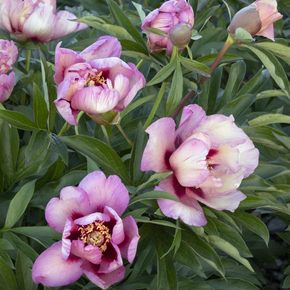
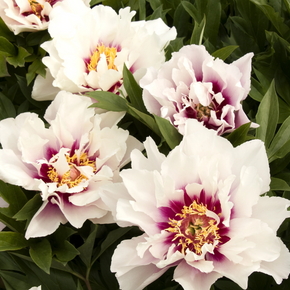
- Award-winning intersectional hybrid bearing enormous 6-8 inch golden yellow blooms with a striking scarlet-flushed center and a sweet lemon fragrance throughout late spring to early summer
- Strong, self-supporting stems require no staking, and a mature plant can produce 60 or more blooms in a single season as successive side buds open over a 3-4 week period
- Recipient of both the American Peony Society Gold Medal (2006) and the Royal Horticultural Society Award of Garden Merit, recognized as one of the finest peonies ever introduced
- Deer and rabbit resistant with lush, deeply dissected dark green foliage that stays attractive from spring through fall, making it a standout in borders, cottage gardens, and cut flower arrangements
Paeonia x Itoh 'Bartzella' is the gold standard of intersectional peonies, a remarkable hybrid that captures the very best qualities of both its herbaceous and tree peony parents. The result is a vigorous, long-lived perennial that produces luminous, semi-double to fully double golden yellow flowers measuring 6-8 inches across, each petal radiating warmth against a delicate scarlet blush at the center. A soft, pleasing lemon fragrance drifts from each bloom, making 'Bartzella' equally irresistible in the garden and in a vase. Unlike traditional herbaceous peonies, 'Bartzella' grows on exceptionally sturdy stems that hold their dinner-plate-sized blooms upright without staking, even in wind and rain. The plant forms a well-branched, rounded mound of glossy, deeply cut dark green foliage, reaching 2.5-3 feet tall and spreading 3-4 feet wide at maturity, and its handsome foliage remains an asset in the landscape from the first flush of spring growth all the way through autumn. Hardy in USDA Zones 3-9, 'Bartzella' thrives in full sun with fertile, well-drained soil and is remarkably adaptable across a wide range of climates, including the warmer reaches of the Pacific Northwest, Southern Oregon, and Northern California. With dual gold-medal recognition from the American Peony Society and the Royal Horticultural Society, and the potential to live and bloom for 50 years or more, this extraordinary peony is one of the most rewarding long-term investments any gardener can make.
Plant Description
Bartzella is an intersectional peony, also called an Itoh peony, a hybrid class created by crossing a tree peony with an herbaceous peony. First successfully hybridized by Japanese plantsman Toichi Itoh in 1948 and later introduced to American gardeners, these intersectional crosses combine the large, exotic flowers and finely lobed foliage of tree peonies with the cold hardiness and die-back growth habit of herbaceous peonies. 'Bartzella' specifically is prized for its luminous golden yellow, semi-double to fully double flowers — a color virtually unavailable in standard herbaceous peony varieties. Each bloom reaches 6-8 inches in diameter and features layered petals of soft gold surrounding a distinctive scarlet-flushed center with ornamental golden stamens. A delicate lemon fragrance accompanies every flower, adding yet another dimension to this already spectacular plant. The glossy, deeply dissected dark green foliage closely resembles that of its tree peony parent and remains fresh and attractive throughout the entire growing season, long after the blooms have faded.
Mature Size
| Attribute | Measurement |
|---|---|
| Mature Height | 2.5 - 3 feet (75-90 cm) |
| Mature Spread | 3 - 4 feet (90-120 cm) |
| Recommended Spacing | 3 - 4 feet on center |
| Bloom Size | 6 - 8 inches in diameter |
| Growth Rate | Moderate; reaches full size in approximately 3 years |
| Longevity | 50+ years with minimal disturbance |
'Bartzella' grows in a tidy, well-rounded mound form. Its compact stature makes it well suited to the front or middle of a perennial border. Mature plants are prolific bloomers, capable of producing 60 or more flowers in a single season as the primary bud and multiple side buds open in succession over 3-4 weeks.
Hardiness Zones
'Bartzella' is exceptionally cold hardy and heat tolerant compared to standard herbaceous peonies, performing reliably across a wide range of climates. It is rated for USDA Hardiness Zones 3-9, making it one of the most adaptable peonies available. Notably, intersectional peonies like 'Bartzella' can tolerate the warmer summers of Zone 9 better than most herbaceous varieties, making it an excellent choice for gardeners in Southern Oregon and Northern California. In the hottest portions of its range, providing light afternoon shade will help preserve bloom quality and prolong the flowering period. The plant dies back to the ground each winter like an herbaceous perennial, with the tender new growth buds protected underground, and re-emerges reliably each spring.
Sunlight Requirements
'Bartzella' performs best in a full sun location receiving at least 6-8 hours of direct sunlight per day. Maximum sun exposure results in the most vigorous growth, the greatest number of blooms, and the strongest stem development. In warmer climates, including much of Southern Oregon and Northern California, a position with morning sun and light afternoon shade is beneficial — it protects the delicate blooms from scorching, extends the flowering period, and helps the plant stay hydrated during hot spells. The plant will tolerate partial shade, but flowering will be reduced and stems may become somewhat lax. Avoid planting in the dense shade of trees or large shrubs, both for light reasons and because peonies strongly dislike root competition.
Soil and pH Preferences
'Bartzella' thrives in rich, fertile, well-drained soil and is not particularly fussy about soil texture — it adapts to chalk, clay, loam, or sandy soils, provided drainage is adequate. The ideal soil is a friable loam: loose, well-aerated, and generously amended with organic matter. Peonies cannot tolerate wet feet, so avoid low-lying areas that collect standing water and be cautious with automated irrigation systems. The preferred soil pH range is slightly acidic to neutral, between 6.5 and 7.0. To prepare the planting site, amend the soil to a depth of at least 12 inches with compost, aged manure, or leaf mold. In heavy clay soils, incorporate coarse grit or sand along with compost to improve drainage and aeration. Sandy soils benefit from heavier compost additions to improve moisture and nutrient retention. Because 'Bartzella' prefers a permanent home and resents disturbance, investing in thorough soil preparation before planting pays dividends for decades.
Watering Guide
During its first growing season, 'Bartzella' should receive a deep, thorough soaking once a week to encourage strong root establishment. Deep, infrequent watering is always preferable to frequent shallow irrigation, as it encourages roots to grow deeply into the soil profile. Approximately 1 inch of water per week — whether from rainfall or supplemental irrigation — is sufficient for established plants. During hot, dry periods, increase watering frequency to prevent drought stress, which can cause premature leaf drop and failure to bud the following year. Always water at the base of the plant rather than overhead; wet foliage promotes fungal diseases such as botrytis blight. Drip irrigation is ideal. Well-drained soil is essential, as saturated or waterlogged conditions will lead to root rot. Established plants are reasonably drought tolerant once their extensive root systems are fully developed, but they bloom most prolifically with consistent moisture during the growing season.
Fertilizing
Feed 'Bartzella' lightly up to three times per year for best results. Avoid over-fertilizing with high-nitrogen products, which promote excessive leafy growth at the expense of flowers.
- Early spring (as new shoots emerge): Apply a balanced or low-nitrogen fertilizer such as a 5-10-10 or 5-20-20 slow-release granular formula, or a liquid fish and seaweed emulsion, to support root development and bud formation.
- Early summer (after blooming): Apply a light top-dressing of compost at the drip line — not over the crown — to replenish nutrients and support energy storage in the tubers for the following season.
- Fall (at garden cleanup): A light application of compost or a low-phosphorus fertilizer encourages healthy root development heading into winter dormancy.
Always apply fertilizer and compost at the drip line of the plant, not directly over the crown, as burying the crown too deeply will inhibit flowering. Organic amendments such as worm castings and compost are highly effective and improve overall soil health over time. Do not fertilize newly planted peonies in their first year; focus instead on establishment and root development.
Planting Instructions
- Choose a site with full sun (6+ hours) and excellent soil drainage. Avoid areas near tree roots or irrigation heads.
- Prepare the soil by digging to a depth of 12 inches and amending generously with compost. Aim for a friable, loamy texture with a pH of 6.5-7.0.
- Dig a planting hole approximately 12 inches deep and 18 inches wide.
- For container-grown plants, set the crown so it sits at or just slightly below the existing soil surface — do not bury it deeply. As a general depth guide: 1/2 inch deep in Zones 7-8, 1 inch deep in Zones 5-6, and up to 2 inches deep in Zones 3-4. Planting too deeply is the most common reason peonies fail to bloom.
- Backfill with amended soil, firming gently to eliminate air pockets.
- Water thoroughly after planting.
- Space plants 3-4 feet apart on center to allow for mature spread and adequate air circulation.
- Do not mulch over the crown. Mulch can be applied around (not on) the plant to retain moisture, but keep it clear of the crown to avoid burying it too deeply over time.
- Be patient — peonies establish slowly and may not bloom at full capacity until their second or third year in the ground. Once established, they should not be moved or divided unless absolutely necessary.
Pruning and Maintenance
One of 'Bartzella's greatest virtues is its low maintenance requirements. Here is a simple seasonal care checklist:
- Spring: Remove any old dead stems remaining from the prior season before new shoots emerge. Check that the crown has not heaved above the soil surface over winter and gently firm it back down if needed. Apply a light feeding as shoots emerge.
- During bloom: Deadhead spent flowers promptly to maintain a tidy appearance and direct the plant's energy toward side buds and root development. 'Bartzella' does not produce viable seeds, so there is no benefit to leaving spent blooms on the plant.
- Summer: Water as needed, weed around the base, and monitor for signs of disease. Apply a light post-bloom feeding of compost.
- Fall (after frost): Cut all stems back to the ground after the first hard frost causes the foliage to die back. Remove and dispose of all cut material — do not compost it, as plant debris can harbor fungal spores that may infect the plant the following season. Apply a light compost top-dressing around the drip line for winter nutrition.
Unlike tree peonies, 'Bartzella' dies completely to the ground each winter and should be cut back accordingly. Staking is rarely needed due to the naturally strong, upright stems, though plants in very exposed or windy locations may benefit from support rings during bloom.
Bloom Season and Seasonal Interest
'Bartzella' is classified as a late midseason peony, flowering in late spring to early summer — typically after standard herbaceous peonies have finished their display. This bloom timing, combined with the plant's 3-4 week flowering window (as successive side buds open after the main bud), extends the peony season in the garden beautifully. The enormous golden blooms are at their peak from late May through June in most climates. After flowering, the deeply cut, glossy dark green foliage remains fresh and attractive all summer and well into fall, continuing to contribute to the landscape long after other perennials have become ratty. The plant then dies back cleanly with the first hard frost, disappearing below ground for winter before re-emerging with vigor the following spring. For maximum peony season length, pair 'Bartzella' with early-blooming herbaceous peonies planted behind it, as the intersectional types bloom later and will extend the show after the herbaceous varieties have faded.
Landscape Uses
'Bartzella' is an exceptionally versatile landscape plant. Its compact mounding habit, stunning blooms, and season-long attractive foliage make it suitable for a wide range of garden applications:
- Perennial borders: Excellent as a specimen or in groups at the front to middle of a mixed border. Plant with other late-spring perennials for a coordinated display.
- Cottage and informal gardens: A natural fit for relaxed, romantic planting schemes alongside roses, irises, and lupines.
- Informal hedge or edging: When planted in a row, the rounded mounding habit creates a soft, informal low hedge along walkways or driveways.
- Specimen planting: Stunning as a solo focal point in a garden bed or flanking an entryway.
- Cut flower garden: Outstanding cut flower with a vase life exceeding one week when cut in the bud stage. The lemon-scented blooms make show-stopping arrangements.
- City and courtyard gardens: Compact enough for smaller urban spaces, and tolerant of sheltered, somewhat enclosed conditions.
Avoid planting 'Bartzella' near the root zone of large trees or shrubs, as competition for water and nutrients will significantly reduce flowering performance. Choose a permanent location thoughtfully, as peonies strongly dislike transplanting.
Companion Plants
'Bartzella's golden yellow blooms combine beautifully with a wide range of perennials and bulbs that share its late spring to early summer bloom time. Consider these companion plant pairings:
- Bearded Iris (Iris germanica): Deep purple, lavender, or blue irises create a striking color contrast with the golden yellow blooms and often overlap in bloom time.
- Ornamental Allium (Allium 'Globemaster' or 'Purple Sensation'): Tall, globe-shaped purple allium blooms rise dramatically above 'Bartzella's foliage for a bold late-spring combination.
- Hardy Geranium (Geranium x magnificum): The rich violet-blue flowers of cranesbill geranium complement the yellow tones beautifully and spill attractively around the base of the peony.
- Lupine (Lupinus): Tall spires in shades of blue, purple, or bi-color contrast elegantly with the rounded peony blooms.
- Peach-Leaved Bellflower (Campanula persicifolia): Airy blue or white bell-shaped flowers provide a delicate, cottage-style contrast.
- White Sage / Artemisia (Artemisia ludoviciana): The silvery-white foliage makes an excellent foil for the warm yellow blooms and helps brighten the border.
- Roses: Old garden roses and shrub roses with pink, apricot, or white blooms pair beautifully in a romantic cottage-style planting.
- Salvia and Agapanthus: For a summer follow-up after peony blooms fade, blue salvias and agapanthus carry the color theme forward.
Pests and Diseases
'Bartzella' is notably resistant to most common garden pests and is generally considered one of the healthiest and most disease-resistant peonies available. However, a few issues can occasionally arise:
- Botrytis blight (Botrytis paeoniae): The most common peony disease, presenting as brown, wilted stems or buds and gray fuzzy mold on affected tissue. It is most prevalent in cool, wet spring conditions with limited air circulation. Prevent it by spacing plants adequately, avoiding overhead watering, and removing and disposing of all plant debris in fall. Treat early infections by removing affected tissue and applying a copper-based or neem oil fungicide.
- Powdery mildew: Appears as a gray-white powdery coating on leaves and stems, usually in summer. Improve air circulation and avoid water stress. Treat with horticultural oil or neem oil at the first sign.
- Peony wilt / crown rot: Can occur in poorly drained soils. Ensure excellent drainage and do not overwater.
- Ants: Commonly seen on peony buds feeding on sweet nectar secretions. They are harmless and require no control — some evidence suggests they may even deter other pests.
- Deer and rabbits: 'Bartzella' shows good resistance to deer and rabbit browsing, making it a reliable choice in areas with wildlife pressure.
Toxicity note: All parts of Paeonia 'Bartzella' may cause gastrointestinal discomfort if ingested. The plant is considered toxic to dogs, cats, and horses. Plant accordingly if pets have access to garden areas.
Cut Flower Use
'Bartzella' is widely regarded as one of the finest cut peonies available, producing blooms that are as spectacular in a vase as they are in the garden. The lightly lemon-scented, 6-8 inch golden flowers have a vase life of over one week when properly harvested and conditioned. For best results as a cut flower:
- Cut stems when buds are in the "marshmallow" stage — soft but not yet open. This is the ideal stage for the longest vase life and allows blooms to open fully indoors.
- Cut stems in the early morning when plants are well hydrated, using clean, sharp pruners or a floral knife.
- Immediately place stems in a bucket of cool water and allow them to condition in a cool location out of direct sun for several hours before arranging.
- Re-cut stems at an angle underwater before placing in a vase with fresh, clean water.
- Change the vase water every 1-2 days and re-cut stems to prolong vase life.
- For later use, cut buds in the marshmallow stage, wrap loosely in newspaper, and refrigerate horizontally at 34-38°F for up to 4-6 weeks — then bring to room temperature to bloom on demand.
A mature 'Bartzella' plant in full production can yield an abundance of cut stems over its 3-4 week bloom window, making it a spectacular addition to any cutting garden.
Wildlife Value
'Bartzella' offers meaningful wildlife value while also being resistant to damage from common garden wildlife. The large, open blooms attract butterflies, native bees, and other pollinators seeking nectar and pollen during the late spring to early summer bloom period. Ants are frequent visitors to the nectar-rich buds and are entirely harmless to the plant. The dense, mounding foliage can provide shelter for small beneficial insects throughout the growing season. On the resistance side, 'Bartzella' is reliably deer resistant and rabbit resistant, making it an excellent choice for gardens in areas of Southern Oregon and Northern California where deer pressure is a regular challenge. It is also reported to be rodent resistant.
Awards and Recognition
'Bartzella' is one of the most decorated peony cultivars in the history of ornamental horticulture, earning recognition from the world's leading horticultural authorities:
- American Peony Society Gold Medal (2006): The highest honor awarded by the American Peony Society, given to cultivars that demonstrate exceptional ornamental quality, vigor, and garden performance over an extended evaluation period.
- Royal Horticultural Society Award of Garden Merit (AGM): One of the most prestigious plant awards in the world, granted only to plants that perform reliably well in garden conditions, are of excellent ornamental quality, and are widely available to gardeners.
These dual honors place 'Bartzella' in a very exclusive category and reflect its outstanding and consistent performance across a wide range of growing conditions over many years of evaluation. It is considered by many peony experts and enthusiasts to be among the top five most important peony introductions of the modern era.
- Award-winning intersectional hybrid bearing enormous 6-8 inch golden yellow blooms with a striking scarlet-flushed center and a sweet lemon fragrance throughout late spring to early summer
- Strong, self-supporting stems require no staking, and a mature plant can produce 60 or more blooms in a single season as successive side buds open over a 3-4 week period
- Recipient of both the American Peony Society Gold Medal (2006) and the Royal Horticultural Society Award of Garden Merit, recognized as one of the finest peonies ever introduced
- Deer and rabbit resistant with lush, deeply dissected dark green foliage that stays attractive from spring through fall, making it a standout in borders, cottage gardens, and cut flower arrangements
Paeonia x Itoh 'Bartzella' is the gold standard of intersectional peonies, a remarkable hybrid that captures the very best qualities of both its herbaceous and tree peony parents. The result is a vigorous, long-lived perennial that produces luminous, semi-double to fully double golden yellow flowers measuring 6-8 inches across, each petal radiating warmth against a delicate scarlet blush at the center. A soft, pleasing lemon fragrance drifts from each bloom, making 'Bartzella' equally irresistible in the garden and in a vase. Unlike traditional herbaceous peonies, 'Bartzella' grows on exceptionally sturdy stems that hold their dinner-plate-sized blooms upright without staking, even in wind and rain. The plant forms a well-branched, rounded mound of glossy, deeply cut dark green foliage, reaching 2.5-3 feet tall and spreading 3-4 feet wide at maturity, and its handsome foliage remains an asset in the landscape from the first flush of spring growth all the way through autumn. Hardy in USDA Zones 3-9, 'Bartzella' thrives in full sun with fertile, well-drained soil and is remarkably adaptable across a wide range of climates, including the warmer reaches of the Pacific Northwest, Southern Oregon, and Northern California. With dual gold-medal recognition from the American Peony Society and the Royal Horticultural Society, and the potential to live and bloom for 50 years or more, this extraordinary peony is one of the most rewarding long-term investments any gardener can make.
Plant Description
Bartzella is an intersectional peony, also called an Itoh peony, a hybrid class created by crossing a tree peony with an herbaceous peony. First successfully hybridized by Japanese plantsman Toichi Itoh in 1948 and later introduced to American gardeners, these intersectional crosses combine the large, exotic flowers and finely lobed foliage of tree peonies with the cold hardiness and die-back growth habit of herbaceous peonies. 'Bartzella' specifically is prized for its luminous golden yellow, semi-double to fully double flowers — a color virtually unavailable in standard herbaceous peony varieties. Each bloom reaches 6-8 inches in diameter and features layered petals of soft gold surrounding a distinctive scarlet-flushed center with ornamental golden stamens. A delicate lemon fragrance accompanies every flower, adding yet another dimension to this already spectacular plant. The glossy, deeply dissected dark green foliage closely resembles that of its tree peony parent and remains fresh and attractive throughout the entire growing season, long after the blooms have faded.
Mature Size
| Attribute | Measurement |
|---|---|
| Mature Height | 2.5 - 3 feet (75-90 cm) |
| Mature Spread | 3 - 4 feet (90-120 cm) |
| Recommended Spacing | 3 - 4 feet on center |
| Bloom Size | 6 - 8 inches in diameter |
| Growth Rate | Moderate; reaches full size in approximately 3 years |
| Longevity | 50+ years with minimal disturbance |
'Bartzella' grows in a tidy, well-rounded mound form. Its compact stature makes it well suited to the front or middle of a perennial border. Mature plants are prolific bloomers, capable of producing 60 or more flowers in a single season as the primary bud and multiple side buds open in succession over 3-4 weeks.
Hardiness Zones
'Bartzella' is exceptionally cold hardy and heat tolerant compared to standard herbaceous peonies, performing reliably across a wide range of climates. It is rated for USDA Hardiness Zones 3-9, making it one of the most adaptable peonies available. Notably, intersectional peonies like 'Bartzella' can tolerate the warmer summers of Zone 9 better than most herbaceous varieties, making it an excellent choice for gardeners in Southern Oregon and Northern California. In the hottest portions of its range, providing light afternoon shade will help preserve bloom quality and prolong the flowering period. The plant dies back to the ground each winter like an herbaceous perennial, with the tender new growth buds protected underground, and re-emerges reliably each spring.
Sunlight Requirements
'Bartzella' performs best in a full sun location receiving at least 6-8 hours of direct sunlight per day. Maximum sun exposure results in the most vigorous growth, the greatest number of blooms, and the strongest stem development. In warmer climates, including much of Southern Oregon and Northern California, a position with morning sun and light afternoon shade is beneficial — it protects the delicate blooms from scorching, extends the flowering period, and helps the plant stay hydrated during hot spells. The plant will tolerate partial shade, but flowering will be reduced and stems may become somewhat lax. Avoid planting in the dense shade of trees or large shrubs, both for light reasons and because peonies strongly dislike root competition.
Soil and pH Preferences
'Bartzella' thrives in rich, fertile, well-drained soil and is not particularly fussy about soil texture — it adapts to chalk, clay, loam, or sandy soils, provided drainage is adequate. The ideal soil is a friable loam: loose, well-aerated, and generously amended with organic matter. Peonies cannot tolerate wet feet, so avoid low-lying areas that collect standing water and be cautious with automated irrigation systems. The preferred soil pH range is slightly acidic to neutral, between 6.5 and 7.0. To prepare the planting site, amend the soil to a depth of at least 12 inches with compost, aged manure, or leaf mold. In heavy clay soils, incorporate coarse grit or sand along with compost to improve drainage and aeration. Sandy soils benefit from heavier compost additions to improve moisture and nutrient retention. Because 'Bartzella' prefers a permanent home and resents disturbance, investing in thorough soil preparation before planting pays dividends for decades.
Watering Guide
During its first growing season, 'Bartzella' should receive a deep, thorough soaking once a week to encourage strong root establishment. Deep, infrequent watering is always preferable to frequent shallow irrigation, as it encourages roots to grow deeply into the soil profile. Approximately 1 inch of water per week — whether from rainfall or supplemental irrigation — is sufficient for established plants. During hot, dry periods, increase watering frequency to prevent drought stress, which can cause premature leaf drop and failure to bud the following year. Always water at the base of the plant rather than overhead; wet foliage promotes fungal diseases such as botrytis blight. Drip irrigation is ideal. Well-drained soil is essential, as saturated or waterlogged conditions will lead to root rot. Established plants are reasonably drought tolerant once their extensive root systems are fully developed, but they bloom most prolifically with consistent moisture during the growing season.
Fertilizing
Feed 'Bartzella' lightly up to three times per year for best results. Avoid over-fertilizing with high-nitrogen products, which promote excessive leafy growth at the expense of flowers.
- Early spring (as new shoots emerge): Apply a balanced or low-nitrogen fertilizer such as a 5-10-10 or 5-20-20 slow-release granular formula, or a liquid fish and seaweed emulsion, to support root development and bud formation.
- Early summer (after blooming): Apply a light top-dressing of compost at the drip line — not over the crown — to replenish nutrients and support energy storage in the tubers for the following season.
- Fall (at garden cleanup): A light application of compost or a low-phosphorus fertilizer encourages healthy root development heading into winter dormancy.
Always apply fertilizer and compost at the drip line of the plant, not directly over the crown, as burying the crown too deeply will inhibit flowering. Organic amendments such as worm castings and compost are highly effective and improve overall soil health over time. Do not fertilize newly planted peonies in their first year; focus instead on establishment and root development.
Planting Instructions
- Choose a site with full sun (6+ hours) and excellent soil drainage. Avoid areas near tree roots or irrigation heads.
- Prepare the soil by digging to a depth of 12 inches and amending generously with compost. Aim for a friable, loamy texture with a pH of 6.5-7.0.
- Dig a planting hole approximately 12 inches deep and 18 inches wide.
- For container-grown plants, set the crown so it sits at or just slightly below the existing soil surface — do not bury it deeply. As a general depth guide: 1/2 inch deep in Zones 7-8, 1 inch deep in Zones 5-6, and up to 2 inches deep in Zones 3-4. Planting too deeply is the most common reason peonies fail to bloom.
- Backfill with amended soil, firming gently to eliminate air pockets.
- Water thoroughly after planting.
- Space plants 3-4 feet apart on center to allow for mature spread and adequate air circulation.
- Do not mulch over the crown. Mulch can be applied around (not on) the plant to retain moisture, but keep it clear of the crown to avoid burying it too deeply over time.
- Be patient — peonies establish slowly and may not bloom at full capacity until their second or third year in the ground. Once established, they should not be moved or divided unless absolutely necessary.
Pruning and Maintenance
One of 'Bartzella's greatest virtues is its low maintenance requirements. Here is a simple seasonal care checklist:
- Spring: Remove any old dead stems remaining from the prior season before new shoots emerge. Check that the crown has not heaved above the soil surface over winter and gently firm it back down if needed. Apply a light feeding as shoots emerge.
- During bloom: Deadhead spent flowers promptly to maintain a tidy appearance and direct the plant's energy toward side buds and root development. 'Bartzella' does not produce viable seeds, so there is no benefit to leaving spent blooms on the plant.
- Summer: Water as needed, weed around the base, and monitor for signs of disease. Apply a light post-bloom feeding of compost.
- Fall (after frost): Cut all stems back to the ground after the first hard frost causes the foliage to die back. Remove and dispose of all cut material — do not compost it, as plant debris can harbor fungal spores that may infect the plant the following season. Apply a light compost top-dressing around the drip line for winter nutrition.
Unlike tree peonies, 'Bartzella' dies completely to the ground each winter and should be cut back accordingly. Staking is rarely needed due to the naturally strong, upright stems, though plants in very exposed or windy locations may benefit from support rings during bloom.
Bloom Season and Seasonal Interest
'Bartzella' is classified as a late midseason peony, flowering in late spring to early summer — typically after standard herbaceous peonies have finished their display. This bloom timing, combined with the plant's 3-4 week flowering window (as successive side buds open after the main bud), extends the peony season in the garden beautifully. The enormous golden blooms are at their peak from late May through June in most climates. After flowering, the deeply cut, glossy dark green foliage remains fresh and attractive all summer and well into fall, continuing to contribute to the landscape long after other perennials have become ratty. The plant then dies back cleanly with the first hard frost, disappearing below ground for winter before re-emerging with vigor the following spring. For maximum peony season length, pair 'Bartzella' with early-blooming herbaceous peonies planted behind it, as the intersectional types bloom later and will extend the show after the herbaceous varieties have faded.
Landscape Uses
'Bartzella' is an exceptionally versatile landscape plant. Its compact mounding habit, stunning blooms, and season-long attractive foliage make it suitable for a wide range of garden applications:
- Perennial borders: Excellent as a specimen or in groups at the front to middle of a mixed border. Plant with other late-spring perennials for a coordinated display.
- Cottage and informal gardens: A natural fit for relaxed, romantic planting schemes alongside roses, irises, and lupines.
- Informal hedge or edging: When planted in a row, the rounded mounding habit creates a soft, informal low hedge along walkways or driveways.
- Specimen planting: Stunning as a solo focal point in a garden bed or flanking an entryway.
- Cut flower garden: Outstanding cut flower with a vase life exceeding one week when cut in the bud stage. The lemon-scented blooms make show-stopping arrangements.
- City and courtyard gardens: Compact enough for smaller urban spaces, and tolerant of sheltered, somewhat enclosed conditions.
Avoid planting 'Bartzella' near the root zone of large trees or shrubs, as competition for water and nutrients will significantly reduce flowering performance. Choose a permanent location thoughtfully, as peonies strongly dislike transplanting.
Companion Plants
'Bartzella's golden yellow blooms combine beautifully with a wide range of perennials and bulbs that share its late spring to early summer bloom time. Consider these companion plant pairings:
- Bearded Iris (Iris germanica): Deep purple, lavender, or blue irises create a striking color contrast with the golden yellow blooms and often overlap in bloom time.
- Ornamental Allium (Allium 'Globemaster' or 'Purple Sensation'): Tall, globe-shaped purple allium blooms rise dramatically above 'Bartzella's foliage for a bold late-spring combination.
- Hardy Geranium (Geranium x magnificum): The rich violet-blue flowers of cranesbill geranium complement the yellow tones beautifully and spill attractively around the base of the peony.
- Lupine (Lupinus): Tall spires in shades of blue, purple, or bi-color contrast elegantly with the rounded peony blooms.
- Peach-Leaved Bellflower (Campanula persicifolia): Airy blue or white bell-shaped flowers provide a delicate, cottage-style contrast.
- White Sage / Artemisia (Artemisia ludoviciana): The silvery-white foliage makes an excellent foil for the warm yellow blooms and helps brighten the border.
- Roses: Old garden roses and shrub roses with pink, apricot, or white blooms pair beautifully in a romantic cottage-style planting.
- Salvia and Agapanthus: For a summer follow-up after peony blooms fade, blue salvias and agapanthus carry the color theme forward.
Pests and Diseases
'Bartzella' is notably resistant to most common garden pests and is generally considered one of the healthiest and most disease-resistant peonies available. However, a few issues can occasionally arise:
- Botrytis blight (Botrytis paeoniae): The most common peony disease, presenting as brown, wilted stems or buds and gray fuzzy mold on affected tissue. It is most prevalent in cool, wet spring conditions with limited air circulation. Prevent it by spacing plants adequately, avoiding overhead watering, and removing and disposing of all plant debris in fall. Treat early infections by removing affected tissue and applying a copper-based or neem oil fungicide.
- Powdery mildew: Appears as a gray-white powdery coating on leaves and stems, usually in summer. Improve air circulation and avoid water stress. Treat with horticultural oil or neem oil at the first sign.
- Peony wilt / crown rot: Can occur in poorly drained soils. Ensure excellent drainage and do not overwater.
- Ants: Commonly seen on peony buds feeding on sweet nectar secretions. They are harmless and require no control — some evidence suggests they may even deter other pests.
- Deer and rabbits: 'Bartzella' shows good resistance to deer and rabbit browsing, making it a reliable choice in areas with wildlife pressure.
Toxicity note: All parts of Paeonia 'Bartzella' may cause gastrointestinal discomfort if ingested. The plant is considered toxic to dogs, cats, and horses. Plant accordingly if pets have access to garden areas.
Cut Flower Use
'Bartzella' is widely regarded as one of the finest cut peonies available, producing blooms that are as spectacular in a vase as they are in the garden. The lightly lemon-scented, 6-8 inch golden flowers have a vase life of over one week when properly harvested and conditioned. For best results as a cut flower:
- Cut stems when buds are in the "marshmallow" stage — soft but not yet open. This is the ideal stage for the longest vase life and allows blooms to open fully indoors.
- Cut stems in the early morning when plants are well hydrated, using clean, sharp pruners or a floral knife.
- Immediately place stems in a bucket of cool water and allow them to condition in a cool location out of direct sun for several hours before arranging.
- Re-cut stems at an angle underwater before placing in a vase with fresh, clean water.
- Change the vase water every 1-2 days and re-cut stems to prolong vase life.
- For later use, cut buds in the marshmallow stage, wrap loosely in newspaper, and refrigerate horizontally at 34-38°F for up to 4-6 weeks — then bring to room temperature to bloom on demand.
A mature 'Bartzella' plant in full production can yield an abundance of cut stems over its 3-4 week bloom window, making it a spectacular addition to any cutting garden.
Wildlife Value
'Bartzella' offers meaningful wildlife value while also being resistant to damage from common garden wildlife. The large, open blooms attract butterflies, native bees, and other pollinators seeking nectar and pollen during the late spring to early summer bloom period. Ants are frequent visitors to the nectar-rich buds and are entirely harmless to the plant. The dense, mounding foliage can provide shelter for small beneficial insects throughout the growing season. On the resistance side, 'Bartzella' is reliably deer resistant and rabbit resistant, making it an excellent choice for gardens in areas of Southern Oregon and Northern California where deer pressure is a regular challenge. It is also reported to be rodent resistant.
Awards and Recognition
'Bartzella' is one of the most decorated peony cultivars in the history of ornamental horticulture, earning recognition from the world's leading horticultural authorities:
- American Peony Society Gold Medal (2006): The highest honor awarded by the American Peony Society, given to cultivars that demonstrate exceptional ornamental quality, vigor, and garden performance over an extended evaluation period.
- Royal Horticultural Society Award of Garden Merit (AGM): One of the most prestigious plant awards in the world, granted only to plants that perform reliably well in garden conditions, are of excellent ornamental quality, and are widely available to gardeners.
These dual honors place 'Bartzella' in a very exclusive category and reflect its outstanding and consistent performance across a wide range of growing conditions over many years of evaluation. It is considered by many peony experts and enthusiasts to be among the top five most important peony introductions of the modern era.